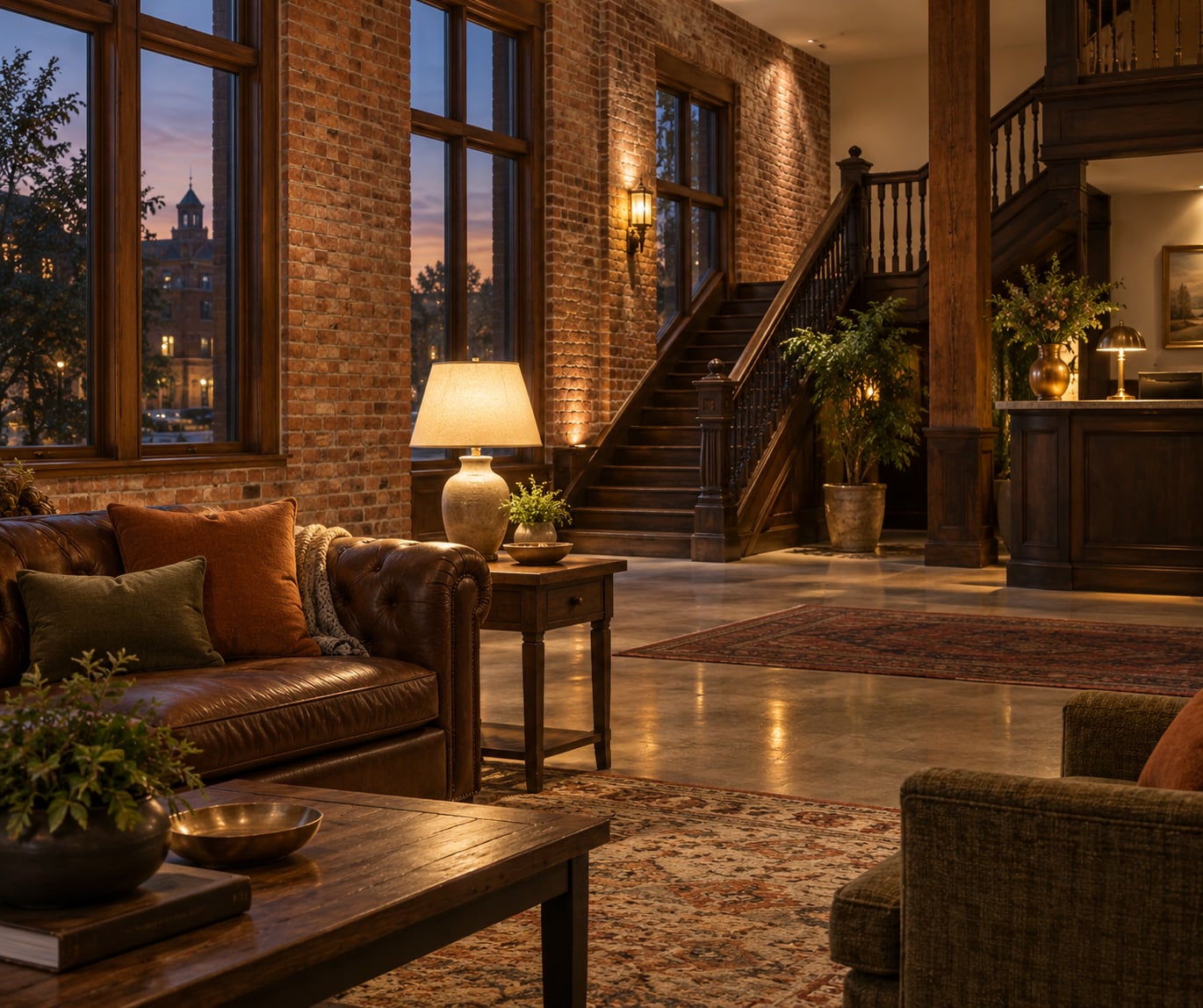
A historic hotel has been renovated well when the restoration keeps the building’s original fabric and character while genuinely rebuilding the parts you cannot see: wiring, plumbing, heating, insulation, windows and waterproofing. On top of that, the visible work — floors, plaster, millwork, bathrooms — should show level lines, matched joints and clean seams rather than a rushed cosmetic refresh.
The catch is that you rarely get to inspect any of it before paying. You see a photo gallery, an adaptive-reuse press release and a rate that assumes you trust the story. Learning how to tell if a historic hotel has been renovated well takes about twenty minutes of research and sixty seconds of looking once you arrive.
Table of Contents›
- What You Need Before You Judge the Renovation
- Step-by-Step: How to Tell If a Historic Hotel Has Been Renovated Well
- Check Whether the Historic Character Was Preserved
- Look for a Cohesive Design Rather Than a Generic Makeover
- Test Whether the Renovation Improves Comfort
- Examine the Details Travelers Usually Miss
- Verify That Historic and Modern Systems Work Together
- Compare Promises With Recent Guest Experiences
- Check the Building and Grounds Are Well Maintained
- Make a Balanced Booking Decision
- Good Renovation or Cosmetic Refresh: A Quick Comparison
- Common Mistakes
- Frequently Asked Questions
- What is the 15-5 rule in hotels?
- Should hotels be renovated every 7 years?
- How often do hotels renovate their rooms?
- How do you tell how old a hotel is?
- Does a historic designation guarantee a good renovation?
- What should I ask a historic hotel before booking?
- Conclusion
What You Need Before You Judge the Renovation
Five things help, and only one of them requires effort.
- The build date and the building’s history. A cornerstone date, the year on the original permit, or a National Register listing gives you the baseline.
- Archival photographs. Library archives, city photo collections and historic society sites often hold images of the same rooms decades ago. Comparing a lobby across a century tells you what was preserved and what was invented.
- Current photos of the actual room type you booked. Not the lobby, not the suite, not the “best available.” Tap into them on your phone and look for the details listed below.
- The renovation record. Permits, preservation grants, historic society approvals, a named architect, dated press coverage or before-and-after photography.
- Recent reviews with dates. Reviews from the last six to twelve months tell you more than a two-year-old top-of-page pile.
Reviews that mention the room specifically — “the bathroom is new but the radiators still clang” — are worth ten times more than “beautiful lobby!” Most travelers write about a historic hotel’s public spaces and barely glance at the tub they soaked in for forty minutes.
Step-by-Step: How to Tell If a Historic Hotel Has Been Renovated Well
Check Whether the Historic Character Was Preserved
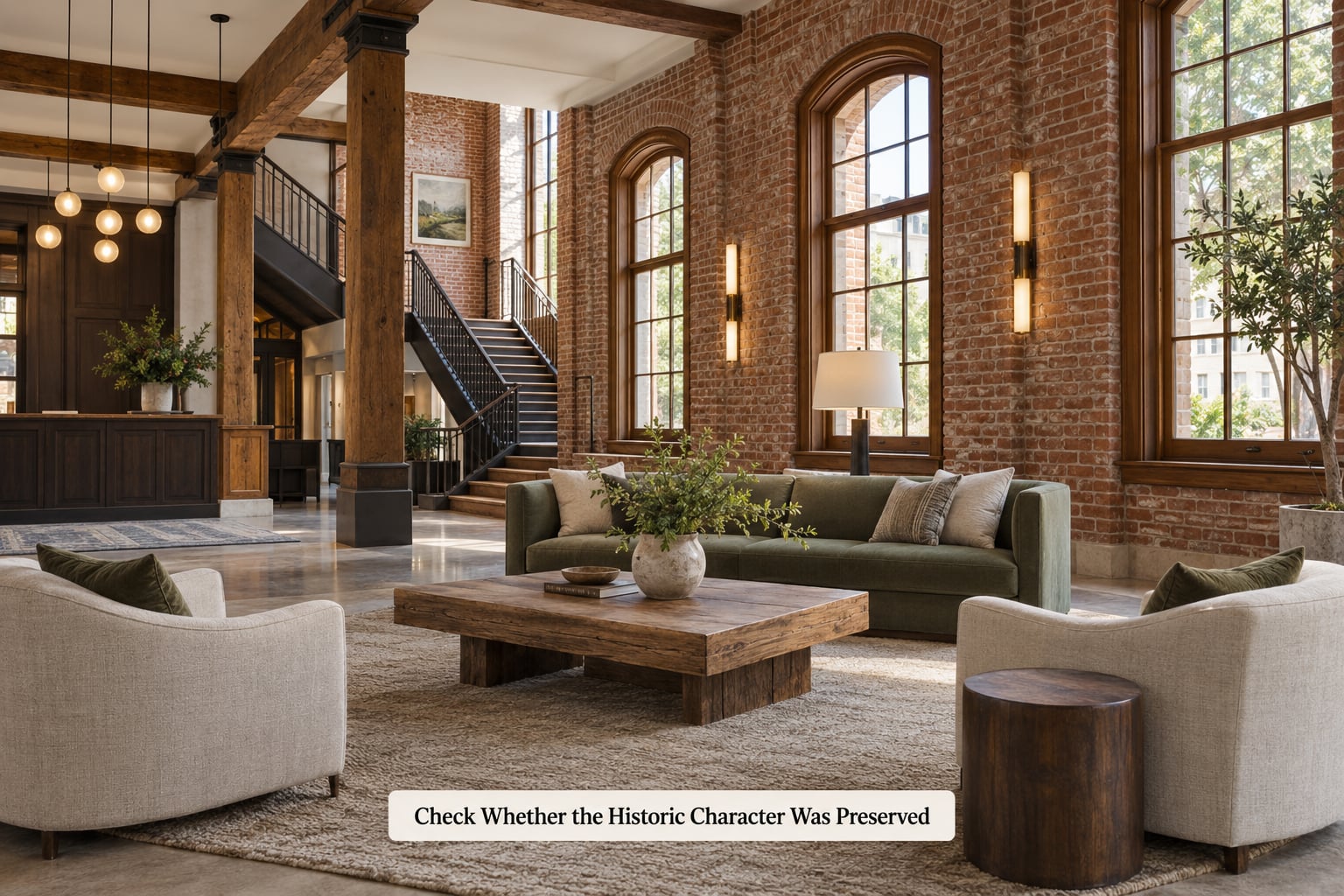
Preservation is the easiest signal to read from photographs. Restored plaster ceilings, exposed brick with honest coursing, original hardwood floors with wide plank spacing, cast-iron columns, restored stained glass and heavy millwork all say the work had a preservation intent behind it.
Watch the imitation. Faux-brick wallpaper, MDF millwork with a wood-grain print, or “historic-style” tile that is really printed porcelain are cheaper tells. The deepest clue is the seam: authentic restoration leaves small irregularities where old material was repaired and made level again, while reproduction often has suspiciously perfect repetition that does not match the building’s actual proportions.
There is also a signature of a cover-up. Several older hotels describe remodels from the 1970s and 1980s in which plaster, columns and windows were hidden behind drop ceilings, carpet, fluorescent fixtures and drywall. If a photo shows a modern box ceiling with a perimeter reveal, you are probably looking at the cover, not the room.
Look for a Cohesive Design Rather Than a Generic Makeover
One design language should run through the property: furniture, fixtures, signage, lighting and menus all belong to the same period and the same idea. A coherent scheme takes planning and money, because it means someone made choices rather than buying whatever was available that season.
Randomness is the warning sign. Different handle styles on the doors and the bathroom, two unrelated chandeliers in the same corridor, rugs that fight the floor pattern, or a reception desk in a style the rest of the building ignores usually means the spaces were done years apart and never reconciled.
Test Whether the Renovation Improves Comfort

A renovation that only improved the view is not a renovation. Ask whether the room performs: window seals that stop street noise, blackout curtains that actually black out, a mattress that supports without sagging, bedding you can adjust, bathroom drainage that runs fast, water at a usable temperature, enough outlets where you sit, and reading lamps you can reach from bed.
Heating and cooling are the two systems people notice first. Old buildings have large radiators and high ceilings that cool quickly, so a poorly retrofitted room is drafty in winter and stifling in July. If reviews mention cold floors, noisy pipes or a unit that runs constantly, the mechanical scope was shallow even if the finishes look new.
Accessibility counts as comfort too. A step-free route from the street, a bathroom with a level entry, grab points and controls within reach are signals that someone thought past the photograph. Old buildings often confine lifts to a corner of the plan, which is exactly where nobody wants to be hauling a suitcase.
Examine the Details Travelers Usually Miss
Run this sixty-second scan the moment you open the door. Solid-core doors are dense and close with a solid thump; hollow-core replacements rattle and drift. Tile should be level, with grout lines of even width and clean edges. Baseboard and crown molding joints should meet cleanly at corners instead of leaving a wedge gap. A wall-to-ceiling line should run straight instead of wavering around a patch.
Then check the practical hardware: how the shower handle works with one hand, whether the wardrobe actually holds a week of clothes, where the outlets sit relative to the bed, whether stair edges are nosed and lit, and whether the corridor outside your door stays quiet at night. Old buildings need more than new paint on the corridor; they need acoustic separation between rooms.
Outside, look at the woodwork. Paint that is already blistering on window frames after two or three seasons usually means the sills were painted without scraping, sealing or repointing — a cosmetic fix that traps moisture instead of stopping it.
Verify That Historic and Modern Systems Work Together
The hardest part of any adaptive reuse happens where nobody looks. The tell is at the edge, not the surface: where new drywall stops at old plaster and someone feathered the joint, where a sprinkler head was neatly set into a decorative ceiling, where a cable was concealed in a restored window frame instead of chased through masonry.
Historic buildings also carry age-specific liabilities. Lead paint and asbestos mean older surfaces disturbed by work need abatement, not a scraper. Single-pane windows that get sealed shut solve noise and drafts by removing ventilation, which then pushes humidity into plaster and trim. Knob-and-tube wiring left in a junction box behind new finishes is a reason to stop and ask.
You will not see most of this as a guest. That is precisely why the paperwork matters: a real project produces a permit trail, an inspection record and sometimes a measured outcome, such as a reported drop in energy or water use after the mechanical work.
Compare Promises With Recent Guest Experiences
Sort reviews newest first and read the room comments, not the headline. Track repeated words. “Dated,” “thin walls,” “creaky floors,” “no hot water until 9pm” and “renovation ongoing” are patterns; one grumpy sentence in June is not a pattern.
Watch for the split that travelers complain about most often: praise for the restored lobby paired with criticism of the guestroom. A property can pour money into public space and treat sleeping rooms as an afterthought, because the lobby is what sells the rate. The renovation claim is only as broad as the worst room category you actually book.
Also check how the property handled renovation disruption. Properties that phased work while welcoming guests often generate complaints about noise and mid-stay changes; properties that shut floors and finished properly tend to produce calmer, more specific feedback.
Check the Building and Grounds Are Well Maintained
Renovation quality is a promise about the next five years, not a photograph from opening night. Weather protection on the roofline, sound exterior paint, tidy landscaping, clean public areas and bathrooms that look cared for are the strongest evidence that the restoration was maintained rather than abandoned.
This is where a well-renovated but tired property separates from a badly renovated one. Both can have older finishes. The difference is water stains, mold lines, dead landscaping and scuffed corridors that signal nobody is doing the slow, unglamorous work.
Make a Balanced Booking Decision
Put the two halves together: atmosphere and comfort. A building with genuine historic character, good beds, quiet rooms and steady maintenance is worth a premium even if the design leans toward period style. A property with a spectacular lobby and tired rooms behind thin doors is not, whatever the marketing says.
Knowing how to tell if a historic hotel has been renovated well stops being a curiosity here and becomes a decision. Decide which compromise you can live with. Some travelers will trade modern plumbing for a restored stairwell; others will not sleep well in a building with single-pane glass and a central heating system. Set your non-negotiables — silence, temperature control, a walkable location, a real desk — and check those against recent reviews before you check anything else.
If the record is thin, email the hotel before booking. Ask which rooms were renovated, in what year, whether the work was structural or cosmetic, and whether the room you are booking is in the renovated wing. A vague answer about “our recent updates” is itself an answer.
Good Renovation or Cosmetic Refresh: A Quick Comparison
Six contrasts do most of the work when you put a hotel’s claims next to what you can actually see.
- Original fabric. Well renovated means restored in place with the irregularities kept; a cosmetic refresh reproduces it cheaply or hides it behind new finishes.
- Building systems. Wiring, plumbing, heating and insulation rebuilt, versus surfaces repainted while the services stay exactly as they were.
- Finish quality. Level lines, even grout and tight molding joints, versus mismatched seams, corner gaps and paint drawn over defects.
- Paperwork trail. Permits, a named architect, preservation grants and dated photographs, versus no dates, no scope and no images of the work.
- Lobby against rooms. A similar standard across public space and guestrooms, versus a showpiece lobby hiding tired rooms behind it.
- Premium charged. Proportionate to the work done, versus charged on the heritage story alone.
Common Mistakes
Judging renovation quality from one polished photograph. Marketing images are shot wide, in daylight, with the room styled. Look instead at tight crops: the corner where tile meets wall, the baseboard, the area behind the curtain.
Confusing age with bad renovation. A 1911 building with restored single-pane windows and a working radiator is doing something clever; an 1890s building with the same windows sealed shut and no heat control is a problem, regardless of age.
Accepting “recently renovated” without scope. A refresh of a tenth of the rooms on a rolling cycle is normal hotel operations. Find out which rooms and which systems.
Reading old-design-looking rooms as unrenovated. Period furniture and brass fittings are a deliberate choice. Judge plumbing, noise and temperature, not the furniture style.
Ignoring recent complaints about maintenance. Water stains, mold and noise complaints in the last year outrank a beautiful review from two years ago, because they describe the present.
Assuming a historic designation guarantees quality. Listing on a heritage register protects a building’s significance. It says nothing about the condition of the guestrooms or the plumbing in them.
Frequently Asked Questions
What is the 15-5 rule in hotels?
The 15-5 rule is an industry guideline suggesting that roughly 15 percent of a property’s rooms are refreshed each year, spread across a five-year cycle, so the whole inventory is turned over about once every five years. It is a planning convention rather than a standard, and it says nothing about how deep the work goes. A year when 15 percent of rooms get new carpet and mattresses looks identical on paper to one where those rooms were rewired.
Should hotels be renovated every 7 years?
A seven-year cycle for a full guestroom renovation is the figure most often cited in hotel industry discussions, alongside the five-year refresh cycle implied by the 15-5 rule. Neither is a legal requirement, and neither tells you whether the work was cosmetic or structural. Treat any recent-renovation claim as a date, not a standard, then ask what scope covered it.
How often do hotels renovate their rooms?
Most hotels refresh rooms on a rolling schedule rather than closing the property at once, typically cycling through inventory every five to seven years. Major mechanical work — heating, electrical, plumbing, elevators and windows — is far less frequent, sometimes a decade or more, especially in listed historic buildings where approvals slow every project. That gap is why rooms can look new while the building systems quietly age.
How do you tell how old a hotel is?
Start with public records: the cornerstone date, the original building permit, historic district nomination forms and newspaper archives from the year it opened. Membership of Historic Hotels of America or a similar body usually carries a founding year. Archival photographs of the same rooms add context, and they let you see which features are original and which were added decades later.
Does a historic designation guarantee a good renovation?
No. A heritage designation protects the significance of a building and, in some cases, restricts exterior changes. It governs nothing about interior guestroom condition, bathroom plumbing or mattress quality. Plenty of listed properties operate tired rooms behind impressive lobbies. The designation tells you the building is worth preserving, not that the operator spent money on the part where you sleep.
What should I ask a historic hotel before booking?
Ask four things: which categories of rooms were included, what year the work finished, whether any part was structural rather than cosmetic, and whether the room you are booking sits in the renovated section. Also ask whether the building has any heritage restrictions that affect windows or heating. Specific answers arrive quickly; a vague reply about recent updates tells you the scope is not something the hotel wants to define.
Conclusion
Start with four things: the building’s history and archival photos, tight crops of the room you actually booked, the renovation record (permits, grants, dated press), and reviews from the last year that describe rooms rather than lobbies. When those four line up, the atmosphere and the comfort are usually real.
If the record is thin, ask one direct question about renovation scope before you pay. If the answer stays vague, treat the premium as a bet on the lobby rather than on your sleep.