To find a hotel with real local character, look for a property that is independently owned or run on site by people who live there, sits inside an actual neighborhood rather than a tourism strip, and makes that place visible in its building, its food, its art and the specific things its staff tell you to go do. Twenty minutes of research per property is usually enough to sort a genuine one from a themed one.
It is worth the twenty minutes. You will spend the bulk of your waking hours in whatever neighborhood you choose, which makes the bed the single decision that shapes the rest of the day. Booking platforms rank on price, photos and star count, none of which tell you whether anyone at the front desk actually knows the neighborhood.
The rest of this guide is a repeatable process: where to search, what to check, what to ask, and the six patterns that fake a sense of place. Bring a pen. Half of these signals disappear once you skim past them.
Table of Contents›
- What You Need
- Step-by-Step: How to Find a Hotel With Real Local Character
- 1. Start with the neighborhood, not the hotel
- 2. Look for evidence of independent ownership or thoughtful stewardship
- 3. Read the hotel’s own story, not just its sales copy
- 4. Check what guests experience beyond the room
- 5. Score your shortlist and pick the one with real local character
- Common Mistakes
- Frequently Asked Questions
- What is the difference between a boutique hotel and a normal hotel?
- How do I know if a hotel is truly independent?
- Is booking direct better than using a booking site?
- How can I tell if a neighborhood is safe and lively at night before I arrive?
- How do I find interesting places to stay without a hotel name in mind?
- Can I email a hotel before booking and ask questions?
- A Short Conclusion
What You Need
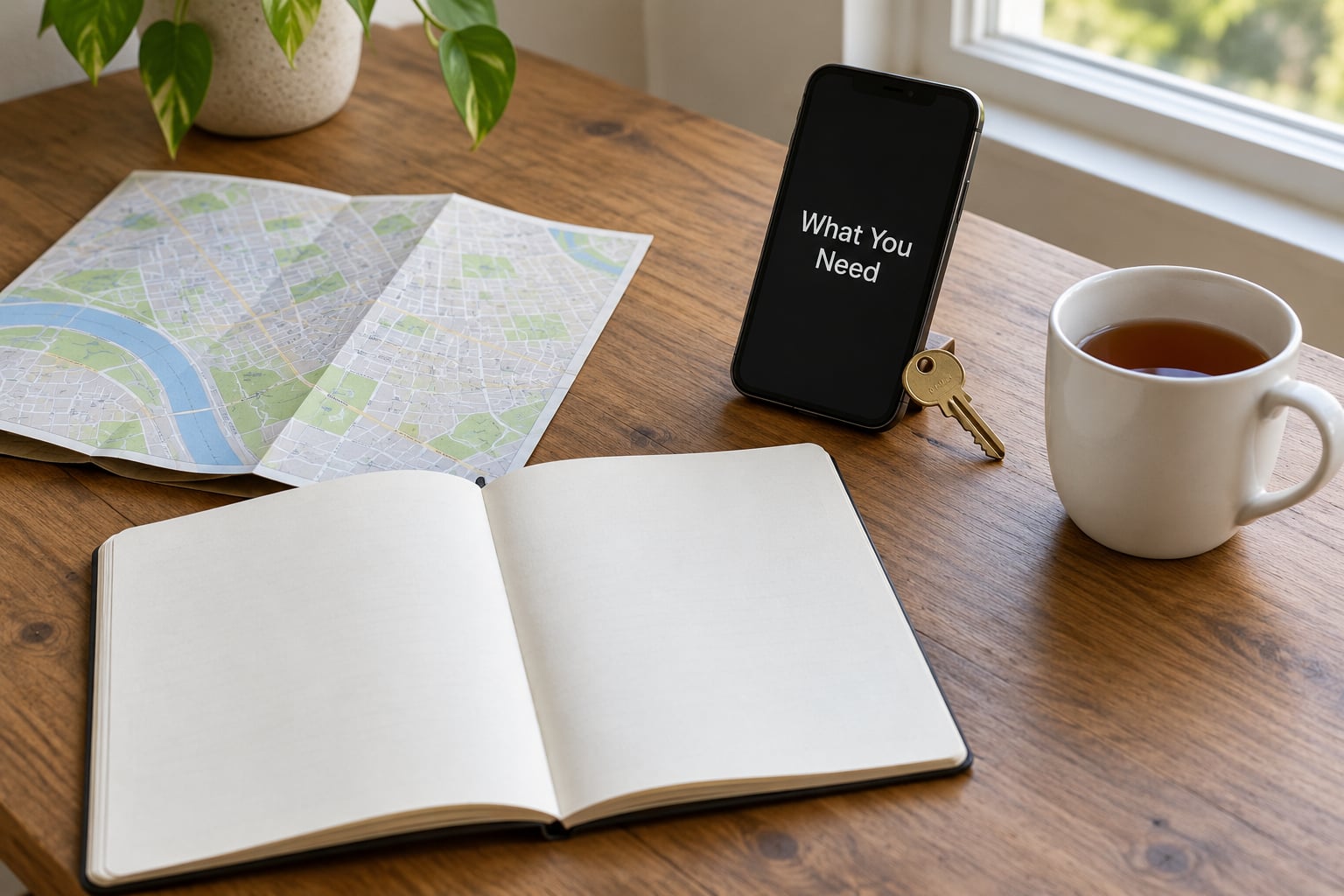
None of this requires money or memberships. It requires a browser, ten minutes of attention per property, and a way to keep notes.
- A large booking platform, for price reality only. Browse the neighborhood you are considering so you know what rooms cost and which properties are listed at all. You will not book here.
- A map with street view. Google Maps or anything comparable. This is the single most useful tool in the whole process, because it shows you the block without paying for a flight.
- Two review sources. The platform listing plus a second site, sorted by newest first rather than most helpful.
- The property’s own website and social accounts. Instagram is where a small hotel is most honest and most exposed.
- A scorecard. A spreadsheet, a notes app, or the back of an envelope. Six dimensions, one to five points each.
- Twenty to thirty minutes per property. Less than that and you will only see the marketing.
Set a firm cutoff. If a property takes more than half an hour of reading, it is telling you something, and it is rarely flattering.
Step-by-Step: How to Find a Hotel With Real Local Character
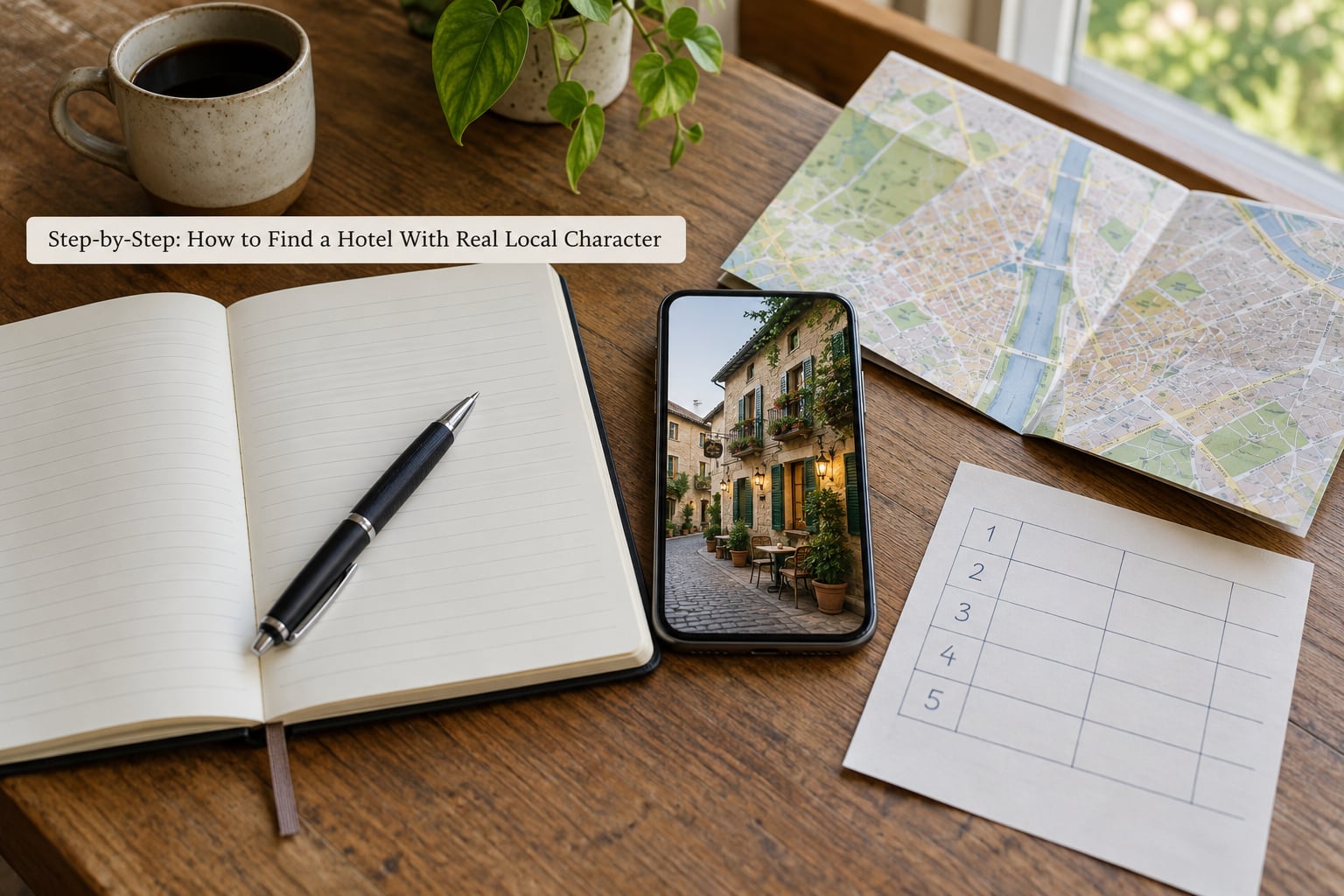
1. Start with the neighborhood, not the hotel
Open the map and zoom out until the property is a dot. Then look at what surrounds it, because a hotel cannot be more local than its block.
Count the neighbouring businesses by category. A bakery, a hardware store, a clinic, a corner bar and a place that does laundry tell you something different from a souvenir shop, a bike-rental counter and three restaurants selling the same six dishes to passers-by.
Then do a walk test in street view. Pick a corner shop you would want, a bar that looks busy, and a bus or tram stop. Measure the distance and count the streets you would cross. A genuine local property usually sits within a ten-minute walk of ordinary errands, and often within five of somewhere to eat that is not part of the hotel.
Check the hour, too. Street view is often captured mid-morning, which is the worst possible time to judge a neighborhood’s energy. Look for evening photos in recent guest reviews instead, especially if you are traveling alone. If every photo shows an empty sidewalk after dark, that is your answer.
You know this step worked when you can name three things to do within a ten-minute walk, none of which are in the hotel.
2. Look for evidence of independent ownership or thoughtful stewardship
Ownership is the hardest thing to see and the most telling, so go looking for it rather than taking the website’s word. Most states let you search a registered business by name through the secretary of state or an equivalent public registry. Type in the property’s legal name, not its marketing name, and note the formation state, the registered agent and any management company that appears.
A management company is not a disqualifier, but it changes what you are buying. An owner-operator with one building is a different experience from a franchisee running a brand’s playbook, even when the furniture is the same and the coffee is roasted locally for both.
Watch for the soft-brand trap. Several brands market themselves as independent in style while belonging to a large parent company, so a property can advertise local character and be one of hundreds of identical rooms elsewhere. Ask the property directly who owns it, and see whether the answer comes back with a name.
For historic claims, check the building rather than the brochure. The National Register of Historic Places database is public and searchable. If a property calls itself historic but the listing returns nothing, ask what year it was built and what was restored; vague answers about heritage and legacy usually mean recent drywall.
Room count is a rough but useful shortcut. Under fifty rooms usually means someone runs the place by hand and knows who the neighbors are. Adaptive reuse, converted motels, guesthouses and bed and breakfasts count here too. None of those things require luxury, and the best local character in most cities costs less per night than the chain on the arterial road.
You know this step worked when you can name the owner or family, the year they took over, and whether anyone else operates the business.
3. Read the hotel’s own story, not just its sales copy
Open the About page and count the names. A property with real history talks about specific people, a specific year, a building with a past, and a renovation with a reason. A property selling a mood talks about curated experiences, immersive stays and connection.
Then read the menu, if there is one. Named suppliers, a named fishery, a named bakery, a region on the label, a wine list with producers you have not heard of. If the food section says locally sourced without naming anything, treat the rest of the claims the same way.
Check the social accounts next. How old is the account, does the feed show this specific building and this specific street, and is the most recent post from this month or from three years ago? Small hotels often post their own supper, a neighbor’s opening, or a local event. A feed of stock interiors photographed in daylight is a property optimizing for a photo rather than for guests.
One more test, and it is the fastest one available. Is the hotel’s restaurant or bar open to non-guests, and are locals in it? A dining room full of diners who did not check in upstairs is very hard to fake. A restaurant that requires a key card at the door is a set piece.
You know this step worked when the property’s own words contain at least two facts you could not have guessed.
4. Check what guests experience beyond the room
Reviews are the only source that describes the thing you actually care about, which is how the place behaves. Sort by newest and read at least twenty of them, including the middling ones. The four-star reviews tell you more than the five-star ones.
Listen for the phrases that indicate a resident, not a script. Staff who name a specific cafe instead of the main street. A breakfast credited to one bakery. The same manager mentioned across reviews from different years. Guests mentioning that someone at the desk walked them to a door or called ahead to a dinner spot. Guests describing a place they came back to.
Now listen for the opposite. Reviews that talk only about the room, the bed and the towels. Complaints about constant staff turnover. Descriptions of a breakfast buffet that could be anywhere. Mention of an event or neighborhood happening that happened years ago, which tells you the page is stale.
Check consistency rather than any single review. When the last six reviews from different months all describe the same local touches, the property is behaving the way it describes itself. One glowing review is marketing; a year of consistent, specific detail is a signal.
Reviews written on the property’s own site are curated, so treat them as advertising. Cross-check at least one external source for every property you are serious about.
You know this step worked when you can quote a specific recommendation a guest received, and when the most recent review is from the last couple of months.
5. Score your shortlist and pick the one with real local character
Score three properties only. Comparing four or five turns the exercise into noise, and the sharpest comparison is three.
Rate each dimension from one to five, with one meaning the claim is decorative and five meaning it is verifiable:
- Location. Ordinary neighborhood, walkable errands, and something nearby worth walking to at night.
- People. Staff who live in the area, low turnover, owners present and reachable.
- Design and building. Real architecture, a real renovation, work that fits the place rather than a style applied on top of it.
- Programming. Breakfast worth eating, guest discounts at nearby businesses, walks, talks, residencies, small events.
- Community connection. The property is known to neighbors, employs locally, and shows up in local press or calendars rather than only in travel lists.
- Value for what you want. Compared against what else you could book nearby, including the chain, not against the cheapest option in town.
Add the six numbers up for a score out of thirty. Below twenty, the locality is decoration. Twenty to twenty-five is a real independent property with a few rough edges, which is usually what you want. Twenty-six or above is worth contacting directly before you book.
Then email or call the top two. The response itself carries information: a named person who answers a specific question in a day or two is a strong signal about how the place is run. Silence, or a form letter about amenities, tells you what you need to know.
You know this step worked when you can defend your pick in one sentence, naming two things that convinced you.
Common Mistakes
Equating local design with local ownership. Reclaimed timber, exposed brick and a neon sign are styling decisions anybody can make. Check the business registry before you fall for it, and treat the property’s legal name as the thing worth searching.
Reading only the first review, or only the top one. The most recent twenty, including the average ones, is the sample that matters. A property with a single glowing five-star review and nothing else is a new opening or a paid placement.
Booking somewhere with no way back. A wonderful house forty minutes out in the hills is a wonderful house if you have a car and a plan for dinner. Before you book any remote property, check the last bus or train home, and what a taxi costs at the hour you would leave.
Trusting claims that have gone stale. Listings get copied and never updated. Look for text describing a renovation in the future tense, a restaurant that closed, or an event from three seasons ago. Fresh reviews and a current social feed settle it in about a minute.
Using the boutique filter on a booking site. That filter returns small chains, converted motels on arterial roads and properties with forty rooms and a template website. It is a starting point for pricing, not a source of independent hotels.
Skipping the evening check if you are alone. Daylight street views flatter everywhere. If you are traveling solo, search for recent photos taken at night, check whether other guests mention walking back, and ask the property directly what is open after ten.
Frequently Asked Questions
What is the difference between a boutique hotel and a normal hotel?
Boutique describes size and style: a small property with individual design, usually under a hundred rooms. It says nothing about who owns it. A large chain can operate a boutique-style brand, and a family-owned guesthouse can be functionally identical to a full-service hotel. Check ownership in a public business registry rather than trusting the label on the listing.
How do I know if a hotel is truly independent?
Search the property’s legal name in your state’s public business registry, then read the About page and recent social posts for names and dates. Confirm it is not a franchise or a soft brand belonging to a large parent. The clearest signal is a person answering your email by name, within a day or two, with a specific answer.
Is booking direct better than using a booking site?
Usually, for small properties. Booking direct avoids commission, so properties can pass the saving on, and it puts you in contact with a person rather than a call centre. The bigger argument is that the conversation before booking is itself a test of how the place is run. Front-desk staff consistently treat third-party reservations differently from guests who wrote in directly.
How can I tell if a neighborhood is safe and lively at night before I arrive?
Use recent guest photos taken after dark rather than daytime street view, and look for a bar or late food option within a short walk. Read reviews that mention walking back to the property. Ask the hotel what is open after ten and how guests get home. An honest answer with a specific name and street is worth more than any map layer.
How do I find interesting places to stay without a hotel name in mind?
Pick the neighborhood first, then browse a booking platform for that block to learn the price range and see which properties exist. Read the reviews newest-first on the most promising small ones, and check each against a map and a business registry. Cross-reference with local guides, tourism office directories and social accounts, which often feature properties before the aggregators do.
Can I email a hotel before booking and ask questions?
Yes, and it is the highest-signal step in the whole process. Ask who owns the property, what they recommend nearby that is not a tourist attraction, whether the restaurant is open to non-guests, and what is within a ten-minute walk. You are allowed to request a specific room number as well. A named person who replies personally tells you a great deal about how the place runs.
A Short Conclusion
Open a map tonight, pick one neighborhood you would actually like to walk around, and drop three pins on small properties inside it. Score those three on the six dimensions, then email the highest one and ask two specific questions before you pay anything.
Knowing how to find a hotel with real local character is half an hour of work, and it leaves you with a place whose staff can tell you something the map cannot.