To stay safe in a hotel as a solo female traveler, you reduce how visible your room, your routine and your name are, and you make your door hard to open. Vet the property before you pay, keep your room number quiet at check-in, inspect the room before unpacking, and use the deadbolt, the chain and a portable lock every single night. None of this takes more than twenty minutes a day.
Most of it happens in a narrow window. The decisions that shape a solo hotel stay get made at the front desk, in the lift, and at the door, not out on the street. Get those right and the rest of the trip gets easier.
A note on what I can and can’t promise. These steps lower risk, they don’t erase it. Anyone who tells you a checklist makes a solo trip risk-free is selling something.
Table of Contents›
- What You Need
- Step-by-Step
- How to Research the Hotel and Neighborhood
- How to Confirm Your Booking and Share Your Itinerary
- How to Check In Safely and Inspect the Room
- How to Secure Your Room and Belongings
- How to Stay Safe When Leaving and Returning
- How to Respond to an Emergency or Suspicious Situation
- Common Mistakes
- Frequently Asked Questions
- How can I choose a safe hotel when traveling solo?
- What should I check when I first enter a hotel room?
- Should I tell the hotel staff that I am traveling alone?
- How should I store money and passport in my hotel room?
- What should I do if I feel unsafe returning to the hotel at night?
- When should a solo female traveler call the police or emergency services?
- Your First Safety Step
What You Need
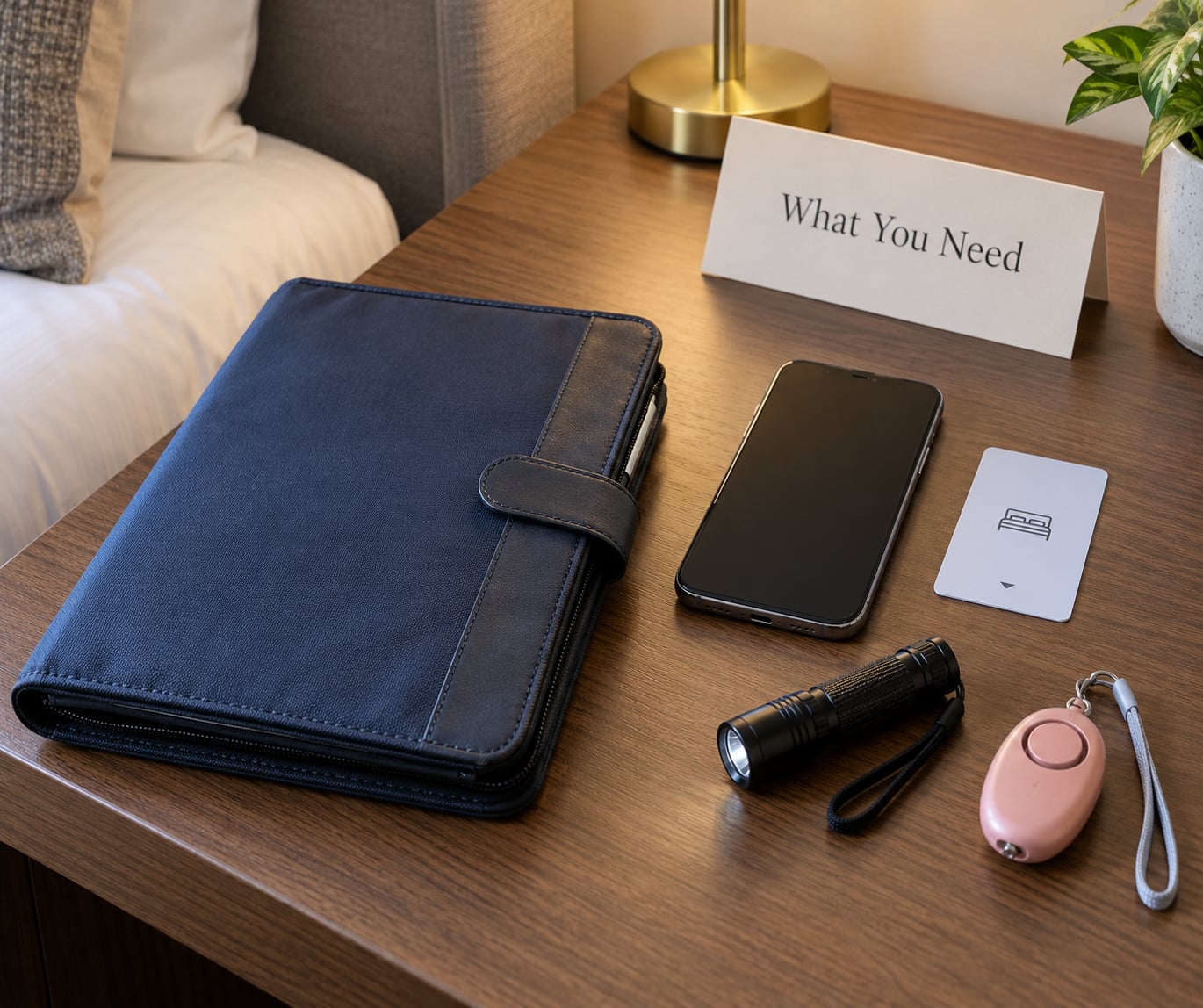
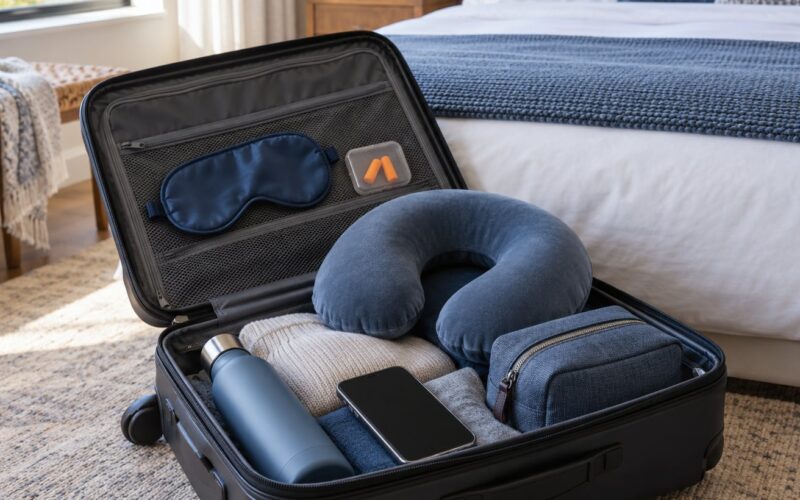
Pack a small safety kit and keep it in your carry-on, not a checked bag that might go to another city without you.
- Portable door lock or rubber door stopper. This is the one item solo travelers mention most often and the one that does the most work. A few grams of rubber between the door and the frame turns a hotel door you cannot fully control into one you can.
- Phone, power bank and a written list of numbers. Your phone dies, your contacts are gone. A card in your bag with the hotel’s direct line, the local emergency number and one person at home changes how fast you can get help.
- Body-worn travel wallet. A slim pouch worn under clothes holds your passport, one card and some cash, so a rummaged bag doesn’t cost you your documents.
- Small flashlight. Useful for the corridor, the entryway and the room sweep when the overhead light is weak.
- Personal alarm or whistle. Cheap, loud, and the kind of thing that makes an uncomfortable moment easier to walk away from.
- Backup card and a small first aid kit. Plasters, antiseptic wipes, any prescription you carry, and the insurance number for your trip.
One more habit beats most gear: share where you are. Send your itinerary to someone who will actually notice if you stop checking in.
Step-by-Step
How to Research the Hotel and Neighborhood
Booking sites tell you about tile floors and breakfast. They rarely tell you whether a woman felt comfortable walking in at eleven at night, which is the thing that actually matters.
Search recent reviews for the words that describe access rather than comfort: night staff, lit lobby, entrance, elevator, security, parking, street. Read the one-star and two-star reviews, since those carry the operational detail. Ignore the single furious review about noise or a billing dispute unless it mentions the door, the staff or the neighbourhood.
Then check the map. Look at the block around the entrance at the hour you will be arriving and leaving. If you are taking a taxi or rideshare to the door, the last hundred metres should be lit and walkable. A hotel across from a bar district at closing time is a different booking decision than the same hotel at ten in the morning.
Call ahead before you book if you can. People on the forums say a call to a female staff member about the neighbourhood comes back far more honest than a message to reservations, so ask the front desk who is on at night and whether the side entrance is locked after midnight. If the person hesitates, that hesitation is information.
For long trips, check the exit routes too. Two ways out of a building is a reasonable baseline, and a ground-floor room with a window onto a car park is a line in the sand for most people.
How to Confirm Your Booking and Share Your Itinerary
Confirm the reservation the day before, from the number on the booking confirmation rather than a search result. Ask three things: is the front desk staffed through the night, can you be told your room number only at the desk rather than over the phone, and can you request a room away from the lift and stairs.
Most hotels will say yes to a room request. Some will say no in a packed week, which is fine. The request costs nothing and sometimes works.
Then share the itinerary. Message the person at home your hotel name, the address, your arrival time and the check-out date. Ask them to call the hotel if you don’t answer by a set time, and set that time. A check-in agreement only works when both sides know when it is.
Keep sharing light after that. Solo women on the forums are split on whether to tell a host, a hostess or a taxi driver that they are travelling alone, and the honest answer is that it depends entirely on the person. You owe a stranger no information about your company or your room.
How to Check In Safely and Inspect the Room
Check-in is where most of the avoidable exposure happens, and it takes about two minutes of attention.
Have your ID ready before you reach the desk, and expect to be asked for it. Hotels need to know who is in the building, and in many places the law requires a passport or national ID for every guest. Give the name you booked under, one at a time, and hand over the document yourself rather than letting it rest on the counter while you sign.
When the clerk says your room number, three things help:
- Say nothing back that repeats it. Don’t confirm it out loud, don’t say your name, don’t joke about the number. Confirmation is what turns a slip into a memory.
- Ask for two key cards, and ask that your details go to nobody. Extra keys are normal, and the request is normal too.
- Step to one side of the desk for the rest of the conversation, and ask the same question there so you can hear your own volume.
Walk to the room and inspect it before you unpack. Stand just inside, close the door behind you, and work in a fixed order so nothing gets skipped.
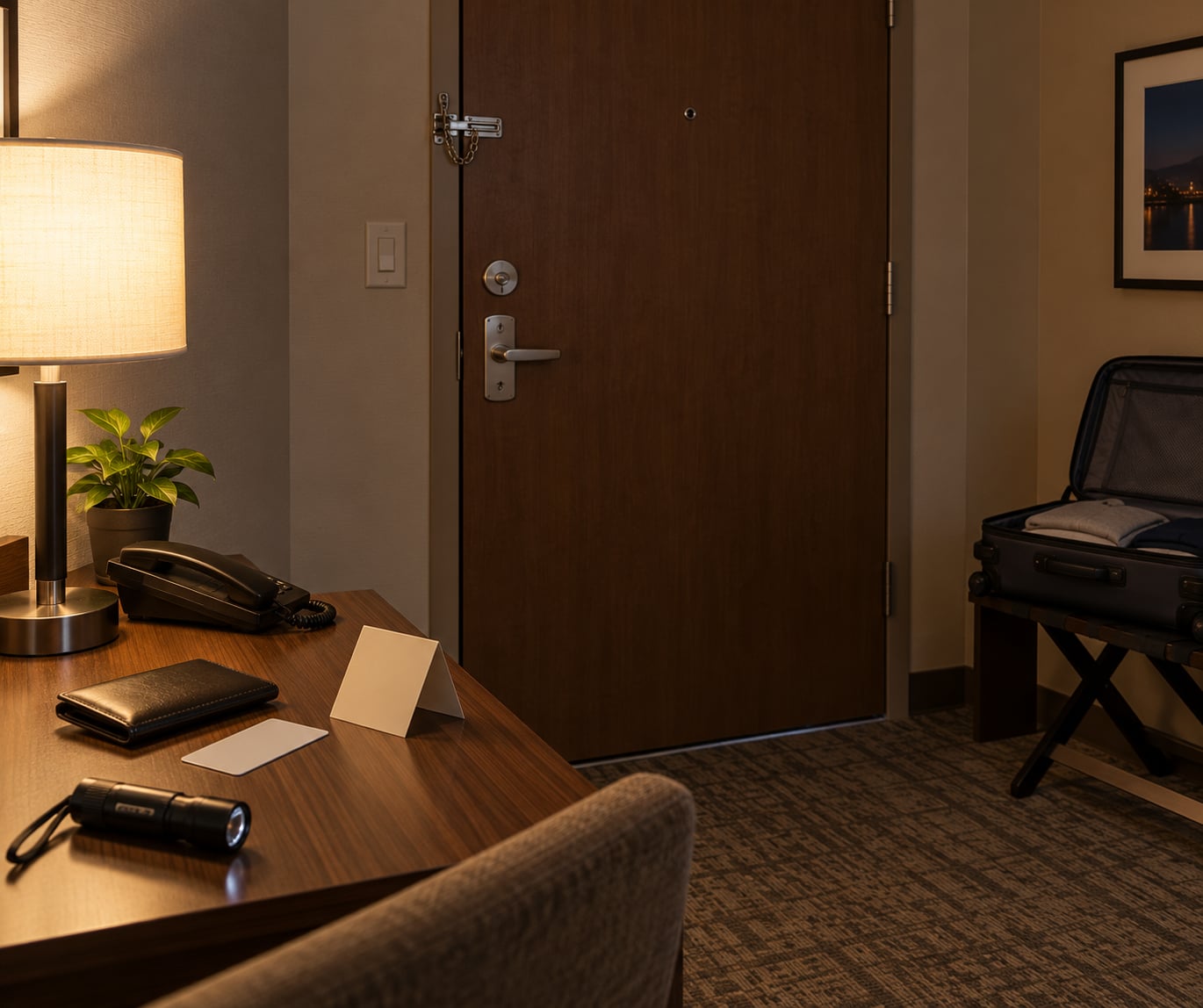
- Door: does it close and latch by itself, and does the deadbolt throw? Check the chain and the swing of the door.
- Connecting door: if there is one to the next room, lock and chain it even when the front desk says the rooms don’t connect.
- Window and drapes: check the latch, look at the drop to the ground, and confirm you can close the drapes fully from inside.
- Bathroom: mirror, cabinet, and the vent or grille, which is a common hiding place for camera devices.
- Smoke detector: look at it. A detector that is a small object with a dark pinhole or lens, and no blinking light, is not a detector.
- Closet, under the bed, drawers and behind the headboard.
Your phone camera helps. Point it into the bathroom vent, behind the mirror and along the back of the mirror in low light, and check the reflection in the mirror for a red or green LED that has no source. A quick scan costs two minutes and answers the question that most travelers are quietly worried about.
If something looks wrong, do not unpack. Walk back to the desk, ask for a different room, and describe what you saw in plain terms. Moving rooms is normal and unremarkable. If you think a camera is in the room, photograph it, leave, ask for a refund or a move, and report it to the local police, because in many places operating one in a private room is a crime.
How to Secure Your Room and Belongings
Do the same four things every night, in the same order, so that securing the room never depends on how tired you are.
Deadbolt engaged, chain on, portable lock or stopper in place. Then the connecting door, if there is one. This is the routine that gets skipped, and it is the one that matters most. A keycard reader alone is a convenience lock, not a security lock.
Use the peephole before opening the door for anyone you didn’t expect. A housekeeper with a knock at noon and a man asking for a spare charger at midnight look identical from the wrong side of a closed door. Open the door only for a name you recognise, with the chain still on, and ask who else is working the floor right now.
Hang the do not disturb sign when you are out, not just when you are asleep. It is the cheapest signal you have, and the community is split on it for a reason: it signals a single occupant to anyone watching. Use it in daylight and on a normal schedule, and hold back on long stays where it might read oddly.
Skip the “make up my room” sign. It advertises that you are out, and a housekeeper walking into an empty room with a stranger inside is exactly the scenario that makes the news. Use it only while you are genuinely in the room and waiting for clean towels, which is the correct use anyway.
Never leave the room service or breakfast card hanging on the outside of the door when you are out. It tells anyone passing that one person occupies the room and that she has left.
For valuables, split them. Passport, one card and some cash in the body-worn wallet on you. The rest of the cash and a second card in the room safe, only if the safe is a proper bolted one and you can set a code you will remember. Anything you would be genuinely upset to lose stays on your person.
Most things taken from hotel rooms are small and easy to resell, and phones and passports are the ones that actually hurt. Nobody in the forums is taking anything memorable, which is exactly why nobody notices.
How to Stay Safe When Leaving and Returning
Night returns deserve their own plan, because this is the window when you are most tired and least observant.
Use the hotel’s registered taxi or a ride-hailing app rather than accepting a ride from someone who approaches you outside. Photograph the car and the plate before you get in, and share the trip. Sit in the back, keep the door unlocked, and have the address ready to read out loud.
At the hotel, valet parking beats walking a car park alone. If you are self-parking, do it in daylight or in a well-lit area with other cars, and take the direct path to the entrance rather than the one behind the building.
In the lift, stand toward the back and away from the doors. There is a well-known tactic of pressing the closest floor button, then the lobby button, then stepping out on the first stop, which is low-cost and occasionally useful. The same logic applies to a car park: if the walk from the car feels long, get back in and drive around the block.
Corridors get a glance, not a stare. A quick turn of the head as you leave the lift tells you who is behind you. If someone follows you toward your door, do not open it, and do not let them see you hesitate in the corridor. Go to the desk instead.
When you return after midnight, call the desk from the lobby and ask them to send security to the door, or ask them to meet you. It costs nothing and it works.
How to Respond to an Emergency or Suspicious Situation
Decide in advance what your threshold is, while you are calm, because the decision is much harder at one in the morning with adrenaline running.
My rule is simple. If a situation makes me go quiet inside, I leave the room. Not to the car park, not to a stairwell, to somewhere with other people in it: the lobby, a cafe across the street, a shop that is still open. I do not wait to see whether it develops.
For a medical emergency, use the local emergency number first rather than the hotel desk, and then tell the desk so they can send someone to the room and meet the ambulance. A hotel can often get a doctor there faster than a taxi can reach a hospital.
For harassment, document it quietly. Time, what was said, what was worn by whom, and get to somewhere safe before you decide what to do next. Name the behaviour when you report it. “He would not leave me alone” is a report; “it was weird” is not.
For a threat from hotel staff or on-site security, which is the risk most advice leaves out, change the setting first. Go to a public area of the hotel where other guests are, or leave the property and go somewhere staffed and open. Then contact your booking platform, the management company and, if you intend to pursue it, the local police. Your own safety comes first and the reporting comes second.
For a lost or stolen phone, call your carrier to suspend the service before you start borrowing phones. Then use Find My iPhone or Find My Device to mark it lost so the passcode and accounts stay locked. Change the lock on any wallet app you had open.
Any time you need the hotel quickly, dial 0 in your room. It reaches the operator, usually faster than the front desk number, and the operator can put a call through while you stay on the line.
Common Mistakes
Each of these has a two-minute fix.
- Treating a five-star review as a safety review. Five stars describes the pillows. Search reviews for the words night, entrance, staff, security and street instead.
- Confirming your room number out loud. Never repeat it back. Step aside from the desk for the rest of the conversation.
- Letting housekeeping signal an empty room. No do not disturb sign, no breakfast card, no make up my room sign on the outside when you are out.
- Taking the first room you are given. A ground-floor room with a window onto a car park, or one beside the lift, is worth one polite request.
- Leaving the connecting door unlocked. Lock and chain it regardless of what the front desk says about the layout.
- Keeping your passport in the room safe and your only card in your bag. Split them. A body-worn wallet for documents, one spare card in the safe.
- Accepting a ride from someone who approaches you. Use the hotel’s taxi or a ride-hailing app, and check the plate before you sit in.
- Waiting in an empty room to see if a situation improves. Leave for somewhere with people in it. That is the fix, not an escalation.
- Relying on one emergency contact who is asleep or offline. Add a local number, the hotel’s direct line, and a second person at home.
Frequently Asked Questions
How can I choose a safe hotel when traveling solo?
Judge access, not comfort. Read the one and two-star reviews for the words night staff, lit lobby, entrance, security and street, then look at the map block around the entrance at the hour you will be coming and going. Call ahead and ask who is on the desk overnight and whether the side door is locked after midnight. A female staff member usually gives you a more honest answer than reservations does.
What should I check when I first enter a hotel room?
Work in a fixed order before you unpack: does the door latch and does the deadbolt throw, is the connecting door locked, does the window latch and do the drapes close, and what is behind the mirror, in the bathroom vent, and inside the smoke detector. Check the closet, under the bed and the drawers last. A phone camera in low light makes the vent and mirror checks quick. If anything looks wrong, do not unpack, go back to the desk and ask for another room.
Should I tell the hotel staff that I am traveling alone?
You do not owe a stranger that information, and plenty of solo women keep it private on purpose. What you should do instead is confirm the practical things: that the front desk is staffed overnight, that you can be told your room number at the desk rather than over the phone, and that they will send security to the door or meet you in the lobby during a late return. Those are normal requests that any hotel handles daily.
How should I store money and passport in my hotel room?
Split them. Wear your passport, one card and some cash in a body-worn pouch under your clothes, so a rummaged bag costs you a change of shirt rather than your documents. Keep a second card and the rest of the cash in the room safe only if it is bolted down and you can set a code you will remember. Nothing you would be genuinely upset to lose should be locked in a room, even a good room.
What should I do if I feel unsafe returning to the hotel at night?
Call the front desk from the lobby and ask them to meet you or send security to the door. It costs nothing, it happens every night at busy hotels, and it means somebody knows you are arriving. Do not open your door to someone you did not expect, and do not walk the last stretch of an unfamiliar street if it feels wrong, get back in the car and go somewhere lit and open instead.
When should a solo female traveler call the police or emergency services?
Call for a medical emergency, an immediate threat, an assault, or when you have found what looks like a hidden camera in your room, since in many places operating one in a private room is a crime. For a threat from hotel staff or on-site security, get yourself to a public area or leave the property first, then report it to management, your booking platform and the police. Safety first, paperwork second.
Your First Safety Step
Verify the property and the neighbourhood before you book, not after you arrive. Read the critical reviews for what happens at the front door at night, check the last hundred metres from the entrance on the map, and phone the hotel to ask who is on the desk overnight.
Everything after that is a repeat of a few habits. Keep your room number quiet, inspect the room before you unpack, run the deadbolt, the chain and your portable lock every night, and split your documents so nothing in one bag can take everything.
Treat that first room inspection as a deliberate check rather than a formality. Ten minutes at the door, on the first night, sets the tone for the whole stay, and it is the step most travelers skip.