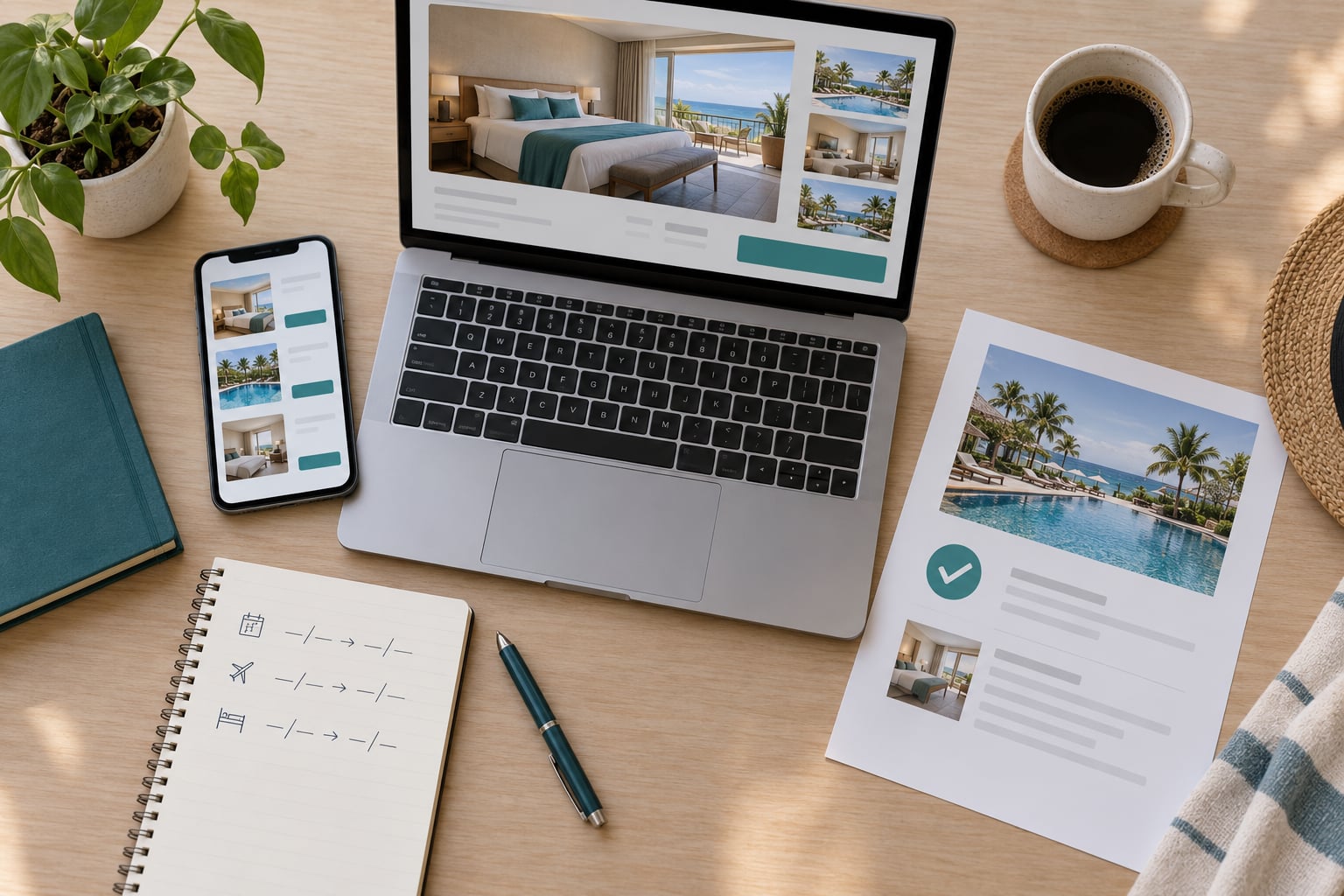
Booking directly with a small hotel and saving money comes down to three things: find the property’s own website, compare the complete total against the booking sites, then ask the front desk to match or beat what you found. Small hotels keep 15 to 25 percent more of every direct reservation because they pay no commission, and most of them will spend some of that margin on a better rate or an extra if you ask politely. It takes about fifteen minutes and works best a few days before you plan to book.
I do this for every independent stay, and the pattern is consistent. The property’s own site is usually at or below the OTA rate. When it is not, the front desk will nearly always close the gap once you tell them you found a lower number elsewhere.
Table of Contents›
- What You Need
- Step-by-Step: How to Book Directly with a Small Hotel and Save Money
- 1. Find the hotel’s official booking options and confirm they are legitimate
- 2. Compare the direct rate with the major booking sites
- 3. Ask about flexible and value rates
- 4. Ask for the best available direct offer
- 5. Check what is included before you pay
- 6. Confirm and save the reservation details
- Common Mistakes
- When an online travel agency is still the better choice
- Frequently Asked Questions
- Is booking directly with a small hotel always cheaper?
- Can I ask a hotel to match the price on a booking website?
- Should I pay a small hotel directly or through a booking platform?
- Do direct hotel bookings include taxes and fees?
- Are direct bookings easier to change or cancel?
- Do hotel loyalty programs apply to independent small hotels?
- Conclusion
What You Need
Before you contact anyone, gather a few specifics. Without them the hotel cannot quote you a comparable rate, and the comparison turns into an argument about apples and oranges.
- Your dates, plus a flexible window. Adding one night at either end of a midweek stay often drops the price more than any discount code.
- A screenshot of the OTA rate for the same room type, same number of guests, same cancellation terms, showing the full total including taxes.
- The property’s own website, email address and front-desk number. For an independent hotel these are three separate channels with different pricing power.
- Your eligibility rates. AAA, AARP (65 and over), student, military, corporate, credit card or alumni affiliations often qualify a small property for a discounted rate it never advertises.
- Gift cards or vouchers you already hold. A small inn will usually honour them without adding the service charge an OTA would.
- Your arrival and departure times, especially for solo travellers booking a single occupancy rate.
One more thing worth having: a card you can put a temporary hold on. Some independent properties will quote a rate over the phone and hold it for you without a deposit until the day before arrival.
Step-by-Step: How to Book Directly with a Small Hotel and Save Money
1. Find the hotel’s official booking options and confirm they are legitimate
Type the property name plus its town into a search engine and open its own domain rather than clicking a sponsored result. The real site usually lists the street address, the owner or manager’s name, direct booking contact details, and photos that match the property.
Check for a booking engine from a known provider, secure payment, a stated cancellation window and a real phone number that gets answered. A site with no property photos, prices that are far lower than everywhere else, or a request to pay by bank transfer is a warning sign, not a bargain.
Related searches on Google often surface sites like “Book Hotel Direct” for this topic. Those are resellers, not the property. If the domain is not the hotel’s own, you have not booked direct.
2. Compare the direct rate with the major booking sites
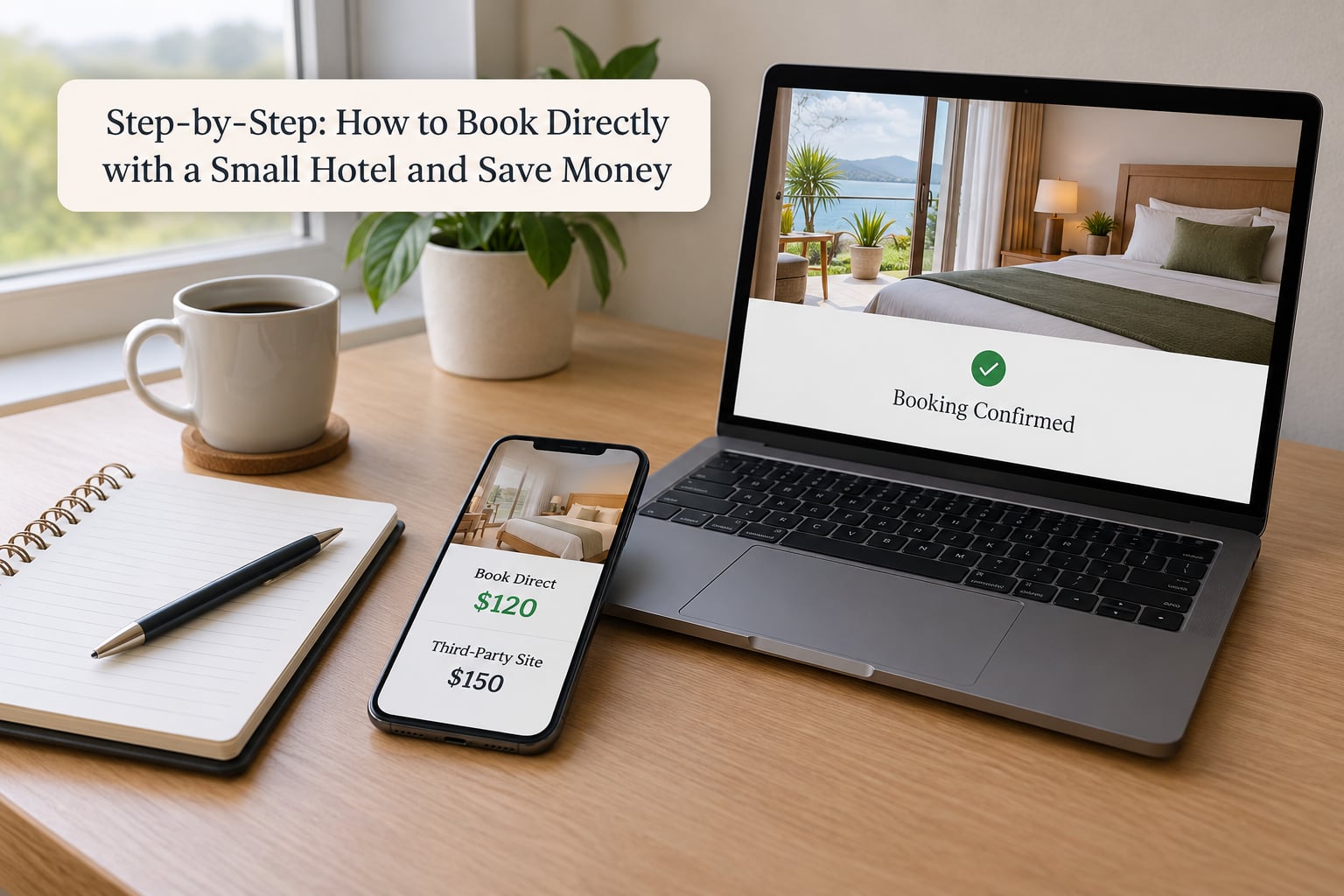
Compare totals, not headline nightly rates. A direct booking that looks 20 dollars cheaper can easily cost more once a destination fee, parking charge or a breakfast add-on is added at checkout.
Here is the difference that matters, side by side:
- Nightly rate: direct rates are usually lower or equal because the hotel avoids commission, but not always.
- Extras: a small hotel often waives parking, throws in breakfast or adds a welcome drink on a direct booking. OTA listings rarely show these.
- Cancellation flexibility: often the same terms, but the property deals with you directly and can usually extend a deadline.
- Loyalty points: usually lost at an independent property, since most have no chain programme.
- Support: an OTA gives you a 24-hour intermediary if something goes wrong. Direct gives you a front desk that may close at night.
- Dispute resolution: if the hotel overbooks and cancels you, an OTA can often refund or rebook you. Direct leaves you negotiating alone.
- Prepayment risk: prepaid discounts look cheap but tie up your money. Refundable direct rates are safer for a first stay.
Now the part that confuses people. Why is an OTA sometimes cheaper? Two reasons. Some OTAs buy inventory on a net wholesale basis and pass part of that discount on, which Priceline-style opaque sites push hardest. And some properties sign rate parity clauses committing them not to undercut their own public rates, so a direct booking is deliberately not the cheapest channel.
Either way, the answer is the same: check, then ask. Never assume which side wins.
3. Ask about flexible and value rates
Small hotels usually load their booking engine with four rate types, and the cheapest headline is not always the right pick. Prepaid and nonrefundable rates come at a discount because you take the risk off the property. Refundable rates cost more and pay you back if plans change. Pay-at-property rates are often the same as refundable with a different hold on your card.
Use the hotel’s own phrase for the floor price: ask for “the cheapest nonrefundable rate you have available.” Front-desk staff recognise that wording and will treat it as a normal request rather than a haggle.
If your trip is uncertain, take the refundable rate even when it is higher. The difference between the two rate types on a small property is often less than the cost of one wasted night.
4. Ask for the best available direct offer
Call the property, not a chain reservations line. Front-desk staff at an independent hotel set their own rates and can usually change them on the spot; staff at a chain’s toll-free number work from a script and cannot.
Here is the phone script that works. Keep it short and do not apologise for asking:
“Hi, I’m planning to stay at your property on [dates] for [number] nights in a [room type]. I found a rate on [OTA name] for [total] and your site is showing [total]. Since I’m booking direct anyway, is there anything you can do on the price? I’m also asking other places if they have AAA, AARP or corporate rates I might qualify for.”
By email, same content in writing:
Subject: Direct booking request, [dates], [room type]
Hello, I’m looking at a [number]-night stay from [date] to [date] for [number] guest. I found [total] on [OTA name] for the same room and cancellation terms, and [total] on your website. If you can match or beat that for a direct booking, I’d be glad to reserve today. I’m also eligible for [AAA / AARP / military / corporate] rates if those apply. What is the best rate you can offer me with free cancellation until [date]? Thank you.”
Three habits improve your odds. Name your eligibility out loud, because small hotels often hold unadvertised rates they only give when asked. Ask once, clearly, and accept the answer. And ask midweek or in shoulder season, when empty rooms make the owner far more willing to move a rate.
If the property cannot beat the price, pivot to value. Travel surveys run by Little Hotelier found 48 percent of travellers would book direct for a free room upgrade and 55 percent for free meals and drinks, while 45 percent preferred a gift card for a local restaurant. Those are the three asks to make instead.
5. Check what is included before you pay
Before you enter card details, work through this list. It is where direct bookings most often go wrong, because the property’s site and an OTA page are not always formatted the same way.
- Occupancy and destination taxes shown separately or bundled into the total.
- Resort, facility or amenity fees charged per night or per stay. City hotels increasingly add these.
- Parking charges, which at a small inn can be a real per-night cost or a free perk if you ask.
- Pet fees, if a dog is coming.
- Breakfast priced as an add-on. Work out whether the per-night cost is worth it to you before treating it as a saving.
- The deposit and hold on your card, and when it is released.
- The cancellation deadline, written down in a local timezone you can reason about.
- Identity requirements, since some properties hold a card on file at check-in.
Anything unclear, ask in writing before paying. A property that answers a fee question in one email is a property that will answer a problem later.
6. Confirm and save the reservation details
Ask for written confirmation with the total, the rate type, the cancellation deadline and the property’s direct contact details. Save the email, take a screenshot of the confirmation page, and put the property’s phone number in your phone rather than an OTA app.
Write down the rate and terms before you travel. If the hotel overbooks and has to move you, or you need to cancel, a direct booking means you are dealing with one small property and no intermediary, so the strength of your record and your tone on the phone are all you have.
Common Mistakes
Comparing the headline nightly rate instead of the total. Fees added at checkout are where “cheaper” bookings go wrong. Open each booking page to the final amount before you compare anything.
Assuming direct is always cheaper. It is often cheaper and sometimes not. Forum discussion on r/hotels is full of people who found the OTA total lower than the property’s own site, which is exactly why the comparison step exists. Check every time, and move on if the OTA wins.
Calling the wrong number. A chain’s toll-free reservations line cannot negotiate. Dial the property and ask for the front desk or the duty manager.
Forgetting eligibility rates. Many small hotels hold AAA, senior, military, student and corporate rates they never list online. Mention yours in the first message.
Asking repeatedly after a no. One clear request, then take the answer. A polite guest who accepts the first offer gets treated better on arrival.
Paying in full, early, for a first booking. A prepaid rate at an unfamiliar property removes your only protection if something goes wrong. Take the refundable rate the first time.
Losing the request for value. If the rate will not move, ask for the upgrade, the late checkout, the waived parking or the free breakfast. Most independent hotels can grant at least one and would rather give it than lose the booking.
When an online travel agency is still the better choice
Being straight about this matters, because direct booking is not free of trade-offs. An OTA gives you round-the-clock support, a dispute mediator when a property cancels you, refund handling if a booking goes wrong, and access to net rates or member-only prices that a small hotel cannot match. Opaque discount sites can be genuinely cheaper again, especially for flexible travellers who accept a named-property booking.
Independent hotels usually have no loyalty programme either, so a chain booking through its own site can earn points and status that a direct booking never will. If you travel chains often, that value is real.
The American Society of Travel Advisors has made a related point publicly: travellers do not reliably pay less when booking direct, and they get fewer perks and less support. That is a fair reading of the evidence. Direct booking pays off when you do the comparison and ask, not when you assume.
Frequently Asked Questions
Is booking directly with a small hotel always cheaper?
No. Direct rates are usually lower or equal because the hotel avoids the 15 to 25 percent commission it would pay an online travel agency, but some properties sign rate parity clauses that commit them not to undercut their own public prices, and discount sites buy inventory at wholesale net rates. Always compare the complete total including taxes and fees before assuming either side wins.
Can I ask a hotel to match the price on a booking website?
Yes, and at an independent property it often works. Send the front desk the rate you found, the room type and the cancellation terms, and ask whether they can match or beat it for a direct booking. Name any AAA, AARP, military, student or corporate rate you qualify for at the same time. One polite request is enough; accept the answer gracefully.
Should I pay a small hotel directly or through a booking platform?
Pay direct if you have compared the full totals and want the perks, flexibility and a real relationship with the property. Use a platform if you want 24-hour support, dispute mediation if the hotel overbooks, or if the platform rate is genuinely lower after fees. Solo travellers booking a first stay at an unfamiliar property usually get more protection through the platform.
Do direct hotel bookings include taxes and fees?
They can, but the presentation is inconsistent. A property’s own site may show a low nightly rate with occupancy tax, destination fees, parking and pet charges added later, while a platform shows one total. Look for the final amount at the last step of checkout, and ask in writing about any resort or facility fee before paying so there is no surprise at the desk.
Are direct bookings easier to change or cancel?
Often yes, because you are dealing with one small property rather than a platform’s system, and a manager can usually extend a deadline or move a reservation where an automated process cannot. You do need to follow the stated cancellation window, and you should save the terms in writing. Keep your own record, since there is no intermediary holding it for you.
Do hotel loyalty programs apply to independent small hotels?
Rarely. Most independent properties, inns and bed and breakfasts have no chain loyalty programme, so booking direct means no points and no status benefits. A small number of independent brands run their own schemes, and some accept points from partner networks, so check before booking. If points matter to you, the chain’s own site or a platform is often the better channel.
Conclusion
Start with the property’s own website, work through to the final total on both sides, and then send the front desk one polite message naming the lower rate you found and any rate you qualify for. That takes fifteen minutes and is the whole method. If they cannot move on price, ask for the upgrade, the breakfast or the waived parking instead.
Updated for October 2026.