Here is the short version: leave two to five dollars in cash for housekeeping each service day, write “Housekeeping” on it so nobody mistakes it for a fee, and place it on the pillow or the desk before you walk out of the room. That is how to tip hotel housekeeping in the United States, and it takes about fifteen seconds per morning.
Tipping is discretionary, not required. No US hotel can bill you for a housekeeping gratuity you did not agree to, and etiquette experts are pretty clear that skipping it makes you a guest nobody complains about rather than a cheapskate. Still, it is the one hotel job where a small daily amount goes further than most guests realize, because the person who resets your room works invisibly, on their feet, while you are out.
The American Hotel & Lodging Association puts the common range at roughly two to five dollars per service day, which is where most of the advice below starts. As of 2026, that figure still travels well from a roadside motel to a city hotel.
Table of Contents›
- What You Need
- How to Tip Hotel Housekeeping in the United States: Step-by-Step
- 1. Check the hotel’s housekeeping policy first
- 2. Choose how much to tip hotel housekeeping for your stay
- 3. Decide between cash and a digital tip
- 4. Leave the tip discreetly and label it
- 5. Thank the housekeeping team when you can
- Common Mistakes
- Frequently Asked Questions
- How much do I tip housekeeping on a 300 dollar per night room?
- Do you tip housekeeping on the last day?
- Is 20 dollars a good tip for housekeeping?
- How much do I tip housekeeping at a five-star hotel?
- Should I tip housekeeping if I skip daily cleaning?
- Can I add a housekeeping tip to my room charge instead of leaving cash?
- Conclusion
What You Need
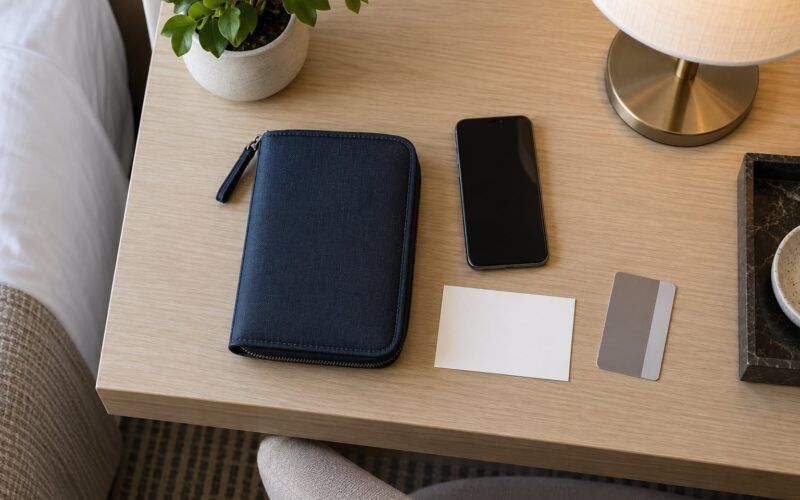
Four things, and none of them expensive. The first is small bills, ideally fives and singles, because a twenty in a hotel room reads as a bigger statement than most guests mean it to be.
The second is something to write on. A plain sheet of paper or a small envelope is fine. What matters is the word “Housekeeping” in clear letters, plus your room number if the property has more than one floor and the tip lands outside the room.
The third is a rough sense of your own stay: room type, how many people are in it, how many nights, and whether housekeeping is coming daily or only when you ask. A two-bathroom suite with three adults in it is a different job than a single queen room for one traveler, and a hotel that cleans every other day changes the math from per night to per service day.
The fourth is the hotel’s actual policy. Check the website, the room information card, your folio at checkout, or just ask the front desk. Many US chains run opt-out daily housekeeping programs, and the ones that do will usually tell you plainly whether gratuities are expected, optional, or handled through an app.
How to Tip Hotel Housekeeping in the United States: Step-by-Step
1. Check the hotel’s housekeeping policy first
Start by finding out whether the property has a housekeeping tipping policy at all, because major US brands handle this differently. Some post a short note about discretionary gratuities on the in-room card. Some have a digital tip option in the app that lets you add a gratuity after checkout. Some include housekeeping in the nightly rate and treat a tip as purely optional.
Ask the front desk one specific question: “Does housekeeping have a tipping policy, and does a tip get passed on to the attendants?” The answer tells you whether cash in the room even matters. If the hotel runs a digital tip option, find out how the money is split before you rely on it, because some programs distribute tips evenly across the housekeeping department rather than crediting the person who cleaned your room.
Resorts, casino properties, timeshares, and extended-stay suites follow their own conventions. Extended stays usually mean scheduled weekly cleanings, so the tip follows the cleaning, not the calendar. Casino resorts often fold housekeeping into a larger service charge, which is a different line item entirely from a gratuity.
2. Choose how much to tip hotel housekeeping for your stay
Two to five dollars per service day is the AHLA baseline, and it is a flat number rather than a percentage. This is the mistake almost every nervous guest makes: they calculate 15 or 20 percent of a 300 dollar room rate and end up leaving sixty dollars under a pillow, which reads as confusion rather than generosity and is not what the guidance asks for. A 300 dollar room gets the same five dollars as a 90 dollar room unless something unusual happened in it.
Property type moves the range more than room price does:
| Property type | Typical tip per service day (US dollars) | Four service days (US dollars) |
|---|---|---|
| Budget and limited-service | 2 to 3 | 8 to 12 |
| Mid-range full-service | 3 to 5 | 12 to 20 |
| Luxury and boutique | 5 to 8 | 20 to 32 |
| Resort and casino | 5 to 10 or more | 20 to 40 |
Here is what a small daily amount adds up to over a longer stay, which helps if you travel often:
| Service days | At 3 dollars per day | At 5 dollars per day |
|---|---|---|
| 2 | 6 | 10 |
| 4 | 12 | 20 |
| 7 | 21 | 35 |
| 10 | 30 | 50 |
If you are traveling solo, tip per room, not per person. One guest in one room is still one room to reset. Where a group shares a room, splitting the tip by the number of adults is fair and nobody will think twice about it.
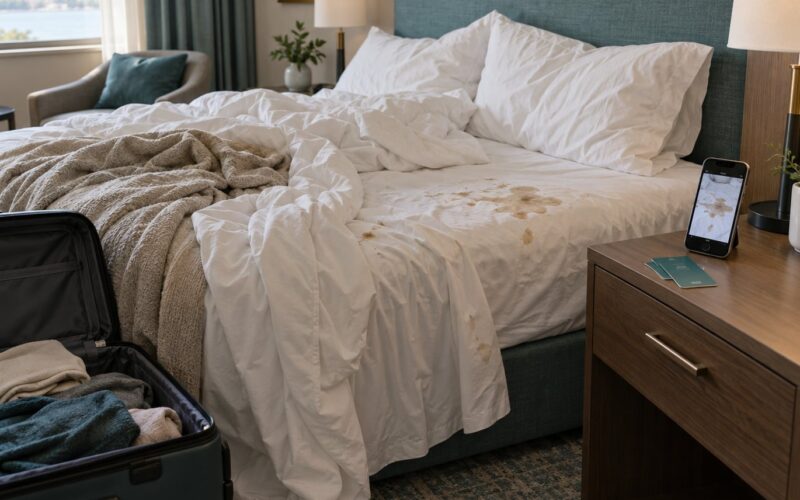
Go above five dollars when the work was genuinely heavier: extra occupants in the room, two bathrooms, a suite with a living area, kids’ toys left out, a diaper bin that needed emptying, an unreasonable stain, or repeated requests for extra towels and toiletries during the stay. Those are the situations the AHLA-style baseline does not cover, and they are the ones attendants notice.
Housekeepers themselves describe small and consistent daily amounts as more useful than one large sum at the end. Several wrote on Reddit that a steady few dollars each morning means something, while a single twenty on departure is a nice surprise that arrives too late to change how a shift felt.
3. Decide between cash and a digital tip
Cash still reaches the person fastest and it is the simplest default. It gets claimed during the clean, when the attendant is standing in your room with your tip in view, and there is no question about how it is later divided.
Charging the tip to your room folio is tidy and works well in properties that have an established distribution process. The catch is that the money usually lands in a pool or a payroll line rather than with one named person, so if your reason for tipping was to thank a specific attendant, the thank-you gets diluted.
A tip card left with an amenity delivery follows the same logic. The person who hands you extra towels is often a different employee from the one who cleans the room, and sometimes from a different department, so a tip there reads as a thank you for the delivery rather than a housekeeping gratuity.
Whatever you pick, ask the front desk how it is distributed. That one question removes most of the doubt, and it takes ten seconds at check-in.
4. Leave the tip discreetly and label it
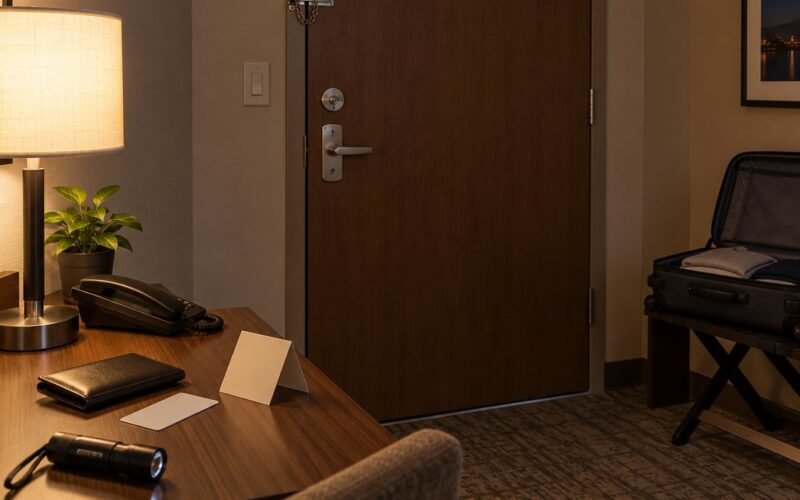
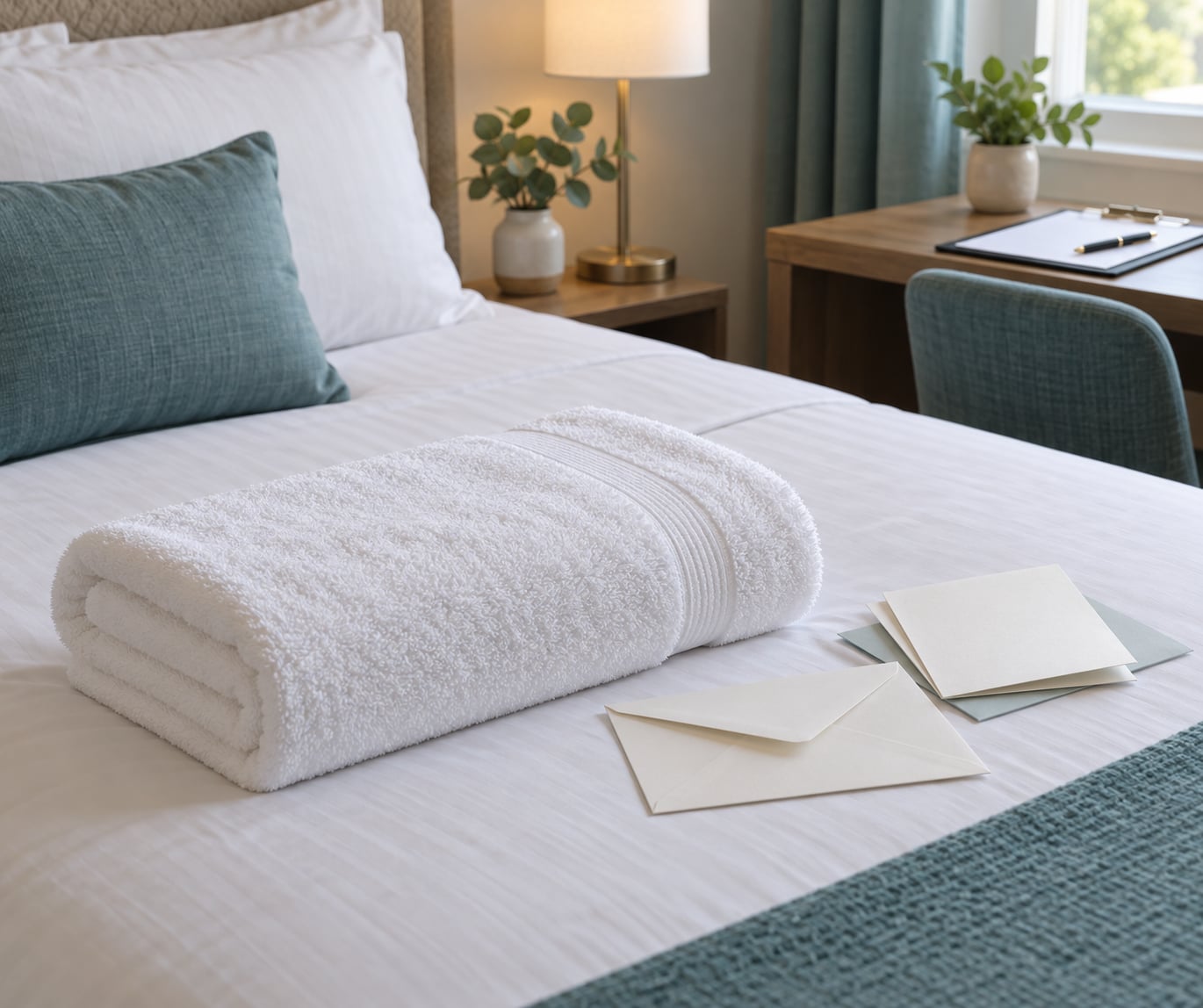
Write “Housekeeping” or “For the housekeeping team” on the note, add your room number, and place it where the attendant will see it before the closet gets opened: flat on the pillow, on the desk, or tucked inside the closet door on the doorknob. Then leave the room and give them the space to work undisturbed.
Do not leave loose unmarked cash on the nightstand. Housekeeping managers post signs about unclaimed money for a reason, and what happens to it is anyone’s guess. It may get turned in, it may get claimed by someone who was not in your room, or it may sit in a lost and found drawer.
Skip the reused envelope trick, too. Hotel delivery slips and guest-service cards often carry printed instructions about charges or feedback, which turns a five dollar thank-you into an accounting problem for the front desk. A blank piece of paper avoids the confusion completely.
Tip each morning rather than once at checkout. Room assignments rotate, and attendants frequently share tips with the colleagues covering the same floor, so a single end-of-stay tip can end up with somebody who never entered your room. Daily tips land with the person who did the work, on the day they did it.
Include the checkout clean. That final service is usually the heaviest of the stay, since the attendant strips the linens, empties every bin, and resets the whole room for the next arrival. Leave your last tip the same way as the others, right before you head out.
5. Thank the housekeeping team when you can
A line in a review helps more than people expect. Reviews on travel sites often mention housekeeping by name, and a specific mention, “the room was reset carefully every morning,” carries weight with the staff who read them. Guests have also mentioned writing “For the housekeeping team” on a note and being told by staff it made their week, which tells you the simple version works.
You do not need to hunt anyone down to say thanks. Nobody wants a guest waiting in the hallway with a dollar bill. If you happen to cross paths, a sincere thank you is plenty, and asking for a return room on your next visit is a bigger compliment than money to most housekeepers.
Report maintenance problems through the front desk rather than assuming a tip fixes them. A broken shower or a dead lamp is a work order, not a gratuity problem.
Common Mistakes
The most common error is treating housekeeping like a restaurant. Calculating a percentage of the room rate produces figures that belong in a restaurant bill, not a hotel room. Use the flat daily amount instead.
The second is tipping once at checkout. With attendant rotation and floor-level tip sharing, that single tip frequently goes to someone who never cleaned your room. Daily is both fairer and easier.
The third is unmarked cash. It is the version most likely to be lost, misread as a stray bill, or claimed by the wrong person. Label it, always.
The fourth is tipping roles that were never part of housekeeping. The front desk, the night auditor, and maintenance are salaried or hourly staff with different pay structures, and a tip there is not expected. Housekeeping attendants are also different from the bellman who carries bags, the valet who parks the car, and the doorman who holds an umbrella. Those roles have their own norms, and the bellman in particular is usually tipped per bag rather than per day.
The fifth is skipping the tip after opting out of daily cleaning. Opting out changes the schedule, not the expectation. If housekeeping still cleans your room on your requested days, tip on those days. Only the checkout clean is guaranteed on every stay, so at minimum tip that one.
The sixth is treating a service charge as a gratuity. A resort fee, destination fee, or posted service charge on the folio covers the property’s operating costs. It is not the same thing as a tip for the person who cleaned your room, and plenty of guests who thought they had already paid up were surprised by how much housekeeping made.
On the other side of the ledger, a few habits cost nothing and genuinely make the job faster. Stripping your bed and stacking linens, emptying the bins, and disposing of trash in the right stream all shave real time off a checkout clean. Reusing the same towel and hanging it to dry instead of throwing it away saves laundry. Using the extra toiletries rather than taking every bottle keeps restocking simple. These are small things, but they are the difference between a 25 minute room and a 45 minute room.
For anyone coming from a country where tipping is not customary, housekeeping in the US is the least expected tip in the hotel. It is optional, it is small, and no one will chase you down over it.
Frequently Asked Questions
How much do I tip housekeeping on a 300 dollar per night room?
Two to five dollars per service day, the same as on a much cheaper room. Housekeeping is not tipped as a percentage of the room rate, so a 300 dollar room does not call for a sixty dollar tip. Go above the range only when the room was unusually demanding, such as two bathrooms, several adults, or heavy trash.
Do you tip housekeeping on the last day?
Yes, if the room is being cleaned before you go. The checkout clean is usually the most thorough service of the whole stay because linens get stripped, every bin emptied, and the room reset for the next guest. Leave that final tip the same way as the others, labeled and placed on the desk or pillow before you head out.
Is 20 dollars a good tip for housekeeping?
It is generous, not wrong, though most guests who leave that much are doubling a daily amount out of guilt. The useful range is two to five dollars per service day at a standard property, higher at luxury and resort hotels. Leaving 20 dollars daily is fine on a suite where housekeeping genuinely did extra, and it works better spread across the stay than as one lump sum.
How much do I tip housekeeping at a five-star hotel?
Five to ten dollars per service day is the common range at five-star properties, and top-end resorts can justify more. Service at that level is usually a fixed daily service rather than an hourly room rate, which is another reason not to use a percentage of the folio. Check the property’s policy, since luxury hotels more often than not describe gratuities as discretionary.
Should I tip housekeeping if I skip daily cleaning?
Yes, on the days the room is actually serviced. Opting out of daily housekeeping changes the schedule, not the custom, and the checkout clean still happens. On a hotel that cleans every other day or only on request, tip per service day rather than per night, so a ten night stay with three cleans gets three tips.
Can I add a housekeeping tip to my room charge instead of leaving cash?
Usually yes, and many hotels now offer it through the app or at checkout. The trade-off is distribution: a folio charge often goes into a pool or a department line rather than to the specific attendant who cleaned your room, while cash in the room is claimed on the spot. Ask the front desk how the property handles it before you decide.
Conclusion
Do one thing first: ask the front desk whether the hotel has a housekeeping tipping policy, since that answer decides whether cash in the room matters. Then keep four small bills in your bag, write “Housekeeping” on a note each morning, and place it on the pillow before you go. Tip on the checkout clean too, and skip the percentage-of-room-rate math entirely.