To track travel spending on a trip, set two numbers before you leave — a total ceiling and a daily limit — then write down every purchase the same day it happens, in the currency you paid, with the exchange rate noted. Review the running total for five minutes each evening. That is the whole system, and it takes about ten minutes a day.
The reason people lose track is not carelessness. On a trip, spending feels normal: a coffee here, a taxi there, and by day six you discover you are well over what you thought. Tracking travel expenses turns that vague feeling into a number you can still act on.
Table of Contents›
- How to Track Travel Spending on a Trip: What You Need
- How to Track Travel Spending on a Trip: Step-by-Step
- How to Track Travel Spending on a Trip: Common Mistakes
- Frequently Asked Questions
- What is the easiest way to track spending?
- How should I record expenses paid in another currency?
- Should I track shared travel expenses separately?
- How often should I review my travel budget?
- What should I do if I spend more than planned?
- Do I need to keep every receipt while traveling?
- Conclusion
How to Track Travel Spending on a Trip: What You Need
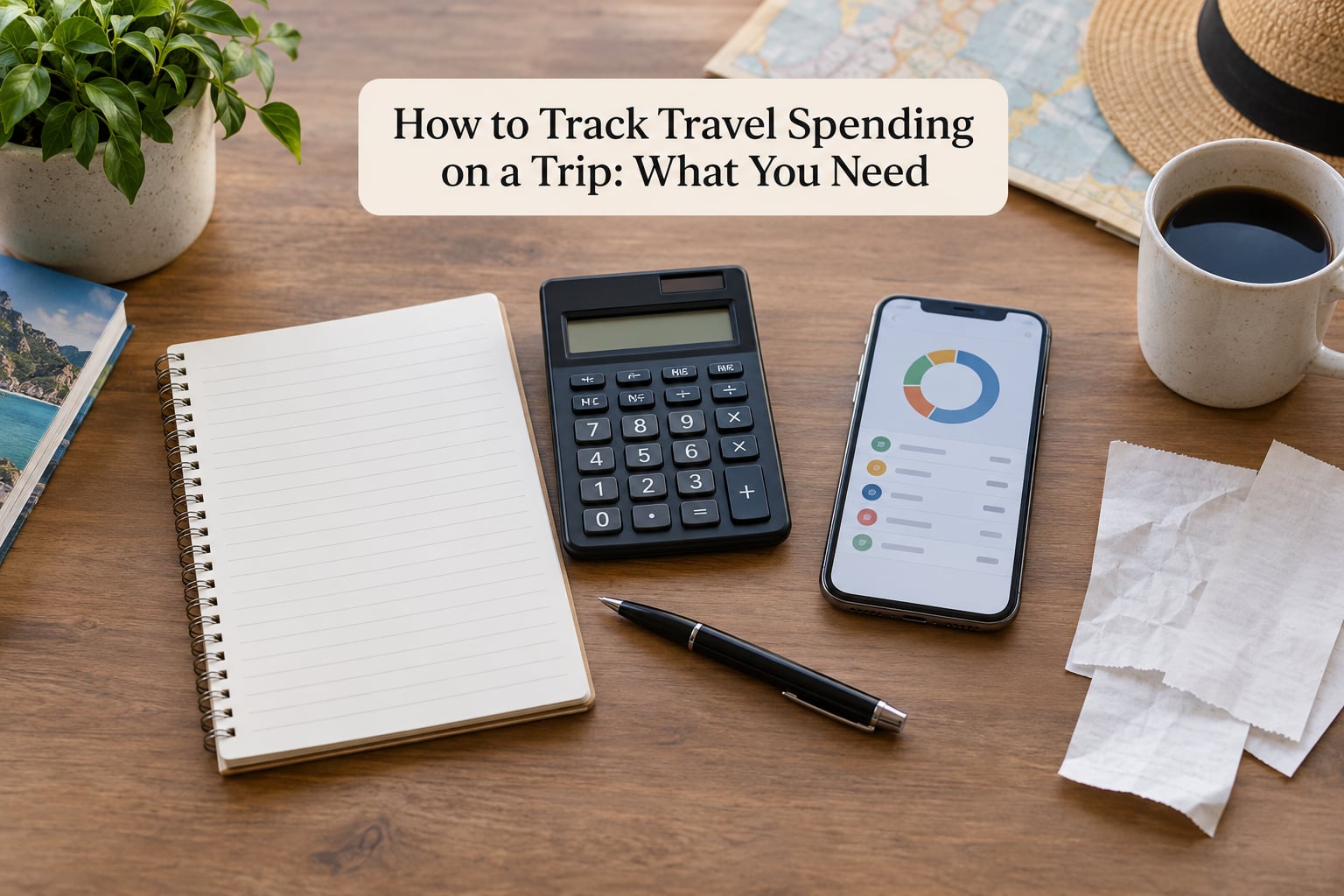
Six things, and most of them you already have. A per-trip ceiling in your home currency. A daily limit worked out from that ceiling. One place to record entries, whatever that is. Access to your card and bank records for cross-checking. The current exchange rate for each currency you will meet. And a fixed five-minute review at the end of each day.
The ceiling is the only number that requires real thought. Everything after it is bookkeeping. Split your ceiling into a daily figure by dividing by the number of days, then add a buffer for the arrival and departure days, which are usually the most expensive.
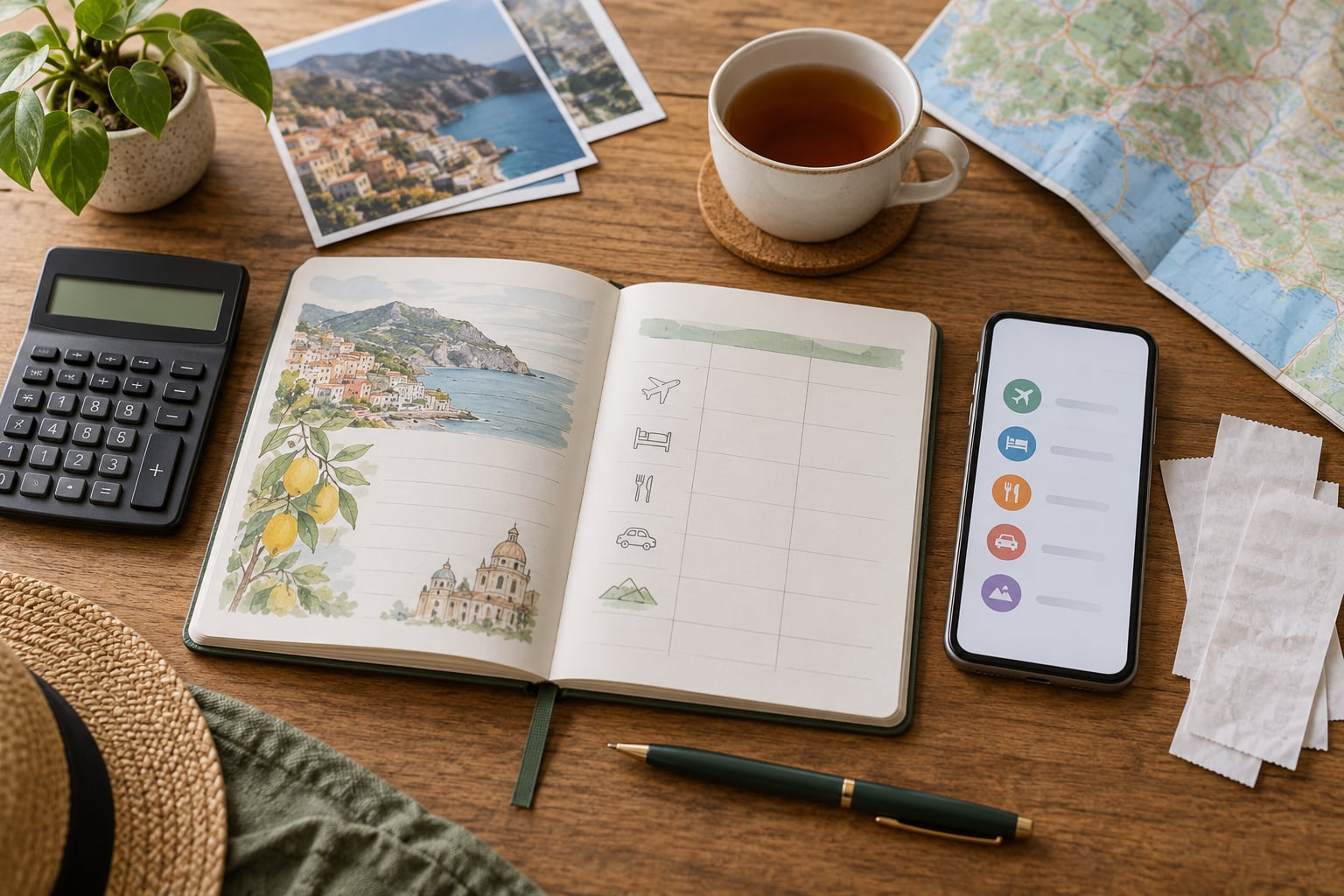
A typical traveller splits into three camps: die-hard spreadsheet people, general budgeting-app users, and travel-specific app users. Forum threads on tracking show the spreadsheet camp reporting that manual entry works fine and beating out anything fancier, while budgeting-app users praise those apps mainly for handling several cards at once. Pick the camp you are already in. The system you abandon on day three is worth less than the humblest one you keep.
Here is how the main options compare.
| Method | Cost | Works offline | Multi-currency | Best for |
|---|---|---|---|---|
| Paper notebook | Free | Always | Manual conversion | Short trips, cash-heavy travel, anyone without a reliable signal |
| Spreadsheet | Free | Yes, if you keep a copy on the device | Add a second column and a stored rate | Travellers who like seeing the whole picture and building next year’s budget from it |
| General budgeting app | Free tier or subscription | Varies by app | Usually, check before you fly | Multi-card spend and automatic categorisation |
| Travel-specific app | Free tier or subscription | Check, it is the main constraint | Usually built in | Multi-country trips, per-trip views, receipt capture |
| Bank and card export | Free | No | Handles it | Reconciling at the end of the trip, catching what you forgot |
Your payment method decides how much work the tracking is. Cash is the hard one: nothing records it, so the withdrawal itself has to be an entry, and each purchase out of it is either a note or a subtraction. A card payment appears on a statement days later, which is too late for decisions but perfect for reconciliation. A prepaid travel card sits in between, and trackers usually read them as a normal account.
That gap is why cash-heavy trips need a rule: decide in advance how much cash you will draw, record the withdrawal as a line item with the fee, and log the balance in your pocket at the end of each day. A quick count beats trying to remember what you spent on coffee.
Foreign transaction fees and ATM fees are where budgets quietly leak. Most card networks charge a percentage on purchases made abroad, and ATM withdrawals often add a fixed fee on top of the rate. Log those as their own category, not folded into meals or transport, or they disappear into the daily average.
How to Track Travel Spending on a Trip: Step-by-Step
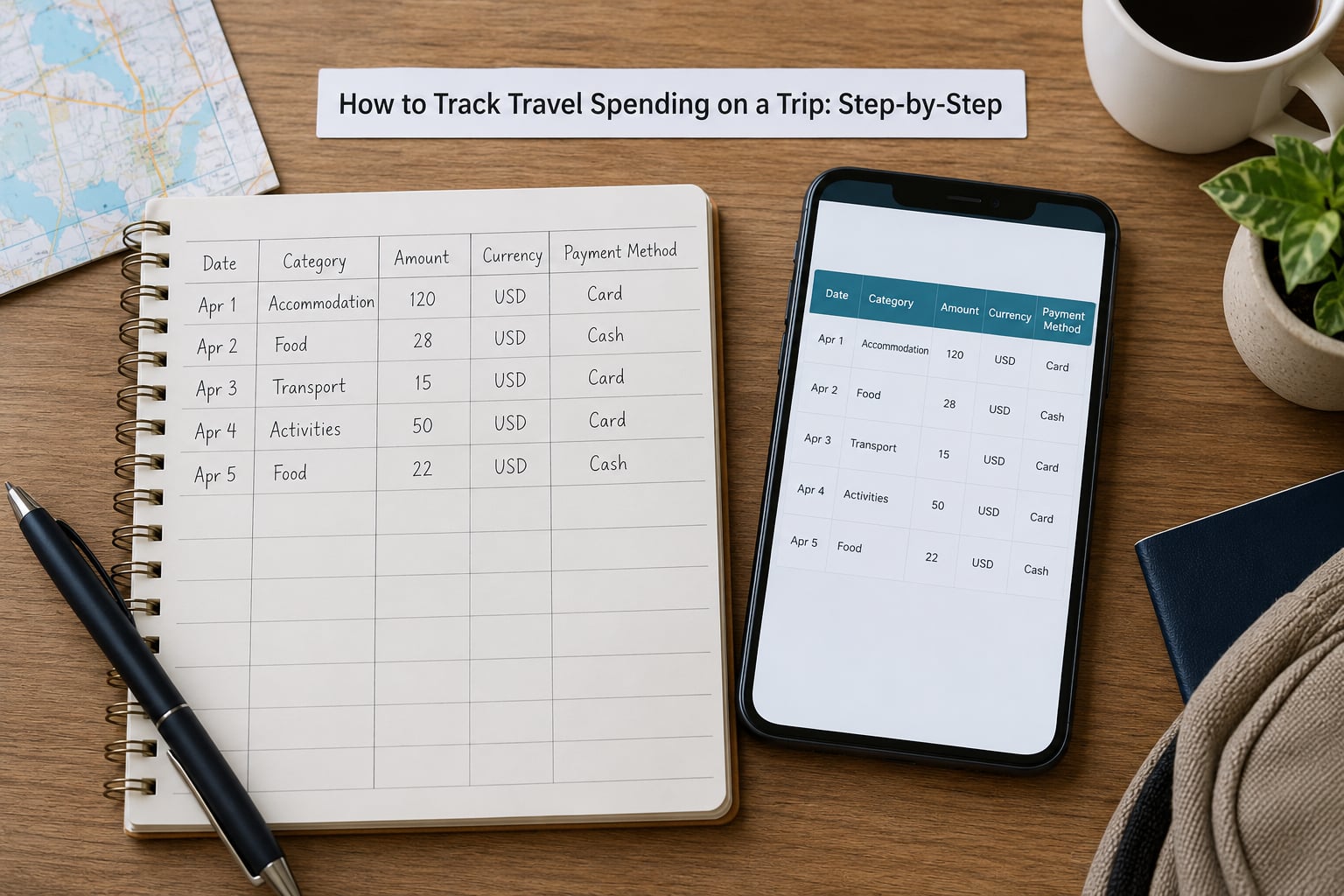
Here is the repeatable routine. Six steps, and you can run it on any trip in any currency.
- Set the per-trip ceiling and the daily limit before you book anything else.
- Choose one capture place and set it up now, while you are on reliable wifi.
- Record each purchase the day it happens, in the currency you paid.
- Store the exchange rate with the entry whenever you pay in another currency.
- Log cash withdrawals and fees as separate lines, not folded into spending.
- Review the running total for five minutes each evening and adjust tomorrow.
Step 1 in more detail. Build the daily number rather than guessing it: a rough daily cost for the destination, multiplied by the number of days, plus flights and anything already paid. Then split the daily figure by category — accommodation is usually fixed per night, while meals, transport and activities are yours to steer. Day six is not the day you discover the budget was unrealistic.
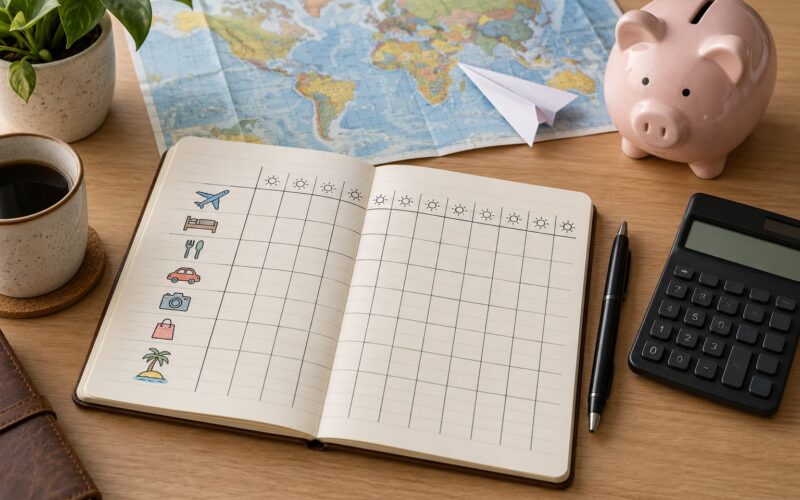
Step 2. If you are using a spreadsheet, set the columns up before departure so you are not designing anything in an airport. These twelve columns cover everything you will want later:
| Column | What goes in it |
|---|---|
| Date | The date of the purchase, not the date you typed it |
| Amount | The number as it appeared on the receipt |
| Currency | Local or home |
| Home currency amount | What it cost you after conversion |
| Rate used | The rate at the point of sale, written down |
| Category | Accommodation, transport, meals, activities, fees, insurance, other |
| Payment method | Cash, card, prepaid |
| Paid by | You, or which traveller |
| Shared | Yes or no, if you are not alone |
| Receipt photo | A link or file name |
| Running total | The daily total, so overspend is visible instantly |
| Notes | Anything the category does not explain |
The rate column is the one people skip and then regret. If you only store the converted amount, next year you cannot tell whether the trip was expensive or the currency moved. Six months later that number is a mystery.
Step 3. Same-day entry works when you are paying by card, because the notification already tells you the amount. When you are paying cash, batch it at the end of the day instead — that is more realistic than promising live entry you will abandon on day two.
Step 4, the no-signal problem. Apps that sync nothing while you are offline are useless on a mountain or a ferry. The workaround most travellers settle on: take a photo of the receipt, write the amount and category on the lock screen or in a paper note, and enter everything in one batch when you get signal. Screenshots of your card notifications work the same way and cost nothing.
Since it is a single phone, keep one copy of the sheet or note in an email to yourself or a cloud drive you can reach from any browser. Losing the device should not mean losing the trip’s financial record.
Avoid entering anything sensitive on hotel or cafe wifi. A budget sheet contains dates, routes and amounts, which is exactly what someone would want for a theft. Waiting until you are back on your own connection costs nothing.
Step 5. Record the ATM withdrawal as an entry: amount in local currency, fee charged by the machine or your bank, and what you planned to get from it. Splitting a withdrawal into a budget line keeps it from looking like an expense when it is really a float.
Step 6. The evening review is where the system earns its keep. Look at two things: the running total against the daily limit, and the category that is drifting. One dinner that pushes you over is not a problem. The third dinner in a row is.
If you are travelling with others, keep the same columns and add a name in the paid-by column, plus a yes or no for whether the cost is shared. Shared items get divided at the end rather than negotiated over dinner — travellers who hand-manage it describe the role of unofficial group accountant as genuinely stressful, and apps like Splitwise exist to remove exactly that conversation. Solo trips skip all of it.
If the trip is for work, check your employer’s rules before you leave. They usually require a receipt for anything above a small threshold and may cap meals per day, so capture more than feels necessary and add a column for billable or personal.
How to Track Travel Spending on a Trip: Common Mistakes
Most tracking fails in the same six ways, and each has a simple correction.
Forgetting the small purchases. Coffee, water, small snacks and tips are where a day quietly goes. The fix is not discipline; it is a cash rule. Draw one amount for the day, and when it is gone, that is the end of discretionary spending. Cash runs out visibly, cards do not.
Mixing currencies. Adding euros to dollars in the same column tells you nothing. Keep the amount you paid and the home-currency equivalent side by side, with the rate written in. This is the single most common complaint in traveller forums, where converted amounts end up as mystery numbers nobody can reconstruct.
Omitting shared costs. Solo travellers skip this and still get an incomplete picture, because a friend pays for the taxi. Log who paid, not just what you spent, and mark shared items so settlement is arithmetic rather than memory.
Relying on memory. Reconstructing a week of spending from a notebook with no figures produces fiction. Write the number at the time, or photograph the receipt. The version of you who tries to remember on the flight home has already lost.
Ignoring fees. Foreign transaction fees, ATM charges, luggage fees, seat fees and city transport passes all sit outside the daily figure in people’s heads. Give them a category. A week of small fees is usually the gap between the trip you planned and the trip you paid for.
Reviewing too late. A single review at the end tells you what happened and offers no options. Five minutes a day is what makes it a control rather than a record.
And if you are over budget mid-trip, the response is triage, not despair. Look at what is actually still ahead of you: the remaining nights, the booked transport, the unbooked excursions. Cut the discretionary remainder, switch from card to cash so the limit is visible, and check whether any large fixed cost can still be moved or cancelled. Travellers who treat the daily limit as a hard ceiling rather than a guideline rarely need more than that.
Frequently Asked Questions
What is the easiest way to track spending?
The easiest method is one page with a daily cap, filled in the same way every evening, plus your card statements for cross-checking at the end of the trip. If you pay a lot in cash, record one daily withdrawal as your float and subtract what is left at night. People who batch entries at the end of the day usually stick with it longer than those who promise live entry and quit on day two.
How should I record expenses paid in another currency?
Record two figures on every line: the amount you actually paid in local currency, and the same purchase converted to your home currency using the rate on the day. Write the rate into its own column. Without it, a converted total cannot be explained later, and you cannot tell whether a trip was expensive or the exchange rate moved against you.
Should I track shared travel expenses separately?
Yes, but simply. Add a paid-by column with a name and a yes or no for shared items. Divide shared costs at the end of the trip instead of splitting each payment as it happens, which is where the arguments start. Shared apps handle the arithmetic, though travellers who do it manually by hand often find the bookkeeping more tiring than the money.
How often should I review my travel budget?
Once a day, in the evening, for about five minutes. Look at the running total against your daily limit and at whichever category is drifting upward. Daily reviews catch a slow leak early enough to change tomorrow. Reviewing weekly means you find out on the last day, when there is nothing left to adjust.
What should I do if I spend more than planned?
Triage what is still ahead: remaining nights, booked transport, anything not yet paid or reserved. Trim the discretionary remainder, switch to cash so the limit becomes visible, and look for one large fixed cost that can still be moved or cancelled. Treat the daily number as a ceiling rather than an average and most overspending corrects itself the next day.
Do I need to keep every receipt while traveling?
Photograph them the same day and sort them into one album per week. Receipts matter for card disputes, expense claims and for working out what a category really cost. For a personal trip you can let small purchases go, but keep anything paid by card, anything above your employer or insurer’s threshold, and anything you may want to query.
One more thing belongs here: after the trip, do not delete the sheet. Totalling each category by day and comparing it against what you assumed before departure is the cheapest way to build a realistic budget next time. Bank rules, exchange rates and app features all change, so check the details for your cards and any tracker you rely on shortly before you leave rather than trusting a note from an old trip.
Conclusion
Start tonight, not at the airport: pick a ceiling, divide it by your days of travel, and set up one page to record entries. That is the whole first task, and it takes twenty minutes.
Then keep the five-minute evening review, which is the part that actually protects the budget. By the end of the trip you will know your real daily cost by category and in your own currency, which is a far better number than any estimate you could have made beforehand.
Adjust the system as you go. Cash-heavy trips need a daily float and an end-of-day count; card-heavy trips need a statement check at the end; multi-country trips need the rate column filled in every time. The version you actually keep is the right one.
Last reviewed and updated for 2026. App features and card terms change, so verify the specifics for your own bank before departure.