Yes, you can see a huge museum in two hours, but only if you treat it as a highlights run rather than an attempt to cover the collection. Two hours buys you roughly 15 to 25 works looked at properly, two or three sections done well, and a memory of the building’s signature rooms. It does not buy you everything, and any guide that promises otherwise is selling something. Here’s how to spend the 120 minutes so that you walk out with a handful of pieces you actually remember instead of sore feet and a blur of rooms.
The biggest mistake is arriving without a route and hoping to improvise. Large encyclopedic museums — the Met, the Louvre, the British Museum, the V&A — are physically huge and only loosely organised, so aimless wandering burns the clock on corridors and re-orientation. Decide what you want to see before you buy the ticket.
Table of Contents›
- What You Need
- Step-by-Step: How to See a Huge Museum in Two Hours
- 1. Set the route before you enter
- 2. Spend the first 10 minutes on orientation
- 3. Start with the museum’s signature collection
- 4. Take one deliberate break
- 5. Use one short temporary exhibition or immersive room
- 6. Finish with one memorable gallery
- 7. Make the last five minutes count
- Common Mistakes
- Quick Tips for a Two-Hour Museum Visit
- Frequently Asked Questions
- Is 2 hours enough at the Met?
- Can you do the Met in 3 hours?
- How long does it take to visit a museum?
- Why do I get so tired in a museum?
- How long does it take to walk around the British Museum?
- How do I avoid crowds at a huge museum?
- Conclusion
What You Need
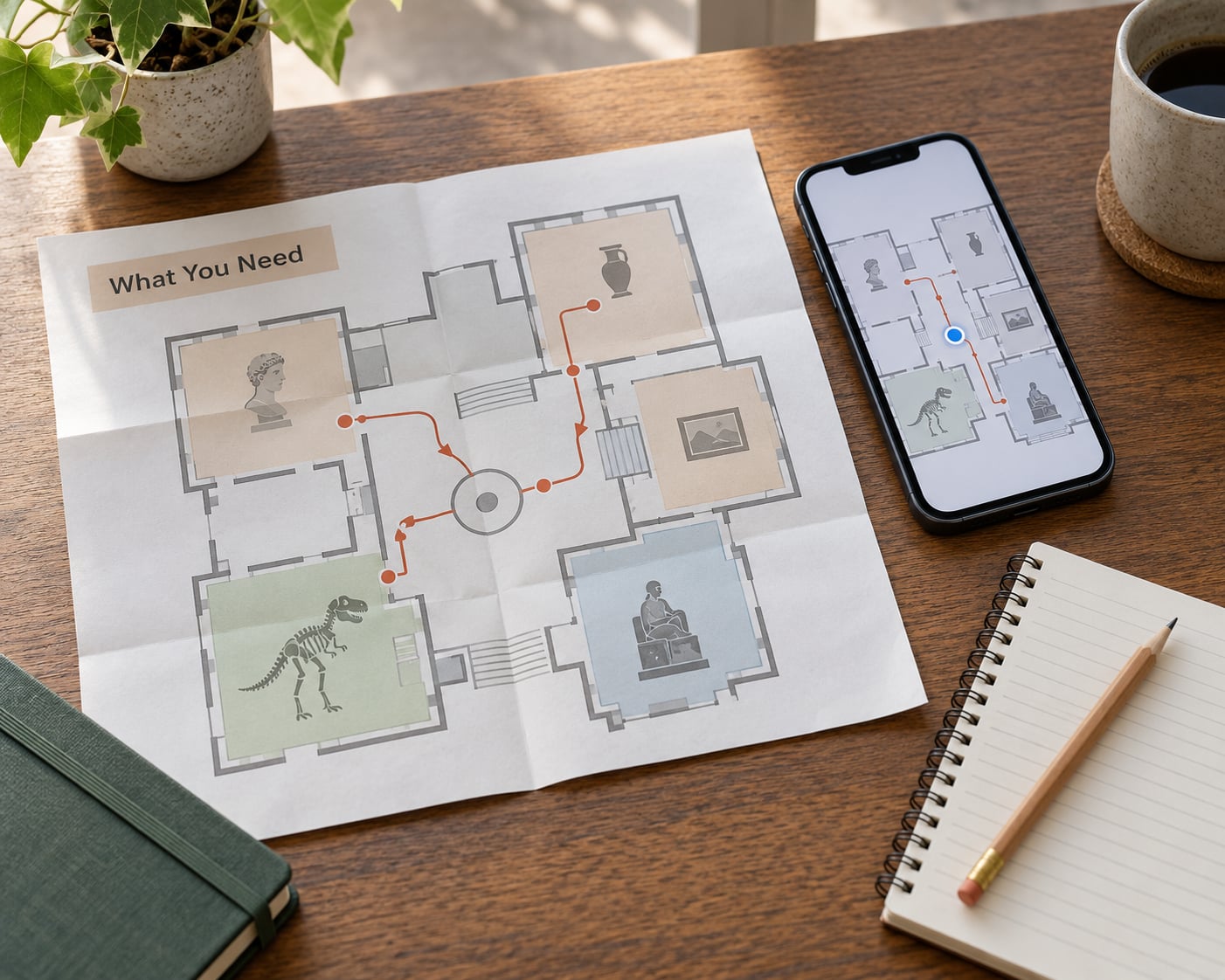
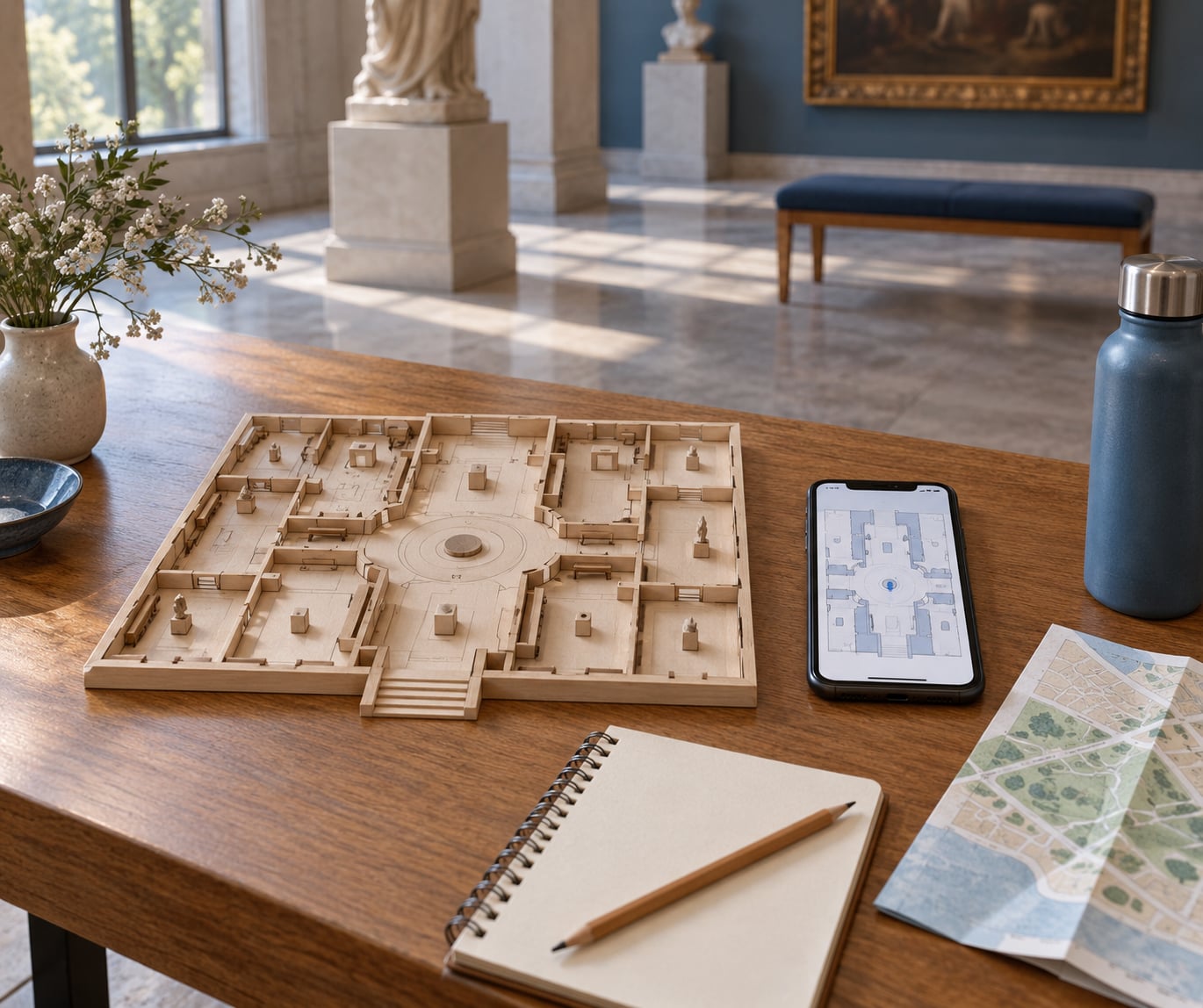
Six things, and none of them expensive. A floor plan, whether printed or in the museum’s own app, is the one that matters most — most large institutions publish one for free before you arrive and hand out paper copies at the desk. With it, you can mark your entrance, your three anchors and your exit before you cross the threshold.
Opening hours and the current exhibition list matter just as much, because a wing can be closed for installation on a day that has nothing to do with anything you planned. Check the museum’s official visitor information page the morning you go, not the night before. Schools, holidays and late-evening openings all change the crowd picture.
Ticket and timed-entry rules decide how many minutes you lose before the clock even starts. A booked slot means your queue is short; a walk-up means the queue is not part of your budget. Book the slot, note whether general admission covers special exhibitions, and check the bag size limit — a large backpack sent to a cloakroom can quietly cost you ten minutes at both ends.
Then the physical kit. Supportive shoes, a full water bottle, and a charged phone are the difference between a good two hours and a bad one. Most museums have benches, cafés and water points; find them on the plan so you know where you are going to sit before you need to.
Finally, write down two times: when you will enter and when you must be out. Two hours means two hours inside, so subtract the exit, the gift shop and the walk to the station from the window you actually have.
Step-by-Step: How to See a Huge Museum in Two Hours
Here is the budget I use. Adjust the block sizes to suit the museum, but keep the shape: get in and orient fast, then two real viewing blocks with a seated break between them.
| Minutes | What you do | Why it holds up |
|---|---|---|
| 0–10 | Clear security, collect the map, confirm what is open | Cloakroom and orientation eat more time than people expect |
| 10–35 | Signature collection or anchor room | See the works the museum is known for while you are fresh |
| 35–60 | First focused gallery block | Twenty-five minutes is enough to read a room properly |
| 60–70 | Seated break, water, review the plan | Scheduled rest beats collapsing at minute 100 |
| 70–85 | One short temporary exhibition or immersive room | Fifteen minutes in something unfamiliar is plenty |
| 85–115 | Final memorable gallery | Slow down; this is the part you will picture later |
| 115–120 | Favourite piece, essentials only, exit | Leaving on time is the whole point of the plan |
1. Set the route before you enter
Download the floor plan and mark three things: the entrance you want, the room holding your first must-see work, and the exit you will use. Then draw a line between them that does not double back on itself. Backtracking is what turns two hours into a bad walk.
Confirm the same morning which galleries are open and whether any of your anchors are behind a temporary closure. If your first anchor is unavailable, swap rather than improvise — deciding in the corridor wastes five minutes and more attention than that.
2. Spend the first 10 minutes on orientation
Pick up the paper map, check the list of what’s on today, and locate three things physically: the restrooms, a water point, and the exit. Those three save you the small panic that derails the middle of a short visit.
Then separate the museum into essentials and options. Essentials are the works you would regret missing. Options are everything else, including the room with the longest queue — that queue is a signal about what you will experience standing in it, not a measure of quality.
3. Start with the museum’s signature collection
Open with the collection the museum is built around: the Egyptian rooms, the European paintings wing, the antiquities gallery, whatever the place is actually known for. Give it 25 to 30 minutes.
The temptation is to sweep the whole room. Resist it. Pick six or eight works, stand in front of each one for a real minute, and let the room’s overall shape register at the edges. Museum fatigue builds fastest in rooms where you try to read every wall label, and reading labels is the habit most likely to eat your break.
4. Take one deliberate break
Schedule ten minutes sitting down at the hour mark. It is the single highest-value ten minutes in the whole visit, and the one most people skip.
Museum fatigue is not laziness. It is attention and foot-fatigue compounding in a noisy, information-dense room where you stand still, walk long corridors and process text under low light. The countermeasures are unglamorous: sit before you need to, drink water, and treat the break as part of the route rather than a reward for finishing.
Solo visitors feel this more, because nobody sets the pace and nobody says it is time to stop. Set an alarm on your watch for the break. It is the easiest fix in this article.
5. Use one short temporary exhibition or immersive room
Choose one secondary experience, based on what actually interests you, how big the room is, and whether it is open today. Immersive or projection rooms often have a timed entry slot and a queue, so check before committing.
Fifteen minutes, then move on. One room experienced properly beats four rooms glimpsed, and the second hour of any museum visit feels far better than the first hour of a five-hour one.
6. Finish with one memorable gallery
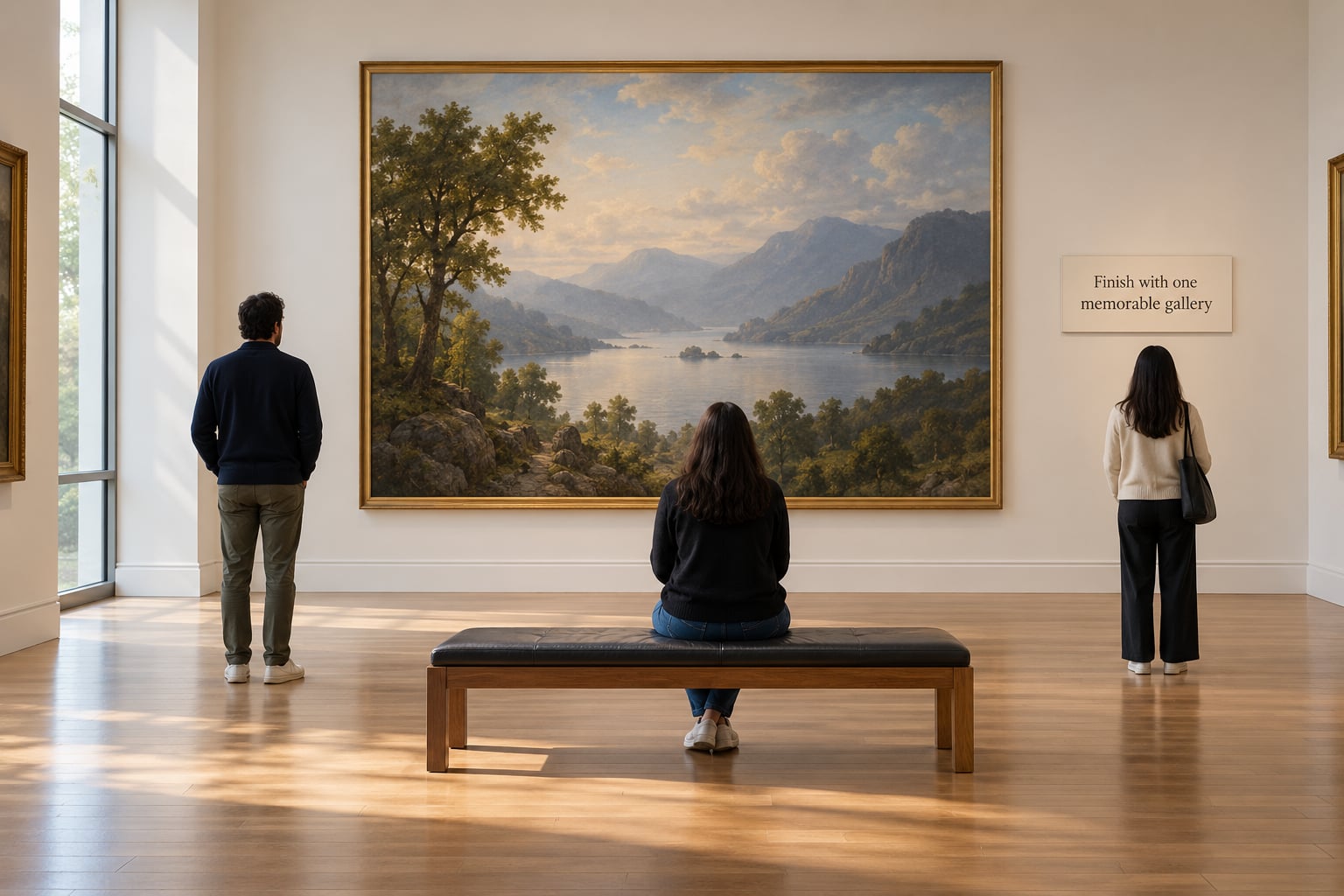
Reserve the last 25 to 30 minutes for somewhere with personality: an unusually lit room, a period reconstruction, a decorative arts gallery that surprises you, or the department that matches your own taste rather than the museum’s reputation.
This is the block where you slow down. Read four or five labels properly, take a few photographs, and let one work hold your attention for a few minutes. Photography rules vary — flash, tripods and sometimes video are restricted — so check the house rules on the map before you raise your phone.
7. Make the last five minutes count
Revisit the single work you want to remember and give it two unhurried minutes. Buy only what you need, and note what is nearby if you have a moment after: another gallery for next time, or a nearby stop that pairs well with the museum.
Then go. The gift shop is the most common place to lose the last ten minutes, and you already saw everything you needed to see on the way in.
Common Mistakes
Trying to see everything. A large encyclopedic museum is measured in days, not hours. Aim at three anchors and let the rest go.
Starting in the wing farthest from your exit. You will spend your final ten minutes crossing the building. Work outwards from your exit instead.
Not looking at the map. Ten minutes with the floor plan buys back half an hour of confused walking. Do it in the lobby or on the bus.
Reading every label. Read labels in rooms you have chosen to stay in, and skim them everywhere else.
Queueing at the busiest entrance when a side entrance is open. Museum entrances differ in size and security setup; the shortest queue is often not the grandest door. Check which doors are open that day.
Ignoring bag check and security. Know the bag rules, travel light, and arrive with ten minutes of slack before your timed slot.
Planning around a room that is closed or crowded out. Have a substitute ready. At marquee works the viewing conditions are often poor, so a strong secondary room beside it can be the better memory.
Quick Tips for a Two-Hour Museum Visit
- Check the official visitor information page the day you go, for hours, closures, timed entry and house rules.
- Ask at the desk what is on. Visitor-services staff and guards will usually name two or three works they would send you to, which is a free and well-informed route.
- Book the first timed slot of the day, or a late slot if the museum runs into the evening. Midday weekends and school-holiday weeks are the hardest times.
- Work in 20-minute blocks and set a soft alarm at the end of each one.
- Photograph selectively. A dozen considered shots beat a hundred blurry ones.
- Use the first short visit as a scouting run. Note the room numbers you care about and the entrances you used, and a longer return visit becomes dramatically more efficient.
- Bring water, wear supportive shoes, and keep your phone charged for the plan.
Museum types change the route more than people expect. In an encyclopedic collection, follow the plan above. In a single-artist house museum, two hours is usually enough for the whole thing, so slow down and read. In a science centre, pick two or three exhibits with live demonstrations or interactive stations rather than walking the full circuit. In an open-air park, the distance between buildings dominates, so count the gaps between sites before you choose your anchors.
Frequently Asked Questions
Is 2 hours enough at the Met?
Two hours at the Met is enough for a highlights run, not the collection. Use one entrance, three anchors and one scheduled break, and you can properly examine 15 to 25 works across two or three sections. Three to five hours is the comfortable minimum for a fuller sweep of the European paintings and Egyptian galleries. Anything under two hours works best if you decide the route before you arrive.
Can you do the Met in 3 hours?
Yes, and three hours is the point where a first visit starts to feel rewarding rather than frantic. You can cover two or three departments properly instead of racing through five. Book an early timed slot, work in 25-minute blocks with a real seated break, and stop trying to see whole wings. Most people who feel they rushed the Met were trying to do a full day in three hours.
How long does it take to visit a museum?
For a large encyclopedic museum, a highlights visit is two to three hours, a single focused wing is three to four, and a full day is realistic for two wings plus a break. House museums are usually one to two hours. Science centres and open-air parks vary widely because walking distance dominates. The honest answer is that most people both overestimate what two hours gives them and underestimate what a full day costs.
Why do I get so tired in a museum?
Because you are combining long periods of standing, long corridors, low light, background noise and dense text, and your attention has no natural rest point. Add poor sleep or a full itinerary and fatigue arrives well before you expect it. The fix is pacing rather than willpower: scheduled seated breaks every 20 to 30 minutes, water, shoes that support, and fewer rooms examined properly.
How long does it take to walk around the British Museum?
Walking the main routes of a very large museum can take a full day or several, and most visitors see only a fraction of the collection in two hours. The building is arranged around a central covered court, so the distance between the areas you care about varies enormously by which ones you choose. Pick two or three areas, one in each half of the building if possible, and accept that you will skip the rest.
How do I avoid crowds at a huge museum?
Arrive for the first timed slot or the last one if the museum runs into the evening, use whichever side entrance is open and shortest, and put your marquee piece at the start of the visit rather than the end. Midday weekends and school-holiday weeks are the worst. If a room is already shoulder to shoulder, the adjacent quieter room is usually a better use of the same fifteen minutes.
Conclusion
Two hours in a huge museum works when the plan is made before you arrive and the clock starts at the door. Get the floor plan, choose three anchors, time your entrance, work in 20-minute blocks, sit at the hour mark, and leave while you still want to.
Do one thing tonight: pick one must-see area, one short secondary experience, and one gallery you’d be glad to end in. Write them down. That single page is what makes the two hours work.