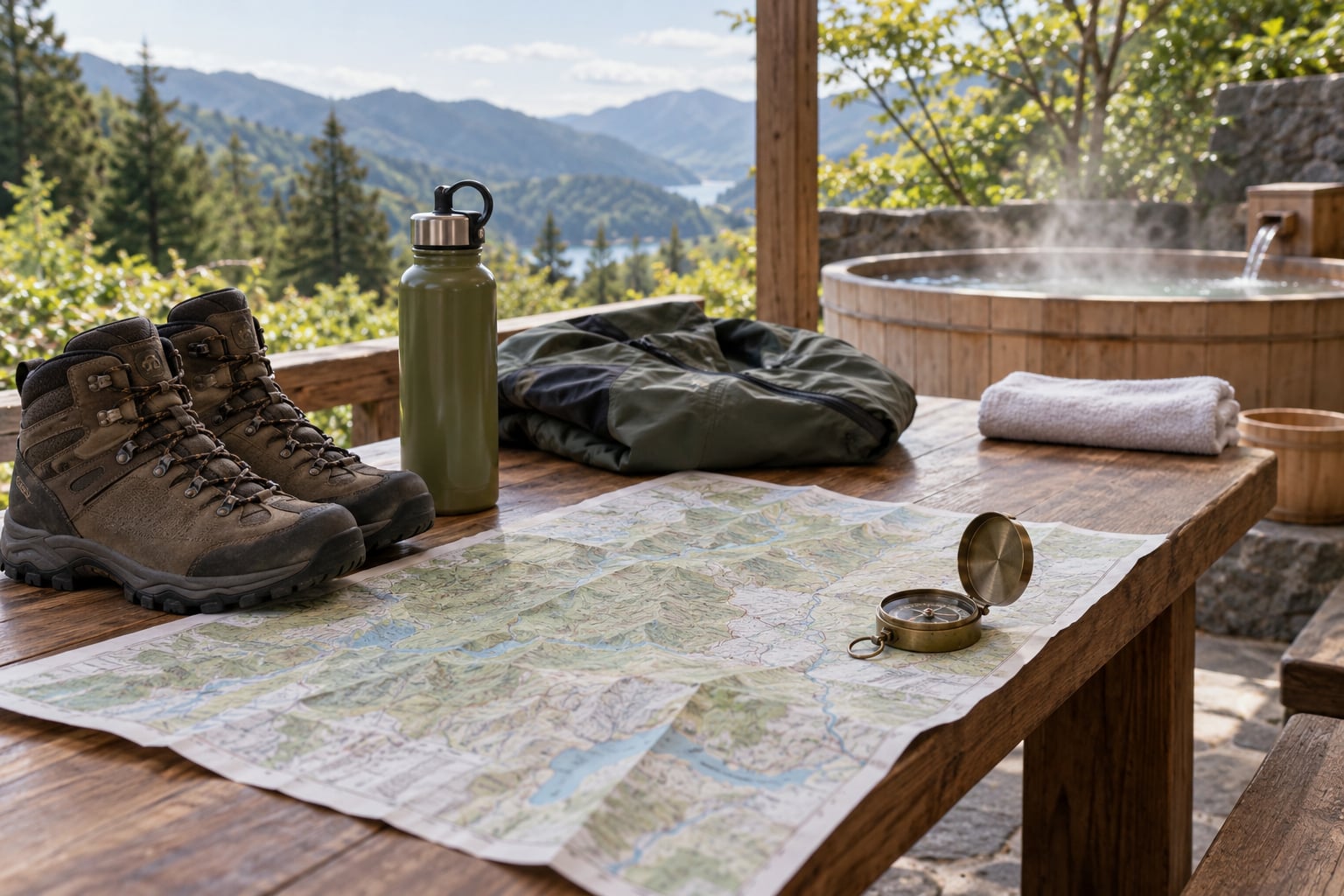
Does travel insurance cover hiking and hot springs? Usually yes, but only up to the point your policy’s wording allows. Standard travel medical cover usually pays for eligible injuries from an ordinary day hike or a soak in a thermal pool, yet the result changes completely above an altitude ceiling, when a guide or rope is involved, or when a slip follows alcohol. Most of the confusion comes from treating an activity as covered or excluded when the real question is which tier of cover your itinerary sits in.
Independent travellers hit this constantly, because the two activities sit in different parts of a policy. A hike is tested against altitude limits, equipment rules and adventure add-ons. A hot spring is tested against accident versus illness, and against exclusions about alcohol, hot water burns and facility rules.
The good news is that both questions can be settled before you buy anything, not in a claims office afterwards. This guide walks through what typical policies contain, where the gaps sit, and the exact questions that produce a written answer from an insurer.
Table of Contents›
- What Does Travel Insurance Usually Cover?
- Does travel insurance cover hiking and hot springs?
- Hiking Coverage: When You May Need an Activity Add-On
- Hot-Spring Coverage: Injuries, Illness, and Excluded Conditions
- How Medical, Trip-Cancellation, and Activity Protection Differ
- What to Check Before Buying a Policy
- Questions to Ask the Insurer or Travel Agent
- What Is Usually Not Covered?
- How to Make a Claim After an Incident
- Frequently Asked Questions
- Does standard travel insurance cover high-altitude hiking?
- Does travel insurance cover injuries in a hot spring?
- Will insurance pay for a helicopter rescue after a hike?
- Is hiking covered if I go with a guide or climbing group?
- Can I be reimbursed if a hot-spring visit makes me ill?
- Conclusion
What Does Travel Insurance Usually Cover?
Travel insurance is really three separate contracts bundled into one document, and hiking and hot springs each touch a different one.
The first is emergency medical cover, which reimburses treatment for an accidental injury or sudden illness while you are abroad. The second is trip protection, which covers money you lose when you cannot travel or must cut a trip short. The third is assistance and evacuation, which gets you off a mountain or repatriated home when local care is not enough.
Many policies also carry a general liability cover for damage you cause to third parties or property. It matters more at a thermal facility than most travellers expect, because some public bathhouses operate on a waiver system where they push liability onto the guest.
Does travel insurance cover hiking and hot springs?
The honest answer is that the activity label matters far less than the wording underneath it. Coverage turns on four things: how the policy defines the activity, what altitude ceiling applies, what the exclusion list says, and whether an add-on was selected at the moment of purchase.
A comparison makes the difference clearer.
- Hiking: day hiking on maintained trails usually sits inside the standard medical benefit. Trekking above roughly 3,000 metres often needs an adventure tier, and glacier travel, ropes or technical climbing can fall into a mountaineering exclusion that standard plans decline entirely.
- Hot springs: soaking is not usually listed as an adventure activity at all, so it is generally handled by the standard medical section. Slips on wet stone and scalds are treated as accidents. Feeling unwell after a long soak is treated as illness, which is a different test with a different outcome.
So the same soak can be covered, partly covered or refused depending on whether you fainted, whether you had been drinking, and whether the water was hotter than the posted temperature. That is not a loophole in the policy. It is the policy working as written.
Hikers on r/TourDuMontBlanc make a related point about hiking policies generally: ordinary walking is rarely the excluded activity, and the fine print tends to be about altitude and gear instead. Read the definition, not the marketing line.
Hiking Coverage: When You May Need an Activity Add-On
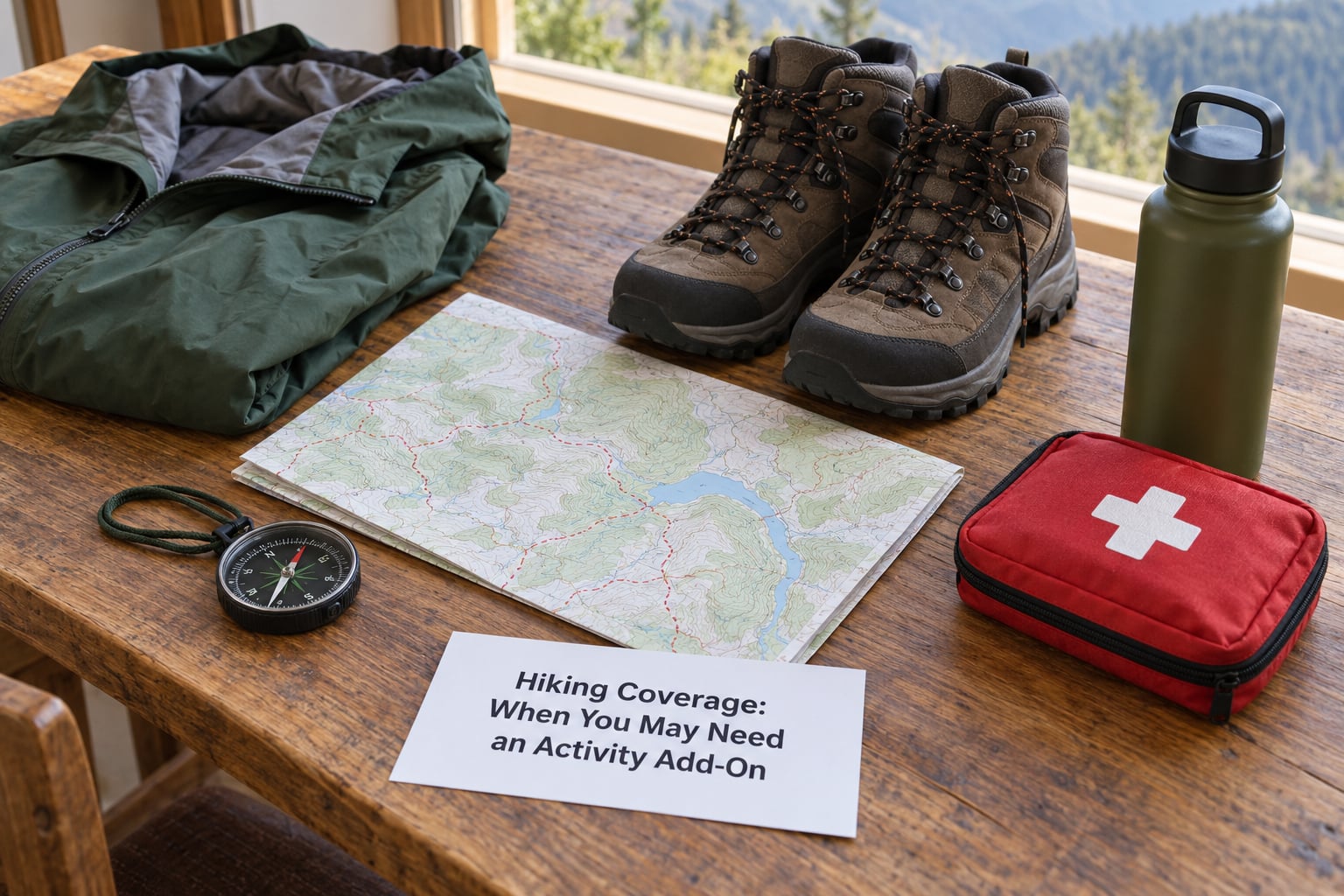
Most insurers grade hiking in tiers, and the tier decides whether your cover is automatic or bought.
Day hiking means a walk of a few hours on a marked trail with no technical section. Almost every policy with medical cover treats this as an ordinary activity, because it carries roughly the same risk as a walk in a city park.
Trekking means multi-day travel carrying your own gear, usually to a higher camp or across a mountain range. Here the altitude ceiling starts to matter. One Australian provider states that hiking and trekking up to 3,500 metres without specialist climbing equipment is covered automatically, which is a fair illustration of where a mainstream tier sits. International policies often quote figures lower than that, and some higher.
Guided climbs and mountaineering are where standard cover ends. If your itinerary includes crampons, a rope, an ice axe or a glacier, many policies classify it as mountaineering rather than trekking and exclude it from the standard benefit. The activity may still be insurable, but through a named pack at a higher tier rather than as an ordinary hike.
A widely sold international plan covers trekking to 6,500 metres at its highest activity level, which is a useful upper marker for what a specialist tier looks like. Anything past the summit push of Everest needs dedicated high-altitude evacuation cover arranged separately.
Two practical notes. First, activity upgrades can generally only be selected when the policy is purchased, not bolted on afterwards, which is the single most common frustration hikers report. Second, several providers apply an upper age limit, often in the mid-sixties, to their high-altitude packs. Check that number if it applies to you.
Altitude sickness deserves its own paragraph because it is frequently excluded by accident rather than by name. Mild symptoms that appear as you acclimatise can be treated as an illness covered by the medical section. Severe forms, where fluid builds up in the lungs or brain, are often carved out as a mountaineering condition that needs an explicit altitude-sickness rider.
Hot-Spring Coverage: Injuries, Illness, and Excluded Conditions
Nobody wrote a hot-spring chapter into the standard policy, so coverage gets worked out by applying general rules to an unusual set of scenarios. The split that matters most is accident versus illness.
A slip on wet stone is an accidental injury. It is the clearest case in this whole article, and a policy with solid medical cover will normally reimburse the treatment, subject to your deductible and the policy limit.
A thermal burn from water hotter than the posted temperature is treated the same way in most policies. It is an accident caused by a physical hazard, not a disease. Keep the receipt for any ointment or dressing you buy afterwards, because treatment claims are often submitted with the medical report rather than at the time.
Feeling dizzy, sick or faint in the water is an illness, and that is a harder claim. If it comes from dehydration, heat or a heart condition, the medical section may respond, but only if the condition is not excluded and only if you sought help quickly. Feeling unwell after a long soak is the scenario travellers most often expect to be covered and least often are.
Then there are the exclusions that catch people out.
- Alcohol. Many policies void or reduce cover for incidents connected with alcohol or drugs. A single drink before dinner is very different from a bottle at the bathhouse, but the wording is often broad enough to be uncomfortable.
- Intoxication and deliberate behaviour. Diving headfirst into a pool at night, or entering water far above your ability, is treated as reckless and commonly excluded.
- Breach of facility rules. Public bathhouses often post a list of prohibited behaviour. Ignoring posted instructions counts against the claim.
- Pre-existing conditions aggravated by heat. If a cardiac condition, blood pressure problem or respiratory illness is made worse by the heat, the aggravation may not be covered even when the underlying condition was declared.
- The facility’s own liability. Whether a local operator accepts responsibility for a wet-floor injury is a separate legal question from whether your insurer will pay you, and the two do not always agree.
Treatments are a related grey area. A therapeutic massage or a mud wrap that leaves you sore is a service cost, not a medical bill, and many policies will not reimburse it. Japan and Iceland both sell spa experiences as the point of the trip, so this matters more there than in most itineraries.
How Medical, Trip-Cancellation, and Activity Protection Differ
The costs that follow a bad day on the mountain or in the bathhouse fall into six separate buckets, and travellers regularly assume the wrong one has been activated.
| Type of cost | What it pays for | What usually triggers it |
|---|---|---|
| Emergency medical | Treatment, hospital stay, surgery and medication abroad | An accidental injury or a sudden illness treated by a licensed provider |
| Medical evacuation and repatriation | Transport to the nearest adequate hospital, or a flight home | Local care is inadequate or you need treatment in your home country |
| Search and rescue | Finding and extracting you from a trail, canyon or snowfield | Only where the policy names it; often excluded or sold as a separate benefit |
| Trip cancellation or interruption | Flights, lodging and pre-paid tours you cannot use | A covered reason such as injury, hospitalisation, weather closure or a natural event |
| Activity liability | Damage you cause to a third party during an activity | Only with the relevant rider and within its own limit |
| Equipment and gear | Hiking boots, trekking poles and rented kit | Theft or damage, often with a delay period on the first claim |
Search and rescue is the row people misread most. Medical evacuation starts once a doctor decides you must move. Search and rescue starts when someone has to find you, which can happen hours earlier on a ridge with no phone signal. Many policies cover only the second one through a dedicated benefit, and some cover neither.
A remote helicopter evacuation can run into thousands of dollars per hour, and in Nepal the flight comes with an excess that must sometimes be paid up front before the aircraft will fly. Travellers on r/backpacking describe paying out of pocket first and claiming reimbursement months later, which is exactly why authorisation matters.
What to Check Before Buying a Policy
Work through this list with the policy document open, not the sales summary page. Insurers publish a Product Disclosure Statement, and that document contains the wording that will be applied to your claim.
- The activity definition. Find the section that defines trekking, mountaineering and adventure activities. Check whether your route is named and whether ropes, crampons or specialist equipment trigger the exclusion.
- The altitude ceiling. Note the number, and note whether it refers to your highest point or your highest sleeping altitude. Those are not the same thing.
- Whether the add-on was bought. Confirm the activity tier appears in your certificate of insurance, not just in your order confirmation.
- Medical evacuation terms. Check the maximum benefit, whether a helicopter flight is explicitly included, and whether rescue and evacuation are separate benefits.
- Search and rescue. Confirm in plain language whether finding and extracting you is covered, and whether it is capped lower than evacuation.
- Pre-existing conditions. If you have a declared condition, check whether the waiver was purchased inside the required window, commonly 10 to 14 days after booking, and whether the condition must have been stable for a set period.
- Trip cancellation triggers. Look for the specific list. If an injury or illness sends you home mid-trip, interruption cover is what matters, and it may require hospitalisation rather than a doctor’s note.
- The deductible and the limit. Note the excess you pay per claim and the ceiling on emergency medical cover, then check that the ceiling exceeds the cost of care in your most expensive destination.
- Territory and residency. The same insurer can issue different wording to residents of different countries, and a policy may not cover every country on your itinerary.
- Authorisation rules. Find out whether you must call the 24-hour assistance line before accepting treatment or agreeing to a rescue, and what happens if you do not.
- Direct billing. Find out which hospitals and clinics will settle directly with the insurer, because paying yourself first and chasing reimbursement later is a lot of admin during a bad week.
- Age and destination limits. Check whether the high-altitude tier has an upper age and whether your destination is on a restricted list.
Questions to Ask the Insurer or Travel Agent
Ask these in writing, by email, so you have a record. A phone call gets you an opinion; an email gets you a position the company has to stand behind.
- Does my policy cover the specific trail I am walking, at the altitude I will reach, on the dates I am travelling?
- What is my maximum altitude, and is that a walking limit or a sleeping limit?
- Are ropes, crampons, an ice axe or glacier travel excluded on my route?
- If I hike with a licensed guide or a climbing group, does my cover change?
- Does my policy cover a helicopter evacuation, and is search and rescue listed separately from evacuation?
- Is there an excess I must pay toward a rescue, and do I pay it before the flight departs?
- Does a slip or fall in a public hot spring count as an accidental injury under this policy?
- Does a scald from water above the posted temperature count the same way?
- Is an incident caused partly by alcohol covered, reduced or excluded under my wording?
- Does the facility’s own waiver affect my claim?
- Are spa treatments, massages and thermal rituals reimbursable?
- If a hot-spring visit makes me ill, what evidence do you need and how quickly must I report it?
- My condition is declared. Is it covered for an activity that involves exertion and heat?
- If I cannot finish my trip because of an injury, does interruption cover pay for the unused nights?
Two answers deserve particular scepticism. If an agent says hiking is always covered, ask which tier and up to what altitude. If another says the trip is covered because you have medical cover, ask them to point at the cancellation section.
What Is Usually Not Covered?
Every policy is different, so treat this as a set of exclusions worth checking rather than a list that applies to you.
- Activities above your declared tier. Walking above the altitude limit, or using ropes or specialist equipment without the named add-on.
- Mountaineering classed as extreme. Summit pushes, glacier crossings and technical climbing that a policy defines separately.
- Pre-existing conditions aggravated by the activity. Especially heart, respiratory and blood pressure conditions in heat, or any condition made worse by exertion.
- Incidents involving alcohol or drugs. Often applied broadly, sometimes with a defined blood alcohol threshold.
- Treatment against medical advice. Including continuing a hike after a doctor or guide has advised against it.
- Unapproved or late-reported treatment. Costs incurred before calling the assistance line may be refused.
- Search and rescue where it is not listed. A policy that covers evacuation only will not pay to find you.
- Costs above the policy limit. If the ceiling is below the cost of care at your most expensive stop, the balance is yours.
- Treating yourself. A friend helping you down a slope is not a qualified medic.
- Deliberate disregard of posted rules. Most relevant at a public bathhouse, where the facility’s own rules form part of the contract.
- Credit card cover for adventure trips. Card benefits are written for ordinary travel and commonly exclude treks and technical activities entirely.
That last point catches experienced travellers who assume their card already handles it. Plenty of hikers carry a card policy and a separate travel policy, because the card covers flight disruption well and altitude not at all.
How to Make a Claim After an Incident
Sequence matters here. Insurers assess claims against the action taken at the time, and gaps in the early record are hard to close later.
- Get safe first. Stop, treat the injury, and call local emergency services for anything involving breathing, bleeding, loss of consciousness, a suspected spinal injury or a suspected heat illness.
- Call the assistance line before you commit to costs. If you can make the call, do it early, and get a reference number. Do this before agreeing to a non-emergency helicopter or before leaving a facility by road.
- Document the scene. Photographs of wet floors, posted temperature signs, signage and trail conditions matter far more than you would expect at claim stage.
- Keep every receipt. Prescriptions, dressings, taxis, replacement clothing and the facility entry receipt all count.
- Get a medical report. Ask for a written summary of the diagnosis and treatment on the day you are treated, while the details are still fresh.
- Report the incident promptly. Most policies set a notice period measured in days, and delay is the most common avoidable reason a claim stalls.
- Submit with the certificate of insurance. Your policy number, dates of travel and destination list are needed before any payment can start.
Reporting quickly does not guarantee payment. The claim still has to satisfy the activity definition, the altitude limit and the exclusion list, and an admission of liability by the bathhouse or guide is not something your insurer will substitute for evidence.
If a claim is refused, ask for the specific clause that was applied and the document used to interpret it, then respond in writing. Several insurers will reconsider when a denial rests on a summary table rather than the policy wording.
Frequently Asked Questions
Does standard travel insurance cover high-altitude hiking?
Usually up to a stated ceiling, which often sits between 3,000 and 3,500 metres for automatic cover. Above that you need an adventure tier bought at purchase time, and glacier travel, ropes or crampons may count as mountaineering and be excluded outright. Check whether the limit refers to your highest point or your highest sleeping altitude, since a pass crossed at 4,200 metres with a camp at 3,600 metres can be treated differently.
Does travel insurance cover injuries in a hot spring?
A slip, fall or scald in a thermal pool is normally treated as an accidental injury and reimbursed under the standard medical benefit, subject to your deductible and limit. Trouble starts when the incident involved alcohol, ignored facility rules, or deliberate conduct such as diving into water far above your ability. Those are the exclusions that most often turn an otherwise straightforward hot-spring injury into a disputed claim.
Will insurance pay for a helicopter rescue after a hike?
Only if the policy names helicopter evacuation explicitly, and many treat search and rescue as a separate benefit from medical evacuation. Evacuation begins once a doctor decides you must move; finding and extracting you from a remote trail is a different, often capped cost. Ask whether an excess applies, whether you must call the assistance line before agreeing to a flight, and whether Nepal-style up-front excess requirements apply.
Is hiking covered if I go with a guide or climbing group?
Guided treks on maintained trails are usually inside the standard medical benefit. Technical climbs, glacier travel and anything using ropes, crampons or an ice axe are commonly reclassified as mountaineering and excluded unless you hold the matching tier. Some operators also require proof of a minimum emergency medical evacuation limit before you may join a trek, so check both directions before booking.
Can I be reimbursed if a hot-spring visit makes me ill?
Possibly, because illness is covered separately from accidental injury, but the outcome depends on what caused it. Dehydration or heat illness may fall under the medical section. A heart or respiratory condition made worse by hot water is a different matter and is often excluded as aggravation of a pre-existing condition. Report it the same day, get a written diagnosis, and keep the facility receipt.
Conclusion
Start with one task: put your actual itinerary next to the policy wording. Match the trail to the activity definition, the highest point to the altitude ceiling, and the hot spring to the accident and illness wording, then ask the insurer the awkward questions in writing.
Most hikers and spa travellers who do this end up either confirming that standard cover is enough or discovering the gap while there is still time to fix it. Both outcomes are better than finding out on a mountain.
Rules and wording vary by country of residence and change as policies are updated, so treat what you read here as a way to ask better questions rather than as an answer for your trip.