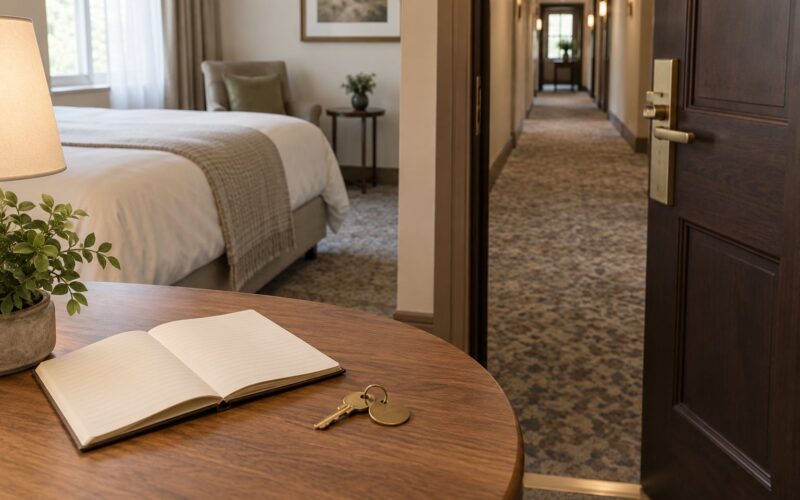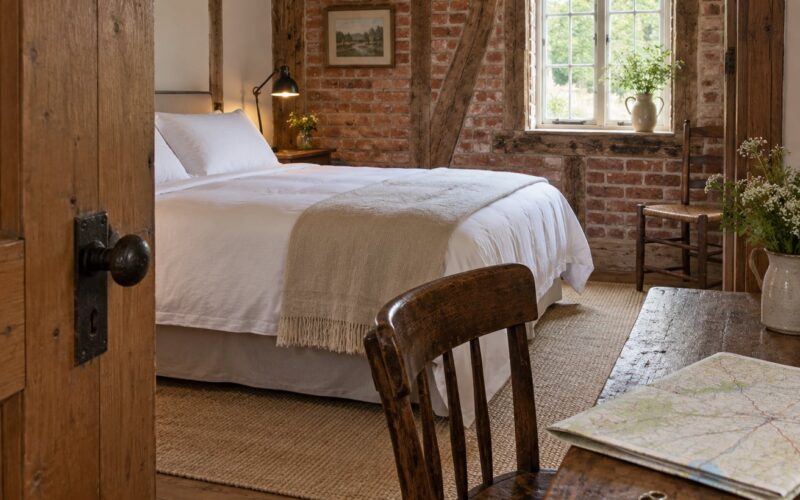
To compare a boutique hotel and a chain hotel fairly, hold the destination and the dates constant and score both on the same eight criteria: service style, location, room consistency, booking flexibility, amenities, loyalty benefits, total cost, and how well the stay suits the kind of trip you are taking. Neither type wins outright. The boutique hotel trades predictability for local character and personal attention; the chain hotel trades that character for a repeatable standard, wider facilities, and points you can bank toward the next trip.
The mistake most people make is comparing the two on the wrong axis — comparing a boutique property in a walkable old quarter against a chain property beside a motorway junction, or comparing a mid-tier chain on a weekend against a design-led boutique on a Saturday night. Fix the dates and the map view first, then work through the criteria below.
Table of Contents›
- How to Compare a Boutique Hotel and a Chain Hotel at a Glance
- Service Style and Staff Approach
- Location and Neighborhood Character
- Predictability, Consistency, and Room Features
- Flexibility, Booking Rules, and Loyalty Programs
- Price, Inclusions, and Hidden Value
- Which Should You Choose?
- Choose the boutique hotel when the trip is about place
- Choose the chain hotel when the trip is about function
- Let three checks decide it if you are solo
- Frequently Asked Questions
- What are the key differences between a boutique hotel and a chain hotel?
- Are boutique hotels more expensive than regular hotels?
- Is a boutique hotel always independent?
- Can you earn loyalty points at a boutique hotel?
- Are boutique hotels safe and staffed enough for a solo traveler arriving late?
- Should I book a boutique hotel direct or through a booking site?
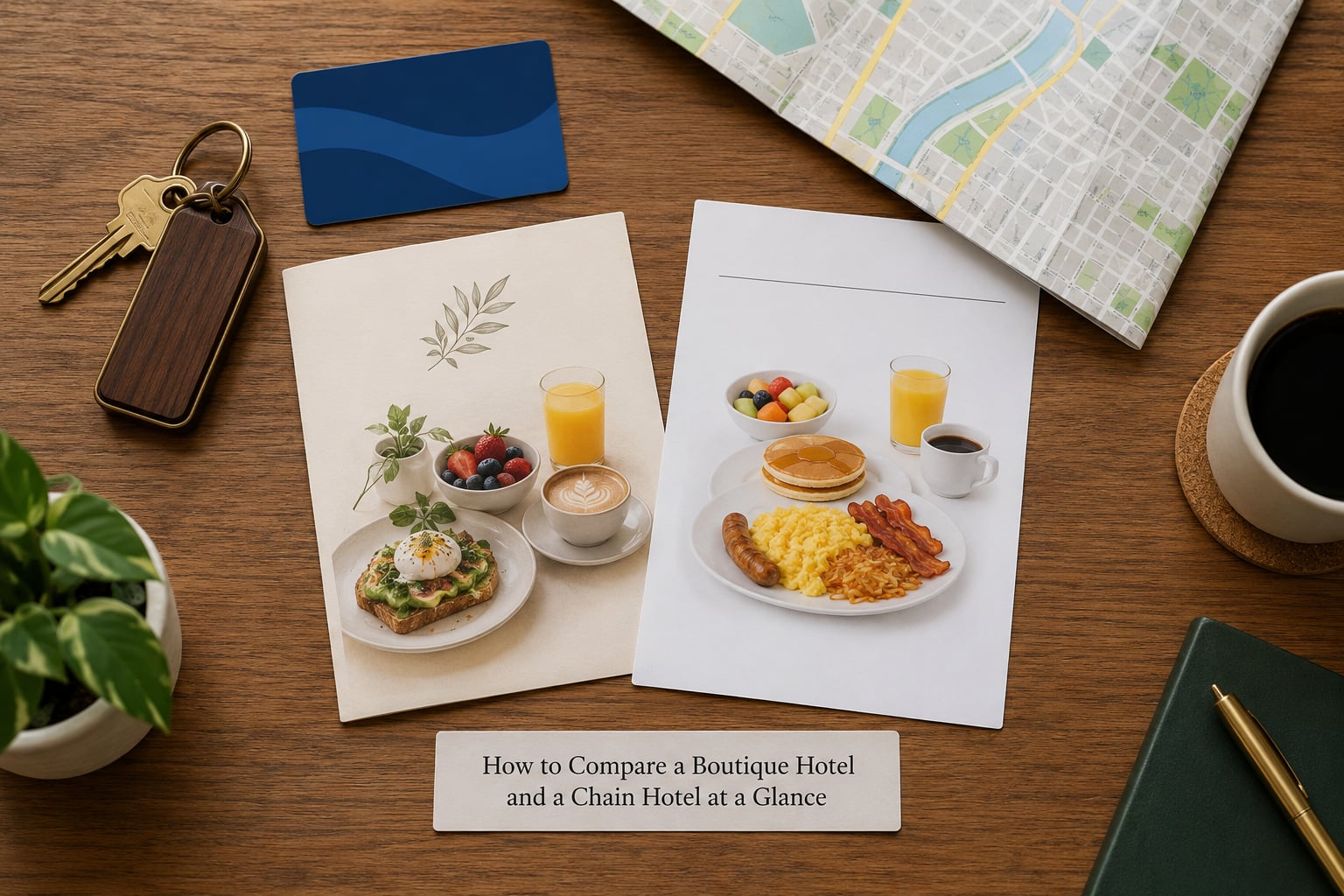
How to Compare a Boutique Hotel and a Chain Hotel at a Glance
| Criterion | Boutique hotel | Chain hotel |
|---|---|---|
| Service style | Personal by default; staff often know repeat guests by name | Standardized by role, delivered identically at every property in the brand |
| Location | Heritage streets, residential districts, arts quarters | Transport hubs, business districts, suburban sites with parking |
| Room consistency | Every room differs; a converted building rarely repeats itself | Identical room layout, furniture and amenities at every location |
| Flexibility | Often negotiable; terms vary property by property | Published, uniform cancellation and modification rules |
| Amenities | Small gym or none, no business center, limited parking | 24-hour gym, business lounge, pool, parking, airport shuttles |
| Loyalty | None, or points through an affiliation partner | Member rates, points, elite tier benefits, app-based self service |
| Total cost on your dates | Runs higher on average, but less predictable | Headline rate is often higher in good locations; points cut it back |
| Best for | Slow trips, local immersion, design, couples, repeat visitors | Business travel, late arrivals, short stops, points earners, first visits |
One note before the rest: the industry word “boutique” is not a regulated label. It usually means a property under roughly 100 rooms, independently owned, with design at the front of the idea — but plenty of properties carrying the boutique look are actually franchise flags of a larger group. Treat the table as a starting shape, not a rule.
Service Style and Staff Approach

The real difference in service is personalization by default versus personalization by exception. At a boutique hotel, personalization is the operating model: the person at check-in may know you stayed last year, may ask what you did yesterday, and may have a restaurant booked for you without you asking. At a chain hotel, personalization is an upgrade path — you get extra attention if you hold elite status, and the baseline for everyone else is written down.
Both can be excellent. What differs is variance. A chain property has a floor: the brand is accountable for a defined standard, and a remote team can enforce it. An independent property has a ceiling that is occasionally much higher and a floor that is occasionally much lower, because the person on the desk is also the person running the restaurant, the reception, and the maintenance.
So test service recovery rather than smiles. Ask one real question at check-in — where to eat tonight, whether you can leave bags until later, whether an early breakfast is possible — and see how quickly you get a straight answer. Then, on the harder point, ask what happens if the room is not ready or the hot water fails. In traveler forums, the recurring worry about independents is not bad manners; it is that photos, listed standards and the actual room at an independent property may not match.
For a work trip or a one-night stopover, predictability is worth real money to most travelers. The common thread in those discussions is simple: a chain means you know you will get the room you booked, even when there is no charm in it.
Location and Neighborhood Character
Location is the criterion that most often settles the question, and the one travelers misjudge from a listing photo. Boutique properties cluster where the buildings are interesting: converted townhouses, heritage warehouses, older residential streets a short walk from a square or a market. Chain hotels cluster where land is cheap and access is easy — beside motorway exits, near convention centres, on the edge of the business district, usually with parking.
Those two addresses produce completely different evenings. The boutique puts you inside the part of the city people actually live in, which means restaurants without tourist pricing, a bakery that opens at six, and street noise. The chain puts you in a district built for arrivals, which means a lobby, a car park, and a walk back to somewhere with life in it after nine.
Test the address twice. Look at the street at nine in the morning for the walkability and parking, then look again at nine at night for lighting, open doors, and how many people are still out. Forum advice on this is consistent: travelers trading points for walkability ask specifically for a smaller hotel within walking distance of food and stores, and they judge the area on how it feels safe after dark rather than on the star rating.
One trade-off nobody mentions often enough: heritage character usually means thick walls were not the priority. Ask about lift access and about rooms facing the street before you commit to an upper floor in an old building.
Predictability, Consistency, and Room Features
A chain hotel sells you a specification. The room you get in Utrecht is the room you got in Leeds and will get in Denver — same bed size, same desk height, same kettle, same blackout blinds, down to the light switches on the nightstand. That is dull until the night you arrive late and jet-lagged, and everything is exactly where your body expects it.
A boutique hotel sells you a designer and a building. The rooms will vary between each other, the hardwares will not match, and the coffee setup may be better than anything on the chain’s list. It will feel more like staying somewhere specific rather than checking into a category.
Chain amenities are also deeper, because they are bought in bulk by a central purchasing operation: a 24-hour gym, a business center with printing, a pool, on-site parking, a lobby that can hold forty people. Independent properties often have a beautiful lobby, a small gym open eight hours a day, and no business facilities at all.
Run the test this way: list the six facilities you will genuinely use, then check each against both properties. Most people comparing a boutique and a chain hotel for a weekend break find the facilities column is a wash once you exclude things they were never going to touch.
Flexibility, Booking Rules, and Loyalty Programs
Chain hotels publish their terms, and the terms are the same everywhere in the brand. Free cancellation until a fixed cut-off, a defined no-show window, member-only rates, points on every stay, and an app that stores your preferences. The flexibility is not generous; it is simply predictable, which for a traveler juggling a booking and a flight is often worth more than generosity.
Independent properties vary more. Some offer deposit-free booking, some hold the room to 6pm on the day, some will move a reservation without charge if plans shift. None of this is consistent, so ask the property directly and get the answer in writing before you book.
Loyalty is where the honest arithmetic changes. A chain stay earns points that reduce the next one, and elite status adds late checkout, room upgrades and guaranteed late arrival. Over a handful of trips that credit is real, and for a points earner it can make the chain the cheaper option on identical dates — something travelers rarely calculate before deciding. Independent properties usually earn nothing, though some belong to an affiliation scheme that credits a partner hotel, and a few lifestyle flags sit inside a chain’s program.
That last point is the trickiest. The soft brands — the design-forward flags of larger groups — look and book like boutique hotels while running brand standards and loyalty enrollment behind the scenes. Check whether the property you are eyeing is independently owned or a franchise flag: read the property description, look for the brand name beside the hotel name, and ask the property directly. My Boutique Stays notes cover the independent properties worth a detour; this section covers the ones where the label is doing the marketing.
Price, Inclusions, and Hidden Value
Boutique hotels are more expensive on average, and that gap is not entirely justified. Independents buy less volume, run leaner staffing and restaurant costs, and sell on a room count that cannot be spread as widely. A mid-tier chain, by contrast, can undercut a boutique in the same city — airport-adjacent chain properties in particular are often dearer than the independent option down the road, which inverts the assumption most people bring to the comparison.
Compare total cost, not the headline rate. Build the same list for both properties: room rate plus taxes, plus any destination or facility fee, plus parking if you will not use transit, plus breakfast if it is charged separately, plus the transfer cost from the station or airport, plus whatever the loyalty credit is worth to you against the room rate.
On a typical weekend, the arithmetic usually lands this way. The boutique’s headline rate runs 20 to 40 percent above the chain’s, and the chain then adds a destination fee and parking that the boutique may not charge at all. If you eat breakfast at the chain and pay for parking at the boutique, the gap narrows to nearly nothing. If you have points, or if you are staying five nights and only use the room to sleep, the chain is often clearly cheaper.
Run one worked comparison. Same city, same weekend, one boutique in the old quarter at 40 percent above the chain’s rate, with breakfast included and no parking charge; one chain beside the station at the lower rate, with a 25 percent facility fee, parking per night, and breakfast charged. Five nights each, mid-tier chain status earning roughly 10 percent of the pre-fee rate back. The boutique comes out ahead for anyone eating in and walking everywhere; the chain comes out ahead for anyone driving, eating out, or banking points. That is the whole method — the answer is a function of your trip, not of the labels.
Which Should You Choose?
Choose the boutique hotel when the trip is about place
You are staying three nights or more, you want to walk to dinner rather than ride to it, and you care more about the room being memorable than about the gym being open. The boutique case is strongest on a first visit to a city with real character, on a weekend with someone you like, and on any trip where you intend to leave the room.
Choose the chain hotel when the trip is about function
You land late, you leave early, the trip is partly for work, or you bank points. Chains win on arrival: a 24-hour desk, guaranteed late check-in for elite members, luggage storage, a business lounge, predictable parking, and a room you already know. Travelers who switch between the two usually find chains overpriced for a leisure break and badly located, while still conceding the value when the trip is work or the location is right.
Let three checks decide it if you are solo
First, staffing hours and check-in window — ask what happens if you arrive at eleven at night, and whether someone is physically on the desk. Second, the street after dark and whether there is food within ten minutes’ walk. Third, reviews that mention staff by name and describe the neighbourhood, since those carry far more signal than a rating alone. A quiet boutique with an unstaffed desk loses to a chain every time; a boutique with a night manager and a good neighbourhood usually wins.
Frequently Asked Questions
What are the key differences between a boutique hotel and a chain hotel?
A boutique hotel is a small property, usually under 100 rooms and independently owned, offering individual design and personal service. A chain hotel is one location of a multi-property brand that follows the same rooms, amenities and service standards everywhere. Size, ownership, design and service style are the four clearest divides; loyalty programs and facilities depth usually follow from them.
Are boutique hotels more expensive than regular hotels?
On average, yes, and the gap is usually 20 to 40 percent on the headline rate for comparable dates and star rating. It is not universal. Mid-tier chains are often dearer than the independent option nearby, especially near airports. Compare total cost rather than the headline: facility fees, parking, breakfast and the value of loyalty points can close or reverse the gap entirely.
Is a boutique hotel always independent?
No. The label is not regulated. Many design-forward properties are franchise flags of larger groups, often called soft or lifestyle brands, and run brand standards plus a loyalty program behind an independent-looking facade. Check the property description for a brand name attached to the hotel, and ask the property who owns it before booking if the distinction matters to you.
Can you earn loyalty points at a boutique hotel?
Most independent properties do not belong to any loyalty program. Some credit stays through an affiliation scheme that credits you at a partner hotel, and some soft-brand flags sit inside a chain’s program and earn points normally. Check the booking page for a points or member-rate option, and calculate what your status tier would be worth on the chain alternative before dismissing the larger brand.
Are boutique hotels safe and staffed enough for a solo traveler arriving late?
It varies more than the marketing suggests. Some small properties staff the desk overnight; others close reception and leave a key safe or on-call number. Before booking a late solo arrival, ask directly what happens at midnight, whether someone is physically on site, and whether you can enter the building alone. Also check recent reviews that describe the street after dark and where to eat in the evening.
Should I book a boutique hotel direct or through a booking site?
Book direct when you want the property to know you are coming and the cancellation terms are flexible, since independent hotels sometimes hold a room longer or upgrade arrivals booked with them. Book through a large booking site when you want an easy free-cancellation window and a clear rate comparison in one place. Chain hotels frequently beat both on price for members, so check the member rate before booking anywhere.
Whichever way you go, fix the dates and the map view before you compare anything, then add up the same cost line items for both properties. If the two land within a few percent of each other, choose on the street at nine at night and on who will be at the desk when you arrive. That is usually the whole decision anyway.