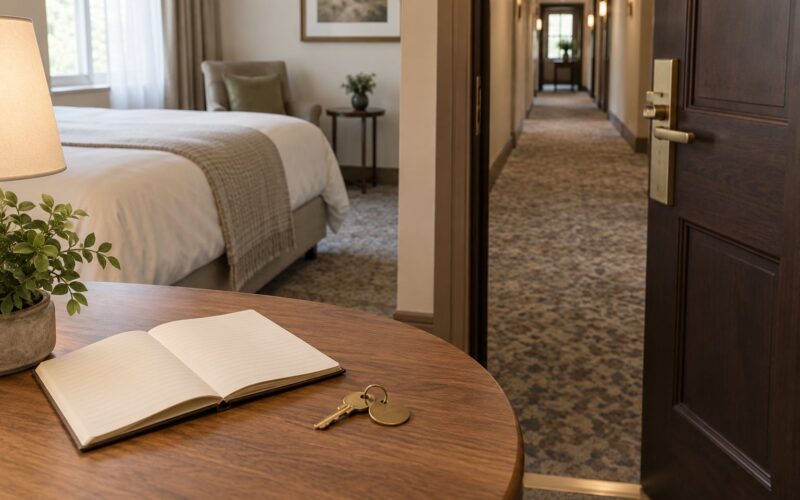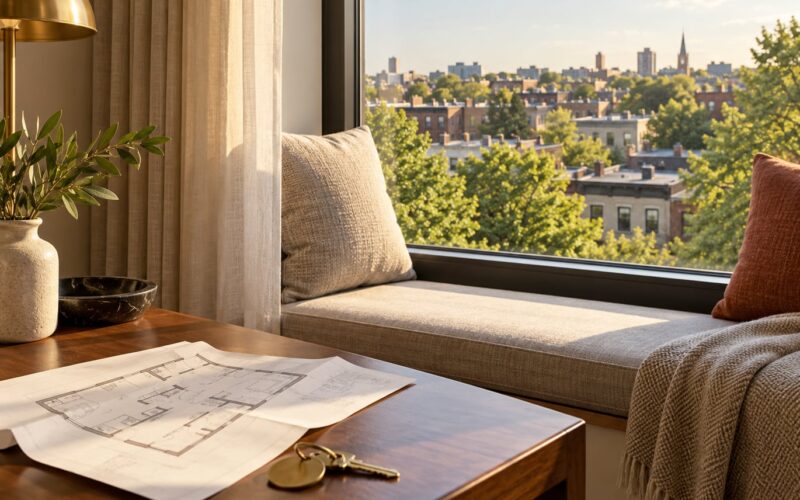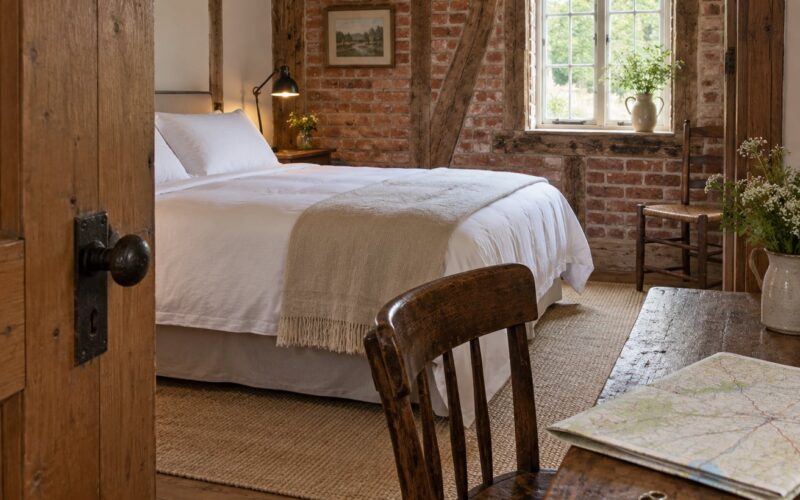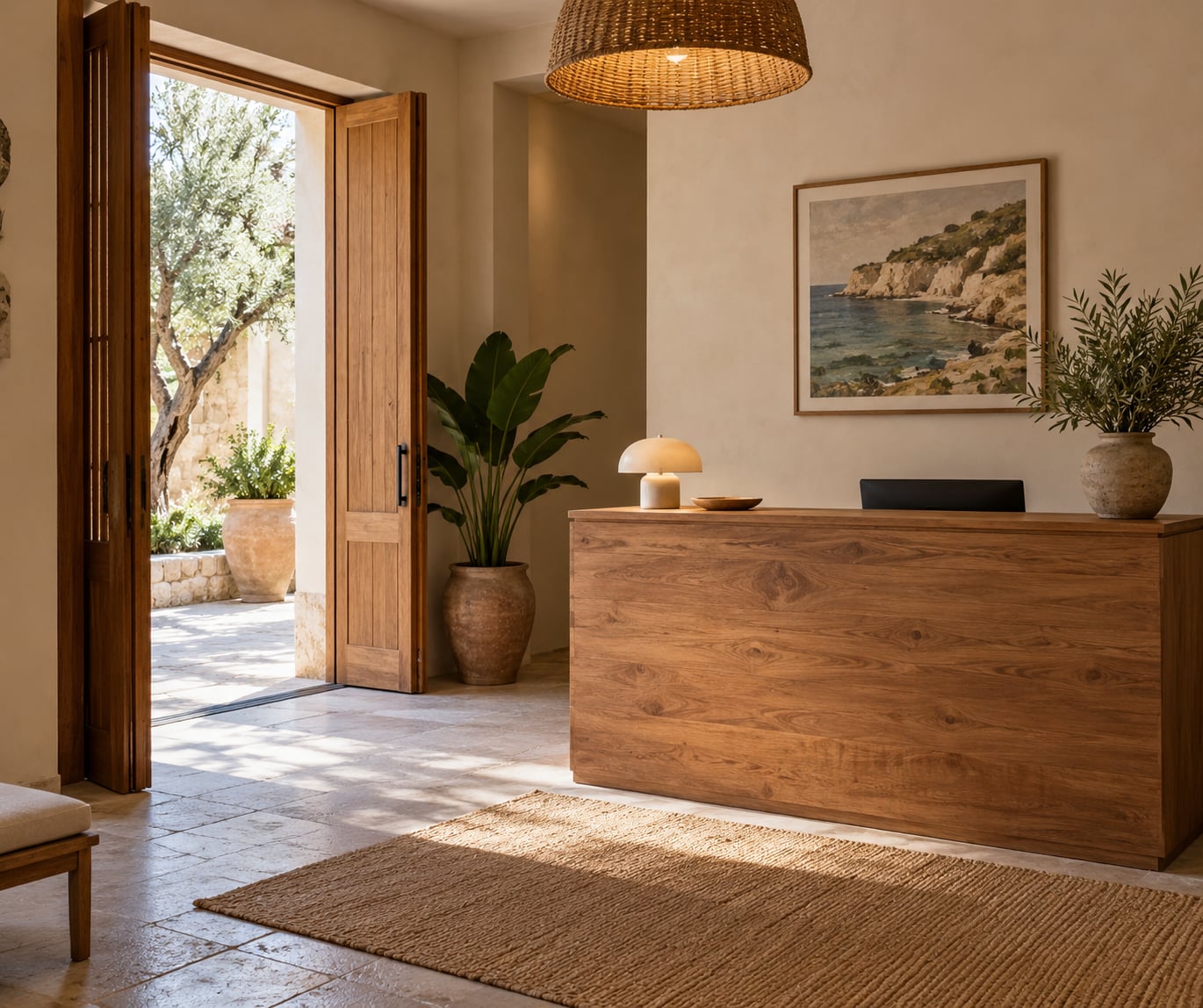
If you’re trying to work out what makes a hotel a boutique hotel, the honest answer is simpler than most definitions make it sound. A boutique hotel is a small property with its own point of view — its own design, its own name, its own people running it — where service is personal because everyone there knows everyone. The label is a descriptor, not a certification, so the real test is whether the whole place hangs together around one idea.
Quick answer: A boutique hotel is a small, usually independent property that focuses on unique design, local culture, and personal service rather than a standardized corporate model. What makes a hotel a boutique hotel is that consistent character: an intimate scale, an owner who makes the decisions, staff who know your name, and a real connection to the street outside.
That last part matters more than travelers expect. Plenty of properties describe themselves as boutique because the word flatters the nightly rate. The ones that earn it have made a hundred small decisions in the same direction — the same reason for the handmade ceramics in the lobby, the same reason the breakfast menu comes from four suppliers within a day’s drive.
This guide covers how boutique hotels differ from other small properties, the traits you can actually observe, and how to test a listing before you pay for it. As of 2026, the term also covers chain-owned boutique sub-brands, so it helps to know which kind you’re looking at.
Table of Contents›
- What Makes a Hotel a Boutique Hotel?
- How Boutique Hotels Differ from Other Small Hotels
- The Defining Traits of a True Boutique Hotel
- What Makes a Hotel a Boutique Hotel in Practice?
- Does Size, Price, or Age Make a Hotel Boutique?
- How to Tell if a Hotel Is Truly Boutique
- Boutique Hotel Examples by Type
- What to Ask Before Booking a Boutique Hotel
- Frequently Asked Questions
- What makes a hotel a boutique hotel?
- Are boutique hotels always small or expensive?
- What is the difference between a boutique hotel and a lifestyle hotel?
- Is a boutique hotel better than a traditional hotel?
- How can I tell if a boutique hotel is authentic?
- Are boutique hotels suitable for families and remote workers?
- Conclusion
What Makes a Hotel a Boutique Hotel?
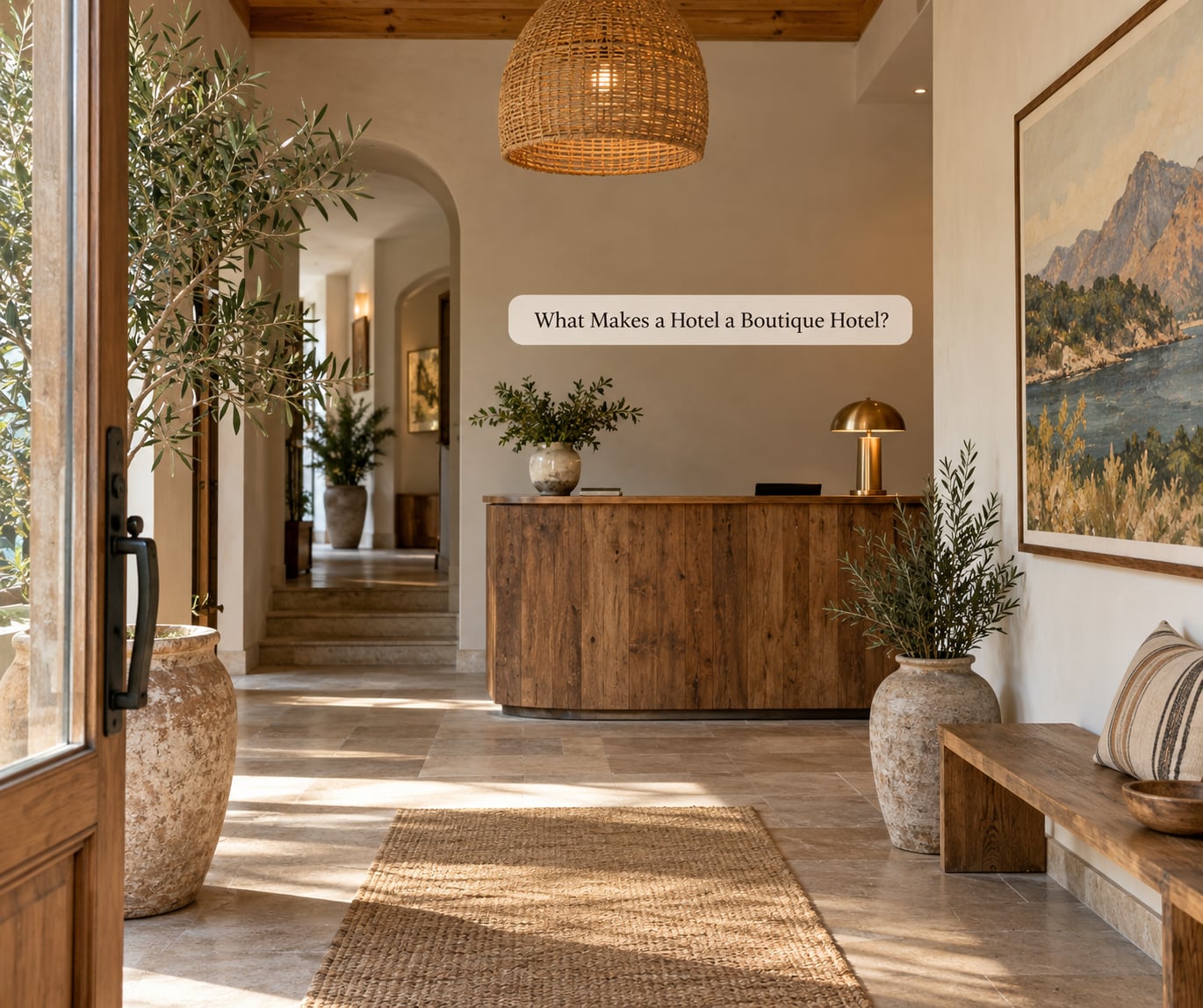
What makes a hotel a boutique hotel is a coherent sense of place and a level of personal attention that a larger property cannot physically deliver. Everything else — the room count, the age of the building, the nightly rate, the absence of a brand sign — supports that idea but does not create it.
The practical test is simple. If you walked into an unfamiliar boutique hotel without being told what it was, could you describe its idea in a sentence? A converted grain store that keeps one communal table and serves whatever the farmship sends that morning. A six-room inn above a bakery, run by the family that has owned the bakery since 1974. A purpose-built city stay with no reception desk at all, because you unlock the door with a code and text the host when you arrive.
That’s the marker. A chain property in the same city gives you the same idea in every city, because the idea is designed centrally and rolled out. A boutique property gives you one idea, fully applied.
How Boutique Hotels Differ from Other Small Hotels
Small is the confusing part. Plenty of small hotels have no particular character at all, and plenty of properties with hundreds of rooms have one. The differences come down to what kind of business is behind the front desk.
A limited-service hotel sells you a clean room and a breakfast option, usually near a motorway junction or an airport. No restaurant, no bar, minimal staffing, price driven by location. Full-service properties add restaurants, meeting space, concierge and spa, and they run on departments. A bed-and-breakfast is a home with a handful of rooms and the owner’s breakfast; it can be warm and characterful without being a boutique hotel in any meaningful design sense. A lifestyle hotel is usually a branded, urban, socially loud property with a bar program and group events.
Boutique sits somewhere else. It is not a service tier. A boutique property might be full-service, might be limited-service, might have no restaurant at all. What it always has is an individual identity and a host or team making decisions in person.
| Type | What it sells | Who decides the look | Service style |
|---|---|---|---|
| Boutique | A specific, unrepeatable place | The owner or a small in-house team | Personal, name-learned, flexible |
| Limited-service | A reliable room at a fair rate | The brand’s design team | Functional, often self-check-in |
| Full-service | Everything under one roof | The brand plus a corporate design guide | Departmental, formal |
| Lifestyle | Social energy and a good bar | The brand’s concept team | Energetic, event-led, group-friendly |
| Bed-and-breakfast | Homestay comfort and a host’s cooking | The host, usually a private owner | Warm, informal, breakfast-led |
One caution about the last row. Plenty of excellent bed-and-breakfasts qualify as boutique in spirit, and plenty of boutique hotels would bore a guest who came for a quiet, homey stay. The categories overlap more than the tables suggest.
The Defining Traits of a True Boutique Hotel
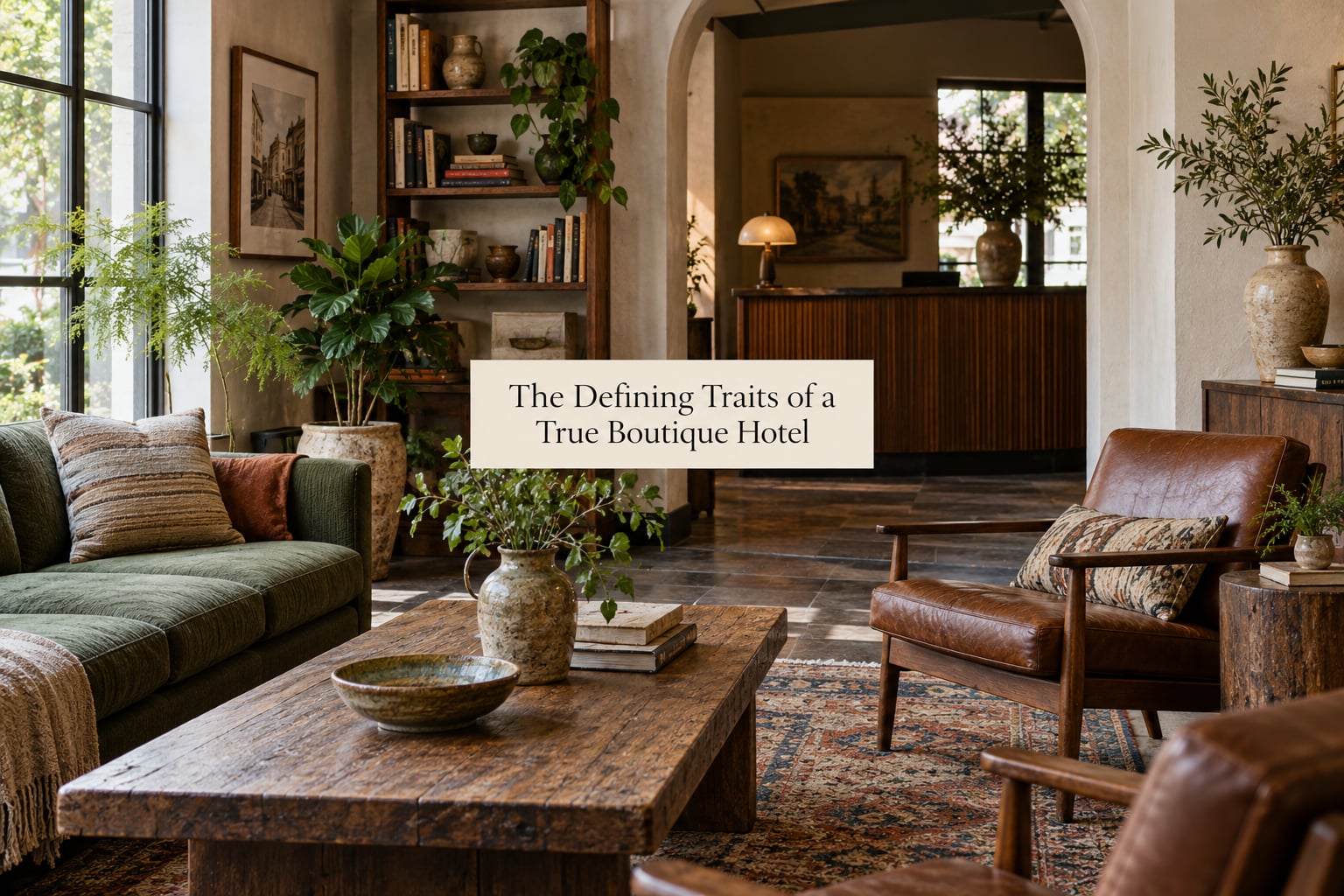
Seven traits show up repeatedly. You do not need all seven, but the properties worth booking have most of them, and the two that matter most are the first two.
Intimate scale. Small enough that the manager knows the room numbers by heart and can see who came in last night. Usually somewhere between ten and a hundred rooms.
Independent ownership. The person making decisions lives near enough to care about them. Not a marketing category applied to a floor of a larger property.
A distinctive concept. One idea, applied to everything. A former post office. A print shop. A building that kept its 1960s tiles because the owner liked them.
Thoughtful design. Furniture, lighting, and fittings chosen rather than specified, often from local makers. Older properties get restored rather than stripped back to bare plaster and downlights.
Personal service. A high staff-to-guest ratio, staff who learn your name by day two, and real flexibility on timing, requests, and late arrival.
Local connection. Menus sourced from nearby suppliers, artwork from local artists, bars staffed by people who know the neighborhood’s history.
A sense of place. The strongest signal, and the hardest to fake. The building could not be anywhere else, and the street outside is part of the stay rather than a backdrop.
What Makes a Hotel a Boutique Hotel in Practice?
In practice, those traits show up in the details of a stay, and you can read them before you arrive. On the booking page, a real boutique hotel explains its concept in the owner’s voice and names the neighborhood. At arrival, someone is actually there, or there’s a considered self-check-in with a phone number that gets answered. In the room, the fittings match the concept rather than a brand catalogue.
At mealtime, the menu is short and specific. On recommendation, staff give you two or three options with real detail — the bakery opens at six, the market shuts at noon — instead of a laminated card of ten restaurants. Afterwards, the breakfast place is one nobody outside the neighborhood would find, which is generally the best possible signal.
Does Size, Price, or Age Make a Hotel Boutique?
No. None of the three is the deciding factor, which is where most of the confusion comes from.
On size: the commonly cited range is 10 to 100 rooms, and that is a useful signal rather than a rule. Operating economics push small properties toward custom furniture and a high staffing ratio per room, and both get expensive above roughly a hundred rooms. Larger boutique-style properties exist; they are usually chain sub-brands with a standardized concept.
A related industry rule of thumb is the 15/5 guideline — roughly fifteen rooms per person on staff through the day and five overnight. It is a rough staffing model, not a definition, but it explains why a twenty-room property can offer better service than a two-hundred-room one.
On price: boutique hotels sit across the whole range. Restoration costs and low room counts push rates up in expensive cities, but plenty of well-run independent properties charge less than the chain down the road. Travelers on forums regularly point out that a modest independent stay with real character beats an expensive one with a thin concept, and that is the honest version of the comparison.
On age: heritage buildings, 1970s conversions, and brand-new purpose-built properties all appear under the label. A new building can be as characterful as a restored warehouse, though it has to work harder to feel rooted.
Here is the part most guides skip: there is no certification body for the word boutique. No regulator defines it, no registry approves it. That absence is why the term gets used loosely and why you need signals rather than a logo. Chain groups now run boutique sub-brands, which is worth knowing, since those properties carry genuine brand standards behind the description.
How to Tell if a Hotel Is Truly Boutique
Five checks, all doable from your phone in about ten minutes, and none of them require contacting the property.
- Read the description for a specific idea. “Boutique experience awaits” is filler. A named building, a named maker, or a named supplier is a person making decisions.
- Check the room count on the listing. Booking sites and hotel sites both publish it. A number well past a hundred with the word boutique in the name usually means a branded concept.
- Compare the photographs room by room. Real boutique properties have variation and small differences between pictures. Chain properties show the same corner from the same angle in every photo, because it is the same corner.
- Scan reviews for staff names and local recommendations. Named staff and specific restaurant suggestions are the strongest review signals. Guests who say little about the room and a lot about a person are telling you something.
- Ask whether the common space is worth the trip. Look for a lobby, courtyard, or bar that people describe as the best part. If every review photo shows the same lobby chairs, you have your answer.
Travelers on hotel forums and review sites cross-check room count, photos, and reviews for exactly this reason, because the label travels further than the substance. Two stays in the same brand can look nothing alike, which is another reason to judge the specific property rather than the category.
Boutique Hotel Examples by Type
These are illustrative archetypes, not real properties, and each one solves a different trip.
An art hotel hangs its identity on a working relationship with an artist or curator, with exhibition space in the ground floor and studios nearby. Best for a city break where the arts matter more than the pool.
A heritage inn lives in a restored building with its original fabric intact, uneven floors included, and trades on history and setting. Best for heritage trips and for travelers who find a dated-but-characterful room more interesting than a new one.
An urban design stay is small, sharp, and social, with a bar program, events, and furniture worth photographing. Best for couples and for anyone who wants to be within walking distance of everything.
A rural retreat trades scale for silence, with few rooms, long drives to reach it, and a kitchen doing most of the talking. Best for slow travel and for travelers who want to do almost nothing.
A neighborhood guesthouse is the humblest and often the most convincing version — a few rooms above a shop or a working housekeeper’s building, where the surrounding street is the attraction. Best for solo travelers who want to know a place rather than stay in it.
What to Ask Before Booking a Boutique Hotel
Emailing the property before you book is normal and welcome, and a good boutique hotel answers in a day with actual detail. Here is what to ask.
Ask about the building and the stairs. Many small properties are second or third floor conversions with no lift, and luggage handling is the thing to negotiate rather than the room price.
Ask about noise, specifically. A building with character also has thin walls and a street outside. Guests regularly report street noise in restored properties, and no amount of design fixes a window that faces a bus stop.
Ask what breakfast actually is and when it is served. A short answer naming suppliers tells you far more than “full breakfast included.” Ask too whether there is dinner, and whether the bar is open to non-residents — if it is not, your evening options narrow considerably.
Ask about transport from the nearest station or airport. Independent properties are often a short walk from somewhere useful or completely dependent on a car. Taxis, bus routes, and the walk to the last bar should all be clear before you arrive.
For work trips, test the wifi with a review that mentions a video call, and check for a desk with a chair that isn’t an armchair. For families, confirm the room can take a cot and ask about stairs with a toddler. For solo travelers, late check-in, solo dining at the bar, and luggage storage between checkout and departure are the three questions worth asking every time.
Frequently Asked Questions
What makes a hotel a boutique hotel?
A boutique hotel is a small, usually independent property with its own distinct idea, its own design choices, and staff close enough to guests to provide personal service. The label is a descriptor with no official certification, so judge a property by whether one concept runs through the building, the food, and the recommendations staff give you.
Are boutique hotels always small or expensive?
Neither is guaranteed. The commonly cited range is ten to a hundred rooms, which is a signal rather than a rule, and rates range from budget to high-end. Restoration costs and custom furniture push prices up, but plenty of independent boutique stays cost less than the chain property nearby. Character, not price, separates them.
What is the difference between a boutique hotel and a lifestyle hotel?
A boutique hotel is defined by individual ownership and a specific place-based identity, usually intimate and quiet. A lifestyle hotel is a branded, urban, socially active property built around a bar program and group events, and the same concept appears in every city. Boutique sells specificity; lifestyle sells social energy.
Is a boutique hotel better than a traditional hotel?
It depends on the trip. A chain hotel delivers the same room, menu, and service script in every city, which is exactly what you want on a work trip or a one-night stop. A boutique hotel delivers atmosphere, neighborhood character, and staff recognition, which matters more when the stay is the point of the visit.
How can I tell if a boutique hotel is authentic?
Check five things before booking: whether the description names a specific concept, the room count on the listing, whether photographs differ room to room, whether reviews name staff and recommend specific local places, and whether guests describe the common space as worth spending time in. A real boutique hotel passes all five.
Are boutique hotels suitable for families and remote workers?
Often yes, with planning. Families should confirm room size, cot availability, and stairs, since small historic buildings rarely have lifts. Remote workers should test wifi reviews for video calls and check for a proper desk. Travelers needing a pool, a gym, elevators, or round-the-clock desk should confirm before booking.
Conclusion
What makes a hotel a boutique hotel is not its size, its age, or its nightly rate. It is a single idea applied consistently by people who are there to be asked, in a building that could only be in that place. Everything else is packaging.
So decide the atmosphere first: independent and quiet, or social and loud. Then pick the traits you actually need — a staff member who learns your name, a bar worth an evening, a walkable street, or simply a bed that works. Check the listing against those five tests, ask the questions that matter for your trip, and ignore the word boutique on the name if the property underneath it does not hold up.