If you have just been accepted and want to know what to expect at an artist residency, the short answer is this: a hosted stay, usually several weeks to a few months, that gives you studio space, often accommodation, and protected time away from your day job and other obligations so you can work on one project without being interrupted. The exact arrangements differ by programme, so the specifics always come down to the brief.
This guide is written for the part most pages skip: the artist who has already been accepted and is now wondering what the arrival, the daily rhythm and the last week actually feel like. Applications get plenty of advice online. Arriving does not.
Table of Contents›
- What Is an Artist Residency?
- How Do You Get Accepted?
- What Is the Daily Schedule Like?
- What Can You Expect from the Studio and Facilities?
- Is Accommodation and Food Included?
- How Are Residencies Funded?
- What Kind of Community Can You Expect at an Artist Residency?
- What Happens at the End of a Residency?
- How to Prepare Before You Arrive
- What to Expect at an Artist Residency in Your First Week
- Travel, money and supplies
- How to Choose the Right Residency for You
- Frequently Asked Questions
- What is a residency for art?
- How much does an artist in residence get paid?
- Are artist residencies hard to get into?
- How long do artists work a day at a residency?
- Are art residencies worth it?
- Conclusion: Start With the Program Brief
What Is an Artist Residency?
An artist residency is a temporary, supported stay organised around your work. In exchange for a fee, a contribution, your labour, or simply your participation, you get studio access, sometimes a room to sleep in, and a community of other artists working alongside you.
It is not the same as a workshop, where a teacher sets the agenda and you follow it for a day or a weekend. It is not an exhibition, because nobody is asking you to have a finished body of work ready. And it is not a holiday, which is the comparison people make that annoys me most. A residency is closer to a rented room with a desk, a door, and a group of people who also happen to be working.
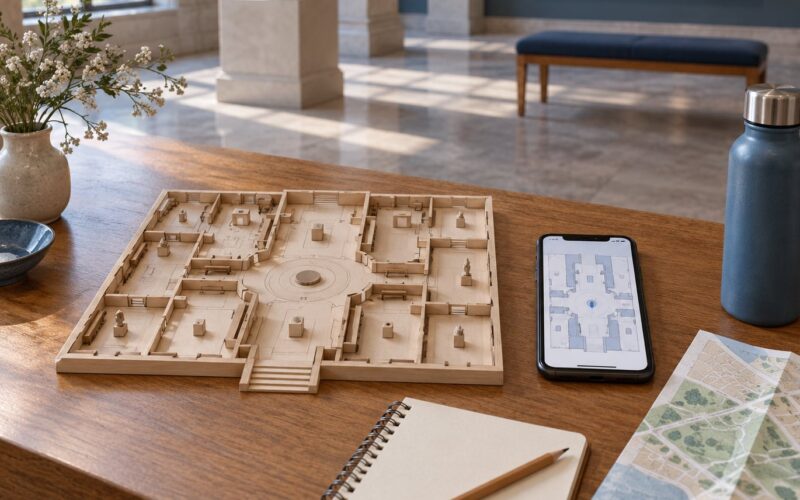
Programmes come in a few flavours. Foundations such as MacDowell or the Bogliasco Foundation run on grants and endowments, while artist-run spaces are usually cheaper and far more hands-on. Museum artist-in-residence programmes are something different again: you live inside a museum, and the expectation is that your work engages with the collection or the building.
How Do You Get Accepted?
Most open calls run on the same pattern. You read the brief twice, check the eligibility rules, write a project description, attach a portfolio, and send it to a deadline. Shortlists often lead to an interview or a request for references, and decisions arrive weeks or months later.
Three things carry more weight than applicants expect. The first is fit with the programme’s stated purpose, which is usually specific, such as a theme, a medium, or a region. The second is a project that plainly needs time: a body of work with a real question behind it beats a vague plan to explore something. The third is a realistic budget and timeline.
Each residency sets its own criteria, so treat the brief as the only rulebook. If it asks for a video walkthrough, that matters. If it lists a word limit, stay inside it. Responding to what is actually asked is the single cheapest way to improve an application.
What Is the Daily Schedule Like?
There is no enforced schedule, and that is the whole point. Nobody checks when you start, and nobody cares how long you stay in the studio. What fills the day instead is a loose rhythm, and it usually looks something like this.
- Morning: studio time before anything else happens. Many people treat this as the productive block and protect it.
- Midday: a break, sometimes a shared meal if the programme provides one, sometimes just lunch at your own desk because you were mid-flow.
- Afternoon: more studio work, or admin, or errands into town when the shops are actually open.
- Once or twice a week: a group critique, a visiting artist talk, or a workshop you are welcome to drop into.
- Occasional evenings: a shared dinner, a walk, or a reading. Usually optional, usually the reason people remember the month.
Some programmes run a fairly fixed week, with a critique on Wednesday and a field trip on Friday. Others are almost entirely self-directed, and you might go a fortnight without seeing anyone who is not staff. Both are normal. The variation is worth asking about before you apply, and often the reason artists apply to the same place twice.
What Can You Expect from the Studio and Facilities?
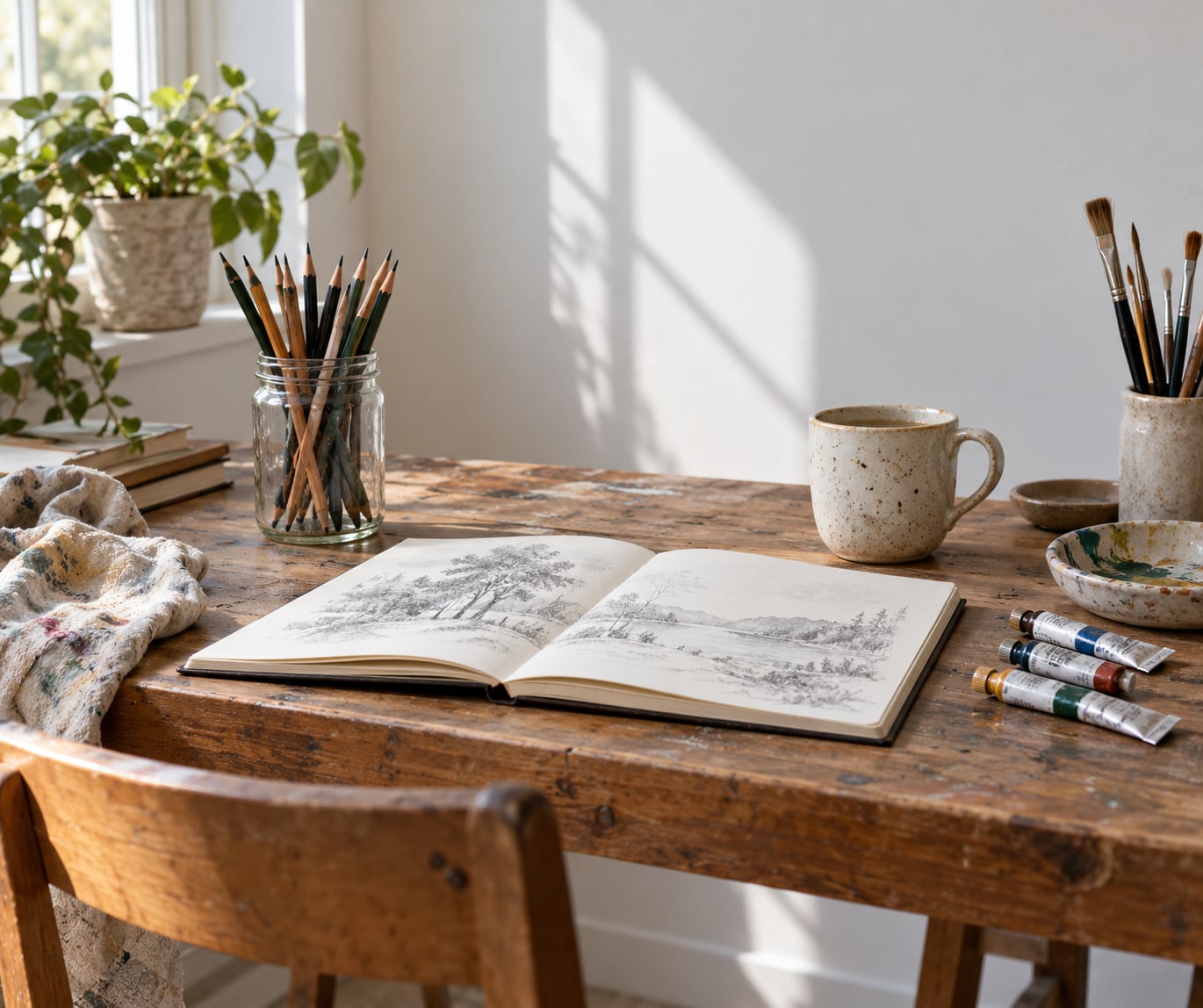
Studios range from a private room with a proper door and lock to a shared barn where eight people work in the same weather. Both happen at excellent programmes. What matters is knowing which one you are getting, because it changes how you plan your materials and your privacy.
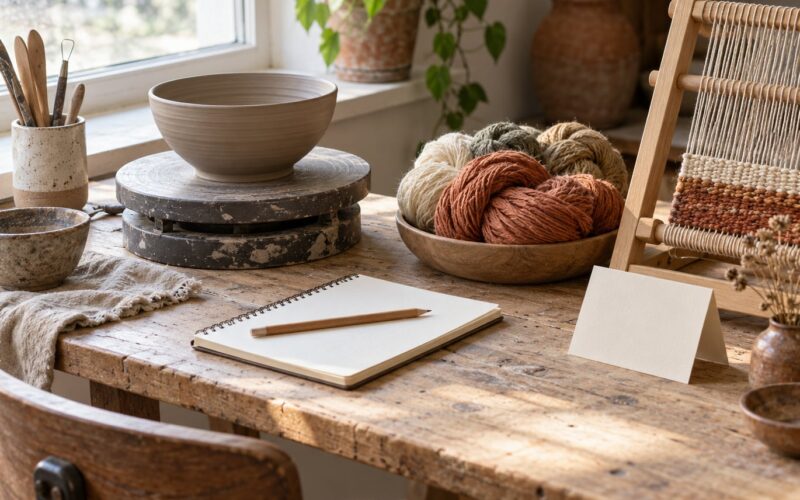
Common inclusions are work tables and chairs, electricity, internet access, and sometimes a kiln, a loom, a darkroom, a print bench or a small machine shop. Larger buildings often have a common kitchen, a laundry and a shared living room. Technical help, when it exists, usually means one resident who knows the building rather than a full-time technician.
Two details catch people out. Bench space and wall space are often more limited than the floor plan suggests, so ask about the size of your actual work area. And “studio access” can mean eight hours a day or it can mean a key, so check the hours before you plan anything that needs them.
Is Accommodation and Food Included?
Sometimes. Some residencies put you in a room on site, others place you in a flat or house nearby and give you studio access only, and a few expect you to arrange your own lodging and pay your own way. None of these is unusual, and the difference changes your budget a lot.
Meals follow a similar pattern. A few programmes cook communally or provide a fixed food allowance. Most do not, which means you are buying your own food in a town that may have one shop and a very limited opening schedule. If you have dietary requirements, raise them in the application rather than after you land.
On-site rooms are simple, usually small, and shared more often than you might picture. Ask about bathrooms, kitchen access, whether a partner or family can come, and how far the nearest town is. If you are travelling alone, a residency in a place with no bus service is a very different six weeks from one a short walk from a market square.
How Are Residencies Funded?
There is no single model. Some residencies are free to the artist, funded by a foundation or by donors. Others charge a programme fee in exchange for studio time, lodging or a stipend. Some are closer to an exchange, where you give work, teaching or a service in return for the stay.
Stipends, where they exist, are usually modest and usually paid at the end of the term or on a monthly schedule. Museum artist-in-residence posts sometimes carry a salary and often come with a healthcare plan, which is a different arrangement from the independent studio residency most people picture. Treat the two separately when you read a listing.
The honest part nobody puts on the brochure: a funded place rarely funds the whole trip. Flights, visas, insurance, supplies and the days before a first payment lands all fall to you, and that gap is where most people get caught. Read the total cost including travel before you apply, not the headline figure.
What Kind of Community Can You Expect at an Artist Residency?
Usually a dozen or so people working in different disciplines, at different career stages, all of whom you did not choose. Alongside them there may be a coordinator, a visiting artist or two, and occasionally a curator or writer who drops in. The mix changes everything. A group of painters, a group mixed with composers and architects, and a group where half the people are first-time residents feel like three different places.
Joining well is mostly a matter of showing up. Be at the first shared meal. Ask about someone’s work in progress rather than their career. Share materials and fix things. If you are there alone, treat the group as the reason you came, because on some weeks the studio will not give you what the people will.
The hard version is a cohort with one dominant voice who takes over every critique. It happens. The usual fix is to raise it early with the coordinator, or to give quiet feedback first in writing so the loudest voice has less to react to. Everyone else in the room has had the same week, and most of them are waiting to see how the coordinator handles it.
What Happens at the End of a Residency?
Many residencies close with an open studio, and a good number put on a small group show. Others ask for a reading, a talk, a screening or a piece of written documentation, especially if the outcome is research rather than objects. The end-of-term requirement is set out in the brief, so read it before you arrive rather than the week before you leave.
Not every residency requires a public exhibition, and plenty of the best work from these programmes stays in a studio in a barn. What does not usually happen is a show that will launch your career. The realistic gain is finished work, a documented process and a group of people you will still know in five years.
And it is worth saying plainly: projects stall. Artists arrive excited, hit a month where nothing works, and leave with less finished than they planned. The ones who regret a residency are rarely the ones who spent every day in it. If the work slows down, treat the term as a success unless you leave with nothing at all.
How to Prepare Before You Arrive
Two weeks out, confirm the practical terms in writing: arrival day and time, what is included, the studio hours, the payment schedule, and who to contact if you arrive to a locked door. Then confirm them again in the week before you fly, because plans change and nobody is trying to trick you.
What to Expect at an Artist Residency in Your First Week
Day one is arrival, keys, a tour and usually a meal where everyone introduces themselves. Day two is orientation: fire safety, wifi passwords, where the kilns or the printer live, and how to book the communal spaces. By day three or four you should be at your desk. Expect a first group critique inside the opening week, and expect to show something rough, which is normal and less painful than it sounds.
Travel, money and supplies
Check visa requirements, vaccination rules and insurance before booking anything, since some residencies sit in countries where a normal travel policy will not cover you. Bring enough consumables for the first week: paint, paper, glue, blades, solder, thread, whatever your medium cannot survive without. A residency in a small town may have no art supply shop and a weekly shop that closes before you finish lunch, so restock when you can rather than when you need to.
Pack layers. Most residencies run for weeks at a time, the weather can change inside that window, and laundry is often communal and infrequent. Bring one thing that is not for work, and keep your phone number clear of everyone except the people who need it, because your own schedule is the thing you came to protect.
How to Choose the Right Residency for You
Judge a programme on fit before prestige. A residency in a country you cannot work in, or one that expects a public talk in a language you are not confident speaking, will cost you more than it gives you, however good the name on the page is.
Duration matters too. A week suits testing an idea or a new material. Two to four weeks suits a defined project with a beginning and an end. A season suits research, site-specific work, or a body of work that needs months of accumulation. The longer the stay, the more life admin you have to clear beforehand and the more it will cost you to live rather than to fly.
These are the questions worth putting to the organiser in writing before you apply. Copy the ones that matter to your project.
| Is studio access included, and during which hours? |
| Is the studio private or shared, and how much space is mine? |
| Is accommodation on site or nearby, and for how many nights? |
| Are meals provided, or is there a food allowance? |
| Is there a stipend, and when is it paid? |
| What are the application fees, and are they refundable? |
| What is the application deadline, and in which time zone? |
| Is there an expected outcome, such as an open studio or group show? |
| Can a partner, child or dog come along? |
| Is the building step-free and accessible? |
Also weigh how much structure you want. Some artists come home renewed after three unstructured weeks; others need the scheduled critique and the shared lunch to get anything done. Neither instinct is wrong, but pick the environment that matches yours rather than the one with the nicer photographs.
Frequently Asked Questions
What is a residency for art?
An artist residency is a hosted programme lasting from a couple of weeks to several months where you get studio space, often accommodation, and protected time to develop a single project. You apply to an open call or by invitation, are selected, arrive for a fixed term, work in the provided space, join whatever critique or community structure the programme runs, and leave with the work started or finished plus a working network of artists.
How much does an artist in residence get paid?
It depends on the model. Independent studio residencies usually pay a modest stipend if they pay anything at all, and many charge the artist a programme fee instead. Museum artist-in-residence posts more often carry a salary and sometimes healthcare, because the arrangement is closer to a job. In both cases the payment rarely covers flights, visas, insurance or the gap before the first payment arrives, so budget for that yourself.
Are artist residencies hard to get into?
Free and fully funded residencies are competitive: a popular open call can draw hundreds of applications for a handful of places, and shortlists often involve an interview or references. Fee-based places are considerably easier to get into, which is why some artists treat them with suspicion. Your chances improve with a clear project, a portfolio that matches the brief, and a realistic budget. Applying early matters, because many programmes fill places by invitation first.
How long do artists work a day at a residency?
As long as the work needs, and nobody is checking. Most artists keep a personal rhythm rather than following a fixed timetable: a protected morning in the studio, a break around midday, an afternoon block, then optional group activities once or twice a week. Some residencies run a structured schedule with scheduled critiques and field trips. Others are almost entirely self-directed. Ask how much programming there is before you apply.
Are art residencies worth it?
Usually, if you go in with a project rather than an open-ended wish to be in a beautiful place. Artists most often describe the value as uninterrupted time, finishing something they had stalled on, and meeting people who still matter years later. It is worth less if the studio is impractical, the cost was never honestly stated, or you spend the whole term avoiding the studio. Community is the part people underestimate most.
Conclusion: Start With the Program Brief
Most disappointing residencies are decided in the application, not in the studio. Read the brief, match your project to its stated purpose, and put every practical term in writing before you commit. Then ask what to expect at an artist residency from people who have already been: honest conditions, honest costs, and a cohort you will talk to long after the doors close.