To join a group tour as a solo traveler, you book a departure the same way anyone else does: pick an operator that runs solo-friendly trips, choose your rooming option, pay the deposit, complete the pre-trip forms, then turn up at the welcome briefing. The only real difference is the room decision and how you handle the first evening with strangers.
Most first-timers assume they need to find a travel companion first. They do not. Operators sell these departures to individuals, and on many trips the majority of the group booked without a partner, which is why the room question and the pace question matter so much more than anything else.
I have watched the same pattern repeat on operator pages and in traveller forums for years: the anxiety is almost never about the destination. It is about the room, the early dinner, and whether you will spend nine days being the odd person out. Get those three answers in writing before you pay anything and most of the fear evaporates.
Table of Contents›
- What You Need to Join a Group Tour as a Solo Traveler
- Step-by-Step: How to Join a Group Tour as a Solo Traveler
- How to Join a Group Tour as a Solo Traveler: Check the Group Fit
- How to Join a Group Tour as a Solo Traveler: Ask the Right Questions
- How to Join a Group Tour as a Solo Traveler: Book the Right Trip
- How to Join a Group Tour as a Solo Traveler: Prepare for the Group
- How to Join a Group Tour as a Solo Traveler: Settle In on Day One
- How to Join a Group Tour as a Solo Traveler: Handle Problems Away from Home
- How to Join a Group Tour as a Solo Traveler: Know When to Choose a Smaller Option
- Common Mistakes
- Frequently Asked Questions
- Can I join a group tour by myself without knowing anyone?
- How do I find a group tour that is suitable for solo travelers?
- Do group tours usually charge a single-person supplement?
- Is it normal to feel uncomfortable meeting a group of strangers?
- What should I do if I do not like the pace or the atmosphere of the group?
- How much advance notice should I book a group tour as a solo traveler?
- Conclusion
What You Need to Join a Group Tour as a Solo Traveler
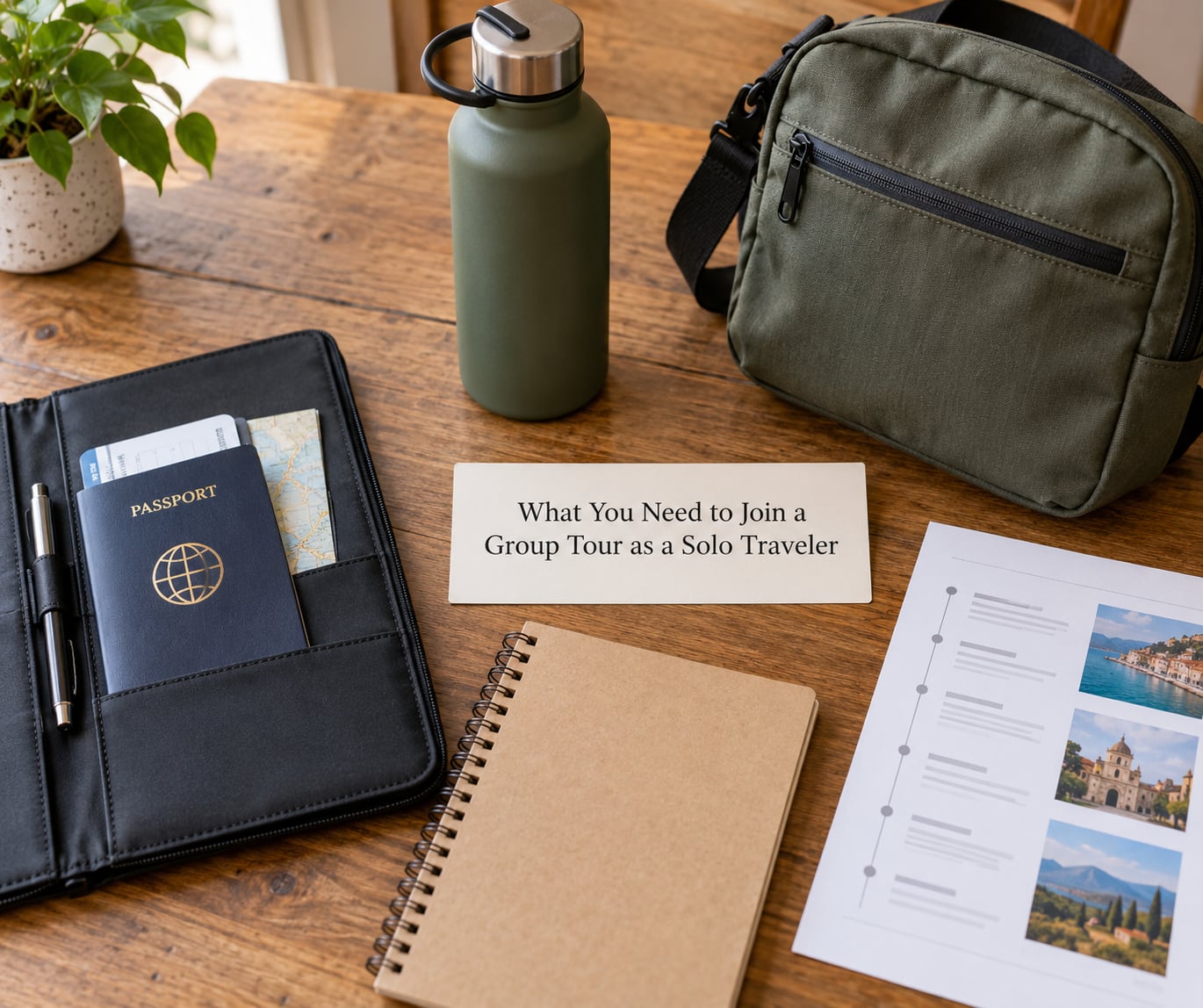
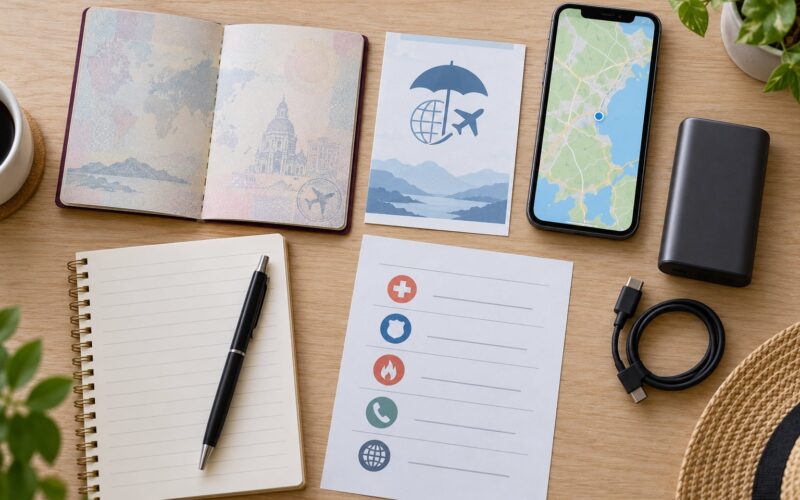
Before you look at destinations, gather the paperwork. You will need a passport valid well beyond your travel dates, any required visas, and travel insurance that covers the specific activities on the itinerary. Some operators make insurance mandatory and will ask for your policy number before the final balance is due.
Then handle the unglamorous parts. Dietary needs, allergies, mobility limits and medication go into the booking form at the moment you reserve, not a week before departure. Kitchen and restaurant planning happens weeks out, and a late note often means no change at all.
You also need an emergency contact who knows where you are, and copies of your documents kept separately from the originals. A shared folder on your phone plus one printed copy in your bag covers the case where your phone is lost or flat.
On the personal side, be honest with yourself about two things. First, the pace: a small-group trip with a local leader still walks a lot, often for several hours a day in hilly places. Second, the sleeping arrangement. If sharing a room with an unknown adult is not acceptable to you, say so now rather than hoping a match works out.
Finally, decide how much structure you actually want. The same destination can be sold as a coach tour with forty people and a fixed dinner table, or as a small group with free afternoons and no scheduled evening events. Both are group tours. They feel nothing alike.
Step-by-Step: How to Join a Group Tour as a Solo Traveler
How to Join a Group Tour as a Solo Traveler: Check the Group Fit
Group fit is the one factor you cannot change once you book, so spend the most time here. Look for the maximum group size, not the marketing phrase. A trip capped at twelve behaves very differently from one capped at thirty, no matter how both are described.
Then check who else is on the list. Operators publish a typical share of solo travelers, and the number tells you a lot: a trip where most people booked alone looks completely different from a departure that is really a couples trip with two spare beds. Some operators also publish the age range for a specific departure on request.
Read what the leader does. A good local leader runs the itinerary, handles the logistics and keeps the group moving; a great one notices who has been quiet all day. Look for reviews that mention a leader by name, since that is the signal people consistently point to when they describe a trip as easy for a first-timer.
Your test is simple: if this exact group of people turned up on this exact itinerary, would you enjoy a week with them? If the honest answer is no, pick a different date or a different operator. Nothing on the brochure will fix that mismatch.
How to Join a Group Tour as a Solo Traveler: Ask the Right Questions
Email or call the operator before you deposit, and get written answers to these:
- How many people are currently booked on my departure? A real number tells you whether you will be the only solo traveler or one of many.
- What is the maximum group size? The cap, not the average.
- Is a single supplement charged, and is the price the same on every departure? Ask for the actual figure rather than a “from” number.
- How does room-share matching work, and is it same-gender? Find out who does the matching and when it happens.
- What is the age range of the group? One late booking can shift the mood of a whole departure.
- How much free time is built in? A trip with no unstructured afternoons is a very different product.
- What are the walking requirements for each day? Ask for hours and terrain, not just distance.
- What happens if the departure does not fill? Most operators guarantee the trip runs, but confirm it.
- What are the cancellation terms? Check the deadline and whether any part of the cost is non-refundable.
- Is there a pre-trip group chat, and how early does it open?
That last group of answers is what separates a good booking from an expensive surprise. A single supplement that appears only after payment, or a group cap that turns out to be thirty-five, are both deal breakers, and both are far easier to catch now.
How to Join a Group Tour as a Solo Traveler: Book the Right Trip
Compare departures rather than destinations. Two identical itineraries in October can feel completely different because one is booked out and one is filling at the last minute. Check how many places remain on each date and pick the one closest to a full but not oversold group.
Look at trip length honestly. First-timers frequently pick fifteen days because it sounds generous, then spend a week of energy they did not budget. Seven to ten nights gives you enough time to settle into the group and still leave the trip with energy for whatever comes next.
Activity level matters as much as price. A walking-focused trip and a sightseeing trip with a coach and free afternoons suit different people, and the walking one will not convert into a gentle holiday just because you are tired on day three.
On cost, compare like with like. A group trip bundles accommodation, transport, a leader and often entry fees into one figure, which is why it can undercut independent travel in an expensive country. Independent travel wins on spontaneity and short trips, not on all-in totals over a week or more.
Then read the terms once more and pay the deposit. You want the confirmation email to state your rooming type, your departure date and the total you are committed to.
How to Join a Group Tour as a Solo Traveler: Prepare for the Group
Most of the social work happens before you land. Join the group chat as soon as it opens, introduce yourself in a couple of sentences, and reply when someone asks you something. That single message does more than any icebreaker on the trip.
State your preferences early and lightly. A message such as “happy to share a room, no snoring, and I usually need an earlier night” sets expectations without demanding anything. People respect directness far more than they respect vagueness.
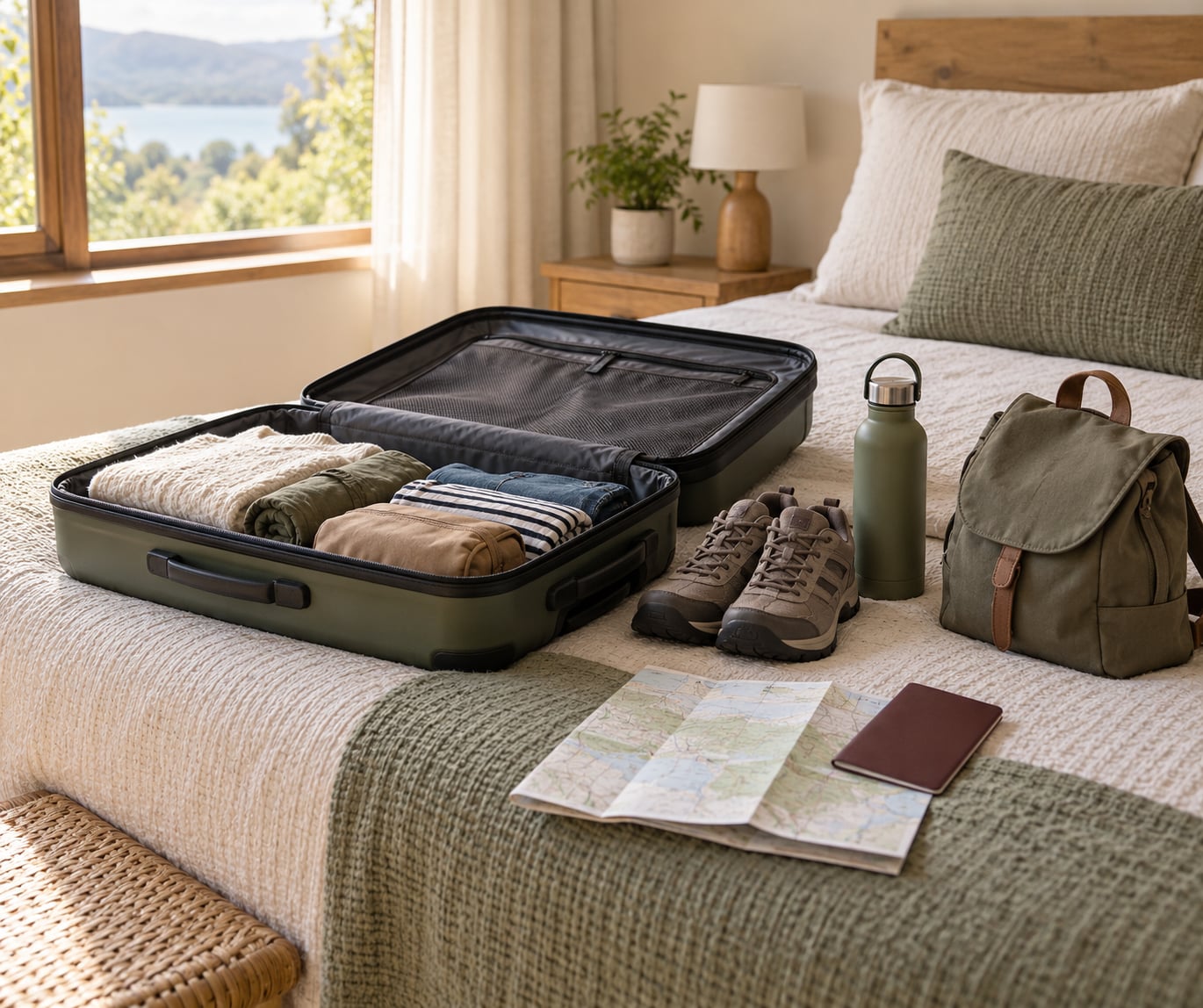
Pack for a group rather than for a hotel. Comfortable shoes for long walking days, a light layer for coaches and temples, and one outfit that works for a dinner with strangers. You do not need much; you need things that survive being worn for eleven hours.
Bring small things that make sharing easy: a deck of cards, a pack of biscuits to share, a book you are happy to put down mid-conversation. On a group trip, the thing that creates a conversation is rarely planned.
Set your own boundaries before you go. You owe the group politeness, not constant availability. A couple of polite refusals early on mean you can say yes to the fifth invitation without guilt.
How to Join a Group Tour as a Solo Traveler: Settle In on Day One
Day one decides the tone of the whole trip, and almost nobody plans it properly. Arrive at the meeting point at least an hour early. That one hour gives you a room to settle into, a chance to find the group, and the option to leave if the atmosphere is already wrong.
Introduce yourself to the leader first, not to the group. Ask the practical questions: what pace are we walking, when is breakfast, how much free time is there this afternoon, and what is optional. Leaders answer these all day for new arrivals, so it is no imposition at all.
Then make one small move. Sit with people rather than standing alone at the bar, join the walk to the first viewpoint, or ask which restaurant is good nearby. You do not need a conversation that runs for hours. Ten minutes of shared interest is enough to turn a stranger into someone you recognise at breakfast.
Watch how the group works before you decide where you fit. Some groups split into cliques within an hour. Some stay fluid. Either is fine, and your job is to find the corner you enjoy rather than to befriend everyone.
On traveller forums this is where first-timers most often say they were wrong. One person in r/ThailandTourism described the exact trade-off for a first trip: more structure and an easier way to meet people, but a real fear of sitting outside the group. Both halves of that are true, and both are manageable if you plan the first day deliberately.
How to Join a Group Tour as a Solo Traveler: Handle Problems Away from Home
Missed connections are the most common first-week problem. Have the operator’s number saved offline, know the name of your hotel, and keep your passport with you rather than in a checked bag. Most missed trains or delayed flights can be handled with one call to the operator, who rebooks the group or tells you what to do alone.
If you dislike the pace or the atmosphere, tell the leader early rather than enduring it silently. Leaders move groups, split walking speeds and change restaurant plans more often than travellers expect. A calm, specific request works: ask for an easier route for the afternoon rather than complaining about the trip.
If the problem is social, options exist that most first-timers never use. Many trips include a free evening block, a second hotel with different guests, or optional excursions where you can meet other travellers instead of the group. Ask what is optional.
If you get ill, your travel insurance and the operator’s local assistance are the two things to use. Operators know which clinics are reputable nearby, which is exactly the value you are paying for when you travel solo.
If you need to end the trip early, ask the operator to help with the remaining logistics rather than improvising. They arrange this regularly and can usually make the onward arrangements cheaper and simpler than doing it alone.
How to Join a Group Tour as a Solo Traveler: Know When to Choose a Smaller Option
Group tours are not automatically the right answer, and pretending otherwise costs people money. A private tour makes more sense if you want a specific region at your own speed, if you are travelling with a mobility limit that makes group walking unrealistic, or if you simply do not enjoy being around other people for a week.
Look for small-group departures capped at twelve or fewer. They keep the social benefits of having people around while keeping the pace personal, which is usually the compromise first-timers actually want.
Hostel-based tours exist for travelers who want company without any intimacy. You book your own bed and join day trips and evening outings with people from the same hostel. No roommate, no single supplement, and you can vanish for a day without explaining yourself.
An independent itinerary with a few overnight stops is often better for a first solo trip of two weeks or less. You learn what independent travel feels like cheaply, and you can upgrade to a structured trip on a later journey once you know what you want.
A fair test: if the appeal of a group tour is mostly the destination and the guided logistics, take it. If the appeal is mainly the idea of not being alone on the flight, take it too. If the appeal is a fantasy of instant friends, book a smaller group and keep expectations realistic.
Common Mistakes
Booking without asking about the room. This is the expensive mistake. The single supplement is the extra charge for having a room to yourself, because hotels price per room rather than per person. Ask whether the trip is twin-share by default, whether matching is free, and what the single supplement actually costs on your date.
Trusting “small group” as a number. Marketing language hides the cap. Look for a maximum, and if you cannot find one, ask in writing and keep the reply.
Picking a departure far from filling. Very last-minute dates are fine on big operations with scheduled departures, but a small group with a handful of places left is a gamble. Choose a date with a healthy number of people already booked.
Choosing on headline price. The cheapest trip usually has the most transfers, the longest walking days and the fewest free afternoons. Compare what the money buys, not just the number.
Saying yes to everything to be polite. Attempting every included activity is how first-timers burn out by day five. Opt out of one thing on day two, early and cheerfully, and the group will not think twice about it again.
Arriving on departure day. Land a day early if you can. It removes almost all of the stress, gives you a night to meet a few people informally, and protects you if a flight is delayed.
Expecting the group to become your friends. Some trips do, some do not. Judge the trip on the itinerary and the company, not on whether you click with everyone. On r/AskBrits, travellers describe group trips as hit and miss depending on who you end up with, and the same trip being called a wonderful experience. Both halves come from the same place.
Frequently Asked Questions
Can I join a group tour by myself without knowing anyone?
Yes. The large majority of group tour departures are booked by individuals, and many operators state that half or more of their travellers book without a partner. You buy a place on a specific departure like anyone else, and you meet the rest of the group on day one. The only choices you make yourself are the rooming type and how much of the itinerary you want to join.
How do I find a group tour that is suitable for solo travelers?
Start with the operator rather than the destination. Look for published maximum group sizes, a stated share of solo travellers, a clear room-share matching policy, and a pre-trip group chat. Ask about free time, walking hours and the age range on your departure date. Small operators and operators that segment trips by age and pace usually give you more useful detail than a large coach operator’s brochure.
Do group tours usually charge a single-person supplement?
Often, yes. The single supplement is the extra charge for having a room to yourself, because hotels price per room rather than per person. Many small-group operators instead quote trips on a twin-share basis and offer free room-share matching, sometimes with a same-gender option. Ask which basis applies to your date and what a single supplement costs on that specific departure, rather than relying on a from price.
Is it normal to feel uncomfortable meeting a group of strangers?
Completely normal, and almost every first-timer feels it. Tour operators build in arrival time, a welcome briefing and often a group dinner precisely because meeting strangers is the hardest hour of the trip. Arrive early, introduce yourself to the leader first, and make one small effort such as sitting with people at dinner. Most discomfort passes within a day of getting settled.
What should I do if I do not like the pace or the atmosphere of the group?
Tell the leader early and be specific. Ask for an easier route, a slower walking group, or a different restaurant table rather than describing the trip as a whole. Leaders also know which evening activities, excursions or free blocks are genuinely optional, which is often the simplest fix. If the atmosphere itself is wrong, check whether a smaller departure or a hostel-based day tour is available on your route.
How much advance notice should I book a group tour as a solo traveler?
For scheduled departures of small-group trips, anywhere from two to six months ahead gives you a decent choice of dates and rooming options. Peak-season trips and operators with small caps can fill earlier, and river cruise or expedition-style departures often sell out a year ahead. Last-minute space does exist on large operations, but waiting until the final days usually means taking whatever rooming option remains rather than choosing.
Conclusion
If you do one thing before booking, get the rooming answer in writing. Whether a trip is twin-share, whether matching is free, and what a single supplement costs on your date decides more about your comfort than the destination list ever will.
From there the process is straightforward: check the group cap and who else is booked, ask about pace and free time, pick a departure with a healthy group forming, complete the forms, join the chat, and arrive a day early. Do those five things and joining a group tour as a solo traveler stops being a leap of faith and becomes an ordinary booking.