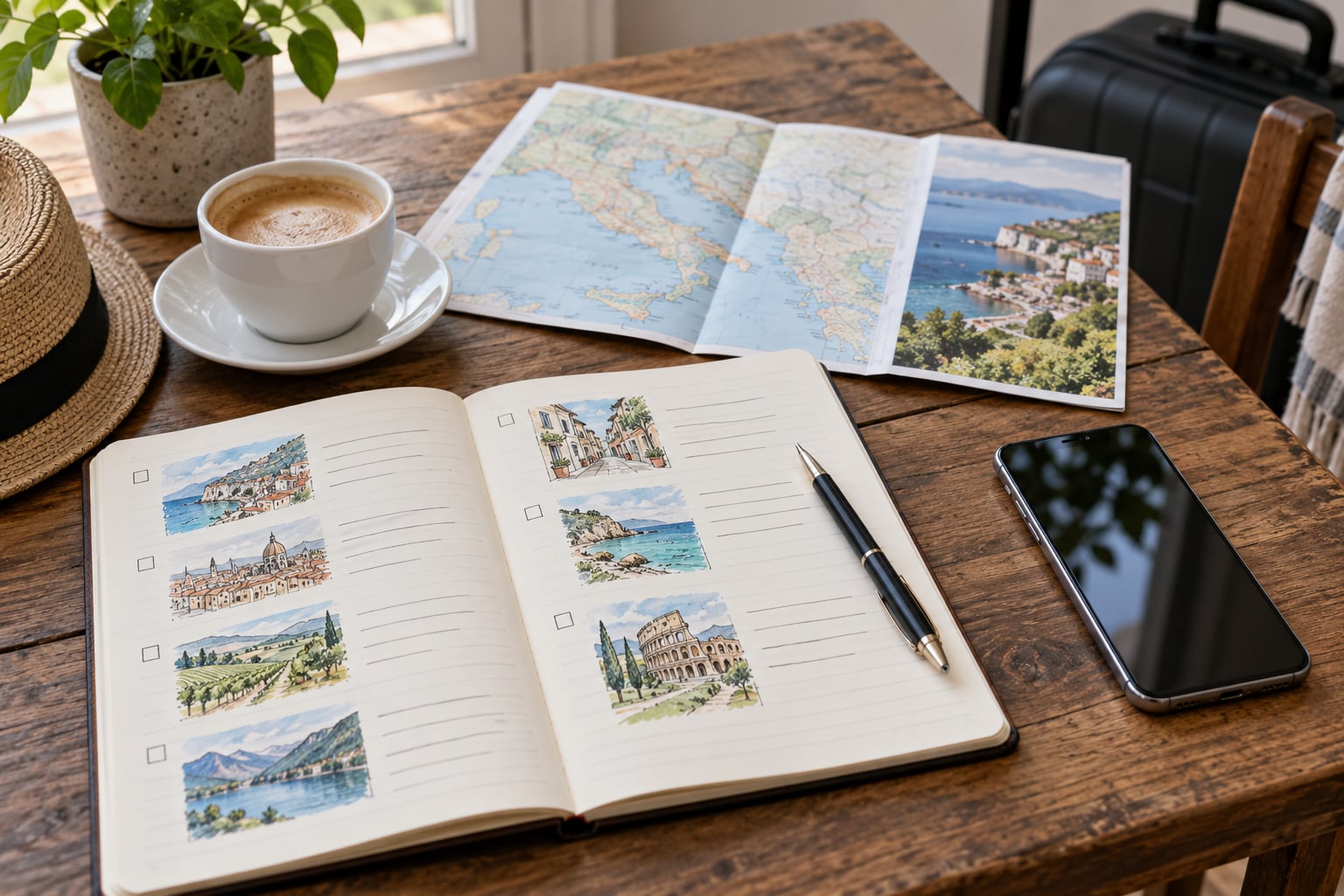
Sharing your travel plans with family works best when you give everyone one link that is always current, agree a check-in time you actually keep, and define what happens if a message goes missing. That combination ends the daily phone calls: they have the information, you have the rhythm, and nobody is left guessing.
It takes about half an hour to set up before you leave. Most of the work is one conversation you have with the person who worries most, because the real problem is rarely the missing information. It is the uncertainty.
Table of Contents›
- What You Need
- Step-by-Step: How to Share Your Travel Plans With Family
- Create one shared travel brief
- Set update times instead of promising constant contact
- Separate useful details from private moment-to-moment updates
- Prepare an emergency contact plan
- Use a simple check-in template
- Agree on what happens when plans change
- Common Mistakes
- Frequently Asked Questions
- How often should I check in with family while traveling?
- What should I share in a family travel group chat?
- What if I miss a scheduled check-in while traveling?
- Should I share my exact location with family?
- How can I travel spontaneously without worrying my family?
- What information is safest to keep private while traveling?
- What to Do First
What You Need
You need five things, and none of them require a new app for your relatives to install.
One shared place for the plan. A shared Google Doc, a Google Sheet, a Notion page or a private blog link that anyone in the family can open without asking you for a password. On The RV Forum, long-haul travellers described exactly this arrangement: friends and family know to check the site on their own schedule, and can leave comments if they want to.
Emergency contacts. Local emergency numbers for every country on the route, plus one named person at home who has the full document and a copy of your passport details.
Booking details. Flights, trains, ferries and accommodation addresses, with confirmation numbers. Your insurer will ask for these, and so will a hospital if you are unlucky.
A backup channel. Most trips go fine on one app. Some countries have patchy mobile data, so agree what happens when your usual messaging app is not working.
Clear update expectations. The number of messages you will send, roughly when, and what a missed message means. This is the piece people skip, and it is the piece that stops the phone calls.
Step-by-Step: How to Share Your Travel Plans With Family
Create one shared travel brief
Start with the top comment in r/femaletravelers, where a traveller wanting more freedom in her own planning put it plainly: Share your itinerary with friends and family. I have mine on Google Sheets and share the link. That is the community default, and it works because a link never goes stale and never needs explaining.
A shared spreadsheet beats a document for most trips. Give each leg of the journey its own row: date, where you are sleeping, how you are getting there, and a rough note about what you plan to do. A document works better if you want prose, a cover photo and a short written summary instead.
Whatever you use, set the sharing to view-only. You want family to be able to read the plan without being able to delete it or accidentally edit it while you are on a train with patchy reception.
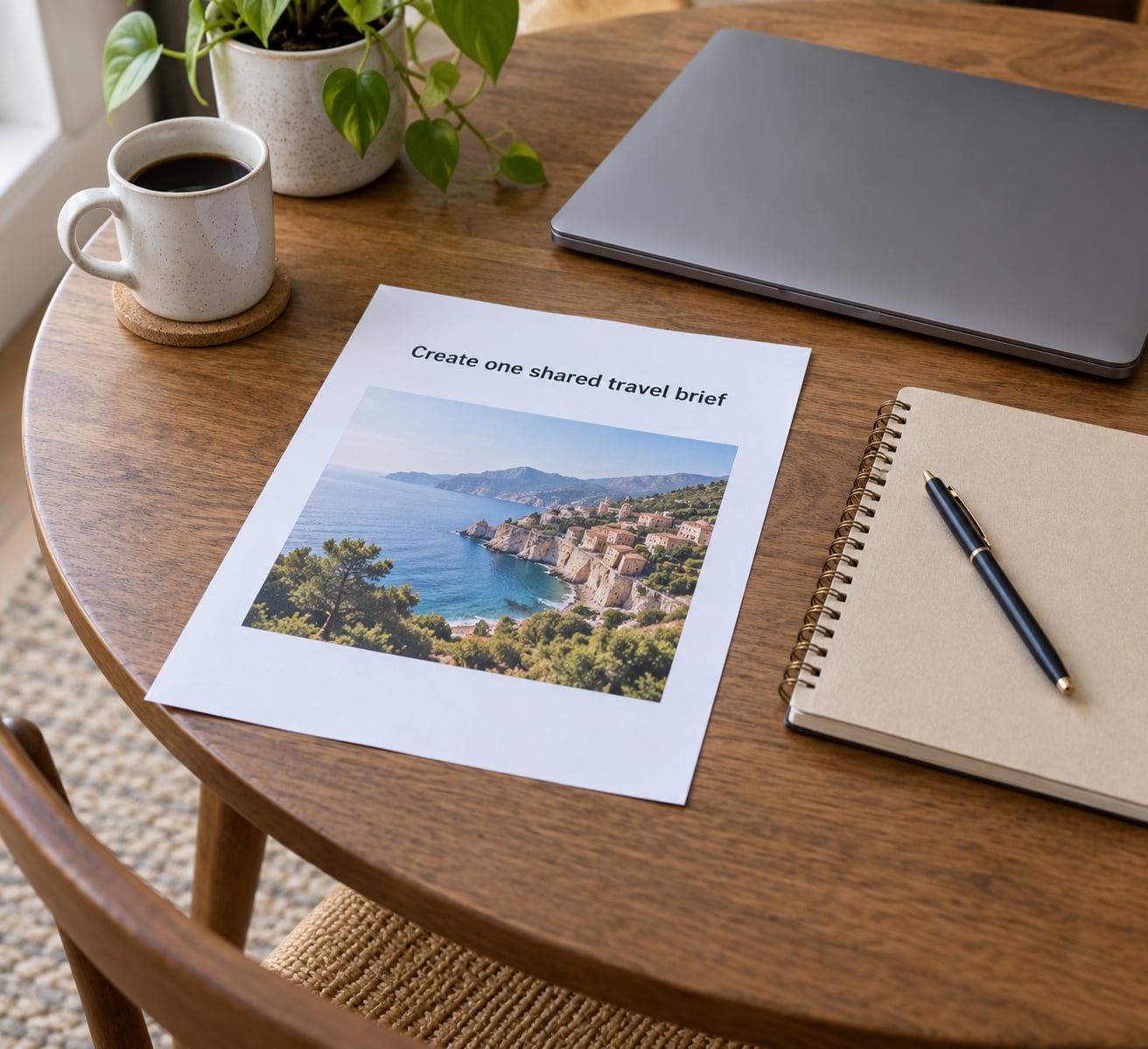
Add a line at the top that says the plan changes, and check the document when you can. A document that is three days out of date is worse than no document, because it reassures people about information that is no longer true.
Set update times instead of promising constant contact
The core problem with how to share your travel plans with family is the phrase send me a message when you get a chance. It sounds harmless and produces a dozen anxious texts by dinner time.
Replace it with specific times. Most people settle on one short message in the evening, after the day’s plans have settled, plus one on the morning you change city or country. A fixed window works better than a fixed clock time because it flexes with local schedules without losing the shape of the day.
Now define what a missed message actually means, in words, before you leave. If the agreed message does not arrive within an hour of the normal time, family sends you one text. If nothing comes back within two, they call the person you nominated as escalation contact. If you have not replied after four hours, they contact the local emergency services and the number of your accommodation.
Writing those three steps down does two things. It stops a delayed train from turning into a phone tree, and it gives a genuinely worried person something to do, which is usually what they actually need.
Separate useful details from private moment-to-moment updates
Not everything belongs in the shared document. Some of it helps your family stay calm, and some of it only creates risk.
Share your accommodation address and check-in window, the transport you booked, the rough shape of each day, and who locally knows you are there. That is enough for someone to find you, and it is what an insurer or a hospital will need.
Hold back the live dot on a map that follows you around the clock, the name of the place you are sitting in right now, and any detail about when your home is empty. The RV Forum travellers made this point from experience: they deliberately avoid posting specifics about where they are at the moment, or where they are headed, and keep their public posts vague.
This is not only about strangers. A precise departure time and a home address in the hands of someone you know badly is a real risk, and continuous location sharing also tells a third party when your accommodation is empty. Sharing your location for a scheduled window, then switching it off, gets most of the reassurance with none of the exposure.
One more thing worth keeping off the record: the anxious part of the trip. Family reassurance is not a debrief. You do not owe an account of why the afternoon went badly.
Prepare an emergency contact plan
Write a short section in the shared document that assumes you cannot reach anyone at home. It should list the local emergency number for each country, which is 112 across most of Europe, 911 in the US and Canada, and 999 in the UK. Add the number for your travel insurer, your nearest embassy or consulate, and one friend or relative at home who holds a copy of your passport and your policy details.
Note anything that matters medically. Allergies, medications, blood group, and whether you travel with an EpiPen or an insulin pump. If you rely on a mobility device or have a hearing or vision need, a line about that helps a stranger help you faster.
Tell the escalation contact what you want them to do if a check-in is genuinely missed and you cannot be reached. Most people are relieved to have the instruction, because guessing is the part they dread.
Print a copy of the brief and carry it in your day bag. When data does not work in a mountain village or a rural area, paper is the version that still functions. Connectivity worry is usually overstated, but paper costs nothing.
Use a simple check-in template
A template turns an awkward blank text box into a five-second job. The long-haul travellers on The RV Forum run an even shorter version, a two-word nightly exchange, All good? and a one-line reply, and report that it keeps everyone calm with almost no effort.
Use the short version on easy days and the full template on the days something actually happened. Five lines is enough:
Where: town and the name of the place you are staying.
Next stop: where you are heading tomorrow, and when you leave.
Getting there: the train, flight or bus, and the booking reference.
Status: nothing unusual, or one line on the delay, change or problem.
Ask: anything you need from home, or nothing today.
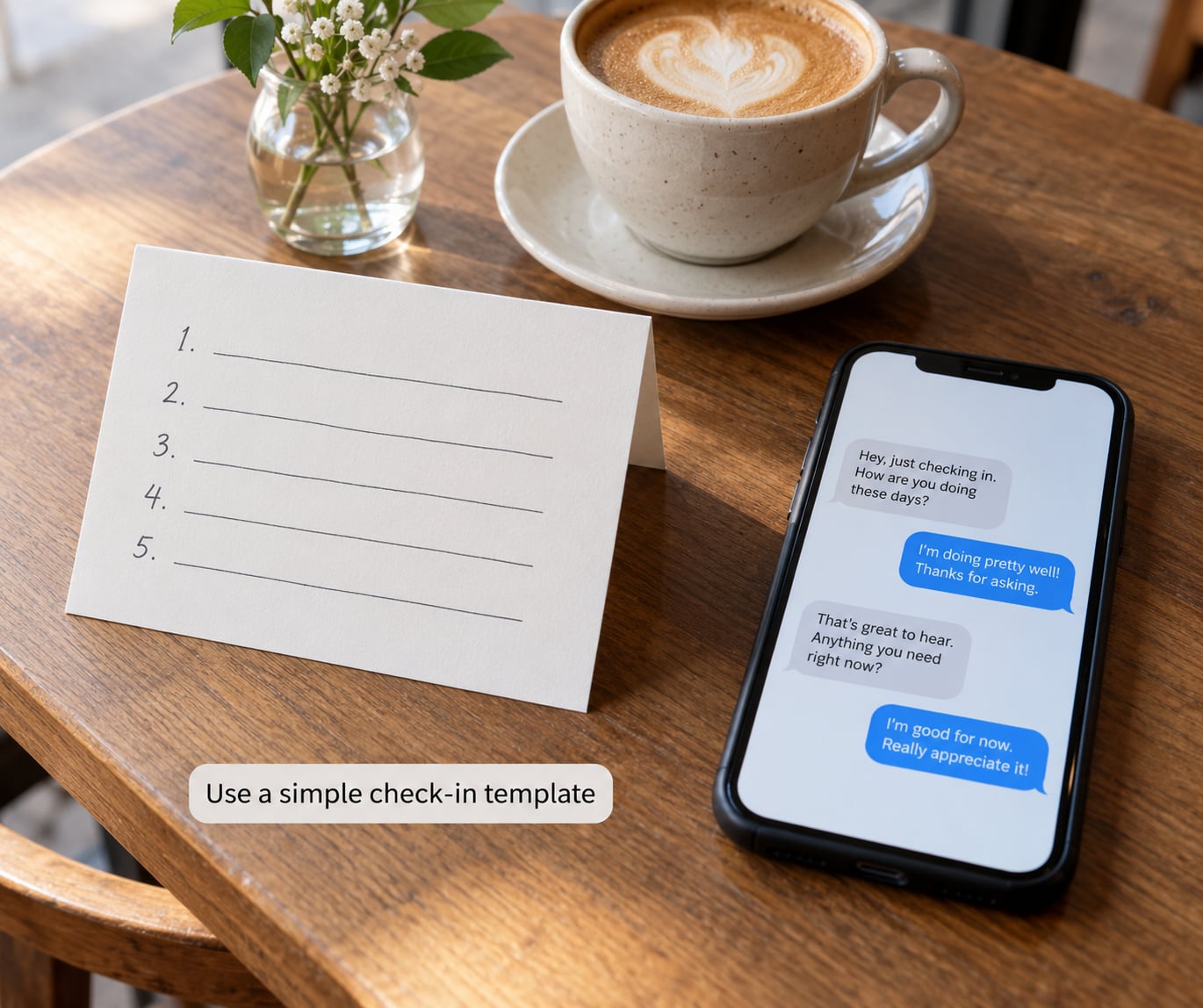
The last line matters more than it looks. Leaving a blank space makes family fill the silence themselves.
Send it in the same thread every day. A single running thread means they scroll once and read the whole trip, instead of chasing a hundred separate messages across three apps.
Agree on what happens when plans change
Slow travel changes shape constantly, and a fixed itinerary is a fiction. Build that into the system rather than pretending otherwise, because pretending is what turns a missed train into an argument.
Update the shared document when the day changes, and send the template with the new accommodation address. The rule is simple: if the place you are sleeping changes, that is worth a message even if everything else is on schedule. If only the afternoon changed, it is not.
For the traveller, the honest framing is that the plan is a live document rather than a promise. Say that out loud before you go. A relative who understands that a booking can move and the document reflects reality is far less likely to treat a change as a sign that something is wrong.
If one person escalates no matter what you send, give them a job instead of more reassurance. Ask them to be the one who checks the document on Sundays, or the one who holds the escalation contact list. Worry is easier to carry when it comes with a task.
Common Mistakes
Updates that are too vague to help. Having a great time, talk later! gives a worried person nothing to do. Fix: always include the town and the accommodation name. It takes four seconds and it ends the follow-up questions.
Promising constant contact. Message me any time! sounds generous and gets taken literally, usually at 2am with a timezone problem. Fix: name the window. One short evening message, one when you change city, and a stated rule for missed messages.
Over-promising on a trip that will not allow it. A three-week hiking route with no signal cannot support a daily check-in, and pretending otherwise damages trust twice. Fix: agree a longer rhythm before you go. Every few days, with a clear note that silence means something specific.
Sharing too much sensitive detail. Real-time location, exact accommodation names and your home being empty. Fix: set time-limited sharing for the arrival window only, and switch it off once you have arrived.
Treating a late message as an emergency. Without a written rule, a two-hour gap becomes an evening of phone calls. Fix: define the escalation steps in advance, and make sure your escalation contact knows them too.
Letting the trip become a status report. The purpose of sharing plans is reassurance, not surveillance in reverse. Fix: if the sharing is draining the calm the trip was meant to create, cut the cadence rather than the principle. Fewer, better messages beat constant ones.
One last tip from the people who actually do this: build the system so it survives a bad day. If the update only works when everything goes well, you will abandon it in week two.
Frequently Asked Questions
How often should I check in with family while traveling?
Once a day is enough for almost every trip, sent in a fixed evening window, plus one extra message whenever you change city or accommodation. Agree the rhythm before you leave rather than during, and include a written rule for what happens if a message is late. That rule is what stops a delayed train from turning into a phone tree.
What should I share in a family travel group chat?
Share the plan, not the moment. Post the itinerary link once, then send your daily template: town, accommodation, next stop, transport, and anything you need from home. Keep live locations and the name of the place you are in right now out of the chat, since group threads get screenshots and forwarded more often than anyone expects.
What if I miss a scheduled check-in while traveling?
Send a short apology message as soon as you have signal, explaining the actual cause with one line and a new check-in time. It rarely turns out to be a problem, because a missed check-in is usually a dead battery or a train with no reception. If you repeatedly miss the window, the fix is to move the check-in to a time that matches when you are actually awake.
Should I share my exact location with family?
Share it in windows, not continuously. Turn on location sharing for the arrival journey, confirm they can see you, then switch it off. Continuous sharing exposes your daily routine and tells others when your accommodation is empty. It also drains your battery, which is exactly what you do not want on the day your phone dies unexpectedly.
How can I travel spontaneously without worrying my family?
Split your plan into fixed anchors and open space. Accommodation for the first few nights, the exit date, and the emergency details are fixed and shared. The middle stays flexible, and family knows it. Tell them explicitly that a changed booking is normal and not a problem, and the document is the source of truth rather than your day-to-day mood.
What information is safest to keep private while traveling?
Your live location, the name of the place you are staying tonight, the dates you will be away from home, and the fact that your home is empty. Post photos after you have left a place rather than while you are there, and delay location-tagged posts until you are home. Your travel insurance details stay private in the shared document, not on social.
What to Do First
Open the conversation with the person who worries most and agree two things: one shared link, and one message window you will keep. Fill the document tonight, while the bookings are still in your inbox, and set the missed-message rule in writing. Everything after that is maintenance, and maintenance is the easy part.