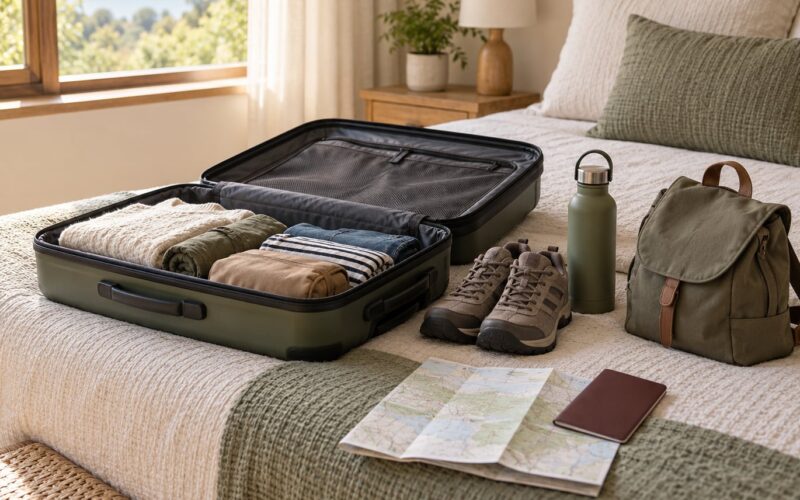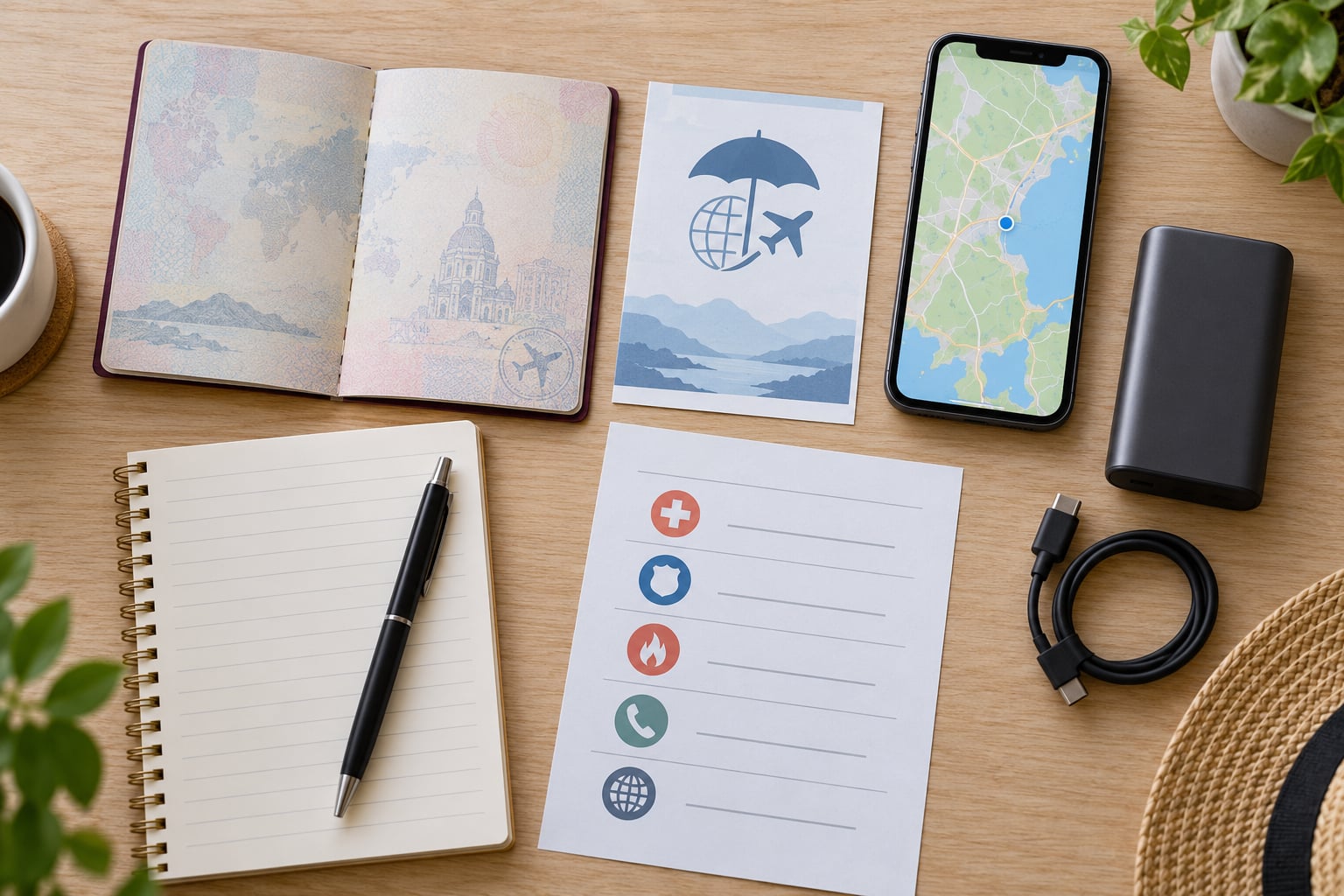
A solo travel safety plan is a written document that tells one trusted person at home where you will be, when you are due to check in, who they call if you go quiet, and what you will do if something goes sideways. If you want to know how to make a travel safety plan for a solo trip, build it in eight steps: research the destination, share your itinerary, set up backups, split your valuables, plan your movement, prep for health and weather, write an emergency plan, then rehearse and update it.
Most solo travel problems are boring. A locked phone, a cancelled bus, a room you cannot find at midnight, a wallet that vanished on a train. A plan turns those from emergencies into inconveniences, and it takes about an hour of work spread across the weeks before you leave.
This framework works for anyone traveling alone, on any trip length, in any destination. Solo travelers of every gender and identity run the same eight steps; the details that change are neighborhood-level, not structural.
Table of Contents›
- What You Need
- Step-by-Step: How to Make a Travel Safety Plan for a Solo Trip
- 1. Assess the destination and route
- 2. Share your itinerary and check-in schedule
- 3. Set up communications and backups
- 4. Protect your belongings and identity
- 5. Plan transportation and daily movement
- 6. Prepare for health, weather and activity risks
- 7. Create an emergency response plan
- 8. Review the plan before departure and update it during the trip
- Common Mistakes
- Frequently Asked Questions
- What precautions should I take when traveling solo?
- How often should I check in when traveling alone?
- What should I do if my phone is stolen while traveling alone?
- Is it safe to go out at night when traveling alone?
- What should I avoid when traveling solo?
- How do I reassure my family without cancelling my trip?
- Conclusion
What You Need
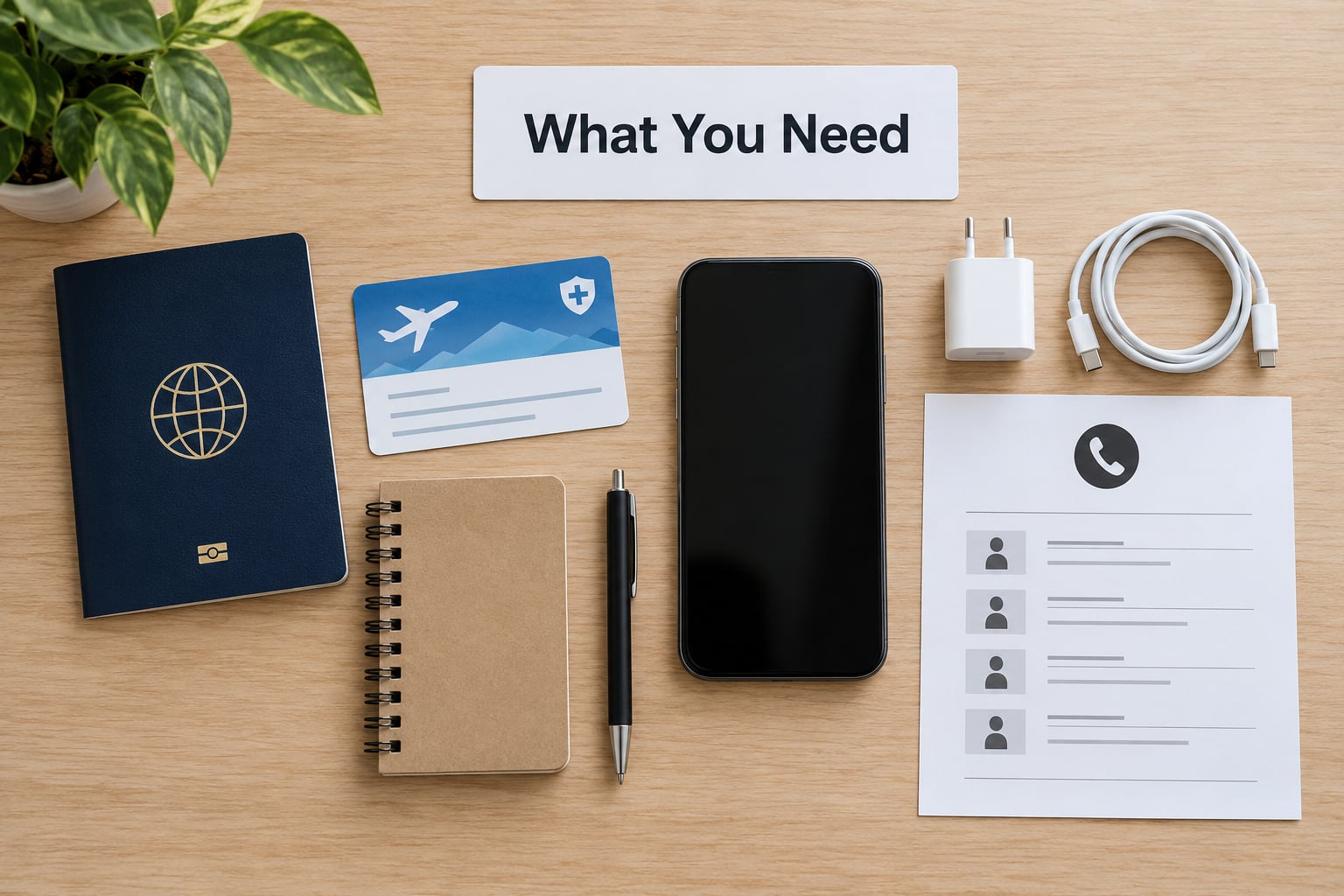
You do not need gear. You need documents, contacts and fallbacks, most of which already exist on your phone or in a drawer.
- Passport and copies. The original, a photocopy, and a scan or photo stored somewhere other than your phone.
- Travel insurance details. The policy number, the 24-hour assistance line, and what the plan actually covers for medical evacuation.
- Your check-in contact. One person, chosen deliberately, who is reachable during your normal waking hours at home.
- A notebook or note app. For the written plan itself, in your own words, so nothing depends on a single app.
- A power bank and universal adapter. Your phone is the hub of the plan, so keeping it charged is the whole job.
- A backup payment method. A second card stored separately from your everyday one, and a small emergency cash reserve.
- A first-aid kit and any prescriptions. In original packaging, with a copy of the prescription in hand luggage.
- Local emergency numbers. Written down, not just saved in a favourites list.
Add a portable door lock or a door wedge if you are staying in budget accommodation, and an RFID-blocking wallet or pouch if you are moving through crowded hubs. That is the whole kit.
Step-by-Step: How to Make a Travel Safety Plan for a Solo Trip
1. Assess the destination and route
Start with official sources rather than forum threads: your government’s travel advisory page for the country, the local police non-emergency line, and the embassy or consulate entry for where you are going. Then read recent traveler discussion for the specific city, and look for named districts rather than general warnings.
Write a one-paragraph risk profile: which neighborhoods you will avoid, what time you intend to be back at the accommodation each day, which planned activities are outdoors or remote, and what the plan is if weather cancels them. Travelers on r/solotravel and r/Europetravel keep circling the same practical question, which is how to get from a large station or airport into an unfamiliar district after dark. Answer it before you book the flight.
You know this step is done when you can name two specific areas you are skipping and one backup route for each travel day.
2. Share your itinerary and check-in schedule
Pick one check-in contact. Not a group chat, not five people each guessing differently. One person who will act.
Send them, in writing: flight or train numbers and arrival times, the address and phone number of every accommodation, the rough plan for each day, your check-in interval, and the escalation instruction. That last part is the one everyone skips. Tell them exactly what to do if a check-in is missed: try the phone, then the messaging app, then wait until the stated deadline, then contact the local emergency number, then the embassy.
Two to three days is the interval most advice lands on. Daily is fine if it does not bother you, but pick a rhythm you will actually keep, because a rhythm you break creates false alarms.
Share with your check-in contact:
- Accommodation address and phone number
- Flight and train numbers
- Check-in days and the deadline
- Embassy and insurer contacts
- A rough daily plan
Keep to yourself:
- Live location, minute by minute
- Which bar or neighborhood you are in tonight
- Your daily walking route
- The fact that you are solo, in public posts
- Stored copies of your key documents
You know this step is done when your contact can repeat your escalation plan back to you correctly.
3. Set up communications and backups
Download offline maps for the whole trip, not just today’s city. Do the same for any route you will walk. Save the local emergency number and your check-in contact’s number as written text somewhere other than the phone’s favourites, so a lost device does not take the numbers with it.
Sort out data before departure: an eSIM or local SIM, or a roaming plan that actually works where you are going. Test it the moment you land rather than assuming.
Then handle the phone-loss scenario now, while it is hypothetical. Find out whether your bank can freeze a card from another app or a phone call, whether your passport can be reported lost online from abroad, and who at home could send you money. If the answer is nobody, that is a gap worth closing before you fly.
You know this step is done when you could describe the first three things you would do with a dead phone and a stranger’s charger.
4. Protect your belongings and identity
Split everything. One card for daily spending, one tucked away for emergencies, cash split between a money belt or zipped inner pocket and a bag. A thief who takes your wallet should not take your ability to get home.
Use a cross-body bag that keeps the opening away from your body on crowded transport, and never set a phone down on a table or a cafe ledge. On trains and buses, keep bags in front of you rather than in the overhead rack. At a cafe, hang the bag strap over the chair leg.
If something is taken, do not chase, and do not announce it. Move to a staffed place first, then cancel cards, then deal with it. Speed matters more than accuracy in the first ten minutes.
You know this step is done when no single lost item ends your ability to get home.
5. Plan transportation and daily movement
Compare routes before you land, not in the taxi rank. Know your arrival option before you book the flight, because a 9pm arrival is a different trip from a 2pm one. If you land late, book the airport transfer, arrange a daylight arrival window, or add a night near the airport and move in the morning.
Build battery discipline into the plan. A phone at four percent in the wrong neighborhood is the failure mode nobody prepares for. Carry the power bank, keep it charged overnight rather than on the move, and know where the nearest cafe or shop is along your route.
For rideshare, verify the plate and driver name before you get in, sit in the back, and share the ride details with your check-in contact. For taxis, use the official rank or an app-based service, and agree the route or the meter before you start.
You know this step is done when every transfer on your itinerary has a backup option that does not depend on a single app working.
6. Prepare for health, weather and activity risks
Check the forecast and any local trail, ferry or attraction guidance in the days before each activity, and adjust rather than pushing through. Mountain, dive and boat activities come with their own cancellation rules, so read what happens if the weather turns.
Be honest about what your body can do. Carry the medication you need, plus what a pharmacy would sell you over the counter at short notice, and know where the nearest clinic to your accommodation is. For anything specific to your health, ask a doctor or pharmacist before you go, and check that your insurance covers what you plan to do.
Confirm accessibility before booking: stair access, walking distances, whether the route you read about online matches the site today. Advice about a place changes; on-the-day check does not.
You know this step is done when you know the name of a clinic near your bed and what your insurance actually covers.
7. Create an emergency response plan
Write the emergency section as a decision tree rather than a list of worries. Four questions, in order: what happened, who can I call locally, who can I call from home, and where am I going to go while I wait.
Fill in the blanks on one page: local emergency number, local police non-emergency number, the nearest embassy or consulate and its hours, your insurer’s assistance line, your bank’s international line, two backup people besides your primary check-in contact, and two meeting points you could actually reach from where you are staying.
Include the failure modes that ruin plans: lost passport, missed connection, locked out of the room at 2am. For each, one sentence on the immediate action. A missed flight is a new ticket; a locked-out traveler in an unfamiliar city is a long walk in the dark.
You know this step is done when someone could read the page and act on it without asking you anything.
8. Review the plan before departure and update it during the trip
Read the whole plan out loud once. Anything you would not explain out loud in a cafe is written too vaguely; anything you cannot read without context needs a word of explanation.
Print a reduced version: emergency numbers, accommodation address, insurer line, and your check-in contact, on one card-sized sheet. Keep it in your wallet or your phone case, not in your bag where a thief will find it first.
During the trip, update the itinerary whenever it changes materially. A different city for three nights, a different accommodation, a train that runs overnight. Send the update to the same person in the same format each time, so a genuine gap is obvious to someone who knows the pattern.
When you get home, send the all-clear. A plan that ends quietly tends to end with someone worried, and that is how the next trip gets cancelled.
You know this step is done when there is a paper copy in your wallet and a message in your contact’s inbox confirming the arrival date.
Common Mistakes
Over-sharing live location. Live sharing to a group chat with forty people in it adds risk and adds nothing. Share with one person, and share the plan rather than the feed.
Posting your location in real time. A live public story, a geotagged photo of the hotel room, a check-in at an airport, each one tells more than you intend. Post the day after, or post nothing.
Relying on one device and one payment method. A dead phone with no cached maps and no second card is a hole in the plan, not a bad day. Fix it with an offline map download, a separate card and written numbers.
Skipping arrival check-ins. Arrival is the most disorienting hour of the trip and the one your contact most wants to hear about. Send one message saying you landed safe, every single time.
Planning a route you would not walk at 11pm. If the only route back to your accommodation is a deserted stretch of road, move the dinner earlier, add a night in town, or choose a different restaurant.
Ignoring local guidance until it is too late. Beach warnings, transit strikes, curfews and neighborhood closures change weekly. Checking takes two minutes and changes what you do that day.
Packing more gear than you will use. Fifteen gadgets in a bag is weight, not protection. Forums describe this as its own risk: over-preparation makes a trip feel heavier and less confident. Choose four things and leave the rest.
Never revising the plan. Conditions change, and a plan written three weeks ago describes a trip you are not taking. Update it the moment the itinerary changes.
Frequently Asked Questions
What precautions should I take when traveling solo?
The six that matter most: research the destination before booking, tell one person your itinerary and check-in schedule, keep an offline map and written emergency numbers on your phone, split your cards and cash so one loss is not total, plan how you will move around after dark, and carry a backup payment method plus copies of your documents. Everything else on most solo safety lists is optional. If you only do those six, you have covered the failures that actually happen.
How often should I check in when traveling alone?
Every two to three days works well, and it is the interval most travelers settle on. What matters more than the frequency is the consistency and the deadline attached to it. Tell your contact which days you will message and how long they should wait before escalating. That way a missed check-in is a signal rather than an excuse to panic, and your contact already knows exactly what to do.
What should I do if my phone is stolen while traveling alone?
Go somewhere staffed and calm first, then work through it in order: freeze your bank cards, report the device to your carrier so it cannot be used, note the phone IMEI if you have a record of it, and contact your check-in person so they know the plan has changed. Then arrange data and a way to receive money. Do not chase, do not argue if you see the thief, and do not post about it publicly until you know who has your details.
Is it safe to go out at night when traveling alone?
It depends on the destination, the district and the hour, which is why step one is assessing the route before you book. Practical rules that help almost everywhere: be back at your accommodation before the streets empty, choose a restaurant near where you are staying rather than a detour afterward, keep the power bank charged, and take a licensed taxi or app-based ride rather than walking an unfamiliar street alone. Night out is fine. A long empty walk home is the avoidable part.
What should I avoid when traveling solo?
Avoid four habits specifically: posting your live location publicly, carrying all your money and cards in one place, walking unfamiliar streets late at night, and skipping arrival check-ins. Also avoid the habit forum travelers warn about most, which is carrying so much defensive gear that the trip starts to feel like a threat rather than a holiday. A lighter plan is easier to follow and easier to live with.
How do I reassure my family without cancelling my trip?
Give them the plan, not reassurance. Send the itinerary, the accommodation details, the check-in schedule and the escalation instruction in one message, and let them see that someone specific has clear instructions. Family anxiety about a solo trip is usually about not knowing, not about the destination. Most travelers who have used this approach report the conversation ends when the document exists, rather than when they reassure again.
Conclusion
Start tonight, before you book anything: choose your check-in contact and send them a message asking whether they would take the job. It takes two minutes and it is the single item everything else in a solo travel safety plan depends on.
Build the rest over the weeks before departure, one step per sitting, and keep it light enough that you actually carry it. A plan reduces risk; it does not remove it, and nobody traveling alone has ever stopped being tired, unlucky or lost. The plan is not there to promise you a perfect trip, just to make the bad hour a problem with a procedure instead of a problem with no answer.