Traveling with a chronic illness works best when you plan around a personal energy budget instead of a packed itinerary. Choose one or two anchor activities a day, schedule real recovery time between them, and keep a flexible alternative for every plan. Most of the work happens before you leave: paperwork, medication, access questions and a baseline you trust.
I have planned trips this way for years, and the same three questions always decide whether a day goes well. How much can I do before I crash? What do I drop first when energy runs short? Who needs to know if I slow down? Get those answered before booking and the trip stops being a series of negotiations with your own body.
Table of Contents›
- What You Need
- Step-by-Step: How to Travel with a Chronic Illness and Pace Yourself
- 1. Set a realistic baseline before booking
- 2. Build an adaptable travel plan
- 3. Pack for comfort, access, and changing needs
- 4. Pace activities using an energy budget
- 5. Plan for triggers, access, and interruptions
- 6. Review the plan while traveling
- Common Mistakes
- Packing every day full
- Building a rigid itinerary
- Underestimating transit and recovery
- Ignoring access details until you arrive
- Carrying too little information
- Pushing through warning signs
- Spending your budget on prep
- Guilt as the default setting
- Frequently Asked Questions
- How can I pace myself when traveling with a chronic illness?
- Should I bring extra medication when traveling internationally?
- How do I ask for seating, restrooms, or other travel assistance?
- What should I do if I become more tired than expected during a trip?
- Is it possible to travel alone with a chronic illness?
- How do I decide which activities to skip without feeling like I am ruining the trip?
- Conclusion
What You Need
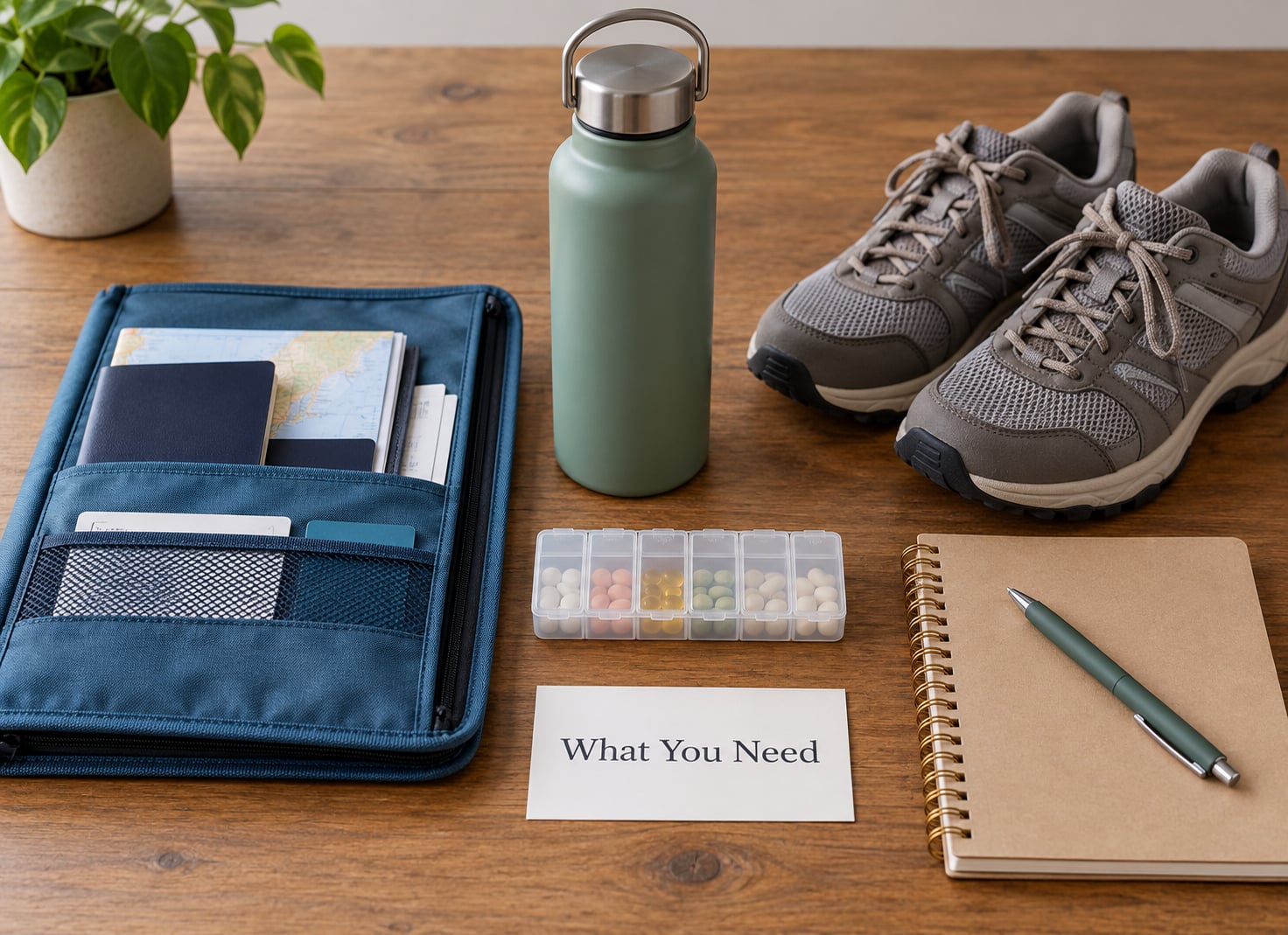
Most trip problems trace back to something that was arranged late. The access question you forgot to ask, the medication in a checked bag, the rest window nobody knew about. What follows is the set of things to have in hand before departure, roughly in the order you will need them.
A medical conversation, four to six weeks out. Book an appointment with the clinician who knows your history and tell them the destination, the dates, the transport mode and roughly what the trip involves. Ask what could reasonably go wrong away from home and what you would want to do about it. Ask specifically about travel, because a standard sick-note or a routine letter rarely covers what a border or a pharmacist abroad will want to see.
Bring the actual questions, written down. Time with a clinician is short and it is easy to leave with a general answer that does not help on a Tuesday in an unfamiliar city. Ask about activity limits, altitude, heat, and what counts as an emergency for your condition.
A medication plan and a pharmacist conversation. Ask your pharmacist how to handle your medicines across time zones, what to do if a dose is delayed by many hours, and which of your medicines are subject to import restrictions in your destination country. Rules differ sharply between countries, and some common over-the-counter products that are harmless at home are restricted or prohibited in others. That is a question for a pharmacist or the destination country’s health authority, not for a forum post.
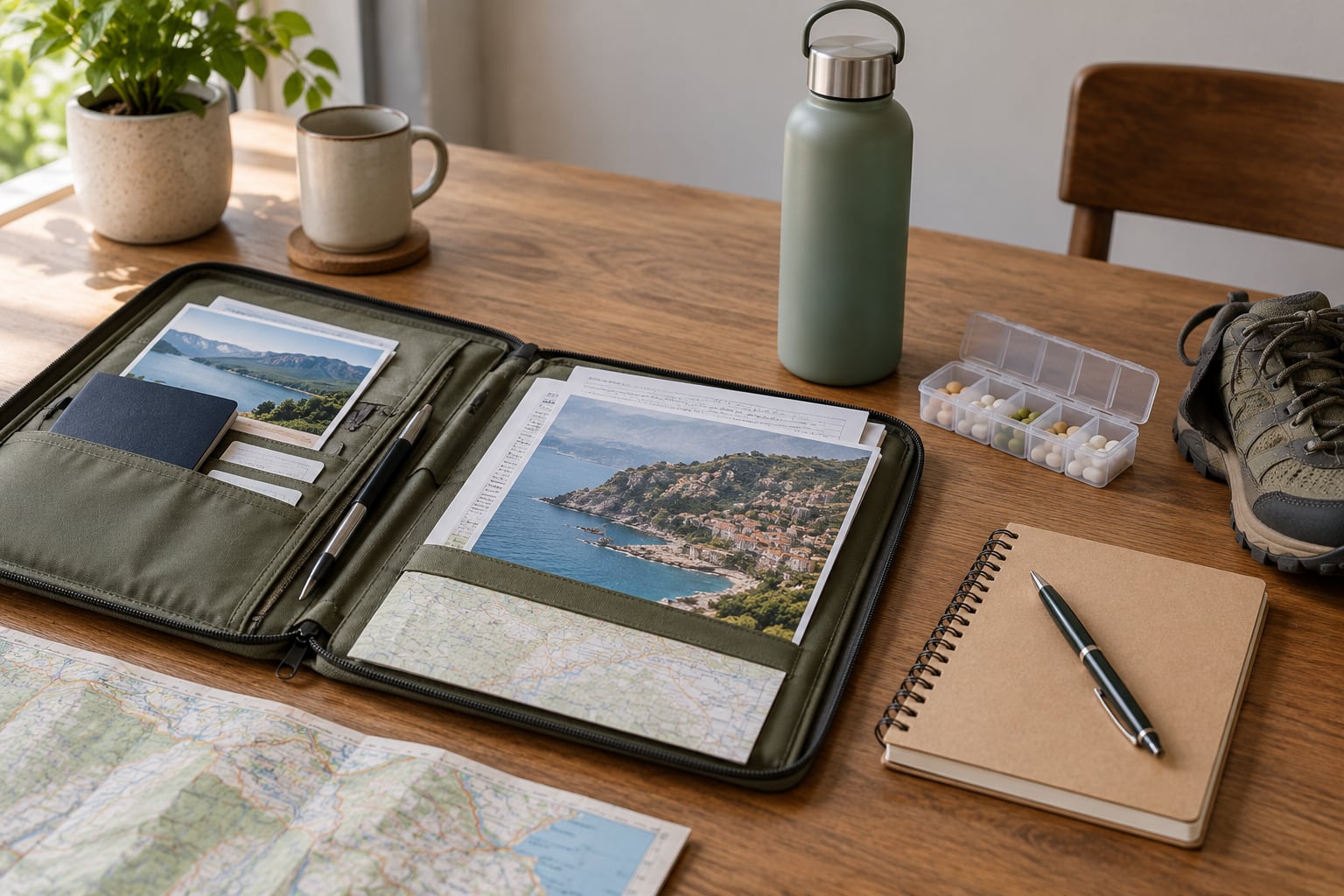
Paperwork. Keep prescriptions or pharmacy labels for every medicine, a copy of your insurance documents, a written summary of your diagnosis, allergies, current medicines and emergency contacts, and any letters your clinician advises. Most people also photograph all of it and keep the images in a folder on their phone, plus one copy in a bag that is not their carry-on. Paper still beats a dead battery.
A flare kit. This is the small pouch you can reach without thinking. It holds the extra items that only matter on a bad day: electrolyte packets, easy snacks, earplugs, any comfort item you rely on, spare dressings or consumables, a charger, and the specific tools you use to get through a difficult day at home. Keep it in your personal item rather than in checked luggage.
Confirmed access, not assumed access. Lift access, ground-floor rooms, bathroom layout, shower seat, step-free routes to meals, distance from the lift to the room. Solo travelers report consistently that these questions are only answered correctly by calling the property directly. Listings are optimistic; the front desk knows the truth. Ask about noise, air conditioning and how far the room is from a shared kitchen or a group arriving at the same time.
Support contacts that work without you. Someone at home who knows what you take and what happens if you cannot get to a pharmacy. Your insurer’s international assistance line, the local emergency number for your destination, and the nearest clinic to your accommodation. Save all of these as contacts in your phone, not just on paper, because you will be reaching for them in a hurry.
Flexibility. Refundable bookings, a spare night at each end of the trip, and a travel plan with a backup version. If none of this is available, add a margin to the itinerary instead. Planning ahead of time for something you can cut is not the same as cutting it at 5pm with your feet already hurting.
Ask your doctor or pharmacist for advice specific to your condition, your medicines and your destination before you travel. Nothing in this guide replaces that conversation, and nothing here is medical advice.
Step-by-Step: How to Travel with a Chronic Illness and Pace Yourself
1. Set a realistic baseline before booking
Your baseline is the honest picture of what a normal week looks like, not your best week in memory. For about two weeks before you plan anything, note your sleep, your energy in the morning and afternoon, how far you can walk comfortably, how many hours of standing you tolerate, and how your symptoms behave after a demanding day.
This is not a medical assessment and it does not need to be precise. You are looking for two things: the range you normally live in, and the point at which you usually start flagging. That second number matters more than the first. It is where you plan your rest windows, and it is where you decide what gets dropped when a day runs hot.
Track it the way that suits you. A note on your phone each evening takes thirty seconds. A paper diary works if phone use at the end of a long day feels like one more task. Some people find a simple three-level scale easier to keep honest: normal, worse than normal, much worse than normal. Whatever the format, the value comes from the trend line over a couple of weeks, not from any single entry.
A good travel day is a day that looks like an ordinary day at home, lightly edited. A difficult day is one that pushes past your range in either direction, and pushing past a range is what tends to cost you the following two or three days. People living with ME/CFS, POTS, fibromyalgia, Ehlers-Danlos Syndrome, arthritis and chronic migraine all describe the same pattern from different angles: the activity itself is survivable, the recovery is the expensive part.
Then match the trip to that baseline rather than the other way round. A destination that needs long daily walks, few rest options and unreliable public transport will ask more of you than a compact one where everything sits within a short radius. Count the number of times you would need to move between places and treat that as part of the day’s demand.
Traveling during an active flare or a stretch of unstable symptoms is worth postponing when you can. People on chronic illness forums talk about this often and the advice is consistent: the trip is easier to reschedule than to recover from, and the recovery is what erases the trip afterwards.
How to know this step worked: you can say, in one sentence each, what a full day looks like and what you would cut first. If you cannot fill in that second sentence, the plan is not ready.
2. Build an adaptable travel plan
Write the plan as options rather than commitments. A rigid itinerary assumes you will have the same energy on day five as on day one, and travel is where that assumption fails hardest. A flexible plan still tells you what you hope to do; it just does not depend on it happening.
Give yourself one priority activity a day. Two if the day is short, easy and close to where you are staying. Everything else is a candidate for the flexible slot, which means it can move to a better day, get shortened, or disappear entirely without the day feeling broken.
For each priority activity, write a nearby alternative that costs half the energy. A museum becomes a single gallery or the building’s cafe. A walking tour becomes a viewpoint reached by taxi. A long lunch becomes coffee and a pastry. If you cannot name a lower-cost version, the activity is not flexible yet.
Build the rest windows into the schedule rather than hoping to find them. A rest window is a specific block of time with nothing scheduled in it, and it protects the rest of the day as much as it protects you. A sample travel day might look like this:
- Morning (best energy window): one anchor activity, started early while energy is highest, ending with a sit-down rest nearby.
- Midday: a fixed 90-minute recovery block in or near the accommodation. Food, medication, feet up, no errands.
- Afternoon: one shorter option, either the flexible activity or the backup version, with an easy exit if energy drops.
- Evening: dinner close to where you are, then an early finish. Sleep is recovery, and travel disrupts it by default.
Keep one day in a longer trip deliberately open. Not a rest day exactly, just a day with no anchor activity, reserved for the museum you missed or the neighbourhood you had not seen yet. It absorbs delay, bad weather, a flare and the ordinary unpredictability of travel.
Plan rest in the same way you plan activity, with a start and an end time. Unscheduled rest tends to be skipped, because there is always something to do instead.
For a longer trip, write the plan as one page per day rather than a single wall of text. Each page needs three lines: the anchor activity, the recovery window, and the backup. That is enough structure to follow and small enough to abandon when a day goes sideways, which it will.
Solo travelers have one advantage here that is easy to miss. Nobody is counting your pace, nobody comments on the rest stop, and nobody is disappointed by the museum you skipped. The whole day belongs to you, so the plan can be exactly as ambitious or as gentle as your budget allows.
How to know this step worked: you can remove any single item from a day without the whole day collapsing. If one cancellation ruins everything, there are too many fixed points.
3. Pack for comfort, access, and changing needs
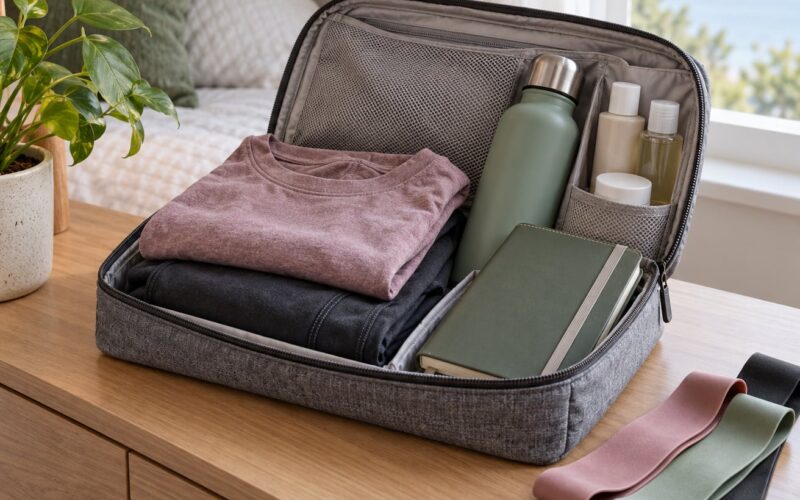
Pack for the trip you are taking and the trip you might be having instead. A flare kit is not a luxury, because a bad day rarely announces itself in time for you to shop for what you need.
Medicines travel in your carry-on, in their original packaging, with the labels intact. That is the rule most often stated in health guidance for a reason: original packaging with your name on it is what makes a medicine identifiable to a clinician or a border official. Keep them in a small organizer for the day and the original boxes together in a pouch. Many travelers keep a written list of names, doses and timing, because reading a label under stress is harder than it sounds.
Bring more than you think you need. Extra supply protects against delayed flights, cancelled refills, a lost bag and a clinician abroad who cannot prescribe the same formulation. Check the destination country’s rules on quantities and on medicines that are controlled or prescription-only, and carry documentation. Do not change, skip, or adjust any medicine or treatment without a qualified clinician, including on a long trip where the schedule makes that tempting.
For comfort, the boring items do more work than the exciting ones. Supportive footwear you can walk in for two hours without thinking about it, layers for indoor air conditioning versus outdoor heat, a lightweight compression garment if you use one, and a small item that makes sleeping in an unfamiliar bed workable.
For access, think about what you will actually touch during a day. Door handles, railings, a transfer to a bed or a toilet, a folding chair at a museum. If you use a mobility aid, check whether the accommodation stores and charges it, whether the bathroom has a step, and whether the route from the car or station to the room is flat.
A short list to work from:
- Medicines: all prescriptions in original packaging, extra supply, a written schedule, pharmacy labels, copies of prescriptions.
- Documents: medical summary letter, insurance details, emergency contacts, copies of anything your clinician asked you to carry.
- Comfort: supportive shoes, layers, compression gear, sleep aid, a small heat or cooling item you know works.
- Access: mobility aid, transfer board or strap if you use one, small stool, anything that makes waiting survivable.
- Flare kit: electrolyte packets, easy snacks, earplugs, spare consumables, charger, comfort item, one change of underwear.
- Recovery: earplugs or noise-cancelling earbuds for flights and shared spaces, sunglasses, a portable mat or blanket for long sitting.
Do not change medication or treatment while traveling on your own initiative. If a dose is missed, a timing question comes up, or a supply runs short, contact a pharmacist or a clinician rather than adjusting it yourself.
How to know this step worked: you can reach every item you need for a difficult day without standing up, without asking, and without leaving the room.
4. Pace activities using an energy budget
An energy budget is a rough estimate of what a day can hold, expressed in the only unit that matters for your condition. For some people that is minutes of walking, for others number of stairs, hours of standing, or the number of transitions between sitting and moving. Pick the unit that best matches your own limits and use it consistently. This is the part of learning how to travel with a chronic illness and pace yourself that most planning advice skips.
Then give each activity a cost in that unit, honestly rather than optimistically. Multiply a six-hour walking tour by the hours you will spend standing at a museum that evening and you will usually find the day is already over budget before you start. Costs vary, so treat the numbers as a planning habit, not a rule. What helps is noticing when a day has already spent its budget before the second half begins.
This is the sort of personal ledger most people find useful once they have run it for a week or two. The recovery figure is the one people skip, and it is usually the one that decides whether the trip was worth it. Start here, then adjust against your own history:
- Sitting at a cafe or reading: low cost, no recovery needed afterwards.
- Short walk on flat ground, under 20 minutes: low cost, no recovery needed for most people.
- Museum visit, one to two hours: medium cost, mostly standing and sensory; 30 to 60 minutes seated after.
- Steep street, uneven ground or hills: high cost; several hours of recovery, sometimes overnight.
- Airport or station, including waiting and transfers: high cost; a quiet evening with no further plans after.
- Flight, long haul: high cost plus disrupted sleep; plan a recovery day on arrival.
- Long social evening, group meal or event: high cost for many people; a slow morning the next day.
- Busy market, festival or crowded attraction: high cost, mostly sensory and social; 60 minutes to a few hours after.
Read that list against your own history rather than treating it as fact. Some people are fine on a long flight and wiped out by a gallery. Others can sit in a café all afternoon and cannot manage a busy train station. The structure is what matters; your own numbers fill it in.
Four habits do most of the work. Break tasks into small blocks, alternate demanding and easy tasks, rest before you feel the need rather than after, and leave buffer time so a ten-minute delay does not become a lost afternoon.
Specific ways that applies on the move:
- Walking: split a distance into segments with a seated pause between them rather than one long stretch. Choose a route with somewhere to sit halfway, and know where that is before you start.
- Sightseeing: two short visits beat one long one. The second gives you somewhere to go after the first falls apart, and having options is itself energy-saving.
- Public transport: treat every transfer as an activity in the budget, because standing, waiting and navigating a station are all costs. Add a buffer for a missed connection, and prefer the route with fewer changes even if it takes longer.
- Long travel days: build the day backwards from arrival. If check-in is at 4pm, the morning is the anchor, the journey is the flexible block, and anything unplanned is the first thing to cut.
Resting on a schedule rather than on a signal is the whole idea. Waiting until you feel depleted means resting from a lower starting point, and for many people that is the difference between a short pause and a long recovery.
Travelers on chronic illness forums call this sofa travel: pick one place, stay longer, and get to know it properly rather than covering ground. It is the cheapest possible fix for pacing, because the single most expensive part of a trip is the movement between things. Fewer bases means fewer transfers, fewer hotel rooms to pack and unpack, and fewer new access details to verify.
Budget sensory and social energy as real costs too. Crowds, noise, bright light, unfamiliar food, and several hours of being ‘on’ with other people take something even when you barely move. Some travelers treat a busy museum as rest because they were sitting; for a lot of people it is the opposite. Note which categories drain you and count them in the same budget.
How to know this step worked: you finish the day with energy left over rather than empty, and you can name which part of the day used it.
5. Plan for triggers, access, and interruptions
Research the practical details in advance rather than discovering them on arrival. Seating on a flight or train, step-free routes, restroom access at the places you actually plan to visit, elevator reliability, temperature, and how crowded things get by mid-morning. Every one of these can be checked in twenty minutes and costs hours if you skip it.
Ask the airline, the hotel and the venue in advance. For a flight, request assistance with boarding, an aisle or bulkhead seat, and an extra seat if you use one; these are free of charge under many carriers’ published rules, and requesting ahead is much easier than negotiating at the gate. For a hotel, ask for the room closest to the lift, confirm whether the bathroom has a step, and ask what noise the room sits next to.
Create one backup for every plan. A heat wave, a closed attraction, a missed train, a flare. Write the backup next to the plan in your phone so you do not have to invent it while tired. For long journeys, break driving into 30 to 45 minute segments with quiet rest stops, which travelers on chronic illness forums describe as the difference between arriving functional and arriving wrecked.
Tell your travel companions plainly, before the trip, what pacing looks like and what you need. The people who cause the most damage are usually well-meaning ones who assumed you wanted to keep up. A useful framing is specific: you may need to skip the second museum, you may need to sit down mid-afternoon, and neither of those is a comment on their company. Travelers on chronic illness forums describe the relief that comes from setting those limits out loud rather than hoping everyone reads your body language.
Solo travelers carry the same conversation with staff, taxis, tour guides and shopkeepers. A short script helps: what you can do, what you need, and that you would like to continue in a few minutes. Most people are more accommodating than the anxious version of you expects.
Know your warning signs in advance, because you make worse decisions when you are the only one who can tell. Emergency numbers differ by country and local services are not comparable everywhere, so look yours up before departure and save it locally.
How to know this step worked: you could lose any one plan today and still have a version of the day that works.
6. Review the plan while traveling
A short check-in at the end of each day, two minutes, is enough. Note your energy, your sleep, your symptoms, how you ate, and how much of the budget got used. Keep it in your phone notes. Within a few days the pattern is obvious, and you adjust with data instead of with fear.
Use it to make the next day smaller when you need to. Moving a flexible activity to a later day, swapping an anchor for the backup, or accepting that a rest day is a plan are all legitimate outcomes, not failures. If you have two or three harder days in a row, cut the next one back proactively rather than waiting for a flare to make the decision.
Watch the warning signs, not just the bad days. Slowing down that is not a reset, symptoms that climb steadily over a day rather than coming and going, a night of sleep that does not restore you, and a need to cancel things you would normally keep doing. Those are signals to reduce load now, not after. With conditions involving post-exertional malaise, a delayed crash is common, which is another reason to act early.
Keep a short list of your own early warning signs and read it when you are unsure. Most people can name three or four things that reliably mean the next day will be worse, and by the time you are deep in a bad stretch you are no longer a reliable judge of your own state. Written down while you were well, that list is worth more than any advice from someone who does not know your condition.
For anything urgent or worsening, seek medical help rather than managing it from the bag. Know where the nearest clinic is relative to your accommodation, keep your medical summary to hand, and have your insurer’s number ready. Emergency services, pharmacies and prescribing practice vary widely by country, so do not assume your home approach will work abroad.
Plan the way home as carefully as the way there. Travelers consistently describe post-trip recovery as the step they most often skip and most need. If you can, take a day at home with nothing scheduled before you return to work or chores, and lower the expected pace of the first week back.
How to know this step worked: you adjusted something before it became a problem, and your notes will make the next trip easier to plan than this one.
Common Mistakes
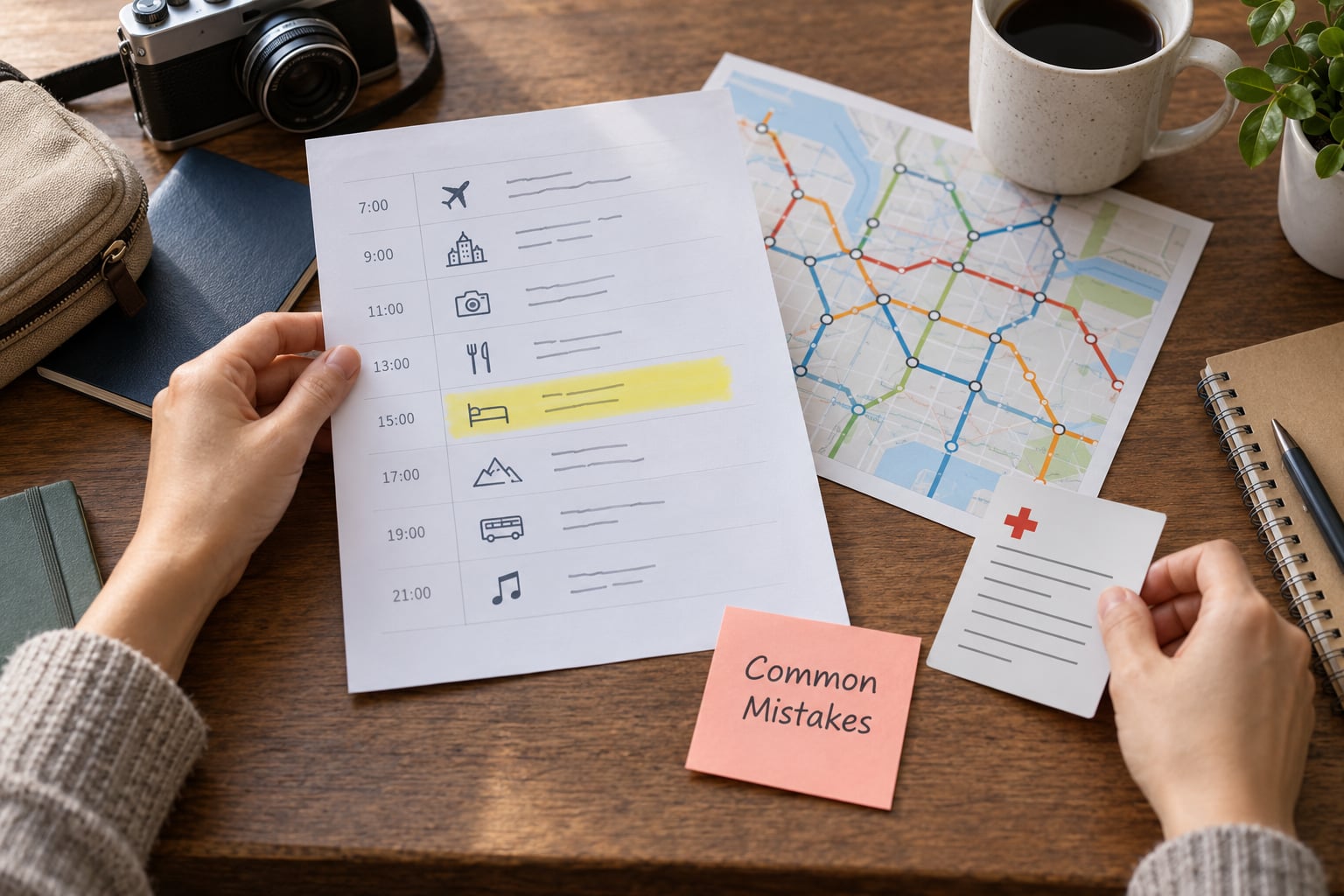
Most bad travel days are not caused by the destination. They are caused by one of a handful of planning errors that repeat, and each one has a straightforward fix.
Packing every day full
Filling a day to the edges feels efficient and usually is not. The over-packed day is the one that ends in a crash, and the crash takes the following days with it. Fix: one priority activity per day, everything else labelled flexible, and a written backup for each.
Building a rigid itinerary
A schedule with no slack assumes perfect health, perfect weather and on-time transport. Any one of those failing changes the whole day. Fix: keep one open day in any trip longer than a few days, and make the days around booked transport deliberately light.
Underestimating transit and recovery
Treating an airport, a station or a six-hour drive as a neutral gap between activities is the most common planning error there is. Transit is standing, waiting, carrying things and navigating, and it belongs in the energy budget. Fix: count every transfer as an activity and add a recovery block after arrival.
Ignoring access details until you arrive
Steps at the hotel entrance, a bathroom you cannot get into, a lift out of service, a venue with no seating. Finding these on arrival turns a small problem into a lost day. Fix: call the property directly before booking and ask the specific questions, because listings rarely tell you the truth about stairs or noise.
Carrying too little information
Losing the medication bag in transit, being asked for something at a pharmacy abroad, or explaining your history to a clinician who has never heard of your diagnosis. Fix: prescriptions and labels, a one-page medical summary, insurance details and emergency contacts, on paper and photographed on your phone.
Pushing through warning signs
Treating fatigue as something to override until it overrides you. The cost lands days later, when you have no choice in the matter. Fix: agree in advance on the signals that mean you stop, and stop when they appear rather than when they become unbearable.
Spending your budget on prep
Packing, cleaning, errands and the run-up to departure can use more energy than the trip, and nobody plans a recovery day for that part. Fix: spread preparation over two or three weeks, delegate what you can, and reserve the week before departure as part of the trip rather than as overhead.
A rough schedule most people find workable runs about eight to ten weeks out. Book the medical appointment and write your questions. Six weeks out, confirm insurance covers the destination and your pre-existing conditions, and ask your clinician and pharmacist about destination-specific medication rules. Four weeks out, choose accommodation by calling properties about access, then book anything refundable. Two weeks out, spread packing across several short sessions rather than one. Forty-eight hours out, re-read your medical summary and confirm your phone is charged and your contacts are saved locally. The day before, do nothing demanding.
Most of this can be done in fifteen-minute blocks, and doing it in small pieces is what keeps the preparation from eating the trip. Delegate anything another person can do. Ask someone to run the laundry, fetch the prescriptions from the pharmacy, or handle one errand you would otherwise drive across town for.
Guilt as the default setting
Needing a seat, a rest, or a skipped activity is not a burden on other people, though it can feel like one. The guilt costs energy that the trip needed, which makes everyone worse off. Fix: state the limit plainly and early. Most people adjust in about a minute; the internal argument takes hours.
Frequently Asked Questions
How can I pace myself when traveling with a chronic illness?
Decide your baseline first: what a normal day looks like, and the point where you usually start flagging. Then plan one or two anchor activities a day, put a fixed recovery block in the middle, and treat everything else as flexible with a lower-energy backup. Rest on a schedule rather than on a signal, because resting from a depleted starting point takes far longer. Write down what you would drop first, so the decision is already made on a hard day.
Should I bring extra medication when traveling internationally?
Most travel guidance is to bring extra supply, and it is worth understanding why. Delayed flights, cancelled refills, a lost bag or a clinician abroad who cannot prescribe the same formulation all turn a small shortage into a serious problem. Keep everything in original labelled packaging in your carry-on, and check the destination country’s rules on quantities and on prescription-only medicines before you leave, since they differ sharply between countries. Ask your pharmacist about the trip specifics.
How do I ask for seating, restrooms, or other travel assistance?
Ask early, before you travel, and be specific. Airlines, trains, hotels and venues all handle requests better in advance than at the door, and boarding assistance or an accessible seat is often available at no charge under published rules. Say what you can do, what you cannot, and what would help, in plain terms. At a restaurant, ask for a table away from the door or the music. Most staff are more accommodating than anxious travelers expect.
What should I do if I become more tired than expected during a trip?
Treat the day as spent. Cancel or postpone the next activity, return somewhere quiet, follow the recovery steps that already work for you, and get proper rest rather than pushing on. Note what happened so you can adjust tomorrow, and watch for the delayed crash that often follows a bad day rather than arriving with it. If symptoms are urgent, worsening steadily, or unlike anything you have had before, seek medical help instead of managing it from your bag. Local services vary by country.
Is it possible to travel alone with a chronic illness?
It is, and many people do it regularly. The planning is heavier, not different. Confirm access details by calling each property directly, since listings will not tell you about stairs, lift reliability or bathroom layout. Book rooms close to where you need to be, keep a rest window in every day, carry your medical summary and insurance details in more than one form, and tell someone at home your itinerary and the plan you would follow if you could not get to a pharmacy.
How do I decide which activities to skip without feeling like I am ruining the trip?
Build the decision into the plan so you do not have to make it while tired. Choose one priority activity per day in advance and label everything else flexible, with a lower-energy backup for each. On a hard day you use the backup rather than the original, which is a substitution, not a loss. Tell your companions the limit before the trip. You are not ruining the trip by resting; a version of the day that works beats a version where you spend two days recovering in a hotel room.
Conclusion
Start with three things before you book anything: write down your honest baseline and the point at which you usually start flagging, pick one priority activity for each day, and build the rest of the day around recovery rather than around fitting everything in. That is the whole framework. Everything else is detail on top of it.
Talk to your doctor or pharmacist before you travel, with the destination and the dates in front of you. They will know the parts I cannot: how your specific condition responds to heat, altitude, disrupted sleep and long sitting, and what you should do about it. Take their advice over anything written here.
Then stay flexible on the trip itself. The plans that work are the ones that assume you will have one good day, one average day, and one bad day, and that still produce something worth remembering on all three. A week in one place, rather than four cities in seven days, is usually the easier shape to pace and the one most travelers wish they had chosen afterwards.