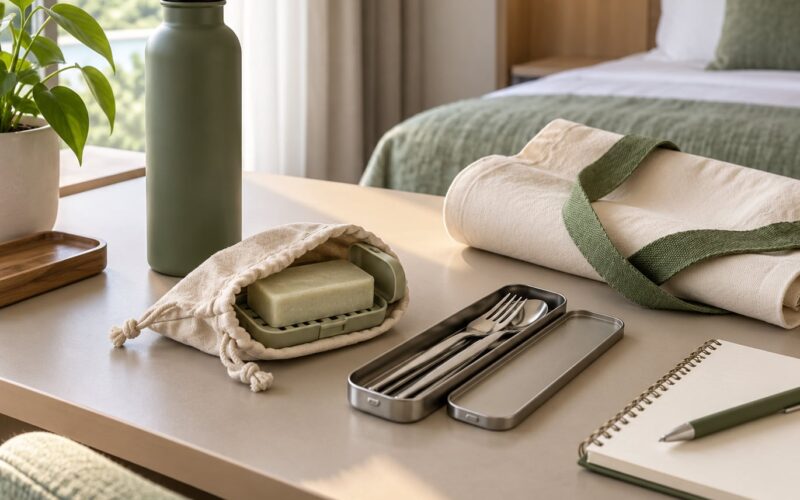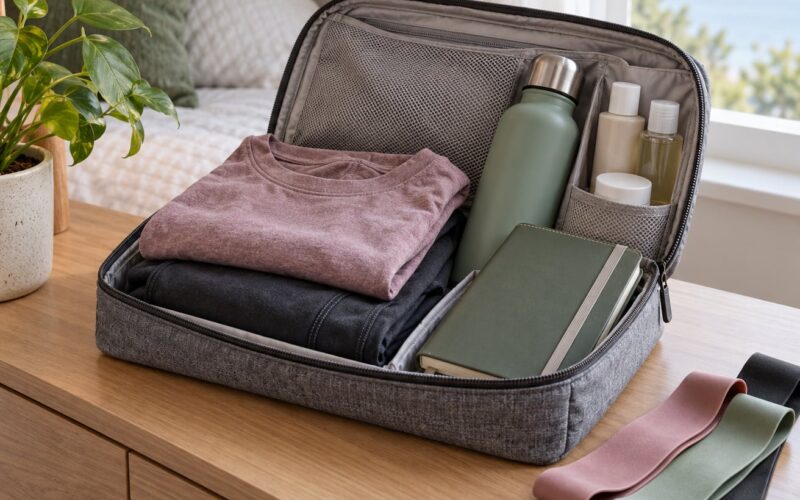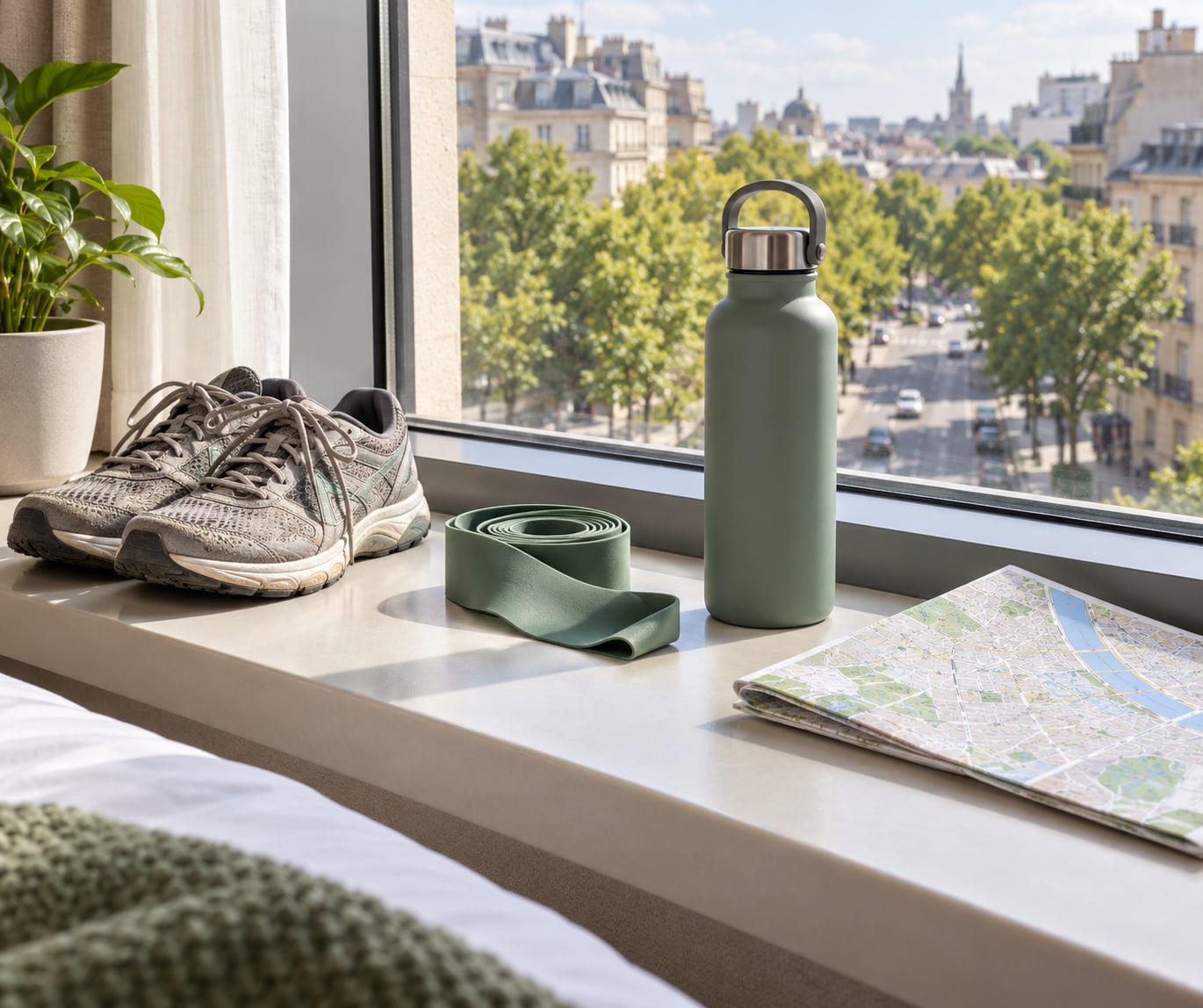
Staying active on vacation without a gym comes down to three swaps: walk instead of riding, train your own bodyweight instead of loading a barbell, and turn sightseeing, stairs and beach time into your cardio. Most people who call this hard are really missing a plan that survives a bad hotel room and a rained-out afternoon. Pick one walking habit, add two short body-weight sessions a week, and you keep almost everything without paying for a single day pass.
That is the honest version. Vacation is not the time to chase new numbers, and it is not the time to punish yourself either. Most of the fitness you built over months survives a couple of weeks of lighter work. What does not survive is the habit itself, because restarting from scratch after a month feels like starting over. So this guide is about maintenance, not progress.
I travel solo most of the time, which makes this simpler than it sounds. Nobody else has to agree to the plan, nobody gets annoyed when I want to walk instead of take a taxi, and I can change the whole thing on a Tuesday without a conversation. The routine below is the one that keeps working when the schedule falls apart.
Table of Contents›
- What You Need
- Walking shoes you have already broken in
- A refillable bottle and a small amount of electrolytes
- One packable piece of gear, not four
- A written plan that is more like a direction than a schedule
- Ten minutes to scout the place you are staying
- Step-by-Step: How to Stay Active on Vacation Without a Gym
- 1. Set a walking floor: the simplest answer to how to stay active on vacation without a gym
- 2. Run a five-minute mobility block after long sitting
- 3. Do two short body-weight strength sessions a week
- 4. Turn sightseeing into the cardio session
- 5. Keep one hotel room workout in your back pocket
- 6. Plan a real rest day instead of pushing through
- 7. Review the trip once a week and adjust
- Common Mistakes
- Trying to keep your full gym program running
- Skipping the warm-up
- Assuming the place has a pool or a gym
- Relying on one hard session a week
- Ignoring shoes, water and sleep
- Ignoring pain and warning signs
- Walking alone at night somewhere you do not know
- Frequently Asked Questions
- What bodyweight exercises can I do in a hotel room?
- Is walking alone enough to stay active on vacation?
- How much exercise do I need on a two or three day trip?
- What can I do on vacation if I have limited mobility or an old injury?
- How long should a vacation workout be, and how often?
- When should I check with a doctor before exercising while traveling?
- Conclusion
What You Need
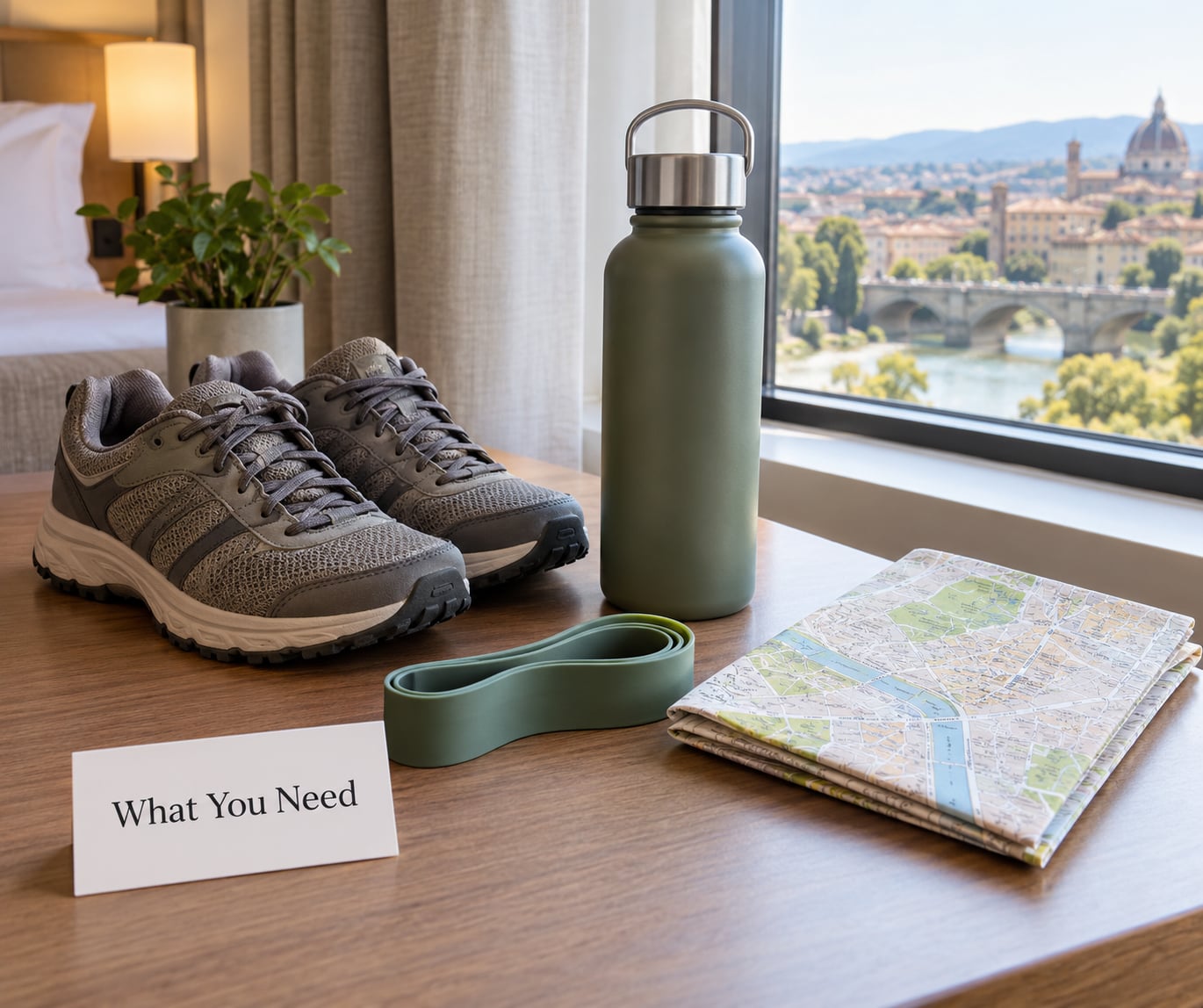
The list is short, which is the point. Everything here fits in a day bag or the side pocket of a carry-on, and none of it needs to be plugged in.
Walking shoes you have already broken in
New shoes on a trip is the fastest route to blisters, and blisters end your walking before motivation runs out. Wear the pair you have walked in for twenty hours at home, and bring a second pair for the evening. Most hotel floors, boardwalks and old cobbles are far less forgiving than a treadmill.
A refillable bottle and a small amount of electrolytes
Heat and humidity add water loss on top of the walking, and dehydration shows up as headache, poor sleep and no appetite long before it feels dangerous. If the forecast is warm or you are moving at midday, carry water with you rather than hoping the next café appears.
One packable piece of gear, not four
A fabric resistance band is the highest-value item here. It weighs almost nothing, it adds real resistance to rows, presses and lateral walks, and it works in a room the size of a shoebox. Beyond that, a pair of mini loop bands or a small jump rope is a reasonable second choice.
Leave the adjustable dumbbell sets at home. They add real weight to the bag, and the return trip usually decides the matter.
A written plan that is more like a direction than a schedule
Two lines is enough: a daily walking target and two body-weight sessions per week. Fixed times fail on vacation because restaurants run late and weather changes. Targets survive that, because you can hit six thousand steps after dinner instead of ten thousand before breakfast.
Ten minutes to scout the place you are staying
Before you unpack, look for a walking route outside, a water source, a shop or front desk that sells a band or rope, and how open the nearby stairs are. On a solo trip this is also how you find out which streets light up after dark and which ones stay busy. Ten minutes now saves a lot of guessing later.
Step-by-Step: How to Stay Active on Vacation Without a Gym
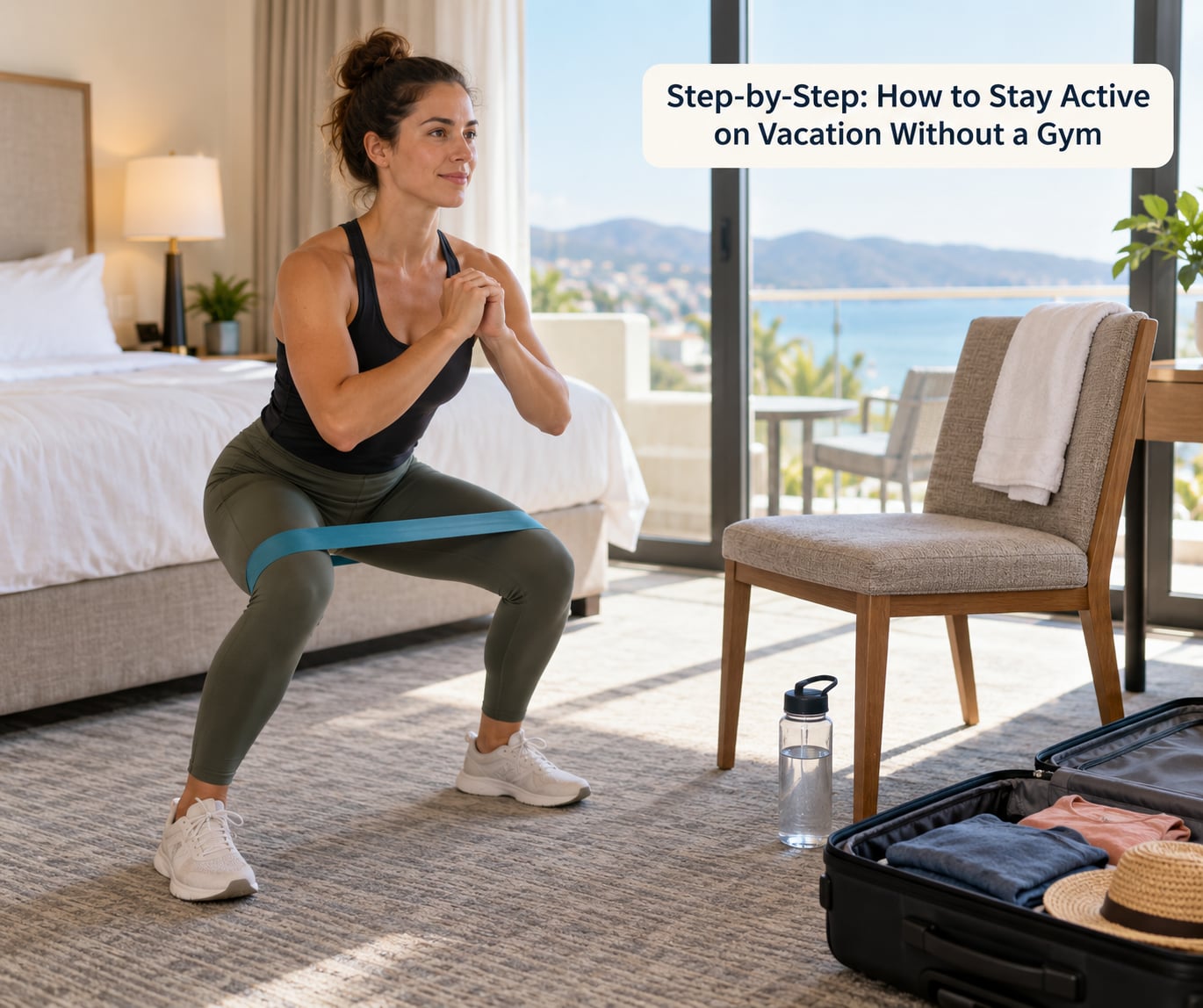
Seven parts, and you can start with three of them. They are deliberately flexible because the trip will not follow them.
1. Set a walking floor: the simplest answer to how to stay active on vacation without a gym
Pick a number you could hit on your worst day. For most adults that sits somewhere around six to eight thousand steps, and for a slow day at a beach resort five thousand is honest and fine. Walking is the base layer here, because it needs no equipment, no schedule and no other person.
Chunk it rather than chasing it in one go. A twenty-minute walk after breakfast, a longer one at dinner, and stairs whenever the elevator is right there usually beats a single aimless afternoon march. Walking instead of a short rideshare or a shuttle is where most of the extra steps quietly come from.
How do you know it worked? Your phone’s step count is higher on travel days than on home days, which is a low bar to clear.
2. Run a five-minute mobility block after long sitting
Long flights, cars and museum queues leave hips, hamstrings and shoulders stiff. Five minutes fixes more of that than any workout equipment you could pack.
Do ten ankle circles each direction, ten body-weight squats with a slow three-second lowering, ten glute bridges on the floor, and eight thoracic rotations per side while seated. Add eight walking lunges if the room gives you room. Two of those three rounds after a flight or a long drive is plenty.
This is not a workout. It is what keeps you moving without feeling like you are working out.
3. Do two short body-weight strength sessions a week
Twice a week is enough to hold muscle through a two-week trip. Three sessions is fine if you genuinely enjoy training, but two is the number most people should commit to because they will actually do it.
Keep each session to twenty minutes and cover the whole body in one circuit. Bodyweight squats for three sets of twelve, incline push-ups off a desk or suitcase edge for three sets of eight to ten, chair dips for three sets of ten, glute bridges for three sets of fifteen, a plank held for three rounds of thirty to forty-five seconds, then eight to ten walking lunges per side.
Rest sixty to ninety seconds between exercises and two minutes between rounds. If you packed a band, add band rows and band lateral walks for two sets each. Do you need to be sweaty? No. You need to finish.
4. Turn sightseeing into the cardio session
The best vacation workout is the one that doubles as the trip. Choose the walking tour over the bus tour, rent bikes when the town has good lanes, swim in the sea when the conditions are safe, or hike a trail with a real elevation gain.
Public parks with outdoor calisthenics stations exist in most cities, and the local council or tourism office can tell you where the nearest one sits. Yoga classes, park runs and community clubs are another option, and asking at the hotel front desk or the tourist information desk usually finds them faster than an app does.
If you are training with heavy barbell weights at home, be straight with yourself here. Body-weight work is maintenance. It will not replace heavy pulling and squatting, and anyone who tells you otherwise is selling something.
5. Keep one hotel room workout in your back pocket
You do not need this every day. You need it for the day the weather is bad, the flight is cancelled, or the group you came with wants to lie by the pool.
Ten named movements, roughly three sets each, about eighteen minutes: jumping jacks, high knees, bodyweight squats, incline push-ups, chair dips, glute bridges, mountain climbers, wall sits at thirty to forty-five seconds, a plank, and a standing hamstring stretch per leg. Room enough for a jump rope? Add it. Nothing here needs floor space bigger than a bath mat and a chair that will not tip.
6. Plan a real rest day instead of pushing through
Rest is part of the plan, not a failure of it. If you did a proper session on day two, an easy walk on day three keeps the rhythm without the recovery cost.
Common travel also stacks up: late flights, broken sleep, unfamiliar food, more sitting than usual. That is a good reason to go lighter, not a reason to push harder. Anyone who trains hard on four days in a row while sleeping badly is not maintaining fitness, they are borrowing against it.
7. Review the trip once a week and adjust
On the halfway point of a longer trip, ask three questions. Did I hit my walking target most days, or did I quit it entirely? What got in the way, time, weather or company? What did I actually enjoy?
Then change one thing. Not the whole plan, just one part. Too cold in the mornings? Walk at midday instead. Company that will not move? Put your walk in before breakfast, when nobody is waiting. Missing the gym more than the walk? Look up a day pass for one afternoon.
A plan you adjust survives. A plan you abandon on a Tuesday because it was too ambitious does not.
Common Mistakes
Trying to keep your full gym program running
Full sessions, heavy loads and a fixed timetable do not survive travel. Aim to hold roughly half your usual volume at a much lower intensity, and treat the strength work as a floor rather than a goal.
Skipping the warm-up
Cold hips and ankles on a hard surface are where most travel injuries start. Two minutes of ankle circles and slow squats before anything else costs nothing.
Assuming the place has a pool or a gym
Plenty of places have a gym with four machines, one broken treadmill and a booking sheet. Ask at the front desk before you unpack, and have your walking routine as the plan A rather than the backup.
Relying on one hard session a week
One intense hour does not replace daily movement, and it tends to end with sore legs on a day you wanted to walk. Short and frequent works better on a trip.
Ignoring shoes, water and sleep
These three decide how the week feels more than the workout does. Break in shoes before you leave, carry water in warm weather, and treat the first night of bad sleep as information rather than something to train through.
Ignoring pain and warning signs
Sharp pain, dizziness, chest discomfort or unusual shortness of breath means stop and seek medical care. If you have a heart condition, a recent injury, a pregnancy or any other ongoing health issue, ask your doctor before you travel and before you exercise anywhere unfamiliar.
Walking alone at night somewhere you do not know
Choose lit, populated routes, plan the loop before you leave, tell someone where you are going, and keep your phone charged. Skip headphones in unfamiliar places. If the street feels wrong, turn around and walk the other way. No step count is worth a bad evening.
A few smaller tips: stretch and hydrate after long flights since stiff travel plus dehydration is what makes day two feel terrible. Download any workout videos you want before you fly, because hotel connections are unreliable. And do not negotiate with yourself in the moment about whether it counts. A walk across a city to see it counts.
Frequently Asked Questions
What bodyweight exercises can I do in a hotel room?
You can do most of a full-body workout with a clear floor and a sturdy chair: bodyweight squats, incline push-ups, chair dips, glute bridges, wall sits, planks, mountain climbers, jumping jacks, high knees and walking lunges. Three sets of ten to fifteen reps each, with sixty to ninety seconds of rest, fills twenty minutes. A resistance band adds rows and lateral walks if you packed one.
Is walking alone enough to stay active on vacation?
Walking daily protects most of your cardiovascular base and needs nothing but shoes, and on a short trip it is genuinely enough. What walking will not hold is heavy strength work, so add two short body-weight sessions a week if that matters to you. Set the target low enough that a tired or wet day still lets you clear it.
How much exercise do I need on a two or three day trip?
On a short trip, do not program a routine at all. Keep your normal walking habits, add one body-weight circuit on a day when you feel fresh, and spend the rest of your attention on the trip. Two or three days rarely changes your fitness, and the win is arriving home with the habit intact rather than with a training schedule to rebuild.
What can I do on vacation if I have limited mobility or an old injury?
Walk on flat ground at a pace you can hold while talking, add seated mobility work, and swim if you can do it without pain. Skip loaded stretching, deep squats and anything that pushes end-range on a joint that complains. Ask your doctor or physical therapist before the trip for the movements you should avoid, and carry whatever you normally use.
How long should a vacation workout be, and how often?
Twenty to thirty minutes, two or three times a week, is plenty to maintain muscle and conditioning on a trip. Daily walking fills the rest. Rest days are fine and often necessary when sleep and food are unfamiliar, and you do not need to earn the vacation with sweat.
When should I check with a doctor before exercising while traveling?
Check before you go if you have a heart condition, high blood pressure, diabetes, a recent injury, a joint replacement, are pregnant, or have not exercised regularly in a while. Bring medication in original packaging with a copy of prescriptions, and know where the nearest clinic is. Acute symptoms mean stopping immediately, not searching for a hotel gym.
Conclusion
Pick one movement you actually enjoy, set a walking floor you can clear on your laziest day, and add two short body-weight sessions to the week. When a day goes sideways, change the plan instead of dropping it, and talk to your doctor before traveling if you have an ongoing health condition or an injury. That is the whole routine.