The fastest way to reduce waste while traveling is to stop buying single-use things in the first place: carry a bottle, a tote bag, a set of cutlery, and a small container, then plan meals and refill stops before you leave. Most of the trash on a trip comes from a handful of repeated moments, and those moments are easy to change once you know where they are.
My honest take after years of watching my own bin bags fill up: the goal is not a perfect trip. Nobody finishes a two-week trip with zero waste, and travelers who promise they do are usually not counting the mini bottles from the hotel bathroom. Aim to cut the obvious waste, then stop worrying about the rest.
This guide covers the practical side: what to bring, what to refuse, how to handle days when a destination has no recycling at all, and what a boutique stay or a small rental can do to make it easier. Most of it takes about twenty minutes of prep and costs nothing beyond a few items you probably already own.
Table of Contents›
- What You Need
- You Do Not Need to Buy a New Kit to Start
- Step-by-Step: How to Reduce Waste While Traveling
- 1. Pack Reusable Essentials Instead of Disposable Supplies
- 2. Plan Meals and Refill Points Before You Go
- 3. Choose Refillable Water and Skip Disposable Drinks
- 4. Buy Only What You Need and Prefer Minimal Packaging
- 5. Reduce Packaging at Hotels and Short-Term Stays
- 6. Sort and Minimize Waste While Moving Around
- 7. Pack Light, Separate, and Dispose of Waste Properly
- Common Mistakes
- Frequently Asked Questions
- Is it really possible to travel with zero waste?
- What should I pack for a low waste travel kit?
- How do I avoid single-use plastic when food is pre-packaged?
- How do I reduce waste in a hotel or boutique stay?
- Where can I recycle or refill while traveling?
- Does flying make low waste travel pointless?
- Conclusion
What You Need
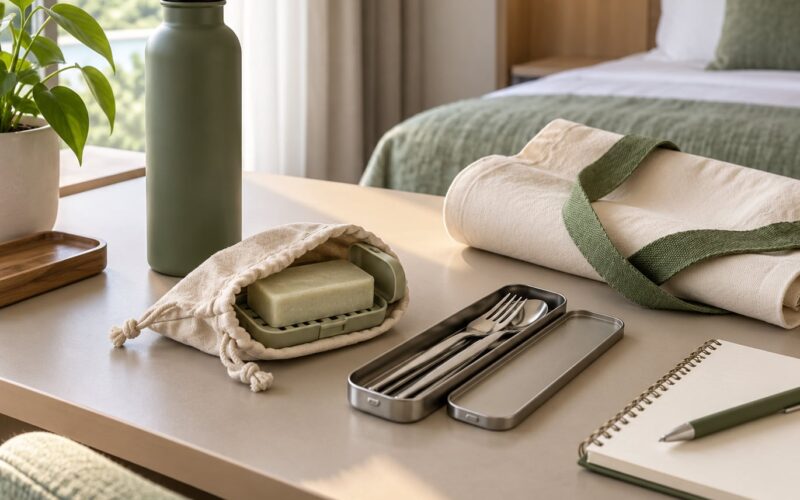
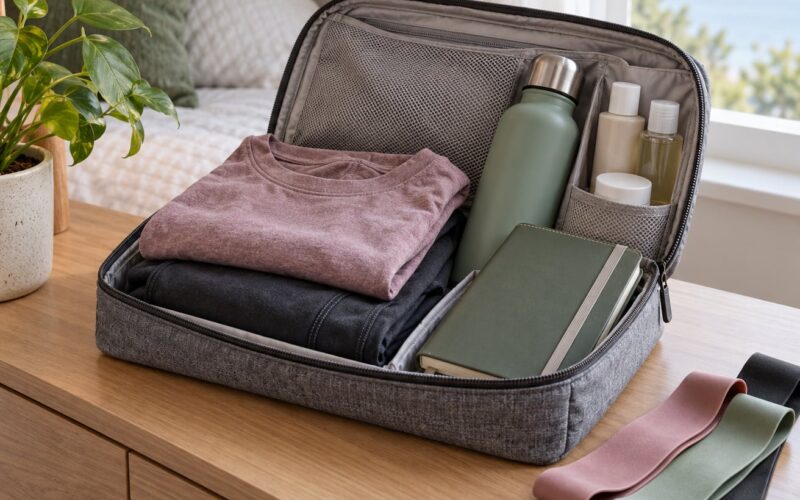
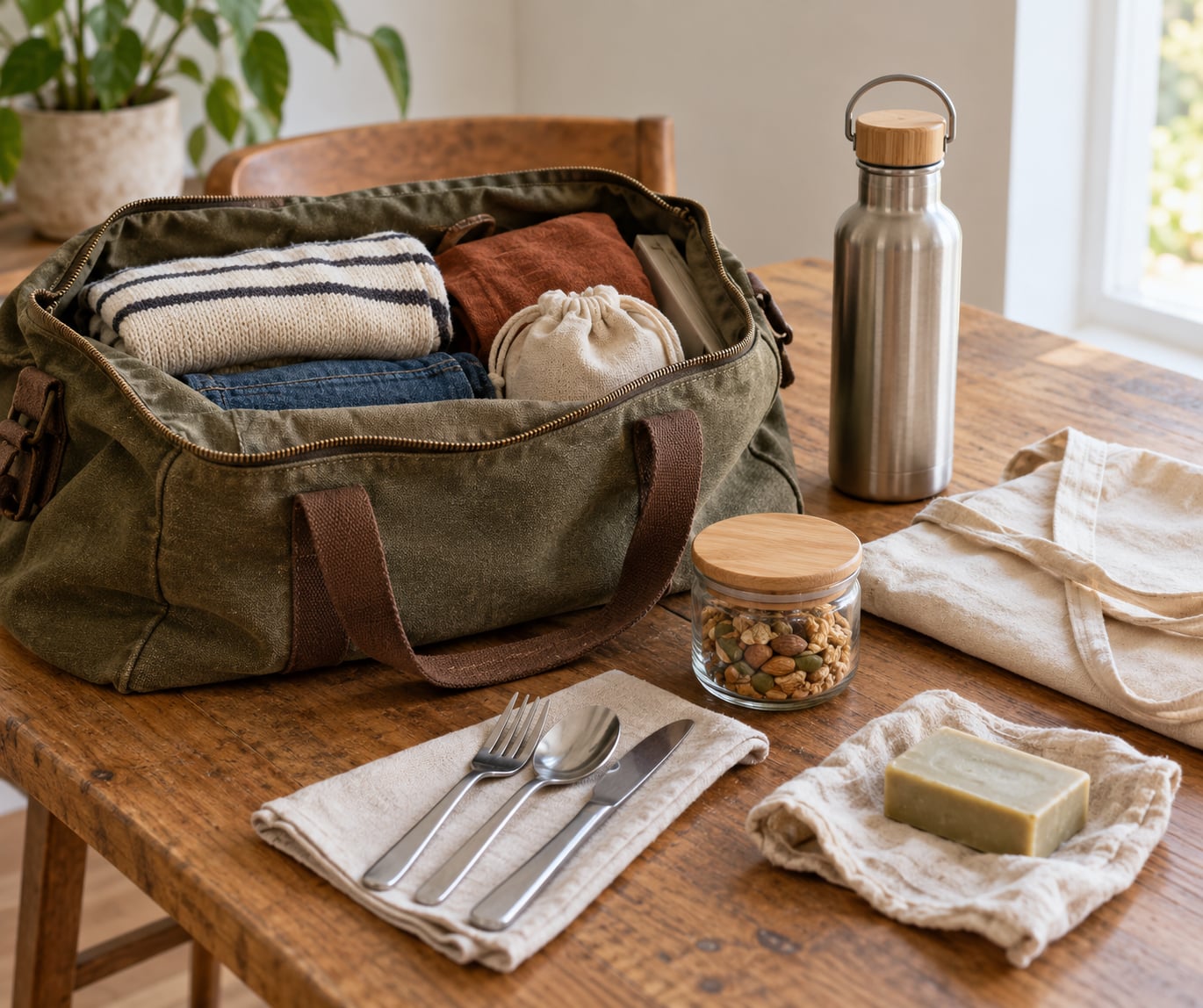
You need less than most packing lists suggest. The whole kit fits in a small pouch and lives in the bag you already have.
- One refillable water bottle. A wide mouth one is easier to clean and to add ice to. A collapsible silicone bottle takes up almost no room once it’s empty.
- Two tote bags or folding shopping bags. One for shopping, one spare. Thin fabric ones roll into themselves.
- A cutlery set. A spoon, fork, and chopstick if you need them. Many eateries will hand you disposable ones the moment you sit down, so having your own changes the interaction.
- A small container with a lid. For market food, a portion of takeaway, or transporting a slice of cake back to the room without it meeting the taxi floor.
- Refillable toiletries. Shampoo and soap bars, a tube of toothpaste, a bamboo or plastic toothbrush. Bars travel better than bottles and last longer per unit.
- A laundry bag. A mesh bag that holds a week’s clothes in a washable bag on day four, and doubles as a wet-bag.
- A scarf or wrap. It replaces paper napkins, works as a light cover-up, and takes up almost nothing.
That’s it. If you already own a water bottle and a tote, you are most of the way there.
You Do Not Need to Buy a New Kit to Start
Long-term travelers often say the same thing about their own habits: the kit that works is the one already in the cupboard. A jam jar with a lid does the job of a proper container. A stainless spoon and fork wrapped in a cloth napkin is a perfectly serviceable cutlery set.
Reviewers on travel forums point out that rigid glass jars are the wrong choice for flights and long transfers, and that even committed low-waste travelers run into plastic packaging they cannot avoid. Buy better things once, use them for years, and skip the specialty shop on day one of the trip.
One more thing worth setting up before you go: a realistic target. My own rule is to fix the five habits I can actually control and stop there. Aiming for zero turns a two-week trip into a stress exercise, and stress defeats the point.
Step-by-Step: How to Reduce Waste While Traveling
Work through these in order. Each one is a habit you set up once, and each gives you something measurable to check later.
1. Pack Reusable Essentials Instead of Disposable Supplies
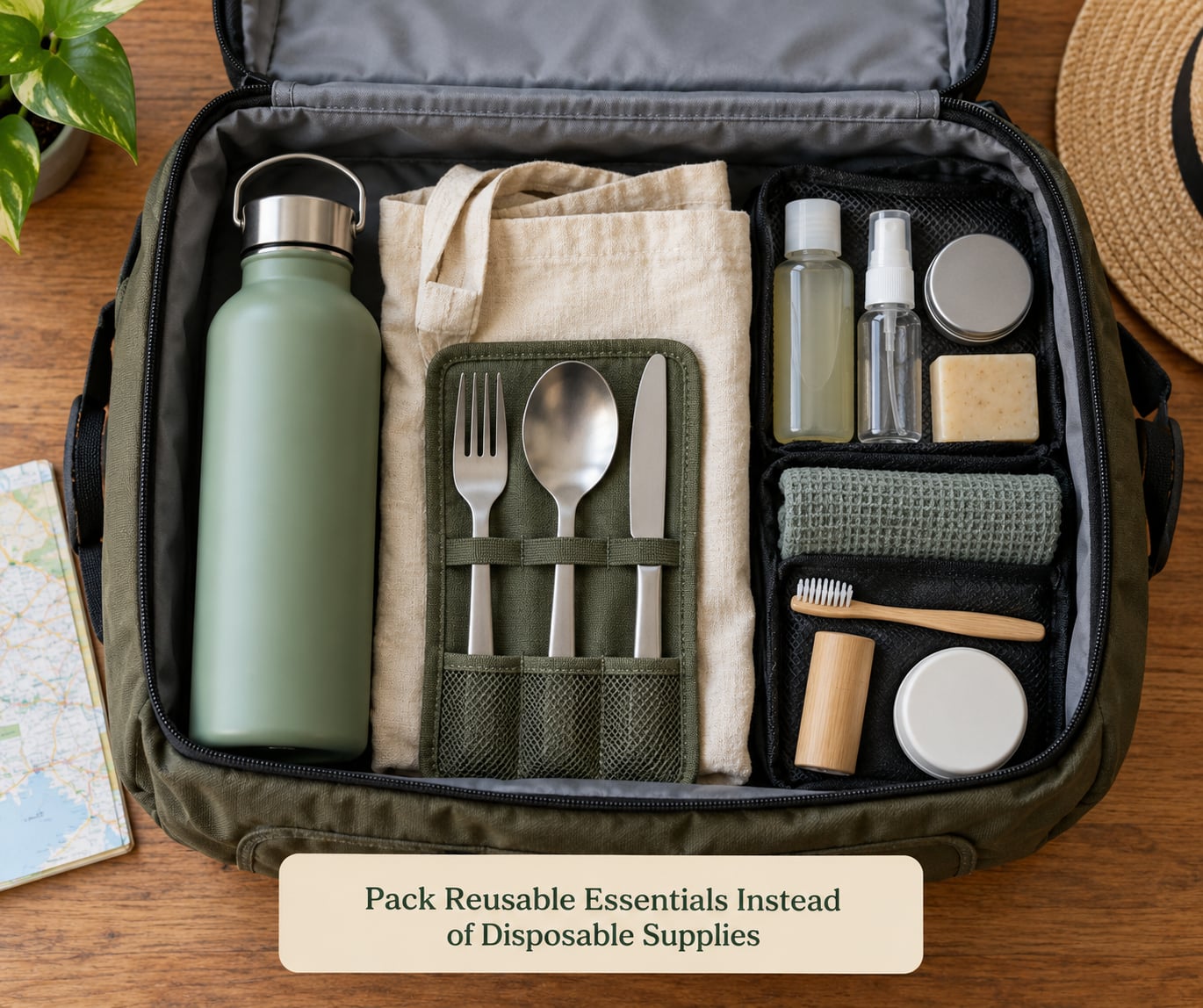
Empty your bag and count what is single-use. Travel-size shampoo bottles, a plastic razor, wet wipes, a disposable toothbrush, packaged snacks, a plastic folder for documents. Each one is a candidate for a swap.
Swap a small bottle of liquid soap for a soap bar that stays dry in a cloth bag. Swap wet wipes for a flannel and a spray bottle you fill from a hotel tap. Swap the travel toothbrush for one that stays in your bag for the whole trip. You will find most of the replacements already exist in a drawer at home.
How you know it worked: when you unpack at the accommodation, nothing in your bag needed a bin that night. That is the test, and it is the whole method in one line.
2. Plan Meals and Refill Points Before You Go
Waste tracks convenience. The meal you eat standing up at a station because you had no plan is the meal that comes in packaging you did not choose.
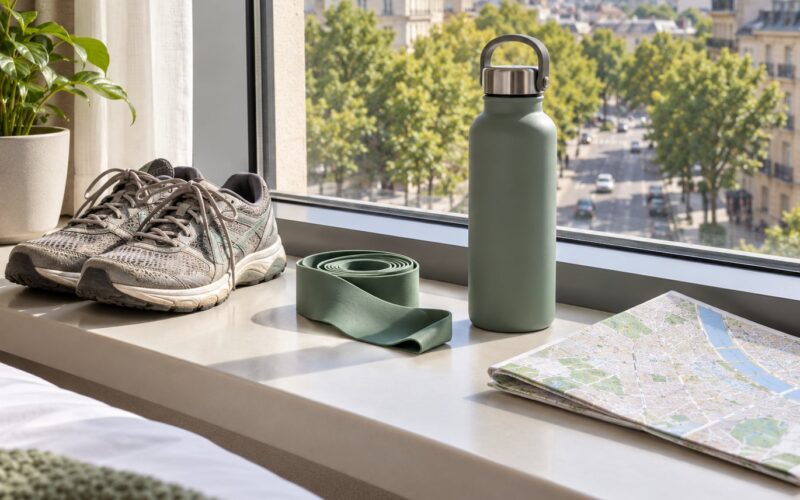
Before departure, spend twenty minutes noting where you can buy food without packaging and where you can refill water along your route. Search for markets, greengrocers, and water refill stations on the map you will actually use, and pin them. Look at the first two days of your itinerary in detail and leave the middle open.
Cooking even one simple meal a day from market ingredients changes the ratio of the trip noticeably. You get a container you refill, produce you choose yourself, and no takeaway box at the end of it.
How you know it worked: at least one day of the trip involved food you prepared or assembled yourself rather than food handed to you in a wrapper.
3. Choose Refillable Water and Skip Disposable Drinks
Bottled water is the default option almost everywhere, which is exactly why it produces so much waste. Carrying an empty bottle makes you look like a traveler rather than a tourist, and it changes what shopkeepers hand you.
Tap water is the first option in most cities. Beyond that, look for refill stations at stations, airports, parks, and larger stores, and apps and maps that list public fountains in a given city. If the local water is not safe to drink, use a filter or bring purification tablets and treat your own bottle rather than buying a new sealed one each time.
Coffee and tea follow the same logic. A cup you carry is the difference between a counter you visit five times a week and a receipt with a lid on it. Skip the straw unless you asked for one, and ask for no ice in summer if that is a habit you are trying to break.
How you know it worked: count the single-use drink containers you bought during the trip. Zero is achievable in cities with refill stations and near-impossible in a desert, which is fine.
4. Buy Only What You Need and Prefer Minimal Packaging
Markets and small shops are where low-waste shopping actually happens. Bulk stalls, greengrocers, and stores that refill your own container are common in much of southern Europe, Asia, and Latin America, though availability varies a lot by town.
Bring your own container to the shop and ask before assuming. Keep produce in a thin bag you can reuse, and say no to the extra plastic sleeve. Buy the larger pack of something only when you will genuinely use it before you leave, not because the unit price looks better.
For gifts, choose something made nearby and meant to last: a spice from a market stall, a woven bag, a tin, something a local person actually uses. Souvenirs that sit unused on a shelf in your home are waste with a travel story attached. Declining free promotional items on the street is one of the easiest refusals you will ever make.
How you know it worked: at the end of the trip, no more than a couple of items go into a charity shop at home, and the souvenirs you kept are ones you have already used.
5. Reduce Packaging at Hotels and Short-Term Stays
Boutique stays, guesthouses, and rentals generate more packaging than you would expect. Mini shampoo bottles, individually wrapped soaps, slippers, a wrapped tissue on the pillow, a paper sleeve around the kettle, and a plastic bag for the laundry service.
Ask politely before arrival or at check-in whether bulk toiletries are possible, and whether laundry can be returned in a reusable bag instead of a plastic one. Guests with allergies and medical needs usually get a fixed request made for them, so a short written note at booking works better than a verbal request at the desk.
Once you are in the room, use the same refill-and-reuse routine as anywhere else. Reuse the kettle for more than tea. Skip the housekeeping option on nights you do not need it, and if you do use it, put the used towels and the empty amenity bottles together for the staff instead of leaving them in a heap. Some places accept refill stations in the lobby for guests, and it is worth asking.
How you know it worked: you left the room with the same number of amenity bottles you arrived with, and you did not accept anything you had already packed.
6. Sort and Minimize Waste While Moving Around
On a day trip, the useful move is a small zip bag or pouch in your daypack. It holds the receipt, the snack wrapper, the coffee lid, the tissues, and the ticket stub, so you deal with them once at the end of the day instead of accumulating them.
Separating while you are out and about matters more than people expect. A clean bottle in the right bin, a wrapper in a market bag, and one crumpled thing in your pocket are all easy; a pocket full of mixed rubbish at 6 pm is not.
Choose services that generate less litter. Walking, a bike hire, and a local bus beat a taxi that runs empty. Bring a cup to a cafe instead of buying one for the terrace. In places where waste collection is inconsistent, travelers get into the habit of carrying their rubbish back to wherever they are staying and sorting it there, which is the cleanest option available.
How you know it worked: you came back at the end of the day with an empty pouch and a sorted bag rather than a pocket full of mixed rubbish.
7. Pack Light, Separate, and Dispose of Waste Properly
Overpacking creates waste before you even leave. Every extra layer, the second pair of shoes, the bulky toiletries set you bought because it was convenient to pack: that is weight you carry and eventually discard. Forum travelers generally plan the kit around the type of day ahead, road trip or overnight or event, because that avoids carrying reusables you never use.
Disposal rules differ enormously between countries and often between towns in the same country. Bins that look identical may take completely different materials, and in some destinations the honest answer is that there is no separation at all. Learn the local rules before you need them, and when a bin is labelled, believe the label rather than what you assume from home.
Keep unusual waste out of the general stream where you can. Take packaging that might be mistaken for local recycling to a pharmacy or a shop that handles it, and never leave a bag of your rubbish in a national park or on a beach. If you are in a place with no recycling, reducing and reusing upstream matters far more than sorting downstream.
How you know it worked: you spent less time dealing with waste than you expected, and you never had to carry rubbish from one place to the next.
Common Mistakes
Buying disposable products for convenience. That is the single biggest source of travel waste, and it is usually a decision made in a shop queue. Correction: keep the container and the cutlery in your bag permanently, so there is nothing to decide.
Overpacking the kit. A full set of reusables for a weekend in a city is more weight than the problem deserves. Correction: build a small pouch and add only what your itinerary needs.
Assuming every recycling system works like yours. This is how travelers end up leaving a place with a bag full of material they thought they had sorted. Correction: check the local rules first, and when in doubt, keep it out of the general bin.
Trying to eliminate all waste. Some packaging is genuinely unavoidable, especially in places where food arrives pre-wrapped. Correction: aim for the top of the order, which is to refuse first and sort last, and accept the rest.
Buying a souvenir on impulse. Correction: put anything non-essential in a bag and look at it again the next day. Most of it stays home.
Forgetting the laundry loop. Packing for every day instead of washing mid-trip produces a bag of used clothing rather than a bag of reusables. Correction: a mesh laundry bag and thirty minutes at a local laundromat solves most trips.
Two smaller habits that cost nothing: keep a plastic bag or two for carrying wet or waste material, and carry a scarf, which removes more napkin use than anything else in your bag.
Frequently Asked Questions
Is it really possible to travel with zero waste?
A completely waste-free trip is close to impossible, because some food and products come in packaging you cannot refuse. What is realistic is cutting the waste you control, which on most trips means water bottles, takeaway packaging, toiletries, and hotel amenities. That is typically the majority of what a traveler generates.
What should I pack for a low waste travel kit?
A refillable bottle, two tote bags, a cutlery set, one small container with a lid, refillable toiletries, a laundry bag, and a scarf. That is the core. Add a filter or purification tablets if local water conditions require it, and check the rules for your destination before you add anything else.
How do I avoid single-use plastic when food is pre-packaged?
You often cannot, and that is fine. Reduce what you can: bring a container for market purchases, eat at places serving food on plates, and carry your own bottle and cutlery. In destinations where street food is wrapped, the packaging is a local habit rather than a choice you make, so adjust your expectations and keep refusing the parts you can.
How do I reduce waste in a hotel or boutique stay?
Request bulk or refillable toiletries in writing before arrival, skip individually wrapped amenities, and put used towels and empty bottles together for housekeeping instead of leaving them scattered. Ask whether laundry can come back in a reusable bag. The room feels wasteful until you look at what is single-use, then the changes are quick.
Where can I recycle or refill while traveling?
It depends entirely on the destination, and that is the honest answer. Stations, airports, parks, and larger shops often have fountains or refill points, and city-specific apps and maps list them. Recycling bins are labelled, and the labels differ from country to country, so read them rather than guessing based on what you are used to at home.
Does flying make low waste travel pointless?
No, though it limits how far you can go. A flight’s emissions are fixed once you have booked, so the productive habit is to fly less when you can, and reduce what the trip generates while you are there. Choosing a train instead of a short flight often avoids more waste than any packing change you will make.
Conclusion
If you do nothing else, do these three things before you leave: put a bottle and a tote bag in your bag and leave them there, write down two refill points and one market for each area you are visiting, and pick one evening per trip where you cook or assemble food yourself. Those three cover most of the waste a traveler controls.
Everything after that is refinement. The mindset that makes this stick is simple: refuse first, sort last. Start with the bottle, the bag, and a plan, and let the rest go as you go.