Dressing for a winter walk in a mountain town comes down to three thin layers you can add and remove, warm socks, grippy boots, and a hat and gloves you actually put on. Get that right and you can walk a village loop, stop for coffee without sweating, and step back out when the wind has shifted. It takes about five minutes to dress for once you know the routine.
A mountain town is not a backcountry trail, and that changes the clothing problem completely. You are on pavement and cobblestone, walking at conversation pace, carrying nothing or almost nothing, and ducking indoors every forty minutes. The gear advice for a winter hike tends to send you out far too warm for a stroll down a main street.
I have made that mistake more than once. Overdress for the photo, then spend the first fifteen minutes of the walk damp under a puffy jacket while everyone else in a fleece looks comfortable.
Table of Contents›
- How to Dress for a Winter Walk in a Mountain Town: What You Need
- How to Dress for a Winter Walk in a Mountain Town: Check the Conditions
- How to Dress for a Winter Walk in a Mountain Town: Build the Base Layer
- How to Dress for a Winter Walk in a Mountain Town: Add Insulation
- How to Dress for a Winter Walk in a Mountain Town: Choose the Outer Shell
- What to check before you buy
- How to Dress for a Winter Walk in a Mountain Town: Protect Your Feet
- How to Dress for a Winter Walk in a Mountain Town: Finish With Accessories
- How to Dress for a Winter Walk in a Mountain Town: Adjust for Your Route
- Common Mistakes
- Winter Walking Tips for Comfort and Safety
- Frequently Asked Questions
- What should I wear for a winter walk in a mountain town?
- Should I wear cotton while walking in cold weather?
- Do I need waterproof boots for a winter walk?
- How many layers are best for a mountain walk in winter?
- What accessories prevent losing heat while walking outside?
- How can I avoid overheating while walking in winter layers?
How to Dress for a Winter Walk in a Mountain Town: What You Need
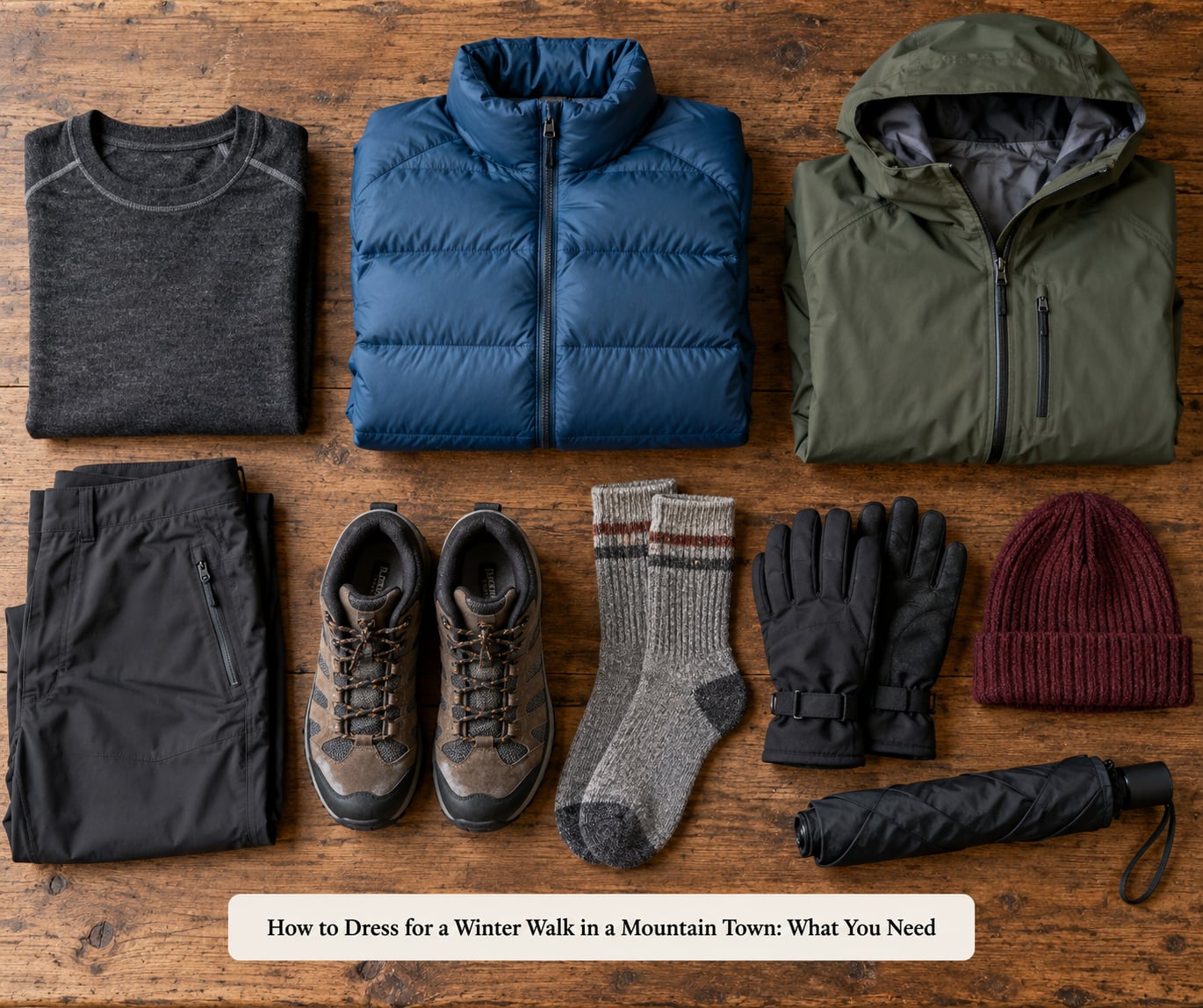
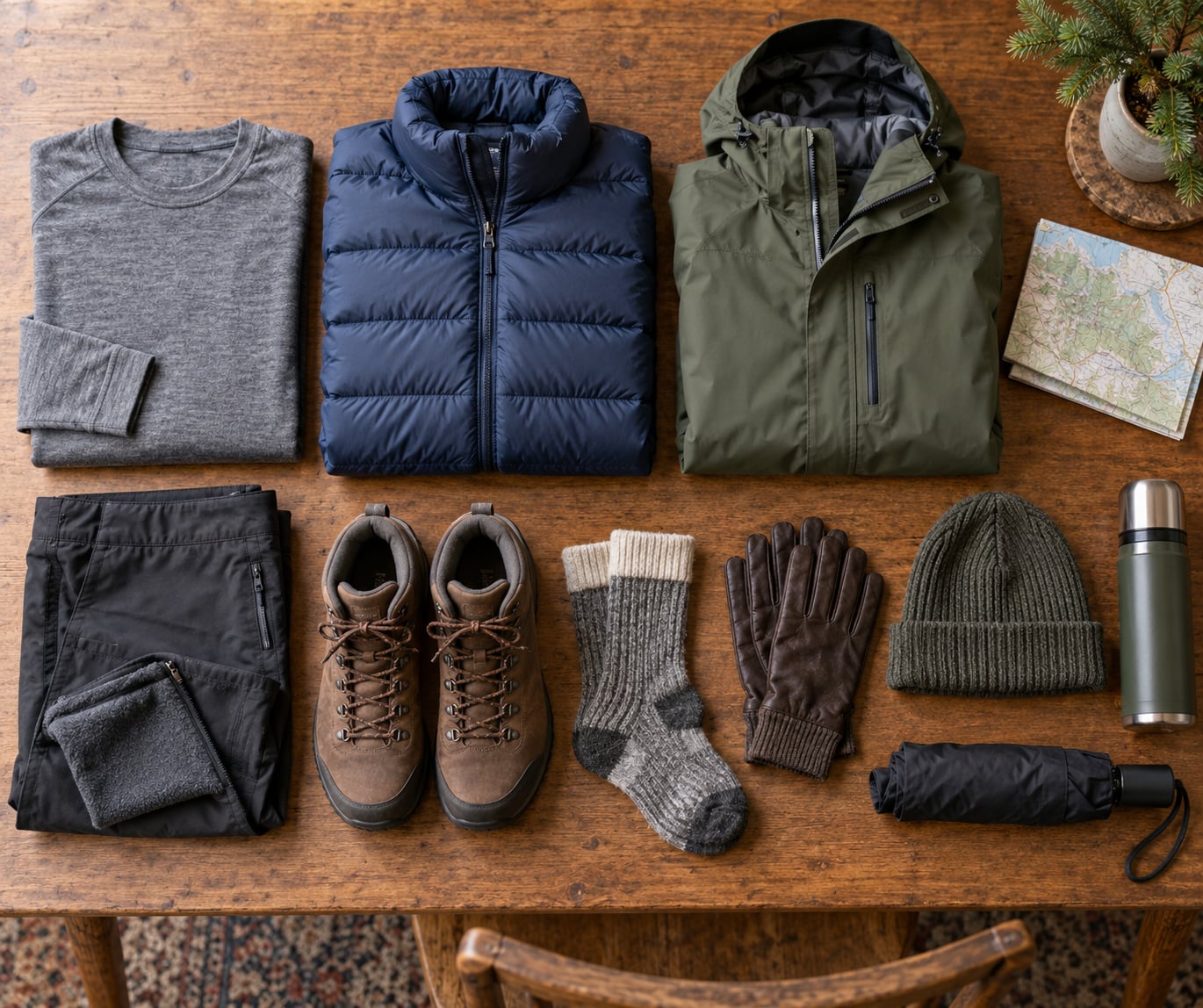
You need seven things, and only the first three are clothing in the technical sense.
- A moisture-wicking base layer. Merino wool or a synthetic top that moves sweat off your skin.
- An insulating mid-layer. Fleece, a lightweight puffy, or a wool sweater that you can unzip or peel off.
- A weather-resistant outer shell. Windproof, water-resistant, breathable, and small enough to fold into a pocket.
- Warm bottoms. Fleece-lined trousers or thermal leggings under them if it is genuinely cold.
- Footwear with grip. Insulated boots or supportive walking shoes with lug patterns that bite into ice.
- Accessories. A hat, gloves or mittens, a neck warmer, and sunglasses if there is snow on the ground.
- A small adjustment for rain, wind or extra time. A packable shell or a compact umbrella, plus a spare pair of socks.
One small bag is worth carrying, even if it is just a tote or a backpack you keep in the hotel. Spare gloves, a hand warmer, lip balm and a snack cost nothing in weight.
How to Dress for a Winter Walk in a Mountain Town: Check the Conditions
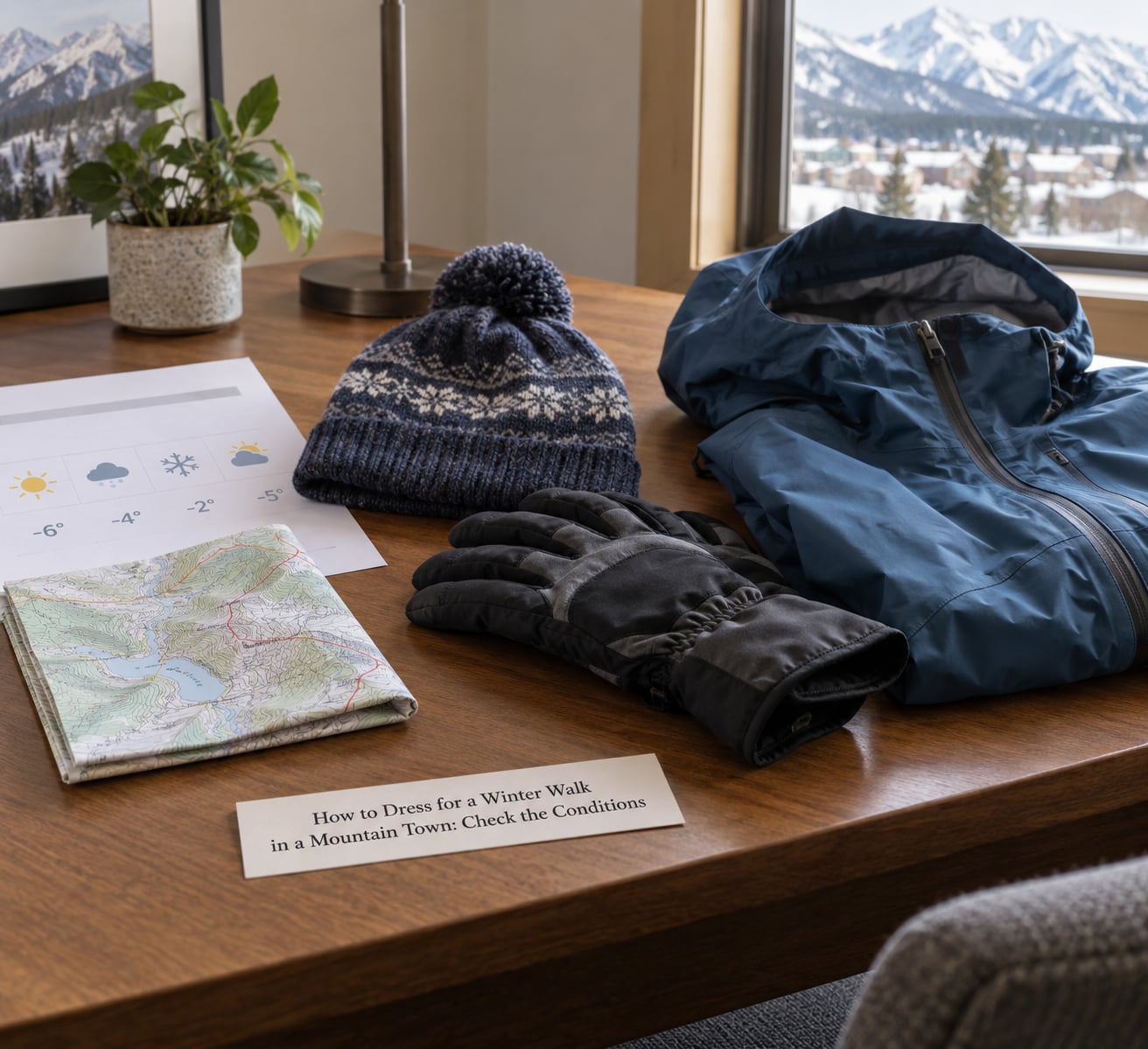
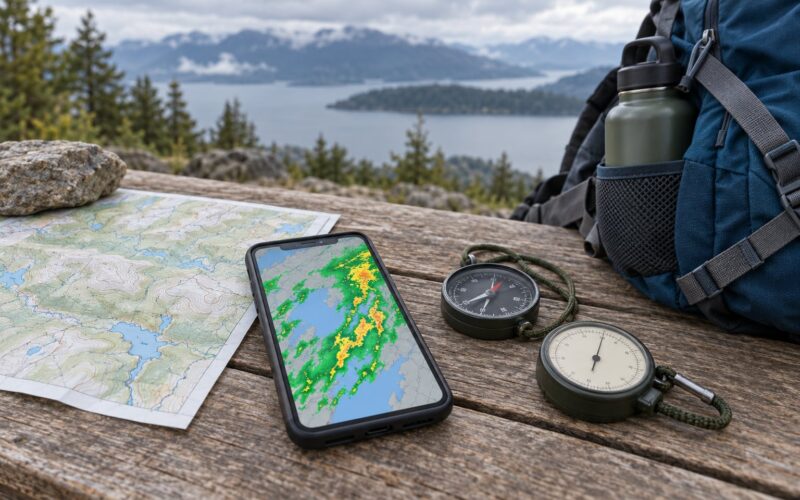
Check three numbers before you dress: the feels-like temperature, the wind, and the daylight window. The first is the one people skip, and it is the one that matters.
Forecasts show the high and the low. What you feel on an exposed street with a valley breeze coming through is usually colder than the number suggests, because wind strips the warm layer of air next to your skin. Dress for the feels-like figure, not the printed one.
Wind funnels through mountain towns in ways that surprise visitors. Streets that run along the valley floor can be calmer than the main drag, and a ridge or a bridge viewpoint can feel noticeably colder than the café you just left. If your route has an exposed section, plan for the worst part of it rather than the average.
Daylight is the other one. In winter, towns like Vail, Estes Park, Gardiner or Telluride lose the afternoon quickly, and streets that looked welcoming at noon are dark and icy at three. If your walk will end near or after sunset, bring a headlamp or know that your phone will be your light source.
Treat the forecast as a guide, not a set of rules. Mountain weather can turn inside an hour, and the sensible response is to wear layers you can adjust rather than a single outfit built for one exact reading.
How to Dress for a Winter Walk in a Mountain Town: Build the Base Layer
A base layer is the thin thing that touches your skin, and its only job is moving sweat away from your body before it turns cold on you.
Skip cotton here. Cotton soaks up sweat, dries slowly, and pulls heat out of you as it does, which is why people who wear jeans and a cotton shirt on a winter walk end up colder than people who started with less clothing. The rule is well known and widely ignored.
Merino wool is the comfortable choice. It regulates temperature well, resists smell for days, and feels fine against skin. If merino makes you itchy, or if you have sensitive skin or Raynaud’s and wool is a problem, wear a thin synthetic or polypropylene layer instead and put the wool over it. Many people who struggle with merino prefer that arrangement.
Synthetic base layers dry faster than wool and cost less. In very cold conditions, some hikers wear two, a thin synthetic next to skin with a merino layer over the top.
Keep the fit close without being skin-tight. A baggy base layer traps air you did not intend to trap, and a tight one restricts movement. Long sleeves are the right call for anything below about 55 F (13 C), which is roughly the point where bare arms start to feel like a mistake within a few minutes.
How to Dress for a Winter Walk in a Mountain Town: Add Insulation
The mid-layer is the warmth layer, and it is the one you will argue with yourself about, because town walking is low intensity and that is exactly where people overheat.
Fleece is the easiest option for a stroll. It is cheap, light, machine washable, and you can shove it under your arm or tie it around your waist when it gets too warm. Most days in town, fleece alone over a base layer is enough for a 45 to 90 minute walk.
Synthetic insulation is warmer for its weight than fleece and still works when it gets damp. It packs down small, which matters when you have no bag. Down is warmer still for its weight, but it loses most of that warmth when wet and it takes a long time to dry, so down is a poor choice in wet, snowy towns unless it sits under a waterproof shell.
The trick with a town walk is to unzip early. Walking at 2 to 3 miles an hour generates real heat, and the mid-layer is what traps it. Open the shell, unzip the fleece, or roll the sleeves partway down before you reach the first hill, rather than waiting until you are soaked.
Keep the mid-layer on indoors. Cafes and shops in mountain towns run warm, and stepping out without it means your outer layer has nothing to fit over when you return to the cold.
How to Dress for a Winter Walk in a Mountain Town: Choose the Outer Shell
The outer shell blocks wind and precipitation and lets vapour escape, and on a town walk it usually spends more time open than zipped.
A windproof jacket handles the breeze on an exposed street or bridge. A waterproof-breathable shell handles snow, sleet and the wet pavement that follows a melt. If you can only carry one, take the waterproof-breathable one; it is a usable wind layer when it is dry and a good rain layer when it is not.
What to check before you buy
- Seams. Fully taped seams keep wet out; stitched or exposed seams leak first.
- Hood. A hood that fits over a hat, with something adjustable at the back.
- Cuffs. Elastic or Velcro cuffs that close over gloves and stop wind finding your wrists.
- Ventilation. Pit zips under the arms, or a front zip that opens far enough to dump heat.
- Packability. It should fold into its own pocket and live in a tote or a day bag.
- Fit. It must fit over your mid-layer without squashing the insulation.
If you have no room for a shell at all, an insulated parka covers more situations than it gets credit for. It is bulkier and it is warm enough to skip the mid-layer on a mild day, but you will not regret wearing it on a frozen bench waiting for a bus.
How to Dress for a Winter Walk in a Mountain Town: Protect Your Feet
Cold feet end a walk faster than anything else, and on a town walk they fail you early because you are standing still in shops and queues far more than a hiker is.
Insulated boots or good walking shoes with a grippy lug pattern are the baseline. Look for a sole with defined lugs rather than a flat pattern, because the ice you will meet is town ice: compacted patches underfoot on main street, slick parking lots, and shaded cobblestones where the sun has not reached all day.
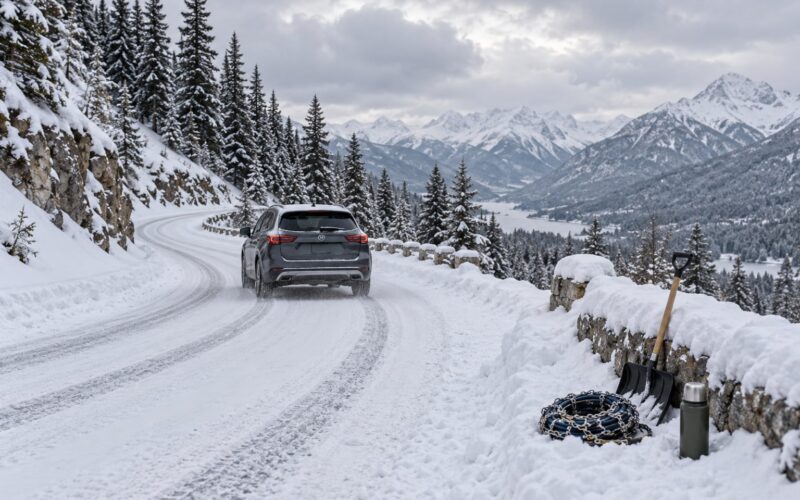
For genuinely icy pavements, microspikes or light crampons that slip over your shoes solve the problem for a few dollars and come in a jacket pocket. They are overkill for a dry cold day and exactly right for a shaded sidewalk after a freeze.
Socks do more work than most people expect. Merino or synthetic socks wick moisture and stay warm damp; cotton socks do the opposite. Carry one spare pair, because a damp sock you cannot change will end your outing well before it is meant to end.
Two small details matter more than they sound. Leave room in the toe box, because thick socks plus boots that are already tight is how numb feet start. And check that your boot sole sits well against snow and ice rather than a smooth leather dress shoe, which has nothing to grip with.
How to Dress for a Winter Walk in a Mountain Town: Finish With Accessories
Accessories are where a warm outfit leaks heat, because bare skin at the head, hands and neck loses far more warmth than bare skin anywhere else.
- Hat. A beanie covers the highest heat-loss area you will ever expose. Wool or fleece, not thin cotton.
- Gloves. Thin liner gloves for moving, insulated or waterproof over-mitts for stopping, since you cannot make a phone call in a mitten.
- Neck warmer. A buff or thin fleece tube closes the gap between collar and jaw and does more for comfort than any extra layer.
- Sunglasses. Snow and ice reflect a lot of light and glare is genuinely painful after an hour. This is the most forgotten item on the list.
- Sunscreen. Cold air hides the feeling of burning. Snow reflects ultraviolet light onto your face, and wind dries skin fast.
- Lip balm. The real one, not the one in your bathroom. Cold dry air cracks lips in about an hour.
- Umbrella or packable rain cover. Compact enough for a bag, and much less annoying than a wet shoulder.
Do not pile all of these on at once. Accessories are where overheating sneaks up on you, because they add insulation everywhere while the mid-layer stays zipped.
How to Dress for a Winter Walk in a Mountain Town: Adjust for Your Route
The same layering system stretches across very different walks, and the only real change is how much insulation you start with.
Short town stroll, 20 to 30 minutes. Base layer, fleece, shell, hat, gloves. Skip thermal leggings unless it is below freezing, and do not carry anything beyond a phone and keys.
Village loop with cafés, 60 to 90 minutes. Add a neck warmer, sunglasses if there is snow, and a small bag with a spare pair of socks. Keep the mid-layer on indoors and strip the shell.
Longer forest walk out of town. Add more insulation than you think you need, because a shaded trail is often colder than the town you left. If the route climbs, keep the mid-layer open the whole way.
Viewpoint with exposure. Wind decides what you wear here, not temperature. Add a windproof layer or a buff over your mouth, and bring a spare glove because bare fingers stop being fun long before you decide to head back.
Wet trail or fresh snow. Shell on, waterproof over-trousers if you have them, microspikes if there is ice, and a synthetic mid-layer rather than down.
Family outing with children. Dress one step warmer than feels right. Children stop moving when they are cold, and a cold adult is a distracted adult. Spare gloves for everyone, always.
Common Mistakes
Most bad winter walks come down to six repeat errors, and each one has a simple fix.
Wearing cotton as a base layer. Jeans and a cotton shirt feel fine at the start and then work against you all day. Fix: merino or a synthetic first layer, and save denim for a short stroll where you will be warm indoors.
Choosing shoes without grip. A waterproof boot with a flat sole can be worse on ice than a lighter shoe with real lugs. Fix: check the sole pattern, and carry microspikes on any day the temperature dips below freezing after rain or melt.
Leaving your feet cold. Cotton socks and tight boots are the usual culprits. Fix: wool or synthetic socks, room in the toe box, one spare pair in the bag.
Carrying too many bulky layers. Three thick sweaters cannot come off mid-walk. Fix: one thin and one warm layer instead, plus a shell.
Forgetting the hat and gloves. You will lose more heat from bare head and hands than from your whole torso if you leave them exposed. Fix: hat and gloves go on before you leave the room, not when you start to feel it.
Ignoring the weather change. You dressed for noon and the wind came up at two. Fix: check the forecast again before you head out, carry a packable layer, and know which part of your route is exposed.
Winter Walking Tips for Comfort and Safety
Start slightly warm rather than slightly cool. On a low-intensity walk, you will cool yourself down in the first ten minutes, and a cold start is hard to recover from.
Carry a compact rain layer and a spare pair of socks in a small bag. Those two items solve more bad days than any jacket upgrade.
Check the route before you leave, especially the shaded sections and the stretch with no cafés. Tell someone your plan and your expected return time if you are walking alone.
Take a break before you feel chilled, not after. Shivering that you can ignore is already a signal, and by the time you are genuinely shivering you have lost ground you cannot easily get back.
There is a real limit. Below about minus 10 F (minus 23 C) feels-like, or with ice on the path you cannot see and traction you do not trust, a town walk stops being a good idea. Turn around, shorten the route, or go back inside.
And choose the footwear for the surface you will actually meet, not the one that looks right in the shop window.
Frequently Asked Questions
What should I wear for a winter walk in a mountain town?
Wear three thin, removable layers: a moisture-wicking base layer, an insulating mid-layer, and a wind- and water-resistant outer shell. Add warm wool or synthetic socks, boots with grippy soles, a hat, gloves and a neck warmer. The point of layers on a town walk is that you can strip a layer while moving, put it back on for a viewpoint, and take the shell off indoors without cooking.
Should I wear cotton while walking in cold weather?
Not as a base layer. Cotton absorbs sweat, dries slowly and pulls heat from your skin as it dampens, which is why people who start warm in jeans finish colder than people who started with less clothing. Cotton is fine for a short stroll where you will spend most of the time indoors. For anything longer, choose merino wool or a synthetic layer that wicks moisture away from your skin.
Do I need waterproof boots for a winter walk?
Usually not. What you need most is grip, because town ice forms in shaded patches, on parking lots and under compacted snow on cobblestones. Insulated boots with a defined lug pattern handle most conditions, and microspikes that slip over ordinary shoes cover the icy days. Waterproof membranes help with slush and melt, but a boot with smooth, hard soles can be more slippery than a lighter shoe.
How many layers are best for a mountain walk in winter?
Three is the working number: base layer, mid-layer, shell. In genuinely cold conditions you can add a fourth thin layer under the mid-layer, which works better than making any single layer thicker. On a low-intensity town walk, three is often too many if you choose them badly, so pick thin pieces and leave the mid-layer open or unzipped while you are moving.
What accessories prevent losing heat while walking outside?
Cover your head, hands and neck first, because exposed skin there loses heat far faster than skin on your torso. A wool beanie, thin liner gloves with insulated or waterproof over-mitts, and a fleece or merino neck warmer cover most of it. Sunglasses and lip balm are not warmth items, but glare off snow and dry cold air will spoil the walk if you skip them.
How can I avoid overheating while walking in winter layers?
Start slightly warm rather than cool, then open the shell or unzip the mid-layer before you feel sweaty, because walking at conversation pace generates plenty of heat on its own. Keep your core layers thin, and leave a spare layer in the bag rather than wearing everything at once. Stopping for coffee with the mid-layer still on and the shell off is the easiest way to stay dry.
Start with the three layers, put the hat and gloves on before you leave, and carry the shell and a spare pair of socks in a small bag. Everything else on this list is a refinement of those five decisions, and you can make all of them in about five minutes.