To stay warm in a tent in cold weather, you have to attack heat loss in the right order: stop it going into the ground, stop it leaking out through gaps, then build a sleep system rated below the forecast low, dress in dry layers, and leave a vent open so sweat doesn’t turn into damp insulation. The whole routine adds maybe fifteen minutes at pitch and two before you climb in.
Most miserable cold nights aren’t caused by a bad sleeping bag. They’re caused by a thin pad, a leak at the door, and a jacket someone wore for six hours of hiking that was soaking wet by the time they got into the bag. Fix those three and the same forecast reads ten degrees warmer.
Here’s the system, in the order that matters.
Table of Contents›
- What You Need
- Step-by-Step: How to Stay Warm in a Tent in Cold Weather
- 1. Eliminate Cold Ground and Drafts
- 2. Build a Complete Insulation System
- 3. Dress in Layers Before Sleeping
- 4. Trap Heat Without Overheating
- 5. Keep Your Feet and Head Warm
- 6. Manage Moisture and Food Comfort
- 7. Prepare for Changing Conditions
- Common Mistakes
- Frequently Asked Questions
- Is there a heater you can use inside a tent?
- What temperature is too cold for tent camping?
- What sleeping bag temperature rating do I need?
- Does a tarp over a tent keep it warmer?
- Does sleeping naked make you warmer in a sleeping bag?
- Can two people share one tent and stay warm?
- Conclusion
What You Need
Most of this list is gear you can use for years, and the cheap items at the bottom are the ones people leave behind.
- A sleeping bag rated for sleep, not for survival. Look for an EN or ISO comfort rating, and pick one at least 10° below the forecast overnight low. Comfort rating is the number you want, not the limit or extreme rating.
- An insulated sleeping pad. A closed-cell foam pad is the dependable choice; an inflatable pad is warmer for its weight. Below freezing, use both stacked, because R-values add.
- A tent that fits the forecast. A three-season double-wall tent is fine for most shoulder-season nights. Freezing rain, heavy snow, and strong wind want a four-season shelter with strong poles and a full-coverage fly.
- A footprint or groundsheet. It stops moisture wicking up from soil, and it adds a little air space under the tent floor.
- Two dry base layers, a mid layer, wool socks, a hat, and a neck gaiter. One full dry set is for sleeping. The second is your emergency set if the first one gets wet.
- A headlamp with fresh batteries, kept inside the tent where you can reach it with gloves on.
- An analog thermometer, if you camp in the same places often. Two nights of notes tell you more about your site than any forecast.
- One safe warmth source: a hot water bottle or a hard plastic bottle, chemical hand and toe warmers, or a sleeping bag liner that adds a few degrees. Not a fuel-burning heater.
Step-by-Step: How to Stay Warm in a Tent in Cold Weather
Seven stages, and the order is the whole trick. Ground and drafts first, because no amount of bedding fixes heat leaking out of a tent wall or straight into the dirt.
1. Eliminate Cold Ground and Drafts
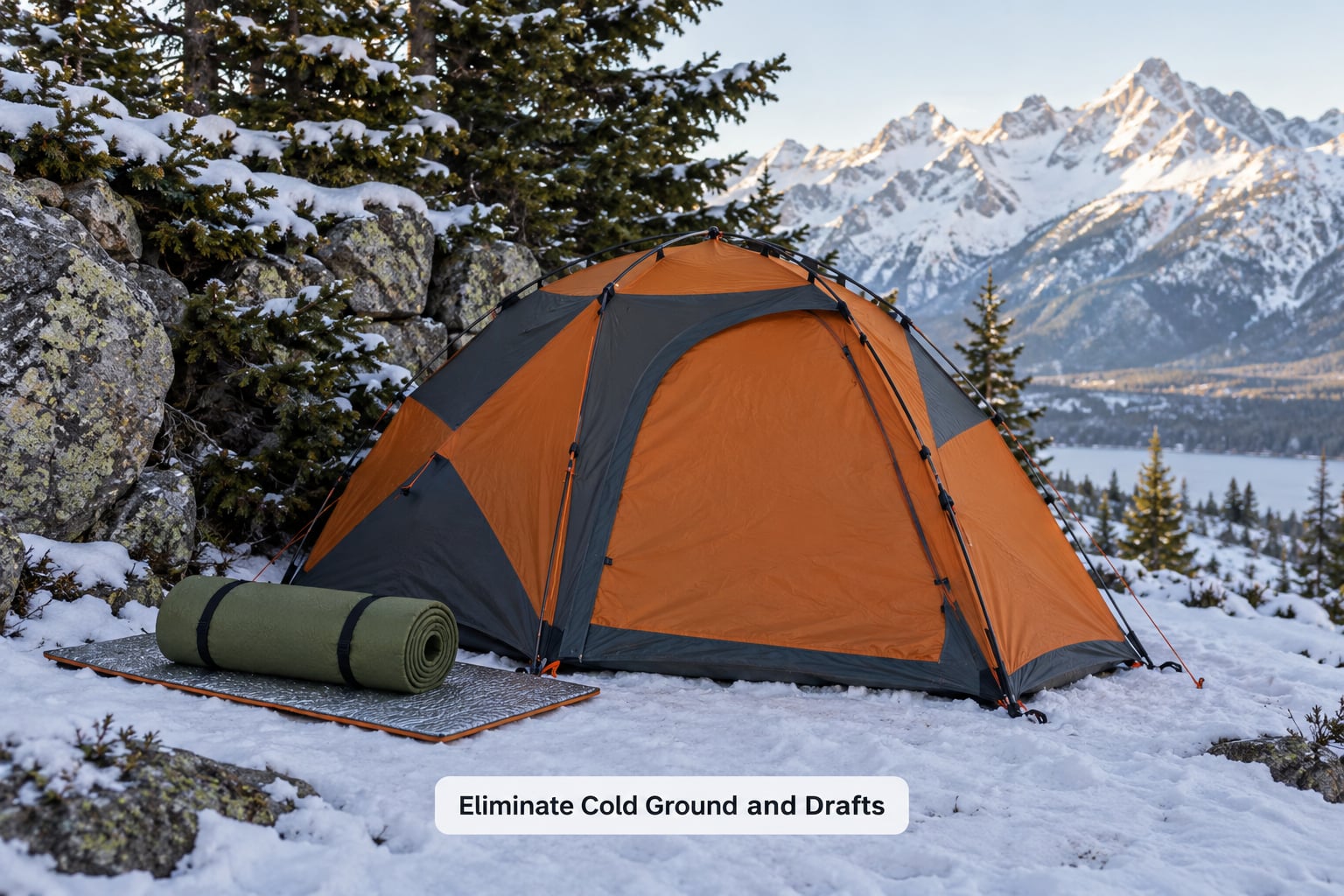
Cold air is heavy. It settles in the lowest spot in camp, which is often exactly where you pitched, so pick a site out of the wind channel and off the valley floor. A stand of trees, a bank, or a rock face behind you is worth more than any gadget.
Then look at the bottom edge of your tent. Air moves under the fly and along the ground, and it will find the door zip. Stake out full, guy the fly low and taut, and keep the vestibule closed or bunched against the tent wall rather than flapping open.
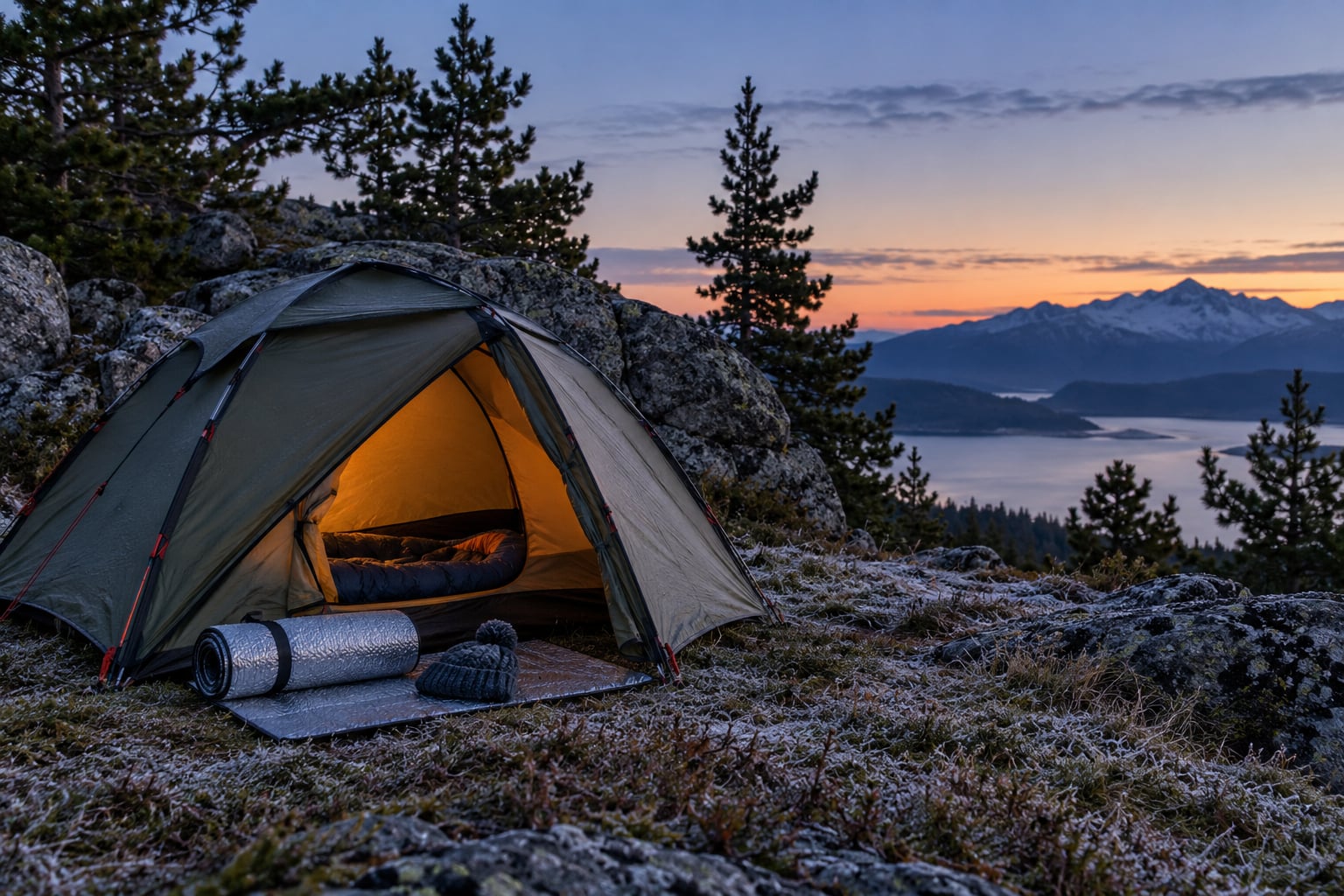
For the ground, lay the footprint, then a foam pad, then your inflatable pad on top. R-values add: an R-2 foam pad under an R-4.5 inflatable gives you roughly R-6.5 of protection, and that is the single biggest change most people can make for under an hour’s work.
2. Build a Complete Insulation System
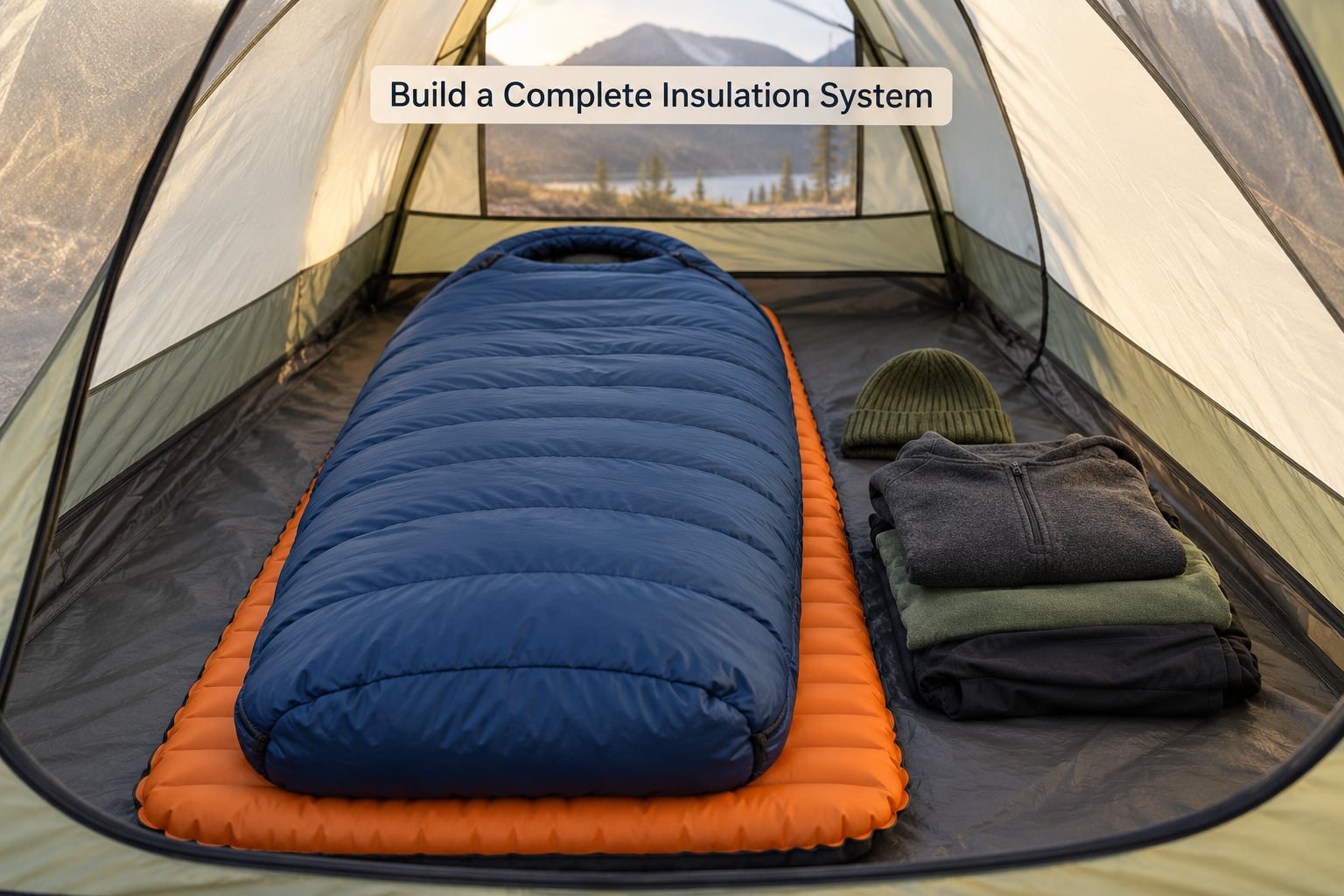
Match the bag to the ground, not to the marketing. A bag’s comfort rating describes the temperature a typical sleeper can sleep in comfortably, and most bags are labelled 5 to 15 degrees colder than that because the limit and extreme ratings are survival numbers, not comfort numbers.
Women’s bags are worth explaining here, because the gap confuses people. The EN and ISO standard rates bags at a fixed metabolic profile, and a standard men’s bag at its comfort rating assumes more body mass and more insulation than many women have. A bag labelled to 30°F for men often works out closer to 40°F for women. Many brands now publish a women’s comfort rating, and it’s worth finding.
Insulation has to stay thick. Anything resting on top of the pad or squeezed under your shoulder stops doing its job, so inflate the pad fully, lie in the middle of it, and don’t zip the bag to the pad with a heavy quilt pinned in between. A liner inside the bag adds a few degrees and keeps the shell clean, and a lightweight overbag over a summer bag extends the season cheaply.
Down stays warmer for its weight but collapses when damp and takes a long time to dry. Synthetic holds insulation while wet and is easier to wash at home. In a wet climate, synthetic is the safer call.
3. Dress in Layers Before Sleeping
Change out of everything you hiked in, including socks. What you wear to bed should be dry at the moment you get into the bag, not dry when you started the afternoon.
A thin merino or synthetic base layer, one warm fleece or puffy mid layer, wool socks, a hat, and a neck gaiter covers nearly every night above freezing. Skip cotton entirely. Cotton absorbs sweat, stops insulating when wet, and dries slowly, which is the exact opposite of what you want at 3 a.m.
Wear loose clothing. Skin needs room to circulate warm air, and tight layers restrict blood flow to the places you most need it, which is your hands and feet.
4. Trap Heat Without Overheating
Zip the tent fully when there’s still air movement outside and the forecast low is above about 40°F. Below that, open the upper vent before you get in and leave it open all night. Cold air holds almost no moisture, so the vent does two jobs: it lets your breath and sweat out, and it stops the tent becoming a greenhouse.
Here’s the test for step four. If the ceiling or inner wall above your bag is dripping in the morning, you were too warm and too closed. Adjust by venting more and cutting a layer.
Run the stove inside or near the door just before you climb in so you enter a warm tent, then close it. Ten minutes of stove heat buys you a comfortable entry, and a cold tent entry is what makes people bail out and never go camping again.
5. Keep Your Feet and Head Warm
Your head loses heat fast because it has little muscle under the skin, and your feet have no muscles to hold heat at all. Those two ends are where cold nights are won and lost.
Put on a warm hat before you zip the bag, not after. If you keep falling asleep, a balaclava stays put where a beanie slides off. For your feet, change into dry wool socks, add insulated booties over them, and never wear socks you have already been walking in.
If you use a hot water bottle, put it against your core rather than at your feet. A bottle at the core gives a few hours of gentle heat where your body can spread it, while a bottle at the feet goes cold and stays there. Fill it with hot but not boiling water, and use a hard bottle if you’re worried about a puncture.
6. Manage Moisture and Food Comfort
Damp insulation is cold insulation. Most campers lose their warmth to sweat soaked into a shirt or a liner, not to the air temperature, so the rule is to be slightly cool when you get in rather than warm.
Eat a real meal two hours before bed with carbohydrates and some fat in it, and drink enough water through the afternoon that you are not thirsty at midnight. Skip alcohol. It makes you feel warm because it widens your blood vessels, then you lose heat faster and sleep badly, which is a hard way to spend a freezing night.
Have a plan for the bathroom. A wide-mouth bottle in the corner of the vestibule saves you from unzipping, undressing, and standing in wind, which is the single biggest warmth loss most campers invite onto themselves. Bring a shovel or a wag bag for anything wider.
7. Prepare for Changing Conditions
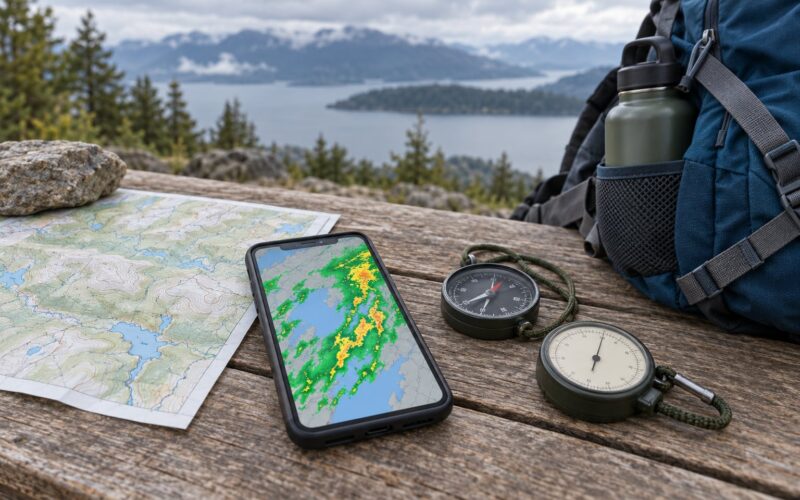
Check the forecast for the site, not the city you drove from, and look at overnight low, wind, and precipitation. Forecasts shift a lot in mountain country, and a night planned for 35°F can arrive at 22°F with the front moving through early.
Carry one piece of emergency insulation you don’t expect to use: a puffy jacket for wearing in the bag, a spare dry base layer, or a couple of chemical warmers in a sealed pocket. Tell someone your route and your return time, and check in when you get back.
Know your turn-back point before you leave. If your sleep system is only rated to 40°F and the forecast calls for 15°F, the answer is a warmer forecast, a better kit, or a different night, not toughing it out. And never light a propane or butane heater inside a tent, in a vestibule, or under a tarp.
Common Mistakes
Skimping on the pad. The pad is the only thing between you and the ground, and cold ground pulls heat out of you faster than cold air. Fix: add a foam pad underneath your inflatable and inflate it firm before you lie down.
Getting into the bag in sweaty clothes. You warmed up moving, you perspired, and now that moisture is cooling you all night. Fix: full dry change, socks included, every time.
Sealing the tent to trap heat. You get an hour of comfort, then condensation soaks the bag and the shell. Fix: vent the top from the moment you get in.
Overheating to test the tent. Cooking inside a closed tent on a cold night fills it with humidity. Fix: cook outside or at the open door, and change clothes after.
Ignoring your head and feet. Warm core, cold extremities, restless night. Fix: hat on before zipping, dry wool socks, booties over the top.
Using a fuel-burning heater inside a tent. A tent is a fabric enclosure, and a combustion heater in one produces carbon monoxide, which has no smell and no warning, and adds moisture to the space. It is the most dangerous item on this list and the one with no place in a tent. Stick to a hot water bottle, chemical warmers, or a rated electric blanket on a battery pack that you can reach quickly if you use one at all.
Frequently Asked Questions
Is there a heater you can use inside a tent?
Not a fuel-burning one. A propane, butane, or liquid fuel heater produces carbon monoxide, which is odorless and can be fatal in a fabric enclosure, and it adds moisture that dampens your insulation. The workable options are a hot water bottle, chemical hand and toe warmers, a sleeping bag liner, or a 12V electric blanket powered by a power bank kept where you can reach it in the dark.
What temperature is too cold for tent camping?
It depends on the kit and the camper, not on a number alone. With a bag comfort-rated 10 degrees below the forecast low, a properly stacked pad setup, and a dry layer system, experienced campers handle single-digit Fahrenheit nights comfortably. Below that, most people need a four-season tent, a much warmer bag, and real experience. Treat any night where your bag rating is warmer than the forecast as a night to reschedule.
What sleeping bag temperature rating do I need?
Read the comfort rating, not the limit or extreme rating, because those two describe what a person can survive briefly rather than what they can sleep in. Buy a bag whose comfort rating sits about 10 degrees below the expected overnight low. If a bag is labelled to 30 degrees, assume a warmer sleeper sleeps comfortably near 30 and a colder sleeper needs the next bag down.
Does a tarp over a tent keep it warmer?
It helps a little, mostly by cutting wind at the surface and adding a still air layer above the fly, and a tarp also sheds snow that would otherwise load the tent. It does not raise the inside temperature much, because your body heat is trapped by the tent itself. A heavy snow load on top of a tarp is a real collapse risk, so keep tension moderate and never leave one up for an entire winter storm.
Does sleeping naked make you warmer in a sleeping bag?
No, for most sleepers. A light dry base layer and a mid layer add insulation without much weight, and a liner plus clothing can add 10 degrees or more to a bag’s rating. What matters is that everything in the bag is dry, and naked sleeping is a reasonable experiment only if you run hot and stay completely dry, which is not a safe plan below freezing.
Can two people share one tent and stay warm?
Yes, but not with one bag. Two people in one bag still lose heat to the pad and the fabric, and neither of you gets a draft collar or a hood fitting properly. The workable setups are two bags zipped together with a shared top, or two bags under one overbag or quilt, and both need a pad wide enough for two people. If your sleep temperatures are very different, two tents side by side works better than sharing.
Conclusion
If you remember five things from this, make them these: pitch in the most sheltered spot you can find, stop heat going into the ground with a stacked pad setup, match a comfort-rated bag to 10 degrees below the overnight low, change into completely dry layers before you climb in, and carry one backup piece of insulation for the night that runs colder than the forecast.
That is how to stay warm in a tent in cold weather, and it works in 2026 as well as any year before it. None of it is expensive, and the stack works in this order every single time.