Learning how to plan a cabin weekend in winter comes down to one rule: book the cabin first, then work backwards to the road, the food and the clothes. Winter cabins sit far from grocery stores, cell towers and plows, so the trip feels easy or stressful depending entirely on what you settled before you drove out. Updated for 2026, this guide walks through the decisions in order, from picking the right stay to arriving with your boots still on.
A weekend is enough. Two nights gives you Friday night, one full Saturday and a slow Sunday morning before you drive home, which is the shape most people actually enjoy.
Table of Contents›
- What You Need to Plan a Cabin Weekend in Winter
- Step-by-Step: Building a Comfortable Winter Cabin Plan
- Step 1: Choose the Right Cabin for Your Winter Group
- Step 2: Check Winter Access and Weather Conditions
- Step 3: Confirm Comfort, Safety, and Essentials
- Step 4: Plan Meals Without Turning the Weekend Into Work
- Step 5: Build a Balanced Indoor and Outdoor Itinerary
- Step 6: Pack by Layer and Leave Room for Comfort
- Common Mistakes to Avoid When Planning a Cabin Weekend in Winter
- Frequently Asked Questions
- What should I pack for a winter cabin weekend?
- How far in advance should I book a cabin for winter?
- Is a remote cabin suitable for a family winter trip?
- What should I do if snow makes the cabin road difficult?
- How can I make a cabin feel cozy on a winter weekend?
- Conclusion: Start With the Cabin and the Weather
What You Need to Plan a Cabin Weekend in Winter
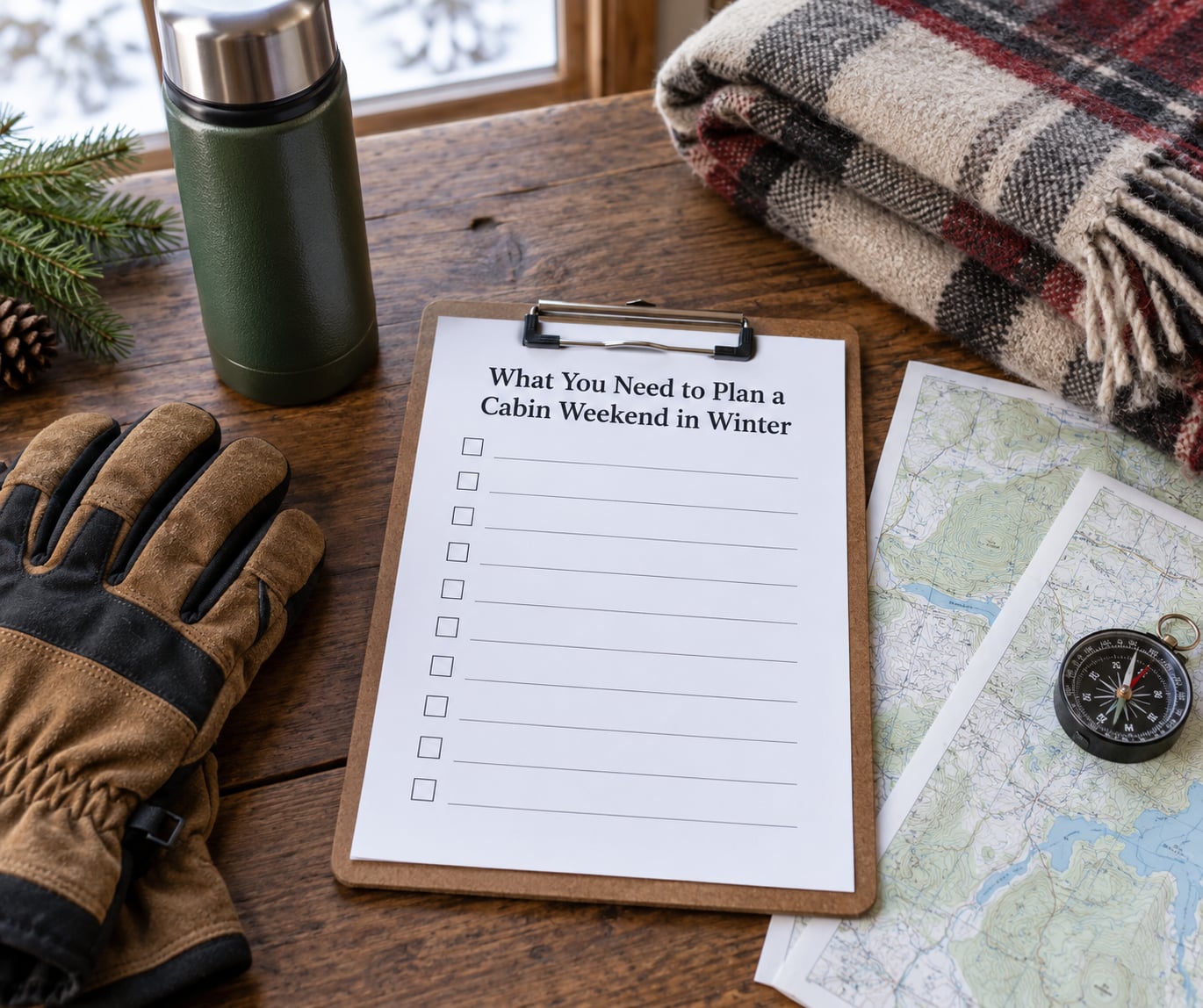
Eleven things have to be settled before you click book. Anything you leave open becomes a problem in a parking lot at dusk with snow starting to fall.
- Cabin location. How far is the drive, and how far past the last town is it? People who post about these trips usually cap the journey around ten to twelve hours, far enough to feel like an escape, close enough to still be a weekend.
- Winter access. Is the driveway plowed? What vehicle does the host expect guests to drive?
- Heating. Forced air, electric baseboard, wood stove, or a combination? And is firewood included or sold by the load?
- Parking. How many cars fit, and is there a place to turn around?
- Supplies. Does the cabin have a full kitchen, running water, electricity, and a washer and dryer?
- Weather. What does the forecast say for the whole weekend, including the day you drive home?
- Food. What will you carry in, and where will you buy it?
- Activities. What works in cold and what works only if the sky stays clear?
- Transportation. Winter tires, chains, fuel range, and a second driver for the return trip.
- Backup plan. What happens if the road closes and you cannot leave on Sunday.
- Cancellation terms. What is refunded if a storm shuts the road instead of the cabin.
A timeline keeps the list from turning into one overwhelming night of research. Work backwards from your departure day rather than forwards from today.
- Eight weeks out. Shortlist three cabins and message hosts about driveway plowing and the heat source. Remote cabins book first, and the plowing question answers itself fastest in writing.
- Four weeks out. Book, then check tire chains and whether your vehicle has all-wheel drive or four-wheel drive. Traction hardware is cheaper to source now than on a Friday morning.
- One week out. Watch the forecast and the state road conditions page for your route. Cancellation windows usually close around a week out.
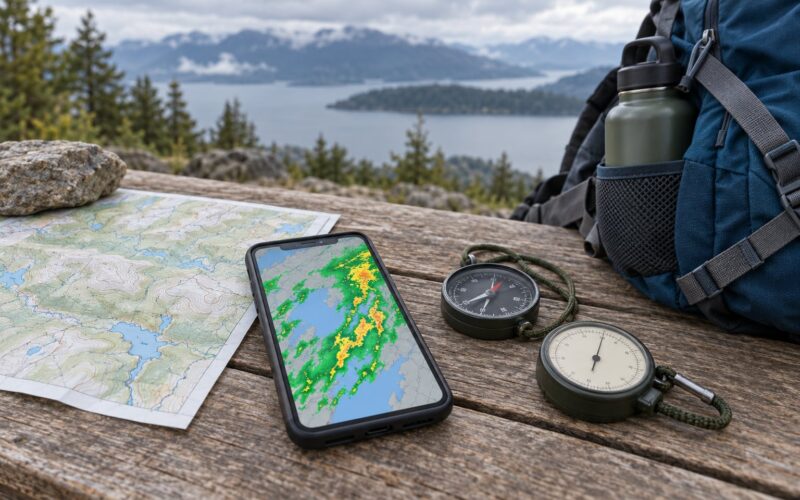
- Two days out. Download offline maps, screenshot check-in instructions, and confirm firewood and hot tub heating. Cell service drops at elevation, often right where you need directions.
- Day before. Shop for groceries in your own town and pack the trunk. The last grocery store is often 40 miles past the fuel.
- Day of. Fill the tank, clear ice off the windshield, and leave early. Daylight is a safety tool, not a scheduling preference.
Step-by-Step: Building a Comfortable Winter Cabin Plan
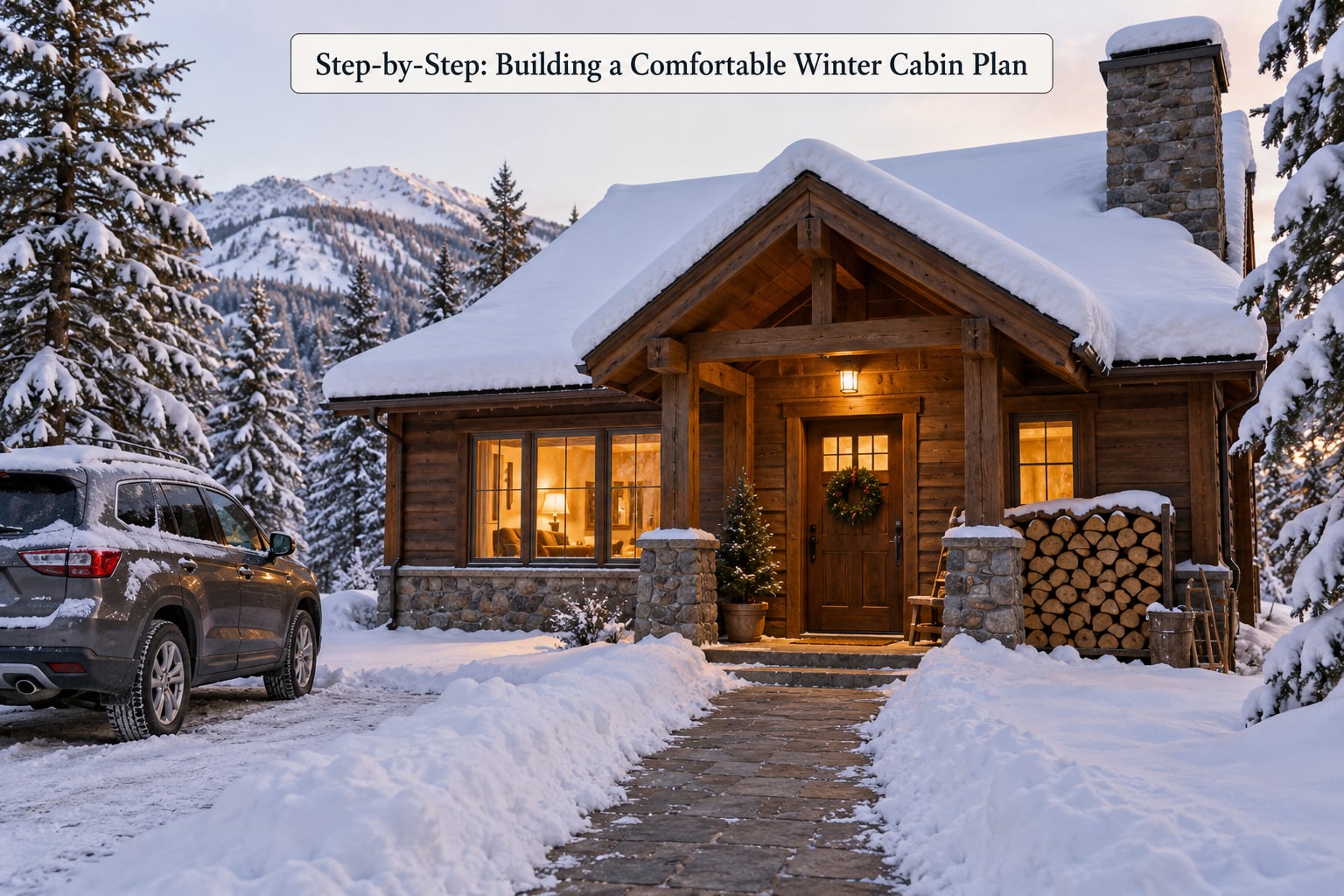
Step 1: Choose the Right Cabin for Your Winter Group
Match the cabin to the people actually coming. Two adults need a different place than four adults and a dog, and the gap between those is usually bedrooms, bathrooms and parking, not square footage.
Spend your attention on three things: how private the cabin is, how it is heated, and how much indoor space there is for a wet-weather day. A cabin with one great room and a wood stove beats a sprawling place with cold bedrooms and a heating system the host has to talk you through.
Check the pet policy early if a dog is coming. And accept that every extra mile of remote access is a mile of driving you do twice in the dark.
Step 2: Check Winter Access and Weather Conditions
Ask the host, in writing, whether the driveway is plowed and after a storm, and what they recommend you drive. A host who answers that question plainly is telling you something about how they handle winter in general.
Then check the road yourself. Your state department of transportation usually publishes a road conditions page with cameras and closures, and the National Weather Service forecast covers the wind and visibility that make a mountain road miserable. Look up the elevation gain on your route too, because snow and ice start earlier the higher you go.
Ice forms first in shaded areas, bridges, dips and curves. Assume those are slick before the rest of the road is, and treat a forecast of freezing rain as a reason to stay home.
Step 3: Confirm Comfort, Safety, and Essentials
Get specifics before you pay. Ask how the cabin is heated and whether the heat runs all night, whether hot water is instant or comes from a tank, and whether electricity is grid or generator.
Ask about the water too. Cabins described as rustic sometimes have no running water, and that is fine if you know in advance, because you can plan around an outdoor shower. It is not fine if you find out while trying to wash a pan before dinner.
Confirm smoke and carbon monoxide detectors, whether firewood is stacked on site, and whether there is emergency lighting or a flashlight near the bed. Ask what the host does the first time a guest arrives in winter, because that tells you how often the heat gets checked.
Have a backup plan written down before departure. If the access road becomes impassable, where do you wait it out, and who do you call?
Step 4: Plan Meals Without Turning the Weekend Into Work
A winter cabin weekend works when dinner is the only thing you cook. Plan one relaxed main meal and treat everything else as assembly.
Buy groceries in your own town before you leave. Past the last town you are looking at gas stations and one small market with a limited selection and a weekend price, and if you are there on a Sunday you may find very little at all.
A simple pattern: something easy to eat within an hour of arrival, one proper dinner, make-ahead breakfasts, and snacks for the walk back. Bring coffee, tea, hot chocolate, butter, eggs, bread, pasta, a good tinned fish or two, and enough fresh for one meal.
Work around the equipment you were given. If the kitchen is well equipped, cooking is a good rainy-day activity. If it is a two-burner cabin with a toaster oven, that dinner is pasta and a soup you made at home.
Step 5: Build a Balanced Indoor and Outdoor Itinerary
Rank your activities by weather dependency before you go, then plan two options for each block. Cross-country skiing, snowshoeing and a long walk at a frozen lake all need good weather and daylight. Reading by the fire, cooking, board games, sketching and stargazing need nothing but a clear sky, which means they never fail.
A two-day shape that has worked well:
- Friday evening. Arrive, start the fire or the heat, unpack, eat the easy meal. Do not plan anything that requires you to be functional after a drive.
- Saturday morning. The outdoor block, while the day is coldest and clearest. Hot chocolate when you get back.
- Saturday afternoon. The second outdoor block, or the indoor one if the weather turned. Stargazing after dark only if the forecast is clear.
- Saturday evening. The one real dinner, then the fire.
- Sunday morning. A slow breakfast, a final walk to the viewpoint or the shoreline, then load the car.
Keep Sunday short on purpose. A late start home in worsening weather is how a good weekend turns into a long one.
Step 6: Pack by Layer and Leave Room for Comfort
Layer thin and pack light. The mistake I see most often is cotton against the skin, which holds sweat and then holds cold. Wool or synthetic base layers, a mid-weight insulating layer, and a waterproof shell will get you through anything a heated cabin and a short walk will ask of you.
- Clothing. Two base layers, one fleece or sweater, one waterproof jacket and pants, wool socks, a hat, gloves and a scarf, plus one pair of waterproof boots that are already broken in.
- Footwear. Bring boots you can get out of in a driveway, and indoor slippers with grip on a smooth floor.
- Light. A headlamp per person. Daylight is short and a cabin with a stove or a fireplace has dark corners.
- Warmth. Hand warmers in a pocket, a thermos that holds heat for hours, and one extra blanket.
- Health. A small first aid kit, any prescriptions, pain relief, lip balm and hand cream for the dryness.
- Electronics. Chargers, a power bank, a car charger, and offline maps downloaded before you leave.
- Comfort. A book, a deck of cards, a board game, earplugs and a portable speaker.
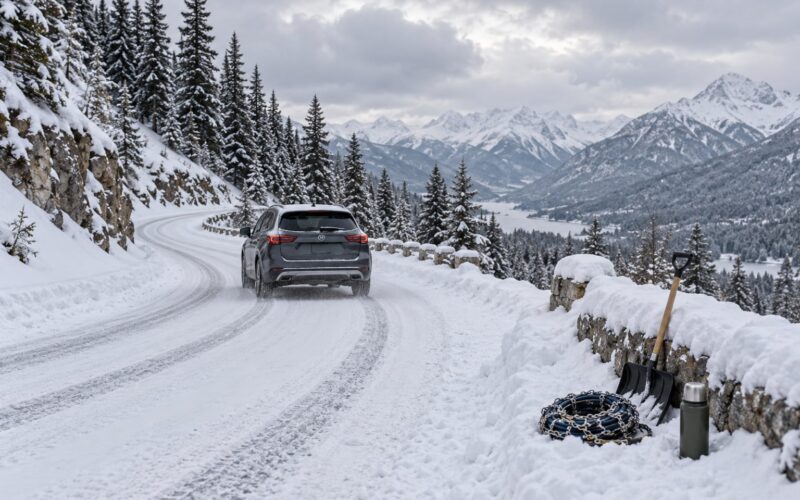
- Emergency kit in the car. A blanket, water, a scraper, a small shovel, flashlight, jumper cables and a charged phone cable. Keep it in the vehicle, not the cabin.
Leave a quarter of the bag empty. You will buy something at the last town and come back heavier, and you want room for it.
Common Mistakes to Avoid When Planning a Cabin Weekend in Winter
Booking the most remote cabin before checking access. The prettiest listing is often the hardest to reach midwinter. Ask about plowing first, and pick a cabin half an hour closer if you are nervous about ice.
Assuming the shop will be open. Small mountain markets close early, close for weather, and close for the season. Buy everything before the last town, then treat the drive to that town as part of the drive, not a detour.
Packing cotton and one heavy coat. You will overheat by the fire in ten minutes and be cold again an hour later. Layers in wool or synthetic, sized to sit still for an evening without cooking, solve this.
Filling every hour. A cabin weekend that runs from breakfast to dinner is a trip with extra steps. Plan one activity a day and let the rest be nothing.
Arriving without a flexible weather plan. Bring two options for every outdoor block and one indoor block that needs no plan at all. Weather changes fast at elevation.
Leaving the departure day ambitious. Most bad endings are not about the cabin, they are about a road at four in the afternoon with low sun on snow. Build in a buffer.
Forgetting who knows where you are. Especially if you are travelling alone. Leave your itinerary and the cabin address with someone at home, and set a check-in time for when you expect to be back.
Frequently Asked Questions
What should I pack for a winter cabin weekend?
Pack in thin layers rather than one heavy coat: wool or synthetic base layers, a mid-weight insulating layer, a waterproof shell, wool socks, hat, gloves and broken-in waterproof boots. Add a headlamp, hand warmers, a thermos, a small first aid kit, offline maps and a book or cards. Keep an emergency kit in the car with a blanket, water, a scraper and jumper cables.
How far in advance should I book a cabin for winter?
Two to three months is the safe window for a remote cabin in peak winter months, because the good heated ones with plowed access go first. For a shoulder-season weekend, four to six weeks usually works. Book sooner rather than later if you need a specific cabin for a dog, a fireplace or a hot tub, since those features narrow the choice sharply.
Is a remote cabin suitable for a family winter trip?
It can be, but remoteness raises the stakes on heat, water and road access. Choose a cabin with a full kitchen, running water and forced-air or baseboard heat rather than a wood stove you have to manage. Stay within an hour of the last town, bring more food than you think you need, and confirm the driveway is plowed before you book.
What should I do if snow makes the cabin road difficult?
Check your state road conditions page and local radio before attempting the drive, and never pass a closure. If the access road is not plowed, park legally as far down as you safely can and ask the host to plow or to guide you in. If a storm is forecast for your return day, contact the host early about a late checkout or an extra night.
How can I make a cabin feel cozy on a winter weekend?
Start the wood stove or heating an hour before you arrive if the host allows it, and light candles or a couple of lamps instead of overhead lights for the evening. Bring a thick wool blanket for the couch, warm mugs, tea and hot chocolate, music and books. Keep a slow indoor activity on hand, like cooking together or stretching a board game, so the evening has somewhere to go.
Conclusion: Start With the Cabin and the Weather
Pick a cabin you can reach on a bad day, with heat and hot water you have confirmed rather than assumed. Ask the host about plowing in writing, buy your food before the last town, and download the directions while you still have signal.
Pack in wool and synthetic layers you can sit still in for an evening, plan one outdoor block and one indoor block per day, and give yourself a slow Sunday morning. That is how to plan a cabin weekend in winter without spending the whole weekend thinking about the drive home.