Plan the trip before you plan the gear. Pick a drive-up campground where your car reaches the pitch, borrow a tent and sleeping bag from someone who has them, and buy only the small things you cannot borrow: a headlamp, a first aid kit, layers, and food. That order matters, because most of what makes a first camping trip feel expensive is gear you could have rented and never needed.
Most first-timers do it the other way round. They browse tents for a weekend, then realise they also need a pad rated for something they cannot spell, then a stove, then a chair, then a cooler, and the hobby gets expensive before anyone has slept outside once. Borrowing and renting shrink that whole list to about five things.
How to plan a first camping trip without buying everything comes down to a sequence, and this is the one I would actually follow. It takes an afternoon of planning plus one rehearsal in a backyard or a living room.
Table of Contents›
- What You Need
- Step-by-Step
- 1. Choose an Easy First Campsite
- 2. Make a Simple Sleeping Setup
- 3. Plan Meals That Need Few Supplies
- 4. Use a Small Lighting and Safety Kit
- 5. Pack Light Using the Ten Essentials
- 6. Set Up and Check the Camp Before Dark
- 7. Buy Only What the Trip Teaches You
- Common Mistakes
- Frequently Asked Questions
- What do I really need for a first camping trip?
- Can I go camping without buying a tent and sleeping bag?
- Should I rent camping gear or borrow it for a beginner trip?
- How do I know which camping gear is worth buying later?
- What food is easiest for a first camping trip?
- How can I camp comfortably without overpacking?
- Conclusion: Start With One Comfortable Night Outdoors
What You Need
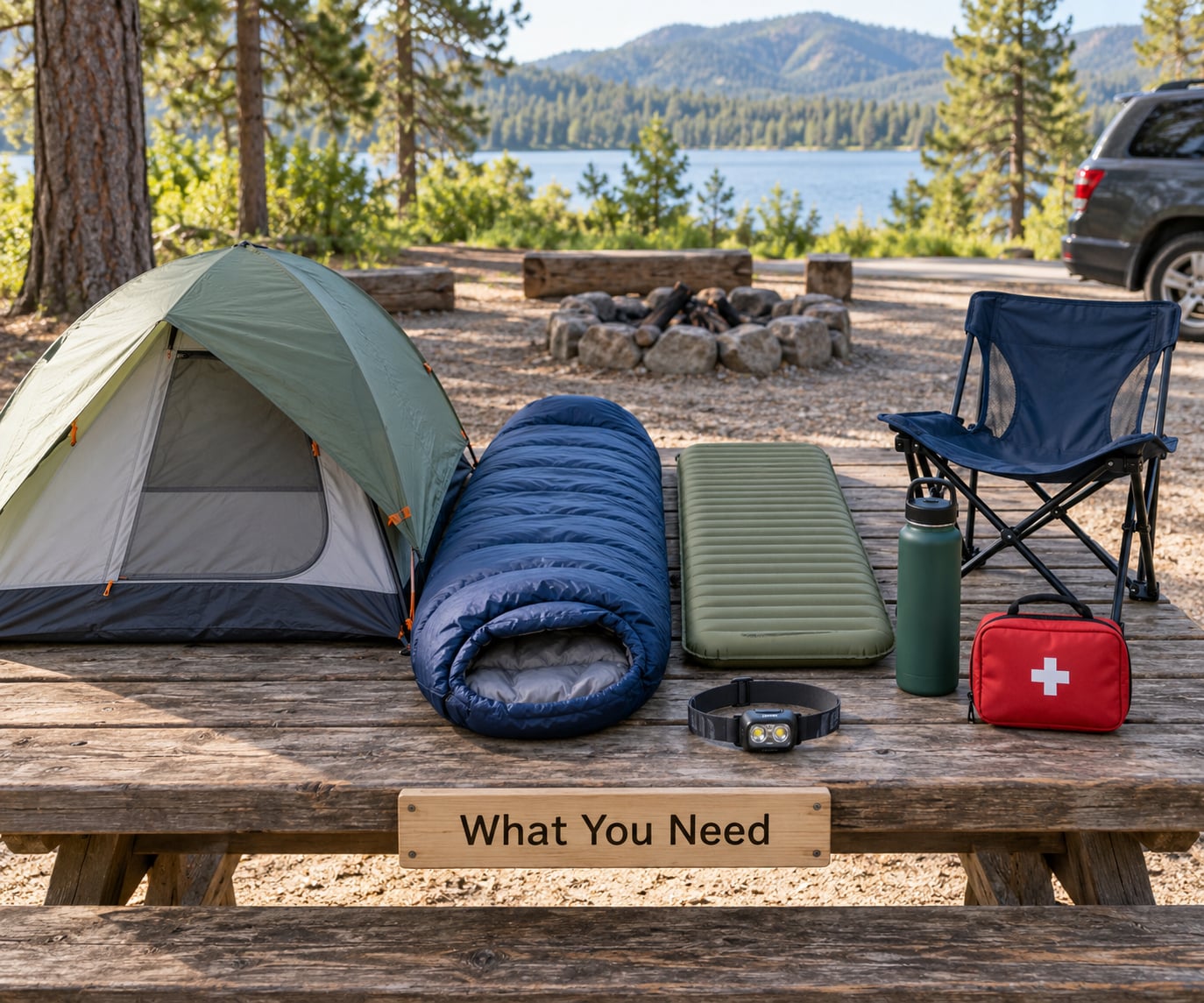
A first camping trip needs five things, not twenty. Shelter, a sleep system, a light, clothing for the actual forecast, and a food-and-water plan. Everything else is either provided by the campground, borrowed, rented, or simply optional.
Here is the honest split for a drive-up weekend.
| Item | Best first option | Why |
|---|---|---|
| Tent | Borrow, then rent | The single most expensive thing you may never need to own. Borrow it twice before buying one. |
| Sleeping bag | Borrow or rent | Sizes vary wildly between people. Try a borrowed bag in your own house first. |
| Sleeping pad | Buy used, borrow new | Used foam pads are cheap and fine. Borrowed air pads are easy to test for leaks. |
| Headlamp | Buy, small and cheap | Cheap to buy, awkward to borrow, and you depend on it every night. |
| Warm layer and rain shell | Own it already | You probably have these in a closet. Cotton is the fabric to skip. |
| Stove, pot, utensils | Borrow, or go cold | Many first trips are fine with sandwiches and no cooking at all. |
| Camp chair | Buy used, or skip | A picnic table usually does the same job for free. |
| Cooler and water containers | Borrow or improvise | Two cheap totes from home work as storage and as an ice chest. |
| First aid kit | Buy, then refill | Build your own from pharmacy basics. This is a safety item, not a comfort item. |
| Firewood, chairs, table, ring | Campground provides | Check the amenities list before assuming you need any of it. |
Two terms worth defining now. A drive-up site means your car pulls right up to the pitch, so nothing needs carrying more than about 20 metres. A walk-in site means you haul gear from a parking area, which is a completely different trip. And r-value, which you will meet constantly, is simply how well a sleeping pad stops heat moving out of your body into the ground. The ground is often colder than the air, which is why a summer night can still feel cold.
Also check what the campground already supplies. Most drive-up sites include a fire ring, a picnic table, a tent pad, nearby firewood, restrooms, and often showers. A handful of campgrounds and outfitters run gear rentals or loaner programs on site. You would be surprised how much of your list was never yours to carry.
Step-by-Step
1. Choose an Easy First Campsite
Your first campsite should be close to home, flat, and boring. Look for a drive-up site with clear amenities listed, vehicle access, and either restrooms or a clearly stated toilet rule. Confirm the site rules before booking: arrival window, check-out time, whether fires are permitted, and whether a permit or reservation is needed.
Check the weather for your exact dates and check fire restrictions, which change with local conditions and can rule out a campfire entirely. Tell someone your itinerary and where you are staying.
How to tell this step worked: after booking, you can answer these without guessing. How far is the parking area? Where are the toilets? Is there firewood, and is it sold on site? Can a car reach the pitch? If any answer is unclear, pick a different site.
2. Make a Simple Sleeping Setup
Three items, and you do not need them to be a matching set. A two-person tent fits one person with room to leave boots and a wet jacket inside. A borrowed bag three sizes too big still works if you wear a base layer and keep it cinched.
For a sleeping bag, read the temperature rating, which is the lowest temperature the bag is designed for, and pick a few degrees below the overnight low in your forecast. Warm ground still pulls heat out of you, so the pad matters as much as the bag.
Test the setup before you go. Sleep on the borrowed bag and pad in your own bed for one night. If you wake up cold at home, your setup will not improve in the woods.
Borrowing and renting both work here. A rental shop that hands you a full kit for a weekend is designed exactly for this. Many outdoor rental shops and community gear libraries exist too; search for one within an hour of where you plan to camp.
3. Plan Meals That Need Few Supplies
Plan one or two meals and make everything else no-cook. Sandwiches, wraps, fruit, nuts, crackers, dried fruit and a good quality canned spread do the job without a stove, fuel, or a pot to wash.
Vegetarian options are easy here and need no special equipment: foil-wrapped potatoes cooked at a site grill, couscous salad made at home, hummus and pita, or a tray of roasted vegetables. If you do bring a stove, a single-burner model with an ignition is all you need. Check the fuel canister for leaks before the trip.
On storage: perishable food goes into a cooler at 40°F or below, and refrigerated food should not sit in that range for more than about four hours. Keep raw meat separate from everything else, and if there is no cooler, plan meals that do not need one.
How to tell it worked: your food list is short, fits in one tote, and nothing needs a knife beyond a small pocket knife.
4. Use a Small Lighting and Safety Kit
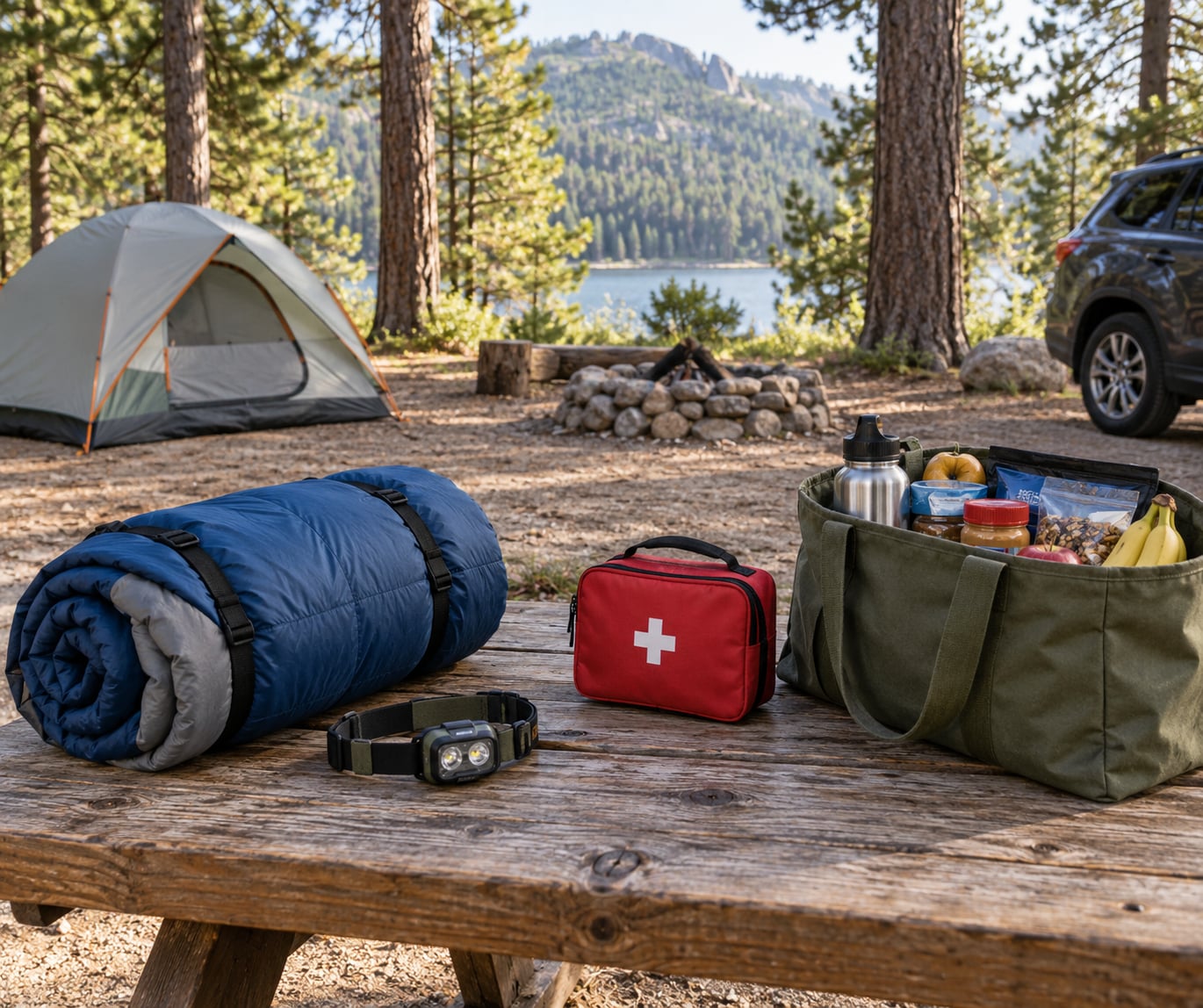
A headlamp is the one item most campers insist on, and the advice in the forums is consistent: get one with a lockout mode so it cannot be switched on inside a pack, and carry spare batteries in a second lamp or a small battery case.
Build a small safety kit instead of buying a pre-made one: plasters, gauze, tape, antiseptic wipes, ibuprofen, antihistamines, any personal medication, blister treatment, tweezers, and a small hand sanitizer. Add sun protection, insect repellent, and a whistle.
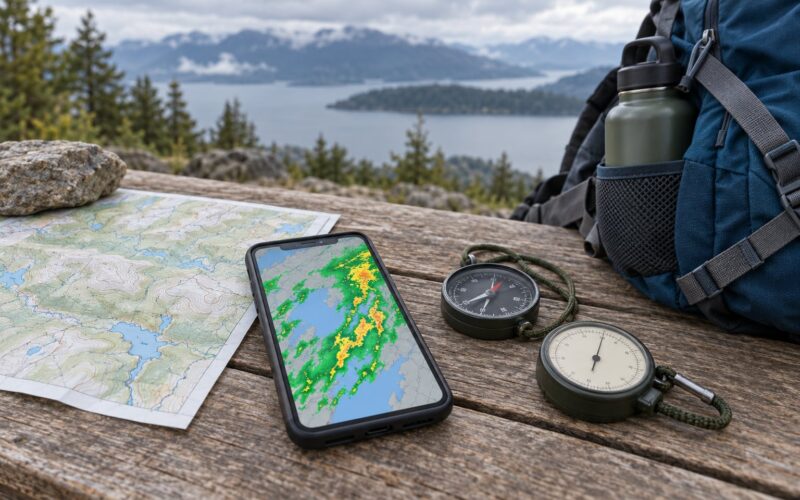
Navigation is simpler at a drive-up site than people expect. Download the map area offline, note the nearest road and your site number, and bring a paper copy in case your phone dies.
Keep this kit in one tote at the top of the car, not at the bottom of a pack, so you can reach it without unpacking.
5. Pack Light Using the Ten Essentials
Every outdoor organisation publishes a Ten Essentials list in some form, and it works well as a packing check: emergency shelter, extra food, extra water, extra clothes, extra light, first aid, navigation, sun protection, a knife or multitool, and a fire starter.
The word doing the work there is extra. Extra food, extra water, extra layers, extra light. Campground-provided shelter, borrowed tent, and a stove you chose not to bring do not need to appear twice.
Leave No Trace applies from your very first trip. Pack out everything you bring in, take trash to the bin rather than burying it, avoid moving rocks or pinecones into a fire ring, and wash up away from the water source. On a site with a vehicle, your car is a storage locker, which is the real reason your load can be small.
How to tell it worked: one tote for shelter and sleep, one tote for kitchen and safety gear, one bag of clothes, and a small rubbish bag. Most people get home with unused food and a tired legs complaint.
6. Set Up and Check the Camp Before Dark
Arrive with daylight to spare. Nothing spoils a first trip faster than pitching a tent for the first time in the dark.
Walk the pitch first. Check the ground for roots, wires and soft spots, and look up. Then pitch the tent, stake every corner, and guy the rainfly out even in clear weather. Set the pad and bag inside, then place your headlamp and your water where you can reach them from bed.
Locate the toilets, the water source, and the bear or wildlife storage if the campground uses lockers. Keep food in a locker or a latched cooler in the car, never in the tent. Keep cooking smells off the sleeping area.
What a successful setup feels like: you know where everything is without looking, the tent does not sag onto your face, and you could find your shoes in the dark.
7. Buy Only What the Trip Teaches You
After the first night, be specific. Write down the one thing that made you uncomfortable and the one thing you wished you had. Usually it is a pad that was too thin, or a bag that was too warm, or nothing at all.
Buy in priority order: first the sleep system, because it decides whether you sleep well. Then the tent, once you know the size you actually want. Then comfort items, one at a time.
Keep renting anything occasional. A tent you use twice a year is a rental item, not a purchase. For gear you use often, buy used and check it over carefully: tent seams, sleeping pad inflation held for ten minutes, sleeping bag zips, stove fuel connections. Group trips also work as shared ownership, since four people can split one full kit. That restraint is where how to plan a first camping trip without buying everything actually pays off.
Common Mistakes
Overpacking before the trip is confirmed. You have bought a full kit for something you have never done. Fix: rent the first one, or borrow everything, and let one trip earn the next purchase.
Buying premium gear too early. Expensive does not mean easier. Fix: buy plain, proven designs with no features you have not heard of.
Choosing an overly remote campsite. A long drive plus an unfamiliar setup plus no help nearby is a lot for a first time. Fix: stay within an hour of home, pick a drive-up site, and go with a friend or on a weekend when someone knows the area.
Skipping the temperature and weather check. A warm day does not mean a warm night. Fix: check the overnight low and pick a bag rated below it.
Not testing equipment. Fix: sleep in the borrowed bag at home, pitch the borrowed tent once indoors, and inflate the pad and leave it overnight.
Blowing up a pad by mouth. Moisture in the pad makes it colder and more conductive, so you lose warmth twice. Fix: use the bag or a pump.
Forgetting to guy the tent out. Guylines and stakes, not rocks, keep a tent tight in wind. Drive stakes straight, and skip the step entirely if there is no room.
Wearing cotton. Wet cotton stays cold. Fix: layer synthetics or wool, and carry one waterproof shell.
Leaving the headlamp unlocked. It can switch on inside a pack and flatten your batteries. Fix: use the lockout mode, and pack spare batteries separately.
One last habit: keep a printed checklist in the tote. Experienced campers keep one for years and reprint it rather than rebuilding it from memory each trip.
Frequently Asked Questions
What do I really need for a first camping trip?
A first camping trip needs five things: a tent, a sleeping bag, a sleeping pad, a headlamp, and clothing matched to the forecast. Add a food and water plan, and a small first aid kit for safety. On a drive-up site with a picnic table you can skip the chair and the stove entirely, because cold meals need no equipment. Borrow or rent the tent, bag and pad, and buy the headlamp and the small safety items, which are cheap and awkward to share.
Can I go camping without buying a tent and sleeping bag?
Yes, and most first trips are better that way. Borrow both from a friend, or rent a full kit from an outdoor rental shop for a weekend. Try the borrowed sleeping bag and pad on your own bed the night before to check the length and the warmth. If you are camping at a site with cabins or glamping tents, you may need neither, which is the cheapest way to try camping in real conditions.
Should I rent camping gear or borrow it for a beginner trip?
Borrow first if a friend has the right gear, because it costs nothing and takes a message to arrange. Rent when nobody you know owns a tent, since rental kits are built for exactly one weekend at a time. Buy used when you are ready to own something, and inspect seams, zips and valves before relying on it. Reserve rentals ahead in peak season.
How do I know which camping gear is worth buying later?
Judge gear by what the trip actually told you, not by what you thought you might need. If you were cold, fix the sleep system first: pad before bag, because the ground steals heat. If the tent was cramped, buy the right size then. Buy used for occasional items and keep renting anything you would use twice a year. Comfort items like pillows and chairs come last, one at a time.
What food is easiest for a first camping trip?
Plan one or two cooked meals and make everything else assembly-only: sandwiches, wraps, fruit, nuts, crackers and a canned spread. That removes the stove, fuel and pot washing from your packing list. If you do cook, a single-burner stove with an ignition is enough, and foil-wrapped vegetables or potatoes do well on a site grill. Keep perishables in a cooler at 40F or below and eat refrigerated food within about four hours.
How can I camp comfortably without overpacking?
Camp with totes instead of packs on a drive-up trip, and keep one tote for shelter and sleep and another for kitchen and safety gear. Your car is the storage locker, so there is no reason to carry comfort items you rarely touch. Skip the stove if you are happy with cold food, skip the chair if there is a picnic table, and pack one spare warm layer rather than a full wardrobe.
Conclusion: Start With One Comfortable Night Outdoors
Book a drive-up campsite close to home, borrow a tent, bag and pad from someone who has them, buy a headlamp and build a small first aid kit, and rehearse the setup indoors once. That is the whole first camping trip, and it costs almost nothing compared with the gear shop most beginners walk into first.
Take the weekend. Get a feel for what you enjoy. Then buy the one thing the trip proved you need.