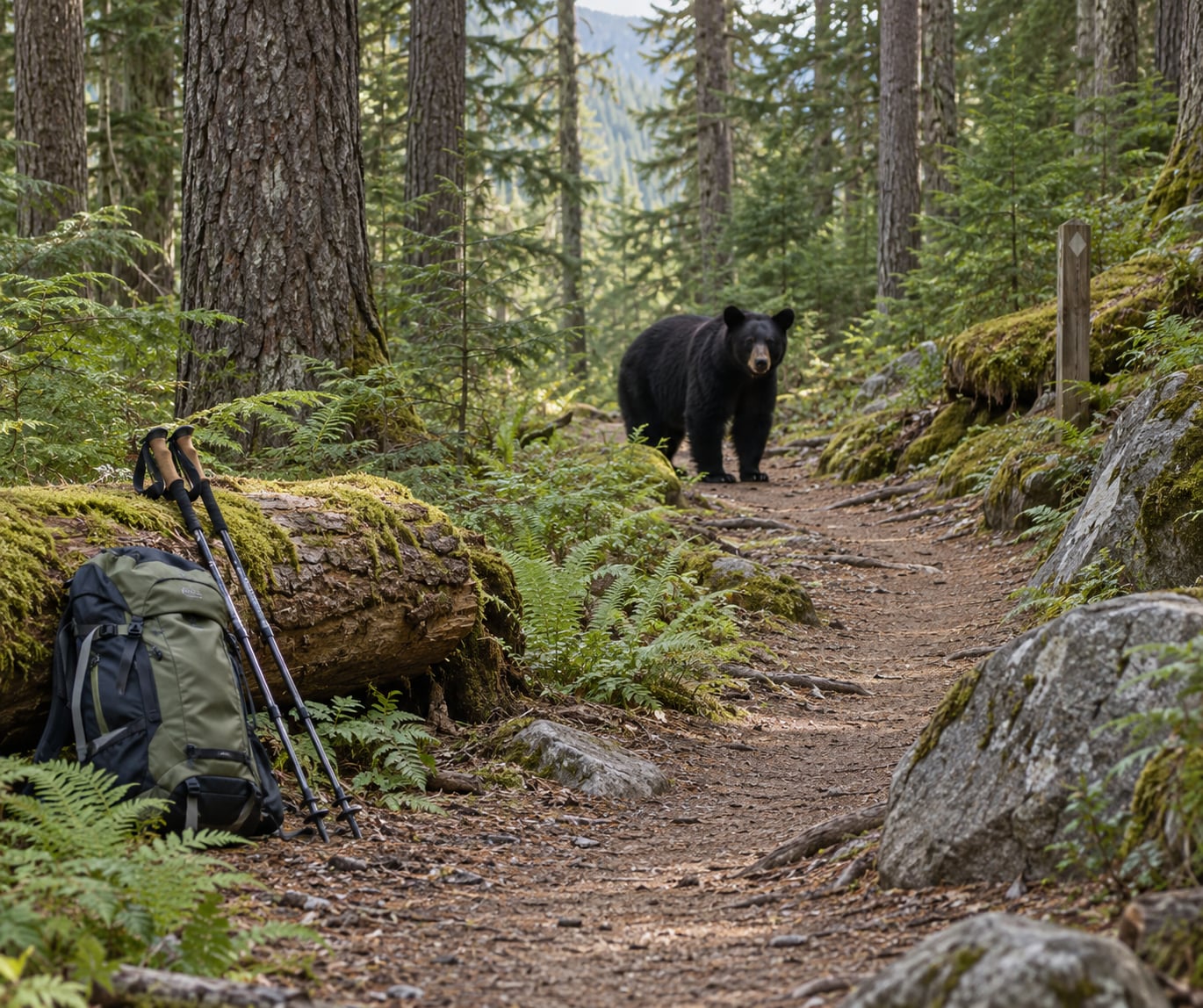
If you see a bear on a trail, stay calm, do not run, and back away slowly while making your presence known. Most encounters end in under a minute because the bear is defensive, not hunting. Give it room, keep your dog and children close, and let it go first.
The difference between a harmless sighting and a genuinely dangerous one is usually decided in the first ten seconds, and those seconds are about behaviour, not gear. A bear that has been eating human food near a trail is a different problem from a bear you startled at a blind corner, and the advice is not identical.
Table of Contents›
- What You Need
- Step-by-Step: What to Do If You See a Bear on a Trail
- 1. Stay calm and stop surprising the bear
- 2. Keep your distance and never approach
- 3. Prepare children, dogs, and loose objects
- 4. Back away slowly and make yourself look larger
- 5. Respond to a defensive bear
- 6. If the bear follows or approaches
- 7. After the encounter
- Common Mistakes
- Frequently Asked Questions
- Should you run if you see a bear on a trail?
- What if a bear follows you?
- Do bear bells work as a bear deterrent?
- What should I do if I see bear cubs?
- Should you play dead if a grizzly attacks you?
- Is it safe to hike alone in bear country?
- Conclusion
What You Need
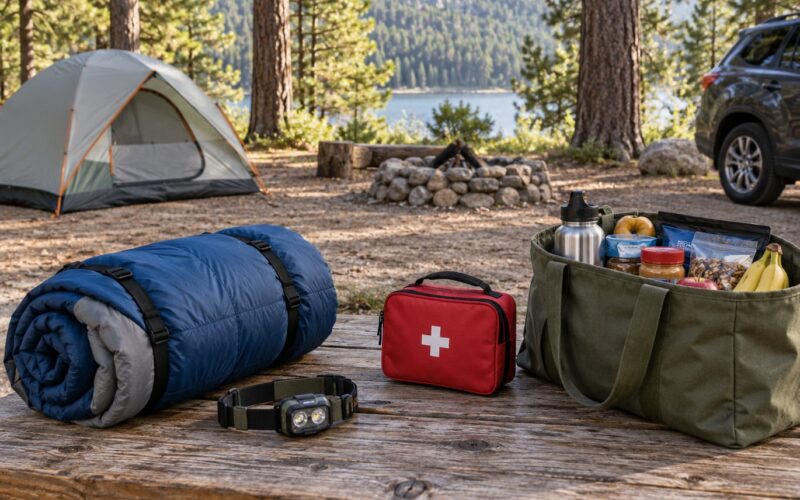
Before you walk in, check which species lives where you are going. Black bears range across much of the eastern and southern United States and into parts of the West, while grizzlies hold the northern Rockies, the inland Northwest and Alaska. Alaska Department of Fish and Game publishes its own bear guidance, and the National Park Service covers its parks; both are worth reading for the specific area you plan to walk.
- Bear spray you can reach in one second. Worn on a belt or chest holster with a safety clip, not in the top pocket of a pack you would have to set down.
- A whistle and a charged phone. The whistle carries further than your voice and costs nothing to carry.
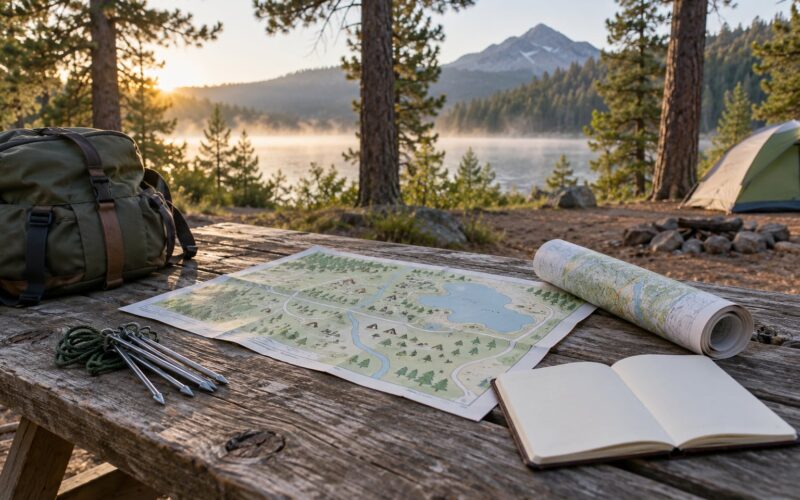
- An offline map or paper map. Retreat is much easier when you know where the switchbacks and the road out are.
- A dog on a leash, and children within arm’s reach. Both change the encounter before it starts.
- Food already secured. Bear-resistant canister, locker or certified bear bag if you are staying out overnight.
- Someone who knows your plan. Route, vehicle, return time and a check-in message.
That last one matters more than most hikers expect. Search and rescue for overdue hikers starts with a route and a car description, and without them the search area grows fast. Working out what you would do if you see a bear on a trail is really working out how fast help could reach you, and that answer starts at the trailhead, not after the sighting.
Step-by-Step: What to Do If You See a Bear on a Trail
1. Stay calm and stop surprising the bear
Stop walking. Do not bolt forward, do not scramble backwards, and do not drop your pack. Talk in a low, steady voice so the bear can identify you as a person rather than a shape moving through its food source.
If you cannot see the bear but clearly hear it, stop talking, stop moving, and wait. Bears often leave once they realise the noise belongs to a person. You will know the pause worked when the animal moves off on its own or simply stops making noise and you are able to walk on without it reappearing.
2. Keep your distance and never approach
Never move toward the bear, never run toward it, and never step between a bear and its cubs, its food or its escape route. If you are close enough that you can see the whites of its eyes or smell it, back up the way you came, diagonally and slowly.
Distance is the protection. Start from the assumption that the bear has not yet decided what you are, and give it no reason to decide you are a threat. Every step you take away from it is a step that makes the encounter shorter, and most of them end before anything happens at all.
3. Prepare children, dogs, and loose objects
Pull children close and put yourself between them and the bear. Get the dog on a short leash; a barking dog is the single most common reason a defensive bear escalates into a charge, and off-leash dogs get people hurt far more often than bears get hurt.
Keep hold of your food, drink and phone. A dropped granola bar is a gift, and a bear that picks one up has learned that your group is worth watching.
4. Back away slowly and make yourself look larger
Walk backwards slowly, facing the bear, and keep it in sight. Raise your arms or lift your pack above your head so you read as bigger than you are. BearWise notes that not running defuses most bluff charges, and the ones that do end usually end here.
5. Respond to a defensive bear
Stay calm and keep backing away. A mother with cubs, a feeding bear, or a bear that has been startled will almost always move off once it has space. Watch for the behaviours that mean it is unhappy: huffing, jaw popping, ears pinned flat, a lowered head, or a shoulder hump as it faces you.
Do not try to befriend it or talk it out of a charge. A defensive bear that decides you are a threat will commit, and the only thing left is spray.
6. If the bear follows or approaches
Turn to face it, look as large as you can, and keep moving away steadily. Hikers on Reddit report black bears following for minutes rather than seconds, and that a burst of spray stops the advance without always ending the encounter.
If it closes to roughly 25 to 30 feet, deploy your spray: unclip it, hold it in both hands, aim slightly down at the bear’s path, and fire a short burst of about five seconds. Note the wind direction first, because a cloud blown back into your own eyes is a real and common failure. If the bear drops, back away and leave; do not approach it to confirm anything.
Do not run. If a black bear is genuinely predatory rather than defensive, running is the one thing that turns a bad moment into a chase. Fight back hard if physical contact happens, aiming for the face and muzzle.
7. After the encounter
Once you are clear, work through a short checklist. Treat any scratches or bites as an emergency and call 911 or your local emergency number; bear wounds get infected fast and any contact with a bear is reportable.
- Check yourself and everyone in your group for scratches, bruising and torn clothing.
- If you deployed spray, get away from it before you wipe your face, and follow the label directions for eye washing. Do not touch your eyes with contaminated hands.
- Inspect your food and scented items; wash anything a bear reached for before you eat it.
- Report aggressive or food-conditioned behaviour to the park rangers or your state wildlife agency, while the details are fresh.
- Change your route or turn around only after you have put real distance between you and the bear.
Reporting matters more than hikers realise. Bears involved in incidents are often relocated or removed, and the report is what triggers that.
Common Mistakes
Most problems on the trail come from a handful of reflexes that feel right and are not.
- Running. It is the worst option available. Fix: walk backwards, face the bear, and use your legs and voice to take up space.
- Screaming and charging the bear. This reads as a challenge, not a retreat. Fix: speak calmly, lower and steady.
- Blocking the escape route. A bear with nowhere to go escalates. Fix: leave a clear lane open and step aside.
- Feeding or dropping food for the bear. Both teach a bear that hikers feed. Fix: keep everything secured and walk away from any food the bear reaches.
- Assuming every sighting is aggressive. Most bears are not interested in you at all. Fix: back away first and judge the behaviour second.
- Climbing a tree. It does not work against grizzlies and it puts you in the one place a mother is likely to come looking. Fix: stay on the ground and keep your space.
On bear bells: hikers on hiking forums are split, and the honest answer is that they are not dependable. Bells are quiet, their range is short, and a bear moving with the wind or through brush may never hear one. Talking, calling out on switchbacks and travelling with a companion do more.
Frequently Asked Questions
Should you run if you see a bear on a trail?
No. Running can trigger a chase response and takes away your ability to control what happens next. Stop moving, keep the bear in view if you can do that safely, speak in a low calm voice, and back away diagonally at walking pace. If the bear moves off first, do not follow it or go looking for it.
What if a bear follows you?
Turn to face it, raise your pack or your arms to look bigger, and keep moving away steadily. BearWise data cited widely shows that not running defuses most bluff charges. If it closes to around 25 to 30 feet, use EPA-approved bear spray: unclip, hold with both hands, aim slightly down, and fire a short burst. If it drops, leave without approaching it.
Do bear bells work as a bear deterrent?
Not reliably, and most agencies do not rely on them. Bells are quiet with a short range, so a bear moving with the wind or through dense brush may never hear one at all. Talk with a partner, call out on switchbacks, and keep your dog leashed. Bear spray, carried where you can reach it instantly, is the deterrent experts actually recommend for people on foot.
What should I do if I see bear cubs?
Assume the mother is close, often in a tree above them or just out of sight behind you. Speak calmly so the cub hears a human voice, do not climb the tree, and never step between cub and mother. Back away slowly the way you came. Leave the area quietly and report the sighting to a ranger, especially if the mother is not seen.
Should you play dead if a grizzly attacks you?
If the attack is defensive, yes. That means a mother protecting cubs, a surprised bear, or contact near a carcass. Lie face down, legs spread, hands clasped behind your neck, pack on your back, and stay still. If the attack is predatory, or it involves a black bear, fight back hard and aim for the face and muzzle instead.
Is it safe to hike alone in bear country?
Manageable, not risk-free. BearWise figures repeated across trail forums show 83 percent of bear attacks involved solo hikers or pairs, largely because nobody else was there to help. Hike in daylight where you can, keep noise up, wear your spray, carry a whistle and a charged phone, and leave your route and return time with someone before you start.
Conclusion
If you see a bear on a trail, the whole job is calm distance and a slow retreat. Do not run, do not feed it, do not block its way out, and keep your spray on your belt rather than in your pack.
Almost every encounter you will ever have ends with the bear walking away first. Give it the space to do that, and check the current guidance from the National Park Service, BearWise or your state wildlife agency before you head out, because local rules differ and they change.