How to do laundry while traveling without a laundromat comes down to a short list of habits: wash by hand in a sink with lukewarm water and a small amount of detergent, soak, agitate, rinse until the water runs clear, press the water out in a towel instead of wringing, then hang everything where air moves across it. A basic sink wash takes two or three minutes of actual scrubbing once the basin is filled. The drying is the part that needs thought.
I have done this in hostel bathrooms, guesthouse kitchens, a rental flat in Lisbon and once in a campsite washroom with a cold tap. It works far more often than travellers assume, mainly because people over-pack the gear and over-do the detergent.
Here is the whole method in five bullets before the detail:
- Sort the load and separate anything that cannot be hand-washed.
- Fill the basin with lukewarm water and dilute the detergent in it first.
- Submerge, agitate gently, rub problem areas, soak 10 to 15 minutes.
- Drain, refill and rinse two or three times until no suds and no smell remain.
- Roll the wet clothes in a dry towel, stand on the roll, then hang in moving air.
Table of Contents›
- What You Need
- Step-by-Step: How to Do Laundry While Traveling Without a Laundromat
- 1. Sort clothes and check the care instructions
- 2. Choose the cleanest available washing space
- 3. Prepare lukewarm water and diluted detergent
- 4. Wash small sections gently
- 5. Rinse until the water runs clear
- 6. Dry the laundry with the least damage
- Common Laundry Mistakes and Better Alternatives
- Low-Water and Hotel-Friendly Laundry Tips
- Frequently Asked Questions
- Is it OK to wash clothes in a hotel sink?
- How long does hand-washed clothes take to dry?
- Can I use hotel shampoo to wash clothes?
- How do you do sink laundry while traveling?
- What is the best sink laundry detergent for travel?
- When is a laundromat still the better choice?
- Conclusion
What You Need
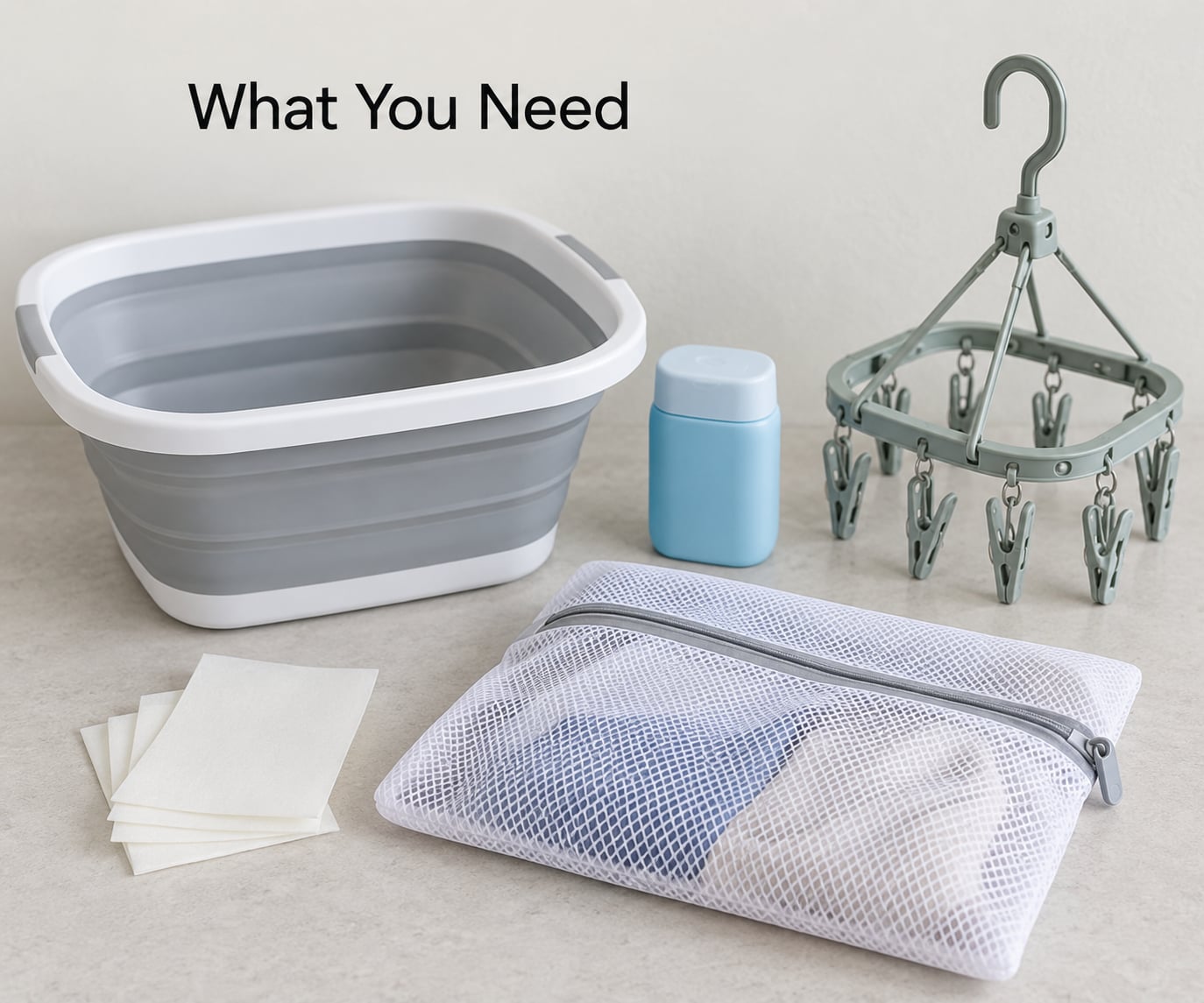
Almost every hotel removes the sink stopper to discourage in-room washing, so pack your own flat rubber stopper. It weighs almost nothing and it is the single item people complain about missing most often on travel forums.
Then add:
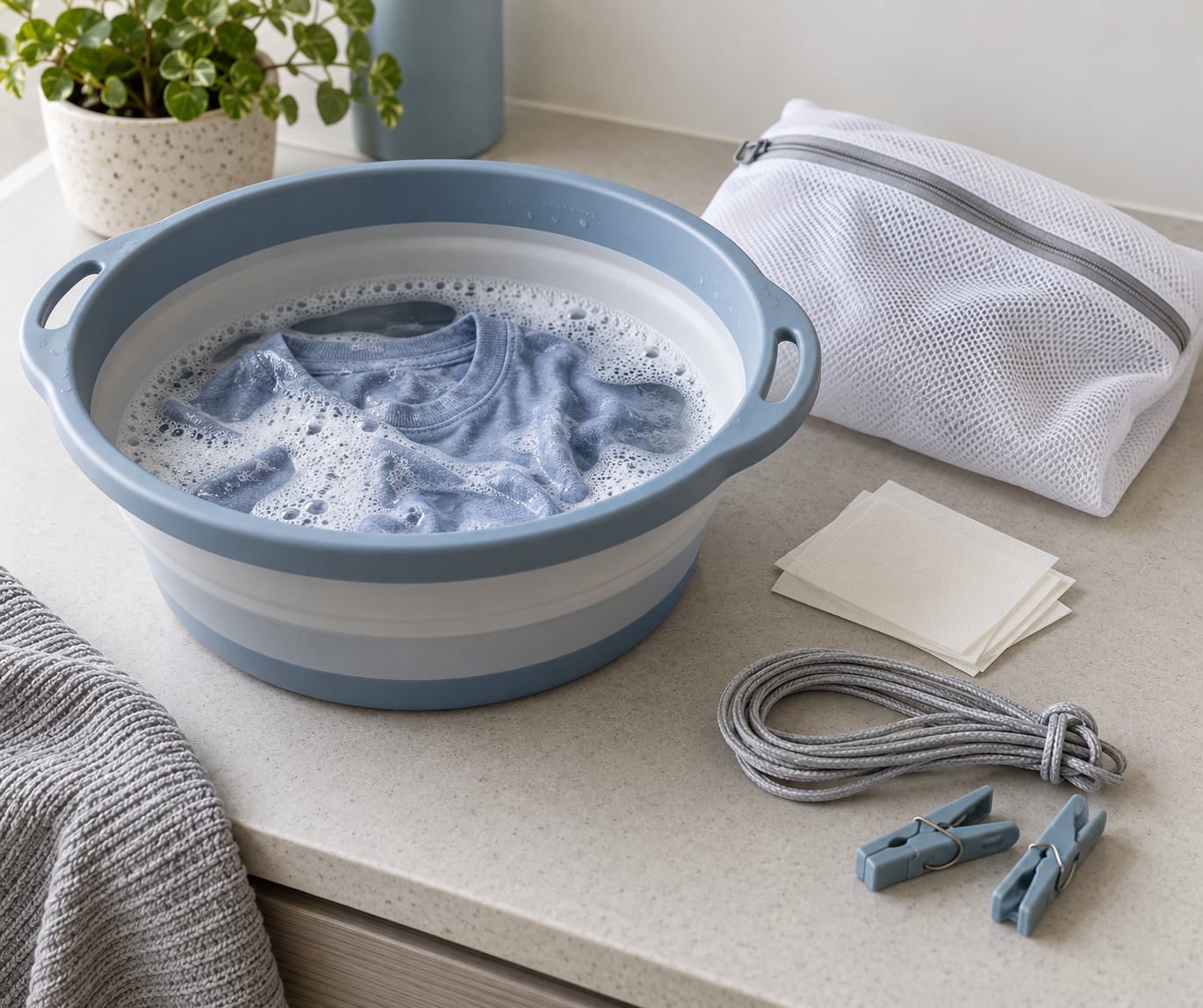
- A collapsible basin if the sink is small, shared or badly shaped. A soft bowl packs down to nothing and gives you a dedicated vessel.
- Detergent sheets or a small measured container. Sheets dissolve in cold water, avoid liquid limits on flights and stop you guessing at volume.
- A wash bag for underwear and socks so small items do not disappear down a plug hole.
- A short clothesline and a few clips, or two folding hangers.
- A mesh or grid scrubber for collars and cuffs. Your thumb is fine for most of it.
- A microfiber towel for the rolling trick and for the final wipe-down.
That is genuinely the list. Forums are full of people who bought a clothesline, packed it for two months and never took it out of the bag, because a guesthouse with a rack in the yard or a self-service place every third town solves the problem on its own. Bring less than you think.
Step-by-Step: How to Do Laundry While Traveling Without a Laundromat
1. Sort clothes and check the care instructions
Sort into three piles: lightly soiled everyday clothes, delicates and wool, and anything you should not hand-wash. Anything marked dry-clean only goes in the “leave it alone” pile. Empty every pocket and shake out the grit at the bottom of a bag, because that grit is what wears holes in fabric.
Towels, jeans and sweaters rarely come well from a sink. Wool needs cool water and no detergent at all. You will know a load is wrong when the basin is more full than the clothes are loose.
2. Choose the cleanest available washing space
The order of preference is a bathroom in your own rental, then a hotel bathroom, then a guesthouse or hostel kitchen, then a campsite washroom. In a shared bathroom, wash early in the morning or late at night when it is empty, and keep the whole thing to a few minutes so you are not blocking a corridor of people holding toothbrushes.
Wipe the basin down before and after, put your dirty laundry away before you start, and never carry a soaking bag of clothes through a common room. If you hang things around a hotel room, use the do-not-disturb sign so cleaning staff are not working around your socks.
Keep damp fabric off wood, off upholstered chairs and away from lampshades and radiators. Air-drying against wood leaves marks, and fabric draped over a lamp or a heater is a fire risk. Hangers on an air conditioning vent or a door hook are better.
3. Prepare lukewarm water and diluted detergent
Fill the basin about a third of the way with lukewarm water, not hot. Hot water sets protein stains and shrinks wool, and it is unnecessary for a small load. Add the detergent to the water and stir it into a solution before any clothes go in, so nothing gets a concentrated spot of soap.
Use less than feels right. People who stiffen clothes by hand-washing almost always overdose the detergent and under-rinse, not the other way around. One sheet or a small capful is plenty for two or three garments.
If the water is hard, which it often is in much of Europe, the minerals bind to detergent and leave a scratchy film that no amount of extra rinsing fully removes. Using less soap and giving one extra rinse does more than anything else you can do about it.
4. Wash small sections gently
Submerge each garment, squeeze the soapy water through it a few times, then rub the fabric between your palms. Pay attention to collars, cuffs, hems and anything with elastic, because soil sits there and does not move on its own.
Soak for 10 to 15 minutes, then agitate again by lifting and dropping the fabric under the water. Work in small batches. A basin crammed with clothes cannot be agitated properly, and the friction you end up applying by hand is what causes wear.
5. Rinse until the water runs clear
Drain the soapy water, press the clothes against the side of the basin to push out what you can, then refill with fresh water. Swish, drain, repeat. Two changes is usually enough for synthetics; three when you used more detergent than you should have.
You are done when the water runs out with no suds and no smell. Test it: put your hand in and stir, then smell the water on your wrist.
Squeeze, never wring. Twisting a garment stretches the fibres and sets creases that no amount of steaming in a hotel room will fix. Press the water out between your palms, or better, into a towel.
6. Dry the laundry with the least damage
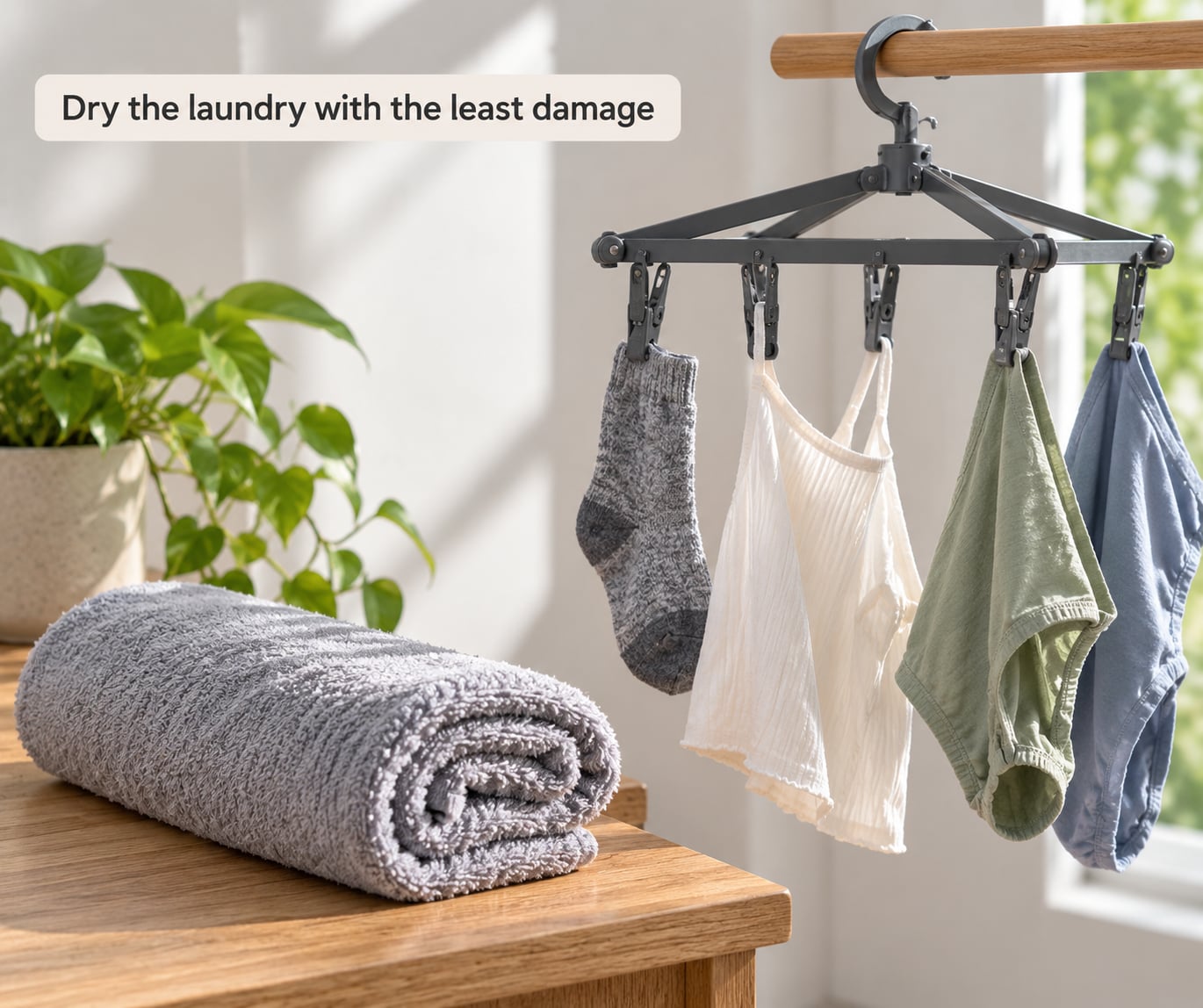
The fastest method without a dryer is towel compression. Lay your clothes flat on a dry towel, roll the towel up with everything inside, and stand on the bundle for 30 seconds. The towel wicks out far more water than your hands can, and it takes a meaningful chunk off drying time.
Then choose the drying spot based on airflow, not on heat. In order of how well it usually works:
- A clothesline strung across a room with a window open on one side, so air moves along the line rather than across it.
- The bathroom extractor fan running, which pulls damp air out and keeps the room from smelling sour by morning.
- Hangers on an air conditioning vent or a door hook, spread out so garments do not touch.
- Flat drying on a towel over a rack, best for knits and anything you do not want to stretch on a hanger.
Reshape every garment as you hang it. Push sleeves back into cuffs, smooth the hem, and pull the shoulders into shape on a hanger rather than folding a heavy sweater over a rail, which stretches it.
Leave gaps between items. Clothes packed shoulder to shoulder dry in the middle last and smell by morning, which defeats the whole exercise.
Common Laundry Mistakes and Better Alternatives
Overfilling the basin. A full basin of tightly packed clothes cannot be submerged, rinsed or agitated properly. Wash two or three items, then refill. It is more trips to the tap and far better results.
Using far too much detergent. The instinct is to add more because the water looks dirty mid-wash. That dirt is the reason you are rinsing. Cut the dose and rinse once more than feels necessary.
Soaking fabrics for hours. Ten to fifteen minutes is plenty. Long soaks let dye lift and let wool felt and shrink.
Washing everything at once. Lingerie, a t-shirt and a pair of trousers in one basin means the trousers get clean and everything else gets rinsed twice. Group by similar fabric and soil level.
Rinsing in water you have already drained the clothes into. Dump the water, wipe the basin, refill. Rinsing in dirty water puts the soil back on.
Wringing delicate garments. It stretches fibres and sets creases. Squeeze and press instead, then let the towel do the work.
Drying in a closed bathroom with no extractor. It will still be damp at breakfast and it will smell. Move the clothes somewhere with a window, even a balcony rail or the edge of the bed, and come back to them.
Hanging clean clothes on an unreliable surface. Do not drape them over a chair back you cannot see, or over a lamp. If you leave the room and the clothes are down and dirty, you have lost the load.
Washing hotel towels and bedding. Skip them. They are heavy, they will not dry in a room and they cost you nothing to skip on a short trip.
Doing it at midnight in a hostel. Washing when the bathroom is empty is considerate in a way that doing it when everyone else wants a shower is not.
Low-Water and Hotel-Friendly Laundry Tips
In a humid climate or a rainy stretch, air-drying in a room stops working and this whole method becomes a treadmill. Two adjustments fix most of it: wash fewer items at a time so you have dry clothes to wear while one batch dries, and hang everything at once rather than in two rounds.
In a small apartment with a shower and no sink, the shower itself works. Let it fill to about ankle depth, put clothes in a mesh bag or a portable wash bag, shut the door and leave them for ten minutes. Then drain and rinse under the running tap. Campgrounds and van trips use the same method with a bucket and a tap instead.
For a hostel, wash in the basin at off-peak hours and stay out of the way. Shared bathrooms are there for showers, so the person who gets the room back fastest gets the least resentment.
For a two-week trip, pick a laundry day that matches a day you are staying put, rather than washing everything the night before a long travel day. A full sink wash takes three minutes; the whole session including hanging takes 20 minutes, and doing it while you are stuck in one place for two days means the load is dry before you move on.
Full-time travellers who do this daily mostly stop thinking about it. They keep a dedicated basin and a short line in the vehicle, and they never own more than a week of clothes.
Two fabric habits cut the whole chore in half. Merino wool and synthetics dry in hours and resist odour, while cotton and denim stay damp for a day and more. Choosing fast-drying layers means smaller laundry volume and lighter bags, which is the real win here.
Finally, keep dirty clothes in a sealed bag inside your bag rather than loose in a compartment. Damp fabric sealed against everything else is how backpacks start to smell, and that smell survives the rest of the trip.
Frequently Asked Questions
Is it OK to wash clothes in a hotel sink?
Usually yes, if you are quick and tidy. Wipe the basin before and after, keep the whole wash to a few minutes, use off-peak hours in a shared bathroom, and keep damp fabric off wood, lampshades and radiators. A do-not-disturb sign on the door stops cleaning staff from moving your laundry. If the bathroom is shared with strangers, go early or late rather than midday.
How long does hand-washed clothes take to dry?
Two to four hours in a warm room with airflow, and overnight in a humid climate or a bathroom with no extractor. Roll the wet clothes in a dry towel and stand on the bundle first, which removes a surprising amount of water, then hang items with gaps between them. If you are leaving the next morning, wash in the evening and hang somewhere with a window.
Can I use hotel shampoo to wash clothes?
It works in an emergency and it is mildly scented, so rinse well. Shampoo is designed for scalp oils and rinses more cleanly than detergent, so it is a reasonable choice for one t-shirt in a pinch. For anything you are washing regularly, pack a travel-size detergent or detergent sheets instead. Sheets dissolve in cold water and take up no liquid allowance in your carry-on.
How do you do sink laundry while traveling?
Fill the basin a third full with lukewarm water and dilute a small amount of detergent in it first. Submerge the clothes, agitate and rub gently, then soak 10 to 15 minutes. Drain, refill and rinse two or three times until the water runs clear with no suds and no smell. Squeeze rather than wring, press the water out in a towel, and hang in moving air.
What is the best sink laundry detergent for travel?
Detergent sheets are the easiest choice: they dissolve in cold water, need no measuring, and avoid liquid limits when you fly. A small container of concentrated liquid is the alternative if you are washing often. Either way, use less than feels right, because too much detergent plus not enough rinsing is the main cause of stiff, scratchy hand-washed clothes.
When is a laundromat still the better choice?
Once a load goes past two or three items, or includes towels, jeans, sweaters or anything bulky, a self-service laundromat wins on time and on drying. Washing machines handle agitation and spinning properly, and a dryer finishes in twenty minutes what air takes all night. In humid weather, or after a few weeks of road wear, one mid-trip laundromat visit resets the whole trip.
Conclusion
Start with one small load tonight. Sort it, put lukewarm water and a properly diluted detergent in the basin, wash gently for two or three minutes, rinse until the water runs clear, roll everything in a towel and stand on it. Then hang the load where air moves across it. Once you have done that once, the rest of the trip is just repeating it on the evenings you are staying put.