How to plan a day trip from a major city: pick a destination you can reach in about 30 minutes to two hours, choose one anchor activity, and build the rest of the day loosely around getting home in good time. That single rule about return timing is what turns a stressful outing into an easy one.
Most failed day trips I have heard about were not bad destinations. They were bad arithmetic. Someone picked a place four hours away, built a tidy schedule around three sights, and then spent the afternoon watching the clock instead of the view. The fix is unglamorous: subtract travel time first, then plan what is actually left.
The rest of this guide walks through that arithmetic in order — what to gather before you leave, how to choose a destination, how to compare transport options, how to schedule meals, and what to do when the last service home gets cancelled. No two day trips look the same, but the structure holds.
Table of Contents›
- What You Need
- Step-by-Step
- Choose a destination that works in one day
- Set realistic departure, activity, and return times
- Compare transportation options
- Build a simple route with two or three anchors
- Plan food around the schedule
- Pack light and prepare for changing conditions
- Common Mistakes
- Frequently Asked Questions
- How far is too far for a day trip from a major city?
- Should I take a train, a bus, a car or a rideshare for a day trip?
- How much does a day trip cost from a major city?
- How do I plan a day trip alone without it feeling awkward?
- What do I do if the return train or bus is cancelled?
What You Need
You need less than people expect, and almost all of it is digital. Gather these before you walk out the door and the day stops being improvised.
- A destination and a route. Not just a place name — a route, with the departure point, the arrival station or stop, and the trip home already identified.
- At least two transport options. A primary route and a backup. If the train line runs hourly and the bus runs every twenty minutes, the bus is your insurance policy.
- A payment method that works on both legs. A contactless card plus some cash, and a transit app or ticket already downloaded and tested.
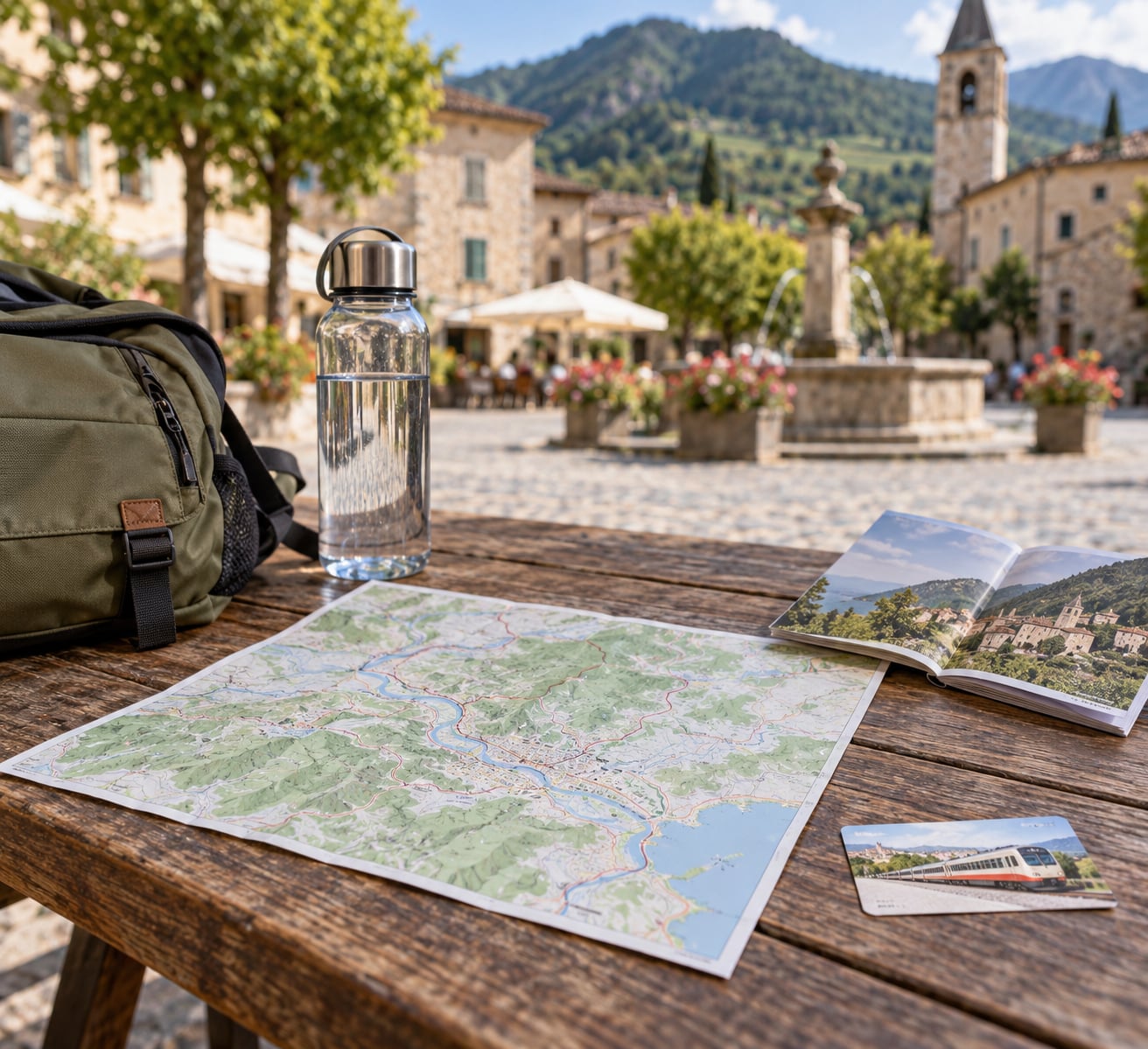
- An offline map. Download the area rather than relying on mobile data, which is patchy in parks, valleys and older rail lines.
- A weather check for the destination, not your city. Coastal and highland spots can be completely different from what you see out of your window.
- Shoes you can walk five hours in. This is the single most common reason day trips end early.
- Water and a snack. A town with one good bakery is not a place to depend on for lunch.
- A plan with slack in it. Two anchors, not six, and no fixed bookings after about 3pm.
Step-by-Step
Choose a destination that works in one day
Choose a destination where the round-trip travel time leaves you at least four real hours on the ground. Under three hours on the ground and it is a long walk, not a day trip. Over six hours door to door and you will spend the whole day sitting down, which is a different kind of trip and a fine one, but not the one people picture.
Judge candidates on opening patterns rather than fame. A historic district, a museum cluster, a market, a trailhead or a small town within an hour all work. What does not work is a destination whose single draw has timed entry booked out three weeks ahead, or a town whose main appeal shuts at 4pm.
A useful test: could you describe the day in one sentence, and would that sentence still be interesting if it rained? If your plan needs good weather and a long drive, it is two dependencies stacked on each other. Strip one away.
Set realistic departure, activity, and return times
Work backwards from the last trip home, not forwards from when you woke up. Find the last service home, subtract your buffer, and that moment is when you need to be leaving the destination — not when you should be arriving back.
Most planning guides suggest a 45 to 60 minute buffer on the return leg. Take it. Trains get cancelled, buses fill, connections get missed, and a day trip that ends in a taxi you did not plan for costs several times more than the fare you saved.
Then check that you have not built a schedule with impossible transfers. Two transfers inside a two-hour window is not a plan, it is a hope. If the route needs more than one change, either pick a direct service or move the destination closer.
Compare transportation options
Compare options on three things: total time, flexibility, and how late the service runs. Price matters, but on a day trip the fare difference between a train and a bus is usually smaller than the cost of one bad connection.
| Option | Flexibility | Last-service risk | Best for |
|---|---|---|---|
| Walking | Total control, stop anywhere | None, but limited radius | Destinations under an hour away |
| Cycling | High, slow travel pace | None | Flat routes along towpaths, promenades, bike lanes |
| Metro or local train | Fixed but cheap | Low, runs late into evening | Suburbs, riverside towns, close-in villages |
| Regional or intercity train | Fixed, fast over distance | Medium, check the last departure carefully | Mid-distance towns and scenic routes |
| Intercity bus or coach | Moderate, often slower | Medium to high, last runs can be early | Places with no rail link |
| Rideshare or taxi | Door to door | High, surge pricing at peak times | Loose schedules, groups, late returns |
| Rental car | Maximum freedom | None, but parking and fuel cost time | Rural stops no transit reaches |
Whatever you choose, check the return route before departure, not on the way there. Know the last departure time, whether you need a reservation for it, and where the station or stop actually is relative to your final activity. Walking a kilometre at 7pm looking for a stop you assumed was nearby is a real way to end a good day badly.
Build a simple route with two or three anchors
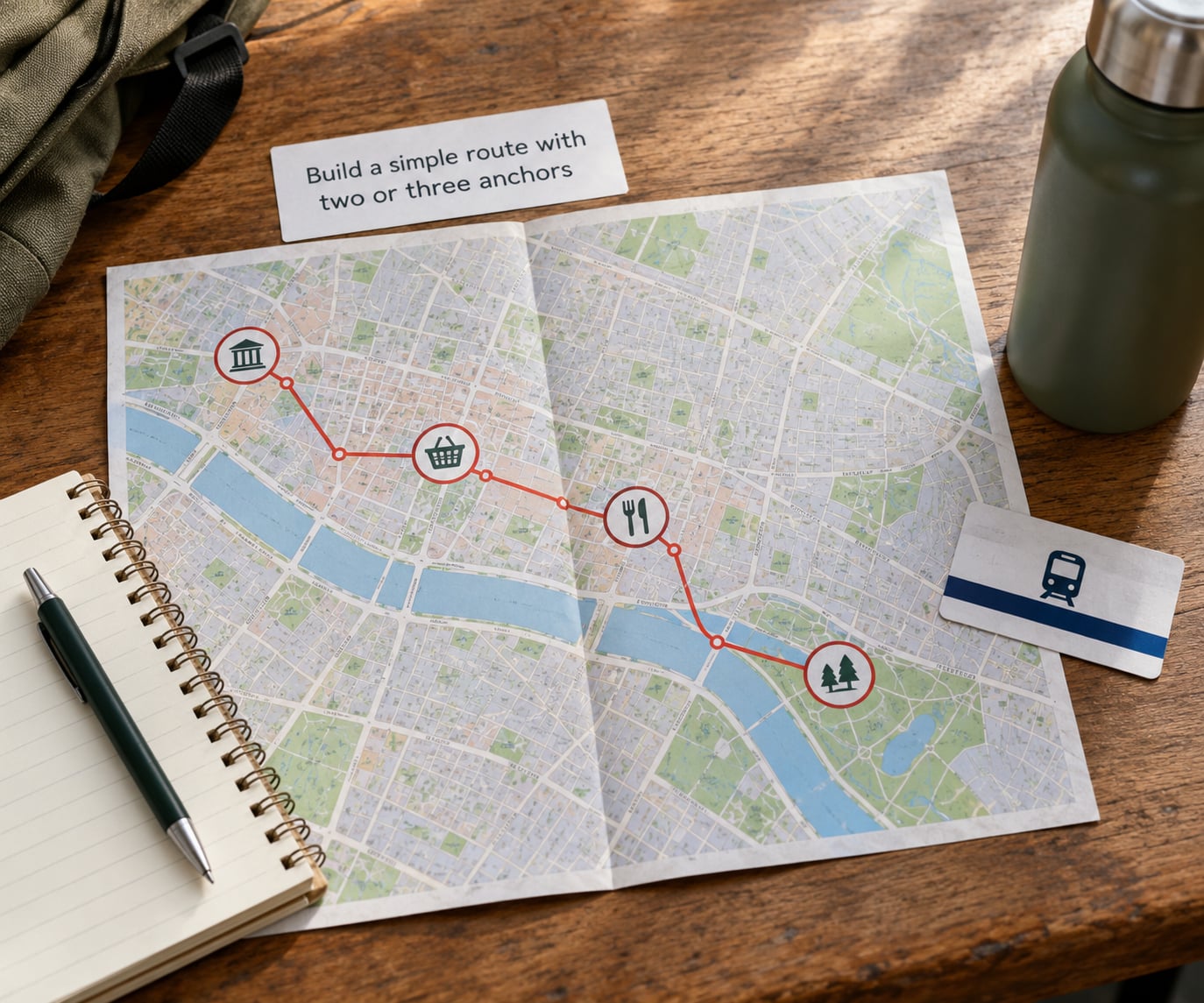
Build the route by geography, not by wish list. Plot your stops on a map first and cluster them so you are not crossing the same town four times. Then pick two anchors — one for the middle of the day, one for later — and treat everything else as optional.
A route that works looks like this: arrive, walk to a market or old quarter, have lunch in the neighbourhood around it, wander without an appointment through one more district, eat an early dinner near the station, and be at the stop with twenty minutes to spare. The anchors are the market and the evening viewpoint. Everything between them is filler, and filler is what makes a day trip feel unhurried.
Solo travellers usually over-plan and then feel rushed anyway, because they forget that every queue, ticket machine and unfamiliar junction takes longer alone. Plan one thing per half day. That is not under-planning; it is the amount that fits.
Plan food around the schedule
Check opening days and typical service hours before you build the day around a meal. Small towns close kitchens early, and many places stop serving at 8pm even in summer. Plenty of old towns a short ride from a big city have no kitchen open past 7 on a Sunday, which is exactly the kind of detail that ruins an otherwise well-planned outing.
Reserve only the meals that are genuinely time-sensitive, and only if the venue accepts single bookings. For everything else, carry a snack so hunger never makes the decision for you.
Keep one flexible food option available for the whole day — a bakery, a market stall, a supermarket counter. Delays happen, and a flexible option means you adjust the meal rather than rush the day.
Pack light and prepare for changing conditions
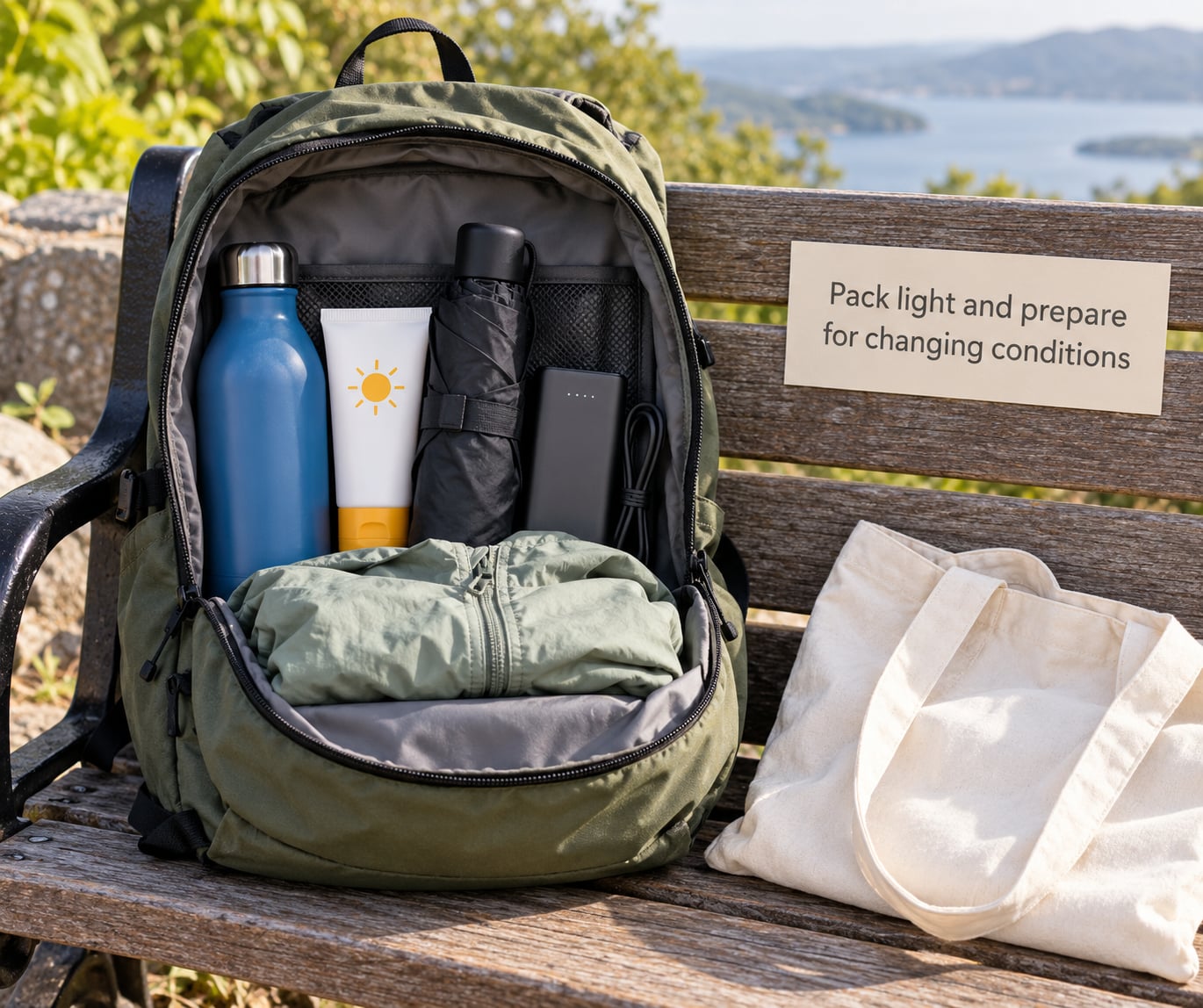
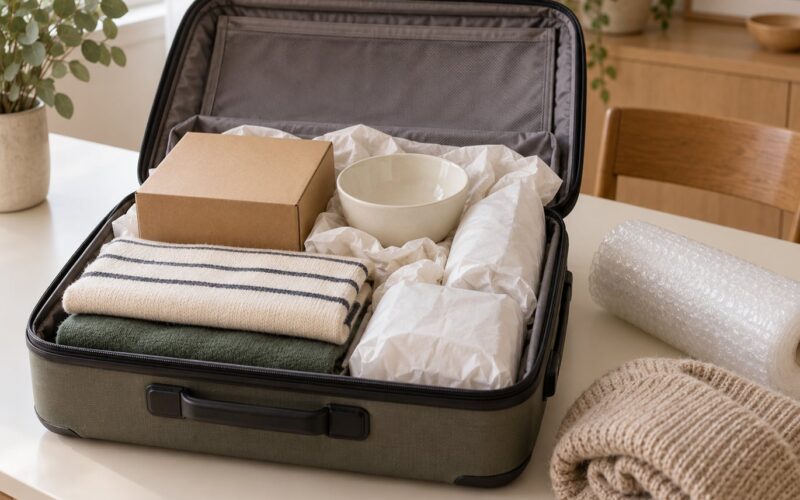
Pack for a walkable day, not a trip. A small day bag with water, sunscreen, a light layer, medication, a compact umbrella, a portable charger and a few snacks covers almost everything. Throw in a reusable tote for anything you buy, and your hands stay free all day.
Add two things that are easy to forget: a screenshot of your return ticket or booking, and an emergency contact plus offline directions. Signal fails in exactly the places people fall in love with, which is an inconvenient pattern.
Check the forecast the night before and again in the morning, then treat it as a strong hint rather than a promise. Coastal fog, afternoon thunderstorms and mountain wind all arrive on their own schedule. If rain looks likely, pick a destination with indoor options along a walkable route rather than cancelling outright.
Common Mistakes
Over-planning the hour. A packed itinerary has no recovery room for the thing you actually wanted to do. Fix: two anchors, and treat the rest as optional.
Relying on one transport route. If the single line fails, your day is over. Fix: know a backup route before you leave, including its first and last departures.
Booking too many timed activities. Timed entry is useful for one thing, and destructive for three. Fix: one timed booking, then build loosely around it.
Skipping meals and breaks. Hungry and tired travellers make bad transport decisions. Fix: eat at a fixed time whether or not you feel hungry, and carry a snack.
Wearing the wrong shoes. New trainers on cobbles is a classic. Fix: wear shoes you have already walked in.
Failing to check the way home. Most trips go wrong on the return leg, not on the way out. Fix: confirm the last service, its location and whether it needs a seat reservation.
Treating the forecast as a guarantee. Fix: plan a second activity for the same place, and check the forecast twice.
Ignoring opening days. A village is not a place to visit on a Monday because it is convenient. Fix: check opening days before you commit to a date.
One more worth naming: not telling anyone where you are going. A single message to a friend with your destination and your expected return time costs nothing and gives someone a reason to worry at the right moment if things go wrong. For longer day trips, a scheduled check-in halfway through works well.
Frequently Asked Questions
How far is too far for a day trip from a major city?
Aim for somewhere 30 minutes to two hours from your city door to door. That usually leaves four hours or more on the ground once you subtract both journeys. Beyond about three hours each way you will spend most of the day in transit, and beyond five it becomes a weekend trip whether you planned it that way or not. The exception is a seasonal festival or a rare event worth the long day.
Should I take a train, a bus, a car or a rideshare for a day trip?
Take a train if one goes direct and the last return service runs after you want to leave. Choose a bus when there is no rail link or the bus runs more often than the train. Drive when your stops are scattered and rural. Use a rideshare when your schedule is loose or the return service is unreliable, and check surge pricing before you book it home.
How much does a day trip cost from a major city?
Your four main categories are return transport, food, entry or activity fees, and a small contingency for a changed plan. Regional and intercity fares vary widely by route and by whether you travel off-peak, and driving adds parking and fuel. The way to control it is to book transport in advance where possible, eat one meal rather than three, and keep one free evening instead of a paid activity.
How do I plan a day trip alone without it feeling awkward?
Eat where there is counter or bar seating, at lunch rather than dinner, where a solo diner looks normal. Book one thing that involves other people, such as a walking tour or a class, and leave the rest of the day open. Tell someone your destination and return time, keep your phone charged, and sit facing the room rather than a wall. Most solo day trips feel ordinary by the second hour.
What do I do if the return train or bus is cancelled?
First, do not wait at the stop. Go to the station or terminal desk or the operator app and ask what the next option is before assuming the worst. Next, check whether a later service, a change of route, or a bus substitution is running. Finally, if nothing is running, agree a sleepover plan with accommodation near the terminal and tell the person who knows your itinerary. Backing up a photo of your ticket matters here.
Start with the trip home, not the destination. Find the last service back, pick a place you can reach comfortably before it, choose one anchor activity there, and leave the rest of the day open. Everything else on this list is detail — that one decision is the whole plan.