Staying hydrated on a hiking trip comes down to four moves: start full, carry enough, drink on a schedule rather than when you feel like it, and replace the salt you sweat away. Here is the short version of how to stay hydrated on a hiking trip, then the detail behind each step.
- Start drinking the evening before and keep drinking through breakfast on trail day.
- Estimate volume from your hike length, the temperature, and your own sweat rate.
- Pack that volume plus a backup, split between a bottle and a reservoir or flask.
- Drink small amounts every 20 to 30 minutes instead of waiting for thirst.
- Add electrolytes on anything long, hot, or heavily loaded.
- Purify anything you pull from a creek, spring, or puddle, and pack out your trash.
- Rehydrate within an hour of finishing, with fluid and food together.
This whole thing takes about ten minutes of planning, and it is the difference between a hike that ends with tired legs and one that ends with a headache and an empty water bottle two miles from the car.
Table of Contents›
- What You Need
- Step-by-Step: How to Stay Hydrated on a Hiking Trip
- Estimate your water needs
- Pack water and electrolyte options
- Set drinking and eating checkpoints
- Adjust for heat, weather, and exertion
- Monitor your hydration
- Common mistakes
- Common Mistakes and Fixes
- Frequently Asked Questions
- How much water should I drink while hiking?
- What should I do if I get dehydrated while hiking?
- What is the 10 gulp rule?
- Do I need electrolytes on a day hike?
- Can you drink too much water while hiking?
- Why do hikers eat gummy bears?
- Final Hydration Checklist
What You Need
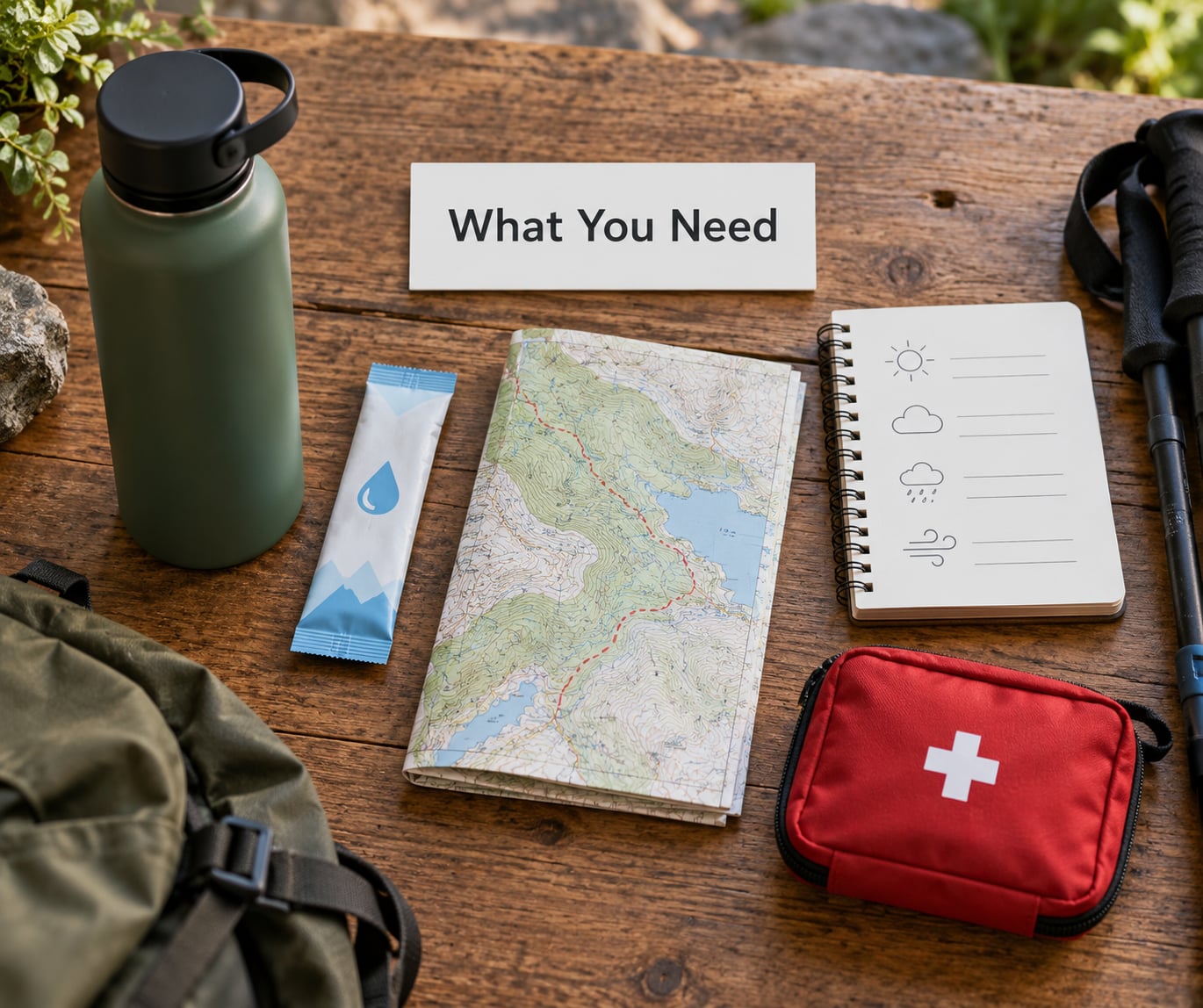
Before you touch the trailhead you should know four things, and everything else follows from them. Here is the list of what to have ready and why each piece matters.
- Your route figures. Total hours out, hours back, distance, and elevation gain. Multiply the hiking time by 1.5 and add a break hour, because almost nobody finishes a long hike at trailhead pace.
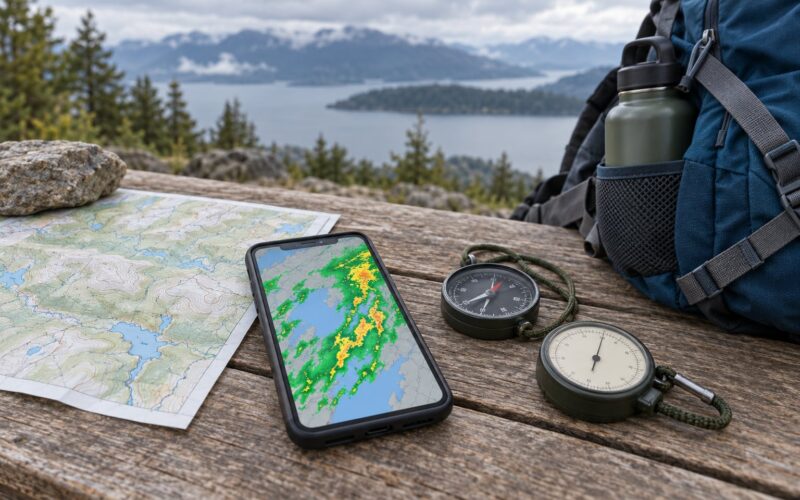
- The forecast for the whole day. Not the morning high. Look at the temperature at the time you will actually be moving, the humidity, wind, and any chance of storms.
- Water capacity sized to that number. Usually 500 ml to a litre per hour of hiking, more in heat, plus a margin.
- Electrolytes in some form. Powder, tablets, or a salt-and-sugar mix you like the taste of, because you will not finish a packet you dislike.
- Food with water in it. Watermelon, oranges, cucumber, broth, rice, and potatoes all count toward your intake.
- A backup plan for water. A known source point you have checked on a map, or a filter, or a purification method.
- A small first-aid pouch. Specifically oral rehydration salts or an electrolyte packet, plus blister care. It weighs almost nothing.
Also worth doing before the day: tell someone your route and expected return time, and download the map for the area. Hydration problems are easier to solve when you are not also solving a navigation problem.
Step-by-Step: How to Stay Hydrated on a Hiking Trip
Estimate your water needs
Start with a range, not a prescription. Most hikers need roughly 500 ml to a litre of fluid per hour of moderate walking, and that number moves with everything around it.
| Hike length (moving hours) | Cool or overcast | Warm | Hot and humid |
|---|---|---|---|
| Under 3 hours | 1 to 1.5 L total | 1.5 to 2 L | 2 L |
| 3 to 5 hours | 2 to 2.5 L | 2.5 to 3.5 L | 3.5 to 4 L |
| 5 to 8 hours | 3 to 4 L | 4 to 5.5 L | 5 to 6.5 L |
| Full day or overnight | 4 to 6 L | 6 to 8 L | 8 L or more |
Then adjust with a short list. Add roughly half a litre an hour if you are carrying a heavy pack, climbing, or moving in high heat. Add more if you are a larger person or a heavier sweater. Subtract if the day is cool, shaded, and you are walking rather than scrambling.
Humidity is the one people underestimate. Sweat runs off you instead of evaporating, so you lose fluid and feel cooler at the same time, which means you drink less than you need.
For a real personal number, run a sweat-rate test once. Weigh yourself naked before a hike and again immediately after, without eating or drinking in between, and subtract. A one to two kilogram drop on a typical walk means roughly a litre an hour plus more. That measurement beats any table, including this one.
Pack water and electrolyte options
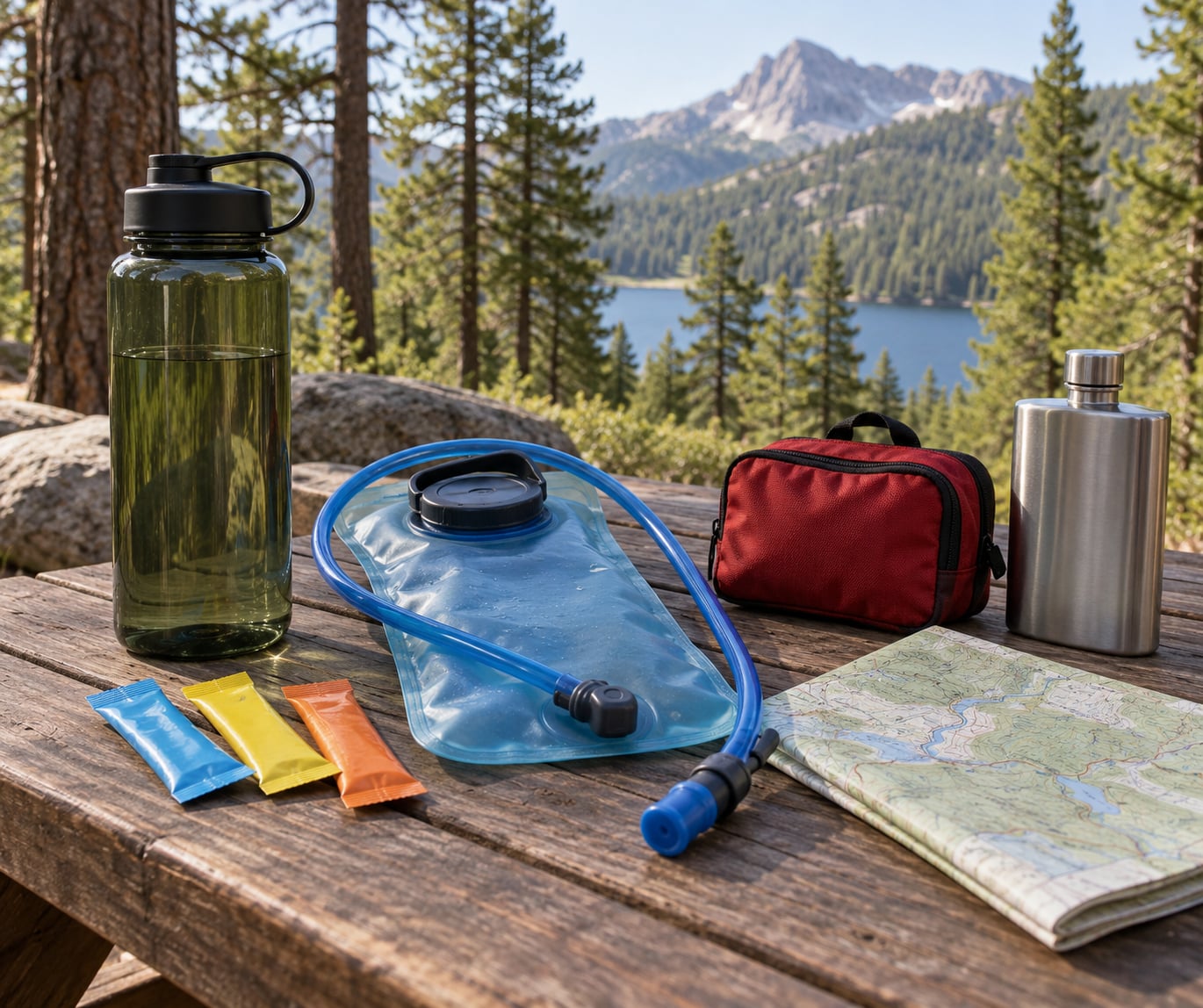
Split your volume across two containers so a single failure does not end your day. Many hikers carry a bottle on the shoulder strap for the flat stretches and a reservoir or soft flask with a hose for the middle sections, where both hands are working.
Reservoirs with a drinking tube make frequent sipping easy without stopping, which is the whole point. Their weak spot is the hose and bite valve, which kink and freeze. Rinse them fully, hang them open to dry, and run cold water through the tube when it is cold enough that the valve will stiffen.
Bottles are simpler, easier to clean, and easy to refill. Wide mouths take a filter and an ice cube. Insulated stainless bottles keep water cold all day and you can freeze them the night before, which makes them the easiest cold option for a day hike.
For electrolytes, aim for roughly 300 to 600 mg of sodium per hour in hot weather or on a long day, more if you are a heavy sweater, and split it across the day instead of dumping it into one bottle at lunch. Look at the label, since packets vary a lot. Use water for most of your intake and electrolytes for the heavy sweat windows.
If you plan to drink from natural sources, match a method to the trip. All surface water should be treated even where it looks clean.
| Method | Good for | Watch out for |
|---|---|---|
| Filter | Groups, high volume, reliable water every day | Weight, price, and freezing ruins hollow-fibre models |
| Purification tablets | Solo hikers, ultralight kits, backups | Taste, waiting time, and they need time to work |
| UV pen | Quick treatment at a campsite with time to wait | Needs a clear line of sight and clean outer casing |
| Boiling | Truly minimal gear, cold nights | Slow and fuel-hungry, and it is hard above freezing |
Carry the backup method even with a filter. A hose splits or a filter clogs two miles from water and your day changes shape fast.
Set drinking and eating checkpoints
The best rhythm is boring and repeatable. Take several sips every 20 to 30 minutes, and drink more than you want at each stop, even when you feel fine. Thirst lags behind your actual fluid loss, so waiting for it means playing catch-up all day.
You have probably heard the 10 gulp rule, which suggests roughly ten small sips every half hour. Treat it as a useful mental timer rather than an exact prescription, because gulp sizes and sweat rates differ. The habit is what matters.
Pair longer breaks with food. A salty snack at a viewpoint gives you a reason to drink and replaces sodium at the same time, which is far more efficient than drinking on an empty stomach.
Split longer lunches with real fluid rather than the fizzy drink from the gas station. Sugar-heavy drinks can upset a stomach once you are moving uphill, and the caffeine in a large coffee can make you feel doubly dehydrated.
Adjust for heat, weather, and exertion
In hot weather, move slower and start earlier. Most heat problems come from pace, not distance, and arriving at a summit an hour earlier than you needed to is worth more than anything you can do with a water bottle.
Breathing through the mouth hardens sweat rate. Breathing through the nose keeps some fluid in your body, which is why people dry out faster on a climb than on the flat.
Cold weather is the trap. Thirst drops because your body is not signalling as loudly, but you still sweat, and cold dry air pulls moisture out with every breath. Drink on the same schedule in winter as in summer, and consider warm fluids from a flask.
Above about 2,000 metres, many people lose more fluid than they realise through dry air and faster breathing. Give yourself a few days to acclimatise rather than pushing high on day one.
Signs you should stop and deal with hydration right now: thirst you cannot shake, dark amber urine, a headache that arrives mid-hike, dizziness, unusual fatigue, muscle cramps, nausea, and confusion or stumbling, which are serious. Some of these also point to altitude, low blood sugar, heat exhaustion, or simply a hard day, so treat them as stop signals rather than trying to diagnose yourself in the field.
Monitor your hydration
Thirst is your most useful signal, and it is a late one. Urine colour is the better early one: pale straw is roughly right, clear all day can mean you are overdoing it, and dark yellow says you are behind.
Also watch weight loss, headache, pace, and mental clarity. The common trail headache after a hot climb is often dehydration combined with sodium loss and not eating enough.
Symptoms of serious dehydration include no urine for many hours, sunken eyes, rapid pulse, severe confusion, and the inability to keep fluids down. Stop, shade the person, loosen clothing, give small frequent sips of an electrolyte solution if they can swallow, cool them, and get help. Never leave someone with confusion or a rapid pulse alone, and never give water to someone who is barely conscious. For anything beyond mild symptoms, call rescue. If a medication or a medical condition is in play, ask a doctor before the trip what your fluid needs should be.
And watch the other end of the scale. Drinking enormous amounts of plain water, without matching salt, can dilute your blood sodium, which causes nausea, headache, fatigue, and confusion, and in bad cases seizures. If your urine is clear all day and you feel bloated or sick, that is the signal to stop forcing water and start using an electrolyte mix instead.
Common mistakes
Rationing water to make it last is the most common and most expensive error. Delaying drinking does not save water, it costs you energy and makes every step heavier.
Drinking only when you pass a source is the second one. The gaps between sources are where you get behind, and by the time the next creek appears you are already behind.
Relying on thirst alone is the third. It is a useful backstop, never a plan. Drink on a timer and let thirst tell you whether the timer was too slow.
Forgoing electrolytes on a long hot day is the fourth. Losing sodium and drinking only plain water leaves you heavy, crampy, and tired in a way more water does not fix.
Hydrating with sugary drinks and sports foods instead of water is the fifth. Fine as a treat, poor as your main fluid.
Common Mistakes and Fixes
Here is the short version to run through before you lace up.
- Carrying less than you need. Fix: add a 20 percent margin to your estimate and check whether your pack can take the extra volume.
- Waiting until you are thirsty. Fix: set a 25-minute timer on your watch and take four or five sips every time it goes off.
- Drinking only at water sources. Fix: carry all the water for the dry stretches, and treat every creek as a bonus.
- Ignoring sodium. Fix: carry an electrolyte product and use it in the hot or long middle hours.
- Chugging instead of sipping. Fix: small and often absorbs better and upsets your stomach far less.
- Forgetting to pre-hydrate. Fix: drink through the evening before and at breakfast.
- Overdrinking plain water. Fix: switch to an electrolyte drink if your urine stays clear all day or you feel bloated.
- Forgetting to rehydrate after. Fix: have food and drink ready within the hour, and keep drinking for a few hours.
Frequently Asked Questions
How much water should I drink while hiking?
Most hikers need around 500 ml to 1 litre of fluid per hour of moderate walking, and more in heat or with a heavy pack. A three-hour mild day hike usually needs 1.5 to 2 litres in total. Measure your own sweat rate once by weighing yourself before and after a hike with no food or drink in between, and use that number instead of any table.
What should I do if I get dehydrated while hiking?
Stop, shade yourself, loosen your layers, and take small frequent sips of an electrolyte drink rather than large gulps of plain water. Eat something salty if you can. Never leave someone with confusion, stumbling, or a fast pulse alone, and call for help if symptoms do not improve within an hour or if vomiting starts.
What is the 10 gulp rule?
It is a drinking prompt, not a scientific formula. The idea is roughly ten small sips every half hour, which spreads fluid intake evenly instead of leaving it to chance. Use it as a mental timer. Individual sweat rates vary widely, so adjust based on urine colour, weather, and how much you are actually sweating.
Do I need electrolytes on a day hike?
Not usually for a cool two-hour walk, where water and a normal meal are plenty. Add them once you are out for more than three hours, climbing hard, carrying a heavy pack, or hiking in heat above about 21 C, because those are the conditions where you lose meaningful sodium. Most packets give enough for a two to three hour window.
Can you drink too much water while hiking?
Yes, and it is more common on hot marathon days than people expect. Large volumes of plain water can dilute blood sodium, causing nausea, headache, fatigue, and confusion, and in serious cases seizures. If your urine stays completely clear all day and you feel bloated or nauseous, stop forcing plain water and switch to an electrolyte drink.
Why do hikers eat gummy bears?
They are cheap, light, portable, and salty enough to help with sodium loss. They also give you a reason to stop and drink every half hour or so, which is the part that actually matters. Regular candy works too, and salty foods like salted nuts or pretzels do the same job with less sugar.
Final Hydration Checklist
Here is what to do first, in order, if you want one short plan for how to stay hydrated on a hiking trip.
- Check the forecast for the hours you will be out, not just the morning.
- Write down your hours out, your hours back, and your elevation gain.
- Multiply the total hours by 0.5 to 1 litre, add heat and pack weight, then add a 20 percent margin.
- Split that volume between a bottle and a hose reservoir or flask, and confirm the hose fits in your pack.
- Pack electrolytes, one salty food, and a purification method as your backup water plan.
- Set a repeating 25-minute drinking reminder before you leave the trailhead.
- Reassess at every break: urine colour, headache, pace, and how much is actually left.
- Drink with food within the hour of finishing.
Run that list once and the rest of the day takes care of itself. Updated for October 2026, and worth re-reading before every trip, because the only variables that really change your water plan are distance, temperature, and effort.