Single-use plastic on a hotel stay is anything plastic you use once and bin while you are there: the bottled water on the desk, plastic-wrapped cups, mini shampoo bottles, coffee and tea capsules, ice bags, laundry bags, wrapped slippers. You cannot remove all of it, but you can cut a large share with a handful of habits that cost nothing extra and add about ten minutes of prep before you leave home. This guide walks through how to cut single use plastic on a hotel stay, from the night before you fly to the moment you hand back the room key.
I keep the short version in my phone notes and rewrite it after every stay. What I have learned is that the plastic arrives in layers the guest does not control, and the useful wins are refusals and substitutions rather than grand gestures. You get most of the benefit from three items in your bag and two polite sentences at the front desk.
If you travel alone, as I mostly do, there is no second bag to hold the overflow and no one to remind you the kit is missing. That makes the small kit below the whole plan rather than the start of one.
Table of Contents›
- What You Need
- Step-by-Step: How to Cut Single-Use Plastic on a Hotel Stay
- Pack a low-waste travel kit
- Request reusable options before arrival
- Refill instead of replacing minibars and bottled water
- Use the bathroom without creating extra waste
- Choose low-waste meals and drinks
- Decline disposable housekeeping extras
- Handle laundry, deliveries and shopping thoughtfully
- Sort waste and pack out rubbish at checkout
- Common Mistakes
- Frequently Asked Questions
- Can I avoid single-use plastic at a hotel without bringing everything from home?
- What should I do if the hotel does not offer refillable water or reusable amenities?
- Is it okay to skip hotel toiletries and housekeeping items?
- How can I reduce plastic waste when eating at a hotel restaurant or buffet?
- What is the best way to dispose of plastic waste during a hotel stay?
- Conclusion: What to Do First
What You Need
A low-waste hotel stay needs very little. These are the items I actually use, and the preparation habits that make them work.
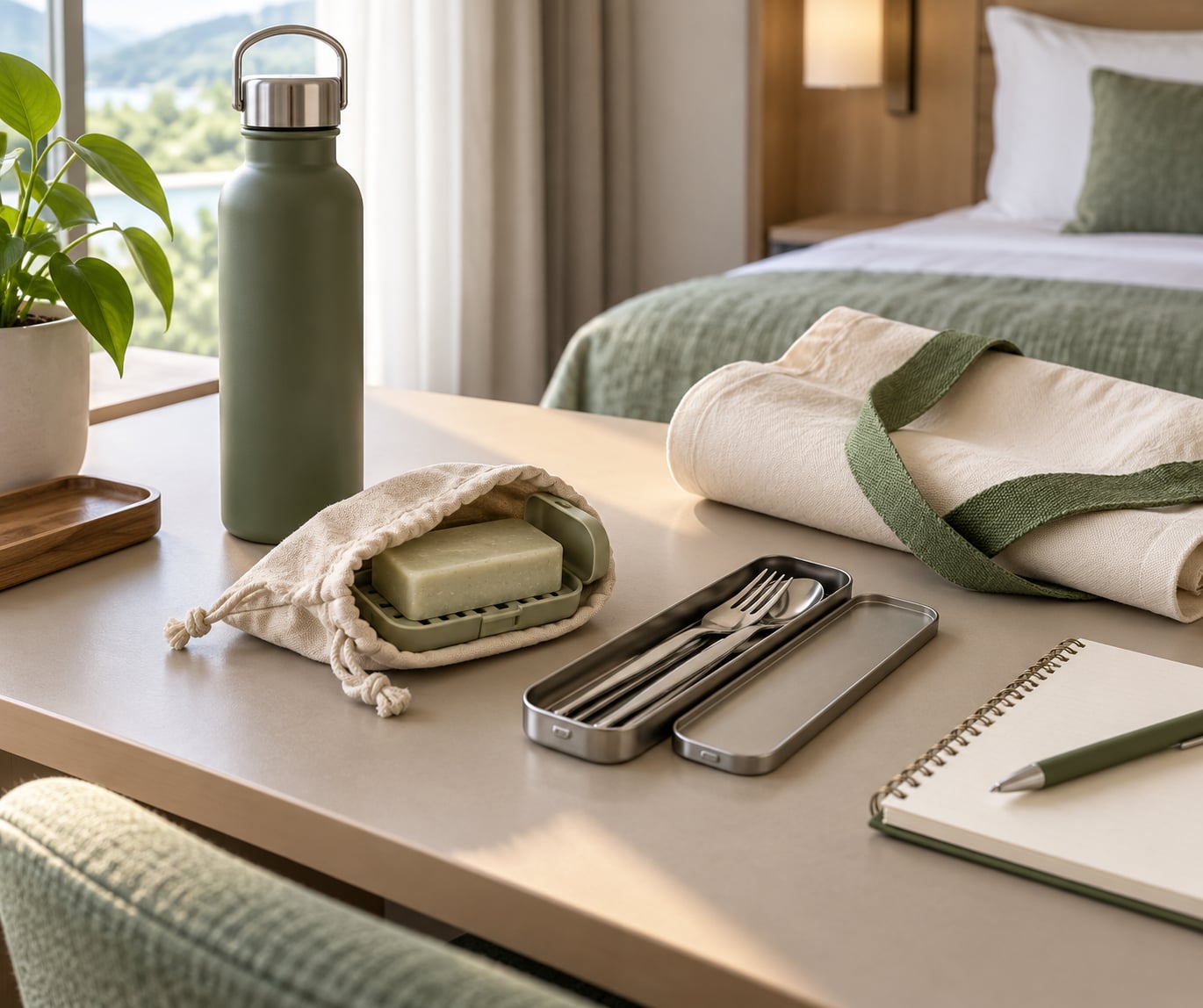
- A reusable water bottle. The single highest-impact item. If you forget everything else, bring this.
- Solid shampoo and a soap bar in a small draining case, plus a conditioner bar if you use one.
- A tote bag that folds into a pocket, for shopping, wet items and anything you pick up on the way.
- A lightweight cutlery set for room service, picnics or street food where cutlery is handed over wrapped.
- A toothbrush you are happy to re-use for the trip, or a reusable case for the one in your bag.
- A mesh laundry bag if you will hand-wash anything or send washing out.
Two habits matter as much as the objects. Write down what you already own before buying anything, because the fastest way to fail this is to order a drawer of specialist eco products. And check your airline’s carry-on liquid rules once: containers over 100 ml go in checked baggage, which is where most people’s plastic lives anyway.
One thing you do not need: a complete replacement for every hotel product. Guests are not required to bring their own soap, towels or bed linen, and a stay where you have quietly out-supplied housekeeping is not a better stay.
Step-by-Step: How to Cut Single-Use Plastic on a Hotel Stay
Follow this in order and the waste reduction happens without you tracking anything. Each step has a visible result, so you know it worked.
Pack a low-waste travel kit
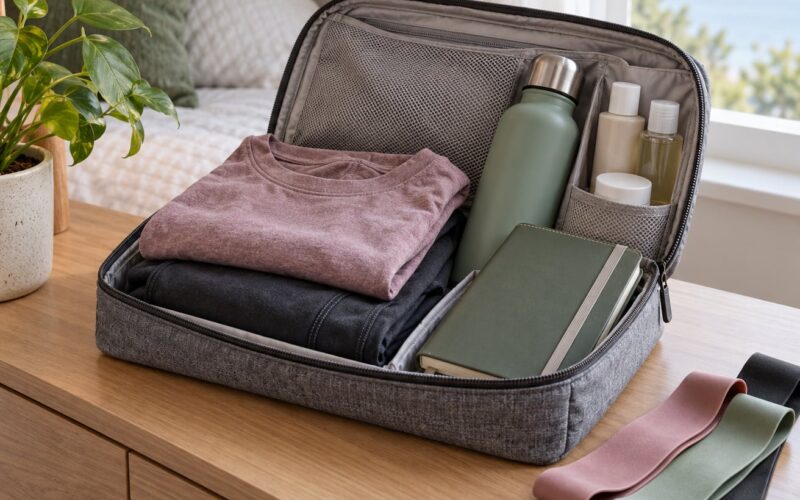
Put the bottle, the solid toiletries, the tote and the cutlery set in the bag the night before you fly. Solid bars are the clever part of the puzzle: a shampoo bar and a soap bar carry no liquid, take up almost no space and ignore carry-on liquid limits entirely. Half a fresh bar works fine if you are tight on room.
Do not overpack it. Someone on a carry-on forum once put it plainly: solid toiletries cut weight and volume, so the kit makes a smaller bag rather than a heavier one. The result you should see when you arrive is a bag you did not have to repack at the airport.
Request reusable options before arrival
Two weeks out, email or message the property and ask three specific questions: whether rooms have a filtered or refillable water option, whether bathroom amenities come as refillable dispensers, and whether they run a linen-reuse or reduced-housekeeping programme.
Specific questions get specific answers. Hotels that already run refill stations or low-waste breakfasts will tell you, and several will offer to hold your requests on file. Properties that do nothing usually reply with generic sustainability copy, which is useful information in itself. You get the answer before you pay, not after you are standing at the desk with a plastic bottle on the counter.
Refill instead of replacing minibars and bottled water
Ask at check-in to skip the room water. Two bottles per room per night is standard at most properties, so a four-night stay can easily arrive with eight bottles you never asked for and will not drink. Traveller guides put the average at roughly 30 single-use water bottles across a two-week trip.
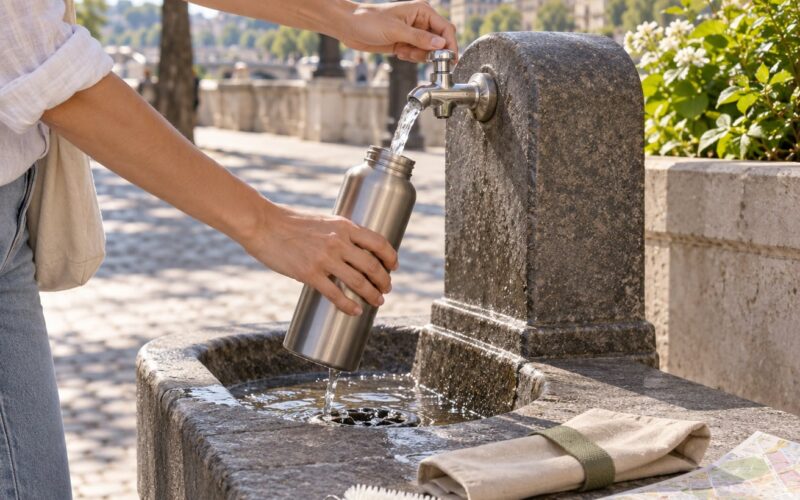
Ask how the property handles single use plastic water and what the alternative is. Common answers: a filtered tap in the lobby, a refill station near the entrance, or simply the bathroom tap. On whether to drink bathroom tap water, follow local advice rather than a rule of thumb, since what is potable varies by country and building. Where you need drinking water, use the filtered option or buy a large container at a supermarket and decant into your bottle.
Minibar bottles work the same way. If you are not going to drink them, do not open them; ask for the room to be emptied and the minibar switched off, which cuts the packaging and the electricity for the cooler. The result: no deposit on the minibar and no half-empty plastic in the waste stream.
Use the bathroom without creating extra waste
If you brought bars, unopened mini bottles can go back into the housekeeping bucket rather than the bin, and several people reuse those bottles at home for decanting other liquids. If you use the wall-mounted dispenser instead, you have made the swap already.
Be honest about the trade-off. Studies cited by travellers and reviewers repeatedly found higher bacterial loads on refillable soap dispensers than on single-use pumps, and guest forums are full of complaints about pumps that arrive empty or mounted too high to reach from a bath. Plenty of guests use the dispensers without a second thought, and plenty also bring their own product. Either is a reasonable choice; just do not pretend the dispenser choice has no hygiene dimension.
Keep the things that are not about plastic. If you need a specific hygiene, medical, baby or accessibility item, take exactly what you need and skip nothing. And use the towels you are given; re-use across a stay is fine, but sending back a damp towel or missing a wash for hygiene reasons helps nobody.
Choose low-waste meals and drinks
Three asks cover most hotel food plastic: no straw, no plastic cutlery, and a ceramic or glass cup instead of a wrapped one. Say it once, at the start of the order, and the kitchen handles it. At a breakfast buffet, skip the individually wrapped pastries and the pre-bagged butter if there is a loose alternative, and pour water or coffee from the urn rather than taking a plastic cup.
Bringing your own container for anything you take away is fine when the venue is happy for you to. Do not do it where staff end up portioning food around your container or losing time to it. The result to aim for is fewer small packages on your table, not a scene.
Decline disposable housekeeping extras
Ask for a reduced or no-daily-cleaning arrangement if you are staying several nights, and reuse the same towels until you want them changed. Say it once, clearly, in writing in the app or at the desk if the stay is long enough. Skipping the daily restock saves the paper replenishment and the wrapped laundry items as a side effect.
Do not treat housekeepers as the enemy of this plan. Housekeeping teams are usually measured on speed and room readiness, so a request that reaches them clearly and early helps, and one delivered at the door while they wait creates work. The result: fewer linens and fewer restocks, with no awkward conversation on your floor.
Handle laundry, deliveries and shopping thoughtfully
Use a reusable laundry bag instead of the plastic one on the floor of the closet, or take your washing to a laundromat with coins. Consolidate food or shopping deliveries into one trip at one time instead of four separate ones, since each delivery is a separate set of bags and boxes.
Carry the tote. Most city shopping does not need a carrier bag, and one trip to a market or a street market can undo a whole afternoon of small packaging. You get the tote back in your bag on the flight home, which is the point of folding ones.
Sort waste and pack out rubbish at checkout
Use the bins the way the hotel labels them, not the way your city does. Recycling rules differ by country and by building, and a hotel bin marked for plastic may not mean general plastics. When you cannot tell, general waste is the safer bin.
One trap worth knowing: biodegradable and compostable sachets and wrappers often cannot go in hotel recycling, because most commercial composting facilities reject them. Putting them in the wrong stream is worse than putting them in general waste. Keep your reusables, take nothing from the room home, and pack out your own plastic if the local disposal options are unclear. That last habit is standard practice on Leave No Trace trips and it applies in cities too.
Common Mistakes
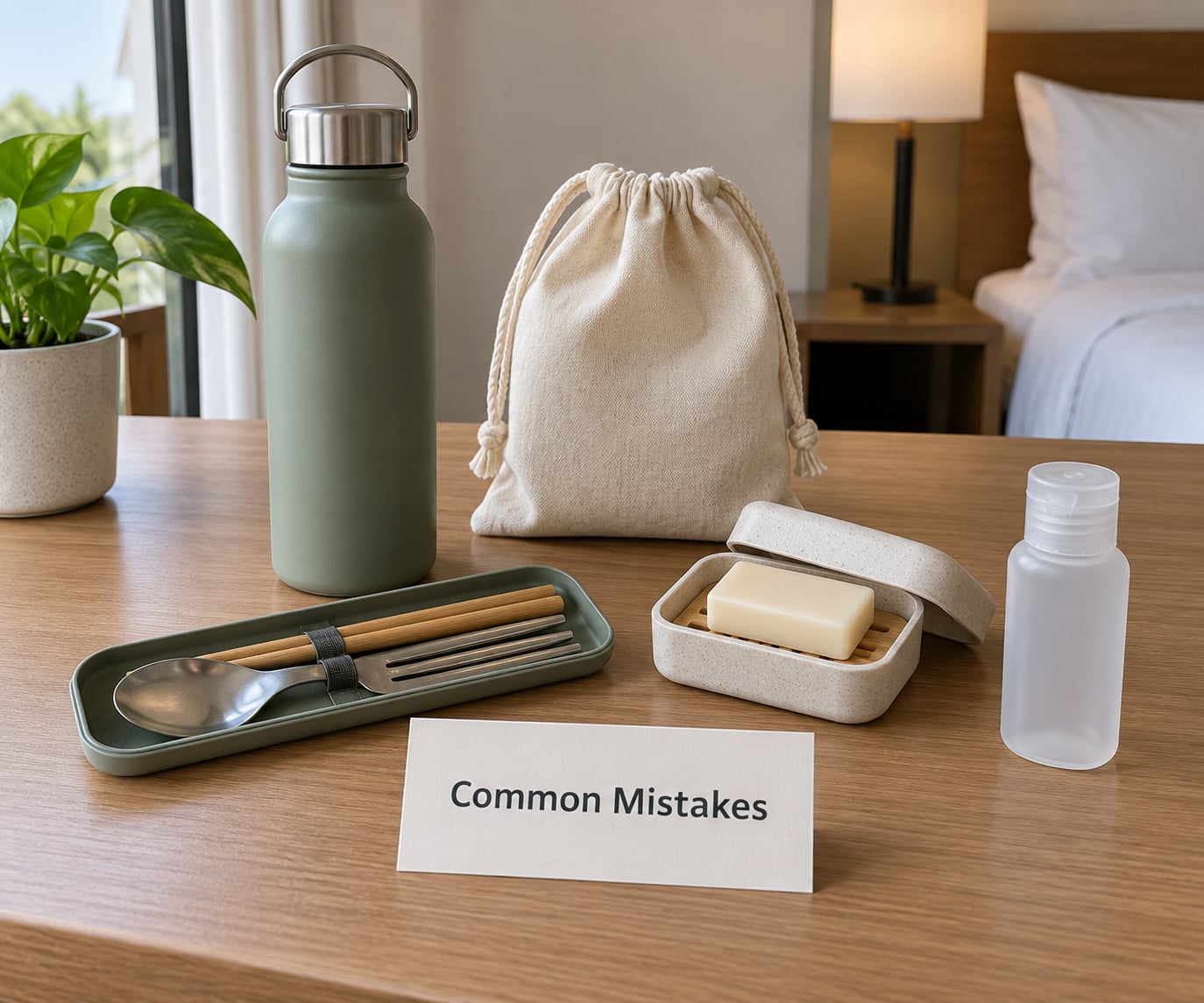
Most people fail at this in the same five ways, and every one of them is fixable.
Overpacking the kit. A drawer full of eco gadgets that stays in a cupboard is not a reduction. Bring the bottle, the bars and the tote, then stop.
Assuming every single-use item is avoidable. The ice bag, the wrapped cup at a busy buffet and the sealed hygiene items are not really yours to refuse. Trying to refuse all of them turns a small win into a standoff with staff who did nothing wrong.
Ignoring local safety rules. Tap water suitability, medical needs and accessibility items come first. Cutting plastic never outranks drinking something safe.
Being rude to the people who work there. A flat demand gets a flat no. A specific, friendly request often gets a yes, and the same front desk serves the next guest the same way.
Treating it as a contest. Some properties remove mini bottles for cost reasons while keeping wrapped cups and bottled water everywhere. Noticing that inconsistency is fair; expecting a front-desk clerk to fix a corporate decision on your behalf is not.
One last practical note. If you forget the kit, you are not stuck: supermarkets, drugstores and refill shops in most destinations sell shampoo, soap and toothbrushes, and the mini bottles in the room work in a pinch. Buying a bar at your destination is a better outcome than flying one.
Frequently Asked Questions
Can I avoid single-use plastic at a hotel without bringing everything from home?
Mostly, and three items do most of the work: a reusable water bottle, solid shampoo and soap bars, and a tote. Those cover the bottled water, the mini toiletries and the carrier bags that make up the bulk of a room’s waste. The rest you handle with a few requests at the front desk and at meals. You will still meet plastic you cannot refuse, such as the ice bag or a wrapped cup at a busy buffet.
What should I do if the hotel does not offer refillable water or reusable amenities?
Ask at check-in what the alternative is: a filtered lobby tap, a refill station near the entrance, or the bathroom tap. Where tap water is safe to drink locally, refilling your bottle there works well. Where it is not, buy a large container at a supermarket and decant. Requesting skip-bottles delivery also helps, because the plastic may still arrive with housekeeping even if you never open it.
Is it okay to skip hotel toiletries and housekeeping items?
Yes, if you have your own. Unopened mini bottles can go back into the housekeeping bucket, and many travellers reuse them at home for decanting other liquids. Use the wall dispensers if you prefer them; they cost less waste, though research has raised hygiene questions about refillable soap pumps, and pumps sometimes arrive empty. Skipping daily housekeeping and reusing towels is fine on longer stays. Take anything you need for medical, baby or accessibility reasons.
How can I reduce plastic waste when eating at a hotel restaurant or buffet?
Make three requests when you order: no straw, no plastic cutlery, and a ceramic or glass cup instead of a wrapped one. At a buffet, pour from the urn or dispenser rather than taking a plastic cup, and choose loose pastries over individually wrapped ones when both are offered. Bring your own container only where the venue welcomes it, so you do not slow the kitchen down. Eat what you take, since food waste is usually the heavier environmental cost.
What is the best way to dispose of plastic waste during a hotel stay?
Follow the hotel’s own bin labels rather than the rules you know from home, because recycling systems differ by country and building. General waste is the safer choice when you are unsure. Do not put biodegradable or compostable sachets in the recycling stream; most commercial composters reject them, so they belong in general waste. Keep your reusables, take nothing from the room, and pack out your own plastic when local disposal is unclear.
Conclusion: What to Do First
To cut single use plastic on a hotel stay, start with three moves. Bring the bottle and the solid bars, because those two remove the two biggest sources. Then ask at check-in to skip bottled water and find out what refill option the property has. Decline only what you can safely decline: the water, the wrapped cups, the straws, the daily housekeeping you do not need.
Say it as a request rather than a demand, and the people at the desk will usually help. You will still find plastic you cannot refuse, and local recycling may not be what you expect. That is the honest version, and it still leaves a lot less behind than the room you were given.