The trick to a trip that works for a 74-year-old and a 3-year-old is to stop trying to please both of them at the same time all day. One anchor activity, a real rest period, and everything else optional gets you through a week without anyone counting the hours until bed.
Learning how to plan a trip with grandparents and small kids takes about an hour of honest conversation before you open a single booking site. Most of that hour is spent asking what each person can actually manage, not what they want to do.
It is not complicated, but it is the opposite of how most families plan. They pick a destination first, build a packed itinerary second, and then spend the trip apologising.
Table of Contents›
- What You Need
- The honest list of needs
- Documents and identification
- Health and medication details
- Bookings and roles
- Step-by-Step
- 1. Define the Needs of Every Age Group
- 2. Choose a Comfortable Base and Short Destination
- 3. Build Days Around One Main Activity
- 4. Match the Day’s Pace to Everyone’s Energy
- 5. Plan Transport, Meals, and Breaks
- 6. Prepare for Health, Safety, and Emergencies
- 7. Rehearse the Plan and Keep It Flexible
- Common Mistakes
- Frequently Asked Questions
- How long should a multigenerational family trip be?
- What kind of hotel works best for grandparents and small kids?
- How do you choose attractions that suit both grandparents and children?
- Should families split into separate groups during a trip?
- How should you handle meals when everyone has different needs?
- Conclusion
What You Need
Before you choose a destination, gather five things. Without them, every later decision is guesswork.
The honest list of needs
Ask each adult and each child’s caregiver directly: how far can you walk comfortably, how many stairs, how long before you need a toilet or a sit. Write the answers down. The number that surprises people is usually how little walking a grandparent can manage on a good day, not a bad one.
For children, note ages, nap times, whether a stroller is still in use, and any sensory sensitivities. Small kids are not small adults; a two-year-old needs a bathroom break every two hours whether or not the schedule agrees.
Documents and identification
If anyone crosses a border, check passport validity against the entry rules for your destination now, not later. Many countries ask for several months of validity beyond your return date, and renewals take weeks.
Grandparents travelling with grandchildren and without the parents present should carry a signed letter of permission from every parent or legal guardian, plus contact details that work during the trip, plus copies of the children’s birth certificates and medical information. Airlines and border officers ask for this, and it costs nothing to have on hand.
Health and medication details
Build one list of prescriptions, dosages, allergies and chronic conditions, and keep it in the shared folder. Medication travels in its original labelled packaging, in carry-on rather than checked luggage, with a few extra days’ supply in case of delay. A fridge in the accommodation matters if anything needs refrigerating.
This is a preparation and paperwork step, not medical advice. Medication questions belong with a doctor or pharmacist before you go.
Bookings and roles
Decide who books what, who holds the room keys, who carries the day bag, and who counts the children at every transition. With four adults on the trip, an unstated assumption about supervision fails at the worst possible moment.
Then set a real activity budget. One booked anchor per half day is generous for a group with a three-year-old and a grandparent using a cane.
Step-by-Step
1. Define the Needs of Every Age Group
Turn the answers into shared trip priorities rather than a wish list per person. Something like “nobody walks more than fifteen minutes without a bench” is a rule everyone can check. “Everyone has a good time” is not.
Write down three non-negotiables for the group: one from the grandparents, one from the children, one from the adults paying. If the three cannot be satisfied in the same place, you have learned something useful before booking.
Include grandparents in this conversation directly, not through their children. Involving them in the plan is the cheapest way to buy-in there is.
2. Choose a Comfortable Base and Short Destination
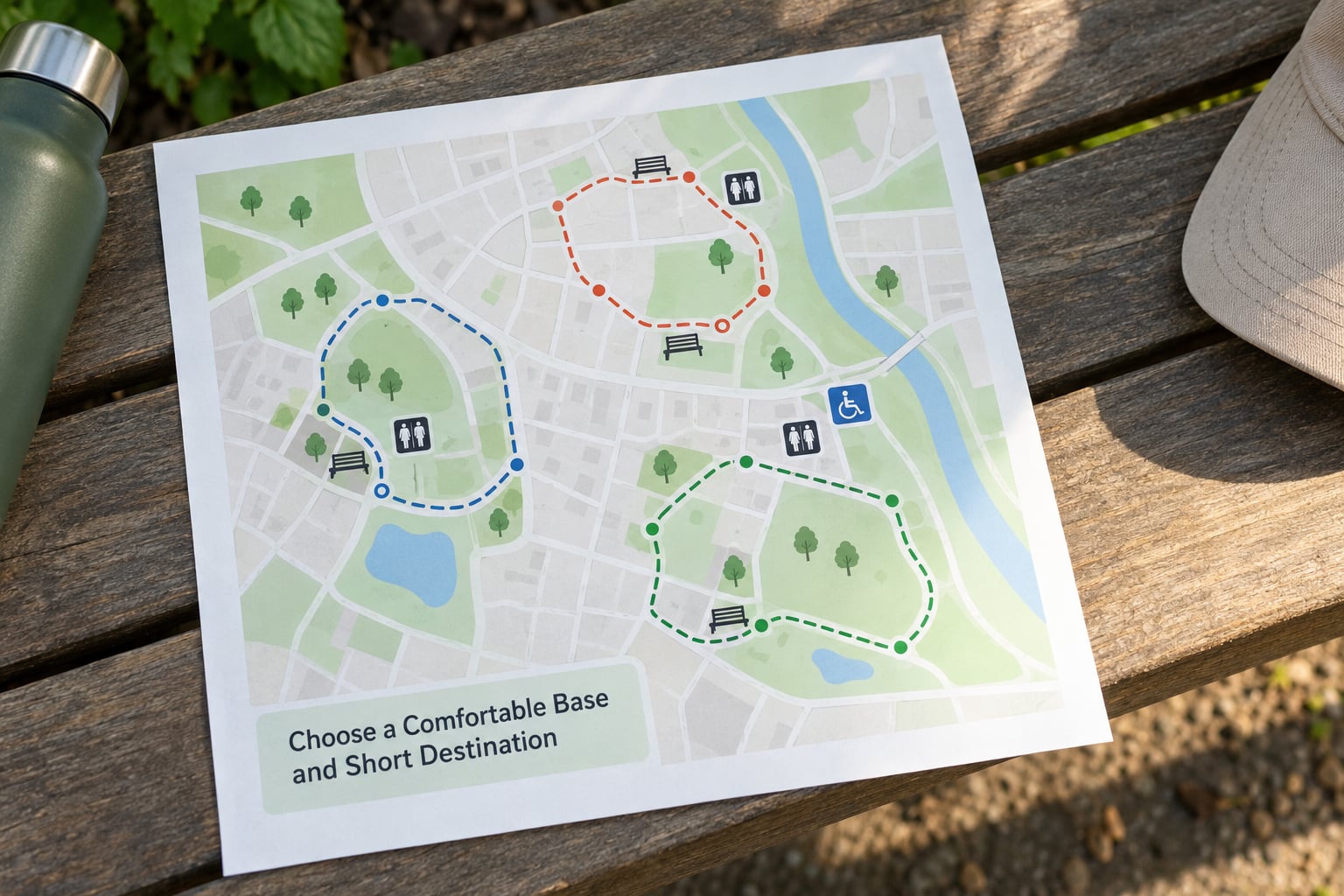
Pick one area and stay there. A city with good transport and step-free attractions works; the same city with a hotel that moves twice beats a brilliant destination everyone is exhausted by on day two.
When comparing how to plan a trip with grandparents and small kids, weight three things above price: transfer length from the arrival point, how quickly you can reach food, and how flat the daily loop is.
Look for accommodation with an elevator or ground-floor rooms, a fridge, a laundry option, and space where a child can sleep separately from an adult who needs rest. Separate sleeping space is the single most reported factor in whether the adults enjoy the trip at all.
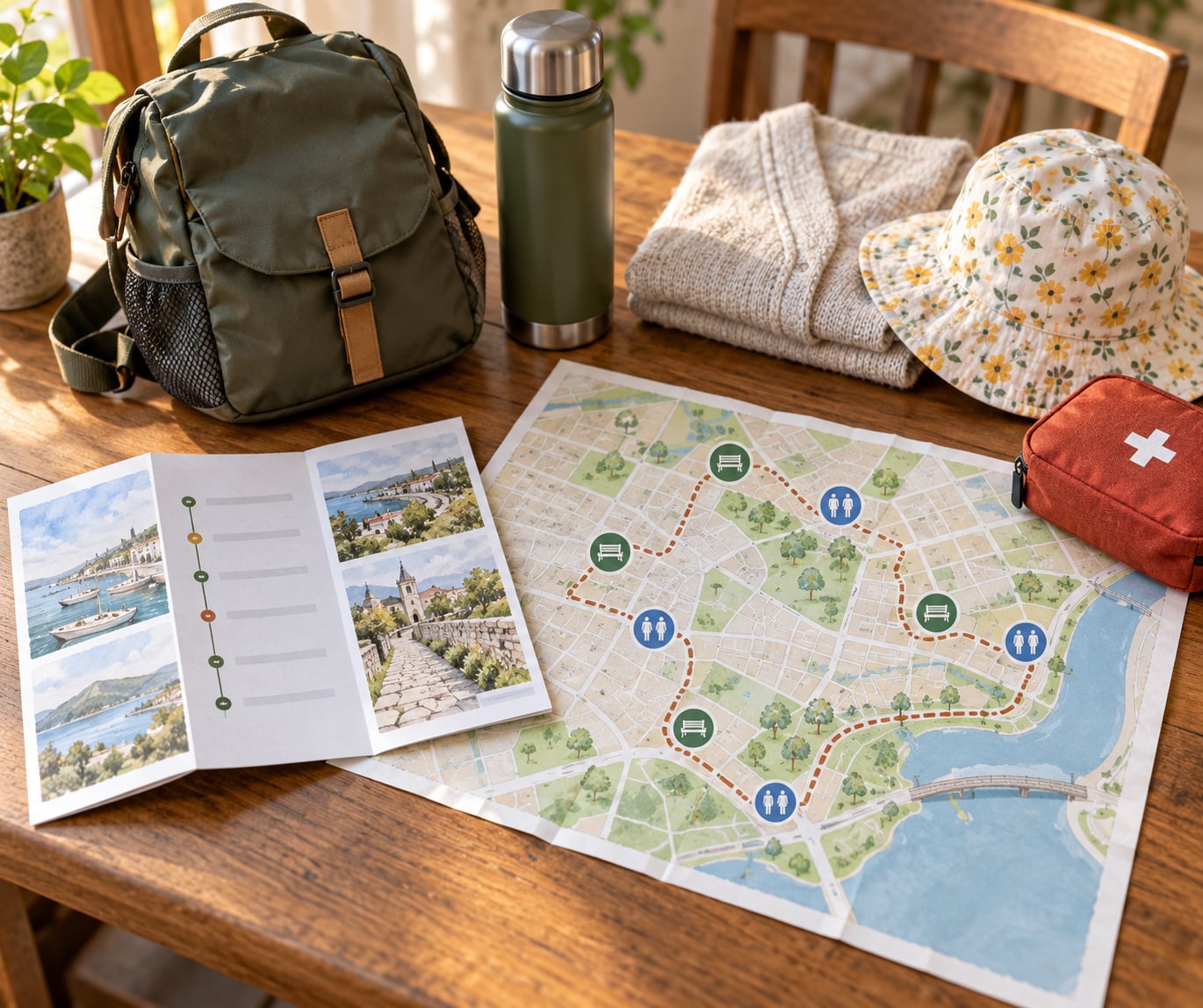
Add a note on the map: where you can sit, where the toilets are, and the one café that is a five-minute walk from the door. That map becomes the fallback plan later.
3. Build Days Around One Main Activity
A workable day has a shape: one morning activity, lunch, a hotel rest period, and one optional evening thing. Everything else is a bonus if energy allows.
Choose anchors that work standing or sitting, with a toilet nearby and somewhere to pause halfway. A market, a small museum, a harbour walk with benches, a cooking class that runs ninety minutes — all of these age better than a full-day coach tour.
Book only the anchor. Confirm opening days, last entry times and seasonal conditions from the operator’s own information before you travel, and check again a few days before. Hours and access arrangements change.
4. Match the Day’s Pace to Everyone’s Energy
Energy is the thing families miscalculate. A toddler can run for an hour then stop dead, and an older adult may manage two hours of walking but not three days of it in a row. Plan the pattern, not the total.
Alternate rather than stack. Active block, then quiet block, then active block, with a rest option in each. Keep departure times flexible: starting half an hour later costs nothing and buys everyone a better morning.
Have two reset options ready before you need them. That means two indoor, low-effort, near-the-base choices, such as a cafe, an aquarium, or simply going back to the room.
For toddlers, a mid-afternoon sleep in a pushchair or a quiet room protects the evening. For school-age children, a scouting task gives them something to do that is not walking. For grandparents, the non-negotiable is a daily sit-down they planned, not one squeezed in while the children eat ice cream.
When needs genuinely do not line up, splitting for a couple of hours beats waiting. Everyone meets back at a set point and time.
5. Plan Transport, Meals, and Breaks
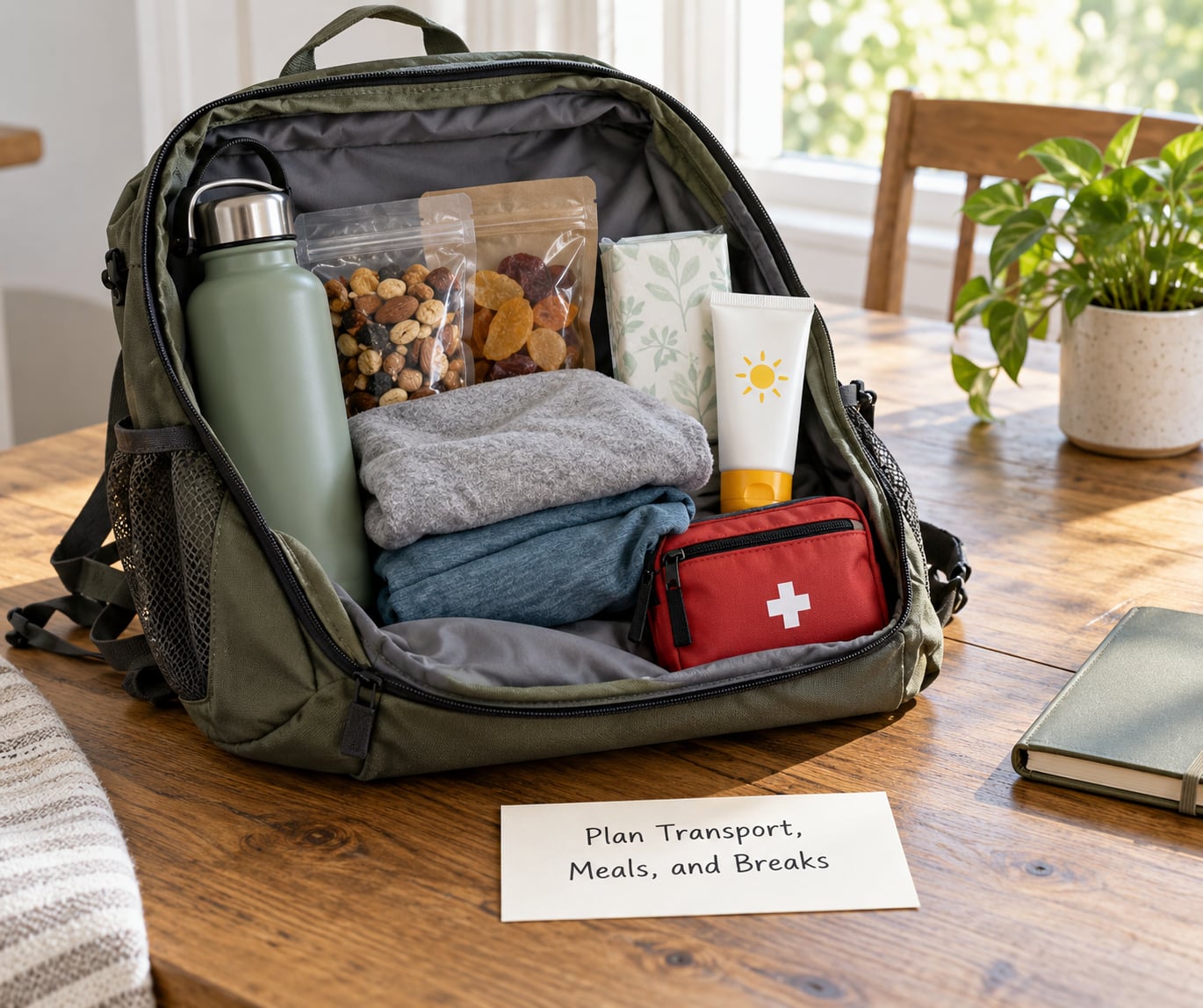
Choose the least exhausting transport option available, not the cheapest or the fastest. A short train beats a long airport transfer with four children and a grandparent carrying a bag.
Confirm accessibility requirements in advance where they apply: wheelchair space, stroller carriage, car seats, a vehicle that does not require steps, or luggage someone else can load.
Meals are where a group with different appetites falls apart, so plan them the same way as activities. Keep a known-good option near the base, and treat anything adventurous as a bonus. Have snacks and water in the day bag at all times; a meltdown at four in the afternoon is usually hunger.
Build regular bathroom stops into the route rather than hoping. That single habit prevents more stress than anything else on this list.
6. Prepare for Health, Safety, and Emergencies
Keep medication in original packaging with a doctor’s name and prescription on the label, carried rather than checked. Share the health summary with every adult on the trip, not just the one who packed the bags.
Know where the nearest clinic is to your base, and save local emergency numbers in everyone’s phone before you arrive. Use child-appropriate sun protection and insect repellent, and keep water rules simple: an adult within arm’s reach of a young child near water, every time, including in the hotel pool.
Confirm your travel insurance covers the group, including pre-existing conditions and any activities you have booked. For individual health questions, medication changes or travel advice for a specific condition, ask a doctor or pharmacist directly.
7. Rehearse the Plan and Keep It Flexible
Walk the first day’s route on a map, then again on Google Maps with street view, and time it at the pace of the slowest person in the group. Add twenty minutes for the things that always take longer.
Assign bathroom responsibility, supervision responsibility and the meeting point in advance. Then share the whole itinerary, including the fallback options, so nobody has to ask what is happening.
Decide your change rule now: rain, a skipped nap, or a sore foot means you drop the evening activity and nobody treats that as a ruined day.
Last check before departure: everyone knows where they are meeting, who has the first-aid kit, and what the next three hours look like.
Common Mistakes
- Overpacking the itinerary. Two anchors a day is plenty. Fix: write the day down before you book anything, then delete from it.
- Choosing attractions that are far apart. Forty minutes of transit twice a day is the thing that breaks the trip. Fix: pick one area and stay in it.
- Ignoring transfer time. Arrival days should have nothing scheduled after the journey. Fix: no bookings on travel days.
- Treating children as autonomous near water or traffic. Small kids do not assess risk. Fix: a named adult is responsible, hands-free, every time.
- Assuming everyone eats the same food. Dietary needs across three generations are normal, not fussy. Fix: pack two known options for every child at every meal.
- Having no identified rest options. If you cannot name three places to sit down within ten minutes, the base is wrong.
- Relying on one adult for all supervision. That adult stops being present for everyone else. Fix: rotate, and name a backup.
- Booking only one sleeping space. Shared rooms turn bedtime into an adult constraint. Fix: separate rooms or a two-bedroom rental.
Frequently Asked Questions
How long should a multigenerational family trip be?
For a group with toddlers and older adults, five to seven days is the practical sweet spot. Long enough to have a slow day and still be novel, short enough that nobody burns out before the end. Under four days leaves no room for a weather day or a sick day. Beyond ten, most groups find the pace becomes the trip rather than the destination.
What kind of hotel works best for grandparents and small kids?
Look for a property with elevator or ground-floor access, a fridge in the room, laundry on site, and a layout that puts every adult within a few steps of the children. Connecting rooms or a two-bedroom rental beat one large room, because separate sleeping space lets the grandparents rest while the small kids are awake. A pool without deep ends helps more than most amenities.
How do you choose attractions that suit both grandparents and children?
Pick places that work standing or sitting, with seating along the route, a toilet close by, and a half-way point to pause. Interactive or hands-on venues hold a three-year-old’s attention longer than a viewpoint. Check step-free access, opening days and how long a visit really takes before you commit, then decide who needs the whole visit and who can join for half of it.
Should families split into separate groups during a trip?
Yes, and often. Two or three hours of split time is enough: the grandparents take a slow route or a museum, the adults take the children somewhere energetic, everyone meets at a fixed point and time. Keep the base small enough that splitting does not mean long transit. Write the meeting point down, because most conflicts come from a shared assumption nobody actually agreed on.
How should you handle meals when everyone has different needs?
Keep two reliable options open at all times for the children, and stop treating the group as one ordering party. A kitchen or a self-catering rental makes it far easier to cover allergies, low-sodium needs and a toddler refusing everything green. Grandparents with swallowing or chewing difficulty need more time and softer options, so eat early or late rather than in the middle of the rush.
Conclusion
The planning sequence that works is short: write down what each age group can actually manage, choose one base where transfers are short and rest is possible, and build each day around a single anchor activity with a real rest period after it. Everything past that is detail, and detail is what you add after the big decisions are made.
So before you open a booking site, do one thing: list each traveller’s needs on paper and put them in front of the grandparents and the children’s caregivers. If you plan a trip with grandparents and small kids around those answers rather than around a destination, the week usually goes better than anyone planned for.