Learning how to travel slowly when you only have a week comes down to one decision: pick a single base and stay there for all seven nights. Everything else falls out of that — one anchor a day, walking distance instead of a transit map, and at least one day you deliberately leave empty. Planning takes roughly two hours before you leave and almost no effort once you are there.
I have run this version of the week enough times to know where it breaks. The failure is never the destination. It is booking three things on a Tuesday and then spending forty minutes of the morning deciding which one to drop.
What follows is the framework I use: seven days, one neighborhood, two anchors worth planning, and a whole lot of ordinary time in between. It works in a big city, a small town, or a coastline, because the structure is about pacing rather than place.
Table of Contents›
- What You Need
- Step-by-Step: How to Travel Slowly When You Only Have a Week
- Day 1: Arrive and settle into one neighborhood
- Day 2: Choose one close-to-base experience
- Day 3: Build a slow neighborhood day
- Day 4: Take one purposeful day trip
- Day 5: Leave a genuine gap in the itinerary
- Day 6: Choose one memorable anchor
- Day 7: Finish without cramming
- Common Mistakes
- Booking three anchors on the same day
- Treating every day as a must-see day
- Constant transit
- Booking only two- and three-night stays
- Refusing to rest
- Staying plugged in the whole time
- Frequently Asked Questions
- How many activities should I plan for a seven-day slow-travel itinerary?
- Can I travel slowly in one week as a solo traveler?
- What should I skip if I only have seven days?
- How do I avoid spending every day in transit?
- Is slow travel practical for families or people working remotely?
- How do I decide what to do when plans do not go as expected?
- Conclusion: Start With One Unhurried Day
What You Need
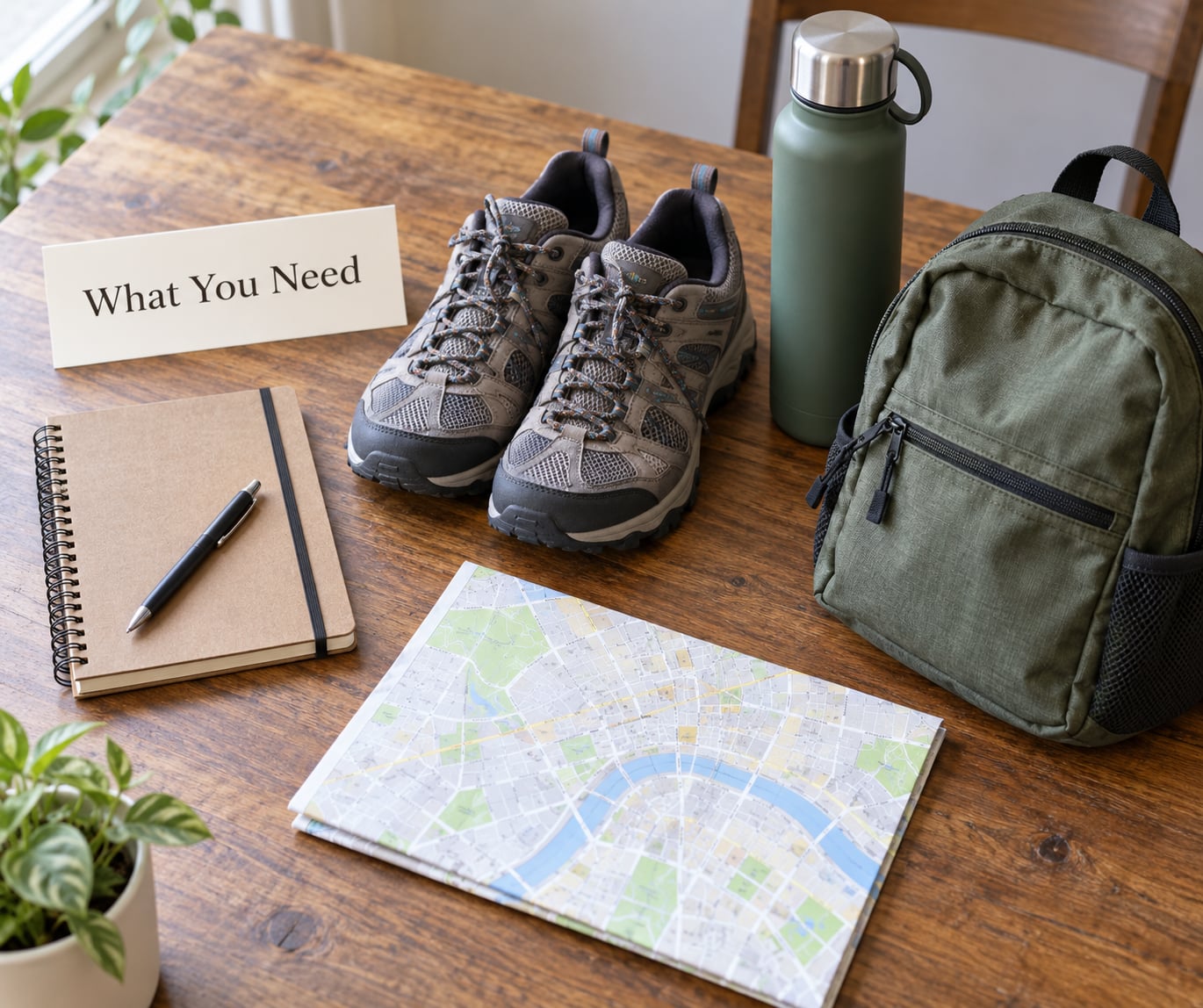
The preparation for a slow week is short, and most of it happens before you book a single room. Five decisions do about ninety percent of the work.
One destination, small enough to cross on foot. This is the filter that saves the trip. If the highlights are spread across an hour of trains, drop it and choose somewhere compact instead. A city where the museum, the market, and the river walk are all within an hour’s walk gives you options on a wet morning; a spread-out region gives you nothing but transit.
A loose structure, not an itinerary. Write down the fixed things only: your arrival day, your departure day, one or two anchors you would regret missing, and one day trip if the distance is short. Everything else stays blank. People on r/slowtravel describe the shift bluntly — the plan stops being a schedule and becomes a shortlist of maybes.
One neighborhood base, booked for seven nights. Most booking sites are tuned for two- and three-night stays, which is exactly why weekly rentals feel hard to find. Look for a furnished apartment with a kitchen and a washer, or a small guesthouse that takes a week. Longer stays usually bring a better nightly rate than three separate short bookings, and a kitchen quietly halves your food spend. Pick a spot on foot, not the cheapest spot on the map — you will save an hour of commuting every single day.
A bag that works for walking and for one unplanned afternoon. Comfortable shoes, a refillable bottle, layers for a day that could turn cool, and nothing that needs ironing. With one base you carry your belongings once instead of once per hotel change, so the bag can be modest.
A short list of things you are willing to skip. Write this down before the trip, not during it. Most people can name three instantly: a famous viewpoint, a landmark on the other side of the city, and a museum that duplicates one you have already seen. Deciding in advance means the day it comes up takes ten seconds instead of an hour.
A notebook helps more than an app. Most of the good decisions on a slow trip come from someone at a café telling you the market is better on a Saturday, and you want somewhere to write that down.
Step-by-Step: How to Travel Slowly When You Only Have a Week
Seven days is short enough that you can hold the whole trip in your head, and that is the real advantage of a week. There is no point arriving rested and leaving depleted. Below is the day-by-day shape I use, and it works whether you are solo, travelling as a pair, or moving with family.
Day 1: Arrive and settle into one neighborhood
Treat arrival day as recovery, not sightseeing. Check in, put your bag down, and walk a fifteen-minute loop around your accommodation to learn where the water is, the bakery is, and the nearest park bench is.
Then eat nearby. Not the famous restaurant you have read about — the place with six tables and a handwritten menu twenty minutes from your door. The reason is simple: you are going to walk past it again tomorrow, and a spot you can return to is worth more than a single perfect meal.
One rule for day one: nothing that requires a ticket slot or a reservation you booked weeks out. Flights are delayed, trains run late, and a rigid first day ruins the mood for the rest of the week. People who describe their first slow trip almost always mention this — they went easy on day one specifically so the rest felt easy.
Day 2: Choose one close-to-base experience
Pick the single thing this destination is genuinely known for — the major museum, the guided cultural walk, the market, the historic district tour — and give it the morning. Not the afternoon, because energy is highest in the morning and museums and markets are at their best then.
Everything around it stays loose. Lunch somewhere within walking distance, then go home or drop your bag. Leave the second half of the day open on purpose. This is the day that most closely resembles a normal holiday, and keeping it half-empty is what stops the week from accelerating.
If the anchor takes three hours, that is fine. Three hours inside one good thing beats two rushed hours each in two places, and you will remember the first one.
Day 3: Build a slow neighborhood day
Stay where you slept. The point of a neighborhood day is that you never cross your base again until the evening.
Build it from three or four stops that sit within a fifteen-minute walk of each other: a café you will want to return to, a small gallery or independent bookshop, a market stall you buy lunch ingredients from, and a green space with benches. Insert a sit-down coffee or tea between each one. That sitting is not wasted time — it is the mechanism that turns four stops into a day you remember rather than a checklist.
Finish near home. A slow trip works partly because your body learns the route. By day three you should be able to walk to your corner shop with your eyes closed, and that familiarity is the thing people miss when they come home.
Day 4: Take one purposeful day trip
One day trip, chosen for a single reason, and returned from in the evening. This is the only day where you leave the base, and it earns its place by doing something the base cannot.
Set a hard limit on the travel time — around ninety minutes each way is the ceiling, and anything longer turns the day into a commute with a photo at the end. Pick one thing to actually do there, plus a meal and a walk. A coastal town where you visit one museum and eat a long lunch beats a three-stop loop of villages.
Have a backup for the return. If the connection is missed or the weather turns, you need to be able to get home without rearranging the evening. Forums of full-time travellers repeat this advice constantly: the day trip is the most fragile part of a short trip, so never make it the day before you fly.
Day 5: Leave a genuine gap in the itinerary
Keep day five blank on purpose. This is the day most people fill, and it is the reason their week feels like a schedule rather than a trip. Forum readers who do this properly describe the first version as physically uncomfortable — you will reach for a booking three times before lunch.
Sleep in. Walk the same street as day three and notice it has changed. Revisit the café. Take a bus somewhere with no reason and get off. Ask someone at your regular table what they would do with a free afternoon, and then do that.
Travelers consistently report that the unplanned days produce the memories they bring home, not the anchors. This is where you learn to travel slowly when you only have a week in practice rather than in theory, and it costs you nothing but the discipline of leaving it empty.
Day 6: Choose one memorable anchor
Day six gets the trip’s remaining energy. One event, one meal, or one outing that the trip is actually for — a night market, a cooking class, a long lunch somewhere you would not find without a recommendation, a performance, a long walk along a coast or river.
Everything around it stays simple. Leave the accommodation after a normal breakfast, do the one thing well, and be back in your neighborhood for dinner. Do not stack a morning attraction onto the front of it. The mistake here is treating day six as the last chance to see everything you skipped, which is how people end a slow week face-down on a train.
Booking this one thing ahead is worth it. Anchors with fixed capacity — a class, a performance, a table — are the only reservations you should make before you leave.
Day 7: Finish without cramming
Keep the last morning close to home. A café you have already been to twice, a walk to somewhere you saw on day one, a slow breakfast, and enough time to pack without rushing.
Do not book a distant attraction for the departure day. Trains run late, and a missed connection at the end of a week undoes the calm you spent six days building. Most people who regret the final day regret it for exactly this reason.
Many travellers add a small ritual: write three lines in the notebook about what the week actually gave you. It sounds precious and it takes ninety seconds, and it is the thing that carries the pace back home with you.
Common Mistakes
Almost every failed slow week fails for one of six reasons, and all six are fixable before you book anything.
Booking three anchors on the same day
This is the number one mistake, and it is usually done in a burst of enthusiasm on a Friday night. Two hours apart looks generous on paper and turns into a blur in practice, because you spend the whole gap travelling between them. Fix it with a hard rule: one anchor per day, and nothing within two hours of anything else.
Treating every day as a must-see day
Six full days out of seven is a fast trip with extra sleep. The week only feels unhurried if something is genuinely skipped, which is why the skip list belongs in your notebook before you leave. Say it out loud on day one: you are not doing the whole city.
Constant transit
Staying in one place is the entire mechanism. Every time you move bases you lose an hour to luggage, two hours to settle in, and the entire day around it. If a destination needs two transfers to reach the main area, choose a different one.
Booking only two- and three-night stays
Most search results default to exactly the pace you are trying to escape. Go into the filter and set seven nights, or look for weekly and monthly rates on a rental site. You will often find a better nightly rate than three separate bookings, plus a kitchen and a washer.
Refusing to rest
Rest is not a reward for finishing your plans, it is one of the plans. Travellers who skip the idle day usually come home tired in a way that has nothing to do with how much they saw. If you want a simple diagnostic, ask on day four whether you would be disappointed to go home tomorrow. If the answer is no, you have over-planned.
Staying plugged in the whole time
Working through lunch on a travel day turns a week into an extension of your desk. Pick one window — three hours is enough to start — and close it. Even a partial digital detox noticeably changes how a day feels, and it is the cheapest change on this list.
Frequently Asked Questions
How many activities should I plan for a seven-day slow-travel itinerary?
Plan two anchors for the whole week, plus one day trip if it is close by. Everything else stays a maybe. Most people who try to fit three scheduled things into a day end up rushing all three and remembering none, while travellers who plan two report the opposite. Write your anchors down and leave every other hour unassigned.
Can I travel slowly in one week as a solo traveler?
Yes, and a week is often easier alone because nobody is waiting for you at the other end of a plan. The usual advantage is that you can change your mind mid-morning without negotiating. Book a base with a kitchen, tell one person at home where you are, and keep one fully open day in the middle of the week.
What should I skip if I only have seven days?
Skip anything more than ninety minutes from your base, anything you have already seen in another city, and any viewpoint you can reach closer to where you sleep. Write a three-item skip list before you leave so the decision takes seconds when it comes up in the moment. That list is where most of the calm comes from.
How do I avoid spending every day in transit?
Stay in one place for all seven nights and limit yourself to one day trip. Choose a base you can reach the highlights from on foot, and set a ninety-minute ceiling each way for the single excursion you take. Every change of address costs about an hour with luggage plus the settling-in time on both sides, so even one extra move quietly costs you half a day.
Is slow travel practical for families or people working remotely?
Both are workable, with adjustments. For families, the home base model removes constant transitions, which is usually what causes meltdowns rather than the walking itself. For remote workers, treat the week as your one break from notifications: pick one three-hour window a day for messages and stay out of it otherwise, and confirm the accommodation has reliable internet before you commit.
How do I decide what to do when plans do not go as expected?
Use the buffer rule: if something is cancelled or the weather turns, you already have an indoor version and an outdoor version of that day decided in advance, so nothing needs thinking. If a plan fails with no spare hour, drop it entirely rather than compressing it. A missed anchor is a small disappointment; a re-planned day is a tired one.
Conclusion: Start With One Unhurried Day
A week is enough to travel slowly, but only if you stop trying to see everything. The whole method fits in three moves: choose one neighborhood and book all seven nights, plan two anchors instead of seven, and protect one day completely.
Do those three things and the rest takes care of itself. Start tonight with the skip list, and you will find that you come home rested, a little more observant about where you live, and with at least one story that did not come from a list.