How to plan a romantic weekend getaway on a budget comes down to four levers: stay close enough that transportation stays cheap, travel on flexible dates, put most of the money into one good night of lodging, and pick one paid experience as the highlight. Decide the total you are willing to spend before you look at anything, and the rest gets easier. Most couples can do two nights for two comfortably on a few hundred dollars, plus a buffer.
The part that trips people up is planning backwards. They pick a destination first, find the cost, and then hope the total works out. Reversing that order is what makes the trip feel generous instead of tight. This guide walks through the whole process in six steps, roughly an evening of work plus a few browser tabs.
Table of Contents›
- What You Need to Plan a Romantic Weekend Getaway on a Budget
- Step-by-Step: How to Plan a Romantic Weekend Getaway on a Budget
- 1. Set the total budget and decide what matters most
- 2. Choose a destination that limits transportation costs
- 3. Pick dates that improve both price and atmosphere
- 4. Find a romantic stay that is worth the price
- 5. Build affordable dates and one special experience
- 6. Confirm the plan, protect the budget, and pack lightly
- Common Mistakes
- Frequently Asked Questions
- How much should two people spend on a romantic weekend getaway?
- What is the best way to find a romantic budget destination?
- Should couples stay in a hotel, inn, or rental?
- How can couples have a romantic dinner without spending too much?
- Is it better to book a weekend getaway in advance or at the last minute?
- Conclusion
What You Need to Plan a Romantic Weekend Getaway on a Budget
You need five things settled before booking anything, and none of them involve money yet. Have all five written down in one place, because every later decision gets checked against them.
- A firm total ceiling for the two of you combined, including everything
- A destination inside a three-hour drive of home by car, train, or a single short flight
- Two possible weekends you can both take off, roughly a month apart
- Two nights of lodging you can hold with free cancellation
- One paid anchor experience — the one thing you will both remember
Now split that ceiling before you go shopping. These shares are typical US ranges for a two-night couples trip and they shift by region and season, so treat them as a starting shape rather than a quote.
- Transport, 25–30%. Fuel, tolls, parking, or a short flight for two.
- Lodging, 35–40%. The biggest single line, and the one that rewards planning.
- Food, 20–25%. Two of the three days eaten in or near the room.
- Activities, 10–15%. Your anchor experience plus a small cash buffer.
- Buffer, 10%. Non-negotiable. It absorbs the extra coffee, the cab home, the parking garage.
Hold that shape in your head. If the lodging share of your total looks smaller than a third, you are probably dreaming about a place you cannot afford to park at or feed yourself in.
Step-by-Step: How to Plan a Romantic Weekend Getaway on a Budget
Six steps take you from an empty browser tab to a confirmed itinerary. Work them in order, and do not skip ahead to the destination search, because that is the step people get wrong.
1. Set the total budget and decide what matters most
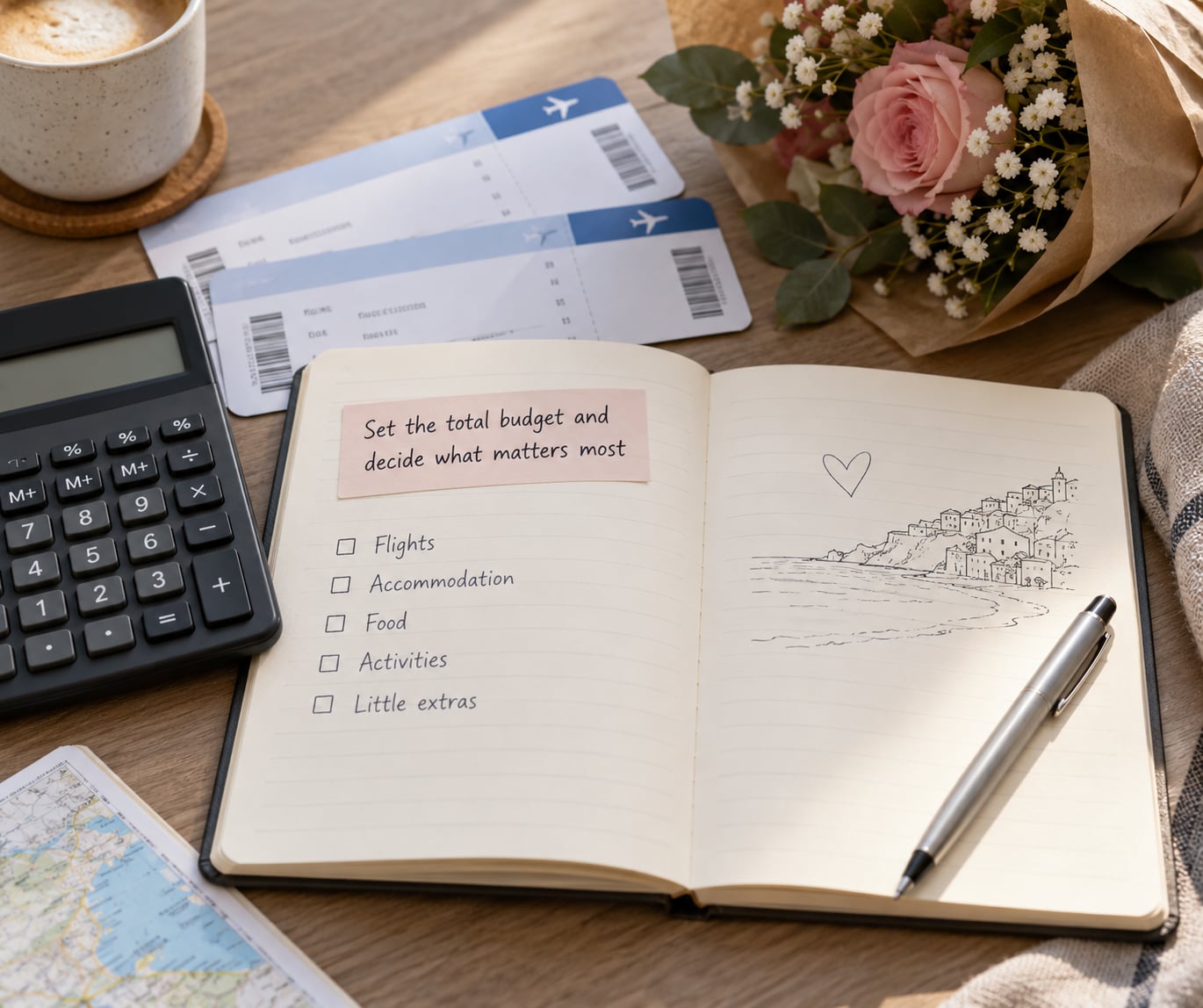
Pick a number you can actually fund this month, not an aspirational one. Then name the two things that would make the weekend feel like a real break. Usually they are a good room and a good meal, or a good room and the one activity you have been talking about all year.
Your splurge should be one line item, not a general attitude. Spending an extra 40 percent on a single night of lodging in a nicer neighborhood beats spreading small upgrades across every meal, because you remember where you slept and you do not remember the dessert.
Read the budget back to yourself before you commit. Add the shares from the section above, add the buffer, and see whether the total you arrived at is the total you wrote down. If it is higher, cut transport or dates before you cut the stay.
2. Choose a destination that limits transportation costs
Distance is the cost driver people forget. A four-hour drive each way costs fuel, tolls, and eight hours of the weekend you paid for. A three-hour radius keeps the drive short enough that it feels like part of the trip rather than a tax on it, which is also the constraint travelers mention most often when they describe what actually works.
Compare three or four candidates on the same five measures: total door-to-door time, fuel or rail cost, parking cost at the destination, typical attraction prices, and how busy the place is on your dates. A slightly longer drive to a town with free parking and cheap meals often wins over a marginally closer place with paid garages and crowded restaurants.
When transportation is expensive, change the route rather than the trip. Look at a quieter secondary town two stops away, or a valley town off the main corridor where parking is free and rooms sit half empty. Same region, same weather, a fraction of the transport cost.
3. Pick dates that improve both price and atmosphere
Run your two candidate weekends against a flight or lodging search and take the better of the two. Moving a weekend by two or three days usually changes prices more than any other lever you control.
Travel in the shoulder season — the weeks just before and after the busiest stretch. You get reduced rates and you get fewer queues, and in most places you still get decent weather. Avoid the highest-demand periods entirely; the discount never compensates for standing in a line you chose.
Check the local event calendar before you commit. A town hosting a major festival, a race, or a big conference will price like a destination event, and rooms disappear weeks ahead. Check seasonal hours too, because an attraction you are counting on may close on off-season weekdays.
One caveat worth stating plainly: cheaper dates that feel wrong are not savings. If the only low rate falls in a season you both dread, pay a little more and pick better dates. The point of the budget is a better weekend, not a cheaper one you resent.
4. Find a romantic stay that is worth the price
Compare the total stay cost, not the nightly rate. Before you fall for a price, add the destination or resort fee charged per night, parking, the local tax, breakfast if it is not included, and any cleaning or resort minimum. A room that looks a third cheaper can land within a few dollars of the place you actually wanted once the extras are added.
Then rank what you are paying for. Location and comfort matter most, because a walkable neighborhood removes two daily costs at once: transportation and the urge to buy lunch. A room with a decent bed, blackout curtains, and coffee equipment beats a bigger room in a lot you would rather drive through twice.
A stay in a residential neighborhood, an inn a short walk from the main street, or a vacation rental with a kitchen usually wins on value. The kitchen matters more than couples expect. Two breakfasts and one dinner cooked in the room quietly buys back the entire anchor experience.
Check the cancellation terms before you commit, and screenshot them. Free cancellation until a set date is the cheapest insurance you can buy, and it costs nothing to keep.
5. Build affordable dates and one special experience
Pick one paid anchor and let the rest be free or nearly free. This is the rule that makes a budget trip feel generous: you are spending on a moment, not on entertainment all weekend.
The free material is better than most people realize. A walk along the waterfront at sunset, a farmers market, a public garden, a viewpoint, a small gallery, a long lunch at a cafe, a scenic byway drive with two planned stops. These cost little and they are the parts people describe afterward.
Shape the anchor around what you actually enjoy. Food-focused couples book one tasting or one chef-led dinner and eat simply the other meals. Outdoors couples buy one guided outing — a boat, a trail permit, a paddle session — and free-spirited the rest. Arts couples reserve one show or one special exhibit and wander the rest. Design-minded couples tour a distinctive building or a market and keep the budget for a single great meal.
Two habits make the cheap moments look intentional. Set one rule for the weekend: phones face down at dinner. And do the thing slightly early — arriving before crowds turns an ordinary walk into a walk that feels like it belongs to you.
Confirm hours and current prices for anything you plan to pay for before you leave. Seasonal schedules change, and discovering a closed door on a Saturday afternoon ruins a day more reliably than a bad rate does.
6. Confirm the plan, protect the budget, and pack lightly
Run the final checklist before you book the last thing. Transport confirmed. Lodging confirmed with the cancellation date noted. Anchor experience reserved or timed. Two dinners booked. Backup plan for rain or a closed attraction. Everyone knows the total.
Then set the trip spending limit. Decide what you are both willing to spend beyond the bookings, put it in cash or on a separate card, and stop when it runs out. Couples who agree on this in advance rarely argue about money on the way home.
Download offline maps and a copy of your reservations. Cell service drops in exactly the places you want to be looking at.
For two nights, pack less than you think. Two tops each, one warm layer, comfortable shoes for real walking, toiletries, any medication, and one thing that makes the room feel like yours — a bottle, a candle if the place allows it, a book. If you need a suitcase, you have probably overpacked; a weekend fit in a single bag for two is a good rule of thumb.
Common Mistakes
Booking a room that charges a destination fee. Read the total before you fall in love with the rate. A per-night resort or destination fee can quietly add a substantial share to a two-night stay, and small-town rooms rarely charge one.
Assuming Friday night prices are normal prices. The first night of a weekend carries a premium in almost every market. Shifting to a Thursday departure or a Sunday return is one of the cheapest savings available and rarely hurts the mood.
Driving and parking in a walkable town. Pay for downtown garages once and walk, or park your car for the whole weekend. One parking trip with a big tip can undo a nice dinner.
Overbooking the itinerary. Three booked activities in one day leaves no room for the conversation that makes a weekend feel like a break. One anchor, one loose block, and a plan that can absorb a delay.
Ignoring what the season does to hours and crowds. Off-season means reduced hours, closed restaurants, and thinner staffing. Check what is actually open before you build a day around it.
Skipping the cancellation terms. A non-refundable room locks you into dates you cannot change, which turns one life event into three ruined days. Free cancellation costs nothing to hold.
Forgetting the small touches. Somewhere along the way, couples stop making the trip feel like a gift. A note left at the room, a dessert from a bakery nearby, the coffee set out early, does more work than an expensive add-on.
Two final tips. Split the planning so neither person is managing everything, and agree on one thing you both want before any browsing begins. And if one of you has more room in the budget, decide openly which line item carries the difference, rather than letting it surface at the restaurant.
Frequently Asked Questions
How much should two people spend on a romantic weekend getaway?
Two nights for two works at roughly 300 dollars total on the low end, around 500 in the middle, and about 1,000 for a roomier version, before anything unusual. The split is steadier than the total: lodging takes the largest share, then transport, then food, then one paid activity, plus a ten percent buffer. Figures vary by region and change over time, so set your own ceiling first and work backward from it.
What is the best way to find a romantic budget destination?
Start from drive time instead of a destination name. List four places inside a three-hour drive and compare them on total door-to-door time, parking, typical attraction prices, and how busy they are on your dates. Romantic is usually a function of atmosphere — a walkable main street, a good bakery, a viewpoint within walking distance — and those places are rarely the famous ones. Search for a town with an evening market and free parking and you will usually find three weekends in a row that work.
Should couples stay in a hotel, inn, or rental?
A hotel gives predictable value and free cancellation, but check for destination fees, parking, and breakfast before comparing totals. An inn or boutique bed and breakfast usually delivers more atmosphere for the same money, often with breakfast included. A vacation rental with a kitchen is the strongest value when you cook even two meals, because it quietly replaces a restaurant night. For a first trip on a firm budget, an inn in a walkable neighborhood is the safest romantic pick.
How can couples have a romantic dinner without spending too much?
Spend on one dinner and treat the rest of the day well. Book the nicer dinner for the evening you arrive, when you are too tired to cook, and keep the second evening simple with a grocery stop and food at the room. Late lunches, bakery runs, and a picnic on a viewpoint cost a fraction of a tasting menu and photograph just as well. Set one rule for the meal, such as phones face down, and it will feel more intimate than an expensive room with the phones out.
Is it better to book a weekend getaway in advance or at the last minute?
Book roughly four to eight weeks ahead for weekend leisure travel, which usually lands you in the lower half of the range. Peak weekends, holiday periods, and destinations with one anchor event need much earlier planning, sometimes months. Last-minute deals exist, but they cluster in shoulder season and unpopular weeks, and the room you want is often the one gone. Whichever route you take, choose lodging with free cancellation so you can lock a rate early and still adjust the dates if something better appears.
Conclusion
To plan a romantic weekend getaway on a budget, set the ceiling first, then pick a destination inside a three-hour drive and two flexible dates, spend your money on one good room and one memorable experience, and fill the rest of the weekend with free moments around them. That order is the whole method. Everything else is detail.
Do one thing before you close this page: write down your total and your two candidate weekends. Then the next decision is a destination, and the trip stops being an idea. Last updated October 2026.