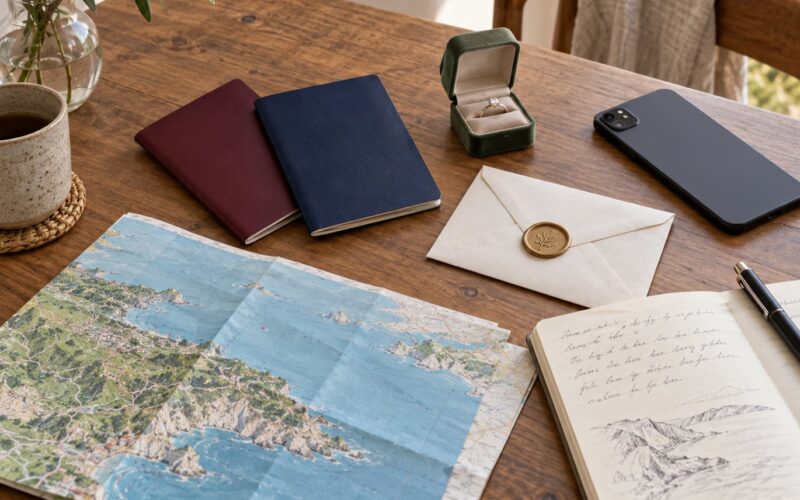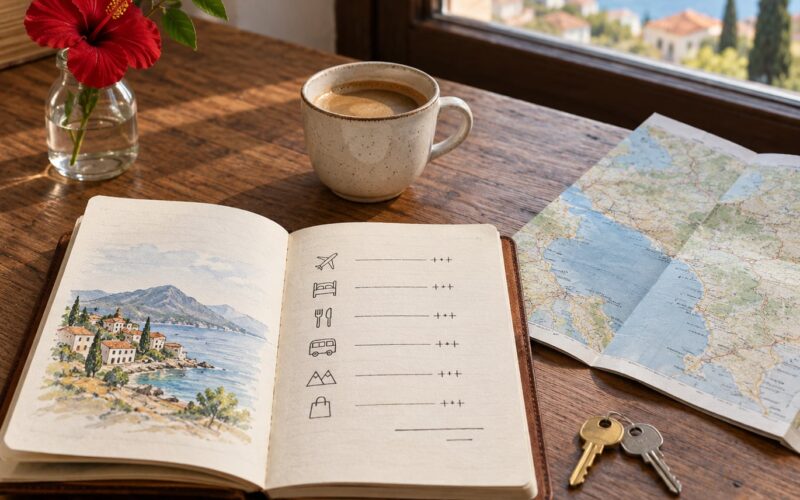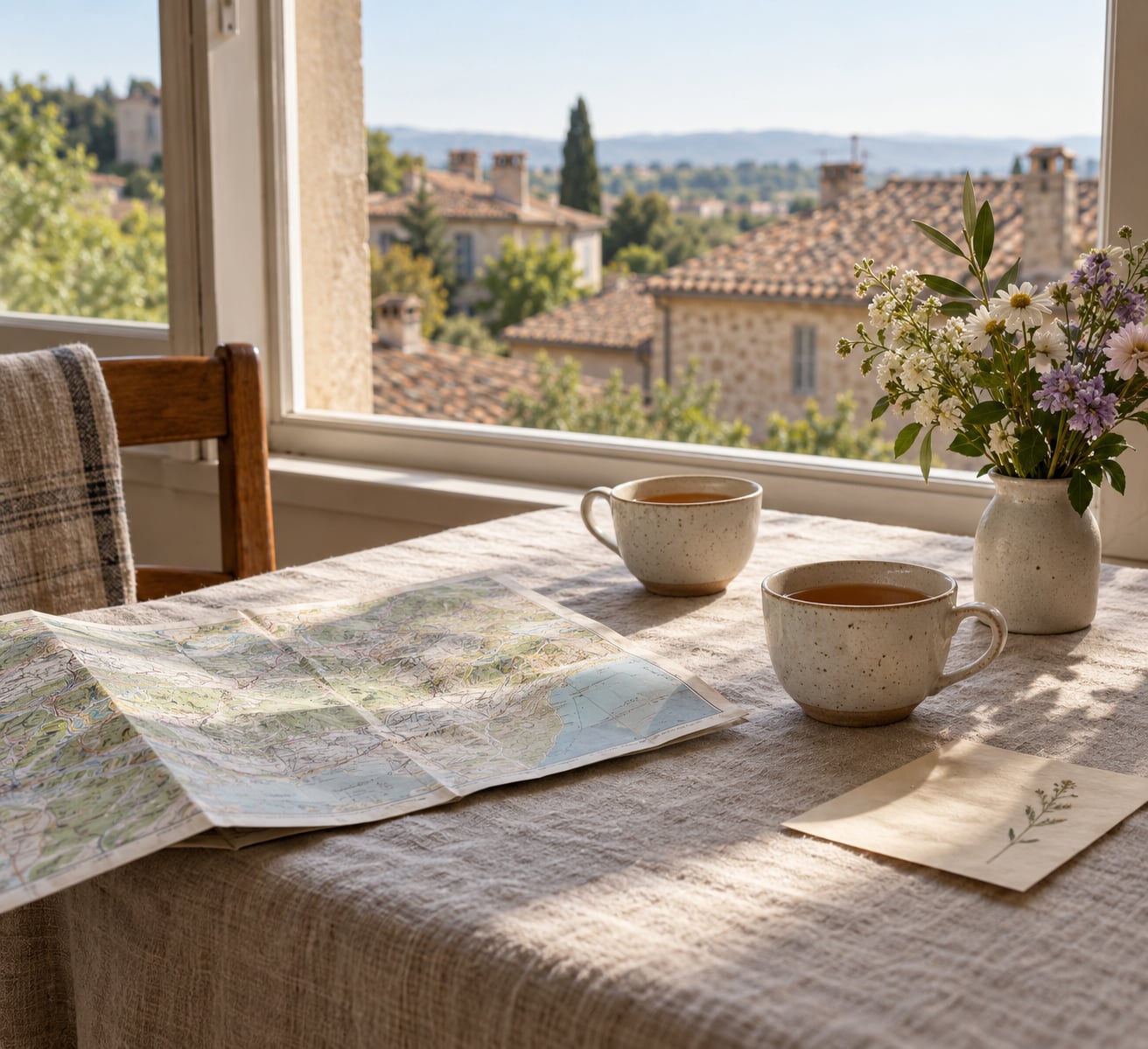
The default anniversary trip is easy to describe because so many couples book it: a resort weekend, a wine-country afternoon, a crowded landmark in season, a long dinner followed by breakfast in bed. Learning how to plan an anniversary trip that is not cliché means reversing the order. You pick the memory you want to make first, then the trip type, then one anchor experience, and only then the destination.
A non-cliché anniversary trip is one built around something specific to the two of you: a shared interest, a place with personal history, or a skill you learn together, rather than a standard romance package that thousands of couples buy each year.
That single shift changes everything downstream. It is also the reason a four-day local trip often outranks a two-week flight, and why the same city can feel cliche or intimate depending on what you do on Thursday morning. The framework below takes about an evening of work, then two or three weekends of booking, and it works whether you have two days or two weeks.
Table of Contents›
- What You Need
- Step-by-Step: How to Plan an Anniversary Trip That Is Not Cliché
- 1. Start with the memory you want to make
- 2. Choose a setting that reflects your relationship
- 3. Build the trip around one shared interest
- 4. Plan one memorable experience, not a checklist
- 5. Add unstructured time – an anniversary trip that is not a checklist
- 6. Book the right pieces at the right time
- 7. Add one personal detail
- Common Mistakes
- Frequently Asked Questions
- What makes an anniversary trip feel personal?
- How far in advance should couples book an anniversary trip?
- Should we plan every day of an anniversary trip?
- What are good non-cliche anniversary trip destinations?
- How can we celebrate an anniversary without making it feel expensive?
- Should an anniversary trip include surprises?
- Conclusion
What You Need
Before you open a booking site, get these six things clear. Couples who skip this step end up arguing about hotels in a browser tab at midnight, and the trip never gets past logistics.
The memory you want to make. Not the destination, the outcome. Reconnecting, resting, exploring, celebrating, or trying something neither of you has done. One sentence, written down, that you both agree with.
A budget you can say out loud. A real number and a real ceiling, plus the shape of where the money goes: transport, stay, food, experiences, and a buffer for the taxi you did not plan. One of the biggest savings in this whole approach comes from moving money between those buckets rather than cutting all of them at once.
Your travel style. Some couples want a bed they do not leave for two days. Others get restless after 36 hours indoors. Write down how much structure feels restful and how much feels like a missed opportunity, because step 5 depends on it.
The shared interests, honestly listed. Cooking, water, mountains, museums, secondhand bookshops, live music, bread, hunting for good noodles at 1pm. Two people who pick a destination from a list instead of from their own habits end up with a nice trip that belongs to someone else.
How many days you actually have. The number of free days, not the number you wish for. A long weekend and a full week want completely different trip types, and pretending otherwise is how people book a week and enjoy three days of it.
Constraints and who plans. Mobility, dietary needs, one partner’s work blackout, visa lead times if you leave the country, plus a quick decision on whether this is a joint plan or one partner’s surprise. Agreeing that now saves the trip later.
Step-by-Step: How to Plan an Anniversary Trip That Is Not Cliché
1. Start with the memory you want to make
Ask what you would want to still be talking about in five years. For some couples the answer is a long unhurried breakfast after years of eating at a table between a school run and a screen. For others it is learning to cook something properly, or a long walk in country that has nothing on it to do.
Write that sentence where you both can see it and check every later decision against it. If a booking does not serve the sentence, cut it, even if it was a good deal.
You will know this step worked when a friend asks what you are celebrating and you can describe the trip in one specific sentence rather than naming a place.
2. Choose a setting that reflects your relationship
Pick the setting from your shared interests, not from the list of places everyone recommends. A neighborhood stay in a city you both like suits couples who talk about food and want to wander without a schedule. A mountain or lake house suits couples who decompress by being outside. A rural area, a small coastal town, and a second city you have never visited all suit couples who like novelty more than rest.
Couples who hate tourist traps usually do not need a remote destination. They need the same region as everyone else, on a weekday, in a part of town that was not built for visitors. That substitution fixes the cliche problem more often than flying further does.
Test the choice with one question: could you describe a normal Tuesday in this place together? If the only thing to do is what you paid to do, the setting is doing nothing for you.
3. Build the trip around one shared interest
Anchoring the trip on something you both genuinely do turns scenery into background. A food trip around a regional ingredient, a walking route with a destination at the end, a pottery studio day, a small music festival in a town nobody stages it in, or a region known for one thing you have never tried.
Then add only two or three supporting activities, and make sure at least one of them uses the same interest in a different way. Three days of cooking should not be three days of cooking; follow it with a market where you buy what you cooked.
The check: a good test is whether a stranger could describe your trip from your answer without hearing the destination name.
4. Plan one memorable experience, not a checklist
One anchor experience carries the trip. Everything else is supporting cast. The anchor is the thing you will describe when someone asks, so it needs to be a little bit difficult to book, which is exactly why so many couples never do it.
Options that work well: a private or small-group visit somewhere that normally requires a large group, a half-day workshop with someone who does this for a living, a guided walk through a neighborhood you would not have found, a long table dinner cooked by a local, a morning market trip with a person who knows the vendors, a sunrise or sunset route with a picnic.
Book the anchor first, then build the rest of the days around its timing. And write a Plan B before you go, because a workshop with a fixed participant count, an outdoor route, and a seasonal tour all depend on conditions you cannot control.
Our 2026 rule of thumb: if an experience needs four or more people to run, call the operator and ask how many are booked. Fewer than six is usually plenty.
5. Add unstructured time – an anniversary trip that is not a checklist
Plan the days around the anchor, then leave the edges empty. Couples who fill every hour come home tired and remember logistics; couples who leave half the itinerary open come home with the stories that were never supposed to happen.
Unstructured time is not wasted time. It is the hour you both sleep in, the walk with no destination, the dinner that takes three hours because nobody is watching the clock, the afternoon you spend reading while the other person naps. Ask a handful of people who have taken an anniversary trip what they still remember, and the answer is nearly always ordinary and unhurried rather than the scheduled spectacle.
There is a practical way to do this. Block the anchor, one meal a day, and the transfers. Treat everything else as unclaimed on paper, and agree in advance that nobody is allowed to fill it. If one partner wants a packed day and the other wants an empty one, split the difference on the day itself rather than compromising the whole trip.
6. Book the right pieces at the right time
Book in this order: the anchor experience, then the stay, then transport, then meals. The anchor has the fewest options and the longest lead time, so it constrains everything else. Once it is fixed, lodging searches become much easier because you know the dates and the neighborhood you actually need.
Lead times worth knowing. Peak-season stays with character run out months ahead, so aim for three to four months for summer and holiday weeks, and six to eight weeks for shoulder-season and off-peak trips. Anchor experiences with capped group sizes can fill faster than hotels, sometimes within two or three weeks in summer. Domestic rail and short-haul fares are worth locking six to eight weeks out; long-haul often rewards booking three to five months ahead. Every one of these is a range, not a deadline, so treat them as starting points.
Confirm a few things directly rather than trusting a listing page: whether the anchor runs on your date, whether the stay has stairs or a walk-up, whether the neighborhood is quiet on the night you arrive, and whether a special occasion note at check-in is possible. A short, specific request gets a better answer than a generic one.
Leave some things open. Booking the second dinner of the trip in advance is usually unnecessary, and a reservation you cannot move is a small commitment that quietly makes the trip feel like a schedule.
7. Add one personal detail
One detail does more than five. It can be an object from your history, a meal you shared on a specific night, a playlist for the drive or the flight, a note tucked into a bag, or an ingredient from the place you are visiting that has meaning to one of you.
The test for a good personal detail is simple: it would mean nothing to a stranger, and everything to the two of you. That is the difference between a personal touch and a gimmick. Keep it light. If a detail is going to make one of you self-conscious, it is doing more work than it should.
Common Mistakes
Filling every hour. The fix is structural: book the anchor and one meal, and leave the rest of each day unclaimed on paper. Enforce it for the first morning, because the rest of the trip will follow.
Choosing a destination because it photographs well. Social-media trips are planned around an image from a weekend that had everything perfect. The fix is to reverse it: pick the experience, then find the nearest place that runs it, and only check the visual appeal last.
Spending only on expensive things. A single splashed-out dinner is not a personality, and it is the most forgettable part of most trips. Spread the money across the stay, the food, and the anchor, which is where the memory is actually made. Where a couple wants to save, the stay is usually the place to save, since character and comfort come from the room and the neighborhood, not the thread count.
Copying another couple’s trip. The friend whose trip you admired had their own history, weather, and taste. Copying the destination and not the reason produces a trip that feels borrowed. Copy the method, not the place.
Trying to make every hour meaningful. Couples who insist the museum, the hike, the dinner, and the sunset all mark an anniversary end up performing the whole weekend. Pick one thing that is the anniversary, and let the rest be a normal good day. That is far more restful and it is what people remember.
Planning a full surprise when you are not a planning person. A surprise trip done badly is a week of logistics on top of a holiday. Keep the destination or the anchor as the surprise and agree the practical parts in advance: dates, rough budget, who is doing what, and how the logistics get paid for without the other partner noticing.
One planner, zero input. The surprise planner is choosing for someone who cannot say no, which is a strange way to be generous. Lock the frame, then leave the inside open, and tell the other person roughly how many days are unclaimed so they can bring ideas for those.
A quick self-check before you book: name the trip in one sentence that contains a specific detail. If that sentence could describe any other couple’s weekend, keep working on it.
Frequently Asked Questions
What makes an anniversary trip feel personal?
It feels personal when the trip contains something only the two of you could have done: a place with history, an interest you both chase, or a skill you learn for the first time. Name the memory you want first, then pick the trip type and one anchor experience. If a friend could describe your weekend and never guess it was yours, the trip is still generic.
How far in advance should couples book an anniversary trip?
For peak-season stays, start looking three to four months ahead, ideally beginning with the anchor experience. Shoulder-season and off-peak trips need more like six to eight weeks for the stay, but small-group activities with capped numbers can sell out in a few weeks during summer. Transport usually settles six to eight weeks out for domestic travel and three to five months for long-haul. Book the anchor first because it constrains everything else.
Should we plan every day of an anniversary trip?
No. Plan the anchor, one meal a day, and the transfers, then leave the rest unclaimed. The unplanned hours are where most of the good memories actually come from, and a fully scheduled weekend leaves both of you tired. If one partner prefers structure and the other prefers freedom, split the difference within a day rather than compromising the whole trip.
What are good non-cliche anniversary trip destinations?
The best answer is a place that supports the interest you already share, not a famous list. A food region, a coastal town with a good market, a second city you have never visited, a rural area within a few hours, or the same popular destination visited on a weekday in a neighborhood built for residents rather than visitors. Specificity, not distance, is what makes a trip feel personal.
How can we celebrate an anniversary without making it feel expensive?
Spend differently rather than spending more. Put the money into the stay and the anchor experience, keep meals simple and local, and choose a shoulder-season weekday so lodging costs less. A home-cooked celebration on the trip, a free museum afternoon, or a long walk on a route you planned yourself carry more meaning than an expensive evening, and cost very little.
Should an anniversary trip include surprises?
Yes, but keep them small and keep them honest. A surprise destination or anchor experience works well when the practical details are agreed in advance, so nobody is managing logistics on top of the surprise. A surprise that depends on secrecy for weeks tends to leak. One personal detail, revealed at the right moment, is usually better than a large reveal.
Conclusion
Start tonight, before any destination enters the conversation. Write down one sentence describing the memory you want this trip to hold, and one describing how you want to feel on the last day. Everything after that, the trip type, the anchor, the booking order, and the open afternoons, follows from those two lines.