Learning how to visit a tea farm as a tourist comes down to four things: a booked visit, a season that matches what you want to see, closed shoes and sun protection, and a willingness to follow the rules of a working farm. Most structured visits run 45 minutes to two hours, and a good half of that time is spent standing in the field or at a tasting table rather than on a bus.
I have planned enough of these days around tea country trips to know the two things visitors regret most: turning up unbooked, and arriving in the wrong month expecting plucking that is not happening.
Below is the framework I use, from picking an experience to buying tea worth taking home. It works whether you are a day tripper from a city or staying a week in a tea region.
Table of Contents›
- What You Need to Visit a Tea Farm as a Tourist
- Choose the Visit Type Before You Book
- Your Packing List
- Step-by-Step: How to Visit a Tea Farm as a Tourist
- 1. Choose the Right Tea-Farm Experience
- 2. Check the Season and Book Ahead
- How the Visit Fits Into a Day
- 3. Confirm the Practical Details
- 4. Follow Local Etiquette on Arrival
- 5. Learn How Tea Is Grown and Processed
- 6. Taste with Attention
- 7. Ask Useful Questions and Buy with Context
- Common Mistakes
- Frequently Asked Questions
- How long does a tea farm visit usually take?
- Do I need to book a tea farm visit in advance?
- What should I wear and bring to a tea plantation visit?
- Are tea farm tours suitable for children and visitors with limited mobility?
- Can I pick tea leaves or take photographs on a tour?
- What happens if it rains, and can I buy tea to take home?
- Conclusion: Start With a Booked Tasting
What You Need to Visit a Tea Farm as a Tourist
Most of what you need is unglamorous. A confirmed reservation, shoes with a closed toe, a hat, water, and a way to get back to your base are the essentials. The rest depends heavily on the farm and the country.
Access rules are not standardised. Minimum ages, mobility requirements, whether visitors can walk unaided on slopes, and whether there are toilets or a place to sit all vary by estate. Confirm them in writing before you travel rather than assuming a tea farm works like a visitor attraction.
Choose the Visit Type Before You Book
| Visit type | Typical length | What you do | Best for |
|---|---|---|---|
| Museum or demonstration garden | 30 to 60 minutes | Look at planted beds, read displays, taste a basic sample | First-timers with limited time or mobility |
| Working factory tour | 45 to 90 minutes | Walk the rows, then watch withering, rolling and drying | Anyone who wants the plant-to-cup story explained |
| Small artisan or family farm | 2 to 4 hours | Host-led walk, sometimes a meal, often a long conversation | Slow travellers and people who want context from the grower |
| Harvest experience | Half day | Pluck leaves with pickers during an active flush | Visitors who want hands-on work and lots of photos |
| Estate stay | One night or longer | Stay in a bungalow on the estate, walk the fields at your own pace | Couples and solo travellers who want the region without a day clock |
Talk to the farm before you pay. At many estates the walk and the tasting are free, while the field tour, the trolley, or the plucking session is a paid add-on. Charleston Tea Garden is a commonly cited example of a free factory tour with a paid field tour attached, and plenty of small operations work the same way. Ask what the fee covers in one message before you arrive.
Your Packing List
| Item | Why it matters | Essential or optional |
|---|---|---|
| Closed shoes with grip | Rows run on slopes and can be wet, grassy or uneven | Essential |
| Hat and sunscreen | Fields are open with very little shade; reviews of upland farms mention this often | Essential |
| Insect repellent | Lowland plantations carry mosquitoes, especially near forest edges and water | Essential |
| Water and a light snack | Tastings are rarely a full meal unless advertised as one | Essential |
| Rain layer or umbrella | Walks often continue in light rain; open vehicles do not | Recommended |
| Small notes or a cash backup | Some small farms, roadside shops and local guides prefer cash | Recommended |
| Notebook or phone for tasting notes | Useful for keeping a record of each lot you taste | Optional |
| Camera with a strap | Hands-free matters on slopes, and a strap beats a dropped camera | Optional |
A long sleeve solves two problems at once: sun on your arms and scratches from scrub when you walk close to the row edge.
Step-by-Step: How to Visit a Tea Farm as a Tourist
Work through this in order. Each step makes the next one easier, and the first two are where most visitors get it wrong.
1. Choose the Right Tea-Farm Experience
Start with the format that matches your energy, not the one with the best photographs. A factory tour and a plucking session are different products: one is a walk and an explanation, the other is a working session in the heat with a basket.
Three questions narrow the list fast. Do you want to see active production, or is a well-hosted tasting enough? How much walking can you do on uneven ground, and can you manage steps without handrails? And are you travelling alone, as a couple, or with a group?
Group size matters more than it looks. Large coach tours move at the pace of the slowest person, spend most of the field time in single file, and leave little room for questions. Forum discussions about tea tours come back to the same point: knowledgeable guides are what people remember, and a group of fifteen is a very different experience from a group of four.
2. Check the Season and Book Ahead
Ask the farm when the current flush started and when the next one is expected. Tea gardens do not run to a fixed calendar: a cool week, heavy rain or a heat spike can move things by weeks, and regional varieties are scheduled differently.
Typical patterns, used only as a starting point:
| Region | Busier harvest months | What you usually see |
|---|---|---|
| Sri Lanka hill country | January to March, June to August, October to December | Plucking, rolling rooms running, first-flush picking in the cool months |
| Darjeeling and the Indian Himalayan belt | March to May, October to November | First flush and second flush; the spring window is the busiest |
| Munnar and the Kerala hills | October to December, February to March | Cool-season plucking, monsoonal months quieter |
| Kenyan highlands | January to April, June to August, October to December | Plucking almost year round with two clear rainy lulls |
| Japan (Uji, Kagoshima, Shizuoka) | May to June, October | Machine harvest, steaming and roasting; shade-grown match tencha |
| Taiwan (Alishan, Taoyuan) | April to June, October | Repeated light harvests and handmade oolong on small plots |
| Rwanda and the African highlands | March to June, September to December | Steady hand picking on smallholder and estate plots |
| Warm growing regions | Often year round | Continuous small harvests and frequent factory runs |
Book in advance during harvest, festival weeks and school holidays. Small farms take a handful of people per day because a group of twenty would disrupt the work. A traveller on a Steepster thread about tea tours and vacations described turning up out of season and finding no picking or drying underway at all, which is the single most common disappointment on this list.
Check for local harvest festivals and first-flush celebrations too. They are wonderful, and they are also when booking slots disappear.
How the Visit Fits Into a Day
Shape the day around the light rather than the clock. Morning visits get the best light on wet rows and often catch the factory just as it starts, so a half-day version usually runs from arrival through to tasting and lunch. Afternoon visits suit farms that pair the tour with a meal, and they leave the morning free for a museum, a hike or a market in the nearest town.
A full day only makes sense when the drive is long, the farm is the point of the trip, or the estate itself is a stop with a view, a walk and a room. If you are spending a full day, pick farms that sit in real tea country rather than on the edge of a city, and combine the trip with a factory tour you have not seen before.
3. Confirm the Practical Details
Send one message and get clear answers. What time and exactly where do you meet, is that a shop on the main road or a gate up a track, and is there parking for a self-drive hire car?
Then cover the rest of the list: public transport or the nearest station, whether the walk can be shortened or replaced by a vehicle, where toilets are, what you may photograph, how you pay, the maximum group size, the cancellation policy, whether food is included and what dietary needs they can handle, and what you must bring.
On transport, be honest with yourself. Estates sit in valleys and on hillsides where bus services thin out after midday, and that is why day-tour operators from the nearest city exist. If you are solo, a shared tour is the easiest first visit; a private charter costs more and buys you the freedom to leave early when the mist rolls in.
Travelling alone changes the practical arithmetic. Share a transfer with other visitors, agree a pickup time in writing, keep your phone charged, and tell someone back home the name of the farm. Small farms are used to solo travellers and the good ones will happily help arrange a car or put you on a shared run.
Ask what the cancellation and rain policy is. Most farms will move your booking to another date or credit it, and knowing that in advance takes the stress out of a wet morning.
4. Follow Local Etiquette on Arrival
Some rules are enforced and some are simply decent behaviour, but a visitor who gets them wrong gets noticed in a bad way.
Arrive on time. A late group holds up a factory tour where the guide is standing next to a working machine. Listen to the safety briefing even if you have done this before, because the pinch points and moving equipment differ from farm to farm.
Stay where you are told. Walk on the paths and between the designated rows, keep behind the pickers rather than cutting across their work, and treat the leaf in front of you as someone’s daily wage. The standing rule is simple: you may look, and you touch only when the guide tells you to.
Ask before photographing people, and never photograph a worker without a clear yes. Ask again before stepping into a work area or leaning over a processing machine. Do not crush, smell or pocket fresh leaf unless someone offers it to you.
One more: if a guide shares a personal story or you are offered a meal in someone’s home, listen more than you talk, and take your cue about whether photographs are welcome at all. A working tea garden is a workplace, not a backdrop.
5. Learn How Tea Is Grown and Processed
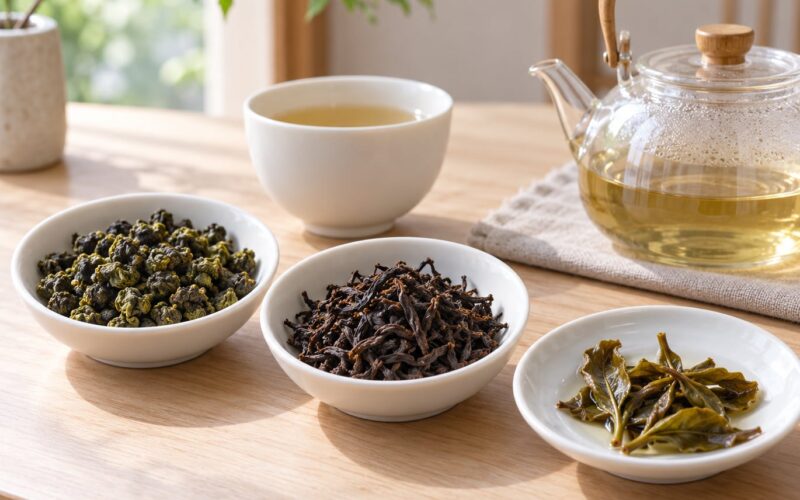
All tea, from green to black to oolong to white, comes from the same plant, Camellia sinensis. What changes is the leaf you pick, how quickly you act after picking, and how much you let the leaf oxidise before you stop it.
| Stage | What happens | Why it matters to the cup |
|---|---|---|
| Plucking | Pickers take two leaves and a bud, or a single leaf, depending on grade | Leaf maturity sets strength, and buds bring aroma |
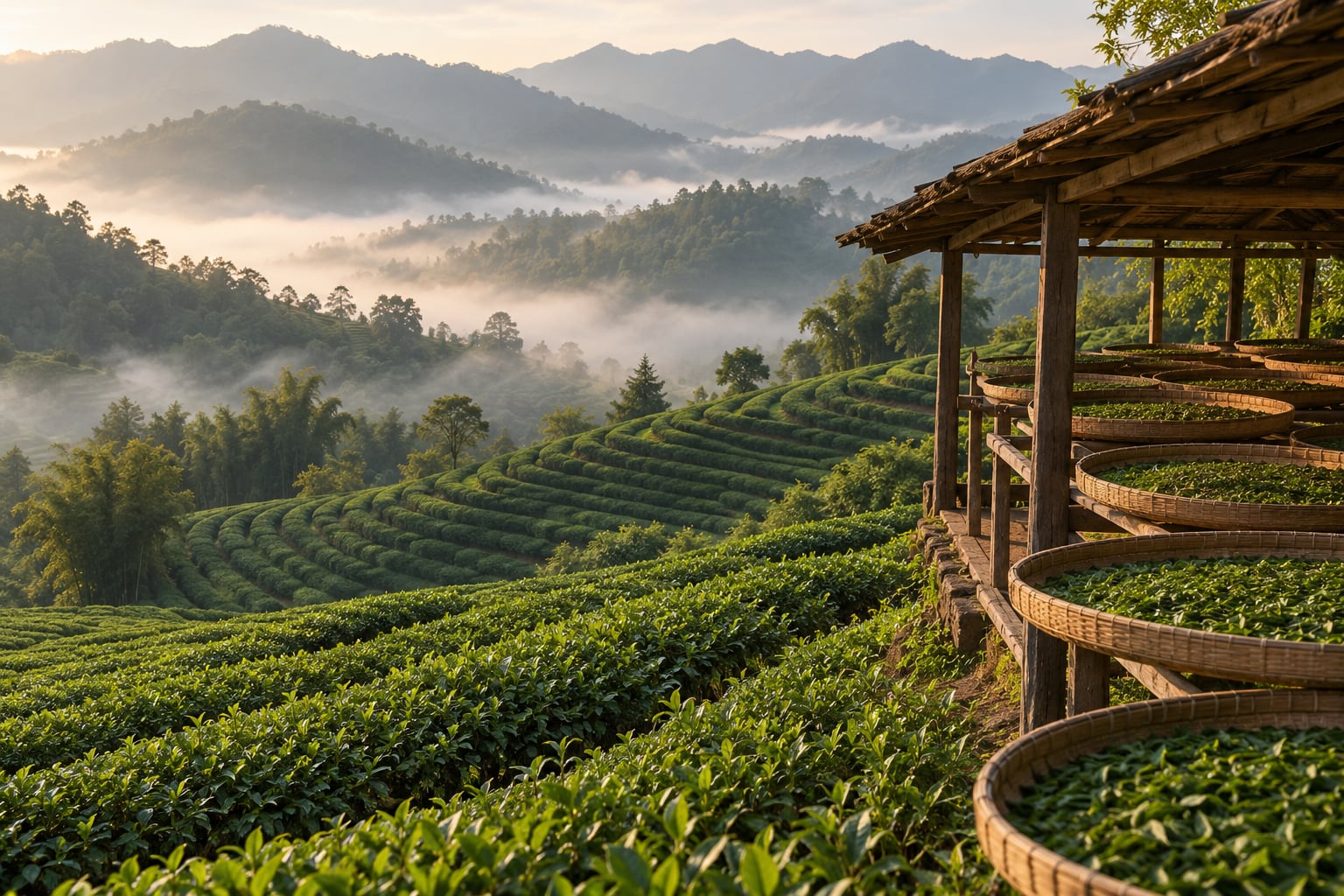
| Withering | Fresh leaf loses moisture on trays or in troughs over many hours | Softens the leaf so it can be shaped without breaking it |
| Fixation or oxidation | Rolling bruises the leaf to begin oxidation; steaming or pan firing halts it for green and oolong | The single biggest fork between tea styles |
| Rolling and shaping | Leaf is rolled, or pressed into shapes such as oolong pearls or black tea spirals | Changes how much surface area later brews can reach |
| Drying | Drying ovens or sun remove moisture to stop the leaf changing | Fixes the flavour and makes the leaf keep |
| Grading and sorting | Leaf is separated by size and quality, then cut to size | Decides the grade name, price band and brewing style |
While you walk, notice the growing conditions. Plants grown under shade trees grow slower and hold more of their own character; plants in open sun produce faster and more heavily. The cultivar planted matters too, as does elevation, soil and the weather of that particular year. So does timing: the first flush in spring tastes different from the second flush a few months later, and the tenderest shoots are made into the highest grades.
What you will see in a factory depends on the day. The Great Mississippi Tea Company runs multi-day hands-on visits where visitors move through conditioning, withering, tumbling, wok frying, rolling, oxidation and oven drying themselves, which is a very different picture from a morning walk past idle machines.
Ask for the names of the terms you keep hearing. A dozen go a long way, and using them afterwards makes shop conversations and further reading far easier.
- Two leaves and a bud — the standard hand-plucked unit, and the usual sign of higher-grade leaf.
- First flush and second flush — the spring harvest and the harvest that follows it, which can taste quite different from the same plants.
- Withering — the slow moisture loss that makes the leaf workable.
- Oxidation — the enzymatic change that browns leaf and builds black tea flavours, halted by heat.
- Steaming and pan firing — the two common ways of stopping oxidation for green tea and many oolongs.
- Shade cultivation — growing plants under cover to slow growth, used heavily for matcha tencha.
- Grade — a size-and-quality classification that sets the leaf’s name and price band.
6. Taste with Attention
Knowing how to visit a tea farm as a tourist is mostly about slowing down for the last thirty minutes. Tasting does not require vocabulary, and it is not a competition where you must declare a winner.
Use the same method for every sample so your notes mean something. Look at the dry leaf first, note its shape, colour and how tightly it is rolled. Smell it before brewing. Then brew exactly as the person pouring for you says to, and use the same leaf-to-water ratio each time so one sample does not flatter itself.
While it steeps, smell the wet leaf again. In the cup, pay attention to body, texture, sweetness, astringency and finish, and write a few plain words. Astringency is that drying, catching feeling at the back of the tongue, common in strong black tea and absent in many white and green teas.
Use descriptive notes rather than verdicts. Grassy, sweet, smoky, nutty, mineral, bright are all useful. Good or bad is not, and regional descriptions are loose conventions rather than rules, so a Darjeeling first flush that tastes brisk to you may taste muscatel to someone else.
7. Ask Useful Questions and Buy with Context
The tasting table is the best moment to ask, and the questions that pay off are the practical ones. What is this cultivar called, and who planted it? Which flush is this from, and when was it picked? Is this a single lot or a blend from several fields? What leaf-to-water ratio and water temperature do you recommend? How long will it keep once it is open, and does it need refrigeration or a sealed tin?
Also ask whether the farm sells direct and whether the tea you tasted is the tea you can buy, because a lot of what you are served in a tasting is a different grade from what the shop stocks.
Direct-from-farm tea is usually less expensive than the same tea through a middleman, and you get an origin and a date rather than a blended name. The trade-offs are practical: smaller quantities, less packaging, and fewer choices about formats. Buy what you can actually finish and store it properly, in a sealed, opaque, dry container away from heat, strong odours and moisture.
Before you leave, a few small gestures close the visit well. Thank the guide by name, and ask whether tipping is expected in that region rather than guessing in front of everyone. Leave an honest review mentioning the guide, because on a working farm the guide does most of the talking. A repeat visitor is worth more to a small estate than a first one.
Common Mistakes
- Turning up without a booking. Small farms cap numbers to protect the work. Fix: book a date and a start time, even for a place that accepts walk-ins, and get the meeting point in writing.
- Expecting plucking in the wrong month. No flush means no picking and possibly no factory activity. Fix: ask when the last and next plucking rounds happened before you commit to a harvest experience.
- Treating the tasting as a contest. Fix: follow the brewer’s instructions every time and write neutral notes on body, aroma and finish.
- Touching leaves or equipment uninvited. Fix: keep your hands to yourself until a guide offers, and stay off working rows.
- Assuming a fixed harvest calendar. Fix: treat any published months as approximate and confirm with the estate for that year.
- Buying tea without checking storage and brewing guidance. Fix: ask how to store it at home, in what quantity you would finish it, and how the second and third infusions taste.
- Underestimating sun and mosquitoes. Fix: hat, sunscreen, sleeves and repellent, and build a rain layer into the plan for open-air vehicles.
- Discovering the paid part on arrival. Fix: ask what the fee includes before you travel, especially whether the field walk or vehicle tour is an extra.
Frequently Asked Questions
How long does a tea farm visit usually take?
Most structured visits run 45 minutes to two hours: a short introduction, a walk through the rows, a look at the factory, and a guided tasting. Hands-on plucking and small farm visits with a meal stretch to a half day, and estate stays have no fixed end. Ask the farm for the planned length when you book so you can fit transport around it.
Do I need to book a tea farm visit in advance?
Book ahead, especially during harvest, festival weeks and school holidays, because small farms limit daily numbers to avoid disrupting the work. Some larger visitor attractions take walk-ins, but you may get a video-guided tour rather than a host. Booking ahead also gets you the real start time and meeting point, which is often not what you would guess from the website.
What should I wear and bring to a tea plantation visit?
Closed shoes with grip, a hat, sunscreen, sleeves, insect repellent and water. Rows are sloped, uneven and often damp, and most fields offer very little shade, so sun protection is not optional. Add a rain layer, particularly if you will ride in an open vehicle. Leave valuables on the bus or in the car, and bring a small amount of cash as a backup for small shops and local guides.
Are tea farm tours suitable for children and visitors with limited mobility?
It varies by farm. Upland estates with steep terraced rows and open trolleys are often tiring and are not always a good fit for small children or anyone who cannot manage uneven ground without support. Ask directly whether there is a vehicle option, how much walking is involved, and whether there are steps, before you book. Flat garden tours, factory tours with seating and shaded tasting rooms work far better.
Can I pick tea leaves or take photographs on a tour?
Only with permission, every time. Plucking is the paid work of the people in the field, and a tour that includes picking means picking. Photography of landscapes is usually welcome, but ask before photographing workers, and never step into a work area or over a machine uninvited. A simple rule works well: you may look freely, and you touch or photograph people only when invited.
What happens if it rains, and can I buy tea to take home?
Light rain rarely stops a walking tour, and most farms will reschedule rather than cancel outright, so check the policy when you book. Nearly every farm sells tea on site, and direct purchases are often better value than the same tea in a city shop because there is no middle layer. Ask whether the tea you tasted is the tea for sale, then how to store it: sealed, dark, dry, away from heat and odours.
Conclusion: Start With a Booked Tasting
Pick one farm, check when its next harvest round is, and message them today. Ask what a visit includes, what it costs and how long it takes, then book the date before you fix your transport.
Everything else in this guide is refinement. Show up with closed shoes and sun protection, stay behind the pickers, taste what you are poured without ranking it, and buy what you will actually finish. Advance contact is the simplest way to learn what a farm is really offering in your particular week.