The short answer: nothing about it is unusual. Restaurants seat parties of one every service, staff see several an hour, and the other diners in the room are absorbed in their own conversations. Knowing how to eat alone at a restaurant without feeling weird is mostly a matter of removing three avoidable things: an exposed seat, a silent panic while ordering, and forty minutes of a phone screen.
There is a second reason it feels odd, and it is worth naming early. Almost nobody minds eating alone. What people mind is being seen eating alone, which is a completely different thing, and a much rarer one. A table for one in a full room is far less visible than it feels from the inside, and the discomfort fades faster than most people expect, usually somewhere between the second and third visit.
So the plan below is not about becoming a different person. It is about arranging an ordinary dinner so there is nothing to feel self-conscious about.
Table of Contents›
- What You Need
- Step-by-Step
- How to eat alone at a restaurant without feeling weird: prepare before you arrive
- How to eat alone at a restaurant without feeling weird: choose a comfortable seat
- How to eat alone at a restaurant without feeling weird: order without overthinking
- How to eat alone at a restaurant without feeling weird: settle into the meal
- How to eat alone at a restaurant without feeling weird: leave on your own terms
- Common Mistakes
- Frequently Asked Questions
- Is it weird to eat alone at a restaurant?
- What should I order when I am eating alone by myself?
- How do I handle the silence when eating alone?
- Can I bring a pet or a friend when I eat out alone?
- How do I eat alone at a restaurant while travelling solo?
- Do I need to make a reservation for one, and should I tip differently?
- Start With the Counter Lunch
What You Need
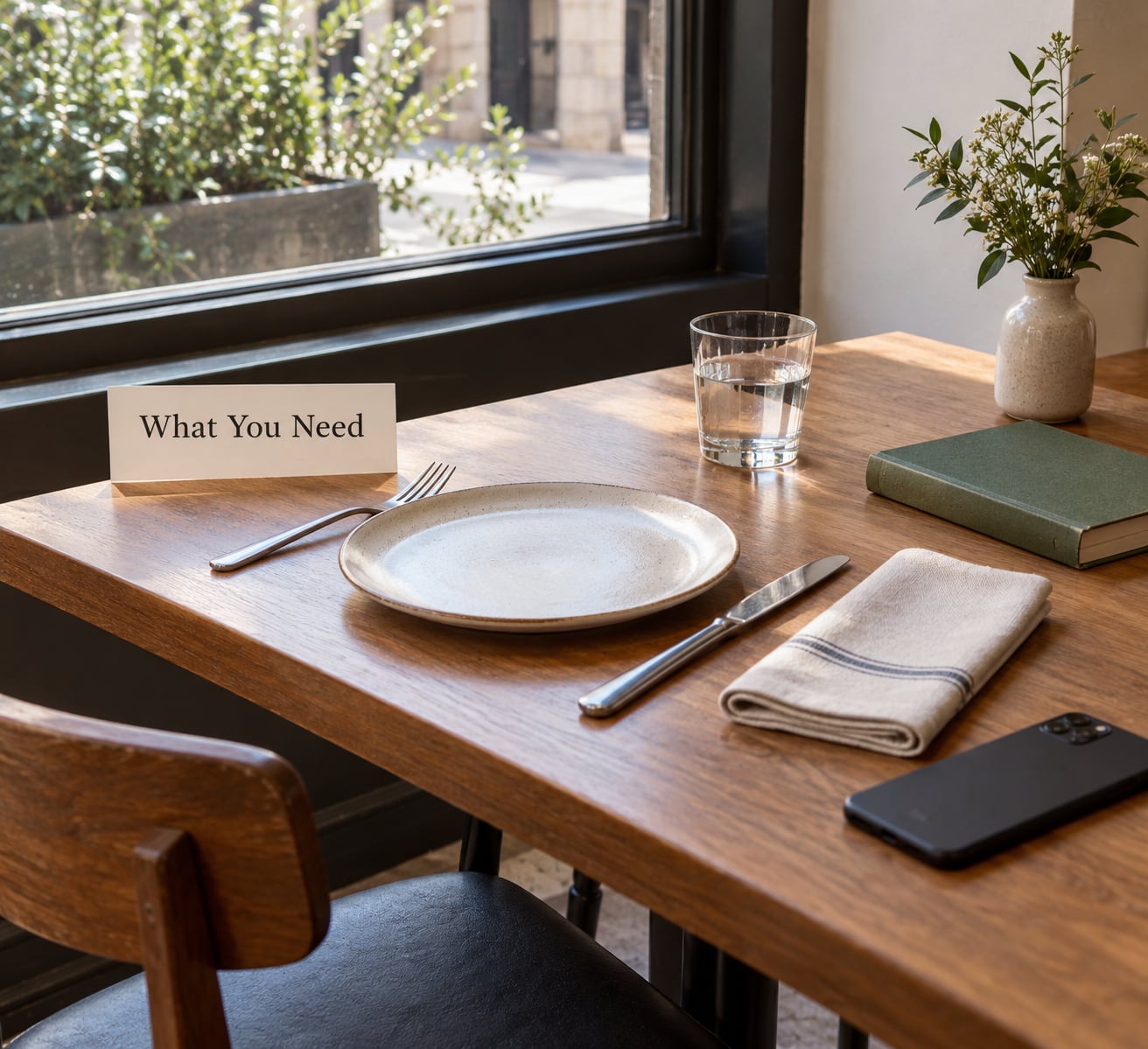
Nothing. There is no equipment, no preparation and no excuse to get ready for. Eating alone at a restaurant requires nothing more than turning up and being able to order food.
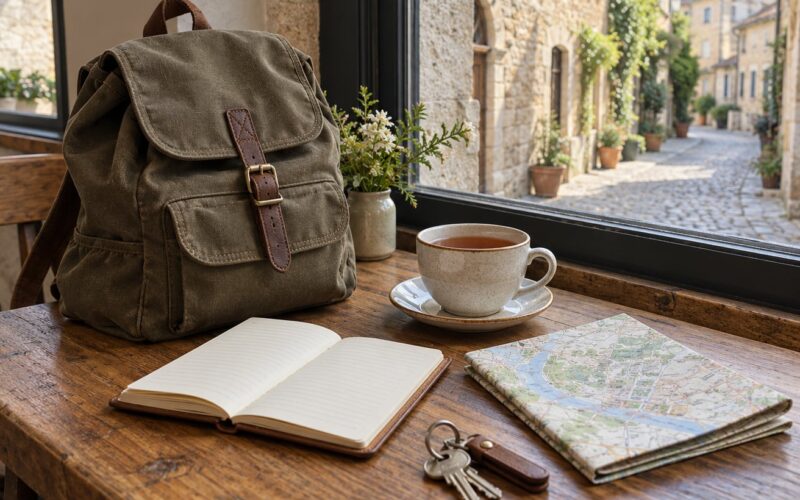
That said, a few optional things make the first visit noticeably easier. A small paperback gives your hands something to do and doubles as a conversation starter with whoever ends up sitting next to you at the bar. A phone is useful for the menu, the address and paying, but it works better face down than face up. A reservation removes the only genuinely stressful moment, which is standing alone at a host stand waiting for someone to look up.
A five-minute look at the room beforehand is worth more than any of it. Look at the photographs, find out whether it is counter-heavy or table-heavy, and check the noise level. A quiet bistro and a loud cocktail bar produce very different solo dinners, and there is no version of the evening that cannot be made easier by knowing which one you have walked into.
Step-by-Step
How to eat alone at a restaurant without feeling weird: prepare before you arrive
Check the restaurant type, the menu, the price range, the noise level and whether it takes reservations. Five minutes of that removes most of the anxiety, because the anxiety is nearly always about not knowing what is about to happen.
For a first solo meal, pick a casual neighbourhood place. A counter-service noodle shop, a bakery cafe with a lunch menu, or a neighbourhood bistro that has been open for twenty years and does not take bookings. Nothing about the food has to be special. The point of a first attempt is only to prove to yourself that the room does not react, and an ordinary room is the cheapest place to test that.
Timing matters more than most guides admit. Go early, or go between the lunch rush and the dinner rush, and the room will be half full instead of packed. An empty-ish room is not only less exposing, it is also easier to get a good seat without asking. If the restaurant has a bar, go at a time when the bar is staffed but the dining room is not yet full.
Success at this stage is simple: you walk in already knowing roughly what the room looks like, roughly what you will eat, and roughly what you will pay. That is the whole job.
How to eat alone at a restaurant without feeling weird: choose a comfortable seat
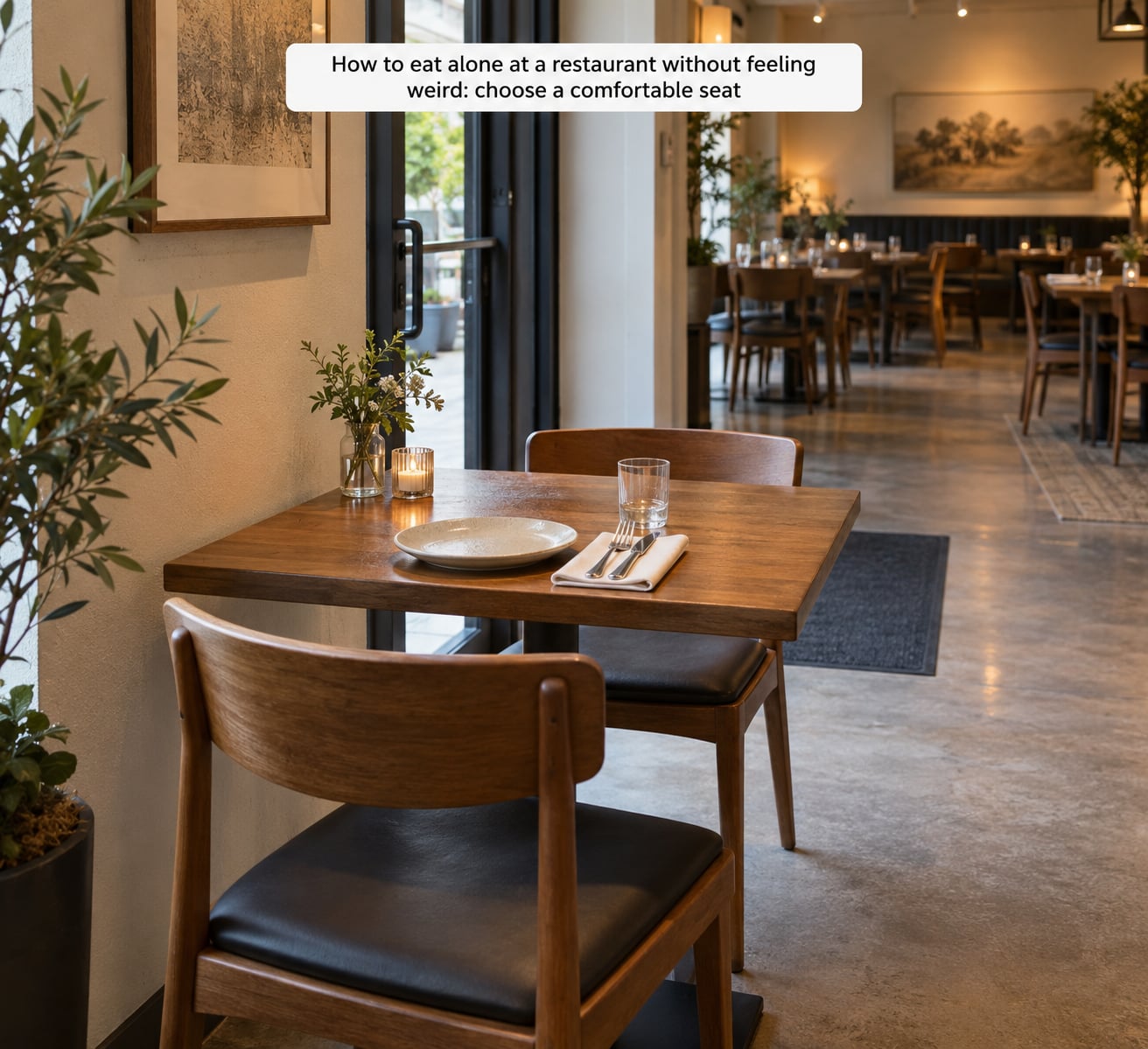
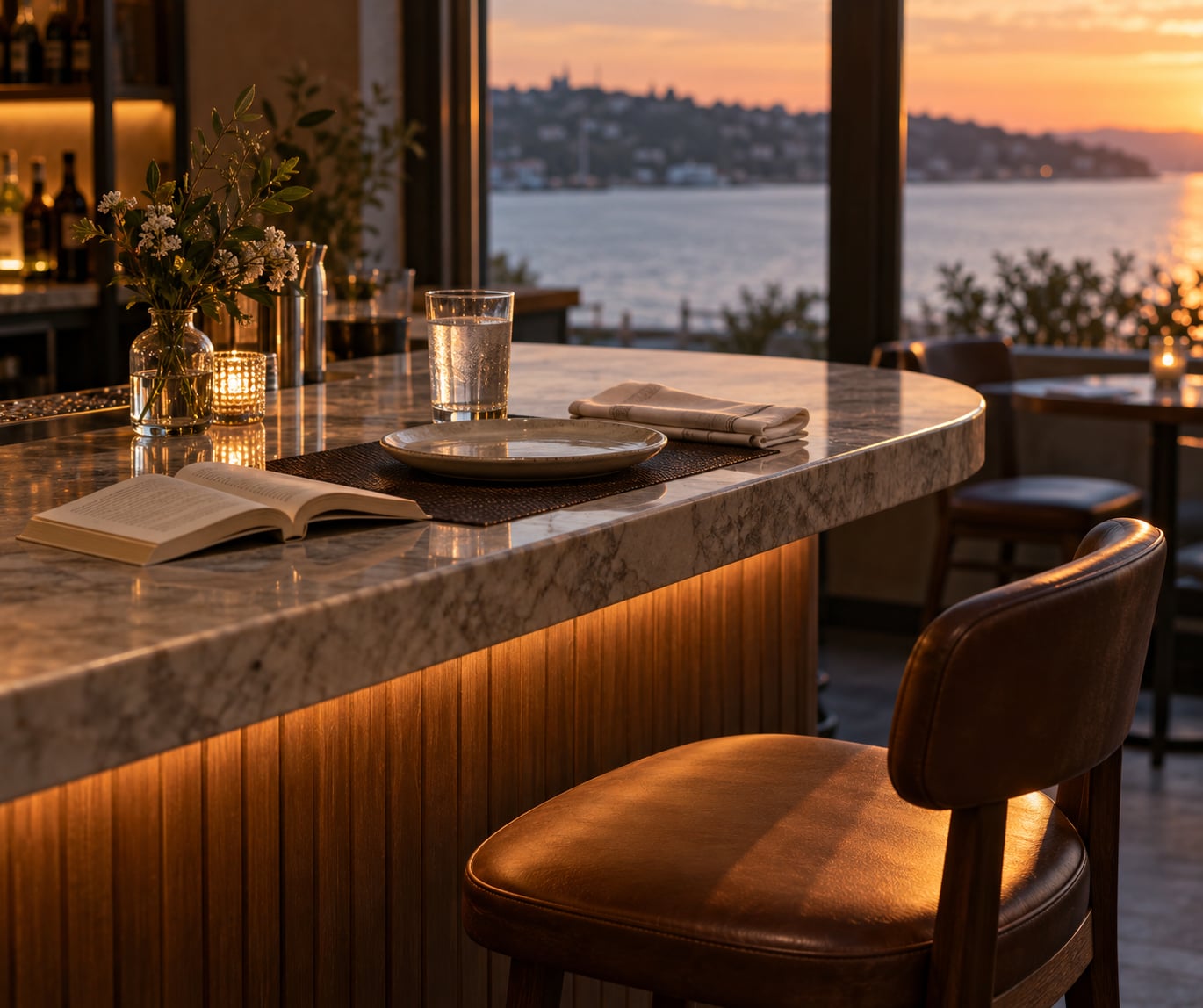
The seat does more work than anything else you do that evening. The single most-endorsed tip among people who eat out solo is the same one every time: sit at the bar.
A bar works because it solves three problems at once. You are not sitting across from an empty chair, the person next to you is right there rather than four feet away, and there is someone professional on the other end of the counter to talk to. Counter seating at a sushi bar, a ramen shop or an open kitchen does the same job and often comes with a set menu designed for one person.
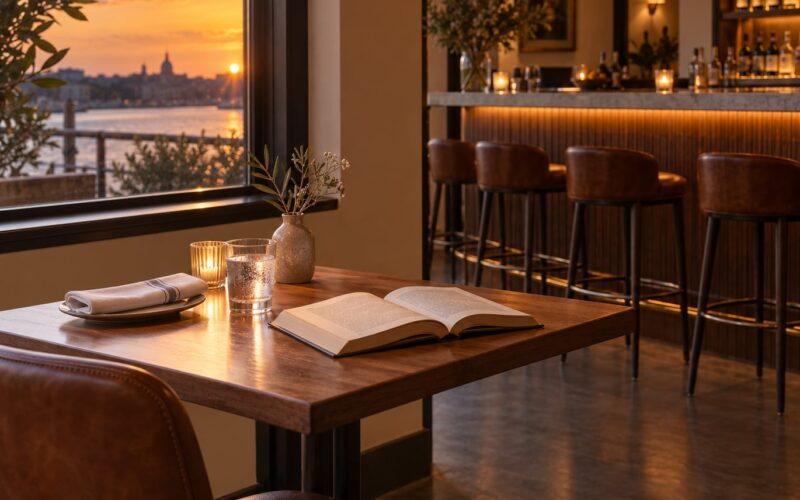
If you would rather have a table, the rule is a wall at your back and the room in front of you. A two-top near the entrance or against a side wall lets you see everything without being the centre of anything. Avoid the large central table in the middle of the room, which is the worst seat in most dining rooms for a solo diner because it faces the most people and has the most air around it.
One practical example. You walk into a mid-priced bistro, the hostess offers the two-top by the window, and there is an empty four-top in the centre. Take the two-top. The empty chair across from you reads as normal furniture. A four-top with one person at it reads as a statement, and the difference has nothing to do with the people involved.
You will know the seat worked within about two minutes. If you are aware of your own hands and wondering what to do with them, try the other seat.
How to eat alone at a restaurant without feeling weird: order without overthinking
Open the menu, give it thirty seconds, and pick two things you understand. That is the entire strategy. People who order confidently as solo diners are not ordering more complicated dishes than anyone else, they are simply stopping the menu from becoming a research project.
Ask one or two real questions. Whether the dish is spicy, whether a substitution is possible, whether the portion is large enough to share even though there is nobody to share it with. Servers answer these all shift long and they are not faintly amused.
A few specific moves help. Order a drink first, before the food, even if it is just a glass of sparkling water or a soft drink. It gives you something to do with the first few minutes and it makes the table look occupied on purpose. Order one starter and one main rather than a single main, because a single plate at a two-top reads as a missed opportunity while two courses read as a person enjoying their evening.
If you want the smaller portion, ask for one outright: I would like the half order, or could you do a small size of that. Servers handle this constantly. If you are served something enormous and cannot finish it, that is fine too, and nobody is keeping a scorecard.
Success looks like ordering out loud without a run of explanation. You do not need to say I am alone, or I do not have an appetite for sharing tonight. You order the way anyone orders.
How to eat alone at a restaurant without feeling weird: settle into the meal
Eat at the pace you want. This is the part almost every solo diner gives up first, because the silence arrives about ninety seconds after the food does. There is no conversation to fill it and no second person setting a tempo, so a lot of people speed up, finish, and leave having eaten rather than had dinner.
Pick one quiet activity and keep it small. Reading is the best of them because it looks unremarkable from across the room. People-watching is the second best and requires nothing at all. The phone works, but it is the most common coping mechanism and the one most likely to keep the discomfort alive, because scrolling is a way of saying you are waiting for something better to happen.
Try leaving it face down for the first ten minutes. You will get uncomfortable for about four of those minutes, and then the discomfort passes and you are just having dinner. The people who report that solo dining got easy describe almost exactly this: the feeling evaporated somewhere around the third visit, not through a breakthrough, just through repetition.
There is a mid-meal moment that catches everyone, the empty stretch between courses or after the main when the plate is cleared. Have something queued for it. That is the one plan worth making, because it is the one that reliably arrives.
Two smaller logistics, since they worry people more than they should. In a long meal, take your bag or jacket with you to the bathroom rather than leaving it draped on an empty chair. And if you are at a counter and someone glances over, they are almost certainly waiting for a friend, not assessing your table.
How to eat alone at a restaurant without feeling weird: leave on your own terms
Finish when you are finished. There is no set duration a solo meal has to meet, and nobody is keeping time on you the way they might on a date. Ask for the check when you are ready, in a normal voice, the way everyone does. Settle it, leave a normal tip, and go.
Do not add an apology or an explanation on the way out. The one thing that would actually mark you as someone uncomfortable is a comment about being on your own, and the staff have almost certainly stopped registering your table several minutes before you reach the door. Leaving promptly and comfortably is the most ordinary thing in the world, because a table for one finishes faster than most tables of two and the room knows it.
You can also leave something behind, deliberately. Order dessert or a coffee and give it twenty minutes. One of the quiet luxuries of eating alone is that nothing is pulling you out of the chair, and once you know that feeling exists, it is much easier to go back for it.
Success at the end is that you walked out on your own schedule, without explaining anything, and did not feel the need to say goodbye to the room.
Common Mistakes
Starting with the hardest restaurant. A tasting menu in a formal dining room is a three-hour test to run on night one. Fix: do a counter lunch or a neighbourhood bistro first, twice, and move up when the first one stops being an event.
Scrolling from the moment you sit down. The phone treats the meal as a waiting room, and you end up alone with a screen instead of alone with dinner. Fix: face down, screen off, for the first ten minutes. That first stretch is the whole exercise.
Ordering the smallest, most apologetic thing on the menu. A single plain salad reads as someone minimising themselves. Fix: one starter, one main, one drink. Enjoyment is the point.
Apologising or explaining that you are alone. Nobody asked. Fix: walk in, say a party of one or a table for one if the host asks, and stop talking about it for the rest of the evening.
Saving the solo meal for the busiest night of the week. A full Friday room is the hardest possible version of the same dinner. Fix: a Tuesday or Wednesday, and a time that sits between the rushes.
Rushing to get through it. A meal finished in twenty-five minutes does not prove anything, and it leaves you with nothing but a memory of nerves. Fix: stay for the coffee, even when you feel finished.
Almost all of these come from the same place, which is a habit of apologising for your own choices. Once you stop doing that, the mechanics above take about a minute to get used to. A lot of people describe the shift as less dramatic than expected: not courage, just a normal dinner that happened to have one person at it.
Frequently Asked Questions
Is it weird to eat alone at a restaurant?
No. A table for one is an ordinary part of every service, and the staff see several every shift. The feeling that you are being watched comes from a well-documented tendency to overestimate how much other people notice what you are doing, not from anything happening in the room. Most solo diners find the awkwardness fades somewhere between the second and third visit.
What should I order when I am eating alone by myself?
Two things you understand, plus a drink before the food. One starter and one main reads as a person enjoying a meal, while a single plate at a two-top can look like a missed opportunity. Ask about spice levels, substitutions or a half order without any worry; servers field these questions all evening. Ordering the dish you would choose with company is the safer move.
How do I handle the silence when eating alone?
Plan for it once, not continuously. Decide what you will be doing before the food arrives, usually reading or people-watching, and keep the phone face down for the first ten minutes. The uncomfortable stretch usually lasts four or five minutes rather than the whole meal. Leave a book, a crossword or a notebook at the table and the silence stops being a problem to solve.
Can I bring a pet or a friend when I eat out alone?
It depends entirely on the venue, so check before you go. Many cafés and casual restaurants welcome dogs at an outdoor table, and plenty of places will seat a small dog beside you at the bar, while most dining rooms and fine dining rooms will not allow animals at all inside. Bringing a friend makes it easier emotionally but removes the practice; many people bring the friend and sit facing away from them.
How do I eat alone at a restaurant while travelling solo?
Counter seating is the best option when you are new to a city. Sushi counters, noodle shops and ramen bars are built for one person, usually offer a short set menu, and put a professional on the other end of the counter to talk to. For dinner in an unfamiliar place, choose somewhere with a short menu and a table near a wall, and keep a backup cafe in mind. Learning the table for one routine is what turns a solo trip into an actual trip.
Do I need to make a reservation for one, and should I tip differently?
Make one if the restaurant is busy or if you want a specific seat, and say you are a party of one when you book. Hosts and servers take single bookings routinely, and a booked arrival skips the most uncomfortable moment, which is standing at the host stand alone. Tipping is entirely normal: check the usual percentage for your area and add to it if the service was good, without adjusting for the size of your table.
Start With the Counter Lunch
Start with the easy version this week. A counter lunch somewhere quiet, ordered without rehearsing it, with the phone face down and dessert when you are done. That is the whole beginner programme, and it costs you an hour.
Everything else on this list gets easier once that hour exists. How to eat alone at a restaurant without feeling weird is not a personality trait anyone is born with. It is a short list of habits, and the first one is always the same: pick the seat, order the food, and let the room get on with its evening.