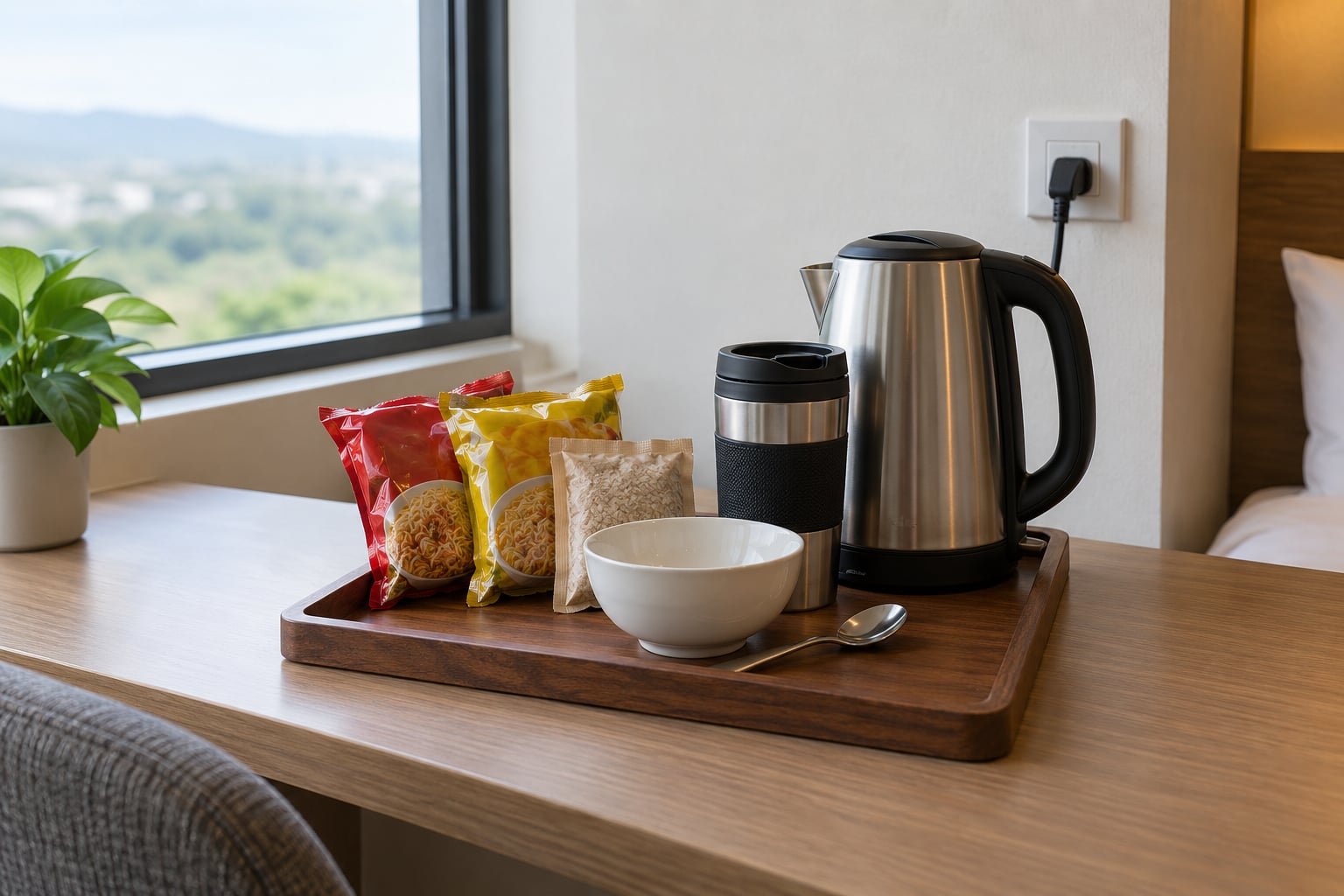
You can cook in a hotel room with no stove by using hot water as your heat source. Boil it in the electric kettle or the in-room coffee maker and you can make noodles, oatmeal, soup, eggs, and rehydrated rice in minutes, then use the mini fridge for cold meals you assemble without heat at all.
Most rooms have more than the listing admits. The microwave is often hidden behind a cabinet door or swapped for a coffee station, and the kettle ends up doing most of the work whether or not anyone mentions it.
Table of Contents›
- What You Need
- Step-by-Step
- Step 1: Check the Room and Choose a Safe Method
- Step 2: Prepare Ingredients Before Heating
- Step 3: Cook Rice or Grains With a Kettle
- Step 4: Make Noodles With a Microwave or Kettle
- Step 5: Heat Eggs and Simple Egg Dishes
- Step 6: Reheat Prepared Food Safely
- Step 7: Build a No-Cook Meal When Heating Is Restricted
- Common Mistakes
- Tips for Better Hotel-Room Meals
- Frequently Asked Questions
- Can I cook in a hotel room without a microwave or kettle?
- What is the safest way to cook eggs in a hotel room?
- How can I cook rice or noodles with just boiling water?
- Can I use a travel mug or tea kettle in a hotel room?
- How should I store and reheat hotel-room food safely?
- Conclusion
What You Need
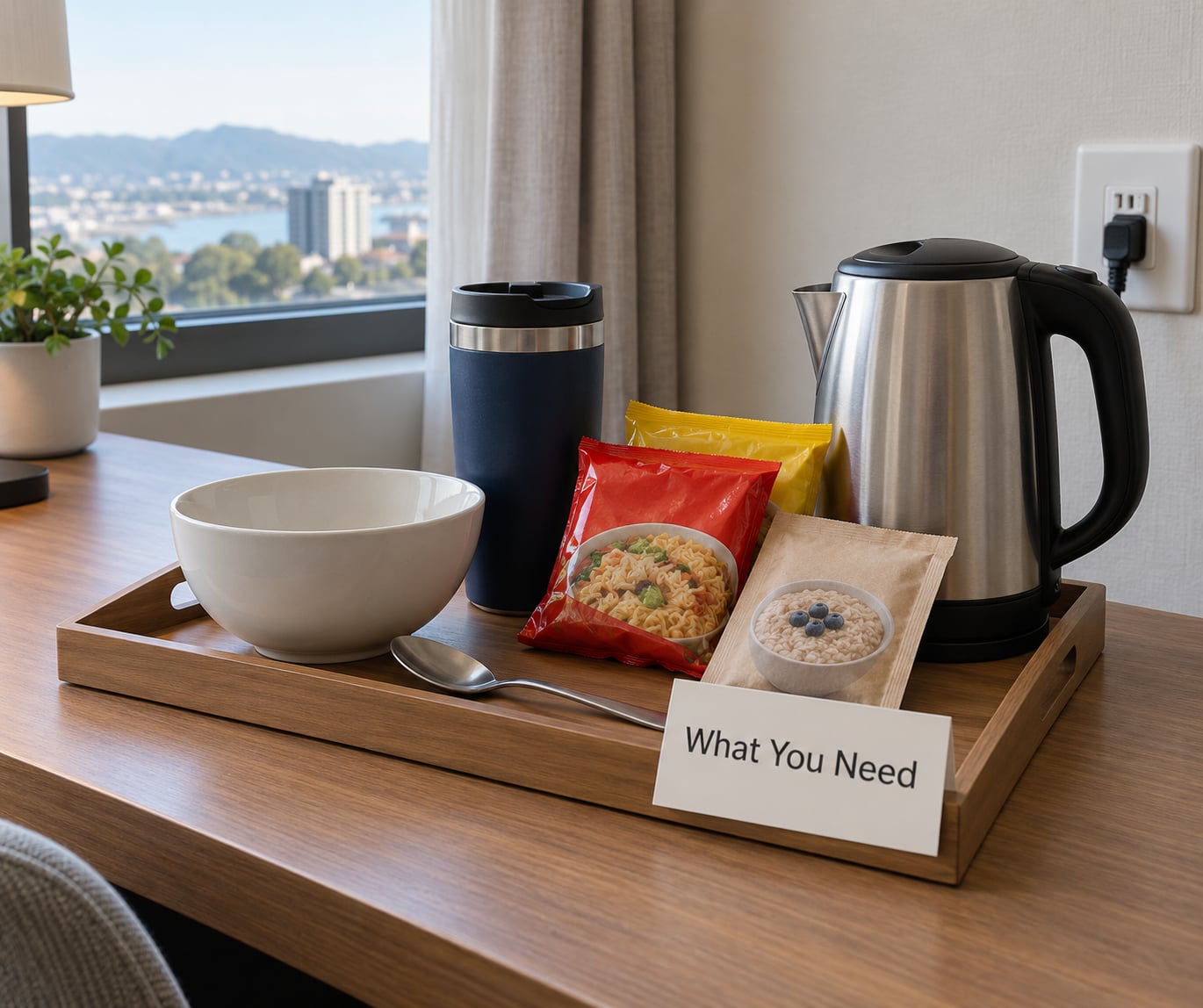
The essential item is an electric kettle, because hot water cooks grains, noodles, oatmeal, soup, and just-add-water meals. A mini fridge is second, since it turns a room into a place where you can keep fresh produce and dairy instead of living on crackers.
Microwave and coffee maker are the extras. A microwave takes eggs, reheated prepared food, and mug meals. The in-room coffee maker is a slow, small substitute for the kettle, and travelers on Ask MetaFilter warn that its water is often not hot enough and can carry a coffee taste into anything but coffee.
Then add the small things that cost nothing to pack: a microwave-safe mug or bowl with a lid, a fork or collapsible spork, a small knife or scissors for packets, a travel mug to keep heat in while you eat, and a bottle of water. A kitchen towel from the bathroom handles most of the mess.
If the room has no microwave, make one phone call before you shop. Front desk staff usually know about a shared microwave in the breakfast nook or lobby, and many will hand you a microwave-safe plate and cutlery if you explain what you are trying to do. Travelers on Reddit’s r/Frugal and on the Ask MetaFilter hotel cooking thread all say the same thing: ask first, shop second.
Two more gaps to plan for. If there is no fridge at all, a bag of ice from the machine downstairs keeps shelf-stable groceries cool for a day, and a folding tote makes it bearable. If you are crossing a border, check the voltage. A 220V kettle or hot plate will not simply work on a 110V circuit, and plug shapes differ by country, so bring an adapter and a converter for anything that heats.
Step-by-Step
These seven steps cover how to cook in a hotel room with no stove, and they work in any order that suits the food. Start by checking what the room actually gives you.
Step 1: Check the Room and Choose a Safe Method
Walk the room before you unpack. Look for a microwave on the credenza, inside a cabinet, or disguised as part of a coffee station. Note the kettle, the coffee maker, the mini fridge, and where the outlets sit. Empty the fridge if you find someone else’s leftovers inside, and check whether the kettle has a limescale problem.
Then reject anything that involves flame. No camp stove, no butane burner, no matches, no candles, in any hotel room. Sprinklers and smoke detectors in guest rooms are sensitive enough that a burned meal can trigger a building-wide fire response, and a portable hot plate plugged in without permission has ended plenty of early checkouts. Several travelers who packed hot plates for the road described a quick conversation with the front desk sorting it out, and that conversation is the whole process: ask before you plug in.
Match the method to the equipment you actually have:
| What you have | What you can make | Realistic time |
|---|---|---|
| Microwave | Scrambled eggs, reheated prepared food, baked potato, soup from a can, mug cakes | 2 to 6 minutes |
| Electric kettle | Instant noodles, oatmeal, instant rice, just-add-water meals, dried pasta, hot drinks | 4 to 10 minutes |
| Coffee maker only | The kettle list, slower, with more coffee residue. Stock the carafe and use the tray as a cutting board | 8 to 15 minutes |
| Mini fridge only | Sandwiches, no-cook grain bowls, mezze plates, cheese and fruit | 5 minutes, no heat |
Keep heat and cold methods separate in your head. If a room offers only a coffee maker, plan kettle-style meals and accept that the water will take its time.
Step 2: Prepare Ingredients Before Heating
Everything goes into one microwave-safe vessel before the heat starts. Measure the portion first, because hotel portions are unpredictable and a mug fills faster than you think.
Loosen every lid and vent every foil or plastic packet before it goes near heat. Break noodle bricks into the bowl rather than trying to submerge them whole. Pull out the amount you need and put the rest back in the fridge.
Setting everything on one tray also means the cleanup is one trip to the sink instead of a hunt through the room, which is the part most guides skip and most travelers complain about.
Step 3: Cook Rice or Grains With a Kettle
Use rice that is labeled instant or precooked, the dehydrated kind that only needs hot water. For roughly half a cup of instant rice, use half a cup of water, or follow the packet if the two disagree.
Boil the water, pour it over the rice in a bowl, cover with a plate, and leave it alone for five minutes. Fluff with a fork. If there are hard bits at the bottom, add a splash of hot water and stand it for two more minutes. A microwave speeds the whole thing up: two to three minutes, with a stir halfway.
Never try to cook raw long-grain rice in a kettle. It sits at the wrong temperature for too long, sticks to the element, ruins the kettle for drinking water, and can leave Bacillus cereus behind, a bacterium that causes food poisoning from cooked rice kept warm. Raw grains need sustained heat well past what a kettle pour gives you.
You can tell it worked when the grains separate with a fork and steam rises from the bowl. Wet and clumped means it needed more water, not more time.
Step 4: Make Noodles With a Microwave or Kettle
Instant noodles are the easiest win in this whole guide. Break the brick into a bowl, add the seasoning, and pour boiling water over it until everything is submerged. Wait three minutes, stir, and wait two more. Most people drink the broth; draining it is optional.
In a microwave, the same bowl takes four to five minutes at full power, with a stir at the halfway point, plus a splash of water if the noodles are still stiff and the bowl looks dry.
Dried pasta and buckwheat noodles are the kettle’s real job. Fill it fully, boil, and add the pasta to a bowl or a heatproof mug, using about four cups of water per 100g. Stir at the start, test at eight or nine minutes, and keep testing until a strand bends without snapping. Drain in the sink with the lid ajar, or strain through a travel mug.
Two things to watch: a sealed paper cup lined with plastic will slump when you pour boiling water into it, and a bowl straight from the kettle is hot enough to burn you through a thin towel. Sit for a minute before you carry it anywhere.
Step 5: Heat Eggs and Simple Egg Dishes
Scrambled eggs in a mug are the best hot breakfast a room with no stove can produce. Crack two eggs into a microwave-safe mug, add a splash of milk or water, and whisk with a fork until the whites and yolks are fully blended with no streaks. That blending is what separates soft scrambled eggs from rubbery ones.
Cover the mug loosely. Cook in bursts of 45 to 60 seconds, stirring between each one, and stop while the eggs still look slightly underdone. They finish setting on the way to the table. Add cheese, salsa, or herbs from the fridge at the end.
For a soft-cooked egg, put the egg in a mug, cover it with water by about an inch, and microwave in 60 to 90 second bursts. Stand it for a minute, peel, and cut it over the top of the rice. If the white is still translucent in the middle, give it another 20 seconds.
Two firm rules here: never microwave an egg in its shell, because the steam has nowhere to go and the egg bursts, and never run a container empty, because a bare microwave with nothing in it can damage the unit. Neither is worth the call to reception.
Step 6: Reheat Prepared Food Safely
Move food onto a microwave-safe plate, cover it loosely so nothing splashes, and heat in 30-second bursts. Stir between bursts, because the edges of a room microwave are uneven and the center lags behind.
Heat prepared food until it is steaming all the way through. The USDA’s reference temperatures are 165F for reheated cooked food and poultry, 160F for ground meat, and 145F for whole cuts of meat and fish. Without a thermometer, check the thickest part with a fork and make sure nothing comes back cold in the middle.
With only hot water, put the food in a sealed microwave-safe container, pour boiling water over it, and leave it 15 to 20 minutes. Soups and curries are good candidates because they are already liquid. Check the temperature the same way before eating.
Storage deserves the same attention. Perishable food left above 40F for more than two hours should be discarded, and that limit drops to one hour in hot weather. Hotel mini fridges often run cold in the back and warm in the door shelf, so keep raw or dairy items toward the back and treat the door shelf as short-term space only. A cheap fridge thermometer in your bag removes the guesswork for the rest of the trip.
Step 7: Build a No-Cook Meal When Heating Is Restricted
Some rooms rule out hot food entirely, and for those, assembly works better than cooking. Build from four shelves.
- Protein: canned tuna or sardines, smoked salmon, a shelf-stable chicken pouch, hard-boiled eggs from a shop, cubed cheese, olives, nuts.
- Grains: crackers, bread, wraps, granola, shelf-stable rice pouches, or crackers with cheese and fruit.
- Produce: carrot and cucumber sticks, cherry tomatoes, an apple, a banana, a bagged salad, drained canned beans, pepperoncini.
- Sauces: mustard, salsa, single-serve pesto, olive oil, vinegar, and whatever spice packets came with the food.
Two combinations I keep coming back to. A mezze plate of olives, cheese cubes, crackers, dried apricots, and pepperoncini takes three minutes and travels to a desk. A grain bowl of shelf-stable rice, canned chickpeas, cucumber, tomato, salsa, olive oil, and pumpkin seeds tastes fresher than anything that came out of a kettle.
Traveling solo, buy single-serve sizes and plan to eat a given item within a day of buying it. One-person quantities from a shop keep the fridge clean and stop you from throwing food out on checkout morning.
Common Mistakes
- Heating a sealed packet or a shelled egg. Steam builds with nowhere to go, and both will burst. Cut the top, or move the contents into a bowl.
- Using the wrong container. Anything with a metal rim, foil trim, or an unmarked plastic tub is a no. The mug from the bathroom is fine; the disposable plastic cup is not.
- Overfilling the kettle. Water above the max line is a burn hazard when you lift it. Fill to the line and make two trips instead.
- Attempting raw grains or pasta in a kettle. Dried pasta and dried rice rehydrate in boiling water; raw rice, quinoa, and other whole grains do not, and will not reach a safe temperature in a kettle pour.
- Treating a mini fridge as a refrigerator. Many are beverage coolers. If perishables are not staying cold, move them to the ice machine’s bags or buy them the same day you eat them.
- Packing a hot plate or immersion heater and using it without asking. Appliances you carry are the ones that cause the argument, because smoke and fire policy sit with the hotel. One call clears it, or you move to a camping area or a short-term rental with a kitchen.
- Running microwave times to the second. A 700-watt unit needs longer than a 1,000-watt one. Start short, stir, and add time in bursts.
- Leaving the mess for later. A kettle rinsed once at the sink and a fork wiped with a bathroom towel is all this requires. A pan left overnight is how a room gets flagged.
Tips for Better Hotel-Room Meals
Upgrade the setup rather than the menu. A travel mug with a real lid keeps noodles hot long enough to eat slowly, and collapsible utensils mean nothing to wash when you leave.
Shop within a five-minute walk of the hotel if you can. The closer the shop, the less you carry upstairs and the more likely you are to buy fresh produce instead of another packet of noodles. The second-night slump is the real enemy here, not hunger.
Plan for smell. Crack the window and run the bathroom extractor while anything fragrant heats, and skip onion and strong fish in a small room. Cold meals, where the smell never happens, are the ones that keep working on day five.
Match gear to trip length. For one night, a kettle and a few no-cook items are enough. For a week or more, a collapsible pot, a folding strainer, a small knife, a salt and pepper kit, and a plate are worth the packing weight, and they turn kettle-only meals into something closer to a real dinner.
One last thing about hot food in a room that smells of coffee. Wash the coffee carafe with soap and hot water before you use it for anything but tea, and keep coffee brewing to a minimum if the smell is going to follow you around for the rest of the day.
Frequently Asked Questions
Can I cook in a hotel room without a microwave or kettle?
Yes, with less heat than most guides admit. Call the front desk first, because staff often know of a shared microwave in the lobby or breakfast nook. Beyond that, a coffee maker can boil water for oatmeal, noodles, and soup, and the mini fridge supports no-cook meals such as sandwiches, mezze plates, and grain bowls.
What is the safest way to cook eggs in a hotel room?
Whisk two eggs with a splash of milk in a microwave-safe mug so no streaks of white remain, cover loosely, and cook in 45 to 60 second bursts, stirring each time. Stop while they still look slightly wet. Never microwave an egg in its shell, because it can burst, and never run a container empty.
How can I cook rice or noodles with just boiling water?
For instant or precooked rice, use about half a cup of water per half cup of rice, cover the bowl with a plate, and rest five minutes before fluffing. For instant noodles, break the brick into a bowl, pour boiling water to cover, and wait three minutes, then stir and wait two more. Never try raw rice in a kettle.
Can I use a travel mug or tea kettle in a hotel room?
Both are fine, since the kettle in the room is meant for heating water. A travel mug is the better investment because it keeps food hot while you eat and doubles as a microwave-safe vessel. Fill the kettle only to its max line, remember it stays hot after boiling, and expect it to be the main tool of the whole stay.
How should I store and reheat hotel-room food safely?
Reheat prepared food in 30-second bursts, stirring between each, until it steams through the center. The USDA reference is 165F for reheated cooked food, 160F for ground meat, and 145F for whole cuts and fish. Keep perishables cold in the back of the mini fridge and discard them after two hours above 40F.
Conclusion
If you keep one thing from this guide, keep this: how to cook in a hotel room with no stove comes down to hot water, a microwave when the room has one, and a plan you can finish in ten minutes. Check the room the moment you arrive. Find the kettle, look inside the cabinets for a microwave, and if there is none, ring the front desk to ask where a shared one is. Then pick the simplest method your equipment supports and cook one small meal rather than attempting a full dinner, because the kettle will carry you further than you expect.