Learning how to pack fragile souvenirs in a suitcase comes down to two things: cushioning and placement. Wrap every piece separately in something soft and springy, fill the gaps so nothing can slide, then push the most delicate items into the middle of the case where cushioning surrounds them on all sides. Ten quiet minutes at the hotel the night before you fly is usually enough.
I travel solo, which means there is no second suitcase and nobody to hand a box to when the belt at the airport goes wrong. So the method below assumes one bag, one personal item, and whatever is already in the room. It has carried home a hand-thrown bowl, a bottle of olive oil and a stack of shells without losing any of them.
The first thing worth understanding is what actually breaks things. Bags get dropped, thrown onto a belt and stacked under other bags. The danger is not a slow squeeze, it is an uneven hit against a hard surface. Soft material absorbs that hit and spreads it out, which is why a sweater beats a tightly stretched sheet of plastic every time.
Table of Contents›
- What You Need
- Step-by-Step: How to Pack Fragile Souvenirs in a Suitcase
- Step 1: Choose the Right Suitcase and Packing Area
- Step 2: Identify and Separate Every Fragile Item
- Step 3: Wrap Each Souvenir Individually
- Step 4: Use Small Boxes for Valuable or Irregular Pieces
- Step 5: Place Heavier Items Low and Near the Wheels
- Step 6: Fill Gaps with Soft Clothing
- Step 7: Close, Lift, and Shake the Suitcase Carefully
- Common Mistakes
- Frequently Asked Questions
- What is the best way to pack fragile items in a suitcase?
- How do I pack fragile souvenirs without bubble wrap?
- Is wrapping something too tightly bad for fragile items?
- Can I bring souvenirs through airport security in my carry-on?
- Will an airline replace a souvenir that breaks in checked luggage?
- How do I pack a fragile souvenir I bought on the last day of the trip?
- Conclusion
What You Need
None of this needs buying, and most of it is already in your suitcase. Gather it on the bed first so you are not hunting for tape at 6am.
- Small boxes. Shoe boxes, takeaway boxes, or the box a mug came in. Cardboard holds a shape that soft wrapping cannot.
- Tissue paper. For the first layer against glass and glazed ceramics, where a scratch marks more easily than a dent.
- Bubble wrap or plastic bags. Bubble wrap if you have it. Clean grocery bags work nearly as well once you blow a little air into them and knot the top.
- Soft clothing. Sweaters, scarves, socks and a towel. These are your main shock absorbers and you already own them.
- Resealable plastic bags or tape. To keep a wrapped bundle closed and to double-bag anything that leaks or smells.
- A phone note. A running list of what is in the bag. Photograph each fragile piece before it goes in. It takes 20 seconds and it settles arguments later.
Check the weight and size limits for your specific airline before the shopping day, not the night before. Most carriers publish them, and the number decides whether you need to ship something home.
Step-by-Step: How to Pack Fragile Souvenirs in a Suitcase
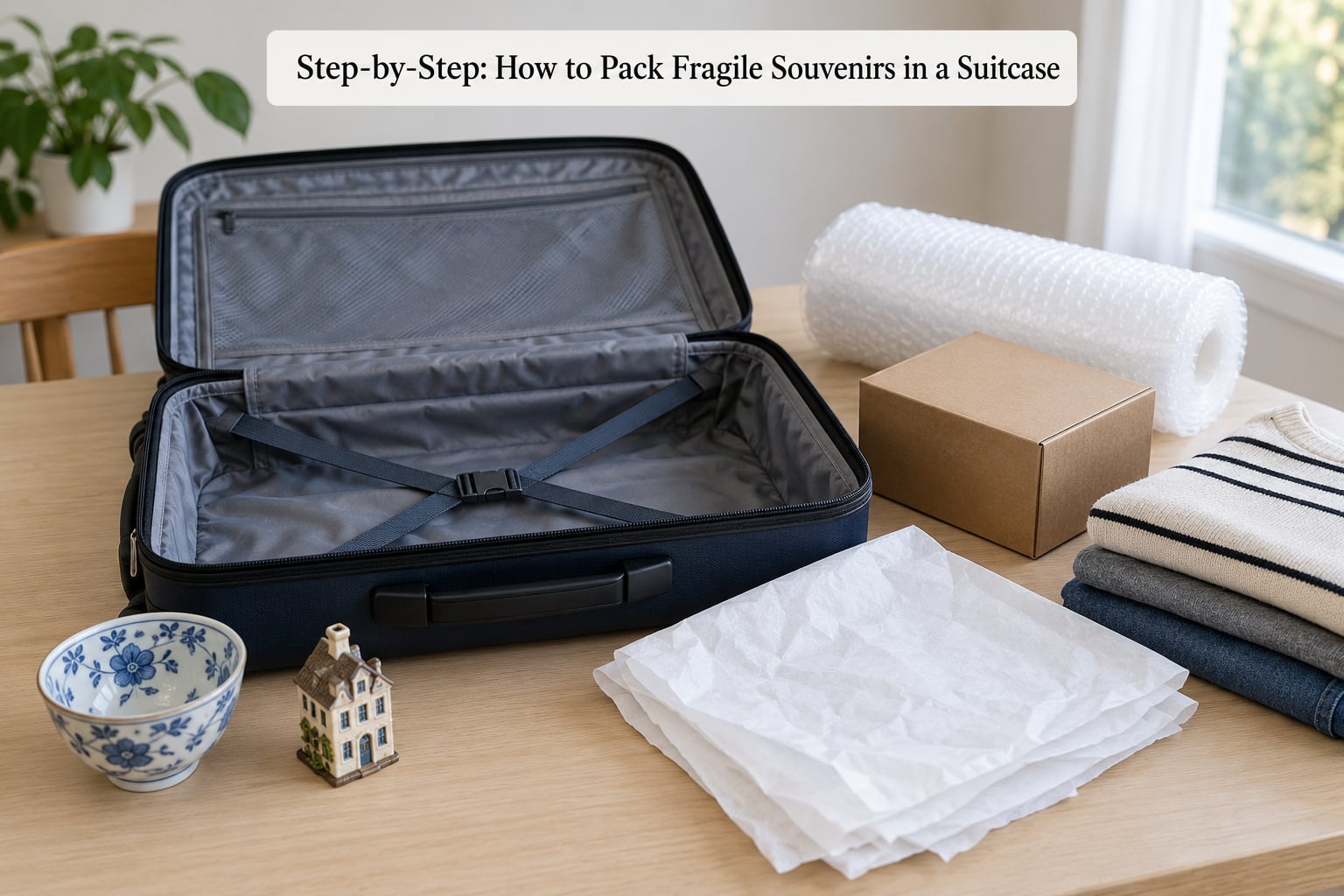
Step 1: Choose the Right Suitcase and Packing Area
A hardshell case spreads a knock across the whole shell. A softshell dents exactly where something hits it, so the shell does almost nothing for you. Either works if you pack the middle properly, but rigid sides buy you margin.
Work out your fragile zone first. It is the flat area in the middle of the case, away from all four walls and every corner. Corners take the biggest impacts because they stick out furthest when a bag lands.
Step 2: Identify and Separate Every Fragile Item
Lay everything out on the floor and sort it into groups: hard and breakable (glass, ceramic), hollow and irregular (bottles, carvings, tall vases), and soft (textiles, paper, prints). Grouping tells you which items need a box and which can be wrapped and placed.
Anything with a thin stem, a handle or a protruding spike goes in the irregular pile no matter what it is made of. These are the pieces that snap when a bag shifts by an inch.
Step 3: Wrap Each Souvenir Individually
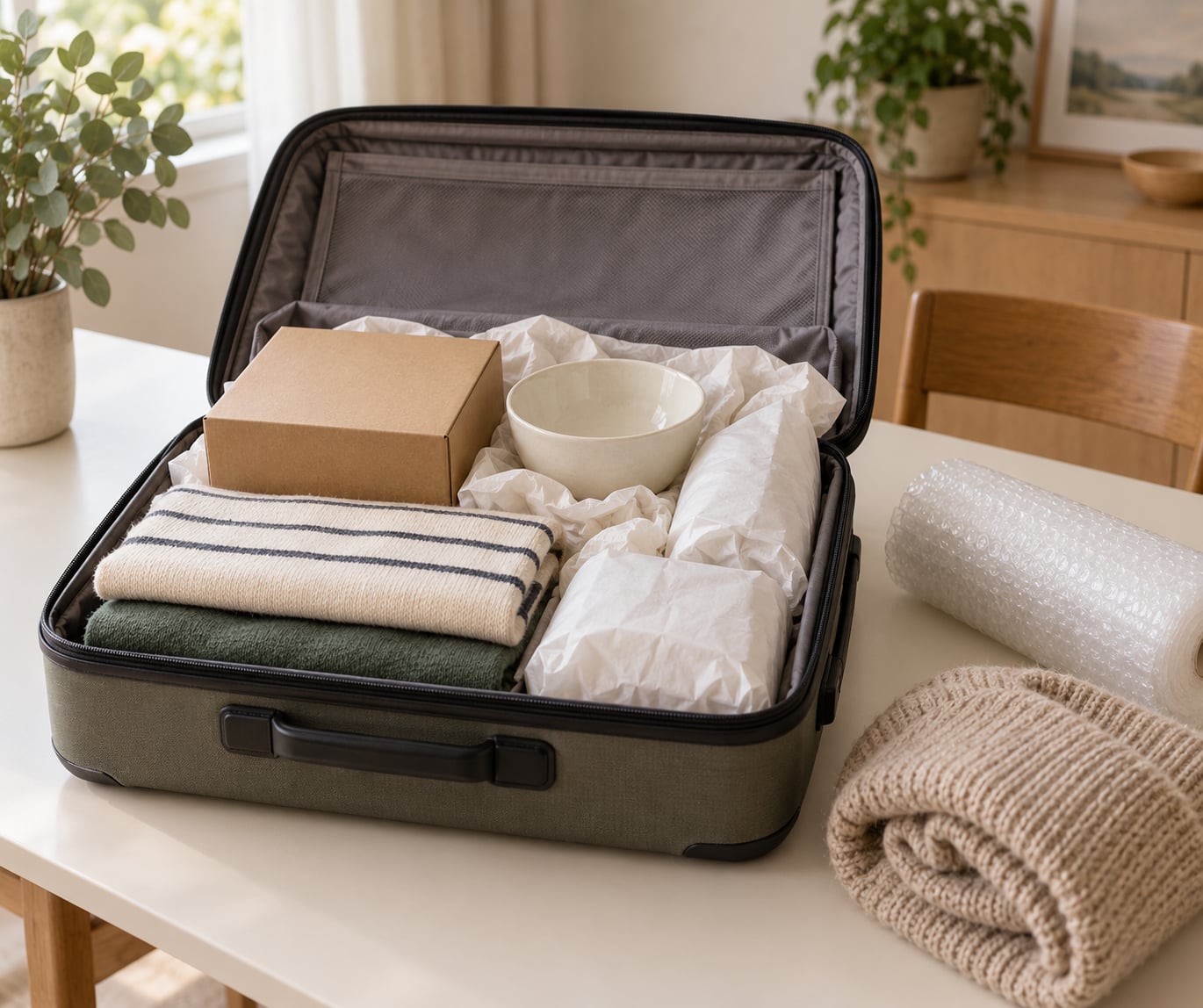
The order matters. Tissue first, then a cushioning layer, then a soft outer layer. Tissue against the surface protects the finish, cushioning absorbs the hit, and the soft outer layer stops the bundle printing a hard edge onto a neighbouring item.
Wrap snug but not tight. A wrap pulled hard enough to compress all the air out of the cushioning removes the very thing that was protecting it, and a tight wrap can also hold a dent in place once it dries. You want a layer you can push a finger into.
Roll the wrapping rather than folding it, so seams do not create hard lines. Tape only the loose end, and never tape directly onto a glazed or painted surface.
Step 4: Use Small Boxes for Valuable or Irregular Pieces
A box is the answer whenever wrapping alone cannot hold a shape. A bottle, a handled cup and a narrow-necked vase all want their own container before they get wrapped at all.
Fit the piece so it does not move when you tip the box. Then fill the empty space inside with rolled socks, a scarf or paper, so the piece sits in the middle of the box rather than resting on the bottom. An empty space inside a box lets the whole thing shift, which is what knocks the souvenir against the corner.
Ask the shop to box anything fragile before you leave. A taped cardboard box from the maker costs nothing and saves you an evening of improvising.
Step 5: Place Heavier Items Low and Near the Wheels
Load the case on its back, wheels toward you, and start at the bottom. Shoes, hard goods and dense items go in first against the wheel end, which is the least exposed part of the case and the part that rarely faces a landing.
Build layers across the case rather than dumping everything in the centre. Each layer gets wrapped souvenirs, then soft filler, then the next layer of clothing. This spreads weight evenly and leaves no hollow pocket for a heavy item to swing into.
Keep the wrapped souvenirs in the middle band of the case. Hard objects belong at the edges, never beside something delicate.
Step 6: Fill Gaps with Soft Clothing
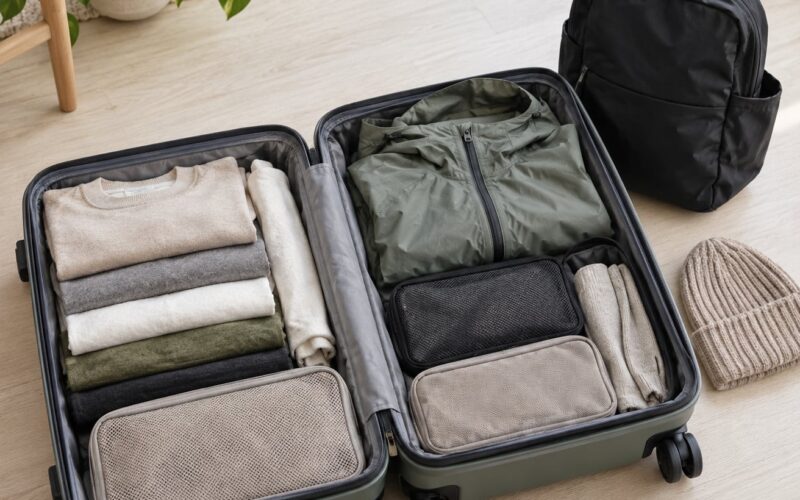
Every gap is a space a souvenir can move in. Roll jumpers and towels rather than folding them, wedge them in around the boxes, and push them into the corners where they will not slide.
Rolled items are better than folded ones here because they spring back instead of staying flat and dead. Leave enough compression that the case closes without a fight, but no more, since an overstuffed zipper can bend the shell and crush what it presses against.
Save a clean sweater for the top layer. If you have to remove something at the airport or repack at the gate, that sweater becomes the wrap.
Step 7: Close, Lift, and Shake the Suitcase Carefully
Zip the case, then lift it a foot off the floor and set it down. Do it again, gently, from the side. Nothing should move, rattle or shift, and no bundle should be visible in a gap.
If you hear a knock, go back to the box that made it and fill the space around the piece. Most of the time it is a hollow bottle rolling in an empty box. If the case will not close without forcing it, take something soft out rather than squeezing the souvenirs.
Do the same test with your personal item, then set the most irreplaceable piece there instead of in the checked bag. That is the single biggest upgrade you can make.
Common Mistakes
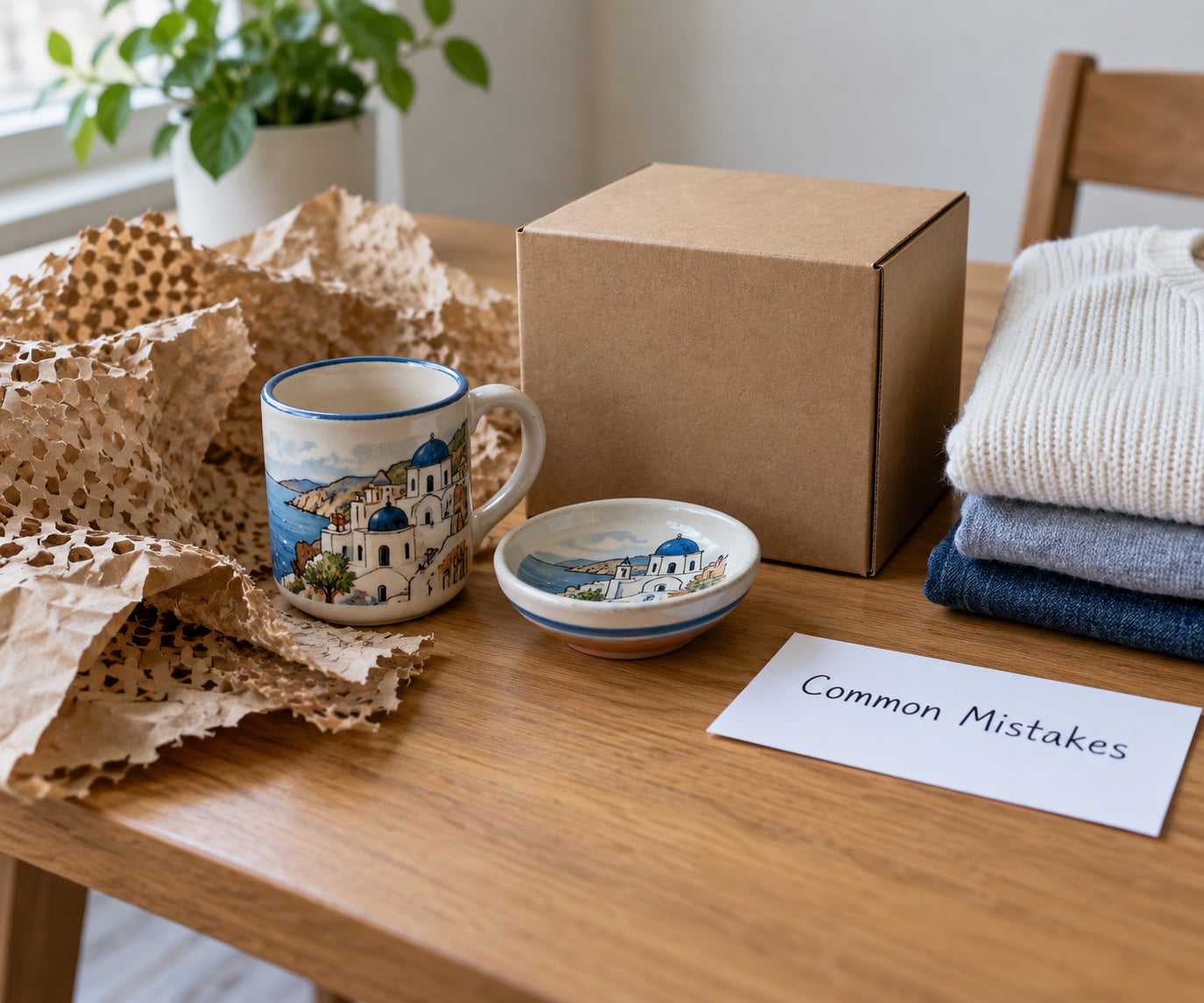
- Wrapping too tight. Compressed cushioning stops cushioning. Pull the wrap snug, not stretched.
- Using flat paper and newspaper as the wrap. Ink transfers and the sheet has no give. Tissue or plastic is better, and keep inked pages away from anything pale.
- Leaving a box half empty. Fill the inside, not just around the box.
- Packing fragile pieces against the shell or in a corner. Those are the impact zones. Centre them.
- Relying on a softshell to do the work. It dents locally. Add cushioning so the shell never becomes the first thing the souvenir hits.
- Repacking in a rush. The last night at the hotel is when most souvenirs break, because the bag gets rebuilt in twenty minutes. Reserve thirty.
If something does break, take photographs at the bag, keep the broken piece and the packaging, and file a report with the airline before you leave the airport. Airlines handle fragile and valuable items differently from ordinary clothing, so early reports make a real difference to what happens next.
Frequently Asked Questions
What is the best way to pack fragile items in a suitcase?
Wrap each item separately in tissue paper, then a springy cushioning layer such as bubble wrap or rolled clothing, then a soft outer layer. Box anything with a handle, stem or hollow shape, fill the empty space inside the box, and place the piece in the centre of the case surrounded by cushioning on all sides. Fill every gap so nothing can shift.
How do I pack fragile souvenirs without bubble wrap?
Use what you already own. Tissue paper or plain packing paper goes first against the surface, then knotted grocery bags for air cushioning, then sweaters, scarves and socks as the soft outer layer. Rolled socks fill the inside of small boxes, and an airline blanket or a clean towel works well for the largest pieces. The soft outer layer matters most of all.
Is wrapping something too tightly bad for fragile items?
Yes. A wrap pulled tight compresses the air out of the cushioning, and cushioning only works because it can still give. A tight wrap can also press a dent into a ceramic piece that stays there after you unwrap it. Wrap snug enough that the bundle holds its shape and no looser, and keep hard goods outside the wrap rather than trapped under it.
Can I bring souvenirs through airport security in my carry-on?
Glass, ceramics, shells and wooden items pass through security normally. Liquids are the part to plan carefully, because containers over 100 millilitres are generally restricted to one resealable bag in most countries, even when the item is inside a checked bag, so check the rules for your departure airport and your destination customs rules before you buy. Canned and jarred food often travels in checked luggage but must be declared on arrival.
Will an airline replace a souvenir that breaks in checked luggage?
It depends on how it was packed and on your airline’s policy. Items described as fragile often carry limited or no liability even when they were packed correctly, while ordinary items are covered up to a set amount per passenger. Photograph the item before packing, keep the box and padding, and report the damage at the baggage desk before leaving the airport, since claims filed later are harder to settle.
How do I pack a fragile souvenir I bought on the last day of the trip?
Ask the shop for a box and some paper, which most will provide for free, and pad it with a sweater in your bag. Wrap the piece, seal it in a resealable bag, and place it at the top of the case surrounded by soft clothing rather than at the bottom. If it is the one item you cannot replace, carry it in your personal item instead of trusting the hold.
Conclusion
The safest order is simple: box the awkward shapes, wrap each piece snug in tissue then something springy, fill the gaps with rolled clothing, keep the delicate items in the middle band of the case, and give the closed bag a lift and a shake before you leave the room. Start tonight by finding the single most delicate souvenir in your bag and giving it a box and a layer of its own.