Most souvenirs fail because people buy them in the moment, not because they buy the wrong object. Learning how to pick souvenirs you will actually keep comes down to a short test: pick the item you would still want a year from now, know exactly where it will live at home, and confirm it survives the journey back. Slow the decision down and the drawer of regrets stops growing.
Table of Contents›
- What You Need to Pick Souvenirs You Will Actually Keep
- Step-by-Step
- 1. Start with the trip, not the shopping list
- 2. Set a souvenir budget and buying rule
- 3. Ask whether it fits your real life
- 4. Prefer meaningful over merely expensive
- 5. Check portability before checkout
- 6. Make one final no-regret check
- Common Mistakes
- How to avoid impulse purchases and souvenir clutter
- Frequently Asked Questions
- What is the best way to choose a travel souvenir?
- How do I know if a souvenir is worth buying?
- Should I buy souvenirs for other people?
- How can I avoid bringing home too many things?
- What are good lightweight souvenirs to buy while traveling?
- Conclusion
What You Need to Pick Souvenirs You Will Actually Keep
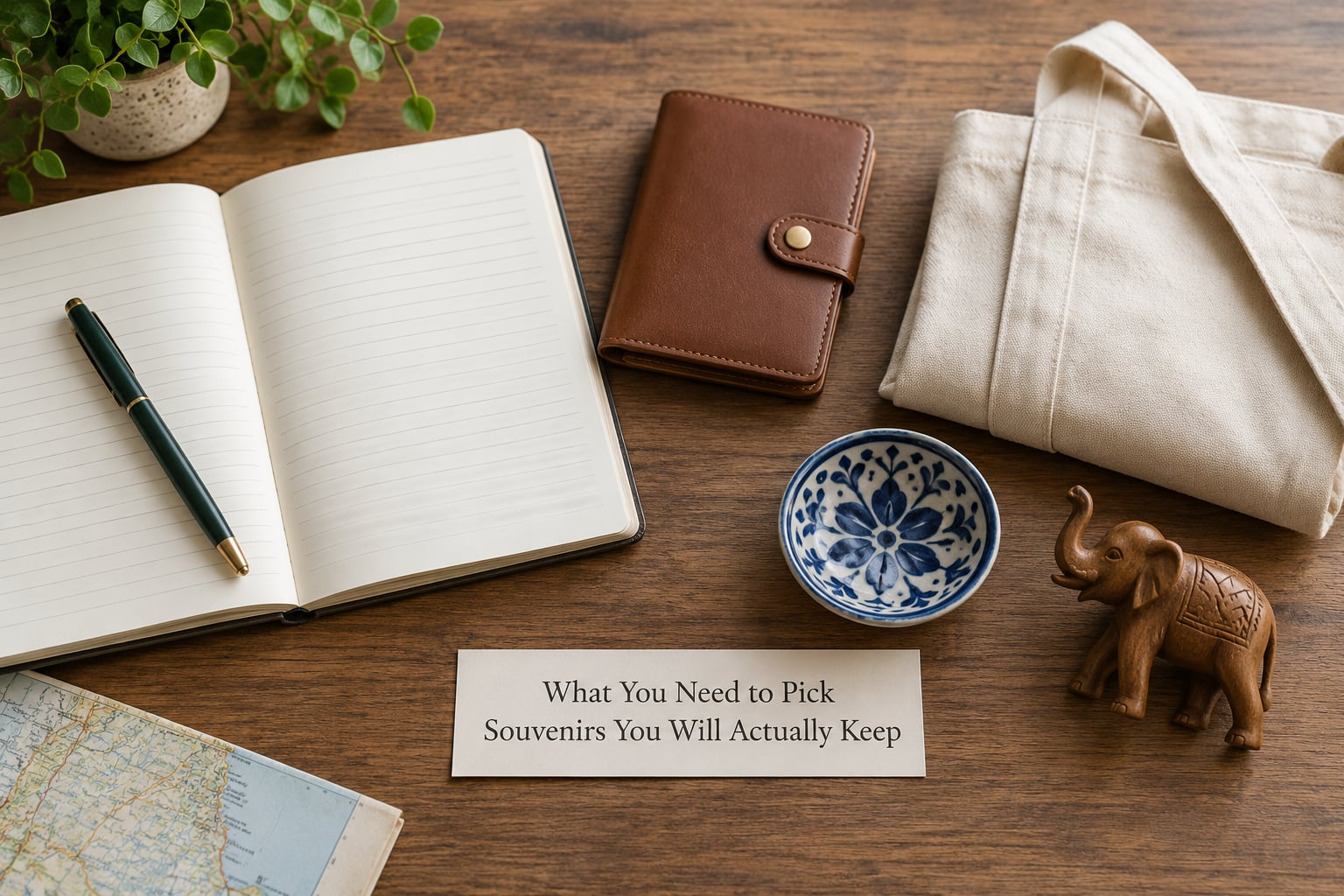
Setup takes about ten minutes before you leave home and roughly five seconds per item in the shop. Everything you need is small, cheap and already in a drawer somewhere.
- A fixed souvenir budget in the currency you will actually be spending in. A number set at home beats a number improvised at a market stall.
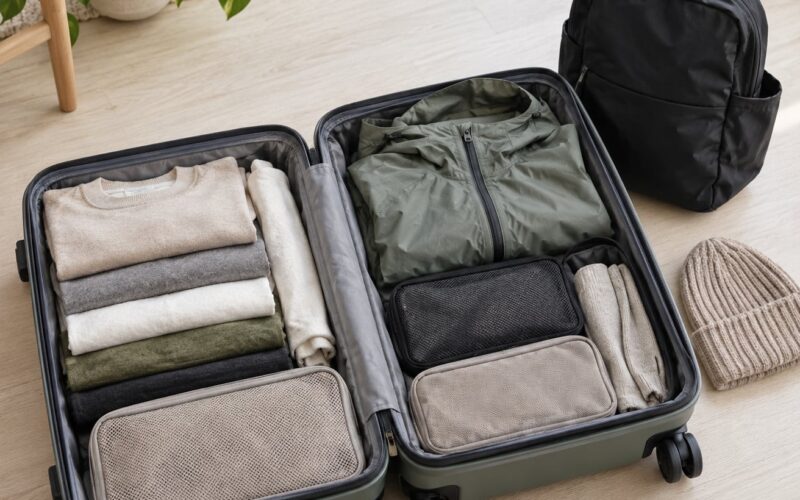
- An honest read on your luggage. One carry-on and a backpack is a completely different souvenir brief than a suitcase with room left in it.
- A note of the trip’s two or three real moments. Not the itinerary, the parts you would actually describe to someone who stayed home.
- A destination for the item. Before the shop, not after. A specific shelf, hook or drawer beats a vague promise to display it later.
A paper notebook works better than a phone note here, because you will write on it in a market with one hand full of a bag. Keep it in your passport wallet and write the trip memories the evening before shopping starts.
Step-by-Step
1. Start with the trip, not the shopping list
On the first evening, write down the moments you would describe to a friend who never came: the market where the vendor remembered your coffee order, the 6am ferry, the museum you nearly skipped.
Those moments become your filter. A generic item that could be bought in ten other countries fails immediately, because it has nothing to do with the trip you actually had. An item that makes you think of a specific afternoon has a fighting chance.
On the Rick Steves travel forum, one long-running collector explains the choice in terms of size, not sentiment: fridge magnets, bookmarks and tea towels, because they take up almost no room. Deciding your theme in week one makes the shop much easier, because you are looking for four more bookmarks instead of browsing everything.
2. Set a souvenir budget and buying rule
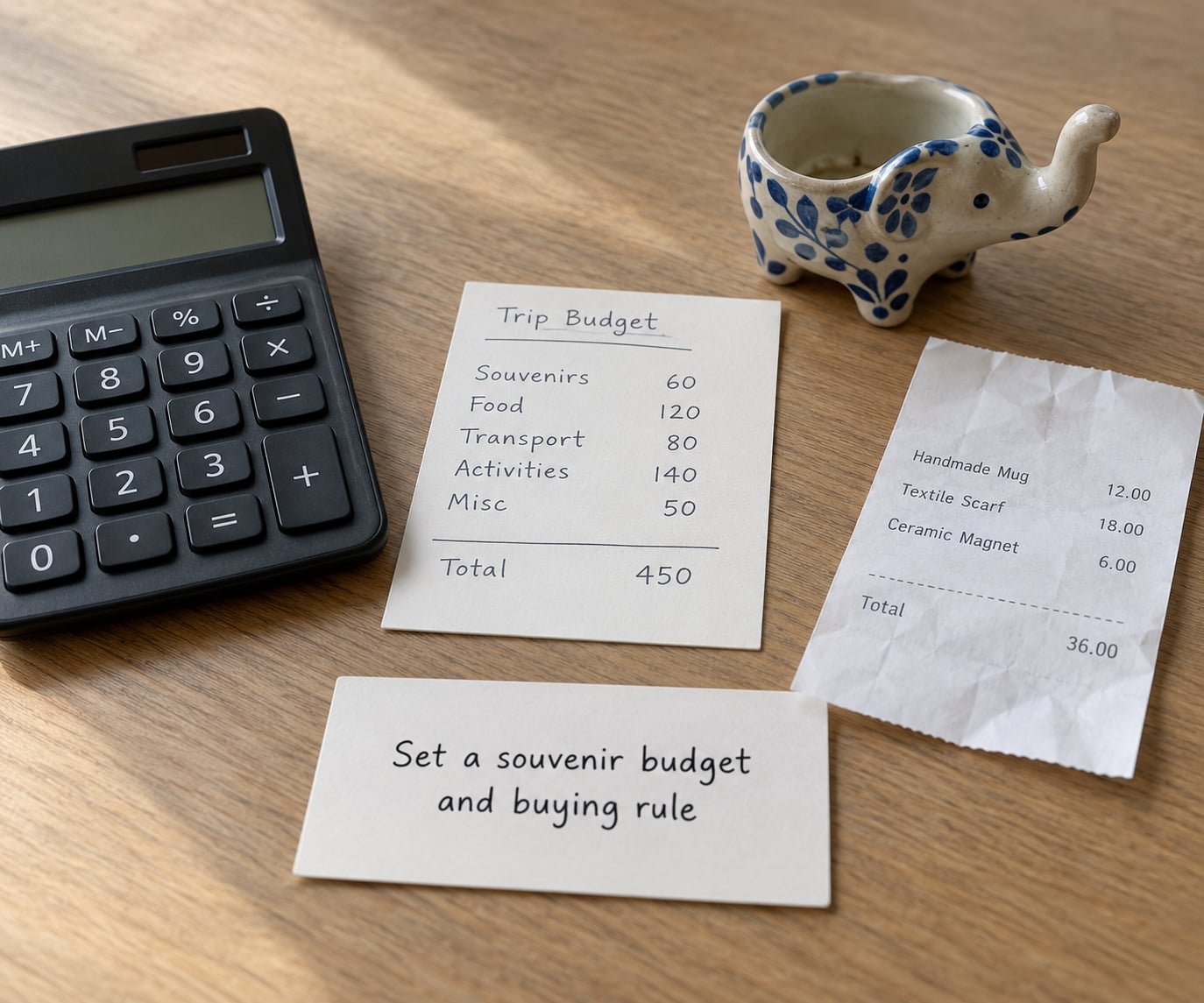
Pick one number and one rule before you land. The number stops impulse spending; the rule keeps your mood out of the decision.
The rule that works best for most people is a waiting period. If you want something on day one, write it in the notebook and look at it again the next morning. More than one trip souvenir is a hole in a bag you later have to carry up a hill.
You can also cap quantity. A one-per-trip rule, or a flat limit of three small items for the whole trip, turns a vague intention into something you can actually follow. Rules set before travel get followed; rules made in a market usually do not.
3. Ask whether it fits your real life
Run three checks. Will I use this at least once a month? Do I know the exact spot it will live in? Is there a reason it is mine and not just available?
Everyday use is the strongest predictor of keeping something. A forum poster describes a neoprene coffee cup sleeve that lives permanently in the car and in the work bag, and it is still the souvenir they mention first. Nothing about it was decorative.
Be honest about space. Solo travellers in small flats often have one shelf, and an item with nowhere to go becomes a guilt object within a year. If you cannot name the spot, you have already answered the question.
Check it against the people you live with too. A reader of a 2014 travel blog post wrote that her husband called every souvenir another dust collector, and she stopped buying for years. She now buys only postcards and ornaments she uses each December. Household friction is a real filter, not a small one.
4. Prefer meaningful over merely expensive
Price is a poor guide. Provenance, materials and who made the thing tell you far more about whether you will still want it in five years.
Regret in this category runs in an unexpected direction. The Canberra Times reported in June 2026, citing booking data, that 37% of travellers felt buyer’s remorse about art and crafts and wished they had bought the paintings and handmade objects instead of the cheaper alternatives. People regret not buying the real craft more often than they regret overpaying for it.
A traveller on r/Regrets put the same instinct plainly: it is better to have the pair of boots you love from the trip than to save a little and end up with something that is not from that place at all. Authenticity beats the bargain.
That cuts both ways. The same forums carry stories of being talked into counterfeit goods, including a handbag in Rome that the buyer still tells as a funny story rather than a favourite. If a stall cannot tell you who made it or what it is, assume it was made somewhere else.
5. Check portability before checkout
Ask three questions at the counter. What does it weigh, what happens if it breaks, and am I allowed to carry it home?
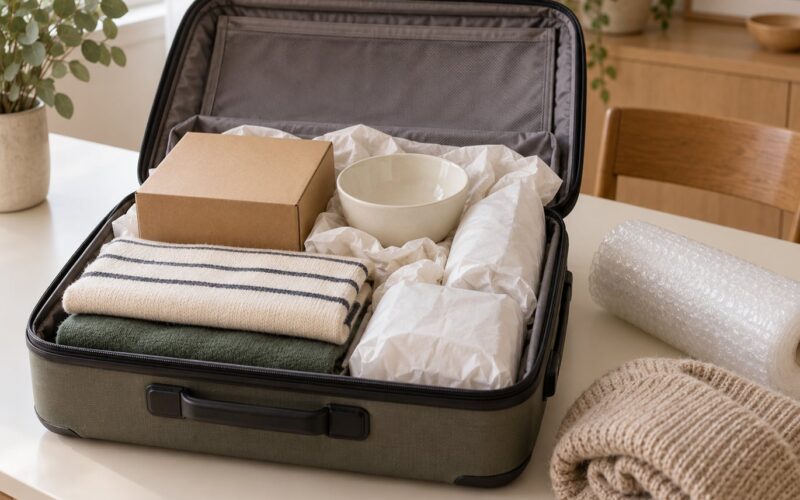
Fragile pottery and glass belong in your personal item, not loose in a checked bag. Liquids above cabin limits go in checked luggage and risk a slow, expensive disposal at security. Choose the flat, light, unbreakable version when a trip has a long flight or several transfers ahead of it.
Import rules vary by destination and change, so check yours before you buy rather than at the border. Ivory, coral, unsealed shells, certain animal skins and unworked wood are restricted in many countries. Packaged food is fine more often than people expect, but check the expiry date and whether the ingredients are allowed through your destination’s rules.
For bulky handmade pieces, ask the maker or shop about insured shipping and customs paperwork. You lose the flight risk and usually pay more, but you keep the object that the Keep Test actually wants you to buy.
6. Make one final no-regret check
Before paying, ask four questions out loud. Is it useful? Does it carry the memory of a specific moment? Would I choose it again knowing what I know now? Will I still be looking after it in a year?
If it fails two or more, leave it in the shop. That rule is the whole method, and it works because it separates the trip you are having from the item you would keep.
Learning how to pick souvenirs you will actually keep is mostly about resisting the moment. The best souvenir on most trips is the one you chose deliberately, carried home safely, and still have something to say about five years later.
Common Mistakes
Most souvenir regrets come from four predictable errors, and each one has a simple correction.
- Buying by price tier. The small cheap one feels safer, so you end up with three of them. Fix: buy one better thing instead of three forgettable things, or nothing at all.
- Collecting many small objects. Six trinkets occupy the same shelf as one good bowl and get noticed far less. Fix: set a quantity limit at the start of the trip.
- Choosing purely decorative pieces. If nothing in your week touches it, it is display, not a keepsake. Fix: ask where it lives and who moves it.
- Delaying the decision to departure day. Last-minute shops sell souvenirs, not memories, and flight-day pressure is real. Fix: make your picks early and write them down.
How to avoid impulse purchases and souvenir clutter
Use a three-line pre-purchase checklist. Write the item in your notebook with the date, then wait until the next day to decide. Most of the time the honest answer is that the appeal was the moment rather than the object.
It also helps to say no out loud. Vendors read hesitation, and a polite decline costs you nothing. You are allowed to leave a market with nothing but a good memory of it.
Finally, keep one honest category per trip: consumables, one wearable, or one display piece. One defined theme makes a collection feel intentional instead of cluttered, which is the difference between a shelf you enjoy and a drawer you avoid.
Frequently Asked Questions
What is the best way to choose a travel souvenir?
Start with the trip, not the shop. Write down the two or three moments you would describe to someone who stayed home, then buy something tied to one of them. Before paying, check four things: will I use it at least once a month, do I know exactly where it will live at home, is it genuinely made in this place, and can it survive the journey home intact. Items that fail two checks stay in the shop.
How do I know if a souvenir is worth buying?
It is worth buying when it scores well on use, provenance and home fit rather than price. Provenance means you can say who made it and why it comes from this place, and home fit means you can name the exact spot it will occupy. A more expensive handmade object usually outlasts three cheap ones, which is why surveys find buyers most often regret not purchasing the local craft.
Should I buy souvenirs for other people?
Buy for others only when you know their space and their habits. The gift version of the Keep Test asks whether they already own something similar and whether the person they live with will welcome another object. Consumables, a good tea or a book from an author they read travel writing about tend to land better than decorative pieces. For solo travellers, sending one thoughtful item home beats carrying four back.
How can I avoid bringing home too many things?
Set both a budget and a quantity limit before you travel, and add a waiting rule so nothing is bought on impulse. Choose one theme per trip, such as tea, bookmarks or patches, and refuse the sixth object in that theme. If your flight is long or your bag is small, that is a hard constraint rather than a preference, and lightweight items like postcards, bookmarks or packaged spices fit the trip far better.
What are good lightweight souvenirs to buy while traveling?
Flat and light wins every time. Good options include postcards, bookmarks, tea towels, enamel pins, patches, printed maps, a locally published book, a scarf that packs down small, or packaged tea and spices you will actually drink. These survive backpacks and carry-ons, cost little to carry and store easily. Fragile pottery and thick framed prints are worth buying only if you can pack them in your personal item or ship them insured.
Conclusion
Souvenirs that survive are chosen with a filter, not with a mood. Write down one trip memory, set a realistic souvenir budget before you fly, and run every candidate through the same four checks on use, home fit, provenance and portability.
Start tonight, with the notebook. Twenty minutes of preparation is what separates a shelf you enjoy from another drawer you keep meaning to empty.