Most people can sleep on an overnight train. The difference between a broken night and a good one comes down to four things: where you sit, how much light gets in, how warm you stay, and how much you prepared before boarding. Get those right and the ride becomes a hotel room that moves.
Learning how to sleep on an overnight train takes about 20 minutes of planning and roughly a week to get genuinely good at. This guide covers the whole sequence, from picking the berth to setting the alarm that gets you off at the right station. Updated October 2026.
Table of Contents›
- What You Need
- Step-by-Step
- Choose the Right Sleeper or Seat
- Pack a Lightweight Sleep Kit
- Prepare Your Body Clock Before Boarding
- Make the Berth Comfortable and Private
- Block Light, Noise, and Distractions
- Stay Comfortable Without Oversleeping
- Common Mistakes
- Frequently Asked Questions
- How do people actually sleep on an overnight train?
- How do you sleep on a train without missing your stop?
- Is it safe to sleep on an overnight train?
- Is a top bunk or a bottom bunk better for sleeping?
- What are the most common overnight train mistakes?
- Conclusion
What You Need
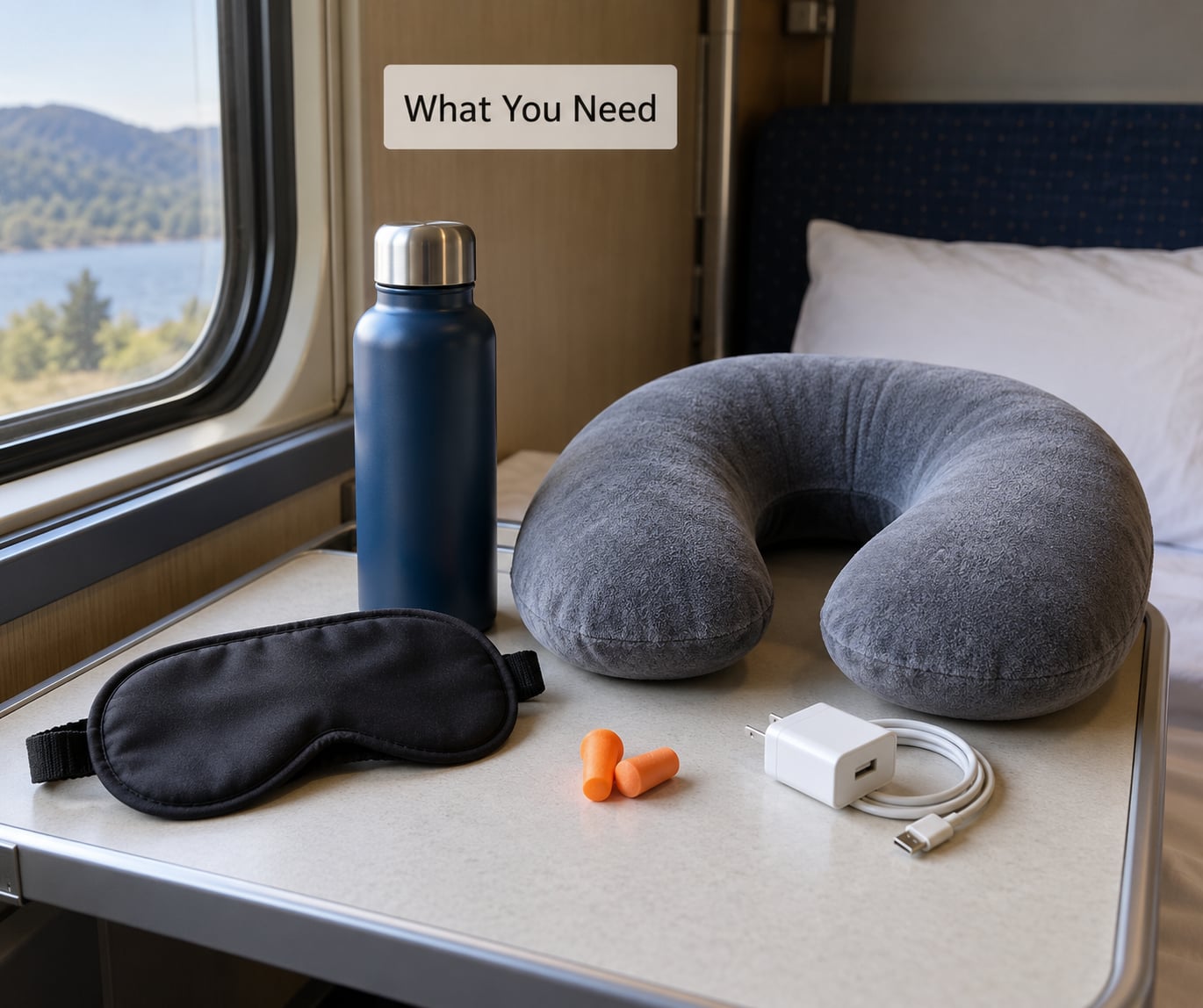
The short list: a booking that puts you somewhere you can actually lie down, and a small kit that does not weigh much.
- A berth you can lie flat in, if the route offers one. Coach works too, but the sleep is a different experience.
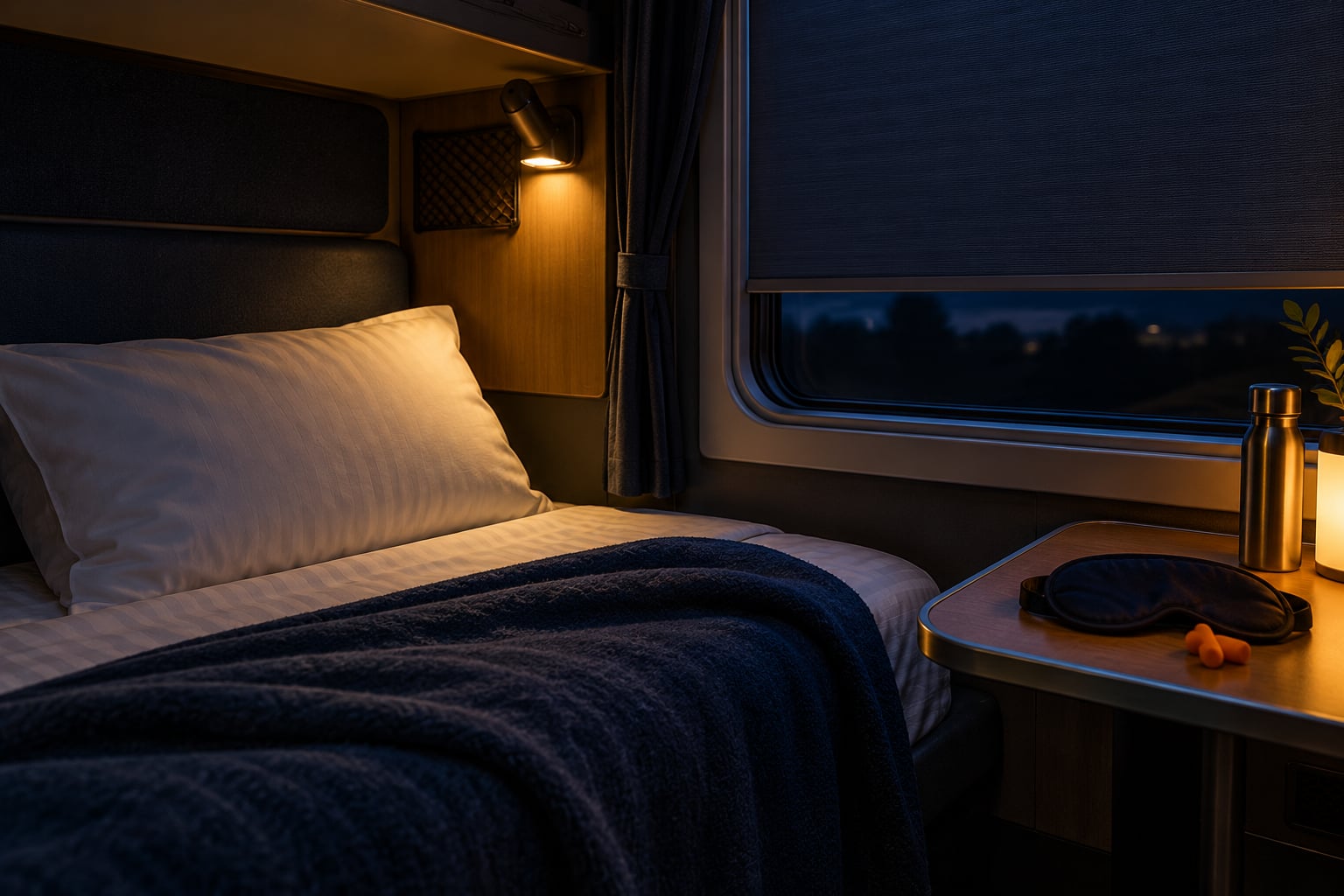
- An eye mask that seals around the nose bridge. The cheap foam kind is why people give up.
- Earplugs or noise-cancelling headphones. On an r/Interrail thread about sleeper tips, the top-voted advice was explicitly not to buy cheap earplugs — the difference is the seal, not the price tag.
- Neck and lumbar support. A travel neck pillow handles the head; a small lumbar roll or a rolled jacket behind the lower back stops the seat pushing you into a hunch.
- A water bottle that fits the cupholder. Amtrak cupholders take a standard 12 oz bottle, so measure before you board.
- Light clothing you can sleep in, plus one warm layer. Carriages cool down noticeably once the sun goes.
- A power bank, and anything downloaded for offline listening, because onboard wifi is unreliable and the ride is long.
- Two alarms set on two different devices, plus a note with your arrival time in local terms.
On Amtrak, a sleeper also comes with sheets, a blanket and a pillow, so pack less bedding than you would for Europe. In Europe, Nightjet and Interrail couchettes usually rent bedding at the station or bring a sleep liner instead.
Step-by-Step
Choose the Right Sleeper or Seat
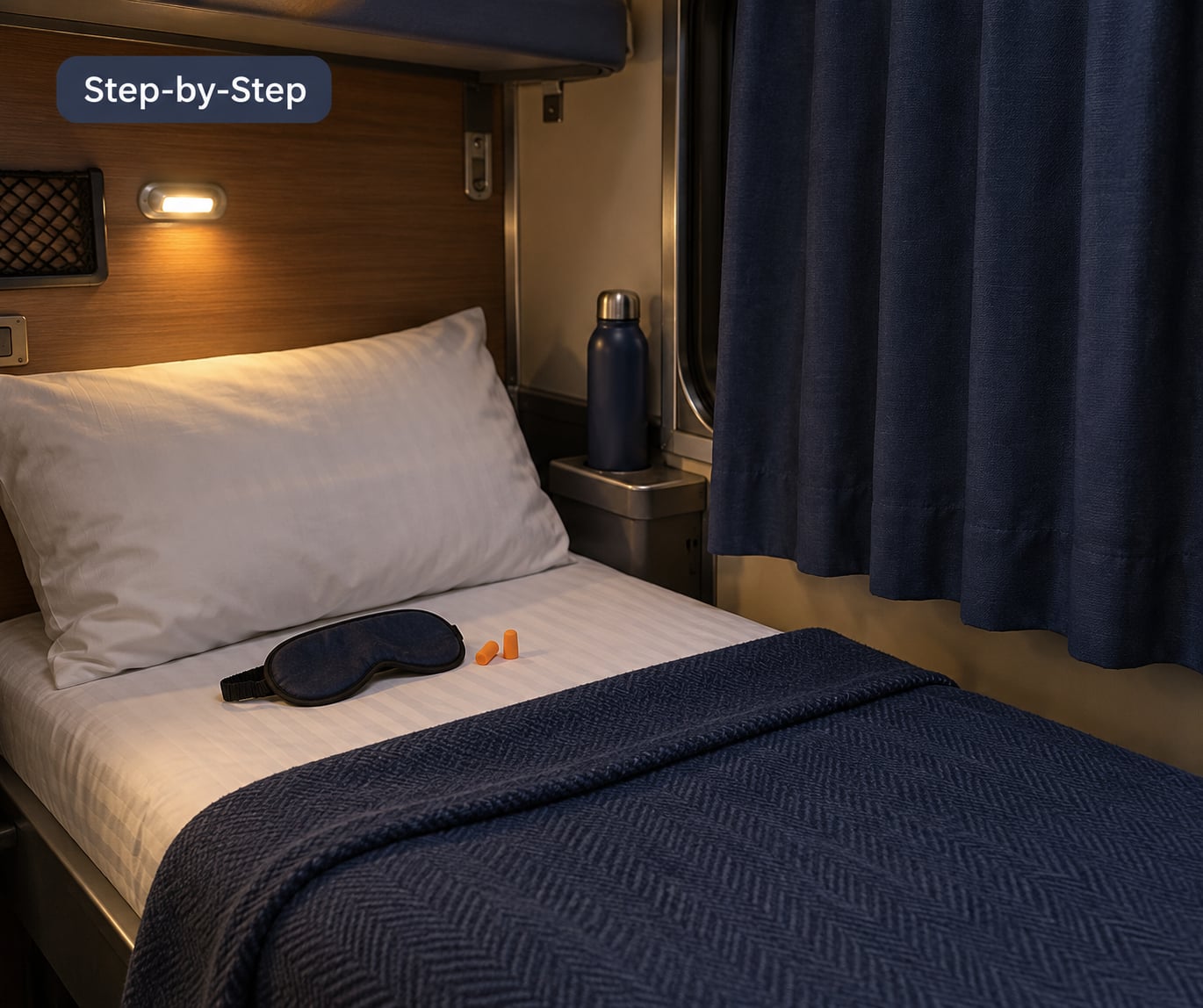
Book the space where you can lie flat, and the lower berth if you are new to this. A roomette on Amtrak is roughly 20 square feet and folds two facing seats into a bed; a bedroom is about 45 square feet and has its own bathroom, which is the single biggest upgrade you can buy for actual sleep.
Inside a shared sleeper cabin, take the lower berth. Upper bunks catch the rail bumps more directly — a Business Insider reporter who logged 128 hours of overnight rail travel found the top bunk the shakiest, and recommends it only to people who already know they sleep through motion.
In coach, the goal is two seats to yourself. Conductors paper a three-letter destination tag above each seat in some services, so a pair with no tag, or a tag for a nearer stop, is often unassigned. That trick, credited to a widely shared sleeper-train essay, works up to about 5 ft 10 in of height. If you are taller, or the carriage is full, plan for a real coach night rather than a good one.
On Amtrak, the 750-mile rule is an operational practice rather than a sleeping rule: on overnight routes covering roughly 750 miles, a full-service dining crew is scheduled onboard. Practically, it means more staff walking the car at night, so bring earplugs even in a roomette.
Pack a Lightweight Sleep Kit
Pack for the seat, not for the journey. Everything in your kit should be reachable from where you lie without standing up.
- Eye mask, worn over whatever light leaks past the blind.
- Earplugs, plus a backup pair in the same bag, because one is easy to lose down a berth gap.
- Neck pillow and a rolled layer for the lower back.
- Toothbrush, a few wipes, a hair tie, anything you would be annoyed to be without at 4 a.m.
- Water, and a light snack for the three a.m. stretch.
- A small pouch for phone, wallet and passport that stays on your body or strapped to the seat frame, never on the hook above a stranger’s reach.
Trains accept full-size liquids, aerosols and razors in checked luggage, which is a real advantage over flying and means you do not have to decant anything.
Prepare Your Body Clock Before Boarding
Stay awake for the two to three hours before you intend to sleep, then eat early. A heavy meal in the stomach plus a night of rail bumps is a bad combination, and an empty stomach at 3 a.m. is its own problem.
Stretch for five minutes while you wait on the platform, then walk the length of the train once you board. It tells you where the restroom car and the vestibules are, which is genuinely useful later.
Do not attempt to fix a bad body clock by staying up for two days before the trip, and do not take anything that knocks you out for a long, heavy sleep. You have to be able to wake at a known time.
Most overnight trains are built for sleep, not for wakefulness — lights dim, the dining car closes, and announcements get quieter. Aim to be ready for bed roughly 90 minutes after boarding, and expect to actually be tired by then.
Make the Berth Comfortable and Private
Most of the work here is done before you lie down. Put the pillow where your neck sits naturally, not where the bed geometry suggests it should go, and wedge the rolled layer behind your lower back.
In coach, recline the seat fully and set the footrest as high as it goes; many coach seats then go close to flat, which is a different proposition from a standard airline seat. A hoodie bunched into the gap between seat and wall stops drafts and gives you something to grab when the train rolls.
Lockers in sleeper cabins usually take a daypack but not a full suitcase, and the overhead racks in coach have height limits. Solve the luggage problem before you lie down, not at 2 a.m.
Block Light, Noise, and Distractions
Treat light as a technique, not a complaint. Close the blind fully; if corridor light still cuts under it, hold it shut with a jacket draped over the gap. An eye mask goes on top of that, and if the mask leaks, an extra layer of fabric beats a thinner mask.
On the 2012 Amtrak forum thread about curtains open or closed, the practical advice is exactly this: improvise, stack material until the dark is total, and keep the blind open only if the night view is worth staying awake for.
For noise, earplugs handle the steady hum. Announcements, door chimes and the conductor walking through still cut through, so a second layer helps — white noise or a track you have downloaded beats silence because your ears stop listening for the announcement.
On temperature, carriages drop after dark, and a train’s heating vents are aimed at the room rather than at you. A layer you can put on without sitting up solves most of it. Some travellers also mention motion sickness medicine for bumpy sections; take it before boarding if you know it works for you, and check the label for drowsiness first.
Other people’s phone screens are a real culprit on a lit carriage. A sleep mask you do not lift for anything is the whole defence.
Stay Comfortable Without Oversleeping
Set two alarms, on two devices, 10 minutes apart, for a time roughly 45 minutes before your arrival. Then check that time against the schedule, because a delayed train changes it.
Keep valuables on your person or attached to the seat frame rather than in a bag on the floor or a hook above the aisle. A phone with an alarm and a wallet with a card are the two things worth keeping closest.
If you need the restroom, go before the carriage settles and note where the nearest one is. A locked vestibule door on a moving train is a common and very avoidable annoyance.
When the conductor comes through, ask for your station and arrival time. It takes ten seconds and it turns a vague night into a timed one.
If you wake at 3 a.m. and the train has stopped, do not assume you have missed anything — most overnight services stop for service, signalling, or a crew change. Check your alarm, your arrival time, and the station board before you panic.
Common Mistakes
Booking the wrong berth. First-timers take upper berths and then blame the ride. Take a lower berth, or a roomette if your budget stretches, and you remove most of the movement before it starts.
Packing the whole suitcase. Everything you own on a coach seat means everything in your way. Keep the sleep kit in a separate small bag that lives at your feet, and leave the rest in the rack where you cannot reach it.
Setting one alarm. One alarm is a coin flip. Two devices, 10 minutes apart, plus a second phone in your bag if you are travelling with one.
Leaving valuables somewhere loose. Solitary travel and a shared carriage need a rule: nothing you would miss stays anywhere you would not sit on. Bags go under your legs or across your body, not on a hook or the floor.
Reading rail bumps as a failed night. The motion is part of the vehicle. A light sleeper wakes at every stop and every shift change; the answer is a sealed mask, sealed earplugs, and a lower berth, not a better attitude.
A few last things that help more than they sound. Bring a second pair of earplugs, because a lost one cannot be recovered at 2 a.m. Download your music before boarding. Take the bathroom trip before the carriage locks. And treat the ride as the destination rather than dead time between two cities — travellers who log the hours that way consistently rate the night better than those counting down to the station.
Frequently Asked Questions
How do people actually sleep on an overnight train?
Most people sleep on an overnight train by controlling four things: light, noise, temperature and motion. Block the light with a sealed eye mask, seal out noise with good earplugs, add a warm layer before the carriage cools, and pick a lower berth or a two-seat coach span. Preparation matters as much as gear, so eat early, walk the carriage once, and set two alarms before you close your eyes.
How do you sleep on a train without missing your stop?
Set two alarms on two different devices, about 10 minutes apart, for roughly 45 minutes before your scheduled arrival. Write the arrival time and station name on paper as a backup, and ask the conductor when they come through. Schedules slip, so confirm the time with them rather than trusting your booking alone, and keep your phone charged overnight.
Is it safe to sleep on an overnight train?
It is generally safe, and the main risks are practical rather than dramatic. Keep your phone, wallet and documents on your body or strapped to the seat frame, and do not leave a bag on the floor or a hook above the aisle. Booking a lower berth or a seat near a restroom also helps, since you are closer to other passengers and staff all night.
Is a top bunk or a bottom bunk better for sleeping?
The lower berth is better for nearly everyone, and especially for first-timers. Upper bunks sit closer to the carriage roof and feel the rail bumps more, which is what a Business Insider reporter who logged 128 hours of overnight rail travel concluded. The upper berth is worth it mainly if you are a confident sleeper or want the ceiling rather than a stranger above you.
What are the most common overnight train mistakes?
The usual ones are booking an upper berth as a first-timer, packing a full suitcase into a coach seat, setting only one alarm, leaving valuables somewhere loose, and skipping the eye mask because the light does not seem that bad. Each has a simple fix, and the first hour after boarding is where you either set up your space properly or spend the whole night fighting it.
Conclusion
Start with the booking, because it is the only decision you cannot fix on board. Choose a space where you can lie flat, take a lower berth if you are a first-timer, and if coach is your only option, aim for an unassigned pair of coach seats rather than a single one.
Everything after that is a short list. Eat early, walk the carriage, set your pillow and lumbar support before you lie down, close the blind and put on a sealed eye mask, add a warm layer when the temperature drops, keep valuables on your body, and set two alarms for 45 minutes before arrival.
None of that is exotic, and that is the point. The riders who enjoy overnight trains are not tougher or luckier than everyone else; they just decided in advance which four variables to control, and then controlled them.