How to hike safely in bear country comes down to three things: prevent the encounter, carry bear spray where you can reach it in one second, and know the species-specific response before you need it. Make noise, hike with company where you can, store food properly, and read the trail for fresh bear signs. Most encounters end without harm, and nearly all of those were avoidable.
I have hiked solo in black bear country in the Northeast and grizzly country in the Canadian Rockies, and the routine is boring on purpose. Boring is the point. Every step below is drawn from National Park Service, Parks Canada and American Bear Association guidance, plus the trail reports and encounter write-ups hikers share afterward.
This guide runs about a half hour end to end. Read the steps section once now, keep the checklist section handy before you leave, and skim the encounter response steps the night before so your hands already know what to do.
Table of Contents›
- What You Need
- Step-by-Step: How to Hike Safely in Bear Country
- Step 1: Check current conditions before you leave home
- Step 2: Plan the route and tell someone where you are going
- Step 3: Carry bear spray and know how to use it
- Step 4: Store food, trash and scented items correctly
- Step 5: Make noise and stay aware on the trail
- Step 6: Read the trail for fresh bear signs
- Step 7: Set up camp without attracting bears
- Step 8: Know what to do if you see a bear
- Step 9: Handle a defensive or predatory attack
- Step 10: Leave safely and report what you saw
- Common Mistakes
- Frequently Asked Questions
- Does bear spray actually work on a charging bear?
- Should you run if a bear is chasing you?
- Is it safe to hike alone in bear country?
- How do you store food in bear country without a bear canister?
- What should I do if a bear is near your camp?
- Do children and dogs change the bear safety plan?
- Conclusion
What You Need
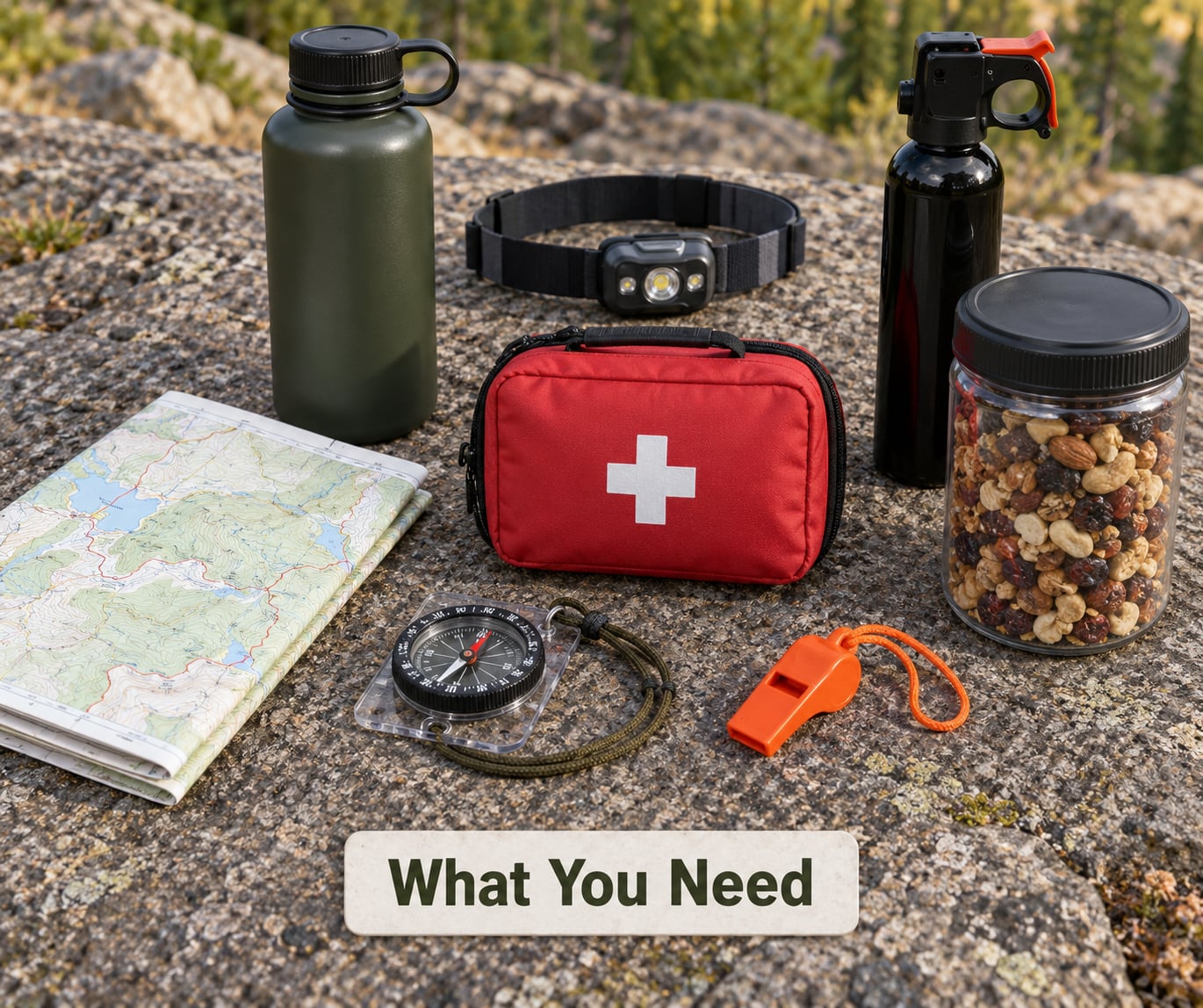
Most of the gear is ordinary backpacking kit. The only item people routinely get wrong is bear spray, because they buy it and then bury it in the top of the pack where they cannot reach it with shaking hands.
Trip preparation
- Current bear activity reports, trail closures and fire restrictions for every area you will cross
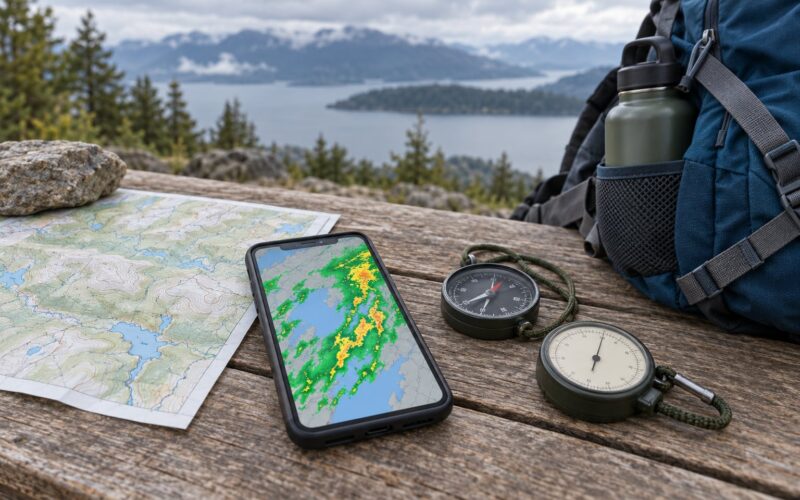
- An offline map plus a paper map, and a compass you can actually use
- A written itinerary with route, camps, vehicle details and a check-in time, given to someone at home
- A headlamp with spare batteries, even on an overnight plan
Trail safety
- First-aid kit, whistle, and a charged phone in a pocket, not in the bottom of the bag
- Ten essentials plus one day of food in case you need to walk out long
- Warm layer and rain shell, because wet cold turns a bad afternoon into a night out
Bear protection
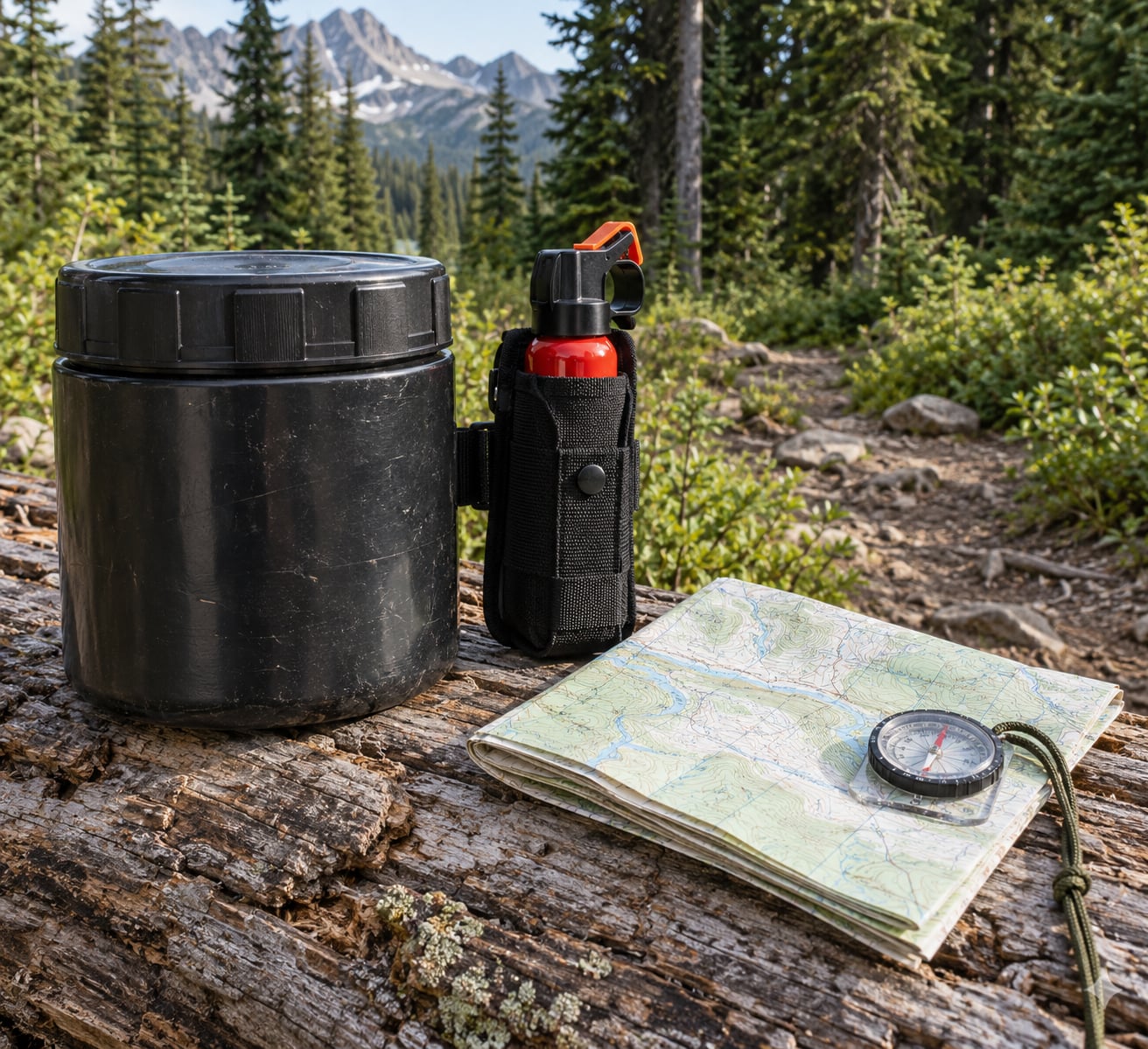
- EPA-approved bear spray in its original labelled canister, in a holster or sheath on your belt or chest, safety clip engaged
- An inert practice canister so you can rehearse the draw and the sweep
- Food storage approved for the area: bear-resistant canister, supplied locker, or a proper hang if that is what the local rules require
- Whatever the storage method is, a bag for trash, pet food, toiletries and anything else that smells like dinner
What you leave behind matters as much as what you carry. Sunscreen, lip balm, deodorant, wet towels and cooking fuel all attract bears, so they go in the storage container too, not in the tent.
Skip the bear bells. Hunters and wildlife agencies say they are ineffective because a walking bear is used to bells, and they cannot make the human noise you need at the moment it counts.
Step-by-Step: How to Hike Safely in Bear Country
Step 1: Check current conditions before you leave home
Read the park or forest service bear activity report, the trail closure list and the road status the evening before and again that morning. Closures exist because of active bear activity, fire, habitat damage or wildlife movement, and ignoring one is the most common way careful hikers get into trouble.
Why it matters: conditions change weekly, and a seasonal closure is usually the result of a bear that had cubs nearby or an animal that learned to associate people with food.
How you know you handled it: you can name your exit routes, you know whether an overnight requires a permit or a food locker, and you chose the route with today’s information rather than last month’s blog post.
Step 2: Plan the route and tell someone where you are going
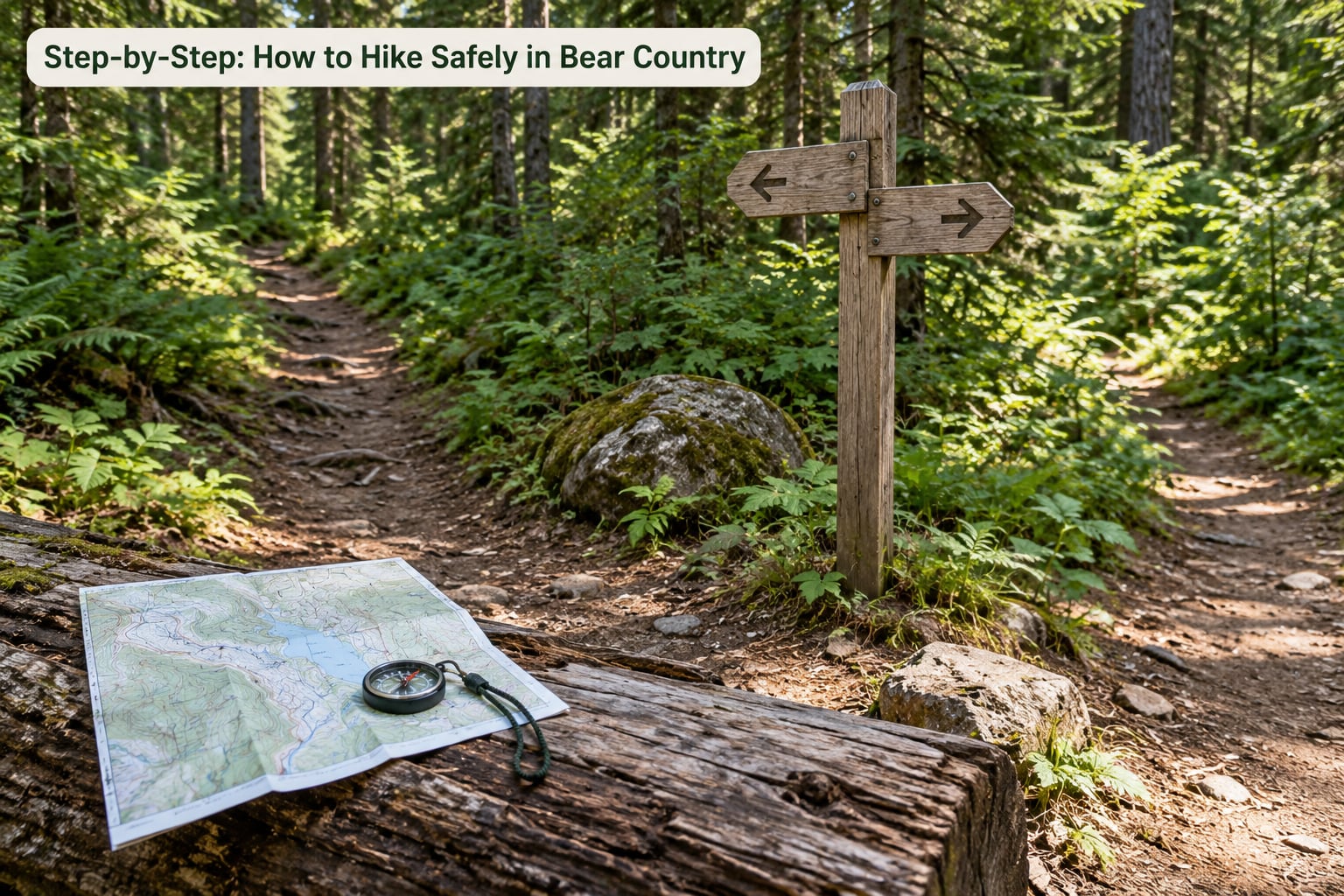
Pick a route that fits the least fit person in the group, and identify at least one bail-out point where you can reach a road or a maintained trail. Download the offline map, mark the bail-outs, and carry a paper backup with a compass.
Leave a precise itinerary with a trusted person: route, camps, vehicle description and licence plate, party size, and the time you expect to be back. If you are solo, add your planned check-in time and your exact return date, and set up a satellite messenger or a personal locator beacon if the cell coverage is unreliable.
Why it matters: search and rescue teams start with your plan. Without one, the first days are spent looking for you rather than helping you.
How you know you handled it: the person at home can describe your route and your return time without asking you a single question.
Step 3: Carry bear spray and know how to use it
Carry bear spray on your belt, hip or chest in a holster or sheath with the safety clip engaged, so a draw is one motion: thumb, click, hand down. Check the canister for leaks, read the expiration on the label, and replace anything past its date or exposed to freezing, which can ruin the propellant.
Deploy it when a bear charges inside roughly 15 to 30 feet, about ten yards. Aim low at the bear’s path and sweep side to side, building a wall of mist between you and the animal. Spray clouds drift, so a stream aimed high or into the air misses entirely. Practise the draw and the sweep with an inert canister a couple of times a season until it is boring.
Keep it on you rather than in the pack, and never strap it to the outside of a backpack where it snags on brush. Hikers on forums recount stowing spray in a bike bottle cage and watching the seconds run out before they could reach it. Body-mounted is the only placement that survives a surprise.
Why it matters: bear spray is the last line of defence, not a guarantee, and it only works inside its effective distance. Placement and practice decide whether it is even there when you need it.
How you know you handled it: you can draw it, clear it and sweep low without looking down.
Step 4: Store food, trash and scented items correctly
Pick the storage method the local rules require. Bear-resistant canisters are the standard in most US parks and are proven. Lockers are free and bear-proof where a park supplies them. Bear bags only work if hung properly: bagged, hoisted at least ten feet off the ground and six feet from the trunk, then tested by an adult. If the area bans hanging, do not improvise.
Everything scented goes in: food, trash, pet food, toiletries, sunscreen, lip balm, wet clothing and towels. Cook away from where you sleep, clean dishes immediately, and dispose of waste and dirty paper in the container or a sealed bag, never in a fire ring. Bears that get human food once rarely forget it, which is why agencies close areas where that happens.
Why it matters: most problems at camp trace back to food or scented items left outside the container overnight.
How you know you handled it: your tent holds nothing but sleeping gear, and the container is closed before you turn in.
Step 5: Make noise and stay aware on the trail
Call out or talk loudly at blind corners, before entering dense brush, along noisy streams where the water covers your footsteps, and anywhere wind or terrain blocks sound. Trekking poles striking rock works too. Groups of three or four or more make far more noise than a single hiker and give everyone a chance to react.
Leave the earbuds in the pack. A bear can move at roughly 30 miles per hour, and a trail runner or a cyclist in earbuds has no warning at all.
Why it matters: surprise is what turns a routine sighting into a serious encounter. Most bears give you plenty of warning and leave before you ever know they were there.
How you know you handled it: a member of your group, or a bird, noticed the bear before it noticed you.
Step 6: Read the trail for fresh bear signs
Watch for tracks in soft ground and mud, scat, claw marks on trees, logs torn apart by claws, mounded soil over roots, and bushes stripped of berries. Birds acting agitated or a group of ravens working one spot usually means a carcass cache nearby, so give the area a wide berth and note the location.
Signs tell you a bear is in the area, not that it is hunting you. Fresh signs near a trail is a reason to change your timing or route, not a reason to hurry through faster and louder.
Why it matters: reading signs early gives you options. Ignoring them removes them.
How you know you handled it: you changed something, such as the route, the hour or the plan for the night.
Step 7: Set up camp without attracting bears
Choose a durable site, check the area for fresh sign before you unpack, and keep the food-prep area well away from your sleeping area. Store all scented items the moment you arrive, not later when you are tired. Cook, eat and wash up at the cook site, then hang a clean towel with your clothing inside the storage container.
Pack out toilet paper and any waste properly, and never bury food scraps near camp. Keep your tent free of food, snacks, sunscreen and scented toiletries, because a bear that investigates a tent once will come back to that tent.
Why it matters: habituated bears are removed by agencies, sometimes by lethal force, because the alternative is a bear that treats tents as food storage.
How you know you handled it: your cook site is clean, your tent is boring, and the container is closed.
Step 8: Know what to do if you see a bear
Stay calm and keep talking in a normal voice. Do not run, do not turn your back, and do not climb a tree. If it has not noticed you, back away quietly and leave by a different route than the one you planned to use.
If the bear has noticed you, group together, keep children between adults, make yourself look larger, and back away slowly while facing it. Speak calmly and give it a clear escape route. Never feed a bear, no matter how calm it seems, because food conditioning turns a short encounter into a relocation order.
Use bear spray only when the bear is approaching inside the manufacturer’s stated range. Identifying the species matters: black bears are usually smaller, with no shoulder hump and a straight facial profile, while grizzlies and brown bears carry a prominent shoulder hump, dished facial profile and longer claws. A black bear that sees you will very often climb the nearest tree, which is why you never climb one yourself.
Why it matters: the calm behaviours take about five seconds and remove almost all of the risk. Panic is what creates injuries.
How you know you handled it: you are still facing the bear while it leaves, and nobody ran.
Step 9: Handle a defensive or predatory attack
Distinguish the two. A defensive bear attacks because it is surprised, cornered, protecting cubs or guarding food, and it usually stops once the threat passes. A predatory attack is rare and involves a bear behaving differently, often approaching in daylight, following you persistently or watching you for an extended period. Report anything like that to the local wildlife agency immediately.
If a grizzly or brown bear makes contact in a defensive attack, lie face down, clasp your hands behind your neck, keep your knees spread and your feet off the ground, and stay put. Many defensive grizzly attacks end when you play dead. If the attack persists or turns predatory, fight back with anything in your hands and focus on the face and muzzle.
If a black bear attacks, do not play dead. Fight back aggressively and concentrate on its face and muzzle. Bear spray can be used in a tent against a bear breaking in, since it blinds and irritates, but plan for a bear that does not leave and be ready to fight. Always follow current guidance from the park or state wildlife agency, because recommendations get refined as agencies learn.
Why it matters: the two species require opposite responses, and mixing them up is the one mistake that turns a survivable encounter into a serious injury.
How you know you handled it: you followed your species rule rather than the rule you remember from a forum post.
Step 10: Leave safely and report what you saw
Pull out of an area where a bear is active rather than camping nearby and hoping. Retrace to a trailhead or a maintained campground, follow any reroute instructions posted by rangers, and do not leave food or gear behind when you abandon a site.
Report aggressive behaviour, a bear inside your tent, an injured animal, food-conditioned behaviour or damaged infrastructure to the local wildlife agency through its official channel. Clean gear that smelled of food before you repack it at home, and consider ending the trip if your camp was compromised, because the same bear often checks the same camp the next night.
Why it matters: reports are how agencies track habituated bears, close areas and protect the next hiker.
How you know you handled it: you made the call before you left the area.
Common Mistakes
Nearly every serious bear encounter I’ve read about starts with one of these. Each has a simple correction.
Stopping for a photo. Closing to about thirty feet for a shot removes the escape route the bear had and puts you inside reaction distance. Give wildlife a wide berth, use a zoom lens, and never approach a bear or a cub no matter how calm the adult looks.
Running. You cannot outrun a bear, and running triggers the chase instinct in a defensive animal. Back away slowly, facing it.
Climbing a tree. Black bears climb well, and grizzlies climb younger trees faster than you think. A tree is not a plan.
Assuming a familiar trail is safe. Bears move ranges seasonally, and food conditions change week to week. Read the current report every trip.
Storing food in the tent. This is the mistake most likely to get your tent destroyed and get a bear relocated or killed. Nothing scented sleeps in the tent, ever.
Letting dogs run loose. An off-leash dog can chase a bear into your campsite or provoke a defensive attack with you caught in the middle. Leash the dog in bear country or leave it home.
Ignoring closures. A closed trail is closed for a reason that involves wildlife. Go somewhere else.
Wearing earbuds. You give up the one warning system that works: your own ears. Pack them for the campsite.
Forgetting bear spray. Not carrying it at all is more common than carrying it badly. Buy it before the trip, not at the trailhead.
Burying the spray in the pack. A bear closes distance at roughly 30 mph, and pack-mounted spray is behind a zipper when you need it. Use a holster or sheath.
Leaving camp dirty. Dishes, a towel on a line and food in the pack all advertise dinner. Clean, store and only then rest.
Panicking. Screaming and scrambling pull an animal that was leaving right back toward you. Breathe, speak, back up, and let it go.
Two more worth naming. Playing dead against a black bear is the wrong call; fight back. And saying hello out loud to a bear you have not spotted yet is not strange. Hikers call out at thickets to give a hidden animal your voice as an early warning, which is exactly the noise discipline that prevents a surprise encounter.
Frequently Asked Questions
Does bear spray actually work on a charging bear?
It works, and it is the deterrent wildlife agencies recommend most often, but it is not a guarantee. Effective range is roughly 15 to 30 feet. Aim low at the bear’s path and sweep side to side to build a mist wall. Hikers who have used it report it ending charges, and also report that past a certain point it stops working, which is why prevention and calm decision-making come first.
Should you run if a bear is chasing you?
No. Bears reach roughly 30 miles per hour, so running does not work and can trigger a predatory chase in a defensive bear. Back away slowly while facing the animal, group up, and make yourself look larger. Deploy bear spray if the bear is closing inside its effective range. If a grizzly or brown bear makes contact defensively, lie face down and protect the back of your neck.
Is it safe to hike alone in bear country?
It is done every day, and millions of solo hikers have hiked bear country without incident. The rules change when you are alone: tell someone your exact route and return time, carry bear spray on your belt rather than in your pack, stay on maintained trails, make noise more often, and turn around rather than pushing through fresh sign or a compromised campsite. Regional guidelines from NPS or Parks Canada should guide your plan.
How do you store food in bear country without a bear canister?
Where a locker is supplied, use it; it is free and bear-proof. Where hanging is allowed, bag your food, hoist it at least ten feet off the ground and six feet from the trunk, and test the height by having someone try to reach it. Bear bags and cables only work when hung correctly. All food, trash, pet food, toiletries, sunscreen and wet towels must go in the same storage, never in the tent.
What should I do if a bear is near your camp?
Stay inside the tent or vehicle with the door closed if you are in one. Do not approach, feed or photograph the bear. If it comes into camp, give it an escape route and use bear spray at the effective range, aiming low. Keep dogs inside and leashed. If the bear breaks into your tent, use bear spray to drive it out and be ready to fight back, since a black bear attack requires resistance.
Do children and dogs change the bear safety plan?
Yes, on both counts. Keep children between adults, stop them from running ahead or from carrying food in their own packs, and pick routes where a tired six-year-old does not dictate the pace. Dogs belong on a leash in bear country or they stay home, because an off-leash dog can chase a bear or provoke a defensive attack with you in the middle of it.
Conclusion
If you do six things before you set out, you have covered most of the risk. Check the current bear activity and closure reports, choose a route that fits your group and has a bail-out, leave your itinerary and return time with someone, and pack bear spray in a holster where you can draw it without looking.
On the trail, make noise at blind corners and near noisy water, keep food and scented items in approved storage, and read the ground for fresh tracks, scat and torn logs. If you meet a bear, stay calm, back away slowly while facing it, never run, and use spray only when it is closing inside its range.
Prevention is what does the heavy lifting, and the habits are simple enough to keep on an ordinary day hike. Learn the two species rules before you need them: fight back against a black bear, play dead against a defensive grizzly or brown bear. Check with your local park or wildlife agency, because their guidance is specific to the species and the animals tracked in your area.