Hosting afternoon tea at home is mostly about order of operations, not baking skill: cook most of it the day before, assemble the food an hour before guests arrive, and brew two pots of tea while everyone is sitting down. A first-time host can put out a spread for six to eight people in roughly two hours of active work, and most of that happens the night before. This is how to host afternoon tea at home for beginners, with quantities that scale, a menu that stays short, and no matching china set required.
Tea grew up as an afternoon habit in Britain, and afternoon tea sits somewhere between a snack and a light meal. It is a small, forgiving format, which is exactly why it works well for people hosting for the first time.
Table of Contents›
- What You Need
- Step-by-Step: How to Host Afternoon Tea at Home
- 1. Choose a Theme and Guest Count
- 2. Plan a Simple Menu
- 3. Prepare the Food Ahead of Time
- 4. Set the Table in a Relaxed Way
- 5. Brew and Serve the Tea
- 6. Welcome Guests and Enjoy the Afternoon
- Common Mistakes
- Frequently Asked Questions
- How much food should I prepare for afternoon tea?
- What tea should I serve to someone who is new to tea?
- Do I need a three-tier serving stand?
- Should afternoon tea be served all at once or in courses?
- What are easy afternoon tea foods that can be made ahead?
- How long should an afternoon tea gathering last?
- Conclusion
What You Need
You need far less than the photographs suggest: one teapot, small plates, forks, a way to serve food at two or three heights, and a short menu of sandwiches, scones and cakes. Everything beyond that is decoration, and all of it is optional.
For brewing and serving tea
- A teapot that holds four to six cups. A straight china pot or a sturdy ceramic one both work.
- A strainer or an infuser. A small unbreakable teabag works too, and nobody has to be told.
- A kettle. If your kettle holds under two litres, borrow or buy a second one; this is the single most common reason a tea service stalls halfway through.
- A milk jug and a sugar bowl, plus a small spoon or a honey pot.
- A second teapot for the caffeine-free tea, or plan to brew the second one after the first is gone.
- A timer. Your phone is fine.
For the table
- Teacups and saucers, ideally two per guest so you can wash and reuse during the afternoon.
- Small side plates, two per guest, plus a few spare.
- Dessert or cocktail forks, one per guest plus a couple spare.
- Cake plates or a cake stand. A three-tiered stand is nice, not required.
- Cloth napkins, a table runner if you have one, and a small vase of whatever is flowering in the garden.
- A jug of cold water with sliced lemon, and a jug of still or sparkling water.
Tiered stand alternatives
If you do not own a tiered stand, use two or three cake plates of slightly different sizes on top of a cake stand or a stack of books covered in a cloth. An ironing board draped with a tablecloth, or one cleared shelf of a bookcase with a runner over it, does the same job. Home bakers have been improvising these for years and it reads as charming rather than amateur.
For the food
- Three to four finger sandwiches per person, in three or four kinds. Cut them small and crustless.
- Two scones per person, warmed at the table.
- Two or three small cakes or pastries per person.
- Fresh fruit in season, sliced just before serving.
- Small dishes for clotted cream and jam, kept separate.
Fillings that actually hold up for an hour on a stand are cucumber with cream cheese, egg mayonnaise, ham with mustard, cheese with pickle, and smoked salmon with dill and a little caper mayonnaise. Anything watery, like tomato, is a risk.
For the drinks
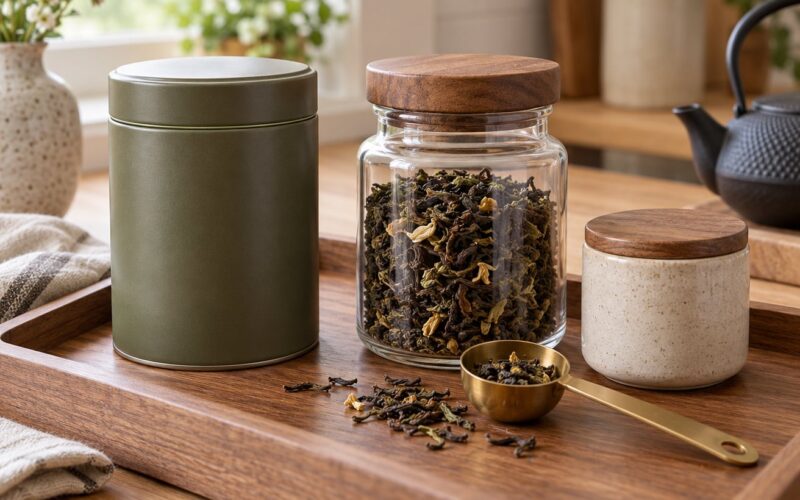
- One black tea as the main pot. English Breakfast and Assam are the usual choices; Earl Grey and Darjeeling work if you want something lighter.
- One caffeine-free option: peppermint, chamomile, or rooibos. Someone will not drink it, and it is better to have it ready than to apologise.
- Water, still or sparkling, for anyone not drinking tea at all.
- One soft drink such as chilled apple juice or sparkling apple for children and non-tea drinkers.
For preparation
- A damp tea towel or a sheet of parchment for the sandwiches.
- A cooling rack, food-safe containers, and masking tape and a pen for labelling the fridge.
- A cooling rack or wire rack so scones and cake cool without going soggy underneath.
- A box or basket at the door for guests taking food home, so leftovers are not your problem.
Step-by-Step: How to Host Afternoon Tea at Home
Work backwards from the time guests arrive. Everything savory is assembled close to the hour, everything sweet is baked a day ahead, and the tea is brewed last of all. Follow the six steps below in order and the afternoon runs itself.
1. Choose a Theme and Guest Count
A theme gives the afternoon a shape without making you cook twice as much. Pick something loose and low-effort: a spring brunch, a birthday, a Mother’s Day table, a girls’ afternoon, a children’s tea, or a festive winter version. A theme should shape one or two items, not the whole menu.
Then fix the number. For an afternoon tea that stands on its own, plan four or five items per person: three or four sandwiches, two scones, and two or three cakes. If you are serving a heavier meal later, drop to three items per person. Always add the host’s own place, plus one spare guest, because someone always brings someone.
Pick the format that suits your guests, because it changes how much you have to do.
- Formal: you pour, guests stay seated, food arrives course by course. Handsome, but you spend the afternoon on your feet.
- Family-style: the tiers sit in the middle of the table, you pour the first round, then guests help themselves. This is the easiest format and the one most beginners should use.
- Buffet: everything on the sideboard, guests plate their own. Best for more than about eight people.
For two guests, halve everything, use one teapot, and do not bother with tiers. For ten or more, use the buffet format, split the room across two smaller tables so nobody has to shout, and bring the sandwiches out in two waves instead of all at once.
2. Plan a Simple Menu
The simplest balanced afternoon tea menu is one sweet item, one savory item, scones with cream and jam, fresh fruit, and something cold to drink. Add a second savory or a second cake if you want it to feel generous. Keep it short: five or six items is plenty, and every extra item is something you have to buy, bake and plate.
| Item | Per person | For 4 guests | For 8 guests |
|---|---|---|---|
| Finger sandwiches | 3 to 4 | 12 to 16 | 24 to 32 |
| Scones | 2 | 8 | 16 |
| Small cakes or pastries | 2 to 3 | 8 to 12 | 16 to 24 |
| Fresh fruit | A small handful | 1 punnet | 2 punnets |
| Loose leaf tea | About 1.5 teaspoons per cup per round | 2 pots | 3 pots |
Bake maths works in batches, which makes planning easy: a batch of eight scones covers four people, a batch of twelve covers six. Sandwiches are easier bought than baked, and a shop-baked sponge cake cut into rounds with jam and cream is indistinguishable from a homemade one once it is on the stand.
Write your timings next to the menu so you know what happens on which day.
- The day before: bake the cakes and biscuits, make the jam if you are using fresh fruit, buy and store the bread, choose and buy the tea.
- Morning of: bake the scones, mix the sandwich fillings, cook and slice any egg or salmon filling, prep the fruit.
- One hour before: cut the sandwiches, fill the jam and cream dishes, build the tiers, warm the teapot.
3. Prepare the Food Ahead of Time
Most of an afternoon tea can be made in advance, and that is the whole trick. On the night before, bake the cake, bake the scones, and get the tea and staples in the house so there is no morning-of shop run.
Scone dough freezes well at the shaping stage. Roll and cut your scones, freeze them flat on a tray, then transfer to a bag. Bake from frozen in a hot oven, adding two or three minutes to the usual time. This works in either direction: you can freeze the dough in advance or freeze baked scones, which are still decent reheated the next day.
Assemble sandwiches as late as you can, because that is the one thing that ruins easily. Prepare the fillings the day before and store them separately, then cut and fill them one or two hours before guests arrive. Line a tin with a damp tea towel or parchment for transport if you are moving them, and always put the damp side against the bread, never the dry side.
Keep anything with raw egg, cooked egg mayonnaise, salmon or cream in the fridge, and keep it flat and undressed rather than stacked under weight. Put assembled sandwiches in the fridge if you are more than two hours early, and do not leave dairy or egg fillings sitting at room temperature for more than about two hours.
What must be fresh on the day is short. Scones are warmed or served warm, fruit is sliced just before it goes out, and the tea is brewed at the table so it tastes fresh. Sponge cake, shortbread, flapjacks and traybakes are all fine made a day ahead and stored airtight.
4. Set the Table in a Relaxed Way
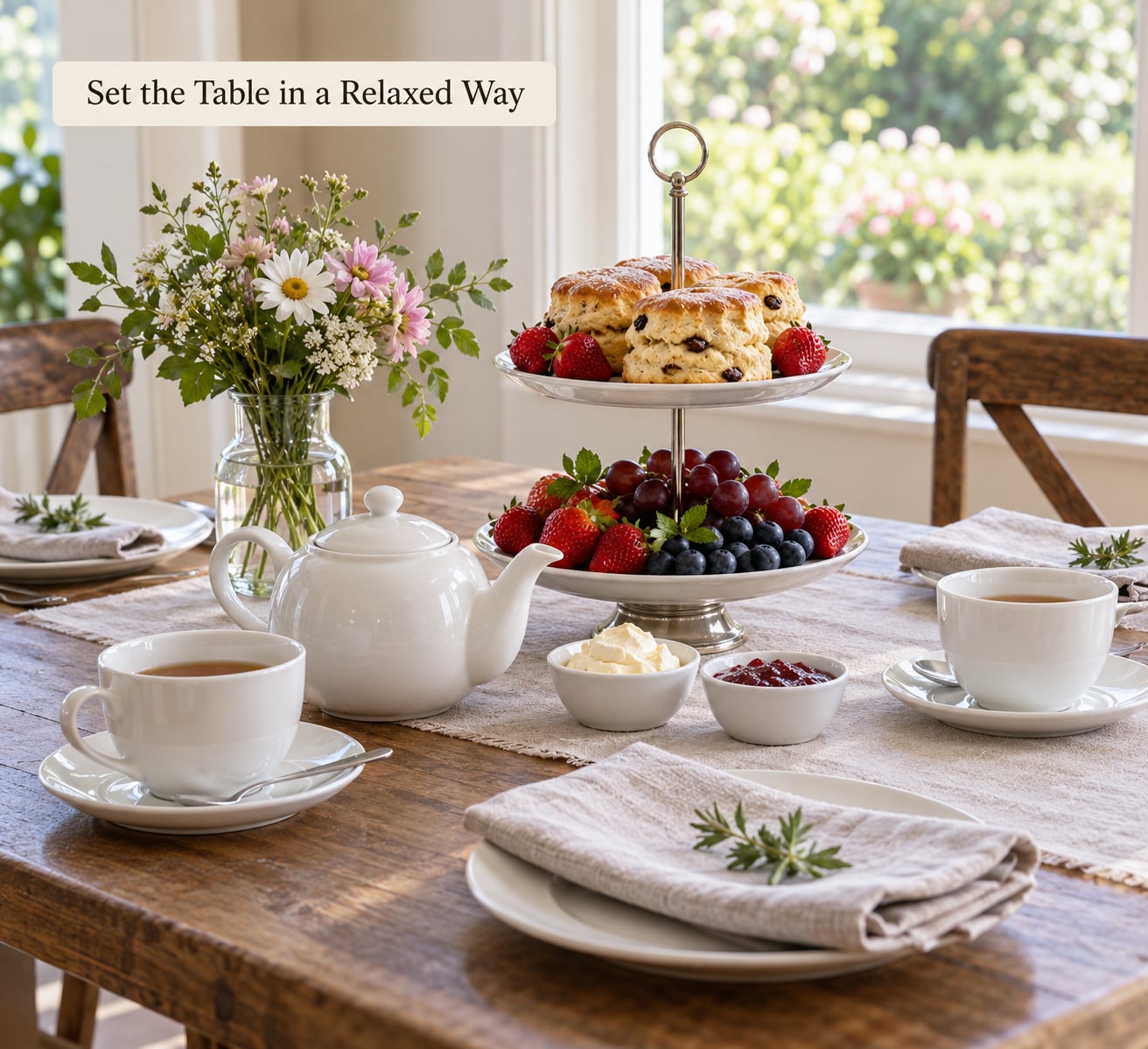
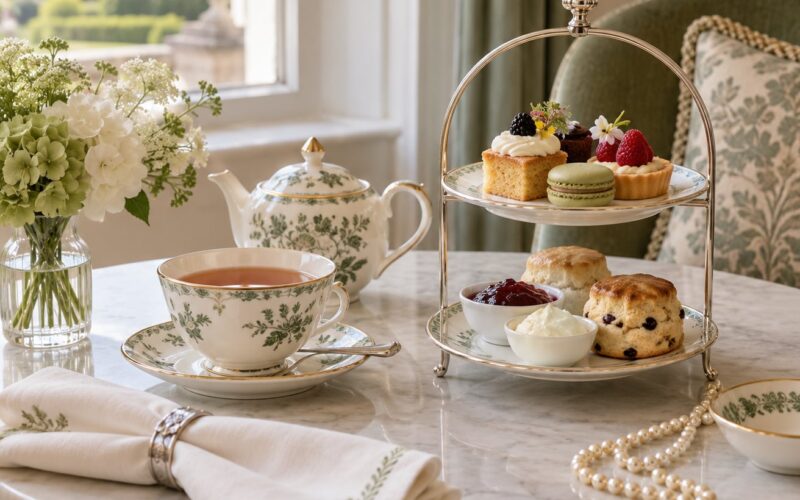
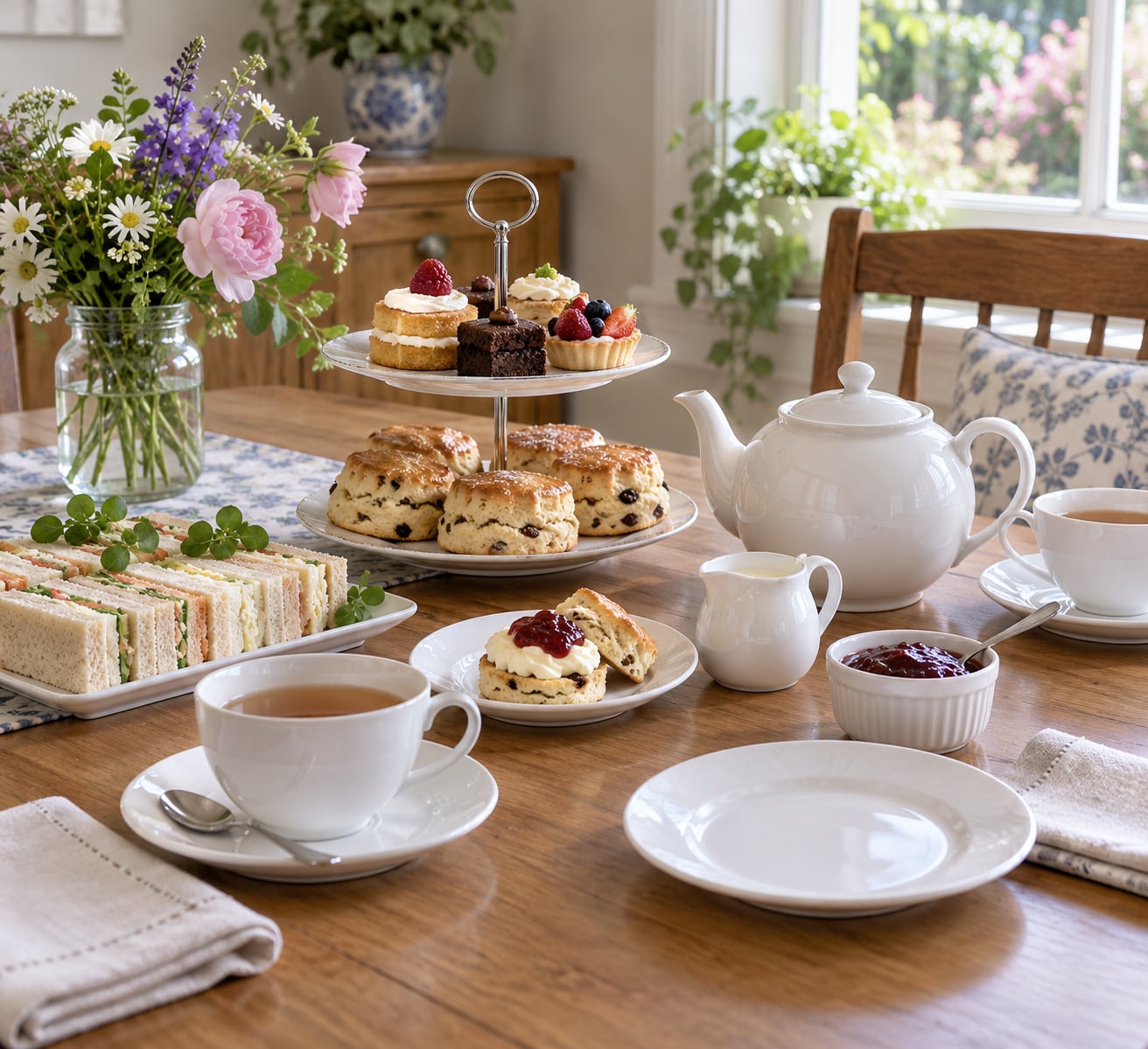
A relaxed table takes about ten minutes to set, and nobody will notice the shortcuts. Traditionally the tiers are stacked sandwiches on top, scones in the middle and cakes at the bottom, so guests eat upwards from the lightest food to the richest. Put the cream and jam beside the scone tier in their own small dishes rather than spooning them on in advance.
Fill a second kettle and plug it in as soon as you arrive, and fill the first again while the water is still hot so nobody waits on a full boil. Warmed cups and saucers dry faster on a rack and go out ready to use. Keep water glasses filled through the whole afternoon rather than waiting to be asked.
Put the rubbish bowl out of sight rather than on the table, and keep a tea towel over your shoulder or hung on a chair so you can wipe plates without leaving the room. Lower lighting and no background music that competes with conversation do more for the mood than any decoration.
5. Brew and Serve the Tea
Start with boiling water for black teas such as English Breakfast, Assam, Earl Grey or Darjeeling, and steep them for three to five minutes. Green tea wants cooler water, around 80 to 90 degrees, and only about two minutes. Herbal and fruit teas take boiling water and roughly five minutes, which is convenient because they are the pot you brew last.
| Tea | Water | Steep time | Serves |
|---|---|---|---|
| English Breakfast or Assam | Boiling, 100C | 3 to 4 minutes | About 3 cups per round |
| Earl Grey or Darjeeling | Boiling, 100C | 3 minutes | About 3 cups per round |
| Green tea | 80 to 90C | 2 minutes | About 3 cups per round |
| Peppermint, chamomile or rooibos | Boiling, 100C | 5 minutes | About 3 cups per round |
For loose leaf, use a rounded teaspoon per cup plus one for the pot. Tea bags in a pot are fine and nobody at an afternoon tea is going to inspect the leaves, so use whichever suits you. Plan on two or three rounds of tea, which means two or three times your pot capacity across the afternoon.
The two-pot system is the simplest trick here. One pot holds the main black tea. The second holds the caffeine-free option and stays covered so it does not go bitter. If you only have one pot, brew the decaf first and pour it into a jug, then rinse the pot well before the main tea goes in. Rinse the pot with hot water between rounds rather than pouring fresh water into spent leaves, or top up with fresh boiling water and accept a slightly weaker second round.
Do not assume everyone takes milk and sugar. Put them on the table with their own spoons and let guests add their own, or you will spend the afternoon asking.
Scone assembly is a guest job and it should stay that way. Serve cream and jam in separate dishes and let each person do it. In Devon the traditional order is cream first, then jam, which keeps the jam from sliding off; elsewhere you will see jam first, and plenty of good hosts do not care at all. Pass the plate around rather than pre-assembling, so hot scones stay crisp.
For people who do not drink tea, keep sparkling water with lemon, iced tea or a cordial within reach. Nobody should have to explain their way out of a cup.
6. Welcome Guests and Enjoy the Afternoon
Serve in order: sandwiches first, then scones, then cakes, with tea poured alongside. Starting at the top tier and working down matches the way the tiers are stacked and stops people filling up on cake before they have had anything savory.
Pour the first round yourself, seated, before you sit down. After that, put the pot on the table, tell people where the milk and sugar are, and let them help each other. That single sentence, take what you want, is what turns a formal service into a relaxed afternoon.
Start between three and four in the afternoon. Around 4pm is traditional, and most people arrive hungry in a way they do not at noon. Plan for about ninety minutes to two hours; a tea that runs three hours turns into a dinner you did not prepare for.
Name one thing as you set it down, such as the smoked salmon and dill filling or the lemon drizzle, and move on. Hosts who hover and narrate every item make guests feel watched, and it is the fastest way to make an elegant afternoon feel like a school play.
If the group wants something to do, keep it low-key: a guess-the-filling tasting, a quiz, or biscuit decorating for children. Otherwise talk, and let the food arrive at its own pace. If you are hosting ten or more, keep a second tray of sandwiches in the fridge and bring it out around five so nobody is picking at the crumbs on the bottom tier.
Common Mistakes
Sandwiches go soggy. Almost always because they were dressed too early. Cut and fill them one to two hours before guests arrive, store them flat, and keep the damp tea towel against the bread rather than over it.
You bought and baked too much. Use the per-person table rather than instinct, and plan for seconds on scones rather than seconds on everything. Leave a basket at the door for takeaways, and expect guests to take a sandwich or two home.
You run out of hot water. The classic beginner failure. Fill a second kettle and plug it in as soon as you arrive, and top up the teapot between rounds. Boiling water for a full pot takes several minutes and guests will notice the wait.
Scones sink or come out dense. Weigh the flour if you can, stop mixing the moment the dough comes together, and keep the oven hot with the door shut for the first fifteen minutes. Wiping the flour off the tops before baking is not essential, but brushing on milk or cream does help the colour.
Only one tea is available. Plan the second pot from the start. Run a caffeine-free tea or a herbal infusion alongside the black one, and have cold water and a soft drink out for the rest.
It feels too formal. Sit down early, put the pot on the table, and tell people to serve themselves. Guests relax when the host stops performing, and one pot of tea keeps being topped up instead of four pots going cold.
Everything goes out at once. Put the food out gradually and refill as tiers empty. It keeps the table looking fresh, the sandwiches crisp, and it stops people from filling their first plate with cake.
On leftovers, cool cakes and breads quickly and store them airtight at room temperature. Keep anything with cream, custard, salmon or cooked egg mayonnaise in the fridge, and eat it within three or four days. Scones reheat in a hot oven for a few minutes; sandwiches with mayonnaise do not reheat well, so give those away first.
A few final hosting tips for keeping the whole thing simple. Buy one thing ready-made rather than making all three; nobody can tell and you get to sit down earlier. Serve the food at room temperature rather than trying to keep everything hot, which is also what makes it possible to prepare ahead. Write your guest list on a small card in the kitchen so you know who likes what. And accept that afternoon tea at home is about three hours of prep and two hours of sitting down with people you like.
Frequently Asked Questions
How much food should I prepare for afternoon tea?
Plan four or five items per person for a full afternoon tea at home: three or four finger sandwiches, two scones and two or three small cakes, plus a handful of fruit. Drop to three items per person if you are serving a proper meal later. Add places for you and one spare guest, and remember a batch of eight scones covers four people.
What tea should I serve to someone who is new to tea?
Serve English Breakfast with milk and sugar as the main pot. It is strong, familiar to anyone who has drunk tea at all, and hard to dislike at first sip. Offer a second pot of peppermint or chamomile for anyone avoiding caffeine, and keep sparkling water with lemon nearby for people who would rather skip tea entirely.
Do I need a three-tier serving stand?
No. Two or three cake plates of different sizes on a cake stand work perfectly, and an ironing board or one cleared shelf covered with a cloth does the same job. The tiers simply keep the food at three heights and stop it getting crowded. Improvised stands are common among experienced home hosts, so nobody will read yours as a shortcut.
Should afternoon tea be served all at once or in courses?
Put everything out but serve it in order, starting with the sandwiches, then the scones, then the cakes, with tea poured alongside the first course. Serving it all at once tends to mean people fill their first plate with cake. Serving in courses takes more of your time, so for a casual gathering just refill the tiers as they empty.
What are easy afternoon tea foods that can be made ahead?
Sponge cake, shortbread, flapjacks, brownies and traybakes all keep for a day or more if stored airtight. Sandwich fillings such as egg mayonnaise or cucumber with cream cheese can be mixed the day before and kept separate from the bread. Scone dough freezes well at the shaping stage, so bake from frozen on the morning and add a couple of minutes.
How long should an afternoon tea gathering last?
Ninety minutes to two hours is the right range, starting at around 4pm when guests are hungry again. Longer than that and the food disappears, the tea goes cold and it quietly becomes a dinner you did not plan for. If you want the afternoon to run on, keep a second tray of sandwiches in the fridge and bring it out later rather than serving everything early.
Conclusion
To host afternoon tea at home for beginners, do three things and stop worrying about the rest. Choose your guest count and buy to the per-person numbers, pick one savory, one sweet, scones, fruit and two teas, then set the table and fill the kettle an hour before anyone arrives. Everything else, the tiers, the china, the pouring height, is optional, and the afternoon works because of who you invite rather than how formal the table looks.