How to store loose leaf tea so it stays fresh? Decant it into a clean, dry, airtight container that blocks light, seal it properly, and keep it in a cool, dark, dry cupboard away from the stove, sunlight, coffee and spices. That is the whole method. Everything else on this page is detail about which container suits which tea, and what to do when you have no cupboard.
It takes about five minutes per tea and lasts as long as the tea does. If you drink a pot most days and buy in small quantities, you will barely notice the difference. If you buy a tin in 2026 and still have half of it next summer, this is the page that decides whether it tastes like tea or like dust.
Table of Contents›
- What You Need
- Step-by-Step: How to Store Loose Leaf Tea So It Stays Fresh
- Step 1: Check the Tea Before Storing It
- Step 2: Choose Storage for the Tea Type
- Step 3: Use Airtight, Opaque Containers
- Step 4: Keep Tea Away from Heat, Light, and Odors
- Step 5: Label and Use Small Quantities
- Common Mistakes
- Frequently Asked Questions
- Should loose leaf tea be refrigerated?
- Can you put tea in a mason jar?
- What is the best container to store loose tea?
- Should tea be stored in a dark container?
- How do I know if old tea has gone bad?
- Can you freeze loose leaf tea?
- Conclusion
What You Need
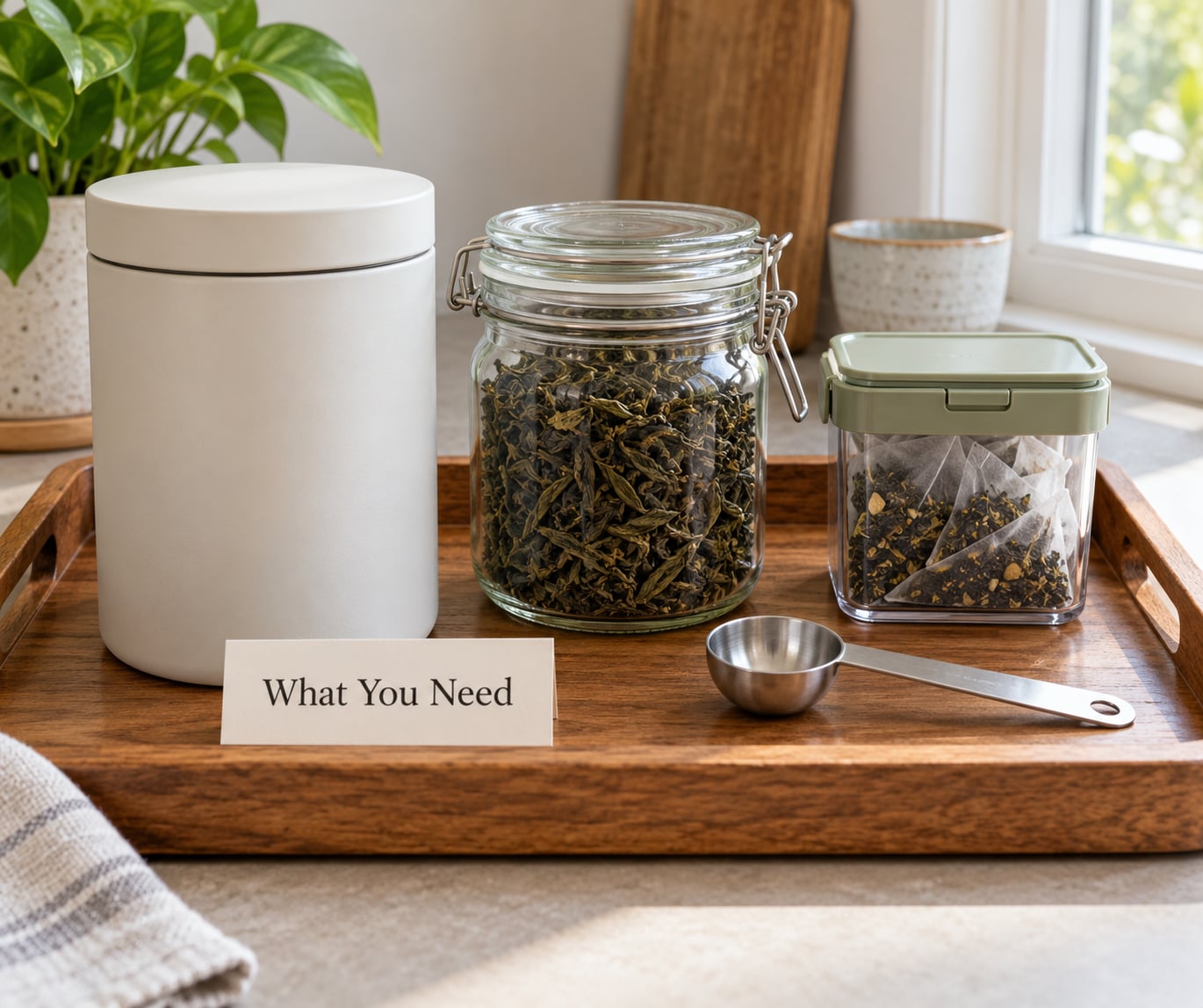
You probably already own most of this. The upgrade that matters is the container, not the accessories.
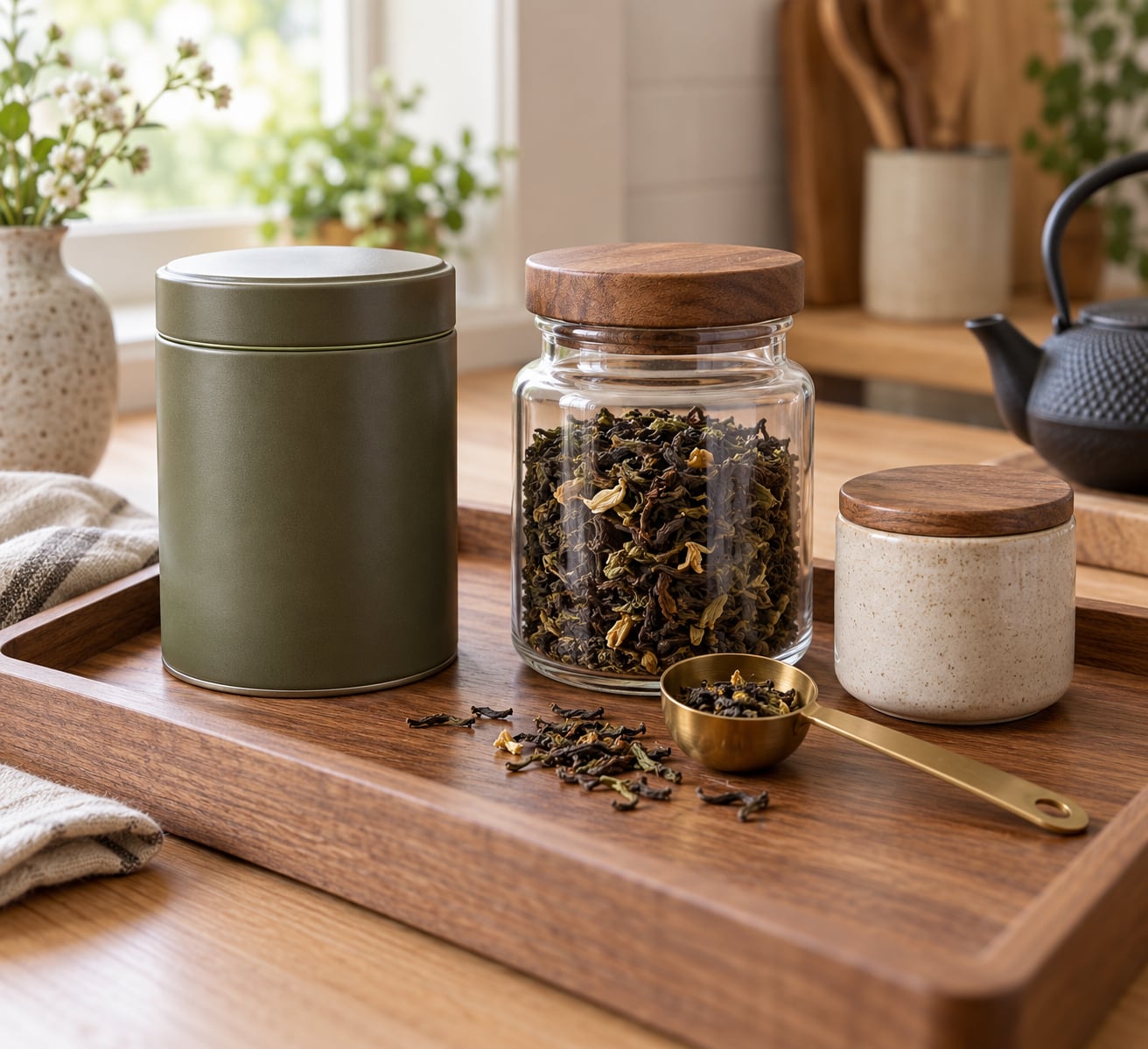
- An airtight, opaque container. A double-lidded tin is the safe default. A stainless steel canister with a clamp-down lid works. A mason jar with a fresh rubber seal is genuinely fine, despite what some retailers tell you.
- A clear jar only if it lives in a dark cupboard. Glass is a good material and a bad location. Transparent glass on a counter or windowsill is the single most common way home tea goes flat.
- A clean, dry surface to work on. Wet hands and a damp worktop reintroduce exactly the moisture you are trying to keep out. Wipe the surface, dry your hands, then open the tea.
- A label or masking tape and a pen. Tea name and the date you opened it. Two seconds of work, and it tells you later whether a pot is six weeks old or six months old.
- Optional: a small desiccant packet for humid kitchens or long storage, kept with the tea but not touching it. A pinch of uncooked rice in the corner of the jar is the budget version of the same idea.
If you want a single upgrade rather than a full set, buy two or three double-lidded tins sized for the teas you drink most. That covers the ones that actually go stale, because those are the ones you keep reaching past.
Step-by-Step: How to Store Loose Leaf Tea So It Stays Fresh
Step 1: Check the Tea Before Storing It
Open the package and smell it before you seal anything. Tea should smell of its own character: grassy for sencha, malty for a black tea, honeyed for oolong, clean hay for rooibos.
If it smells musty, sour or cardboard-like, put it back in the bag for a day and smell again. A tea that smells odd when you first open the bag is telling you it was stored badly before it reached you, and no container will fix it.
Also check for visible damage: fuzzy spots, white flecks, a leaf clump stuck together from damp. Skip or rinse that tea rather than decanting it into a nice tin and worrying about it later.
Step 2: Choose Storage for the Tea Type
Most teas want the same thing. A few want something different, and those exceptions are where most of the confusion online comes from.
| Tea type | Best storage approach | Peak window | Still drinkable after |
|---|---|---|---|
| Green tea (sencha, gyokuro) | Airtight opaque tin, cool dark cupboard, refrigerated once opened if you drink it slowly | 6 months | 12 to 18 months |
| White tea | Airtight opaque tin, cool dark cupboard | 1 to 2 years | 3 to 5 years |
| Oolong (tieguanyin, Da Hong Pao) | Airtight opaque tin, cool dark cupboard, away from the kitchen | 1 year | 2 to 3 years |
| Black tea | Airtight opaque tin, cool dark cupboard | 2 years | 3 to 5 years |
| Herbal and rooibos | Airtight opaque container; essential oils mean odour contamination happens fast | 1 to 2 years | 3 years |
| Matcha | Airtight tin, cool dark cupboard, use within months of opening | 3 to 6 months | 12 months, colour only |
| Pu-erh (aged, compressed) | The exception: breathable storage at around 60 to 70 percent humidity, not sealed airtight | Improves with age | Decades |
These are general guidance ranges rather than lab figures, and they assume the tea was sealed and stored properly from the start. The gap between peak and drinkable is real, and it is where most home tea falls: not unsafe, just dull.
Step 3: Use Airtight, Opaque Containers
Transfer the tea into a container that is clean, bone dry and airtight, then close it fully. Push out excess air where the container allows it, or fill the headspace with a small sealed bag of the tea’s own leaf so there is less loose air moving around inside.
The seal matters more than the material. A double-lidded tin that clicks shut protects against light and air. A mason jar with a tight rubber ring does the same, and people on r/tea regularly point out that a good mason jar seal is tighter than a lot of decorative tins. Where you will store the jar, in the dark, matters more than whether it is glass or metal.
Keep the original foil-lined bag inside the tin if you have it. A bag within a tin is a second barrier, and it is the standard trick for teas you will not finish quickly.
Step 4: Keep Tea Away from Heat, Light, and Odors
Put the container in a cupboard that is cool, dark and dry, and ideally somewhere with a steady temperature. The worst spots in a kitchen are the shelf above the kettle, the top of the fridge, and any counter facing a window.
Keep tea physically away from coffee, spices, bread, onions and cleaning products. Tea is famously good at absorbing scent, which is charming in a tea shop and less charming in a kitchen cupboard next to the cumin. A tin that already carries a strong previous aroma is not a fresh container any more; wash it, dry it thoroughly and let it air before reusing it.
One container per tea. Mixing two teas into one jar gives you neither aroma, and it is the reason people decide their tea tastes flat when the real problem is a crowded jar.
If you are travelling or staying somewhere without a proper cupboard, a small airtight tin in your bag beats the original packet every time. Never leave tea in a parked car for hours; heat does more damage in an afternoon than a month of daylight does.
Step 5: Label and Use Small Quantities
Write the tea name and the opening date on the container with masking tape or a small label. When you open a tin, use the oldest one first, and decant a few weeks’ worth into a smaller jar so the big tin stays sealed.
You will know the setup is working if, a month after opening, a pot tastes roughly like it did the first time you brewed it. If it has thinned out noticeably, the usual cause is one of three things: a container that was not truly airtight, a spot too close to heat or light, or a shelf life simply running out.
Common Mistakes
Putting tea in the refrigerator by default. A fridge is humid, and every time the container goes in or out it can gather condensation. Tea in the fridge needs a genuinely moisture-proof airtight container, and it needs to reach room temperature before you open it. For most black and oolong teas this hassle buys nothing. Reserve it for opened green tea and matcha in a warm kitchen, or for a bulk buy you cannot get through.
Using a jar that is not fully dry. Water trapped with the leaf encourages mustiness and clumping. Dry the jar, dry your hands, dry the spoon. This is the cheapest fix on the page.
Keeping every tea in one big container. You lose the individual aromas, scents migrate between leaves, and every opening exposes all of it. One tea per container, even small ones, is the rule that changes results most.
Relying on an unsealed packet or a half-empty bag. Once the top of a kraft bag is rolled down, the leaf is sitting in open air. If a bag is half empty, cut off the ziploc section and drop the rest of the bag into an airtight container, or stand the bag up in a tin with the fold pressed flat.
Displaying tea in clear jars on the counter. It looks good and it is the most damaging habit there is. Light fades both colour and aroma, and you will notice the difference in the cup within weeks. Put display jars in a dark cabinet instead, or accept a display of closed tins.
Never rotating what you already have. A tin opened eighteen months ago sitting behind six newer tins is why people think storage does not work. Old teas go to the front of the queue.
Frequently Asked Questions
Should loose leaf tea be refrigerated?
Only sometimes. A refrigerator helps opened green tea and matcha in a warm kitchen, and it is reasonable for a bulk buy you cannot finish. For black tea, oolong and herbal, it adds nothing and brings humidity with it. If you do refrigerate tea, use a truly airtight moisture-proof container and let it sit until room temperature before opening, so condensation does not land on the leaf.
Can you put tea in a mason jar?
Yes, and plenty of tea drinkers do it daily. A mason jar with an intact rubber seal is airtight, and the glass is inert, so it will not absorb smells the way a tin can. The two limits are light and the rubber seal. Store the jar inside a dark cupboard, not on a counter, and replace the ring if it has gone stiff or you see daylight when it is closed.
What is the best container to store loose tea?
A double-lidded tin is the safest all-round choice because it blocks air and light at the same time and hides the leaf from view. A stainless steel canister with a clamp lid is equally good. A mason jar works if it stays in a dark cupboard. Clear glass, unsealed kraft bags and thin decorative tins are the ones to avoid for anything you plan to keep for months.
Should tea be stored in a dark container?
Yes. Light is one of the main things that damages leaf, fading the colour and breaking down the aromatic compounds you are trying to protect. That is why tea arrives in opaque tins and foil-lined bags in the first place. A dark container only matters if the tea is also sealed, so an opaque tin in a sunny spot still protects the light while a clear jar in a dark cupboard protects the air.
How do I know if old tea has gone bad?
Old tea is almost never unsafe. It goes flat, thin and dull because the aromatics have dissipated, not because it has become poisonous. A dry leaf with no smell, a pale washed-out colour and a brew that tastes like warm water rather than tea are the usual signs. Mould, a damp or sour smell, or visible fuzz is different: that means bin the tea.
Can you freeze loose leaf tea?
Yes, and it is genuinely useful for a bulk or seasonal buy you will not open for a year. Freeze it in small sealed portions, double-bagged if you can, then let the portion come to room temperature while still sealed before you open it. Freezing without that step lets condensation form on the leaf, which is the one condition that genuinely damages stored tea.
Conclusion
Start with one tea. Pour it into a clean, dry, airtight opaque container, label it with today’s date, and put it in a cool, dark, dry cupboard instead of leaving it in an open packet on the shelf.
Do the same for the next two or three you drink most, then keep using the oldest first. That is the whole routine behind how to store loose leaf tea so it stays fresh, and it costs almost nothing beyond the containers.