Bitter green tea is almost always a brewing problem, not a bad tea problem. Learning how to brew green tea without making it bitter comes down to three levers: cooler water, a short steep, and good leaves. Start at 175°F (80°C), steep the first cup for 60 to 90 seconds, and use about 2 grams of leaf per 250 ml of water. That single default fixes most bitter cups, and everything after that is fine-tuning.
The reason it matters is that green tea is unoxidised and delicate. Brew it like a black tea and the harsh polyphenols flood out long before the pleasant ones do. Get the technique right and the same leaves taste sweet, grassy and clean, with that savoury depth tea drinkers call umami.
Table of Contents›
- What You Need
- Step-by-Step: How to Brew Green Tea Without Making It Bitter
- 1. Choose a Green Tea Suitable for Brewing
- 2. Use Cooler Water: How to Brew Green Tea Without Making It Bitter
- 3. Measure the Leaves Without Overloading the Pot
- 4. Steep for a Short First Infusion
- 5. Pour Carefully and Adjust the Next Steep
- Common Mistakes
- Frequently Asked Questions
- What temperature water should I use for green tea?
- How long should I steep green tea without bitterness?
- Can I brew green tea from a tea bag without it tasting bitter?
- Is a second infusion of green tea stronger or bitter?
- How do I make iced green tea that is not bitter?
- What if my first cup of green tea is already bitter?
- Conclusion
What You Need
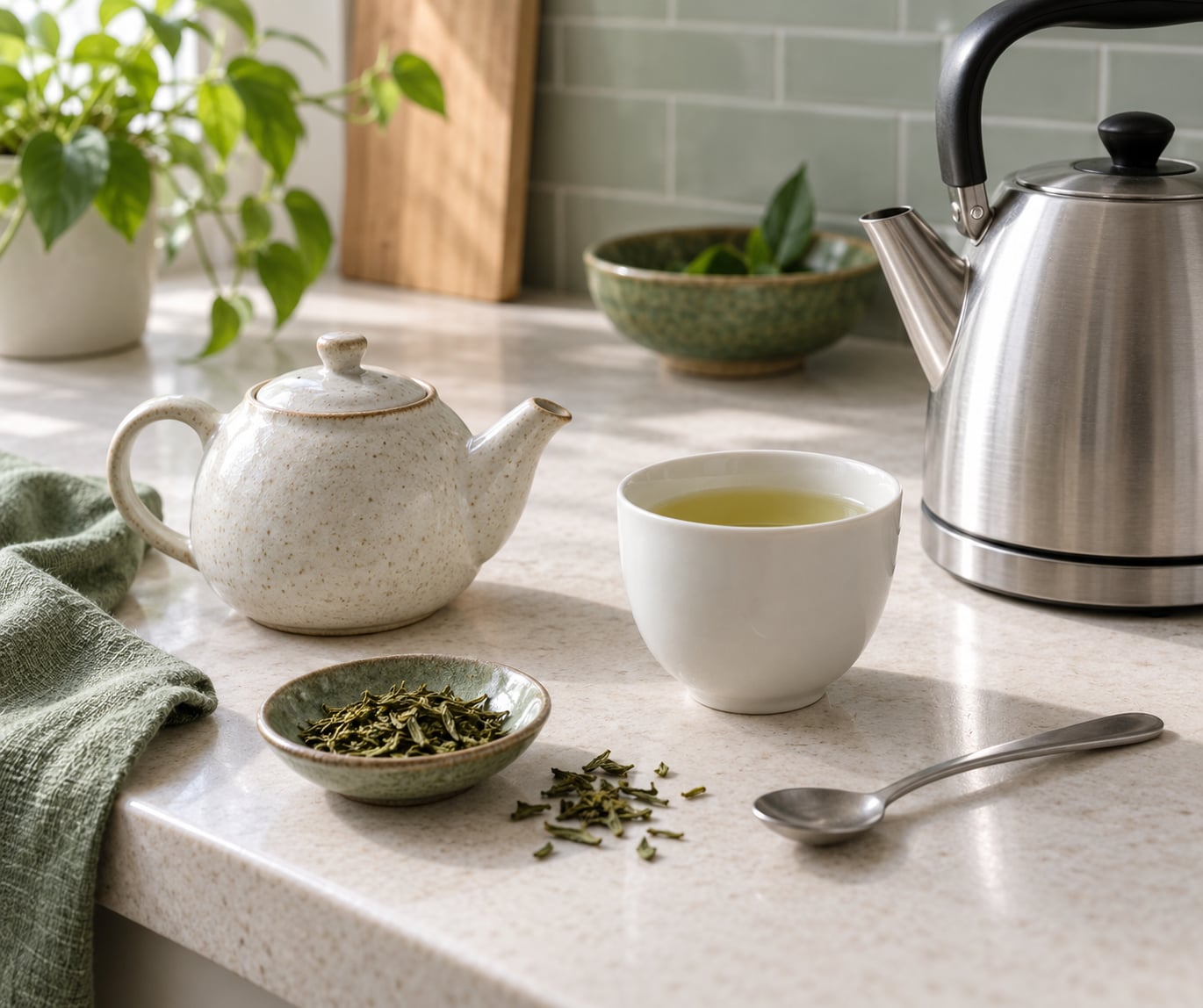
The good news is that the equipment list is short, and most of it is already in your kitchen.
- Fresh green tea. Loose leaf or bags both work, but the leaf type changes the method. Whole leaf and bagged fannings behave differently in the pot.
- Filtered or soft water. Tap water loaded with limestone flattens a cup and sharpens any bitterness. A basic jug filter is enough.
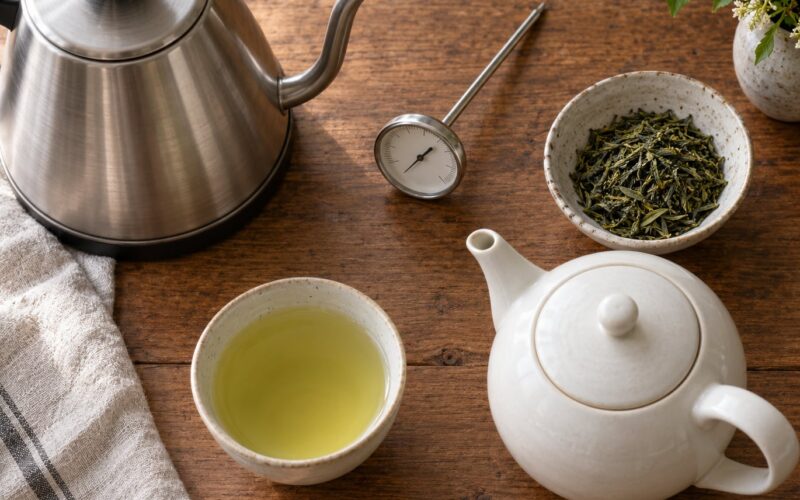
- A kettle with temperature control, or a regular kettle plus a thermometer. Without either, the workaround is below.
- A small pot or a large mug so the leaves have room to unfurl. Packing them into a tiny infuser basket is a common cause of bitter cups.
- A timer. Your phone works. Sixty seconds is not something to guess at.
- Optional: a spare cold-water jug for the flash-cooling trick, and a bamboo whisk or small strainer for removing spent leaves.
If you have no thermometer, boil the water, pour it into a mug or pot, and leave it uncovered for four minutes. That lands close to 175°F. It is not laboratory precision, but it is a real improvement over pouring straight from a rolling boil.
Step-by-Step: How to Brew Green Tea Without Making It Bitter
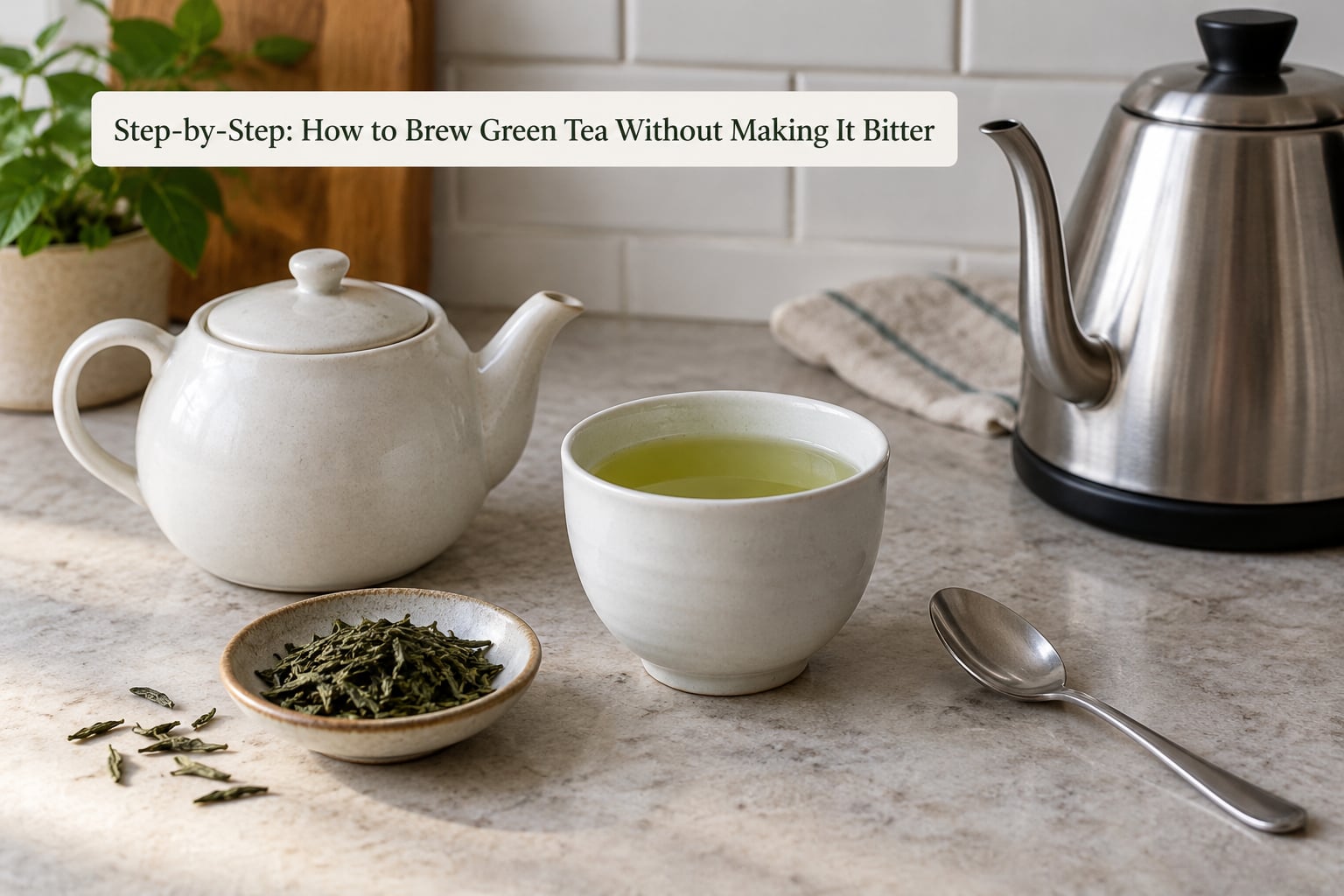
1. Choose a Green Tea Suitable for Brewing
Fresh, high-quality green tea is naturally more delicate and forgiving of technique, while older or cheap tea is less sensitive to heat and tastes harsh sooner. That difference comes down to how much the leaf has broken down.
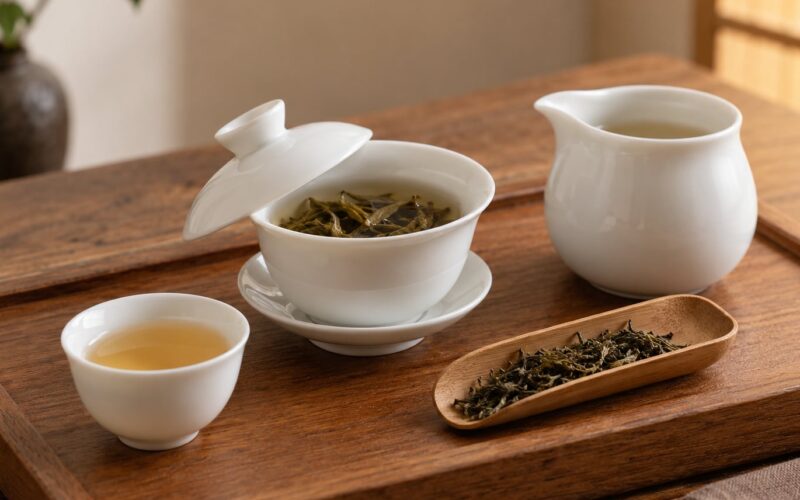
Whole-leaf sencha and Chinese greens such as Longjing (Dragon Well) are good everyday starting points. Gyokuro and other shade-grown teas are the opposite: they are so delicate that even 140°F (60°C) water is right. Jasmine green tea is scented rather than delicate, so it can take a slightly hotter pour. Gunpowder and other rolled, tightly packed styles are the most forgiving and the hardest to make bitter.
If your tea came in a bag, you have broken leaf and fine dust. It will extract faster than loose whole leaf, which is why the timings below are shorter.
2. Use Cooler Water: How to Brew Green Tea Without Making It Bitter
This is where most home brewers go wrong. Boiling water on green tea scorches the leaves and pulls out the compounds you do not want.
Start at 160 to 175°F (70 to 80°C) for everyday loose-leaf tea. Drop to 120 to 140°F (50 to 60°C) for gyokuro, kabusecha and other shaded teas. Pan-fired Chinese greens and jasmine blends are comfortable at 175 to 185°F (80 to 85°C).
If you only have a straight boil, pour it, wait four minutes off the heat, and use that. The difference between 212°F and 175°F is the single biggest change most readers can make today.
3. Measure the Leaves Without Overloading the Pot
Roughly 2 grams per 250 ml of water is the everyday ratio, which is about a level tablespoon of whole leaf. A single tea bag is designed for 200 to 250 ml and sits in the same range.
Too much leaf does not make a stronger cup, it makes a more bitter one. When the pot is crowded the leaves cannot expand, so more water touches more leaf surface and extraction accelerates. If your pot is full to the brim, use a larger pot or fewer leaves.
If a cup comes out weak and watery, add a little more leaf next time rather than extending the steep. Time pulls out bitterness far faster than leaf quantity does.
4. Steep for a Short First Infusion
Steep the first cup for 45 to 90 seconds. Sencha and Longjing sit happily at 60 to 90 seconds, jasmine and gunpowder at 90 to 120 seconds, gyokuro at 2 to 3 minutes in cooler water.
Watch the colour rather than the clock alone. The liquor should turn pale green-yellow, not deep olive. You want a fresh green or grassy aroma, and the taste should be sweet with a soft, drying finish. Grassiness and sourness both mean the water was too hot or the leaf too old.
Pouring in short increments helps too: decant every 15 to 30 seconds and the leaves stay in the sweet window instead of being pushed past it.
5. Pour Carefully and Adjust the Next Steep
Pour every last drop into your cup so no liquor sits on the leaves. That last splash is often the bitterest part of the batch.
A second infusion does taste stronger, because the same water works on already-wetted leaves. Give it 15 to 30 seconds more than the first, and use cooler water if you want to keep it mild. A mizudashi-style cold brew in the fridge needs a completely different ratio: roughly 1 gram per 100 ml, left for six to eight hours, then strained.
Keep a simple adjustment framework. Weak cup means more leaf or a few more seconds. Balanced cup means change nothing. Bitter cup means cooler water first, then less time, then fewer leaves, in that order.
| Tea style | Water temperature | First steep | Ratio per cup |
|---|---|---|---|
| Gyokuro and kabusecha | 120-140°F (50-60°C) | 2-3 minutes | 2 g / 250 ml |
| Sencha | 160-170°F (70-75°C) | 60-90 seconds | 2 g / 250 ml |
| Longjing, Dragon Well | 175-185°F (80-85°C) | 90 seconds | 2 g / 250 ml |
| Jasmine green | 175-185°F (80-85°C) | 90-120 seconds | 2 g / 250 ml |
| Gunpowder and rolled | 195°F (90°C) | 2 minutes | 2.5 g / 250 ml |
| Tea bag, fine dust | 170-180°F (75-80°C) | 45-60 seconds | 1 bag / 200 ml |
If a cup has already gone bitter, you have three options. Dilute it with hot water, drop a few ice cubes in to shock the temperature and slow the release, or add a splash of milk for a matcha-style drink where fat blunts bitterness outright. You cannot re-steep bitter leaves and improve them.
Common Mistakes
Every bitter cup has a cause you can name. Here are the ones that come up most.
- Boiling water. The default on most kettles, and wrong for green tea. Let it sit four minutes after boiling or use a variable-temperature kettle.
- Steeping too long. Long steeps extract bitter polyphenols long after the sweet ones have finished. Set a timer and take the leaves out on time.
- Too many leaves. A cramped pot over-extracts. Use about 2 grams per cup, or fewer.
- Leaving leaves in the pot or reheating them. Bitter liquor keeps pulling from the leaf while it sits. Pour it all out, and never reheat a brewed cup to “fix” it.
- Storing tea badly. Heat, light, air and damp make green tea turn flat and stale within months. Keep it sealed, cool and dark, and buy smaller quantities more often.
- Brewing a blend that was not built for hot water. Fruit and herbal green blends often taste better cold. Follow the packet if it disagrees with your instinct.
Hard tap water deserves its own mention, because it hides behind everything else. Water high in calcium dulls sweetness and pushes the edges sharper, so a cup stays bitter even after you fix the temperature and time. Filtered water is the cheapest fix there is.
If you think you simply do not like green tea, the fix is usually a blend rather than a blend of sugar and honey. Mint, a slice of lemon, a few slices of fresh ginger and cold brewing all shift the flavour without adding sugar. Jasmine green tea is the gentlest place to start, and a green tea latte hides bitterness better than any amount of stirring will.
Frequently Asked Questions
What temperature water should I use for green tea?
Most everyday green tea is best at 160 to 175°F (70 to 80°C). Shaded teas like gyokuro prefer a much cooler 120 to 140°F (50 to 60°C), while pan-fired Chinese greens and jasmine blends handle 175 to 185°F (80 to 85°C). Boiling water is the main reason home brewers get bitter cups. Without a thermometer, boil the water, pour it out, and wait four minutes before using it.
How long should I steep green tea without bitterness?
Steep your first infusion for 45 to 90 seconds at 160 to 175°F (70 to 80°C). Gyokuro and other delicate teas take two to three minutes in cooler water, and rolled teas such as gunpowder can take about two minutes at a hotter temperature. Tea bags made from fine dust need the shortest steeps of all, usually under a minute. Use a timer, and pour out every drop when the time is up.
Can I brew green tea from a tea bag without it tasting bitter?
Yes, and most bagged green tea can be made drinkable. Bagged tea is broken leaf and fine dust, so it extracts faster than loose whole leaf: use about one bag per 200 to 250 ml, water at 170 to 180°F (75 to 80°C), and a steep of 45 to 60 seconds. Remove the bag on time rather than letting it sit. Shortening the steep fixes a bitter bag far more reliably than adding more tea.
Is a second infusion of green tea stronger or bitter?
A second infusion is stronger because the leaves are already wet and open, so water pulls flavour out faster. It is not automatically bitter. Give it 15 to 30 seconds more than your first steep, and drop the water temperature slightly if you want to keep it smooth. Most sencha, Longjing and jasmine greens handle two or three infusions well. A third pour is worth trying only with whole-leaf tea.
How do I make iced green tea that is not bitter?
Brew it strong and short, then dilute, rather than brewing it weak and iced. Use about double the leaf for half the steep time, pour the hot concentrate over ice, and top up with cold water. For no hot water at all, cold brew the leaves in the fridge at roughly 1 gram per 100 ml for six to eight hours. Tea leaves still release a little bitterness in the fridge, so straining early and keeping the ratio moderate helps.
What if my first cup of green tea is already bitter?
Three rescue moves work. Dilute it with hot water, which softens the taste quickly but leaves it thin. Add a few ice cubes, which chills and dilutes in one step and tastes better than plain water. For matcha or a very strong brew, a splash of milk coats the mouth and blunts bitterness outright. You cannot fix it by re-steeping the same leaves; the extracted bitterness is already in the cup.
Conclusion
Start tonight, not with new equipment. Take your current green tea, cool the water to 175°F, use about 2 grams per cup, and set a timer for 60 seconds. That single change is usually the whole fix.
Then use one rule for every cup after that: if it tastes bitter, take one step back, in order. Cooler water, less time, fewer leaves. Change only one thing at a time and the next cup will be noticeably smoother.