What is served at a traditional afternoon tea? It is a light mid-afternoon meal built around a pot of tea, small savory bites eaten with the fingers, warm breads or scones with clotted cream and jam, and a final course of cakes and pastries. The exact selection and service style change with the country, the venue, the season and the occasion.
That last sentence matters more than it sounds. There is no single global rulebook for afternoon tea, and anyone who tells you otherwise is describing their own dining room. What follows is the widely shared skeleton of the meal, plus the places where it bends.
Table of Contents›
- What Is Served at a Traditional Afternoon Tea?
- The Traditional Tea Service at a Glance
- What Tea Is Traditionally Served?
- What Is Served at a Traditional Afternoon Tea? Savory Bites
- Why Scones, Breads, and Cakes Belong on the Table
- How Is Traditional Afternoon Tea Served?
- How Does Afternoon Tea Differ Around the World?
- Frequently Asked Questions
- How many pieces should I eat at traditional afternoon tea?
- Do you eat afternoon tea food in a particular order?
- Is afternoon tea the same as drinking tea with cake?
- Can children drink afternoon tea, and what are the alternatives?
- How do I know whether a hotel serves traditional afternoon tea?
- Conclusion
What Is Served at a Traditional Afternoon Tea?
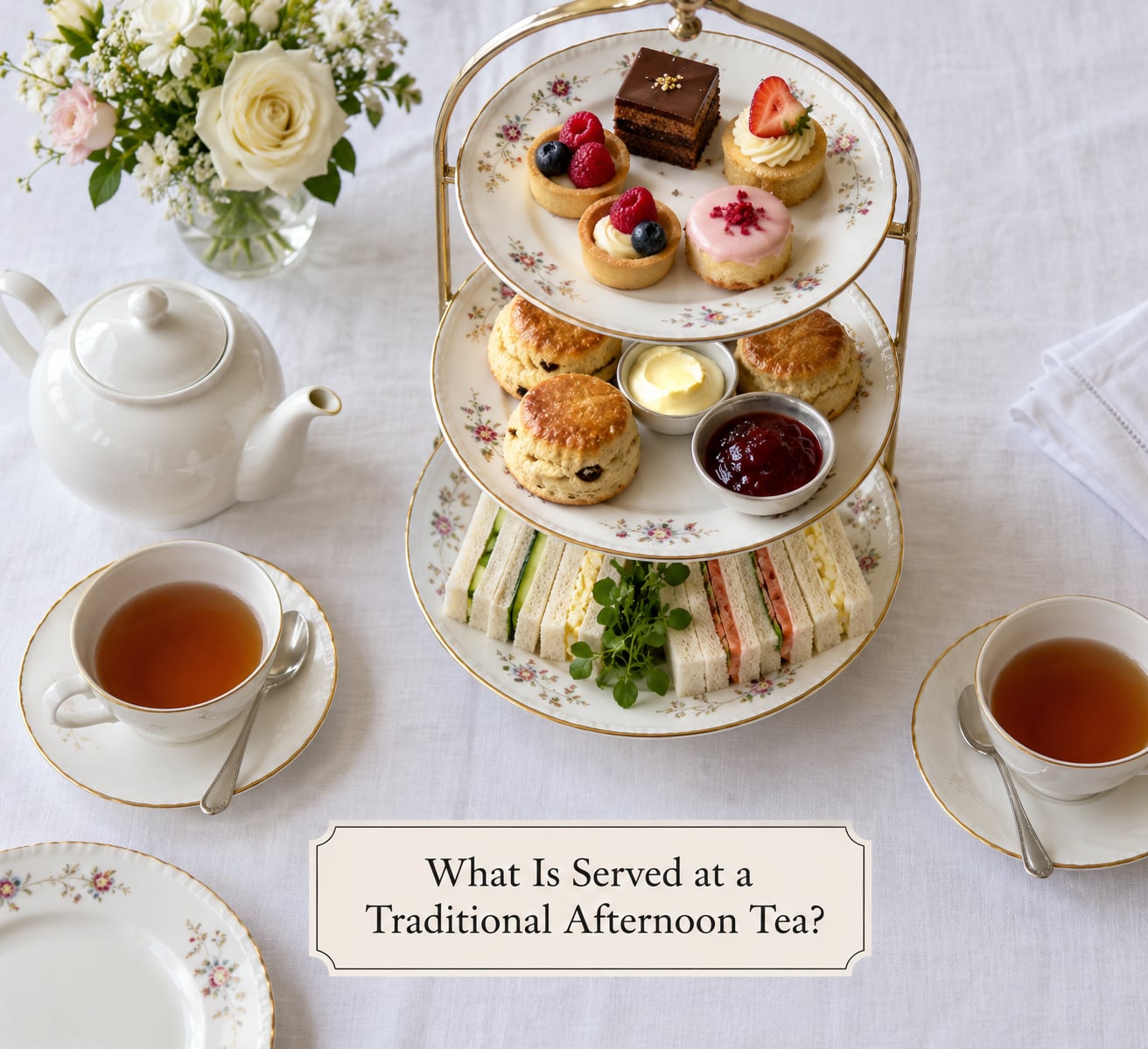
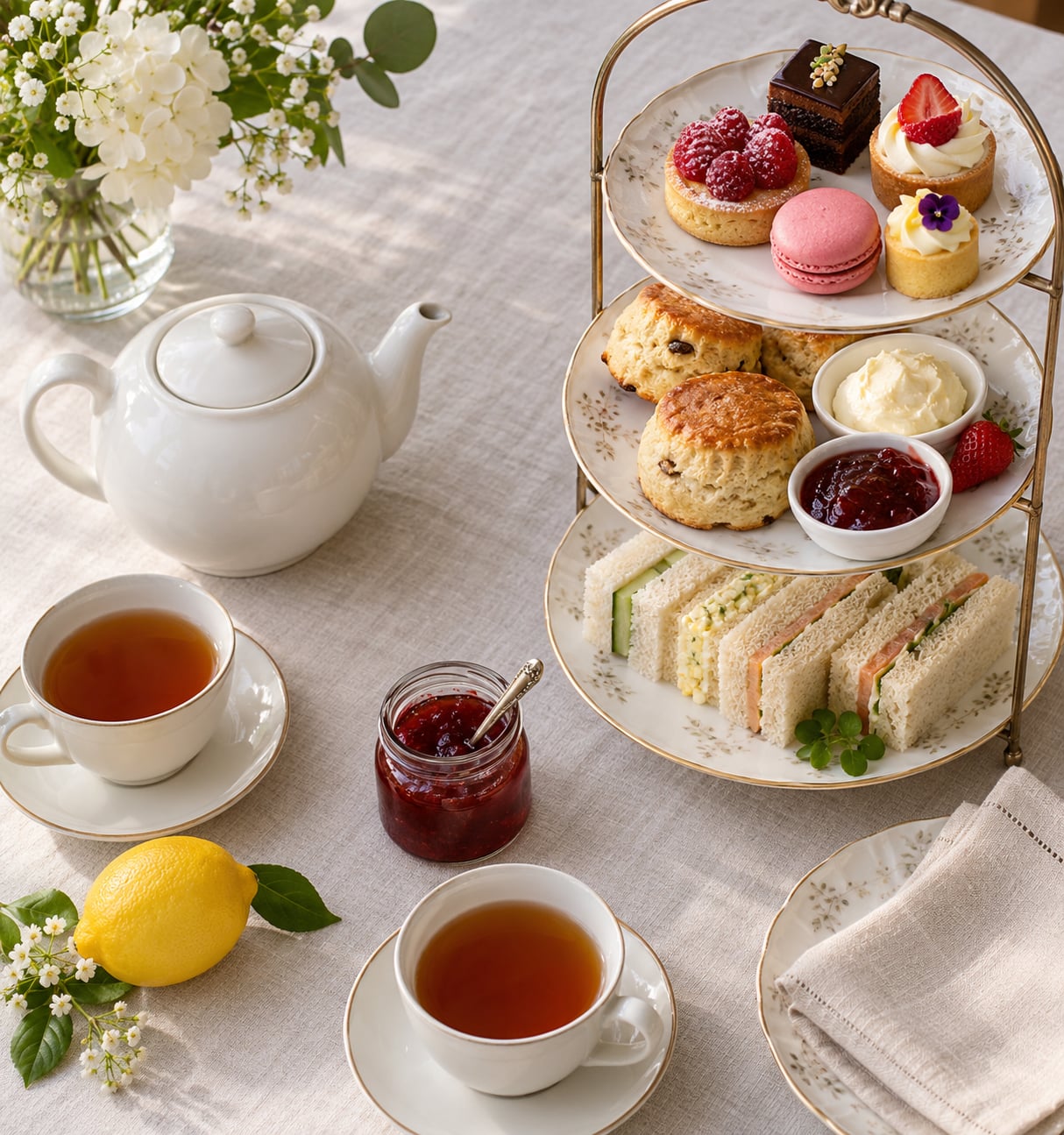
In the classic British and Commonwealth form, a traditional afternoon tea is a three-tiered stand served around three to four in the afternoon. The bottom tier holds savory finger sandwiches, the middle tier holds warm scones with clotted cream and jam, and the top tier holds cakes and pastries, all washed down with loose-leaf tea.
Tea is the spine of the meal rather than an afterthought. Everything else is built to be eaten in small pieces alongside it, in a fixed order, over a sitting that usually runs an hour to an hour and a half.
Beyond that core, you will meet savory pastries, quiches and miniature hot dishes in some hotels, breads and cheese in others, and whole sweet courses in East Asian versions. A cream tea drops the sandwich and cake tiers entirely and leaves you with scones, cream and jam. A champagne afternoon tea adds a sparkling wine to the same food.
The Traditional Tea Service at a Glance
| Course of service | What it holds | Classic examples | Optional or regional swaps |
|---|---|---|---|
| Tea | A pot, poured through a strainer, refilled during the sitting | English Breakfast, Earl Grey, Assam, Darjeeling | Green, white or oolong teas; herbal and caffeine-free infusions |
| First course, savory | Small savory bites eaten with the fingers | Finger sandwiches, crustless bread rounds, quiche or tartlets | Savory pastries, dim sum, miniature hot dishes |
| Second course, breads or scones | Warm baked items served with spreads and preserves | Plain and fruit scones with clotted cream and jam | Sourdough and cheese, buttered toast, steamed buns |
| Third course, sweet | Small cakes, pastries and confectionery | Victoria sponge, lemon drizzle, shortbread, macarons | Fruit tartlets, pineapple cakes, mochi-style pastries |
| Finishing | Condiments and something fruit | Lemon curd, fresh fruit, sugar | Freshly sliced fruit instead of cake |
Not every course appears at every traditional service. A modest tearoom in a seaside town will serve scones and cake and call it a proper afternoon tea, and that is entirely legitimate. What you are checking for is a deliberate sequence, not a fixed headcount of items.
What Tea Is Traditionally Served?
Tea is served as a category rather than a single variety. Most traditional services offer a printed tea menu, usually a short list of loose-leaf options, and the pot arrives at the table rather than a tea bag being dropped into a cup.
Black teas dominate because they were what the tradition grew around, and they stand up to food. English Breakfast and Assam are malty and robust enough for a savory sandwich, while Earl Grey brings bergamot brightness that cuts through clotted cream.
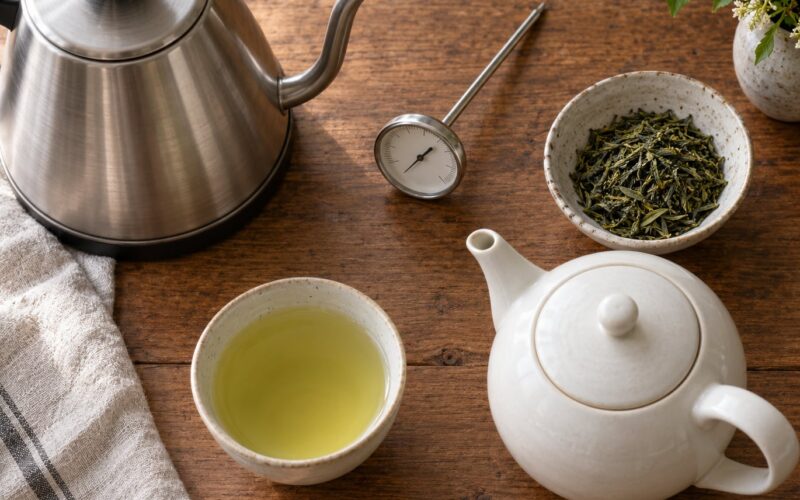
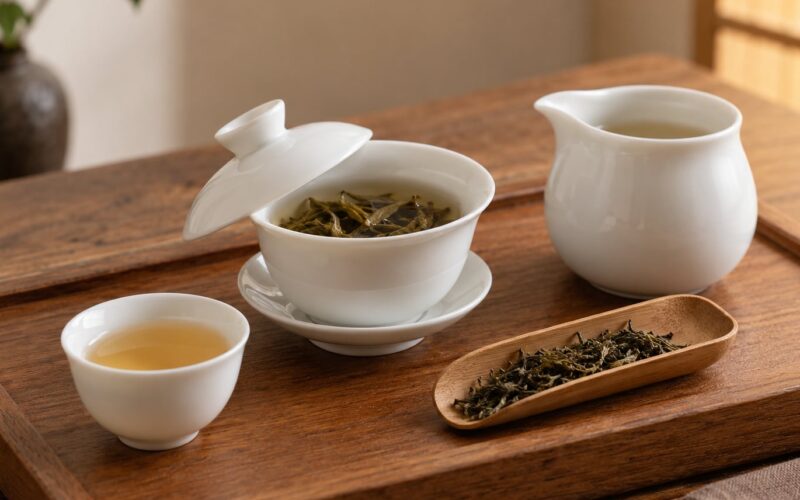
Darjeeling is the refined choice, more floral than malty, and lighter with it. Many venues now pour green, white or oolong teas as well, which suits a service leaning toward the East Asian end of the spectrum.
If you want nothing caffeinated, an herbal infusion or a fruit tea works fine and is normally listed on the same menu. Just ask, because in a small tearoom the list is not always printed anywhere you can see it.
Champagne afternoon tea adds a glass of sparkling wine to the same food, and an evening tea version swaps in alcohol and more substantial savory courses. Those are additions to a set menu, not separate traditions with their own rules.
What Is Served at a Traditional Afternoon Tea? Savory Bites
The savory course is the part that varies most between countries, and it is also the part that tells you what kind of service you are sitting in.
Finger sandwiches are the British default: crustless white or brown bread cut into slim strips, sized for two or three bites, with the crusts trimmed so they never appear on a plate. The classic fillings are cucumber with cream cheese, egg mayonnaise with fresh cress, smoked salmon with dill and lemon, ham with mustard, and coronation chicken.
Quiche and savory tartlets show up wherever a French influence runs through the kitchen, cut into small rounds and served warm or at room temperature. That is a standard part of a French service rather than a British one, though plenty of British hotel kitchens borrow from it.
Crustless bread rounds and small brioche buns turn up in continental European versions, usually with a lighter filling than the British default. Miniature hot dishes, such as a small quiche, a slice of quiche lorraine or a warmed savory pastry, belong to the more elaborate hotel version rather than the simple tearoom one.
In Hong Kong, the savory course is a dim sum selection: steamed buns, siu mai, rice noodle rolls and shrimp dumplings, served in small baskets and eaten with chopsticks. Taiwanese and other East Asian services tend toward the same family of small savory bites alongside sweet pastries that have no British equivalent.
One more thing worth knowing. The name British can mean a lot in these fillings, and a hotel aiming at an international crowd will lean heavily on the egg and cucumber versions because they travel well and offend nobody. A local tearoom may do exactly what it has always done.
Why Scones, Breads, and Cakes Belong on the Table
The order of the courses is not arbitrary. You go from savory to neutral to sweet, which moves your palate in one direction and stops the meal from arriving as a single wall of sugar.
In a British service the middle tier is scones, served warm and often wrapped in a linen cloth, with two kinds on the stand: plain and fruit. The plain scone is the one for clotted cream and jam. The fruit scone is usually already sweet enough to eat as it is.
Clotted cream is the element people argue about most, and it is genuinely not interchangeable. It is a thick, high-fat cream with a slightly cooked top, spooned on cold so it holds its shape. Butter is not a substitute, and a tea room serving something looser than that is serving a different thing.
Preserves on the table are usually strawberry and raspberry jam, with lemon curd offered as an extra alongside. Some services also set out a fruit compote or poached fruit.
French afternoon tea does not center on scones. The middle course leans toward breads and small pastries, and the sweet course is built around fruit: tartlets, small fruit cakes and tart toppings rather than a scone with jam.
East Asian services use steamed buns, pineapple cakes, mochi-style pastries and coconut sweets in that middle position, and quite often skip a sweet course entirely in favor of fruit. None of these imply a missing tier. They are regional fillings for the same three slots on the stand.
How Is Traditional Afternoon Tea Served?
Everything usually arrives together, on one tiered stand, within a few minutes of you sitting down. In a formal service the stand is placed in front of you and worked through in order, bottom tier upward, rather than the courses being brought out one at a time.
You start at the bottom with the savory bites, then move to the middle for scones, then to the top for sweets. Plenty of people reverse it. Nobody will stop you.
Everything on the stand is finger food. Sandwiches, scones and small cakes are picked up and eaten directly. For scones, a small knife or a teaspoon is used to spread, and a side plate catches the crumbs.
Tea is poured for you, and poured again when the pot runs low. Nobody needs to ask, though saying so is fine.
Expect the sitting to last sixty to ninety minutes. The bill usually arrives as one item per person, with sparkling wine and any extras itemised separately. Standard venues will not expect you to finish everything on the stand.
How Does Afternoon Tea Differ Around the World?
There is no official global standard, and the same name covers services that would not recognise each other. The useful way to compare them is by balance: how much tea, how much savory food, how much baking, how much sugar, and how long you are expected to stay.
Britain sets the template most people picture. Tea leads, sandwiches and scones and cakes follow on the stand, and the sitting is an hour or so. It is the version most reliably described as traditional.
France runs lighter on tea and heavier on baking and fruit. Sweet pastry and small fruit tartlets do the work that scones do in Britain, and the atmosphere tends toward a café with a table service rather than a formal stand.
Continental Europe sits between the two, with more breads and cheese appearing in the middle course and a shorter, more snack-shaped service in city tearooms.
Hong Kong is the clearest departure. Tea is often a house blend rather than a menu choice, the savory course is a full dim sum selection, and sweets arrive in the form of cakes and traditional pastries. The meal runs longer and is eaten with chopsticks rather than fingers for some items.
Taiwan and other parts of East Asia have their own local forms, typically heavier on sweet buns and pineapple cakes and lighter on clotted cream, with a shorter and more casual rhythm. Regional variations within these traditions matter as much as the differences between them.
Frequently Asked Questions
How many pieces should I eat at traditional afternoon tea?
Most traditional services put out around four to six sandwich pieces, two scones and two or three small cakes for one person. That is designed to be a fixed portion, not a test, and there is no expectation to finish the stand. If you are hungry, order a second helping or a plate of sandwiches separately.
Do you eat afternoon tea food in a particular order?
The traditional order is bottom tier first: savory finger sandwiches, then scones with clotted cream and jam, then cakes and pastries from the top tier. It exists because moving from savory to sweet in one direction makes the meal easier to eat. Plenty of diners go sweet first and nobody minds.
Is afternoon tea the same as drinking tea with cake?
Not quite. Afternoon tea is a small structured meal built around tea, with a savory course and a bread or scone course before the sweets. Tea with cake is just tea and something sweet. The traditional meal has a sequence and a set of components, and that is what separates it from an ordinary cuppa.
Can children drink afternoon tea, and what are the alternatives?
Yes, and it is a good way to introduce children to a formal meal. For anyone avoiding caffeine, most venues list herbal infusions and fruit teas on the same menu as the black teas. Milk in tea is normal at a children’s service, and a pot of Earl Grey with milk usually goes down better than plain tea.
How do I know whether a hotel serves traditional afternoon tea?
Look for a written menu that names the courses and a stated duration, and ask whether the selection is fixed or ordered a la carte. A traditional service serves a set stand of sandwiches, a bread or scone course and sweets together, and it usually runs sixty to ninety minutes. Most hotels also state a dress code, normally smart casual.
Conclusion
What is served at a traditional afternoon tea comes down to four things: a pot of tea, small savory bites, a warm bread or scone course, and something sweet at the top. The order runs bottom tier upward, the portions are fixed, and the whole thing takes about an hour and a half.
Before you book anything, read the written menu and ask one question: is this a fixed traditional selection, or a la carte? That single answer tells you what you are getting, how long you will be at the table and whether anything needs flagging in advance.