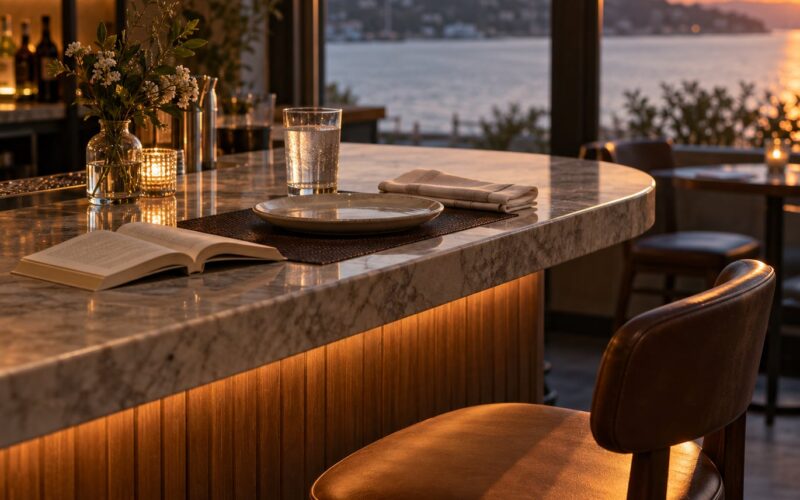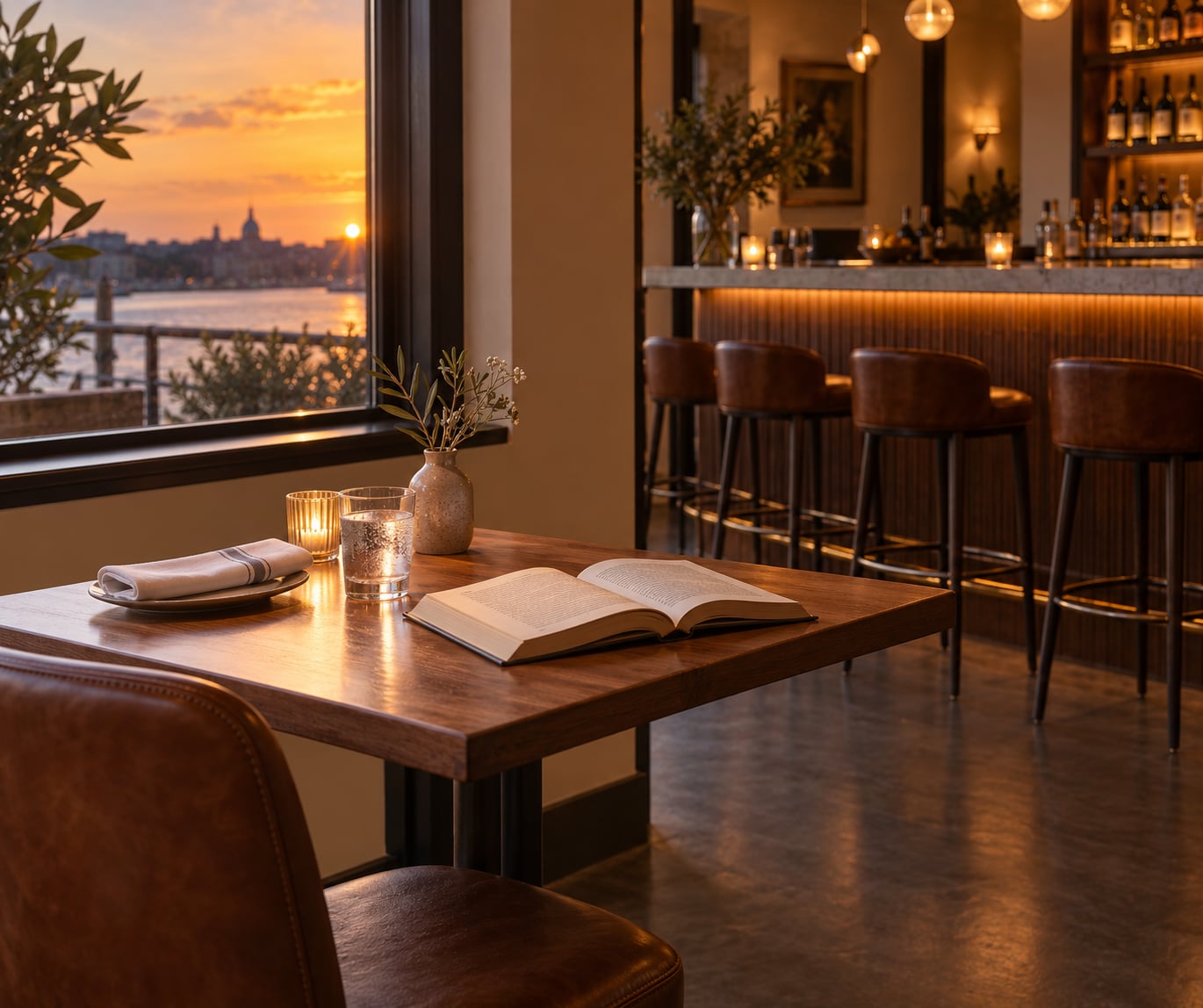
Finding a restaurant that welcomes solo diners comes down to three things: seating built for one person, a menu that works in single portions, and staff who treat a party of one as routine. Search by seating format instead of cuisine, read recent reviews for guests who ate by themselves, and pick an off-peak hour. That combination works almost anywhere, and planning one meal takes about fifteen minutes.
Most of the discomfort people feel eating alone has very little to do with eating alone. It comes from booking the wrong room at the wrong hour, or from walking into a space that was designed for two-hour dinners and long tasting menus. Pick the room that fits one, and the awkwardness mostly disappears.
Table of Contents›
- What You Need
- Step-by-Step: How to Find a Restaurant That Welcomes Solo Diners
- 1. Search for restaurants with a comfortable solo-dining setup
- 2. Check the restaurant’s seating and service format
- 3. Read recent reviews for evidence of solo hospitality
- 4. Call or message before booking when the welcome is uncertain
- 5. Choose a time that matches the restaurant’s rhythm
- 6. Look for a menu and price level that work for one person
- 7. Make the reservation or walk in confidently
- 8. Have a backup plan for the same neighborhood
- Common Mistakes
- Frequently Asked Questions
- Is it OK to eat alone at a restaurant?
- How do I make a reservation for one person?
- Is it better to sit at the bar or at a table when dining solo?
- How long can I sit alone before it becomes awkward?
- What should I order when eating alone at a restaurant?
- How can I tell if a restaurant is solo friendly before I go?
- Conclusion
What You Need
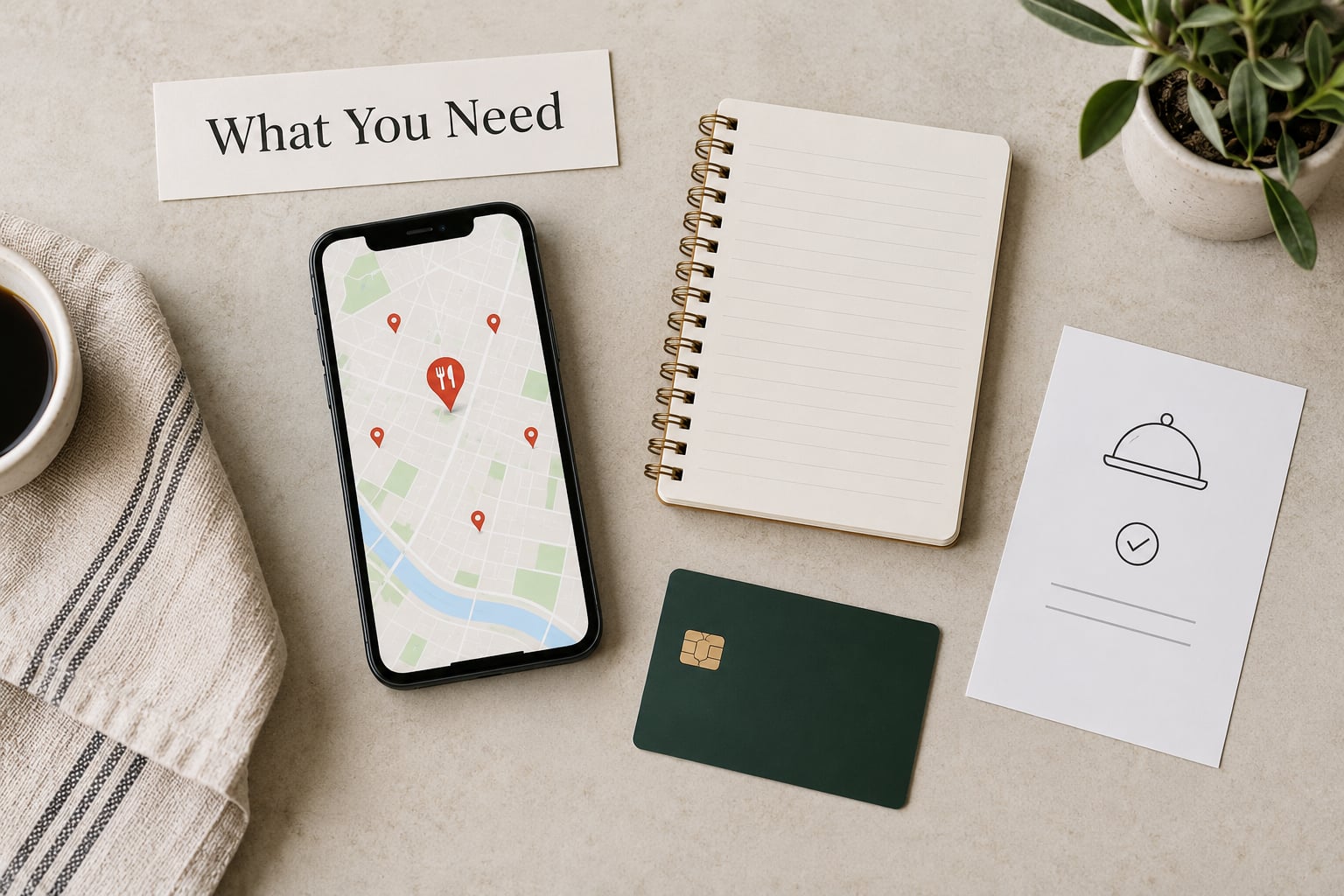
None of this needs special software or planning. It needs five things, and you can assemble them in a few minutes the first time.
- A phone or laptop. Maps, review platforms and reservation sites all work better on a screen you can hold in one hand at a bus stop or in a hotel lobby.
- A map or review platform. Google Maps covers almost every restaurant in most cities. Yelp and a city-specific forum often add the personal detail Maps leaves out.
- The time you want to eat. Decide this before you search. A place that is perfect at 6pm on a Tuesday can be a bad fit at 8pm on a Saturday.
- Your dietary needs. Allergies, vegetarian, vegan, religious restrictions. Some of these narrow your options more than any seating preference will.
- Two backup options in the same neighborhood. Closures, long waits and no-reservation rooms happen. A second and third choice in walking distance turns a bad hour into a good one.
If you are traveling, add the neighborhood structure to this list. Pick the area you want to be in first, then find the restaurant inside it. The reverse order sends you across town for a room you did not want.
Step-by-Step: How to Find a Restaurant That Welcomes Solo Diners
The process below takes about fifteen minutes and gets more accurate the more you use it. It is not about finding a list of named venues, because those lists go stale. It is about recognizing the setups that welcome a party of one and the setups that do not.
1. Search for restaurants with a comfortable solo-dining setup
Search by seating and service, not by food. Most solo diners find their best meals through a phrase like solo dining, counter seating, bar seating, communal table, casual dining or restaurant neighborhood, added to the area you want to be in.
These terms work because they describe the room, not the menu. A search for tacos will hand you a room with two-person booths and a host who does not seat parties of one on a Friday. A search for bar seating in the same zip code will hand you a stool at a rail with a laminated counter menu.
A few setups consistently work well for one person. A counter with a direct view of the kitchen puts you in the middle of the room without making eye contact the whole time. Bar rail seating along the front does the same thing near the door. Communal tables fill naturally with strangers, so your party of one stops standing out the moment the second guest sits down. A small two-top near a window costs you nothing socially.
2. Check the restaurant’s seating and service format
Look at photos before you read anything. Photos tell you the table shape, the number of seats per table and how full the room gets. Three or four empty chairs at a table is a bad sign for a solo guest. Three stools at a rail is the opposite.
Service format matters as much as furniture. Counter service means your order comes from one person and the meal moves at a pace you set. Table service means a server takes an order designed to feed two and checks back on a schedule built for shared plates. Both are fine, but they suit different appetites for pacing.
| Seating format | Best seat | Solo comfort | How it books |
|---|---|---|---|
| Chef’s counter or kitchen counter | Any stool, ideally the middle | High | Book online, party of 1 |
| Bar rail or window counter | Rail, not a high-top | High | Walk in or bar reserve |
| Communal table | The end seat | High once it fills | Book early, or walk in |
| Two-top table | Against the wall | Medium | Book, ask for a single |
| Booth or banquette | Booth, half facing in | Medium | Book |
| Outdoor patio | Two-top on the rail | Medium, weather dependent | Walk in, host seats it |
| Tasting menu room | Assigned seat | Low unless the room runs a bar | Book weeks ahead, ask in advance |
The row at the bottom is the one that surprises people. Tasting menus and omakase counters are often the most hospitable rooms in the city, because the entire format assumes one guest at a time. Some, though, book in pairs only. That has to be asked about, not assumed.
3. Read recent reviews for evidence of solo hospitality
This is where most guides stop and where the real answer sits. Open the reviews and search inside them for words that describe a single guest: alone, by myself, solo, counter, bar seat, two-top, first come, first served, weeknight.
Read the four or five most recent reviews, not the top review. A comment from two years ago tells you about a room that may not exist now, while last month’s reviews tell you about the same host working the same shift.
Look for three specific signals. One, someone describes eating alone without any friction, and the staff were normal about it. Two, the reviewer mentions a portion that fed one person properly. Three, nobody mentions being rushed or moved to the worst seat. Silence on those points is mild evidence too. Readers on dining forums pick up the same signals, and a thread about a city’s solo spots often names the format that worked better than any review aggregate.
Then run the reverse test. A single angry review about a slow table gets less weight than three separate reviews mentioning bad service, because the same complaint repeating is worth more than one loud one.
4. Call or message before booking when the welcome is uncertain
A two-minute call settles questions that twenty reviews cannot. Use it for omakase counters, tasting menu rooms, ramen bars with counter-only seating, any venue that mentions a minimum party size, and anywhere you would be genuinely upset to arrive and be turned away.
Say this: Hi, I am looking to book a table for one on Thursday around 7pm. Do you seat solo diners, and if so, is the bar or counter the better seat for me? Is there anything I should know before I come?
That script does three things. It states the party size immediately, so nobody is surprised. It asks where a solo guest would be best seated, which tells you whether the host thinks about solo diners at all. And the last question invites the honest answer, which is usually the most useful thing you will hear all week.
Many hosts will tell you plainly that solo guests are seated at the bar. That is not second-class treatment. In many rooms it is the best seat in the building, with the most attention and the least waiting.
5. Choose a time that matches the restaurant’s rhythm
Same restaurant, different hour, completely different experience. Weekday lunch is the easiest meal a solo diner will ever book. The 5pm to 6:45pm window catches rooms before the rush but after the lunch rush has cleared. Happy hour gives you a bar full of people, small plates sized for one, and a lower spend per course.
Friday and Saturday after 8pm is the hardest window. Rooms are full, tables are turned quickly, and a party of one occupies a seat that could serve four. Not every restaurant refuses solos then, but the ones that do rarely advertise it.
Counter-only formats have their own clock. A ramen counter with twelve stools seats twelve people an hour. Go at the wrong moment and you wait; go early or late and the cook has more time for you.
6. Look for a menu and price level that work for one person
Open the menu before you commit. You are checking for portion discipline, not quality. A menu built around small plates, skewers, dumplings, tacos, oysters or a prix fixe course is designed to be eaten by one person and shared by many.
A menu of large plates for two or three needs a decision from you. Order one and take the rest, or order two halves to eat on the spot. Either is normal. Nobody at the table next to you is tracking your leftovers.
On spend, a single diner pays the full check, so an expensive tasting menu or a bottle-heavy wine list costs you more than the same experience split between two people. That is worth weighing against the room, not against your nerve. A $60 prix fixe with twelve courses and a counter seat may be a better value than a $40 entree in a quiet dining room, because the counter seat is the experience.
Watch for minimums and minimum spends, which are common at counter seats and tasting rooms. They are normal and not a scam, but they change whether the evening suits you.
7. Make the reservation or walk in confidently
Booking online is straightforward. Set the party size to one, choose the bar or counter option if the platform offers a seat-type toggle, and pick a time two hours away from peak if you want a quieter room. Platforms like Resy, Tock and OpenTable all handle single bookings without any special note needed.
For a walk-in, keep it short. Tell the host you are a party of one, a bar seat would be great, and otherwise let the room run its course. Do not explain your situation. Nobody needs to know that this is your first time eating alone in a year.
If you get seated somewhere you did not want, ask once, early and politely. Hosts move people around constantly, and a request in the first five minutes is easy to grant. The same request after the appetizers is a complaint.
8. Have a backup plan for the same neighborhood
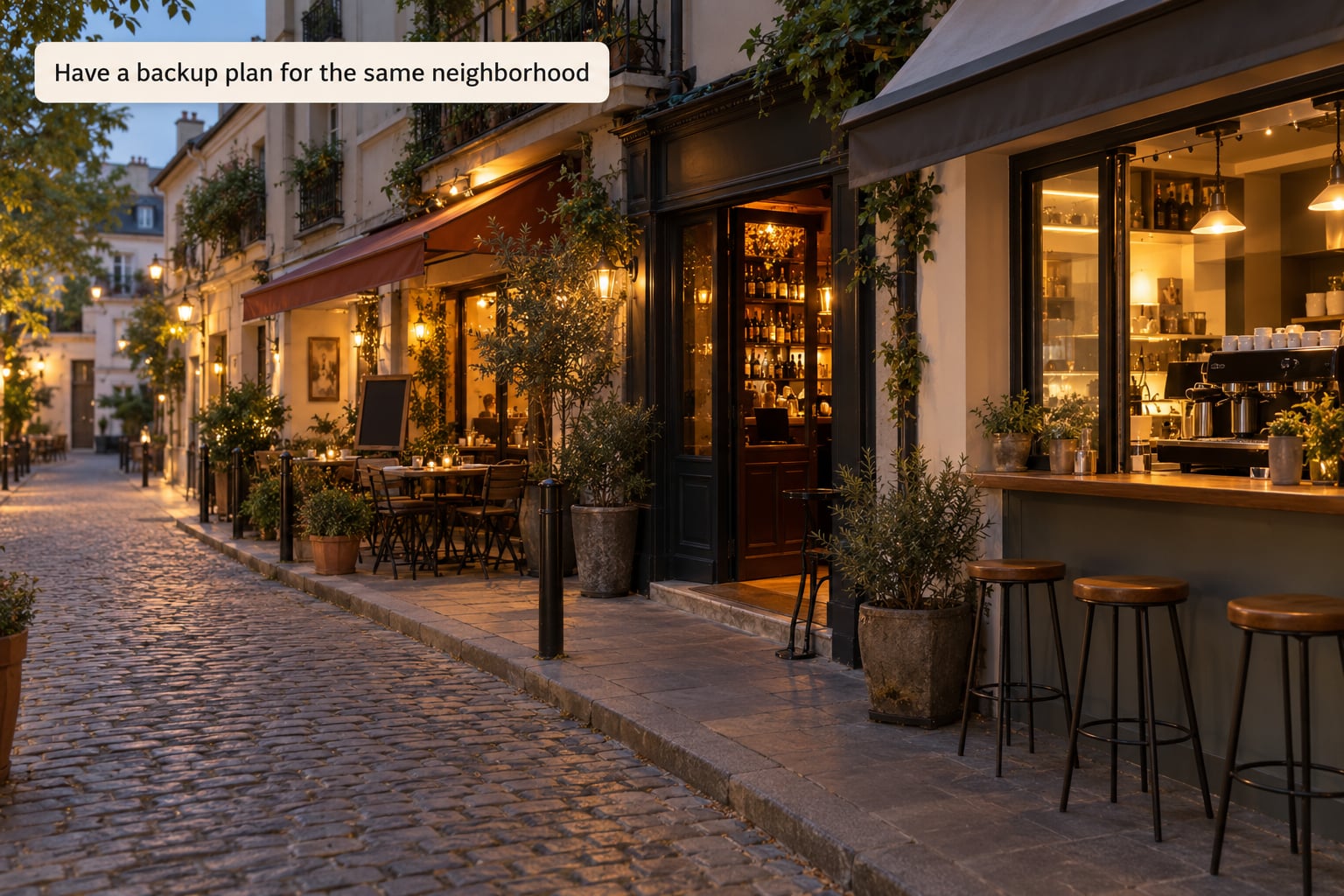
Keep two more options within a ten-minute walk. A café with a counter, a noodle shop, a diner or a casual restaurant all handle a party of one without ceremony.
Backups exist for three ordinary situations: the room is closed tonight, there is a wait you do not want, or you arrive and it is not the mood you hoped for. Walking to a second choice costs you five minutes. Rewriting your evening costs you the rest of the night.
Check the backup on the same map, in the same pass, before you leave. A backup you have never seen is not a backup.
Common Mistakes
Assuming every counter seat is solo-friendly. Some counters are staff-only work surfaces where a guest would be in the way. A bar rail facing the street is different from a service counter behind the register. Check the photos before you commit.
Relying on old reviews. A review from two years ago may describe a different room, a different menu and a different owner. Sort by newest and read three of them.
Going at the busiest hour of the week. Friday and Saturday nights are the hardest seats in the city to get alone. Same room, same menu, Tuesday at 6pm is a different evening.
Assuming a reservation guarantees comfort. A booking gets you in the door. It does not pick your seat. Ask for the bar or counter when you book and when you arrive.
Choosing a room that is too quiet or too formal. A hushed dining room with white tablecloths and a two-hour pace makes silence louder than it needs to be. A busy counter with an open kitchen makes company for free.
Overexplaining at the host stand. Solo diners tend to narrate. You do not need to justify a reservation for one, and stating it plainly works better than softening it.
Confidence here is mostly repetition. The first meal alone takes effort. The fifth is a Tuesday errand. Most people I know say the change came from picking the seat, not from changing their attitude.
Frequently Asked Questions
Is it OK to eat alone at a restaurant?
Yes. Dining alone is ordinary and most staff see it several times a night. Most discomfort comes from choosing a room or an hour that suits couples better than individuals, not from the act itself. A counter seat in a busy room at 6pm on a weeknight reads as normal to everyone in the building, including you.
How do I make a reservation for one person?
Book online and set the party size to one, then choose the bar or counter option if the platform offers a seat-type toggle. Pick a time away from peak if you want a quieter room. For anything unusual, call instead and say plainly that you are booking a table for one and ask whether the bar or counter is the better seat.
Is it better to sit at the bar or at a table when dining solo?
The bar or counter is usually better, and it is not a demotion. You are close to the food and the staff, the pacing is entirely yours, and a conversation is optional rather than missing. A two-top against a wall is the better pick when you want quiet, a book, or a long meal without anyone near you.
How long can I sit alone before it becomes awkward?
As long as you are dining. There is no time limit, and any limit you feel comes from imagining what others are thinking. Servers check on the pace you set, not on how many people arrived. If a member of staff mentions timing at the table, it usually means the next reservation is due, and you can ask how long you have.
What should I order when eating alone at a restaurant?
Favor small plates, a prix fixe course, or dishes built for sharing such as dumplings, tacos, skewers or oysters, then order two or three to taste. On a large-plate menu, order one and take the rest without ceremony. At a counter, ask the cook or the bartender what they would order, which is the highest-value question available to a solo guest.
How can I tell if a restaurant is solo friendly before I go?
Check three things. Look at photos for stools, rails and two-tops rather than large booths. Search recent reviews for the words alone, solo, counter and bar seat. And check the menu for small plates or a fixed-price format. If you want certainty, make one two-minute call and ask whether they seat solo diners.
Conclusion
Start with the format, not the name. Shortlist three nearby places with counter seating, bar rails or communal tables, read the four newest reviews on each for guests who ate alone, and confirm by phone only if the room looks unusual. Then pick a weeknight hour and just go.
A meal on your own is not a consolation prize, and it does not need to be treated like one. It is dinner, it takes fifteen minutes to arrange, and the seat you choose decides how it feels.