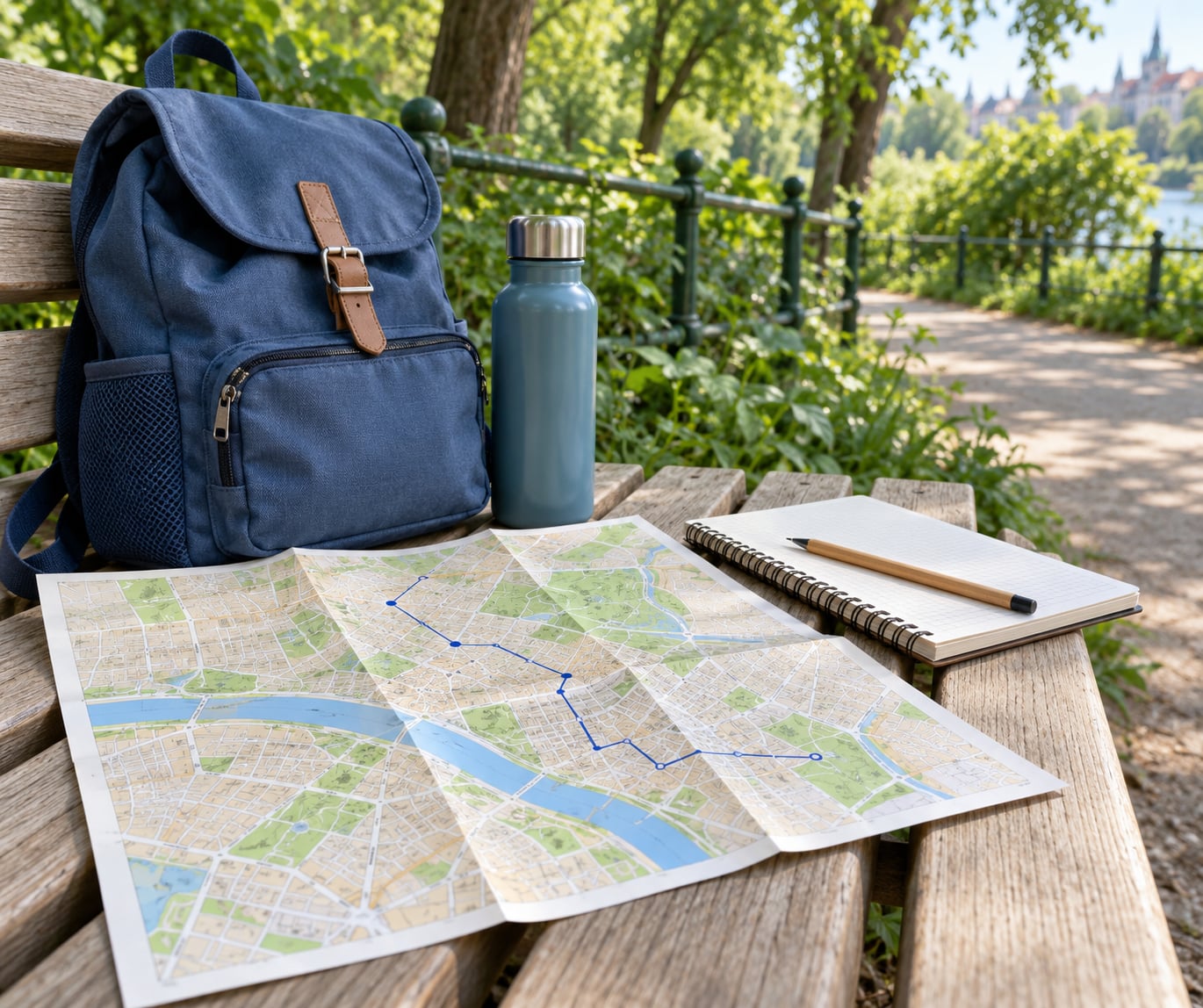
To find kid friendly walks in a city, work backwards from your youngest child rather than forwards from a list of parks: set a time limit, pick a route with safe crossings and a predictable surface, add two or three stops that hold attention, and build in an easy exit. It takes about 20 minutes of planning and 40 to 60 minutes on the ground.
That sounds obvious. Most city walking guides skip it and hand you a list of named trails instead, which answers a different question. The useful part is the screening method, and it works in a city you have never visited. It also works in the city you know well but have never actually walked end to end with a two-year-old.
Last updated: October 2026.
Table of Contents›
- What You Need
- Step-by-Step: How to Find Kid Friendly Walks in a City
- Set a Realistic Distance and Time
- Choose a Route With Safe, Predictable Streets
- Add Stops That Hold Children’s Attention
- Plan Around Weather, Noise, and Opening Times
- Build a Simple Comfort and Safety Kit
- Do a Short Test Walk Before Committing
- Keep the Route Enjoyable and the Plan Flexible
- Common Mistakes
- Frequently Asked Questions
- What age is a city walk suitable for?
- How long should a walking route be with a young child?
- Are city walks suitable with a stroller?
- What should we do if the weather changes during a walk?
- How can we keep children interested without adding too many stops?
- When is a park walk better than walking through a city centre?
- Conclusion
What You Need
Before you open a single route map, gather the constraints. The more honest you are here, the fewer disappointing Saturday mornings follow.
- Ages of everyone coming. The youngest one sets the pace and the length. A seven-year-old can walk twice as far as a toddler in the same hour, and the toddler decides.
- Mobility and equipment. Walking independently, riding in a stroller, or being carried in a baby carrier. These three produce completely different route lists.
- A maximum walking time. Write it down. Most families with a toddler land somewhere between 20 and 45 minutes of actual movement.
- Interests. Ducks, trains, dogs, leaves, water, construction machinery. This is what you use later to pick stops.
- Rules for your outing. Whether screens are allowed, whether there is a treat budget, how long you tolerate before a snack stop.
- Restroom and water access. A route with no toilet for 40 minutes is a route you will abandon early.
- The forecast and any alerts for heat, storms or air quality, plus the daylight window if you are walking in the evening.
- Access details — how you will get there, where the trailhead is, and whether parking or public transport is simple.
- Who is supervising whom. If you are walking solo with one child, or two adults are splitting the load, that changes what each person carries.
That last list is short, but it is the part people skip. Parent forums are full of the same complaint: nobody can filter routes by surface, toilets and shade before turning up, and parents describe arriving at a trailhead that looked fine online and eating dirt for half an hour.
Step-by-Step: How to Find Kid Friendly Walks in a City
Set a Realistic Distance and Time
Start with the youngest child’s limit, not the route’s full length. Young children walk at roughly 1.5 to 2 mph against an adult’s 3 to 4 mph, and they stop constantly to look at things, which is the point but also the variable.
Plan conservatively. A toddler who is genuinely walking will manage about a mile of actual movement in an hour, broken into segments with real pauses. If your maximum is 45 minutes, plan a 20 to 25 minute core route so the outing can grow instead of collapse.
Build a break in at 10 or 15 minutes, before fatigue turns into resistance rather than after. A planned stop at a bench or swing is a stop; the same stop extracted from a meltdown is a rescue.
The useful rule: it is always fine to turn around early and nobody has to call it a failure. Families in local discussions describe their walks as distance-free by design, the child setting the pace and stopping to observe constantly. Shorter walks repeated often beat one long walk attempted monthly.
Choose a Route With Safe, Predictable Streets
Screen the street environment before you screen the distance. Kids who can walk a mile happily will not cross six busy roads for it, and the road crossings are where the risk actually lives.
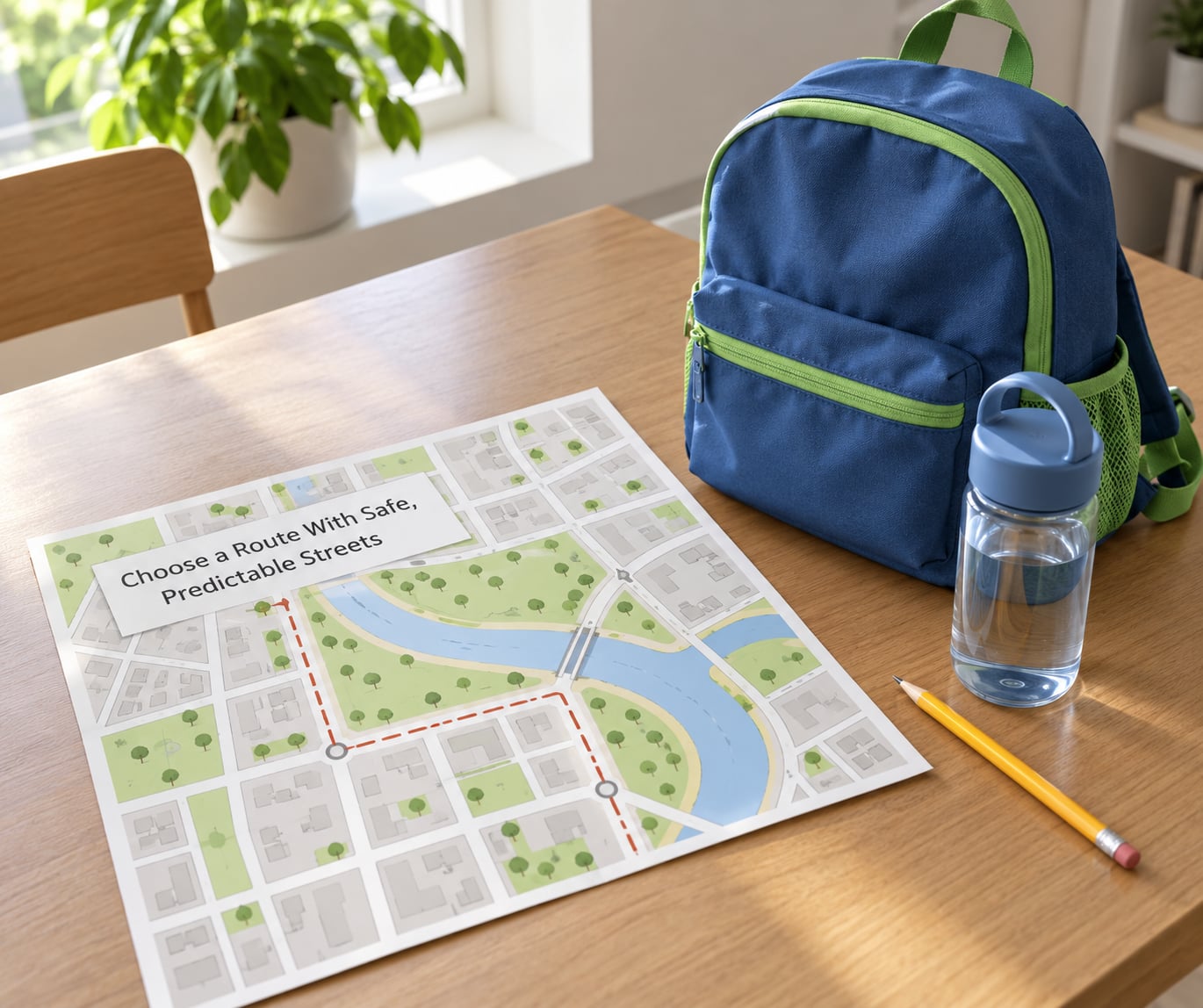
Look for a continuous sidewalk or separated path, crossings that are frequent rather than one long exposure, and a flat or gently rolling profile. Stairs, switchbacks, steep banks and boardwalk edges are the features most likely to end the walk early and the ones most often left unmentioned online.
Then check what a photo will not tell you. Is the path separated from traffic, or sharing a lane? Is there seating every ten minutes or none for the whole stretch? Are the streets lit if you finish near dusk? Where is the nearest restroom? Is there a playground at the end, or at the start, or neither?
Parents repeatedly ask which parks have paved paths and walking loops rather than rough trails, and the honest answer is that most city parks have both in the same place, often within a few hundred metres of each other. That proximity is useful. It means the paved loop can be the plan and the rougher path the bonus.
Add Stops That Hold Children’s Attention
Two or three purposeful stops, spaced every 10 to 20 minutes, do more for a walk than a packed itinerary. A playground, a shaded patch of grass, a public art piece, a duck pond, a distinctive old building, a snack stop — pick from the interests you listed earlier.
Water features come up more than anything else when parents describe what keeps a child engaged. A shallow creek, a splash pad, a fountain they are allowed to touch, even a drainage channel will hold attention longer than a viewpoint.
Scavenger hunts and simple incentives are reported in forum threads as the difference between a short walk and a complaint. A folded card with five things to find works, and it costs nothing. So does letting a child carry the list.
Do not schedule an attraction schedule. Attractions have hours, queues and their own bad days. A route built around three open-air stops is the one that still works when the schedule collapses.
Plan Around Weather, Noise, and Opening Times
Check the official forecast, not a general weather app glance, and look for heat and air-quality alerts as well as rain. Then decide in advance what changes if the forecast is wrong, because deciding in the moment rarely produces a good answer.
Write a short-goal version and a poor-weather version of the same route. The short goal is usually a truncated out-and-back, half the length, ending at the same playground. The poor-weather version swaps the long exposed stretch for a short sheltered park and a shorter path home.
Check opening hours for anything you plan to use, and check for local events, markets and construction. A city walk is unusually exposed to roadworks and event closures, and both are easy to find in advance through the parks department site or a local noticeboard.
Noise is worth thinking about too. Streets that are pleasant on a weekday can be genuinely unpleasant on a school run or a weekend market afternoon.
Build a Simple Comfort and Safety Kit
The bag is boring and it works every time: water, snacks, sun protection, a weather layer, basic first aid, identification, a charged phone, tissues and something familiar from home.
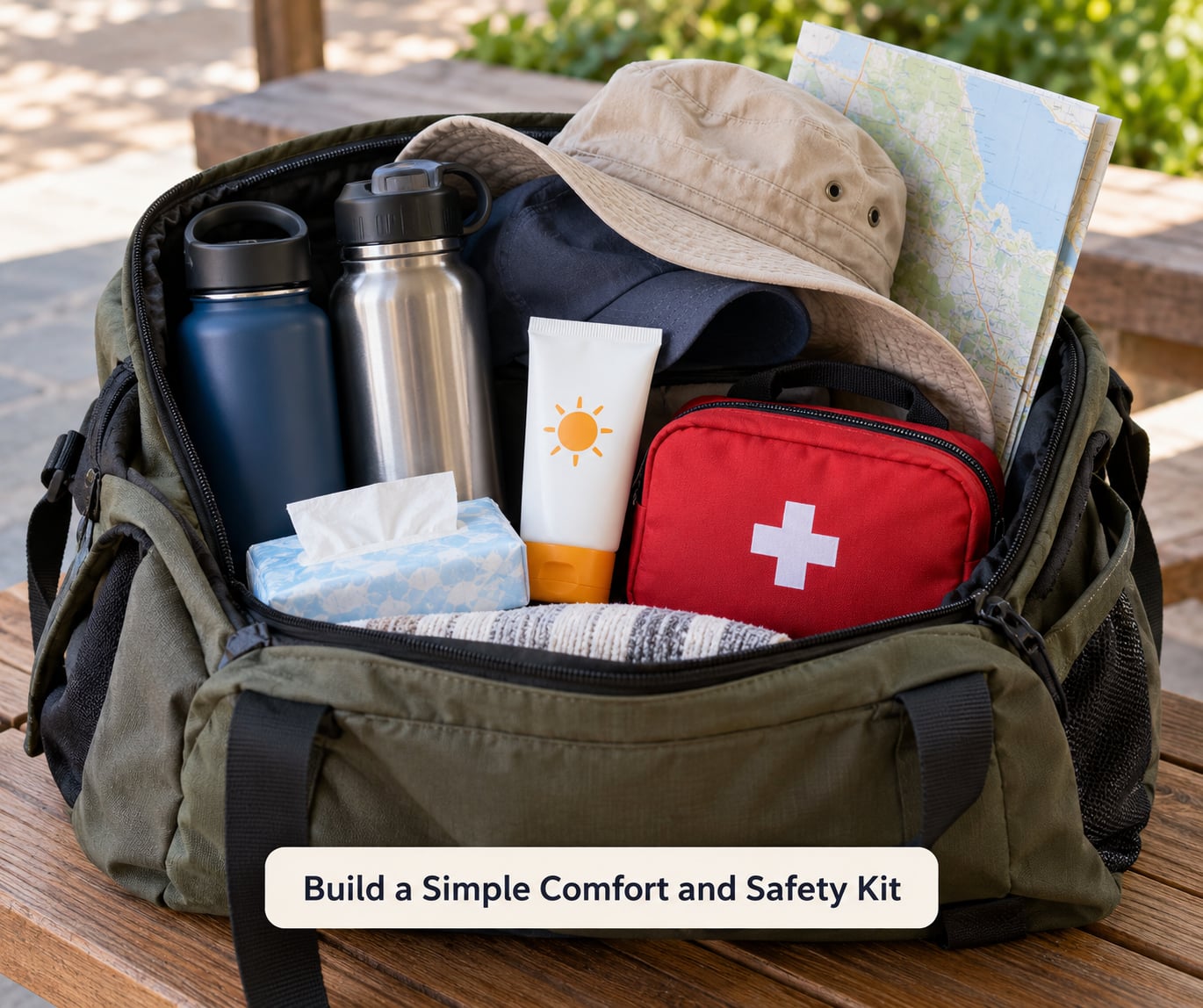
Water quantity is the one to get right for your own child. A refillable bottle each, plus a short refill stop if the route allows it, beats carrying everything from home. Snacks should be something the child eats standing up, because sitting down often signals the end.
Dress for the finish rather than the start. Most cold walks end with a child who overheated and then got cold, so the layer belongs in the bag and comes out at the halfway point.
If two adults are coming, split the roles. One carries the child and the child-specific items, the other carries water, the map and the first aid kit. Both keep a phone charged. If you are walking alone with a toddler, the phone goes in a front pocket, the child carries your identifying details, and the plan assumes you may need both hands.
Do a Short Test Walk Before Committing
Before you commit the family to a new route, walk a short version of it. Thirty to forty minutes close to home, with the same gear, is enough to tell you most of what you need.
Watch the pace, not the distance. How long did they actually walk before the first sit-down, and what triggered it? Were the crossings manageable or was there a moment you held your breath? Did the weather hold, or was the layer needed? Did the stroller perform on the surface, or did small wheels sink on crushed gravel? Was there a restroom when you needed one?
The thing to judge is how the walk ends. If the child is still in reasonable spirits at the far end, the route is good and you can lengthen it. If the last ten minutes are all complaint, the problem is usually pacing or stops rather than the route itself.
Do this twice, in different weather if you can. Most parents who repeat it find their reliable routes come from these test walks, not from any list.
Keep the Route Enjoyable and the Plan Flexible
Give the family plain signals for each stage, agreed before you leave: we keep going, we take a break, we turn around now, we change plans. Deciding these calmly in advance means the hard call in minute thirty is a rule rather than an argument.
Let children make small choices. Which way at the next corner, which stop first, which item goes on the list. Enough that it feels like their walk, not so much that you lose sight of traffic, water edges and other people.
Letting a child lead for a stretch on a route you already know is the most commonly repeated piece of advice from parents who say their walks work. Keep it to a stretch, not the whole route, and only where the path is wide enough that a wandering three-year-old is not a hazard.
Ending well beats ending on schedule. A walk that turns back at twenty-five minutes with everyone still talking is a better one than a full route finished in tears, and the same route is there next week.
Common Mistakes
- Planning around adult walking speed. Your pace is roughly double a young child’s and you will not notice the time until they are done. Fix: set the time limit from the youngest child’s number, not the map’s.
- Packing the itinerary with every attraction in reach. One queue or one closed gate derails the whole thing. Fix: two or three outdoor stops, nothing with a schedule attached.
- Ignoring crossings and heat until the day. A route that looks calm in a photo can be six road crossings and no shade. Fix: count crossings and shade on the map, before leaving.
- Starting with the longest, most ambitious route. A hard first walk teaches children that walking is a test. Fix: the short test walk first, always.
- Forgetting where the toilets are. The need arrives on schedule regardless of your plan. Fix: one restroom on the route, checked in advance, and a backup you know about.
- Relying on a single forecast check. Conditions shift through the morning, and heat arrives earlier than expected. Fix: check official alerts, pack the layer, keep the short version ready.
- Finishing the route no matter what. Distress at minute forty is the walk failing, not the child. Fix: agree the turn-around signal in advance and use it without negotiation.
One more worth naming: taking advice written for hiking. Boots, elevation gain and five-mile loops do not translate to a thirty-minute neighbourhood walk, and the language makes ordinary routes sound like more work than they are.
Frequently Asked Questions
What age is a city walk suitable for?
From about one year old, as long as the route is short and the surface is predictable. A one-year-old will usually be carried rather than walking, which means the route matters more than the pace. From three or four, kids can walk a full short loop and start choosing stops themselves. Older children handle longer routes and can be given the leading job, which buys you a quieter walk.
How long should a walking route be with a young child?
Aim for 20 to 30 minutes of actual movement for a toddler, 45 to 60 minutes for a preschooler, and let a loop’s own length fall out of that rather than the other way round. Plan a break at 10 to 15 minutes, before tiredness turns into resistance. If the walk ends early and everyone is still talking, you set the limit well.
Are city walks suitable with a stroller?
Yes, on paved or compacted gravel paths, which is most of the urban network. Crushed gravel, dirt and anything with roots, steps or boardwalk gaps will stop small wheels quickly. The most useful trick is choosing a route with a paved option and a rougher option in the same park, so the paved section is the plan and the rest is the bonus. A baby carrier unlocks far more routes.
What should we do if the weather changes during a walk?
Have the short version ready before you leave: a half-length out-and-back that ends at the same playground. If rain arrives, stop under cover, get layers on in the order you packed them, and walk the remaining distance rather than running it. For heat, shorten the loop, use shade and drinking fountains, and finish before the peak afternoon. Turning back early is a normal outcome, not a failure.
How can we keep children interested without adding too many stops?
Use two or three stops spaced every 10 to 20 minutes, chosen from what the child already cares about, and make one of them water: a creek, splash pad, fountain or duck pond. A simple scavenger list works well and costs nothing. Letting a child choose the order, or lead a stretch of a familiar path, does more for engagement than adding a fourth stop.
When is a park walk better than walking through a city centre?
Pick the park when the child is tired, the weather is marginal, or the route needs toilets and seating. City streets are better when the child is alert and interested in buildings, shops, buses and people, and when you can use a cafe or bakery as the endpoint. A city walk also has more escape options, which matters if the mood turns in the first ten minutes.
Conclusion
Good kid friendly walks in a city come down to three decisions made before you leave: work out the youngest child’s real limit, pick a route where the crossings are short and there is a rest stop, and make the first walk shorter than your maximum so next time it can be longer. Test it close to home, keep the turn-around signal agreed in advance, and the same route will keep working as they grow.