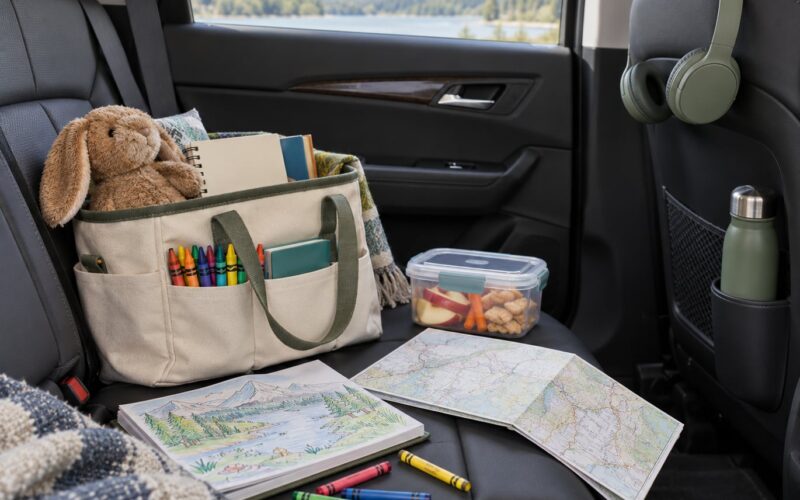
How to plan a trip with a toddler and keep your sanity comes down to three decisions: pick the destination to fit your child, build each day around one thing, and treat every plan as optional. Trips with toddlers fall apart when adults try to fit a sightseeing schedule around a two-year-old. It works the other way around.
This takes about an hour of planning per day of trip, plus an hour of decisions before you book anything. It feels slower at the start and it is the reason you get any relaxed moments at all once you are there.
Table of Contents›
- What You Need
- Decide these six things before you book
- A pre-booking checklist by timeline
- The kit bag that lives in the stroller
- Know what makes accommodation toddler-friendly
- How to Plan a Trip with a Toddler and Keep Your Sanity Step by Step
- Choose a destination that matches your toddler’s needs
- Build the itinerary around one or two anchors
- Pack for delays, naps, and everyday surprises
- Make meals and eating situations simple
- Prepare for transport so it isn’t the whole trip
- Plan a backup option for every outing
- Use a simple daily reset to protect your own energy and keep your sanity
- Common Mistakes
- Over-scheduling the itinerary
- Booking too many transfers
- Planning only adult activities
- Ignoring meals and nap time
- Having no plan B
- Overpacking
- Frequently Asked Questions
- How long should a toddler activity be before it turns into a meltdown?
- Do I need a stroller or is a carrier enough?
- How do you handle naps when your toddler’s schedule changes?
- What do you do when the plan falls apart at 11am?
- How do I stop being the parent who always loses their patience?
- Conclusion
What You Need
Most of the work happens before you book. These are the decisions to settle, the things to have on hand, and the questions to ask before money changes hands.
Decide these six things before you book
- Trip length. Two to four nights works for most toddlers. Beyond a week, everyone gets tired rather than relaxed.
- Destination type. Beach, city, resort, national park, or a visit to relatives. Each one stresses you in a different way.
- Transport. Fewer legs beats a better route. A direct flight with a toddler is worth more than the cheaper connection.
- Accommodation. Crib, fridge, kitchenette, laundry, and stairs matter more than the view.
- Feeding plan. Self-catering, familiar restaurants, or a mix. Decide this before you land, not at 6pm.
- Emergency contacts and insurance details. One page in your phone and one copy in the bag.
A pre-booking checklist by timeline
| When | What to do |
|---|---|
| 4 to 8 weeks out | Check passport or documentation validity, confirm the destination suits your toddler’s temperament, and ask the accommodation about cribs, stairs, and kitchen access. |
| 2 weeks out | Book the transport, download anything you will need offline, and tell your pediatrician where you are going in case you need advice while away. |
| 48 hours out | Check the weather and adjust the anchor activity, not the booking. Pack the kit bag and put documents in one folder. |
| Day of | Feed before you leave, bring one change of clothes per person, and leave with more time than the trip needs. |
The kit bag that lives in the stroller
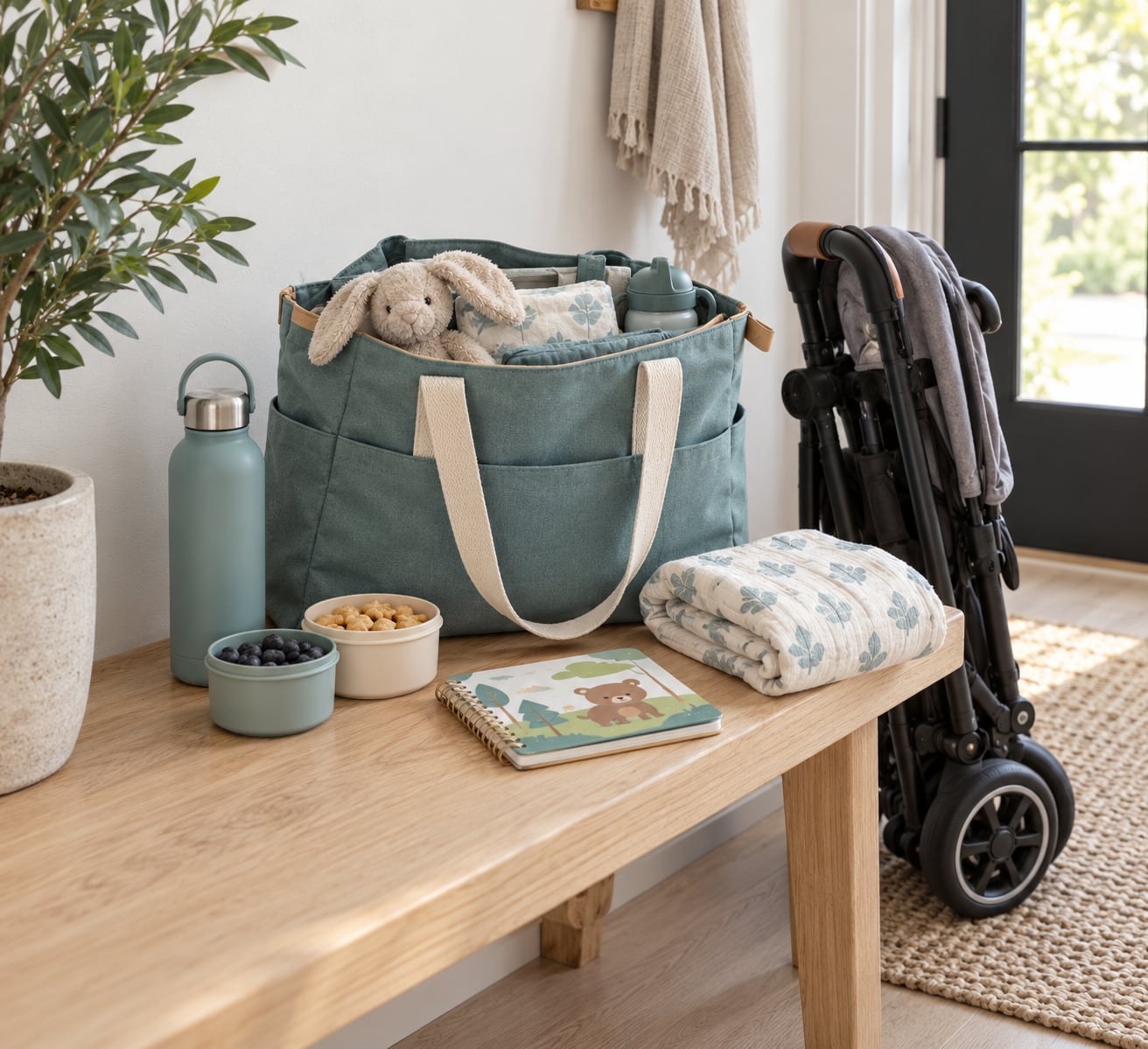
This is a separate bag, not the diaper bag you carry. It holds the things that must be reachable in under a minute: diapers and wipes, a change of clothes, two snacks, a water bottle, a portable changing mat, tissues, and one quiet toy. Parents report the single biggest travel mistake is overpacking and then not being able to reach anything in a stuffed bag.
Know what makes accommodation toddler-friendly
| Requirement | Why it matters |
|---|---|
| Crib or pack and play | You will not nap without one, and neither will your toddler. |
| Fridge or kitchenette | Makes milk, formula, and simple meals possible instead of ordering dinner every night. |
| Washer or laundry nearby | One load of laundry buys you half the packing. |
| Minimal stairs or a lift | Stairs with a heavy stroller at the end of a long day is where the evening ends. |
| Space to walk or run indoors | Bad weather days happen. A corridor or lobby beats a room with nowhere to move. |
| Kid-friendly eating options | Breakfast nearby saves a lot of negotiating at 7am. |
If you are traveling alone, add one more filter: proximity to food, a bathroom, and a car or transit stop. You will want options rather than a fixed plan.
How to Plan a Trip with a Toddler and Keep Your Sanity Step by Step
The best way to travel with a toddler is to plan one anchor activity a day and build everything else around it. Seven steps, in this order, and you will have a trip that still works when something goes sideways.
Choose a destination that matches your toddler’s needs
Pick the place that fits the child you actually have right now. A toddler who naps reliably and walks happily will do fine in a busy city with short outings and frequent rests. A toddler who melts down in crowds and wakes at every noise wants somewhere slower with outdoor space and short journeys between beds and bathrooms.
Walk the destination in your head before you commit. How long is the longest stretch without a toilet, a snack, or a nap? What is the plan when it rains? How many transfers sit between your bed and the nearest playground? A three-hour walk through a museum is a hard sell at two years old.
Low-stakes first trips are underrated. Your own city as a visitor, a weekend at a nearby town, or a resort where the beach is ten minutes from the room all teach you what your toddler does on the road without the cost of a bad international flight.
Age matters less than temperament, but the window between about eighteen months and two and a half years tends to be the hardest. Strong opinions, a nap that resists being moved, and a vocabulary big enough to argue with. A three-year-old who has slept in travel cribs before is usually easier than a fifteen-month-old on their first day out. Age gives you a rough guide; your own child’s history is the better one.
Watch your toddler for a few weeks before you travel, not just the night before. A child in the middle of a sleep regression or a teething stretch is a poor candidate for a demanding trip, and you usually already know that.
Build the itinerary around one or two anchors
One anchor a day is the rule. The anchor is the thing the day is built around, and everything else is optional. A museum, a beach afternoon, a zoo, a walk through a specific neighborhood. If you name three anchors, you have scheduled a trip you will abandon by day two.
A workable daily rhythm looks like this:
- Morning: something flexible and outdoors, a walk or a playground, ending near a bathroom.
- Mid-morning: the one anchor activity.
- Lunch: somewhere easy, with a familiar food guaranteed.
- Afternoon: the nap, on a mattress or in the travel stroller if that is the only way it happens.
- Late afternoon: a short, low-effort walk near the accommodation.
- Evening: dinner, bath, bed in roughly the same order as home.
Keep the anchor within about ninety minutes of waking, not at 4pm when everyone is finished. Plenty of parents find their whole trip works better when they accept that the schedule is a suggestion and the day will tell them what it wants to be.
Pack for delays, naps, and everyday surprises
Pack in three layers. Everything needed to get through the day goes in the carry-on. Everything for comfort goes in the kit bag. Clothes and bulk go in checked luggage or the boot, in small quantities.
The practical framework covers food and snacks, water, diapers and wipes, one change of clothes per person plus one extra for the toddler, sleep supports such as a familiar blanket or sound machine, entertainment, basic health items, and a documents folder you can grab without searching.
Snacks are the piece parents mention most often. The common rule is roughly one snack per travel hour plus two emergency ones, in containers that open with one hand and do not make a mess across a car seat or tray table.
Pack fewer clothes than you think and plan on a laundry stop halfway through. Overpacking is the reason you cannot reach the thing you need at the bottom of a bag.
Make meals and eating situations simple
Treat food as logistics, not as a test. Bring two or three foods your toddler currently eats and accept that this might be the whole list. New foods on a trip are a gamble you do not need.
Ask for help early at restaurants. A polite request for a high chair, a table away from the kitchen door, or a container of food before the meal starts solves most problems before they start. Choose places with high chairs, a bathroom you can reach quickly, and room for a stroller.
Expect the predictable change. A toddler who eats everything at home may refuse everything on day three, and that is normal rather than a parenting failure. Carry a backup meal and eat it without commentary. Hunger plus a tired toddler is the hangry meltdown, and a snack ten minutes early prevents most of them.
Prepare for transport so it isn’t the whole trip
Transport is where plans break, so it gets its own preparation.
For a flight, book around the nap window where you can. Choose a direct route over a layover, arrive early enough to handle the security line without rushing, and use the family boarding option when the airline offers it. Feed before boarding and let your toddler walk or burn energy in the terminal rather than boarding already frustrated.
Bring the car seat to the airport in its own bag so a gate check is a bag you hand over rather than a piece of equipment you rebuild at the other end. Keep the stroller with you through the terminal and gate check it only if you have to. Download anything you will watch before you are in the air, and pack new toys wrapped so they can be revealed one at a time.
For a car trip, plan stops roughly every two hours and treat the first hour as the settle-in period. Pack the kit bag within reach rather than in the boot. For trains and public transport, choose seats near a bathroom and check whether there is a space to change a diaper.
Screen rules can relax for long journeys. Guilt about the first screen is a common source of friction, and the honest answer is that a two-hour flight with a rested toddler beats a strict rule and a screaming passenger. If you are working out how to fly with a toddler for the first time, the practical toddler travel tips are unglamorous: nap-shaped booking, early arrival, and a bag you can open one-handed.
Plan a backup option for every outing
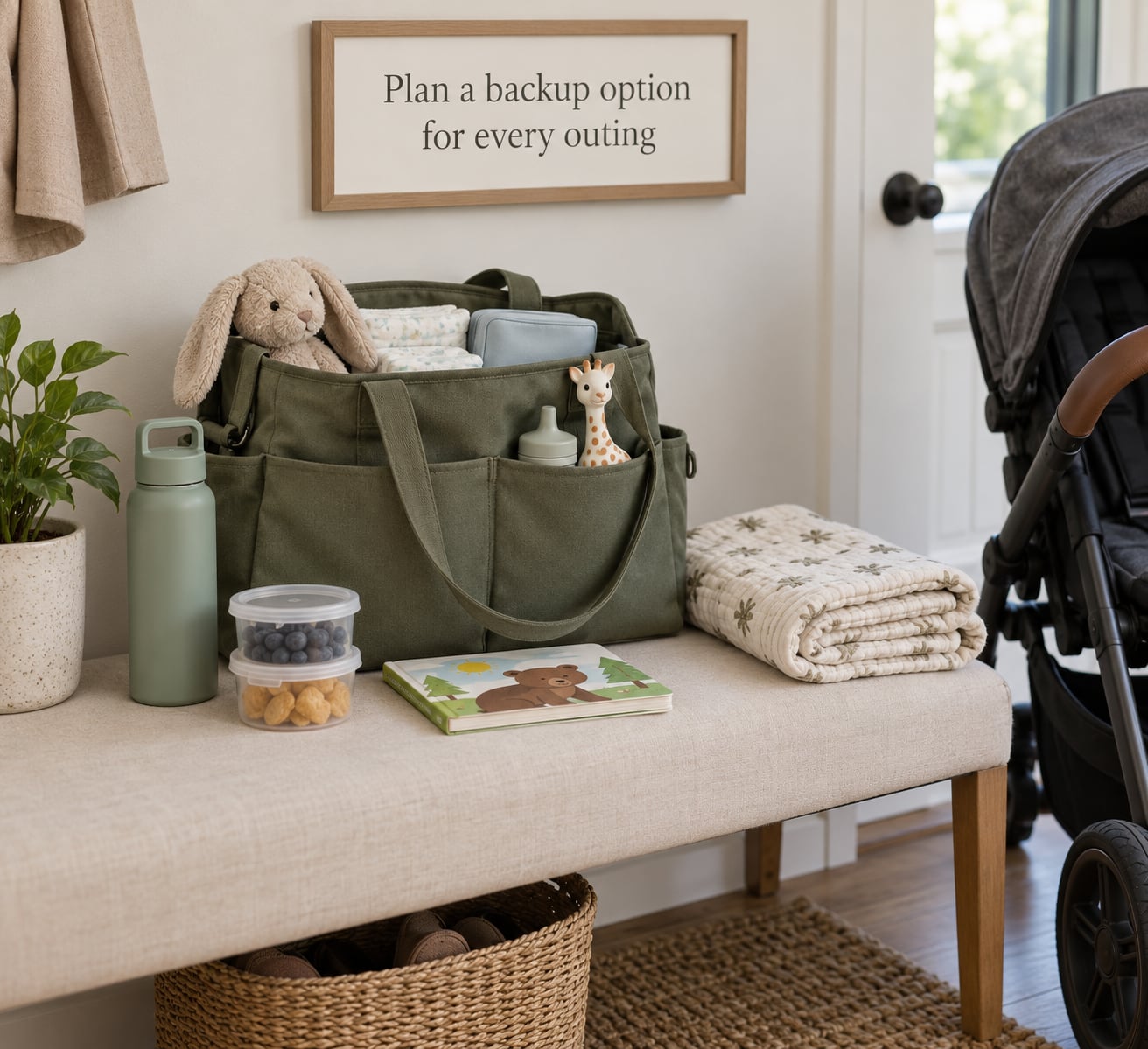
For every plan, know one thing nearby that requires less of everyone. That is the whole trick. When the beach is too windy, when the museum queue is an hour long, or when your toddler has decided the day is not happening, you do not need a solution, you need a second option you can reach in ten minutes.
Before each outing, identify four things:
- An indoor option within a short walk or drive.
- A shorter version of the original plan, such as the outside of the building rather than the whole thing.
- A quiet place with a chair for you and somewhere for your toddler to move.
- The easiest route back to the accommodation, including how you are getting a taxi or ride back.
Write it down. A parent who is not improvising is a parent who stays calm, and calm is contagious. Toddlers pick up your stress quickly, which is the honest reason a plan B helps both of you.
Use a simple daily reset to protect your own energy and keep your sanity
Ten minutes the night before keeps the next day possible. Check meals and snacks, top up supplies, look at the weather, note your toddler’s cues from the day, confirm transport for the morning, and decide the one anchor. Then stop looking at it.
Be honest about your own state in that reset. If you are at your limit, tomorrow’s anchor gets smaller, and nobody has to say out loud that it has changed.
If you are traveling without another adult, add two rules to this routine. Keep plans within reach of where you are staying so you can bail quickly, and eat something proper before you try anything hard. Solo travel with a toddler is entirely doable; it just has less margin for a bad hour.
Common Mistakes
Nearly every difficult trip traces back to one of these six planning errors.
Over-scheduling the itinerary
The fix: cut the plan to one anchor a day and write the rest as optional. Two full days can follow the same rhythm with different anchors, and nobody misses anything.
Booking too many transfers
Every connection is a nap you have to move, a bag to collect, and a chance for something to go wrong. One fewer change is worth more than a better view out the window.
Planning only adult activities
A museum with no running space, a tasting menu, an evening walking tour. Check every plan against one question: can a tired two-year-old do this and still get a nap afterward? If not, it belongs to a different trip.
Ignoring meals and nap time
These are not breaks in the day, they are the day. Put the nap first and anchor the activities around it, then work backwards from feeding times.
Having no plan B
Decide the backup before you leave the accommodation, when you are calm and can walk or drive the route. Deciding it at the door with a crying child is too late.
Overpacking
Half the clothes, plus laundry, plus a kit bag you can actually reach. Small quantities, in bags you can open one-handed.
Frequently Asked Questions
How long should a toddler activity be before it turns into a meltdown?
For most toddlers, one to two hours is the realistic limit for a single activity, and that includes a snack and a bathroom stop somewhere inside it. Younger children manage closer to forty-five minutes. Watch for the early signs rather than waiting for tears: heavy sighing, dropping things, repeated requests for the same thing. When you see those, stop the activity early rather than pushing to finish it.
Do I need a stroller or is a carrier enough?
Bring both if you can. A stroller wins on long walks, hot days, and any moment your arms give out, and it often doubles as a nap spot. A carrier or wrap wins in airports, on stairs, in crowded streets, and anywhere a stroller becomes a problem. Parents traveling alone tend to rely on the carrier more, because it keeps one hand free.
How do you handle naps when your toddler’s schedule changes?
Keep the nap time fixed rather than the bedtime, and hold it loosely by keeping to within an hour. Shift the whole day forward or back around that nap instead of trying to force an early one. If you are crossing time zones, keep the morning anchored to home time and accept a few short days of adjustment. Car naps count, and a travel nap beats a missed nap by a mile.
What do you do when the plan falls apart at 11am?
Go to the backup option you identified before leaving, without a speech about changing plans. A nearby indoor space, a shorter version of the activity, or an early lunch and a slow afternoon all work. Toddlers read your tone, so keep it low-key and treat the change as normal. Parents who prepared a second option say it is the difference between a bad hour and a bad day.
How do I stop being the parent who always loses their patience?
Lower the number of decisions you make on any given day, and the temper has less to grab onto. Keep snacks available, keep the anchor small, and give yourself a real break while your toddler is safely occupied. If you feel the calm cracking, hand over to another adult if there is one, or take five minutes outside. It is a planning problem more than a character problem.
Conclusion
How to plan a trip with a toddler and keep your sanity comes down to a small number of decisions made once, before you book. Choose the destination to fit your toddler’s temperament rather than its reputation, name one anchor activity per day, protect the nap, and write down a backup option while you are still calm.
Start with the first two and leave the rest for later. Pick the place, set the daily anchor, and only then book the extra tickets and tours. A rested toddler and a parent who is still enjoying the trip is a successful holiday, and everything else is optional.