Being a respectful visitor in a small town means treating the people who live there as neighbours rather than as staff running a tourist attraction. Learn about the place before you arrive, stay out of the way on shared sidewalks and two-lane roads, ask before you photograph anyone, and spend your money where it stays in town.
Most of it takes five minutes of attention. The hard part is remembering that a town of a few thousand people has no anonymity buffer: the cafe you photograph is where the owner takes her lunch, the sidewalk you block is the school pickup route, and the evening quiet you are enjoying is somebody’s open-window night.
I learned that the hard way. A shopkeeper politely asked me not to photograph her while she was serving, and I left feeling slightly embarrassed, which told me she was right. How to be a respectful visitor in a small town is less about a rulebook than about noticing where you are, and the six steps below cover the parts people most often miss.
Table of Contents›
- What You Need Before You Go
- Step-by-Step: How to Be a Respectful Visitor in a Small Town
- Step 1: Learn About the Community Before You Arrive
- Step 2: Slow Down and Observe Local Rhythms
- Step 3: Spend with Local Businesses and Hosts
- Step 4: Be Considerate in Public and Private Spaces
- Step 5: Make Your Presence Lighter on the Place
- Step 6: Leave Community Life Better Than You Found It
- Common Mistakes and How to Correct Them
- Frequently Asked Questions
- How can I show respect as a visitor in a small town without knowing its customs?
- Is it appropriate to photograph residents and everyday life in a small town?
- How should I support local businesses without making the visit feel performative?
- What should I do if a small town is quiet, private, or not used to tourists?
- How can I leave a positive impact without donating or volunteering inappropriately?
- What are common mistakes visitors make in small towns?
What You Need Before You Go
Nothing here is expensive or complicated. It is preparation, and most of it takes one evening before you leave home.
- Thirty minutes of research. Read the town website, the local chamber or tourism office page, and the most recent reviews of the places you plan to visit. Small places close for seasons, renovations and family reasons, and the website is often a year out of date.
- A flexible itinerary. Treat any fixed reservation as a suggestion. In a town with one good dinner spot, your plan for Tuesday night may move to Wednesday.
- A real time commitment. A two-hour stopover and a two-night stay produce completely different impressions. Overnight guests get treated as guests; drive-throughs get treated as traffic.
- A plan for small annoyances. There is no pharmacy open at 9pm, no app delivery, and no second coffee shop. Knowing that in advance saves you from saying something unkind to the person at the counter.
- Cash and a reusable bottle. Plenty of small businesses still run on notes and coins, and refill stations and water fountains are less common than you expect.
- A camera with a manners setting. If you bring one, be ready to put it away. If you do not bring one, you will notice more, and people will like you more.
- For solo travellers: a booking. A table for one or a room booked ahead removes the awkwardness of arriving alone and standing in a doorway while everyone waits.
Step-by-Step: How to Be a Respectful Visitor in a Small Town
Step 1: Learn About the Community Before You Arrive
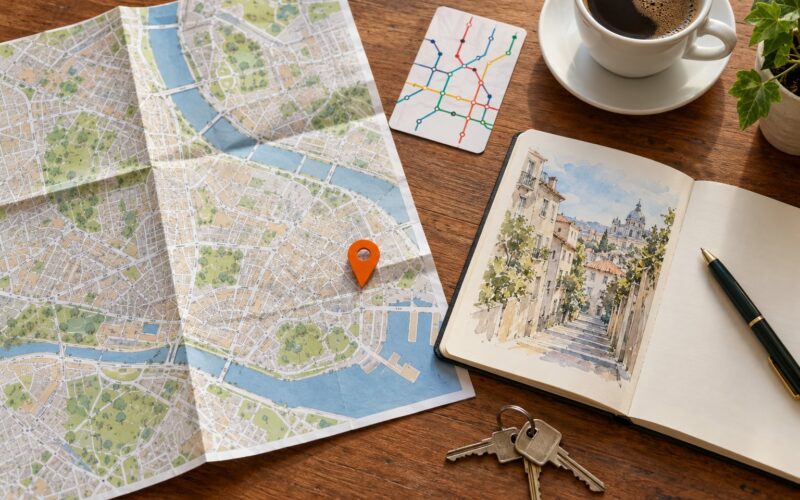
Ten minutes of reading changes the whole visit. Find out what the town actually does: farming, timber, manufacturing, a rail line, a university, a military base. The working rhythm decides when shops open, when the main street is empty, and whether a lunchtime arrival is sensible.
Then look for the basics. Read recent visitor reviews for warnings about seasonal closures, and check whether the trail you want is open, since muddy-season closures are common and posted late. If the town has a public Facebook group or community page, a short scroll tells you what people are currently annoyed about, which is the fastest way to avoid being the annoyance.
Learn one or two things you could ask about: a local dish, a nearby trail, the year the bridge was built. That question is often the start of a five-minute conversation, and it treats the town as a place with knowledge rather than a photo stop.
Step 2: Slow Down and Observe Local Rhythms
Small towns run on shared routines, and your visit lands inside somebody’s ordinary day. Notice when the quiet hours are. In most places, early morning before about 8am and the hour after dinner are the least intrusive times to be on the street, while Saturday morning is peak time for everyone at once.
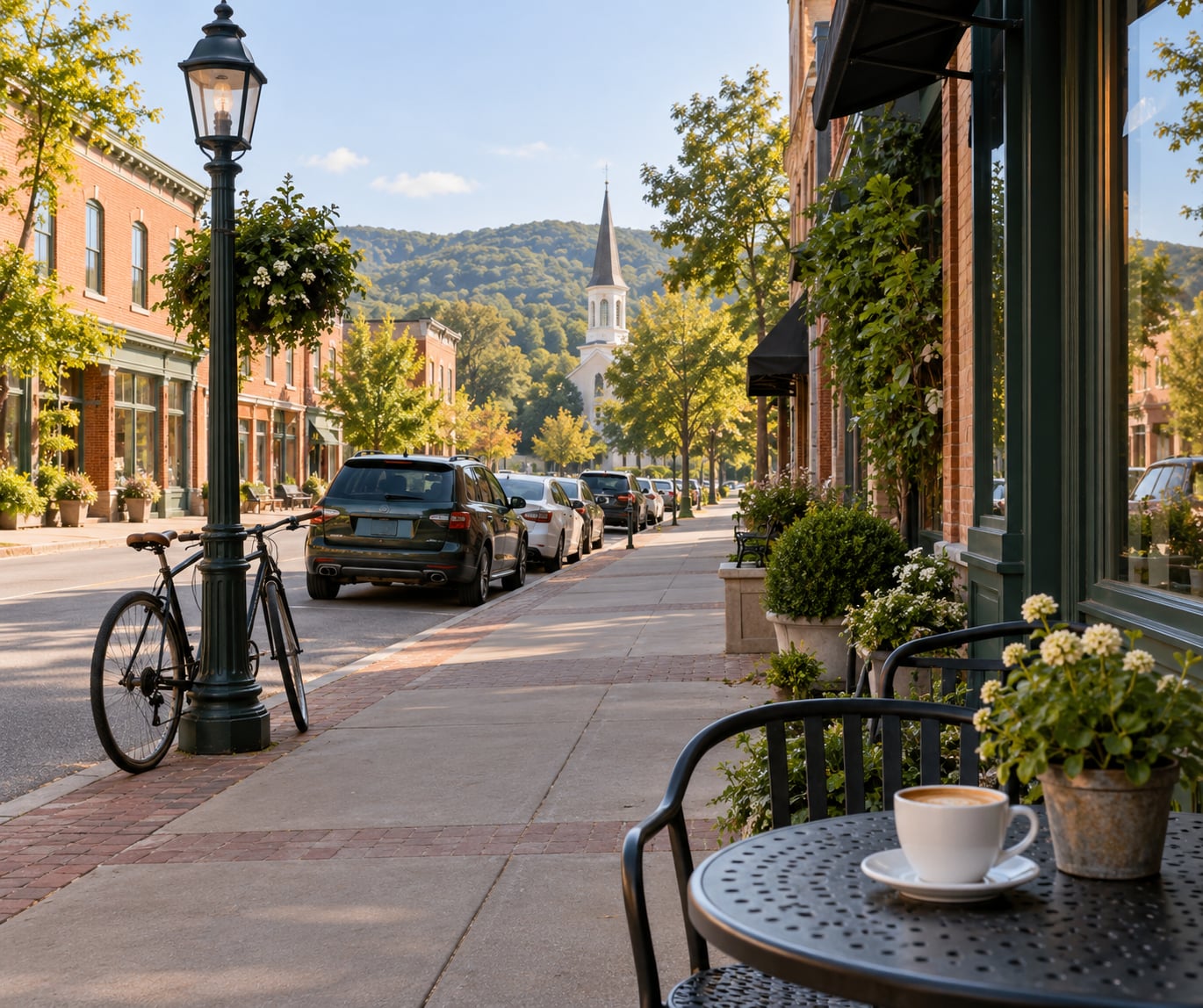
Adjust your speed rather than your schedule. On a two-lane road, pull completely off the road when you slow down to look at something, use marked passing places, and never stop on a bend. If a farm tractor is coming the other way, slow early and let it through. The same applies on foot: curb to the far side of a two-lane road rather than stepping back into traffic.
Curiosity and intrusion look similar from the outside, and the difference is consent. Looking at a shop window, a church, a boat ramp or a garden from a public place is normal. Following a resident down a street, joining a conversation you were not invited to, or lingering at the harbour watching people fish is not. A reader on a Quora thread about small-town etiquette tips put it simply: people are not exhibits, and they are not staffing your trip.
Step 3: Spend with Local Businesses and Hosts
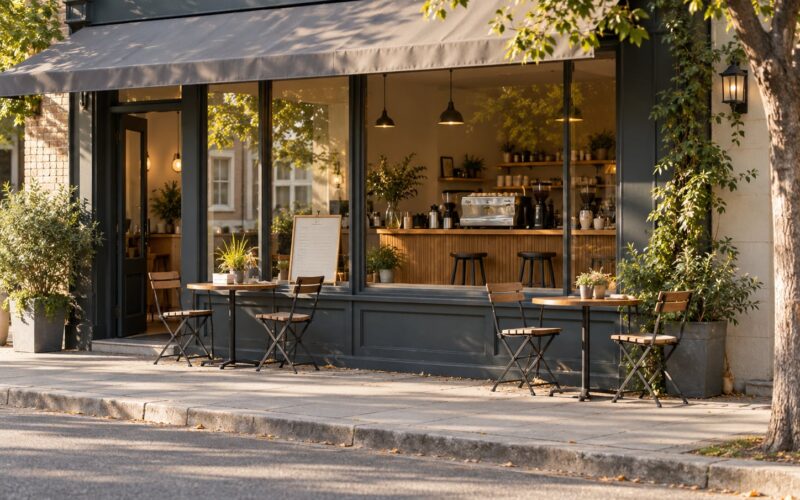
Your spending is the most direct thing a visitor controls, and in a small town the effect is easier to trace than in a city. An independent guesthouse pays a housekeeper, a linen service and a local laundry. The hardware store employs someone who lives two streets away. Book the family-run lodging, eat in the cafe where the tables are full of people who work nearby, and buy from the shop whose owner knows the name on the box.
Pay fairly, and tip the way you would anywhere else in that country. Tipping is never an insult in a small town, and a table service that is slower than a city simply means fewer tables and more conversation between courses. Be patient with businesses that are one person doing three jobs, and skip the audible complaint about there being no chain pharmacy, no late hours and no delivery. The person hearing it is often the owner who decided to open at 6am instead of closing.
Ask before bargaining, especially with craftspeople. Paying the asking price is not naive, it is how a small maker keeps working. If something is handmade, buy one and let the person who made it explain it.
Step 4: Be Considerate in Public and Private Spaces
Photography. Ask before photographing people, always, and accept a no without arguing. That covers children, workers behind counters, people fishing, and anyone on a porch. Porches in particular look public and are private: a house with a wide front step and a rocker is somebody’s living room. Inside a business, ask the person serving you before you start, and keep the flash down. Drones need permission, and in many rural areas a launch is an actual legal and livestock problem, not a style choice.
Noise. Sound travels further in a small town than visitors expect, particularly at night through open windows. Bring conversation inside after about 9pm, keep speakers off outdoors, and skip the late arrival when you are staying in a guesthouse where the owners live on site and the walls are thin.
Parking and access. Do not block a driveway, a mailbox, an alley mouth or a fire hydrant, and never park in a marked loading zone during delivery hours. If a bus or church service is letting people out, give the space back before you take it. Watch for time limits written on signs, and leave the spot the way you found it.
Public conduct. Dress appropriately where it matters, which in practice means covering shoulders and legs at churches, cemeteries and rural shrines. Keep public affection restrained on a main street where teenagers are walking home. Follow local rules on dogs, fires and trail use, including the ones that only exist on a sign at the trailhead.
Step 5: Make Your Presence Lighter on the Place
Pack out what you carry, including the receipt in your pocket, and use refill points instead of buying single-use bottles. Stay on marked trails, close every gate you open, and never walk onto working land: livestock, irrigation, spraying and fencing all outrank a good view.
Leave natural and cultural things where you found them. That covers wildflowers, rock stacks, cairns, shells, signed post cards in a visitor book and small offerings in a churchyard. Do not buy souvenirs made from protected material, and do not hand out sweets or small gifts to children unless you have spoken to a parent first, because in a small place you may never see that child again and their family still deals with the consequences.
Keep your footprint small in a physical sense too. One walking loop of the town beats a day of shuttling back and forth between outlying points, and it spares everyone the traffic. If you rent a vehicle, stay on the paved and gravel surfaces and never use a private drive as a turning place, because the ruts stay for years.
Step 6: Leave Community Life Better Than You Found It
Thank the people who hosted you, specifically rather than generically: mention the breakfast, the trail tip, the lift back to the station. If you overstepped, apologise once, name exactly what you did, and do not explain your intentions.
Share accurate feedback. A good review describing a real place, the walk from the inn and the early opening hours helps the next traveller and helps the town. If a business disappointed you, write the review honestly but privately to the owner rather than publicly and loudly, and never as a negotiating tactic.
When it fits, support a community or conservation project with money rather than time. Volunteering in a place with no spare labour can add pressure instead of removing it. And do not promise a return you cannot keep, because a town that plans around a visitor who never comes back has to absorb that gap alone.
Common Mistakes and How to Correct Them
Almost every complaint residents raise in online discussions about visitors is a friction, not a disaster. In Reddit threads on how overtourism damages a place, the recurring theme is accumulation: nobody minds one slow driver, and everybody minds the twentieth.
| Situation | What locals appreciate | What lands badly |
|---|---|---|
| On the road | Pulling fully off to look at something | Stopping in the lane, on a bend or in a passing place |
| Driving past farm equipment | Slowing early and letting it through | Passing on a gravel shoulder at speed |
| Parking | Leaving a gap beside mailboxes and driveways | Taking two spaces, blocking an alley or a hydrant |
| Photos of people | Asking first, and accepting no | Camera up before the introduction |
| Photos of buildings | Street-level shots from public ground | Windows, porches, interiors and drone passes |
| Evenings | Conversation kept indoors after 9pm | Outdoor music and late arrivals in a guesthouse |
| In a shop | Asking a real question and lingering politely | Treating the owner and staff as photo props |
| On the trail | Staying on track, closing gates, packing out litter | Shortcuts across grass, dogs in grazing fields |
| At the table | Ordering what the place is good at, tipping normally | Complaining about no delivery and short hours |
| After the visit | A specific thank you and an honest review | Promising a return, or posting a mocking review |
Two habits fix most of the rest. Slow down before you judge, because almost every irritation looks different at walking pace. And when you are unsure, assume the person in front of you is a neighbour deciding whether to welcome you back, because in a small place they may well be the one who decides.
Frequently Asked Questions
How can I show respect as a visitor in a small town without knowing its customs?
Watch what people around you do before you do anything different. Sit where others sit, wait where they wait, and notice where people walk rather than where the pavement is widest. Small town etiquette is mostly consistency: do not stand in a doorway to eat, do not cross a square that has no marked crossing, and follow whatever the shop next to you does. When in doubt, copying the nearest local beats guessing.
Is it appropriate to photograph residents and everyday life in a small town?
Ask first, every time, and treat a no as final. That matters most for children, people at work, anglers, and anyone sitting on a porch or in a yard, since a front step often looks public and is not. Photographing the streetscape from a public place is fine, and asking the owner before photographing inside their business is normal and usually welcome. Drones are a separate question and need permission.
How should I support local businesses without making the visit feel performative?
Book the family-run guesthouse instead of the chain, eat at the cafe with regulars in it, and buy one good thing rather than several souvenirs. Spend is enough on its own; nobody is asking for a performance of gratitude. The version that does not work is announcing loudly at the counter that you are supporting local, because the person serving you is the local business. Pay the asking price, tip normally, and say thank you once.
What should I do if a small town is quiet, private, or not used to tourists?
Lower your volume and your expectations. Visit outside peak hours, keep street time short, and avoid the one cafe or viewpoint where everyone else is standing. In a town that rarely sees visitors, a camera raised on a quiet morning can feel intrusive even when you meant nothing by it. If a resident engages, most will tell you what they like about the place; that is often the best thing you will learn all day.
How can I leave a positive impact without donating or volunteering inappropriately?
Money is easier for a small community to use than labour. A donation to a project the town already runs, or a conservation group working nearby, lands directly, while unsolicited volunteering in a place with no spare capacity usually adds coordination work for someone already stretched. Write an accurate review, mention the place to a friend, keep your waste with you, and return within the season the businesses can actually trade in.
What are common mistakes visitors make in small towns?
The usual ones are stopping in the lane to take a photo, blocking a driveway or mailbox, photographing people without asking, being loud after 9pm, walking onto working land, and complaining about the lack of chain stores or late hours to the face of the person serving them. None of these feel like insults while you are doing them. Each is a small, repeated signal that you consider the place a backdrop rather than somebody’s home.
Start with the least effortful habit: before you photograph anyone, ask. Everything else in this guide is a small variation on the same idea, which is to treat a small town as a place where people are trying to live rather than as scenery you have travelled to collect. Learn the rhythm, spend where your money stays, take up less space and noise than you brought with you, and leave one good review behind.