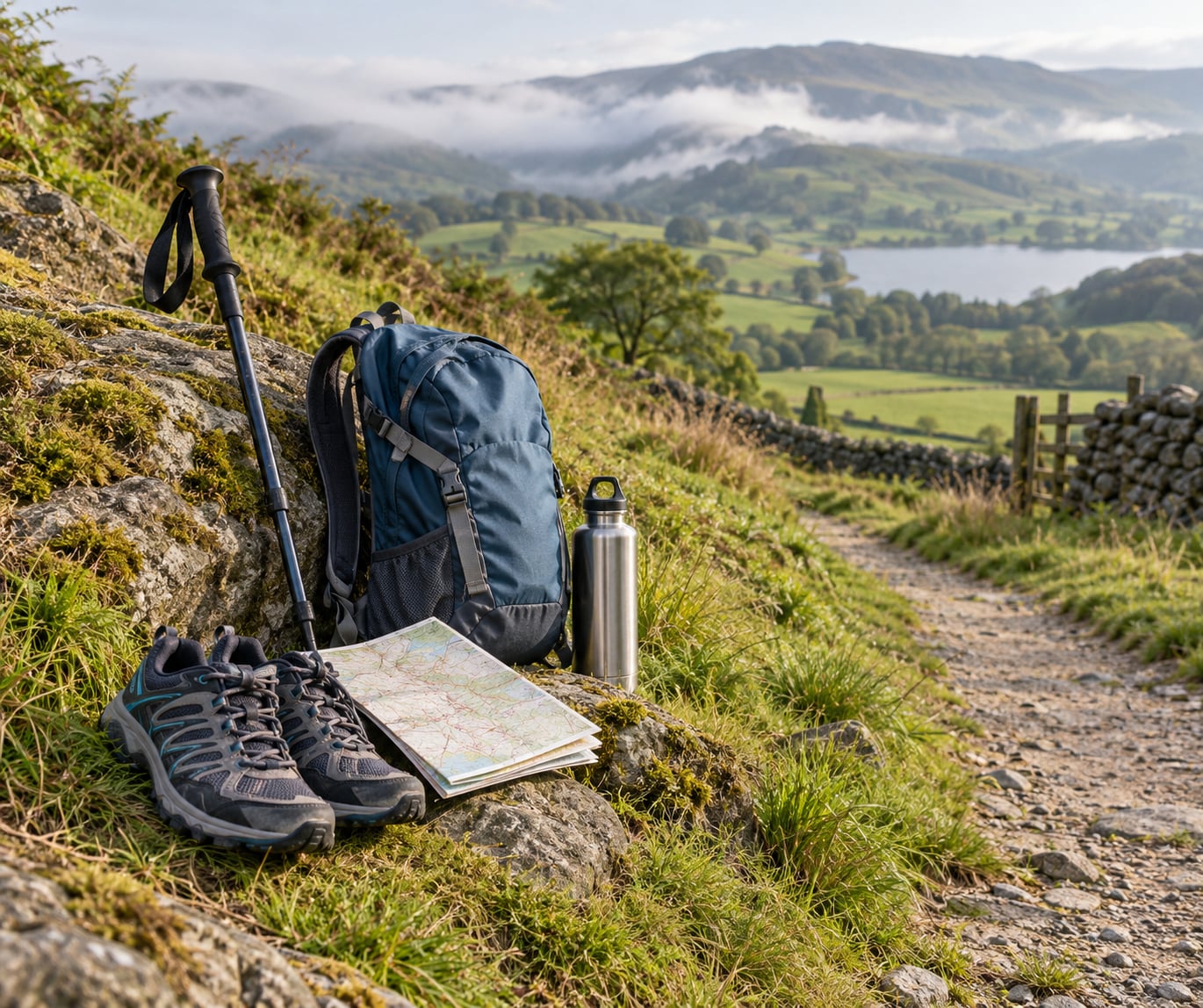
Training for a walking vacation comes down to three things: enough lead time, walking sessions that get longer by small steps rather than all at once, and two short strength sessions a week. Most people need 8 to 12 weeks of preparation. If you have not exercised regularly, plan on 4 to 6 months instead.
The reason this trips people up is that a day hike and a walking vacation are not the same activity. A day hike is one long walk followed by sitting down. A walking vacation is that same long walk repeated for five to fourteen days, usually on a fixed schedule, often with a day bag on your back and a hotel bed at the end of it.
Walkers planning a Camino de Santiago describe the same thing on forums: the single hardest part is not one 12-mile day, it is the fourth 12-mile day in a row. That is what the plan below is built to fix.
Table of Contents›
- What You Need
- Step-by-Step: How to Train for a Walking Vacation
- 1. Set a Comfortable Baseline
- 2. Build Walking Endurance Gradually
- 3. Add Strength for Daily Walking
- 4. Practice the Terrain and Pace You Expect on Your Walking Vacation
- 5. Taper and Rehearse the Week Before Your Walking Vacation
- Common Mistakes
- Frequently Asked Questions
- How many weeks before a walking vacation should I start training?
- Is 4 weeks enough to get in shape for a walking vacation if I am not active?
- How do I train for back-to-back long walking days?
- How do I train for hills when I live somewhere flat?
- I am over 50, or returning after illness or joint surgery. What changes?
- What should I do if my training plan gets disrupted before the trip?
- Conclusion
What You Need
You need less gear than most people expect, but you need it before week one, not the week you fly.
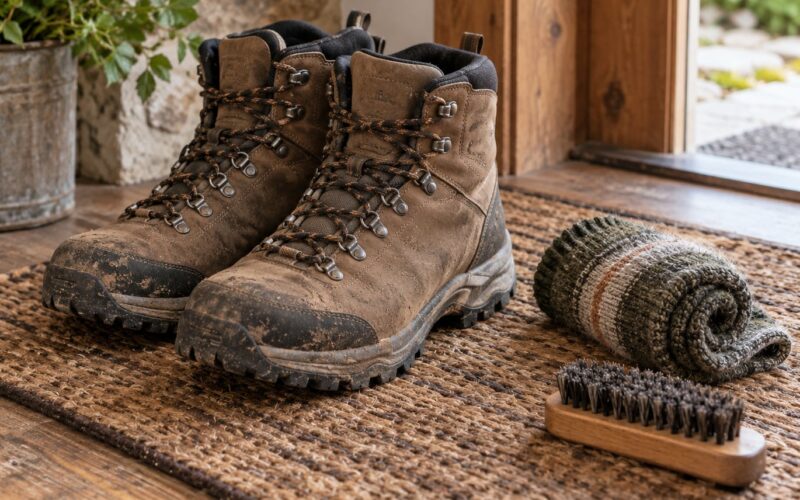
- Footwear you will actually walk in. Whatever shoes and socks you plan to wear on the trip, wear them for every training walk. New boots need two to three weeks of short walks before a long day; that is the single most preventable cause of blisters and black toenails.
- Clothing for your climate, not your home climate. If the trip is warmer than where you live, train in the warmer time of day. Cotton stays wet; synthetic or merino layers dry out.
- A written weekly schedule. Three walks, two strength sessions, two rest days. Put it on a calendar with the days marked, because an unplanned session is the one that gets skipped.
- A simple tracking method. A phone note is enough: date, duration, distance, terrain, and how you felt afterwards. A paper notebook works just as well if your phone battery is not dependable on a long day.
- Your trip’s real numbers. Ask the operator or read the itinerary for daily distance and elevation gain. Without those figures you are guessing at the finish line.
One caution. This is general information, not a medical plan. If you have a heart condition, diabetes, a recent injury or joint replacement, or you are returning after illness, check with your doctor before starting a new exercise programme. Stop any session that causes sharp pain rather than the dull ache of working hard.
Step-by-Step: How to Train for a Walking Vacation
Work through these five steps in order and do not skip ahead. Each one earns the next, and each one has a simple test that tells you it is working.
1. Set a Comfortable Baseline
Start by finding out what you can do today, not what you think you should be able to do. Take a 30 to 45 minute walk on a flat, familiar route and time it. Note the distance, the terrain, whether anything hurt, and how you feel the following morning.
That last part matters more than the distance. Soreness that clears by day two is normal training. Pain that is still there on day three, or a knee that stayed grumpy, is your plan telling you the starting point is too high.
Set your first week’s walking at about 60 to 70 percent of what felt hard. Begin with three walks spread across the week, and record each one the same way. The purpose of this step is a baseline you can trust, not a number to feel good about.
2. Build Walking Endurance Gradually
Add walking time or distance by no more than 10 to 15 percent per week. That is the single rule that keeps this safe and it works on any timeline. If week one was three 30-minute walks, week two is three 35-minute walks.
Keep the pace conversational. You should be able to speak in full sentences without pausing for breath, which is roughly the effort a walking holiday demands. Fast walking trains a different system than the one you need, and it shortens the day instead of filling it.
Work hills or stairs in from week two, in a short block rather than a long one. A 20-minute climb once a week is enough, and it builds the legs that uphill days ask for. Walking twice as long on the flat is a fair approximation of the same effort, if you have no hills at all.
Repeat-a-week rule: if a progression step feels too hard, or your recovery was poor, repeat the week. Falling behind the calendar by a week is a small price for showing up on day six of the trip.
3. Add Strength for Daily Walking
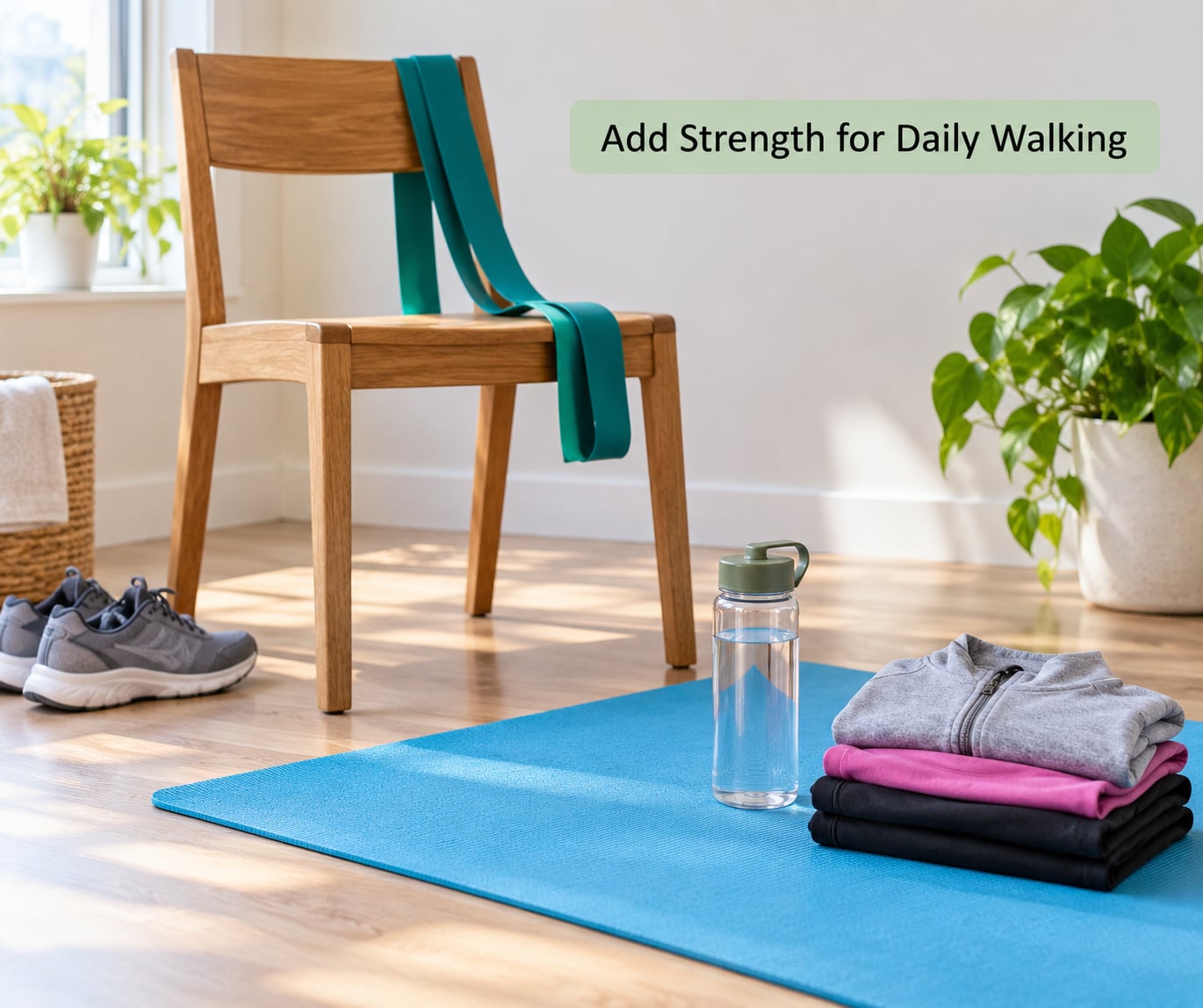
Two 20-minute sessions a week will do more for your walking holiday than an extra long walk. Hills and cobbles load the quadriceps, glutes, calves and core far harder than flat pavement does, and those muscles are what fail on day five.
Run two to three sets of 8 to 12 reps, resting a minute between sets, and stop each exercise while you can still control the movement rather than at the point of failure:
- Squats to a comfortable depth, bodyweight or holding a chair for balance.
- Step-ups on a single stair, one leg at a time, which is also your hill substitute.
- Reverse lunges, holding a wall or counter if you need it.
- Calf raises on a step or kerb, slow on the way down.
- Glute bridges on your back, 10 to 15 reps, for the pushing power on an ascent.
- Dead bugs for core control, 8 to 10 each side.
- Single-leg stands near a counter for 20 to 30 seconds, three times each side.
Back-to-back days, not exhaustion, is the target. A session you can finish and recover from is a session you will still be doing in week ten.
4. Practice the Terrain and Pace You Expect on Your Walking Vacation
Flat walking is the easiest version of this and it trains the least. Once your weekly long walk reaches 90 minutes, make it specific to the trip you booked.
Find uneven ground: a park with roots and loose gravel, a cobbled street, a beach, a bridleway. Walk it at holiday pace rather than power-walking, because a slow eight-mile day is harder on the feet than a brisk five.
Carry your actual day bag on at least two long walks, fully loaded, and notice where it sits on your shoulders and how your hips compensate. A pack that swings from one shoulder turns a climb into a three-sided job.
Then do the thing most people skip. Walk two long days in a row, with an easy hour or two between them. That is the specific adaptation a walking vacation demands and a day hike never asks for. If you only train for single long days, day three of the trip will be the one that hurts.
5. Taper and Rehearse the Week Before Your Walking Vacation
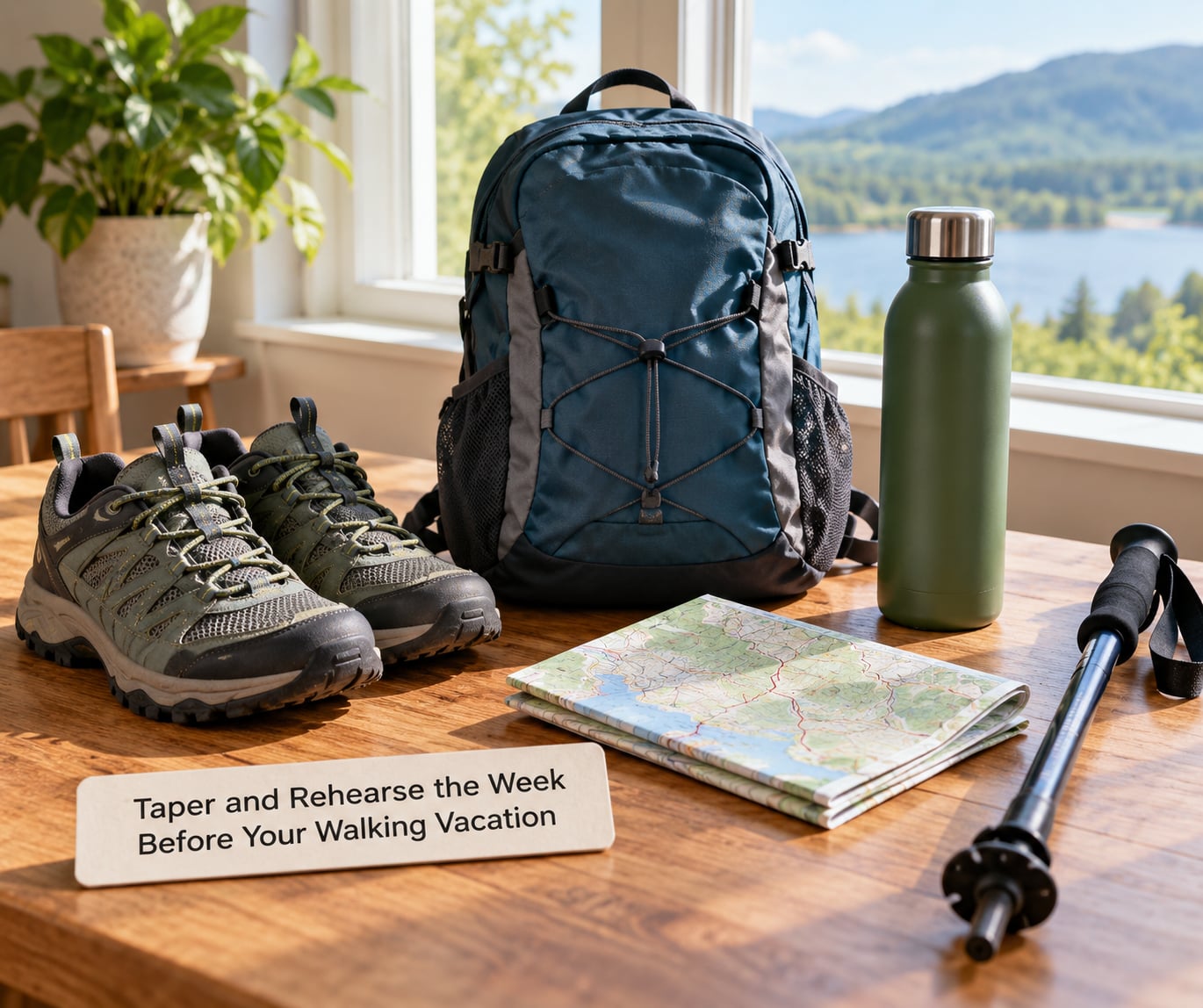
The final week is not for adding anything. Cut your walking volume by roughly a third, keep the two strength sessions but drop the sets, and keep the easy days easy. You are arriving rested, not fitter than you were seven days earlier.
Rehearse once, properly: one long walk at the distance and pace of your hardest trip day, loaded, on similar ground. That is the test. If it feels comfortably manageable, your plan is calibrated. If it feels like the end of a hard week, you still have time to trim the trip rather than abandon it.
Handle the logistics while you are fresh. Lay out the kit, sort the laundry, download the offline maps for the route, and confirm the first two days of the itinerary. Jet lag and a lost daypack are poor excuses for a sore knee on day two.
On the trip, make day one deliberately short and flat, even if the group is eager. The people who enjoy a walking holiday most are the ones who are still comfortable on day eight.
Common Mistakes
Jumping the distance in week one. The most common and the most avoidable. This is why the baseline step comes first and why the 10 to 15 percent rule exists. A sore knee at mile two on the trip is almost always a week-two training session that happened in week one.
Training only on flat roads. Steady flat walking builds endurance and nothing else. Add stairs, step-ups, kerbs and a weekly climb so quads, glutes and calves meet the demand before the trip does.
Starting new boots the week you leave. Blisters are a packaging problem, not bad luck. Walk in the exact footwear you will travel in, starting with short outings.
Skipping rest days. Adaptation happens between sessions. Cutting your rest days to squeeze in another walk usually costs more on the trip than the extra walk was ever worth.
Never walking consecutive long days. One hard walk proves you can walk far. Two in a row prove you can still walk on day three, which is the actual question.
Trying to train for the whole holiday at once. Some experienced walkers treat a walking vacation as a week of recovery rather than a continuation of training, and they usually enjoy it more. Train to get there, not to suffer there.
Letting travel or life swallow the plan entirely. A missed week is not lost, it is a reason to repeat it. When you do travel for work, keep the frequency: three shorter walks beat one long one, and the strength session survives in a hotel room with a chair and a resistance band.
Frequently Asked Questions
How many weeks before a walking vacation should I start training?
Most people need 8 to 12 weeks of preparation, and 12 is a better target than 8 because the final fortnight is a taper rather than a gain. If you are not regularly active now, allow 4 to 6 months, which is the honest runway rather than the optimistic one. Start from a baseline walk in the first week and count backwards from your departure date.
Is 4 weeks enough to get in shape for a walking vacation if I am not active?
Four weeks is enough only for a relaxed trip of 4 to 5 miles a day on mostly flat ground, and it depends on arriving at week one already walking regularly. If you are currently inactive, four weeks will not build the endurance you need, and no plan can manufacture it. Choose a shorter, flatter trip instead, or postpone. Six to eight weeks is the realistic floor for beginners.
How do I train for back-to-back long walking days?
Train them directly, because nothing else replicates them. Once your weekly long walk reaches 90 minutes, schedule two long days in a row with an easy hour or two between. Walk them at holiday pace rather than hard, and pack what you will actually carry. The second day is meant to be uncomfortable but controlled. If it wrecks you, shorten both days by a quarter and try again the following week.
How do I train for hills when I live somewhere flat?
Use a stairwell, a pedestrian bridge or a stadium step block for a 20-minute climb once or twice a week, and use step-ups for strength. A treadmill at a 5 to 10 percent incline does the same job indoors. As a rough approximation, walking twice as long on the flat matches the effort of hill walking, though it trains the calves less well. The incline options are better, so use them first.
I am over 50, or returning after illness or joint surgery. What changes?
Start lower and build slower, which mostly means choosing the 12-week version and skipping the first two progression steps. Steady walking is well suited to building back up, so the movement itself is rarely the problem. Check with your doctor before starting, especially if you have a heart condition, diabetes or a recent operation. Stop at pain rather than pushing through it, and expect the trip to look easier, not harder, after a few weeks of consistency.
What should I do if my training plan gets disrupted before the trip?
Repeat weeks rather than compressing them. Losing a week costs you very little; cramming two progressions into one week is how people arrive injured. If you can only manage two walks a week, keep both of them long and drop the strength sessions, since the walking carries the trip. If you can only manage one, take the trip at a shorter daily distance. And if life has taken over entirely, move the trip.
Conclusion
Learning how to train for a walking vacation is unglamorous work: a baseline walk, three scheduled walks a week, two short strength sessions, and a 10 to 15 percent weekly increase that you are allowed to slow down. Add one long rehearsal with a loaded bag and one pair of back-to-back days, and most of the trip stops being a question mark.
So do one thing today. Take a 40-minute walk, write down the distance and how you felt the next morning, and put three more walks in the calendar for this week. Everything after that is just building from there.