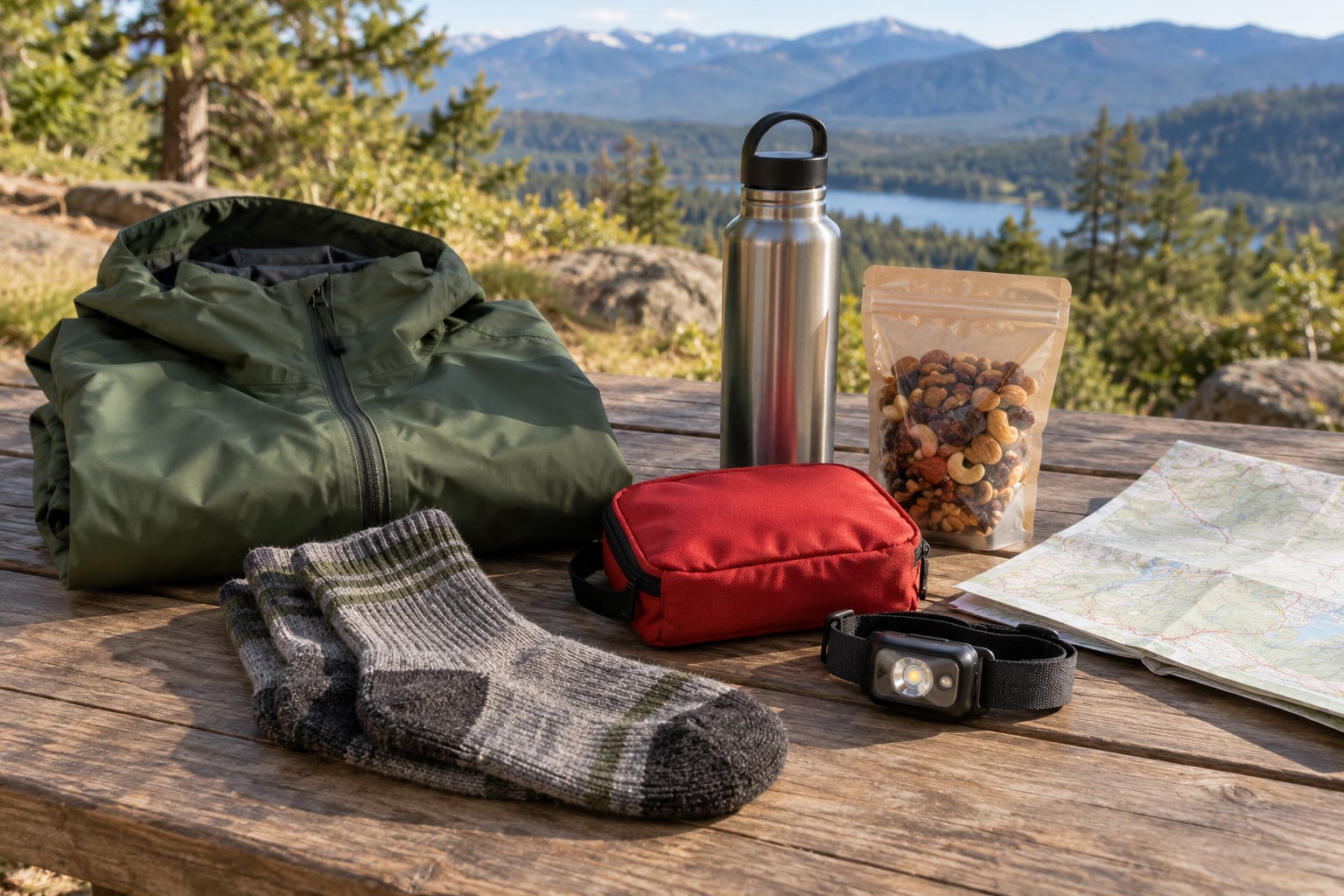
What to pack for a day hike in spring comes down to seven things: footwear you have already walked in, a three-layer clothing system, water and food for longer than you plan to need, a navigation backup, first aid, sun and insect protection, and a way to reach help. Add a pack liner, one extra pair of socks, and a layer you can put on when you stop moving.
Spring is the season when a single item earns its weight twice. A trail that is dry and easy at 8am can turn to ankle-deep mud by noon, and a warm valley start can end at a snowfield with 40 degree temperature swings. The answer is not more gear. It is a small, flexible kit built around the forecast and the route.
I put together this list after a few seasons of shoulder-season hikes, most of them solo, most of them in places where the weather changed faster than the map suggested. If you only remember one thing from this guide, make it the checklist at the end of the last section. Forgetting one item is the single complaint I hear most often from hikers who do everything else right.
Table of Contents›
- What You Need
- Step-by-Step
- Build Around the Forecast and Route
- Choose a Comfortable Day-Hike Pack
- Dress in Flexible Layers
- What to Pack for a Day Hike in Spring: The Essential Kit
- Check the Kit Before You Leave
- Common Mistakes
- Packing for the forecast instead of the conditions
- Leaving out the rain shell
- Wearing cotton
- Testing new footwear on the trail
- Carrying too little water, or only water
- Forgetting socks and a pack liner
- Ignoring bugs and sun
- Not telling anyone where you are going
- Frequently Asked Questions
- How much water should I pack for a day hike in spring?
- Do I need a rain jacket for a spring day hike?
- What should I wear for a spring hike if the weather is mild?
- Should I bring extra food on a day hike?
- What items should I leave behind to keep my pack light?
- Do I need hiking poles for a short spring trail?
- A Simple Rule for Your Next Spring Hike
What You Need
Before you pick anything out of the closet, know which seven categories your kit has to cover. Most packing lists fail because a category was never on the list at all.
- Clothing. A moisture-wicking base layer, an insulating mid layer, a weather-resistant shell, hiking socks, and whatever your legs need for the forecast.
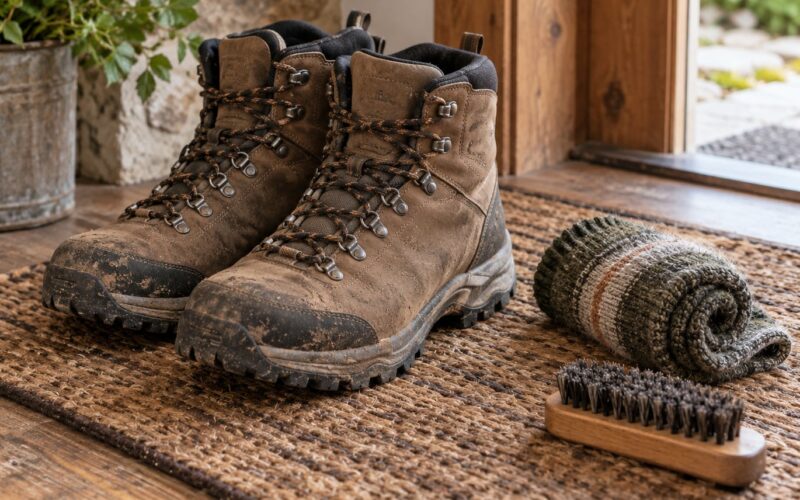
- Footwear. Broken-in boots or trail shoes with traction that suits the surface, plus gaiters if the route holds snow or deep mud.
- Navigation. A map and compass, a charged phone with the trail downloaded for offline use, and a paper backup in a waterproof bag.
- Hydration and food. Water plus a way to treat more of it, and enough calories to cover a delay you did not plan for.
- Protection. Sunscreen, sunglasses, insect repellent, a tick remover, and a light rain layer even when the forecast looks dry.
- Emergency gear. A first aid kit, a headlamp with spare batteries, an emergency bivy or blanket, a whistle, and a firestarter.
- Communication. A phone, and for solo hikers in areas without cell service, a satellite messenger or personal locator beacon.
Spring weather, trail length, terrain, and your own tolerance decide the final selection. Someone walking a flat paved loop in town needs two of those categories and a water bottle. Someone driving into a drainage in the Rockies in April needs all seven and then some.
Hikers on forums like r/hiking and r/hikinggear repeat one theme constantly: nobody remembers everything on a blank checklist, and everyone remembers it after one bad trip. The forgotten item is usually socks, a lighter, or a second water filter.
Step-by-Step
Build Around the Forecast and Route
Start with three pieces of information before you open the pack: the forecast for the hours you will be out, the recent condition of the trail, and your planned return time.
Recent trail conditions tell you what the ground is doing. Reports of mud, snow patches, or a washed-out bridge mean waterproof footwear and a pack liner, not cotton socks and optimism. In mountain areas, check the elevation profile before you check the temperature, because most spring weather surprises happen as you climb rather than as you walk.
Sunrise time sets your turnaround clock. Work backwards from sunset and subtract an hour of buffer, so a sunset at 7:30pm means you turn around at 6:30pm regardless of how good the weather is or how far you have come. Most hikers who get caught out did not misjudge the weather, they misjudged the distance.
Surface type decides the footwear. Dry rock and hardpack favors trail runners, mud and snow favors waterproof boots and gaiters, and loose gravel or talus favors a stiffer sole with more underfoot protection.
Choose a Comfortable Day-Hike Pack
Twenty to thirty litres covers nearly every spring day hike, with room for the layers and the extras that add up in shoulder season. Smaller packs work for a short warm loop. Larger ones are for long routes, a dog, or photography.
Once you have it, the weight inside matters more than the weight of the bag. Most comfortable loads for a day hike sit between 10 and 20 pounds including water. Here is how the categories compare.
| Pack style | Typical all-in weight | What fits inside | Best for |
|---|---|---|---|
| Ultralight | Under 10 lb | One layer, one meal, minimal first aid, paper map | Fast solo loops in mild, dry conditions |
| Standard | 10 to 15 lb | Full layering system, extra food, first aid kit, headlamp | Most spring day hikes |
| Comfort | 15 to 20 lb | Everything above plus a warmer layer, water filter, extra socks, satellite device | Long routes, elevation gain, uncertain weather |
Inside the pack, put the heavy items close to your spine and high up: water, a first aid kit, an extra layer. Keep the things you might need in the first ten minutes of walking in the top pocket or hip belt: snacks, phone, keys, map, headlamp.
Two habits make a big difference in spring. Roll your clothing rather than compressing it, because a compressed jacket takes longer to put on when you are cold and rushed. And line the inside of the pack with a heavy-duty trash bag or a dry bag, since a wet sleeping bag or a soaked fleece ruins the rest of the kit.
Practical details count too. A pack with a hydration sleeve lets you drink more without stopping, side water bottle pockets keep the load balanced, and a whistle on a buckle is one you will actually have on you.
Dress in Flexible Layers
The layering system is the part of spring packing that pays off most often. Three layers let you manage a wide temperature range with far less gear than one thick jacket.
The base layer touches your skin and moves sweat off it. Merino wool or a synthetic blend both work; merino resists odor better, synthetic dries faster. Skip cotton entirely, because wet cotton stays cold and heavy long after the sun comes back.
The mid layer holds warmth. A fleece, a light synthetic insulated jacket, or a merino zip works well and compresses into a small pocket when you are moving hard uphill.
The outer layer handles wind, rain, and any falling snow. A waterproof breathable membrane shell is the workhorse for spring. A packable hooded windbreaker adds less warmth but weighs almost nothing, and it stops moving air, which matters more on exposed ridgelines than most hikers expect.
Footwear is the one category where spring deserves extra thought.
| Footwear | Best spring surfaces | Watch out for |
|---|---|---|
| Waterproof boots | Deep mud, snow patches, wet rock, stream crossings | Hot in warm weather, slow to dry |
| Trail runners | Dry hardpack, gravel paths, warm and dry spells | Soggy socks on a wet trail |
| Approach shoes | Loose rock, talus, gravel, mixed terrain | Not built for deep mud |
Whatever you choose, walk in it before the hike. Wet leather boots that have never been worn will rub blisters within the first mile, and there is no substitute for a pair of socks that fit.
Pack two pairs of wool or synthetic socks and wear a liner sock under the hiking sock if you are prone to hot spots. Add gaiters for mud or post-holing; they keep snow and wet gravel out of your boot, which is the difference between a warm foot and a cold one hours later.
What to Pack for a Day Hike in Spring: The Essential Kit
This is the spring version of the standard ten essentials, adjusted for the conditions this season actually brings. Hikers consistently report that a headlamp plus spare batteries has turned an unplanned night walk into a manageable one.
- Navigation. Map and compass first, phone second, paper third. Download the trail map for offline use before you leave, since spring trailheads often have no reception. Test that the compass is on the correct bearing before you start, not after you are lost.
- Headlamp. Bring one even for a hike you expect to finish in daylight. Keep spare batteries or a charged secondary battery in the top pocket, where cold hands can reach them.
- Water plus treatment. Plan roughly half a liter for each hour of moderate hiking, more in heat, and more if the route has no reliable sources. Add a filter or purification tablets so a stream or an old fire hydrant is a backup instead of a crisis.
- Extra food. Bring more than you need. Trail mix, nuts, nut butter packs, energy bars, dried fruit, and chocolate are lightweight and stable. A sandwich that gets crushed in a side pocket is a bad lesson to learn.
- First aid. Blister treatment, a small gauze pad, adhesive bandages, pain relief, antiseptic wipes, elastic wrap, nitrile gloves, and any prescription medication you take. Add a small splint if you are heading into terrain where a fall would be serious.
- Insulation. A packable insulated jacket or fleece for the stop you did not plan. Standing still in spring wind cools you fast, and that is exactly when you cannot generate heat.
- Emergency shelter and fire. A bivy or emergency blanket, a lighter, and a spare match container are small enough to carry and useful in a genuine night emergency.
- Sun protection. Sunscreen, sunglasses, and a brimmed hat. Spring sun on snow or water reflects hard, and a long day out means long exposure.
- Insect and tick protection. Repellent, a tick remover, and a check routine. Ticks and mosquitoes are often active weeks before hikers expect them.
- Communication. A phone with location sharing turned on, plus a satellite messenger or beacon if you are solo and out of coverage. Tell someone your route and your return time, and write the plan down where you can see it.
Two items sit outside the ten and earn their place every spring: a pack liner, and a toileting kit with a trowel, waste bag, and toilet paper. Spring soil is often saturated, and catholes that will not dig mean you have to carry waste out. Pack it and you avoid an awkward decision on the trail.
Check the Kit Before You Leave
Ten minutes at the tailgate prevents most bad days. Run through this in order.
- Footwear. Laces tied the way you will tie them on the trail. No hot spots, no new boots on their first long walk.
- Water and food. Count the bottles. Check that the filter or tablets are in the pack, not sitting on the kitchen counter.
- Battery and maps. Phone charged, offline map downloaded, headlamp working. Cold drains batteries faster than you expect, and water in a pack pocket is a cold phone.
- Layers. Base, mid, and outer all packed, plus the extra insulation layer. Try them on together before you leave home.
- Turnaround time. Say it out loud to the person who knows your plan, and set a phone alarm for it.
- The load. Walk around. If anything swings, feels lopsided, or presses on your hip or lower back for more than a minute, adjust it now rather than two miles in.
Common Mistakes
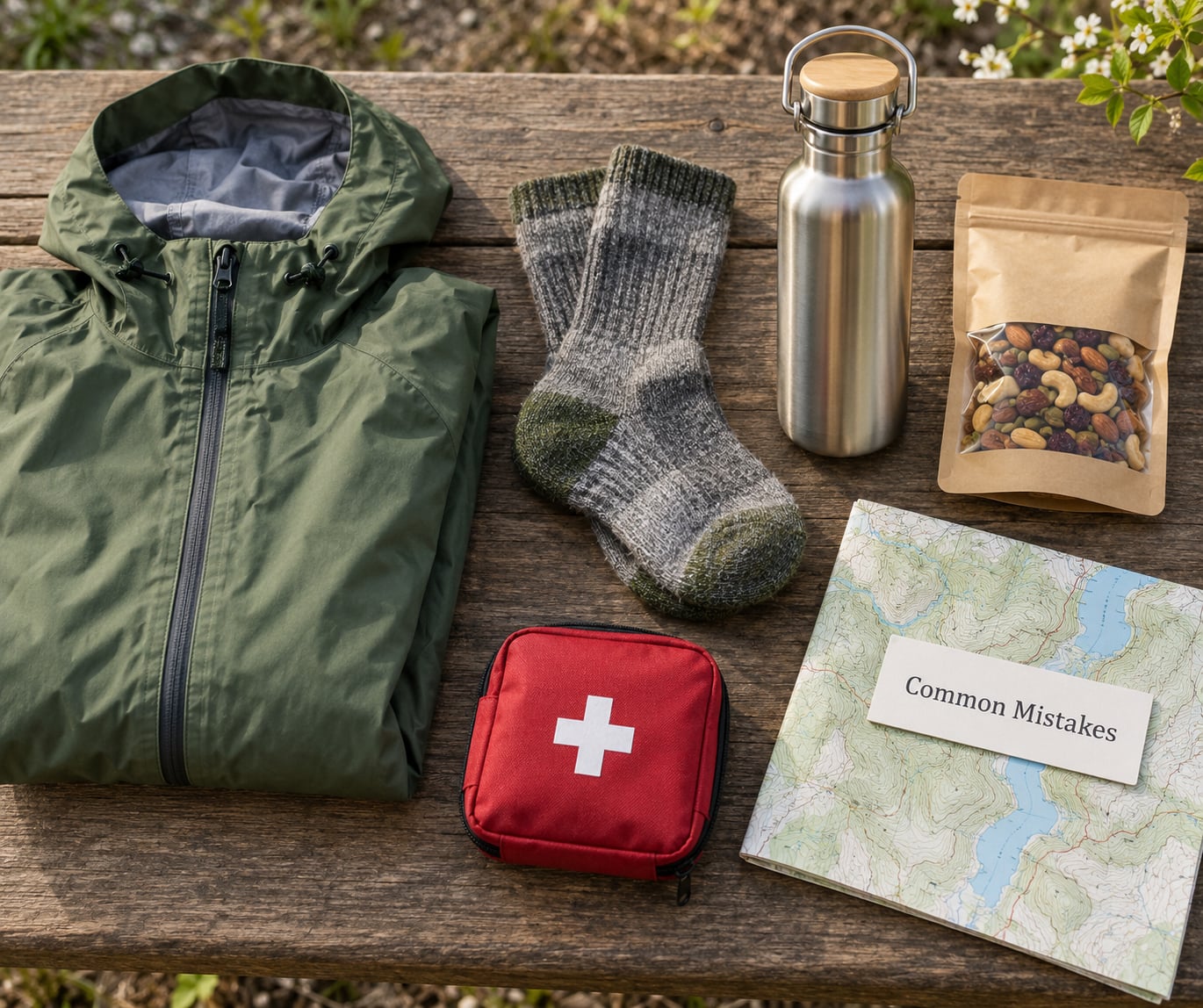
Almost every packing problem I have watched happen on trail traces back to one of these.
Packing for the forecast instead of the conditions
A sunny morning forecast is not a forecast for the ridge at noon. Check the hourly forecast for your elevation and add a warm layer regardless. The forecast can be wrong in your favor, which is a colder problem than being wrong against you.
Leaving out the rain shell
Spring showers are often short but sudden, and an afternoon storm builds faster than you can walk out of it. A lightweight shell weighs almost nothing compared to what wet hypothermia costs you. Leave the heavy rain pants at home if you like, but keep the jacket.
Wearing cotton
Cotton base layers, cotton socks, and a cotton shirt stay wet, wick heat away, and dry slowly. This is the most consistent rule hikers repeat on every forum thread. Synthetic and merino dry fast and keep working after the rain passes.
Testing new footwear on the trail
Blisters from new boots end more spring hikes than any weather event. Wear whatever you are packing on three or four walks before the day that matters, including one with a loaded pack.
Carrying too little water, or only water
Under-carrying water on a warm, low-humidity trail is dangerous. Carrying a 50-pound water supply is just as bad. Filter tablets or a small filter solve the version of this problem that actually happens: the creek that runs lower than the map claims.
Forgetting socks and a pack liner
Extra socks are the most common “I wish I had packed it” item on hiking forums, and a wet pair can end a hike early. A trash compactor bag costs pennies and keeps everything else dry in sustained rain.
Ignoring bugs and sun
Ticks and mosquitoes appear earlier than most people expect in spring. Bring repellent and a tick remover, and check yourself at the end of the hike. Sunglasses and sunscreen matter too, especially on snowfields or open water.
Not telling anyone where you are going
The most serious incidents involve people who were overdue and untracked. A five-minute conversation with a friend, a ranger station, or a trailhead log gives searchers something to work with. Back up your return time.
Frequently Asked Questions
How much water should I pack for a day hike in spring?
Plan on about half a liter per hour for moderate hiking, and closer to a liter an hour when it is warm or you are climbing. In spring, cold air can mask thirst, so drink on a schedule rather than when you feel like it. Carry a filter or purification tablets so streams can be a backup. Starting fully hydrated matters more than drinking hard on the trail.
Do I need a rain jacket for a spring day hike?
Yes, almost always. Spring weather changes quickly, and showers can arrive when the sky was clear an hour earlier. A lightweight waterproof shell costs very little in pack weight and protects everything under it. A packable windbreaker is a weaker substitute, though it stops moving air on exposed terrain. Cotton and thin non-waterproof layers are the wrong choice here.
What should I wear for a spring hike if the weather is mild?
Mild mornings still need a layer. Start with a moisture-wicking base layer, add a light fleece or insulated jacket, and carry a shell in your pack. Leave it on and you will be warm within twenty minutes of climbing. Add breathable pants that dry fast, wool or synthetic socks, and no cotton anywhere in the system.
Should I bring extra food on a day hike?
Yes, and more than you think you will eat. Pick something you can eat without stopping to think: trail mix, nuts, energy bars, dried fruit, or nut butter packs. The extra food covers the slow group, the wrong turn, and the unexpected night out. Fresh sandwiches and anything that crushes in a side pocket are the ones that disappoint.
What items should I leave behind to keep my pack light?
Cut the second pair of camp shoes, the full first aid kit meant for an overnight, the books, and anything you carry for a hike you have not taken yet. Keep the essentials: navigation, water treatment, first aid, headlamp, insulation, food, and a shell. Most hikers find that a lighter pack feels better, not harder, on a long spring day.
Do I need hiking poles for a short spring trail?
Not strictly, but experienced hikers carry them in spring more than any other season. On mud, snow patches, and wet rock they add stability and save your knees on the descent. They also help you balance in a stream crossing. Choose aluminum poles with wide baskets for mud, and make sure you know how to use them before the trail needs you to.
A Simple Rule for Your Next Spring Hike
What to pack for a day hike in spring reduces to one rule: carry the essentials, add layers for the forecast rather than the picture, prepare for what the trail does to you, and leave behind anything that does not serve that route. Pack the ten, add a shell and an extra pair of socks, check it at the tailgate, and go.