Knowing how to visit a hot spring resort for the first time comes down to three things: figuring out whether you undress before you soak, rinsing off before you get in, and staying in the water in short enough stretches that you do not overheat. Get those right and almost nothing else can go wrong. A managed resort is a normal, low-stakes place with showers, lockers, and staff, and the whole visit takes about two hours once you know the rhythm.
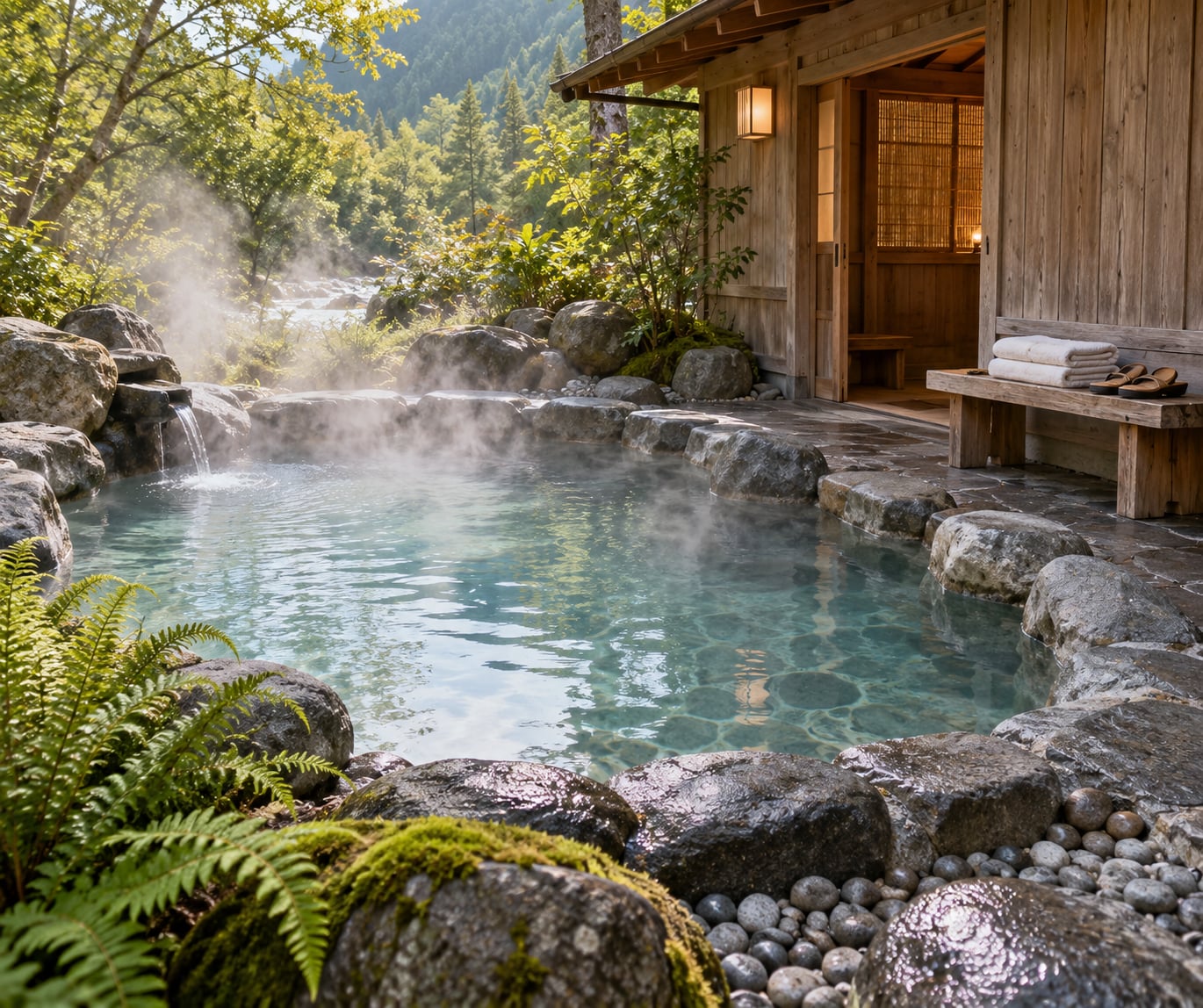
A hot spring resort is a built facility where geothermal water is pumped from a local source, held at a controlled temperature, and circulated through pools, tubs, and cold plunges. That is worth separating from a natural hot spring reached by hiking, because the two have almost nothing in common in terms of rules, clothing, and what you bring. If someone said “hot springs” and pointed at a trailhead, that is the wild version. If they mentioned a day pass or a locker number, it is the resort version.
Most of the anxiety people feel about a first visit is anticipation, not the soaking itself. Nearly everyone who has been through it says the same thing afterward: it was more ordinary than expected. Here is how the visit actually works, from packing to the last rinse.
Table of Contents›
- What You Need
- Step-by-Step
- 1. Choose the Right Resort and Pool Type
- 2. Book and Confirm the Details
- 3. Prepare What You Need to Bring
- 4. Learn the Bathing Rules Before You Enter
- 5. Soak Gradually and Listen to Your Body
- 6. Make the Rest of the Visit Easy
- Common Mistakes
- Frequently Asked Questions
- Do you take your clothes off in a hot spring?
- What to know before going to hot springs?
- Are you supposed to shower after hot springs?
- How long can you stay in the hot springs?
- Can you dip your head in a hot spring?
- Are children allowed at hot spring resorts?
- Conclusion
What You Need
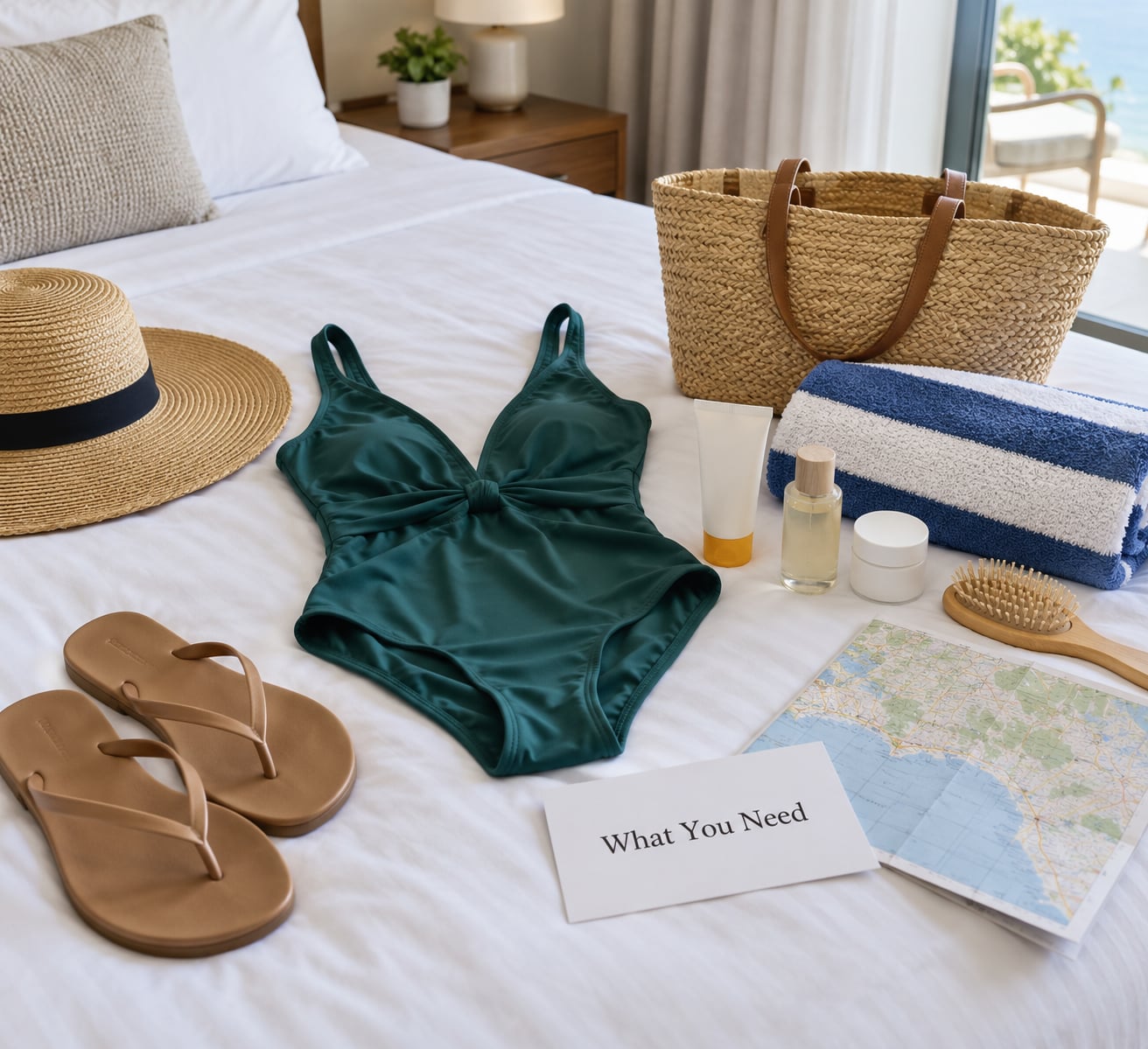
Most of what you need you already own. The items people most often forget are a towel you trust, water you can reach, and a way to get your hair out of your face.
- A booking confirmation saved on your phone, plus the resort’s address and phone number. If you are arriving after dark or to a remote site, download the map before you lose signal.
- Photo ID if you bought a day pass in advance or are checking into an overnight stay.
- Swimwear, even at facilities where you will be removing it. You will want it for the changing room, the sauna, and any pool that requires it.
- Two towels if you can manage it: one to sit on, one to dry off. Rental towels at resorts are frequently small and slow to dry.
- Flip-flops or sandals that can get wet. Wet tile and wet stone are the main slip risk in the building.
- A change of clothes, including something dry to walk out in.
- A hair tie and a small toiletry bag. Hair goes up before the water, not after.
- A refillable water bottle. You will drink more than you expect.
- Any health supplies you rely on, kept with you rather than locked in a locker across the complex.
Leave jewelry at home or in the locker. Metal in sulfurous mineral water discolors skin and tarnishes fast, and you do not want a ring latched around your finger when you need to get out quickly. Contact lenses are worth removing too, though some soakers dunk and pop them out. Most people carry their small towel to the pool rather than leaving it behind, and treat the locker as a place for clothes and valuables only.
Last thing before you leave home: read the resort’s own rules page. Hours, clothing policy, whether phones are allowed, whether pets are permitted, and whether tattoos are restricted all vary by property, and getting these right in advance removes most of the guesswork.
Step-by-Step
Six steps, in the order that keeps a first visit calm. Take them roughly in sequence and you will never be the person standing in the lobby unsure what happens next.
1. Choose the Right Resort and Pool Type
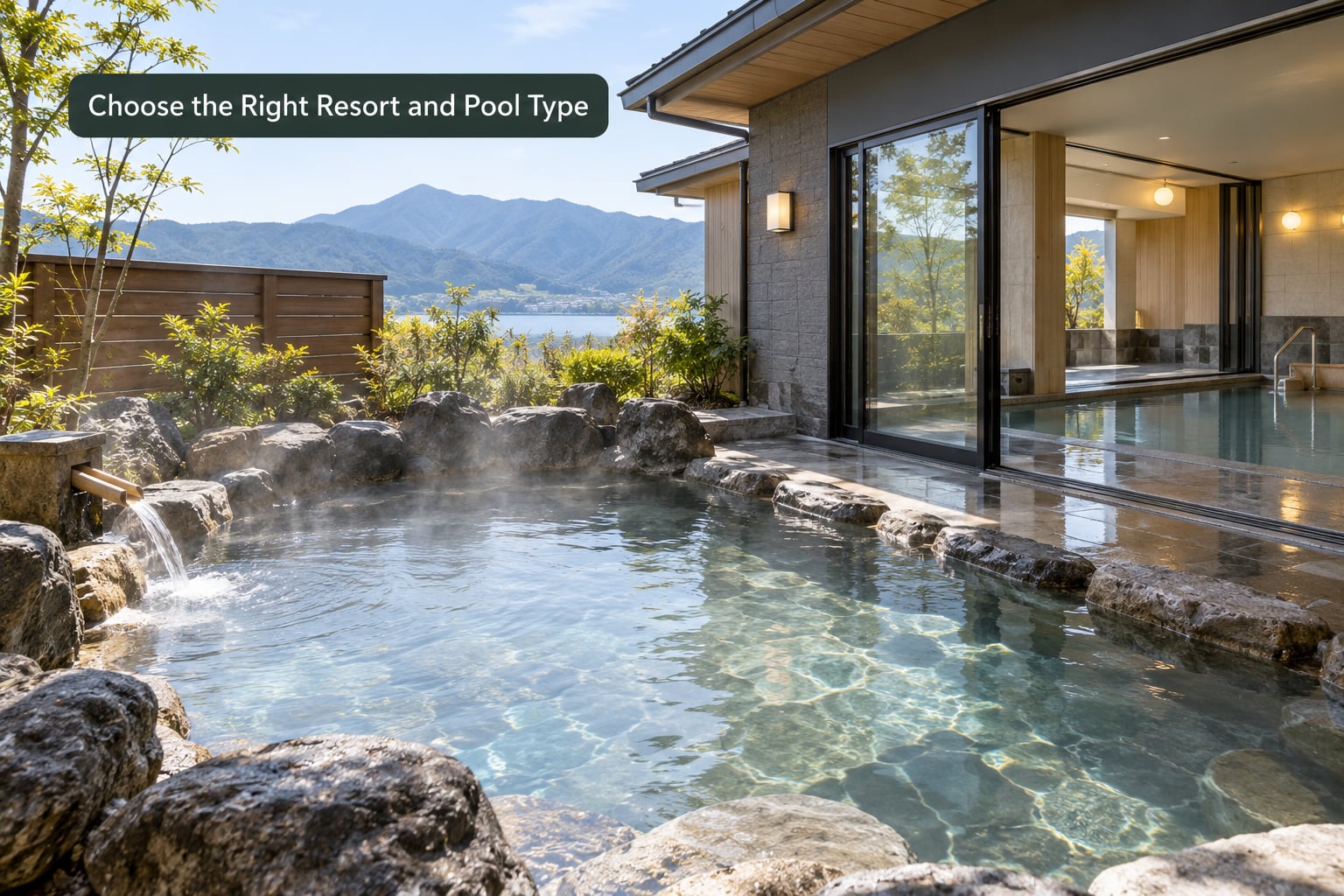
Managed resorts, day-use spas, and wild natural springs are three different trips. Managed resorts usually have showers, changing rooms, lockers, and staff on site, and they take day passes or overnight guests. Day-use spas are smaller and often quieter, sometimes limited to a set number of bathers at a time. Natural springs in the backcountry have no staff, no showers, and no rules except the ones you bring with you, and they often require a permit or a reservation during busy months.
Within a facility, the pools are usually more varied than the marketing suggests. You will find outdoor pools, indoor pools, cold plunges, sauna and steam rooms, and private cabanas you pay extra to reserve. Mineral water coming from a geothermal source runs hot by nature, and resort pools are held somewhere between a warm soak and a genuinely hot one. Sources range from the mid-80s Fahrenheit at cool entry pools to well above 140°F at raw source pools, so you cannot assume two pools at the same resort feel the same.
Check three things before you commit: the hours of each pool area, whether you need a reservation or a timed entry, and how far the walk from parking to the water is. At a resort with multiple buildings, one building may be adults-only or clothing-optional while the other is not. That distinction is usually stated on the booking page, so read it there rather than guessing on arrival.
2. Book and Confirm the Details
Booking a day pass usually reserves you a window of time rather than a specific pool. Overnight guests usually get bathing access included with the room, though some properties sell separate day passes to non-guests as well. Private soaks and cabanas are a separate booking entirely and go fast.
Before you pay, get answers to five questions. What time does check-in open for a day pass, and how long is the window? Are towels included or rented? Is there a locker fee, and is it refundable? What is the cancellation policy, since a lot of these are prepaid and non-refundable? And what is the last entry time, which is often earlier than closing?
Add-ons are where first-timers get surprised. Massages and other treatments book separately and sell out early. Lockers may cost a few dollars more at peak times. Some resorts sell robes, some do not, and some include a small towel in the pass and rent the rest. None of that is hidden from a careful reader, but it is easy to miss if you only glance at the headline figure.
3. Prepare What You Need to Bring
A short list, and that is it. Your phone, a key, a card, the toiletries you actually use, and your water.
- Swimsuit, even if the facility is clothing-optional or nude.
- Flip-flops or sandals that can handle water.
- A dry change of clothes and something to walk home in.
- A change of underwear and a shirt you can put on damp without wincing.
- Towels, preferably two and preferably large.
- Hair tie, sunscreen if any area is outdoors, lip balm, and a water bottle.
- Nothing valuable. Phones get used on the pool deck or not at all, depending on the resort.
On the question of a robe: bring a light layer for the walk between buildings if you are staying overnight. Some resorts provide robes at check-in, others do not, and the gap between the pool building and your room is sometimes a cold walk.
4. Learn the Bathing Rules Before You Enter
Here is the part that trips up almost every first-timer. At nearly every facility, you shower or rinse completely before you get into the water, every time. Not a quick hand rinse; the actual body shower. There is usually a sign saying so, and staff enforce it because the water is shared and untreated or lightly treated. Skipping it is the one mistake that will make you conspicuous.
The clothing question has a real answer, and it depends on the facility rather than on hot springs generally. Three policies exist. Swimsuit required means you keep a suit on in every pool, common at family-oriented resorts and at many mineral spring facilities in the American West. Clothing optional means nude is allowed but nobody expects it, so a swimsuit is fine and often the easier choice for a first visit. Nude only means suits are not permitted at all, which is the norm at a traditional Japanese onsen and at a few clothing-optional properties in North America. If you cannot tell which one you have found, ask at the desk or look for signage at the changing room entrance. Never guess by walking in.
A few more things worth knowing. Towels are for drying and for sitting on, not for floating in the pool. Keep your voice low; these spaces are quiet because most people came to be quiet, and loud groups are the single thing soakers complain about most. Photos of other people need their permission, and many facilities ban phones at the pool edge entirely. Food and drink stay out of the bathing area, alcohol is usually restricted or banned outright, and tattoos can be an issue at some traditional bathhouses and at properties that cover them.
Enter and leave slowly. Put one foot in, then the other, then lower yourself in rather than dropping in, both for the tile and for your own comfort. Walk rather than run on wet surfaces.
5. Soak Gradually and Listen to Your Body
Start at the cooler end of the temperature range and work up. Most first-timers find their first five minutes feel like a lot more heat than the thermometer promises, because you are sitting still in warm water with nowhere to put your attention.
Fifteen minutes in one go is plenty for a first session. Then get out, sit somewhere shaded or cool, drink some water, and come back for a second round. Two or three short rounds beats one long one, and plenty of people stop after two and feel great. You can dip your head or dunk it, but you do not have to; submerging is optional and the only real rule is that you keep control of yourself and do not push off blindly.
Drink water regularly. A long soak in hot water costs you more fluid than you notice, and dehydration is the reason so many people feel lightheaded and blame the water.
Get out immediately if you feel dizzy, nauseous, cramped, short of breath, or genuinely unwell. Do not push through those. And skip the hot soak entirely, or ask a doctor first, if you are pregnant, have a heart condition or uncontrolled blood pressure, have a fever or open skin infection, are recovering from alcohol, or have just eaten a heavy meal. If you are unsure, ask staff rather than guessing.
6. Make the Rest of the Visit Easy
Leave yourself time. Most people book a two- or three-hour window, and rushing the last fifteen minutes is what makes a good visit feel stressful. Change, dry off, and drink something before you leave.
If you are soaking alone, timing is the whole game. Early morning on a weekday is the quietest and gives you the most space; the last two hours before close is often empty because people have finished their day; late afternoon is the busiest. Reservations on small day-use spas mean you may get the space to yourself, which is a good option if being alone in a busy room would not appeal to you. Ask about a cabana or a private pool room if you would rather not share the space at all.
Rinse off after your last soak if the facility asks you to, and do not skip the locker rules on the way out. Wipe down, take your things with you, and leave the pool area better than you found it.
Common Mistakes
Skipping the shower. This is the mistake that follows you around. Rinse fully, soap and water if the facility has it, dry off, then enter.
Assuming every pool is the same temperature. Entry pools and source pools can be 60°F apart. Put a hand and a foot in first and stay in for five minutes before settling in.
Staying too long on the first round. Fifteen minutes, then out. Long sessions feel good until the heat catches up with you when you are already standing at the edge of the pool.
Wearing a swimsuit into a nude facility. It is uncomfortable for you and awkward for everyone. If the signage is unclear, ask at the desk before you undress, not after.
Getting loud. Keep conversations low and out of the water. Most first-timers say the social pressure to talk is the thing they enjoyed least.
Photographing without asking. If you want a picture of the setting rather than the people, frame it that way, and never include another soaker without their okay.
Bringing valuables into the wet area. Jewelry, watches, and anything you cannot replace belong in a locker or at home. So does your phone, if the facility says poolside.
Turning up without confirming hours or entry rules. Many pools close earlier than the building, and the last entry time is earlier still.
Frequently Asked Questions
Do you take your clothes off in a hot spring?
It depends on the resort. Three policies exist: swimsuit required, clothing optional, and nude only. A swimsuit-required resort keeps you covered in every pool. A clothing-optional resort allows nudity but does not expect it, so a suit is fine and usually the easiest choice for a first visit. A nude-only facility, common at traditional Japanese onsen, does not permit suits at all. Check the resort’s page or ask at the desk before you undress, because walking into the wrong section is the worst-case mistake.
What to know before going to hot springs?
Sort out six things first: whether you need a reservation, what the clothing policy is, whether the pass includes towels and a locker, the pool hours and last entry time, what you need to bring, and whether you are soaking alone or with someone. Under two hours covers the whole visit including changing. Download the address and map before you leave if the resort is remote, because cell service is often patchy.
Are you supposed to shower after hot springs?
Most resorts want a quick rinse before you leave, mainly to clear mineral residue off skin and hair and to keep the pools cleaner. A full shampoo is usually not necessary, though you may want to wash your hair if you soaked in very sulfurous water. Many people skip it entirely and feel fine. Check the posted instructions at the facility, since some springs insist on it and some treat it as optional.
How long can you stay in the hot springs?
Fifteen minutes is a good first round, then get out, drink some water, and cool down for five or ten minutes before going back. Most facilities work fine with two or three rounds across a couple of hours. Longer single sessions are where overheating and lightheadedness catch people out, especially on a first visit when you have not yet learned how your own body handles the heat.
Can you dip your head in a hot spring?
Yes, you can. Submerging your head or holding your face under briefly is fine and many people do it. You do not have to, and plenty of soakers never put their head under at all. The practical reasons people skip it are comfort and water temperature rather than any rule. If you dunk, keep hold of the edge or the step, and do not push off the bottom of a pool whose depth you have not judged.
Are children allowed at hot spring resorts?
Many resorts allow children in family pools with shallower water and lower temperatures, while keeping the main pools adults-only. Rules vary widely and some facilities set a minimum age for any bathing at all, so check before you bring kids. A few things help regardless of policy: keep soak sessions short, keep them out of water that is too hot for them, and get them out as soon as they look flushed or tired.
Conclusion
Confirm the resort’s clothing policy and hours before you travel, pack light with your own towel and water, shower fully before you get in, enter a cooler pool gradually, soak in fifteen-minute rounds with breaks between them, and leave yourself an unhurried half hour to change. That is the whole thing. The rest is just showing up and letting the water do its work.