Planning a spa day without overspending comes down to three things: set one firm total before you look at any spa, choose one treatment that genuinely matters to you, and ask for the all-in price in writing before you pay. Book the cheapest slot you can and most of the rest of the budget takes care of itself.
The reason people blow past their budget is rarely the treatment itself. It is the four extras that never appear in the advertised rate: the facility fee for using the pool, sauna or steam room, the gratuity on top of the service, the service charge some spas fold into the bill, and the upgrades offered in the last five minutes while you are still on the table.
This guide is written for 2026 pricing, and the same four costs apply whether you are booking a neighborhood day spa, a resort spa or a hotel spa you are visiting as a guest. Budgets below are worked out as shares of your total rather than fixed amounts, so the method works in any city at any income level.
Table of Contents›
- What You Need Before You Book Anything
- Step-by-Step: Planning a Spa Day Without Overspending
- 1. Work down from your total, not up from a menu
- 2. Choose the spa format that matches your budget
- 3. Compare the full price before booking, not the treatment price
- 4. Build a balanced treatment plan instead of a long one
- 5. Save on food, transportation and the small extras
- 6. Book early, ask for the written total, and keep the confirmation
- Common Mistakes That Blow the Budget
- Frequently Asked Questions
- How much should I budget for a spa day?
- Is a spa day pass cheaper than booking individual treatments?
- Should I tip at a day spa, and is gratuity already included?
- Can I use a spa day pass at a resort or hotel?
- Is booking a last-minute spa appointment a good way to save money?
- Start With One Priority Treatment
What You Need Before You Book Anything
Five things. Gathering them first is what separates a spa day that finishes under your limit from one that quietly costs a third more than you planned.
- A budget worksheet. One page, your total at the top, then seven rows beneath it for treatments, facility access, food and drink, transportation, gratuity, a retail allowance and a buffer. Fill the rows with percentages, not numbers, and the worksheet works in every city.
- A shortlist of two or three spas. More than three and you will start negotiating with yourself. Search by neighborhood and by treatment type rather than by brand.
- The full service menu. You want durations listed, because a 50-minute facial and a 90-minute facial are different products. Note what is included with each one, and whether facility access is separate.
- The booking terms. Cancellation window, no-show charge, facility fee for non-hotel guests, how long the treatment runs versus how long you have the room, and whether gratuity is added automatically.
- Transportation details. Parking, transit, or a taxi you can leave running for a few hours. This line is on the worksheet for a reason and it is the one most people forget entirely.
Keep the worksheet on your phone. You will want it open when you call, not two days later when you have half-remembered what was included.
Step-by-Step: Planning a Spa Day Without Overspending
How to plan a spa day without overspending is mostly arithmetic done early and honestly. Six steps, in order, and you will know your real number before anyone asks you for money.
1. Work down from your total, not up from a menu
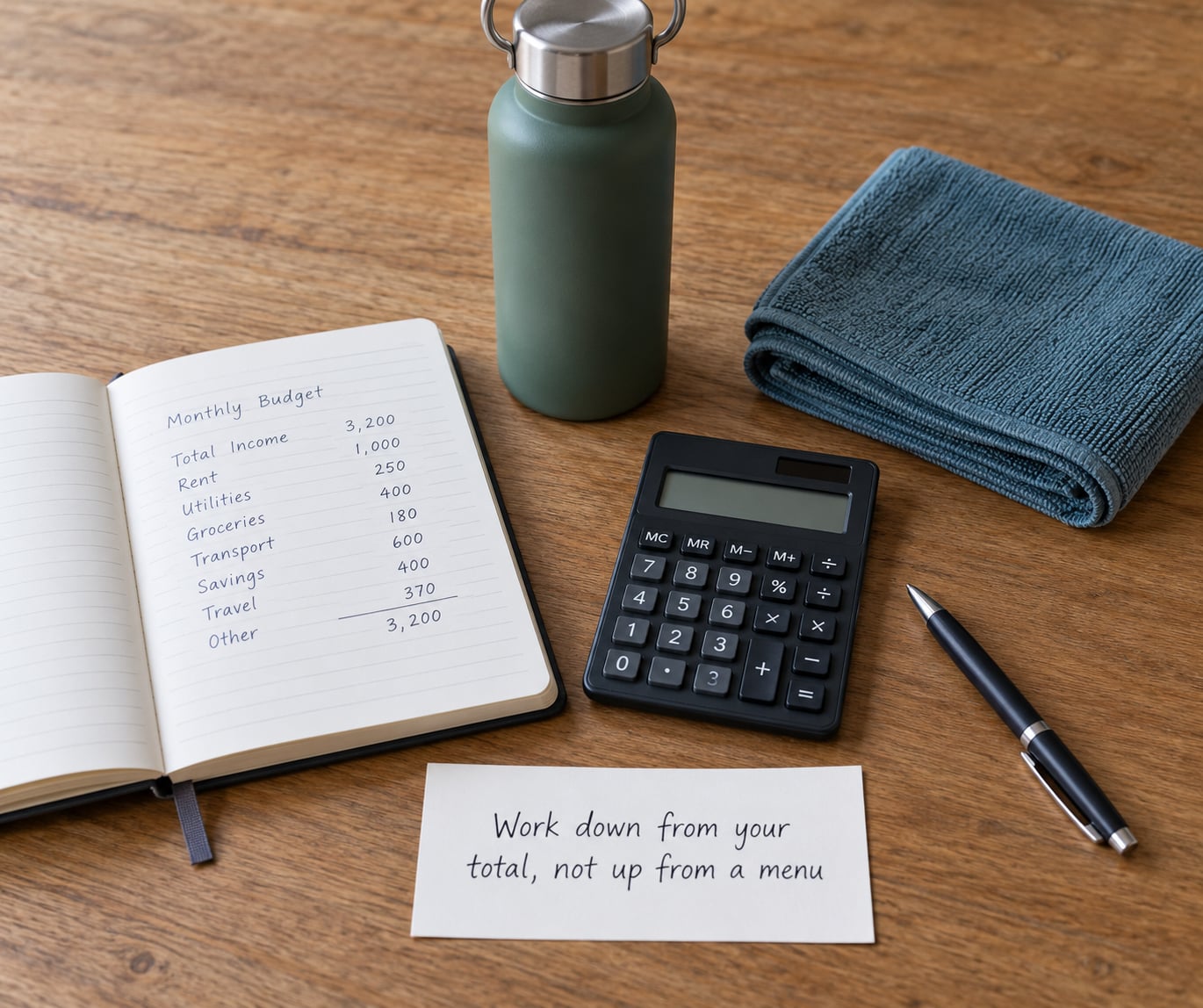
Start with the amount you have actually decided to spend, then divide it. This is the step that changes everything, because the alternative, adding a menu to a number in your head, always produces a total you did not choose.
- Treatments: 45 to 50 percent. This is the part people actually came for, so it gets the largest share.
- Facility access and day pass: 10 to 15 percent. Sometimes free, sometimes not.
- Food, drinks and the tea lounge: 10 to 15 percent.
- Transportation and parking: 10 to 15 percent.
- Gratuity: 8 to 10 percent. Budget it now and it stops being a shock.
- Retail allowance: 0 to 5 percent. Zero is a perfectly respectable number.
- Buffer: 5 percent. Something always costs slightly more than quoted.
A worked example: with a total of 300 units, 140 goes to treatments, 45 to facility access, 40 to food, 40 to travel, 27 to gratuity, 8 as a buffer. The rows already add up, so there is nothing left to accidentally spend.
How to tell it worked: you can say the total out loud and feel fine about it. If you feel relief, your number is fiction and needs another pass.
2. Choose the spa format that matches your budget
Most spas sell the same room time in five different shapes, and the shapes are not priced the same. Pick the shape first, then the spa.
- Day pass. Access to the pool, sauna, steam room, lounge and changing rooms for a few hours, usually at a flat rate. Best value when your budget is tight and you want the experience more than a specific treatment.
- Booked treatments only. No access fee if you skip the facility, which is the cheapest way to get a massage in the world. Ask specifically whether the room is inside the facility area.
- Multi-service package. Two to four treatments bundled, usually at a small saving over buying them separately. Worth it when you actually want every item on the list.
- Resort or hotel spa access. Often the best facilities and the highest minimum spend, with a food and beverage minimum attached. The trap is spending on lunch and drinks to reach a threshold you did not need.
- Hotel guest benefit. If you are staying overnight anyway, some hotels credit or discount spa treatments for in-house guests. This is the single most underused lever in this whole guide.
For one person on a limited budget, a booked treatment plus day pass beats a package. For three friends, a package split evenly beats three separate bookings.
How to tell it worked: you can name, in one sentence, what your money buys. If your answer involves the word “and” three times, it is a package, and packages are where budgets go to hide.
3. Compare the full price before booking, not the treatment price
Two spas quoting the same 60-minute massage can be 40 percent apart by the time you leave. Line up every line item before you commit.
- Facility fee. Often charged per person, per visit, or per day, and waived for hotel guests. This is the single most complained-about charge in spa forums, and it is entirely avoidable if you ask about it on the phone.
- Service charge. Different from gratuity and sometimes confused with it. If one is already applied, your tip can be smaller without being rude.
- Gratuity. Some spas add it automatically, some leave it to you, some add it at checkout where you cannot refuse. Ask which.
- Tax. Applied on top, and higher than most people expect on a service-heavy bill.
- Upgrades. A longer session, a premium oil, a hot stone add, a scalp or foot add. Each one is reasonable; all five at once is how the budget dies.
- Cancellation and no-show terms. Often a flat charge if you cancel late or fail to show, sometimes as much as the treatment itself.
- Time limits. Your treatment may be 60 minutes but your access 90. Knowing the cap stops an awkward overrun charge.
How to tell it worked: the spa has given you a number that is final, not a starting number. Write it down.
4. Build a balanced treatment plan instead of a long one
The instinct to book everything is the expensive one. A day with one substantial treatment and real rest between appointments feels more restorative than a day with four rushed services back to back.
Start with one primary treatment, the thing you would book if you could only book one thing. Then add at most two shorter items, and give yourself an unscheduled gap after each one. Gaps are not wasted time; they are the part of the day you are actually paying for.
What to skip: long add-on lists, premium product lines, and any second treatment scheduled immediately after the first. Also skip anything described as required when it is really optional, and skip the retail shop unless you already decided what you want before you walked in.
Facials and longer massages tend to deliver more per minute than short add-ons, and reviews of many day spas point to the same thing: people remember the room, the quiet and the unhurried hour, not the extra fifteen minutes of hand work.
How to tell it worked: you finish the day feeling like you rested, not like you completed a checklist.
5. Save on food, transportation and the small extras
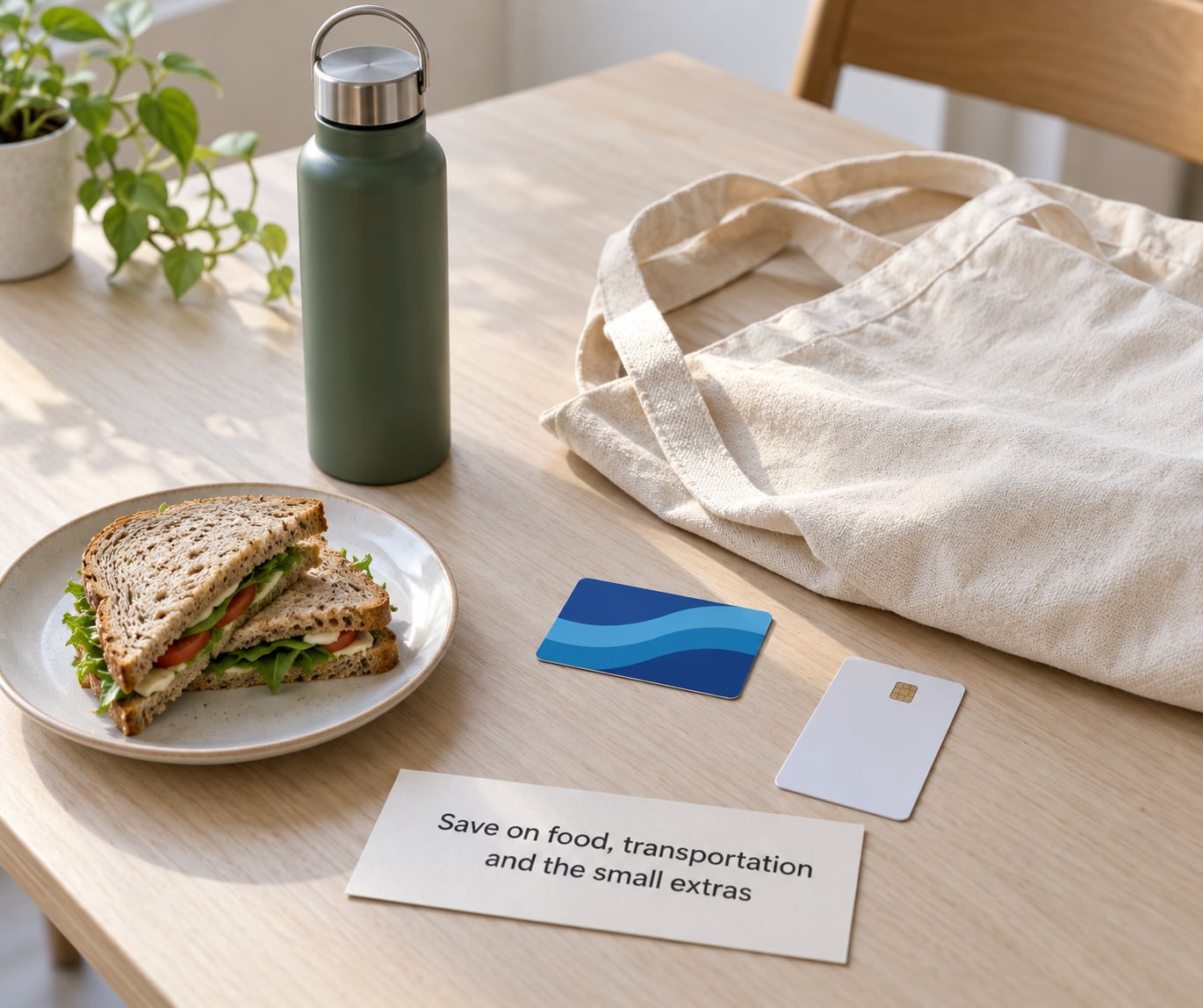
These three categories add up quietly, and they are the easiest places to save without touching the spa itself.
- Eat before you arrive. A proper meal beforehand means one drink and a small plate instead of a full lunch, and you get more out of the treatment on an empty stomach anyway.
- Bring water. Spas charge for bottled water and the tea lounge is good but not free. A refillable bottle fixes both.
- Go by transit or shared ride. Parking at a spa or resort can cost more than your massage tip on its own.
- Skip the robe upgrades, the foot products and the sunscreen at checkout. All reasonable, all unbudgeted.
- Leave the gift shop alone unless a specific product is why you came. Retail is where spa budgets go to die quietly.
Add a plan for after. A quiet tea, a walk along one nice street, or a neighbourhood café close to the spa turns a treatment into a day out at almost no extra cost. If you have an afternoon gap before you travel home, filling it is free, and free is the budget goal.
How to tell it worked: the non-spa part of your day cost less than the spa part, which is not how most spa days go by accident.
6. Book early, ask for the written total, and keep the confirmation
Book ahead rather than booking early in the day. The best value slots are usually weekday mornings, weekday afternoons, the shoulder season, and the days right after a holiday rush when demand drops off a cliff.
Midweek and off-peak rates are the most reliable discount in this industry, and they are usually built into the price list rather than hidden in a promo code. Shoulder season means the weeks either side of peak, including the January reset when the industry is quietest.
Cancellation openings are the other honest lever. Same-day availability is often discounted, and if you can arrive with nothing else planned, you have nothing to lose.
Then do the thing most people skip: ask for the all-in figure by email or message before you confirm. A simple version that works is to say you have a set budget for the day and ask what the total comes to including fees and gratuity, so you can plan around it. Staff answer this far more comfortably than you expect, and the reply becomes your record.
How to tell it worked: after booking you have a written confirmation showing the treatments, the start time, the total, the cancellation terms and the fee structure. Save it. That single document is what you check against at checkout and what you use if a charge you did not expect appears.
Common Mistakes That Blow the Budget
Forgetting the facility fee. The advertised treatment rate is not the total, and the difference can be large enough to double a day pass. Ask on the phone, and ask whether hotel guests are exempt. If you are staying overnight, that question alone can save more than any discount code.
Booking two long treatments to be generous with yourself. Two 90-minute services leave no room to rest and cost nearly twice what one does. One substantial treatment plus time beats two appointments in almost every case.
Filling every hour. Booking from morning to evening feels like getting your money’s worth, and it is the opposite. An hour of nothing scheduled is part of what you are paying for.
Shopping at the spa. Oils, salts, robes and candles are sold in a low-pressure, high-margin setting at the exact moment you feel best and least likely to say no. If you want a product, decide before you arrive and cap the spend at the amount you budgeted, which for many people is nothing.
Tipping without checking the policy. Tipping 20 percent on a bill that already includes a service charge is paying twice. Ask at booking, not at checkout, and tip on the pre-service-charge amount if that is the local norm.
Spending to reach a minimum. Resort spas frequently attach a food and beverage minimum or require a package credit you do not need. Walk in knowing the exact figure you will commit to, and decline anything that only makes sense because of a threshold.
If none of the above works out, the at-home route still holds up well. A warm bath with Epsom salts, a foot soak, a simple sugar scrub, a honey and avocado mask, a scalp massage, a deep conditioning treatment on your hair and a herbal tea afterwards costs a fraction of one treatment and uses nothing you likely don’t already have. It is the right answer for a monthly reset, and the wrong answer when what you actually need is an hour of someone else’s hands.
Frequently Asked Questions
How much should I budget for a spa day?
A single booked treatment plus transportation and gratuity is the cheapest useful version, while a day pass with one or two treatments and lunch sits comfortably above it. Work in shares rather than figures: roughly half your total on treatments, a tenth to an eighth on facility access, a tenth on food and travel, a tenth on gratuity, and a small buffer for what always costs more than quoted.
Is a spa day pass cheaper than booking individual treatments?
Usually yes, if you were going to use the pool, sauna or steam room anyway. A pass buys hours of facility access at a flat rate, so the value climbs if you rest in it. If you only want a massage and would sit fully clothed in a treatment room, book the treatment alone and skip the pass entirely.
Should I tip at a day spa, and is gratuity already included?
Check the booking terms before you go, because this varies more than anything else. Some spas add gratuity automatically and it is not tippable twice. Where it is not included, 18 to 20 percent of the service charge is standard. If a service charge is already applied, tip on the pre-service-charge amount.
Can I use a spa day pass at a resort or hotel?
Yes, resort and hotel spas sell day passes to outside guests, usually by the hour or as a half-day block. Expect a higher rate and often a food and beverage minimum attached, so confirm whether spending on lunch and drinks is required to book. Staying overnight and using the hotel guest benefit is usually the cheaper route.
Is booking a last-minute spa appointment a good way to save money?
It can be, because same-day and cancellation openings are often discounted. It suits you only if you have no fixed travel schedule, no dress code for the facility, and nothing to do afterwards if the slot is not offered. Book at least a day ahead if your day includes food, transit or a train, and you would rather pick the time than take whatever is left.
Start With One Priority Treatment
Pick the treatment you would book if you could only book one, set your firm total, and divide it across the seven rows before you look at a single spa menu. Protect the unscheduled hour afterwards, because that quiet stretch is the part people remember. Then save the difference rather than spending it on upgrades you had not planned.
Last reviewed for 2026, and the fee structures above change often, so confirm the all-in number with the spa before you confirm the booking.