What to look for in a boutique hotel before you book comes down to ten things you can actually verify: the neighbourhood, the room you have been assigned, the staffing hours, the building’s age and noise behaviour, what breakfast and other amenities actually cost, and the exact terms attached to your money. A boutique property gives you more character than a chain, and considerably more variation between one property and the next, so nothing about a standard room can be assumed. The charm comes with trade-offs, and the trade-offs are the part you need to see before you pay.
I have booked the small-hotel version of this trip enough times to know where the surprises hide. A 14-room guesthouse in a converted townhouse sounds wonderful until the bathroom has no window and the desk closes at 10pm. A former warehouse conversion looks extraordinary in the photos and means a five-minute walk to the nearest transport stop. None of that is hidden; it is just rarely written down where you would see it.
Here is the order I work through, and the evidence I look at for each one.
Table of Contents›
- What to Look For in a Boutique Hotel Before You Book at a Glance
- 1. Location and access to the neighborhood
- 2. Room size, layout, and essential comfort
- How to compare room size honestly
- 3. Bed, bedding, and sleep quality
- 4. Bathrooms and daily-use details
- 5. Staff service and communication
- Questions that reveal the staffing model
- 6. Breakfast, dining, and food options
- 7. Atmosphere, design, and the reason it is boutique
- Independent property or lifestyle chain
- 8. Amenities that match your trip
- Essentials versus extras
- 9. Reviews, photos, and the full cancellation policy
- What to look for in reviews at a 12-room property
- 10. Total price and value for the experience
- Working out the real total
- Frequently Asked Questions
- What should I ask a boutique hotel before booking?
- How do I know if a boutique hotel is right for a family?
- Are boutique hotels usually more expensive than regular hotels?
- What is the best way to check if a boutique hotel is quiet?
- Can I work from a boutique hotel for several days?
- What details should I check in the cancellation policy?
- The First Thing to Check Before You Book
What to Look For in a Boutique Hotel Before You Book at a Glance
The table below is the whole checklist in one view. The final column is the part most people skip: not the criterion, but the specific thing to check.
| # | Criterion | Why it matters | Evidence to check |
|---|---|---|---|
| 1 | Location and access | A boutique property has no pool, gym or spa to distract you from its surroundings | Walking distance to transport, a map of the block at night, reviews that mention street noise |
| 2 | Room size and layout | Small rooms are stylish in photos and awkward with a suitcase open | Floor area in square metres, wardrobe space, number of outlets, window size |
| 3 | Bed and sleep quality | Historic buildings transfer noise and light through thin walls | Bed size, blackout blinds, room position relative to stairs and shared spaces |
| 4 | Bathroom | Old buildings produce tight, wet bathrooms with weak ventilation | Shower type, water pressure, window or extractor fan, two-towel-per-guest minimum |
| 5 | Staff and communication | Small properties rarely run a 24-hour desk | Desk hours, latest check-in time, whether they answer email before you book |
| 6 | Breakfast and dining | Included breakfast changes the value of a stay more than almost anything else | Whether it is included, serving hours, seating capacity, nearest open restaurant |
| 7 | Atmosphere and design | Character and shallow styling look identical in marketing photos | Named designer, local materials, whether the building is genuinely independent |
| 8 | Amenities that match your trip | You will not use a rooftop bar you cannot reach in January | Wi-Fi speed, air conditioning, workspace, laundry, parking, pet and child policy |
| 9 | Reviews and booking terms | At a small property a single bad review moves the average more | Reviews from the last six months, photos of the booked room type, cancellation window |
| 10 | Total cost and value | Mandatory fees and short-stay minimums are common at small properties | Full stay total including taxes and fees, parking, breakfast, minimum-night rules |
1. Location and access to the neighborhood
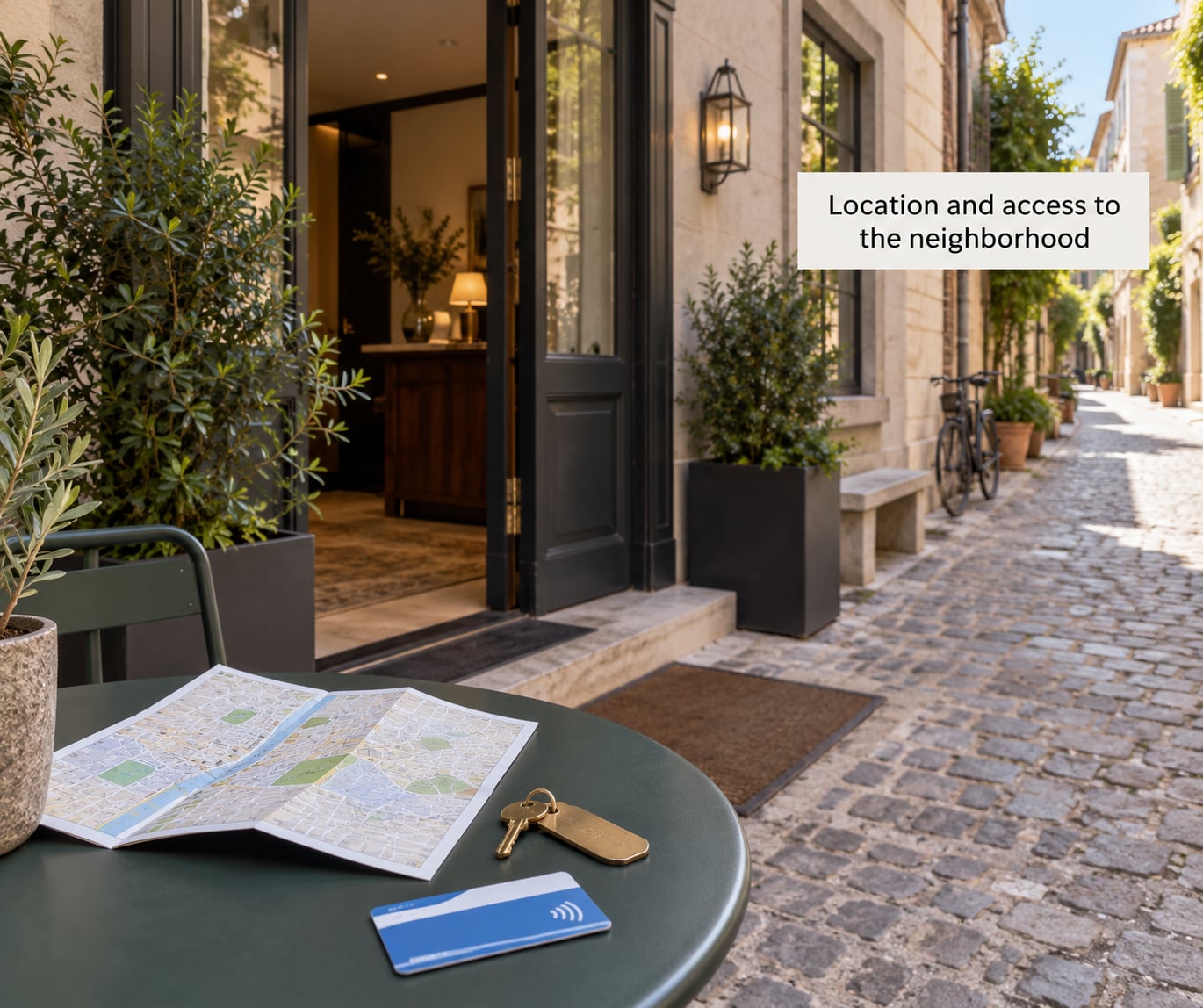
The single most useful thing you can do before booking is to look at the map and walk the block in your head at the hour you will be there. A small property has far fewer things to do inside it, so where it sits becomes the stay rather than a detail of it. Forum regulars on hotel threads say the same thing repeatedly: at this size, location beats polish.
Check four things. How far is the nearest usable transport stop, and is the walk there lit and flat? What is genuinely open nearby in the evening rather than what appears on the map? How noisy is the street at night, and does the property face it directly? And is there parking, or are you relying on a city-centre space that is hard to find and awkward to leave?
Historic city-centre neighbourhoods are the usual source of trouble here. Cobbled streets, a bar downstairs, a tram line or a late-running kitchen on the same lane will all reach a lower-floor room. Search the reviews specifically for street noise and note which floors people say to ask for. That single detail often decides whether a charming property is restful or exhausting.
For solo arrivals the timing question matters more than the noise question. Ask directly what the latest check-in time is, because a 10pm desk close turns a delayed train into a taxi you did not plan for.
2. Room size, layout, and essential comfort
A boutique room is frequently smaller than a standard chain room, and the difference is felt most in the first ten minutes with a suitcase. Ask for the floor area in square metres or square feet rather than relying on adjectives, because “spacious” applied to a 14 square metre room tells you nothing.
How to compare room size honestly
Read the number of steps between the bed and the bathroom, and ask whether luggage fits in the wardrobe or has to sit in the corridor. Count the outlets: two is workable with a power bank, one is a problem for a stay longer than two nights. Look at the window in the photos and judge its real size, because a small window makes a room feel darker than its square footage suggests.
Stylish and comfortable are different categories. A minimal room with a good mattress, thick curtains and a proper reading light beats a cluttered room with statement furniture every time. Travellers consistently rate a renovated room and an outdoor space above almost anything else, so if the property has both, prioritise those over aesthetic extras.
3. Bed, bedding, and sleep quality
Sleep is where small properties fail most often, and the cause is usually the building rather than the bed. Ask for the bed size in writing if you are booking for two, and check whether the room has proper blackout blinds or a light shade that actually blocks a streetlamp.
Then ask where the room sits. A room next to the stairs, the lift, the kitchen or the shared terrace hears the whole building. Many properties will hold a top-floor or courtyard-facing room when you ask at booking rather than at check-in, and that request costs nothing.
Two more details matter in old buildings: climate control. A converted townhouse with radiators that cannot be turned off is fine in October and hard to sleep through in April. And pillow comfort, which nobody photographs. If you have slept badly in standard pillows before, ask what is provided, because a small property cannot always accommodate a preference at short notice.
4. Bathrooms and daily-use details
Bathrooms are the least photographed part of any hotel and the one you use every single morning. Confirm the shower type, because a rainfall shower with low pressure and a handheld with good pressure feel very different, and historic buildings are notorious for weak pressure on upper floors. Check whether there is a window or an extractor fan, since a bathroom that cannot dry is unpleasant by day two.
Ask how many towels arrive per guest and whether toiletries are refilled or replaced. A small property restocking a shelf is a reasonable, checkable detail, and properties that answer it well usually answer everything else well too.
If you are travelling with someone else, ask whether the room has a separate shower or a bath over a shower, because sharing a single small bathroom for a week of early starts is a real friction point. And if anyone in your party has limited mobility, ask about the lift, the bathroom layout and the bed height before booking. Small historic properties often have stairs only, and a charming third-floor room is not accessible.
5. Staff service and communication
Genuine personal service is the thing boutique properties are actually selling, and it is also the hardest thing to verify online. The best proxy available before paying is responsiveness: does the property answer an email within a day, does it answer the specific question you asked, and does it tell you when something is not possible instead of leaving you to find out on arrival?
Questions that reveal the staffing model
Ask what hours the desk is staffed, what happens if you arrive outside them, and whether there is someone on site overnight. Then ask who handles problems at 2am. The answers map onto your trip more directly than any description of “intimate service” does.
Staff-to-guest ratio is a useful safety and comfort signal for solo travellers. In a fourteen-room property you may deal with one person who knows every guest by name. That is the good version. It can also mean that the same person is cooking breakfast, which is where slow check-outs and lost key cards come from. Slow travellers tend to treat a small operation’s occasional roughness as charming; anyone on a tight schedule will not.
For solo stays specifically, ask about a late arrival, whether there is a common area to sit in, and what the neighbourhood looks like after dark. Well-run small properties will offer a specific answer to all three.
6. Breakfast, dining, and food options
Confirm in writing whether breakfast is included in the rate you booked, and if not, what it costs and whether it is served to everyone or only to guests. This one detail changes the value of a stay more than any other, and it is also the detail most often buried in a small property’s terms.
Ask about serving hours. A breakfast that ends at 9:30am is a problem for anyone with an early train, and at a 12-room property the dining room has twelve seats, so late arrivals may eat whatever is left or not at all. If you plan to eat in, ask about the nearest places that are reliably open and how far they are.
Not every boutique hotel has a restaurant, and that is fine. What matters is whether you want a base to come back to at night or an address in a city where you intend to eat out every meal. Properties with an on-site kitchen often offer in-room dining or a simple evening menu, which can be excellent, and properties without one are usually surrounded by the kind of neighbourhood that makes eating out easy.
Dietary needs are worth raising before booking rather than on arrival. A small kitchen handles some restrictions well and cannot improvise others, so say what you need and listen to whether the answer is specific.
7. Atmosphere, design, and the reason it is boutique
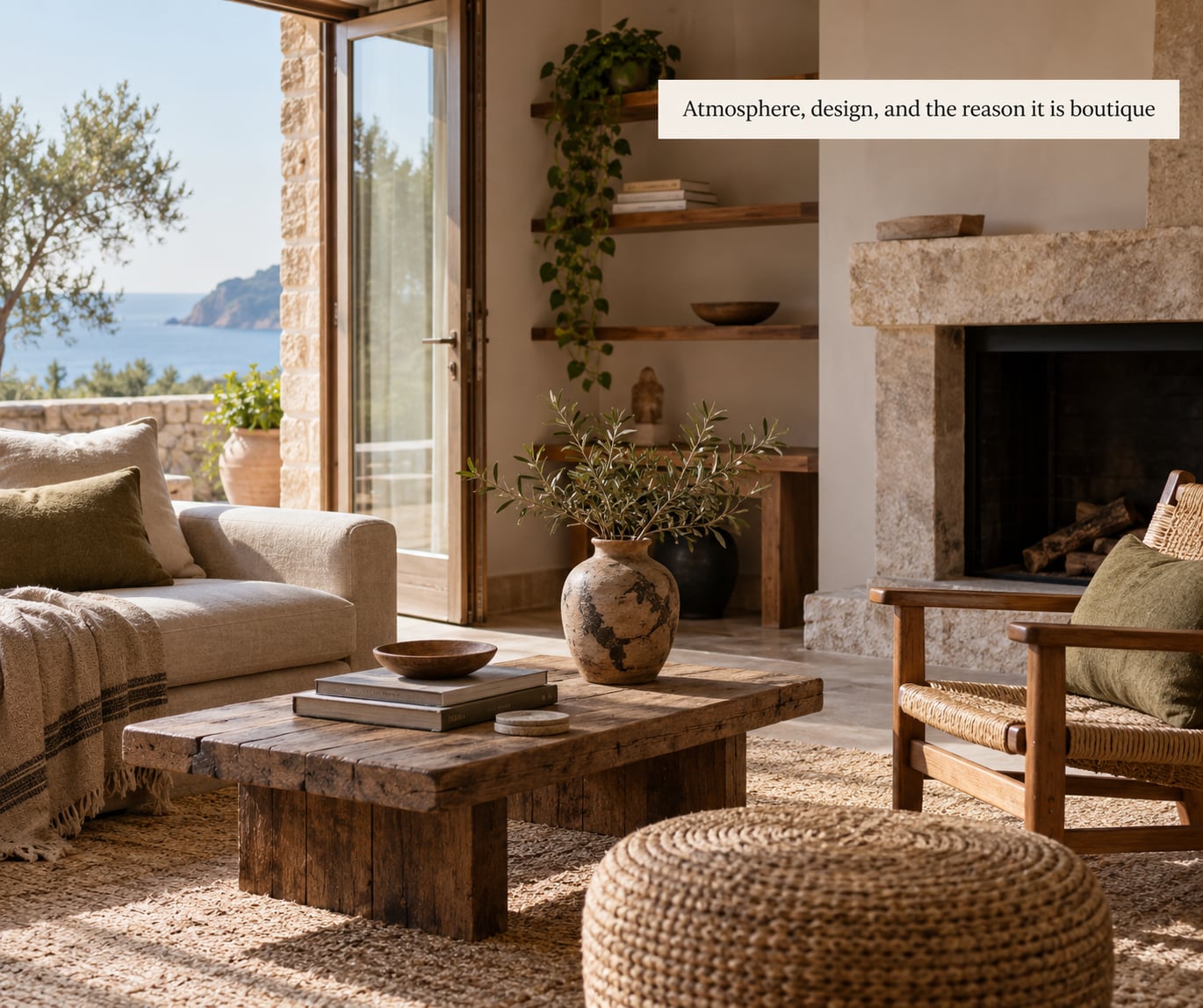
There is no official regulatory definition of a boutique hotel, and the label is used loosely enough that a property can call itself one while operating like a small chain. The usual shorthand is a small, independently owned property with a distinct design concept and a low staff-to-guest ratio, often under a hundred rooms. The term came from San Francisco in the early 1980s with properties like Kimpton’s Bedford and Morgans Hotel, which is a useful reminder that boutique originally described a mood, not a category with rules.
What separates the real thing from the styling is specificity. A property with a named designer, local materials, commissioned art or restored original architecture is making choices. A property with a colour-matched Instagram feed is doing marketing. Ask who designed it and what was kept from the original building, and the honest answers come quickly.
Independent property or lifestyle chain
Watch for a brand family: a sign, a loyalty programme, a corporate app. A “boutique” label attached to a 200-room lifestyle brand property is a marketing decision, and you get brand-standard rooms, brand-standard service and none of the independence. That is not a bad stay, it is a different product, and it should be judged against a chain rather than against a 12-room guesthouse.
Privacy and shared spaces deserve attention too. Communal lounges and libraries are the best part of a small property and also a source of noise. Check whether there are quiet hours, whether the bar or shared space closes early, and whether the room sits directly above it. Character and privacy are a genuine trade-off here, and it is worth deciding consciously rather than discovering it at midnight.
8. Amenities that match your trip
Small properties are not missing amenities out of stinginess. They simply cannot spread the cost of a large facility across few rooms, so the gym, the pool, the spa and the room service often do not exist. That is fine for most trips and wrong for a few specific ones.
Essentials versus extras
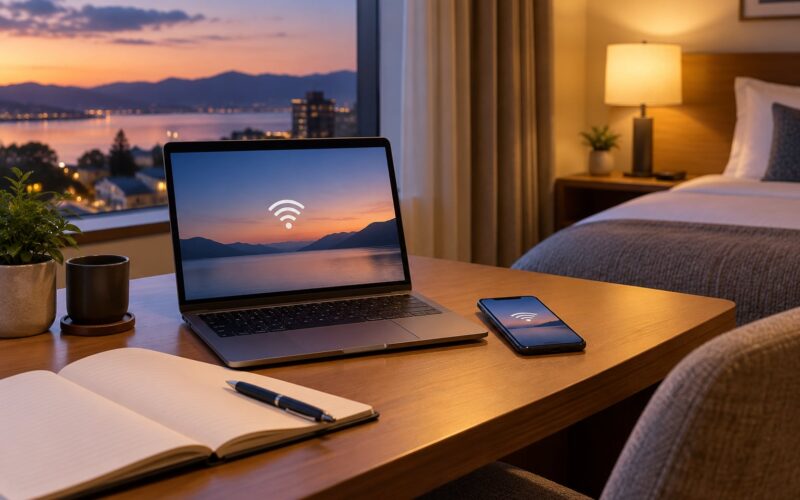
Decide what your trip needs first. Reliable Wi-Fi is essential if you are working or booking anything time-sensitive, so ask for the network name and whether it is shared with other guests. Air conditioning or heating you control is essential in most climates. A proper desk and a chair you can sit in for several hours is essential for remote work and almost never mentioned in the photos. A kettle, a mini-fridge, a safe and somewhere to put a suitcase are the quiet essentials that determine whether a room works.
Then the trip-specific items: luggage storage before check-in and after check-out, laundry or laundry nearby, on-site parking, a family room or a child policy, a pet policy and its fee, and any wellness or recreation space. Ask for all of these before booking and treat a vague answer as a no.
One more: adults-only policies are common at small properties, particularly in old buildings where space is tight. If that applies to you or to a travelling companion, check the policy early rather than discovering it at the payment screen.
9. Reviews, photos, and the full cancellation policy
Reviews are most useful at a small property when you read them as a trend rather than a score. Sort to newest first and read the last six months. If every recent review mentions the same thing, that is a fact about the property; if a single review describes a flood or a power cut, it is a story.
What to look for in reviews at a 12-room property
At a 12-room property, one review moves the average more than two hundred reviews would move a chain’s, and the sample can be tiny. Weight specific operational details over adjectives. “The desk closes at 10pm and there is no key drop” is useful. “The staff were lovely” is not. Look for reviews that mention the same room type you booked, and treat repeated praise for a renovation date or a specific room as a signal that better options exist within the property.
For photos, insist on seeing the actual room type you have reserved, ideally uploaded by a guest rather than shot by the property. Ask directly for recent photographs of that room and be suspicious of a gallery shot. A balcony or outdoor space, natural light and a modern bathroom are the details that survive close inspection.
Then read the terms as carefully as the room description. The cancellation window and whether the rate is refundable, the deposit or prepayment requirement, what happens if you cancel inside the window, whether a no-show forfeits the full amount, the minimum number of nights at peak times, and whether your card is charged in the property’s currency. A non-refundable booking for the wrong dates is the single most common expensive mistake, and it is entirely avoidable. Travellers on hotel forums describe losing real money this way.
Finally, note the booking channel. Booking direct often brings a better rate, a more flexible policy or a small in-room credit, and gives you a person to email when something changes. Booking through an online travel agency sometimes brings a wider cancellation window and a 24-hour line, and it is worth comparing the two terms rather than the headline figure. If a package only promises “a four-star hotel in Rome” with no name attached, you have no way to check anything in this article, so decline it.
10. Total price and value for the experience
Calculate the full cost of the stay before deciding anything: the nightly rate multiplied by nights, plus local taxes, plus any mandatory or destination fee, plus parking if you have a car, plus breakfast if it is not included, plus transport to a property with no lift or an isolated location. Small properties are more likely to levy a city or tourism fee that a chain would have absorbed, and short-stay minimums mean a two-night trip can cost more per night than a four-night one.
Working out the real total
Read the final amount on the payment screen rather than the rate in the search results, and check whether the quoted rate was per night or for the whole stay. When a property is a converted historic building with a small guest list, the spend per room is often higher because fewer rooms carry the renovation, the staffing and the design.
Boutique does not mean luxury, and treating it as a guarantee of quality is a mistake. A small property can be beautifully designed and still have a tired mattress, or impeccable and cost less than the chain opposite. What you are paying for is specificity: a particular building, a particular street, service with a human in it. If that is what the trip is about, the maths works. If you need a gym, a business centre and guaranteed 2pm check-out, a chain suits you better and you should not pay a premium to pretend otherwise.
Frequently Asked Questions
What should I ask a boutique hotel before booking?
Ask six things: the desk hours and latest check-in time, whether breakfast is included, the room’s floor area and bed size, whether the property is independently owned, whether there is a lift and parking, and the exact cancellation window with any deposit. The email that answers these clearly is itself a good sign about how the stay will run.
How do I know if a boutique hotel is right for a family?
Check three things before assuming it is: the stated adults-only or minimum-age policy, whether any family rooms or connecting rooms exist, and whether the property has a lift, stairs only, or space for a cot. Many small properties have no policy for children at all, so ask directly. A great adults-only retreat is often a poor choice for a family, and the reverse is equally true.
Are boutique hotels usually more expensive than regular hotels?
Often per room, yes, and the reason is arithmetic rather than luxury. Renovation, design and staffing costs are spread across fewer rooms, and small properties may add city or destination fees a chain absorbs. Cheaper options exist, particularly in less central neighbourhoods and off-season. Compare the full stay total, not the nightly headline rate, before concluding either way.
What is the best way to check if a boutique hotel is quiet?
Read recent reviews sorted by newest and search for the words street, noise, quiet and footsteps. Then ask directly which rooms are furthest from the stairs, the lift and the shared space, and request a top-floor or courtyard-facing room when you book. In old buildings, wall and floor noise transfer is a construction fact that no amount of thick curtains will fix.
Can I work from a boutique hotel for several days?
Often yes, if the trip does not need a business centre. Confirm three things before booking: the Wi-Fi is adequate for video calls and is not shared with other guests, there is a desk and a proper chair rather than a luggage bench, and there is somewhere to work in the evening if the room feels small. Ask about single-day rates too, since some small properties offer them.
What details should I check in the cancellation policy?
Check the deadline and the time zone, whether the rate is fully refundable or non-refundable, whether a deposit is taken at booking and when the balance is due, what happens if you cancel inside the window, whether a no-show forfeits everything, and any minimum-night rule at peak times. Screenshot the terms, because small property policies change more often than chain ones.
The First Thing to Check Before You Book
Start with location and access, because at this size it is the stay rather than a detail of it. Then verify the exact room and the total cost, taxes and fees included, and read the cancellation policy properly rather than skimming it.
Only then email the property with your remaining questions: desk hours, breakfast, room position, the renovation date, parking. A property that answers all of that in one clear message has told you how it will run. One that does not has already told you something too.